Guanajuato and San Miguel de Allende are the two best-known colonial towns in Mexico's central highlands, both in the state of Guanajuato and both UNESCO-listed. Guanajuato is a steep silver-mining city of colored houses, plazas and streets that run through old tunnels. San Miguel is calmer and more polished, built around a neo-Gothic parish church that looks like a stage set.
You can see both in four or five days, and they make a natural add-on to a trip that starts in the capital; see our Mexico City travel guide for that end of the route. This guide covers what to see in each town, how to get there from Mexico City, Querétaro and León, and which one makes the better base.
Guanajuato or San Miguel de Allende?
They are about as different as two colonial towns can be. Guanajuato is a working university city with students, theaters and traffic, squeezed into a narrow ravine. San Miguel is smaller and gentler, with a long-established foreign community, galleries and rooftop bars.
| Guanajuato | San Miguel de Allende | |
|---|---|---|
| Feel | Steep, student-driven, a little chaotic | Polished, walkable, relaxed |
| UNESCO listing | Historic Town and Adjacent Mines, 1988 | Protective Town of San Miguel and the Sanctuary of Jesús Nazareno de Atotonilco, 2008 |
| Headline sights | Pipila viewpoint, Alhóndiga, tunnels, Callejón del Beso, mummies | Parroquia, Jardín Allende, rooftop views, Atotonilco |
| Best for | History, nightlife, festivals, budget travel | Slow days, shopping, design hotels |
| Suggested time | 2 nights | 2 nights |
If you only have time for one, pick Guanajuato for atmosphere and San Miguel for comfort. Most people who see both come away preferring one, and the argument over which is half the fun.
Guanajuato: El Pipila and the City Views
Start with the view. The monument to El Pipila stands on a hill above the center and looks down over a jumble of colored houses, church domes and steep lanes. It is named for the miner credited with helping rebels get into the Alhóndiga in 1810, and you can reach it on foot by a stair climb or by funicular from near the Teatro Juárez.
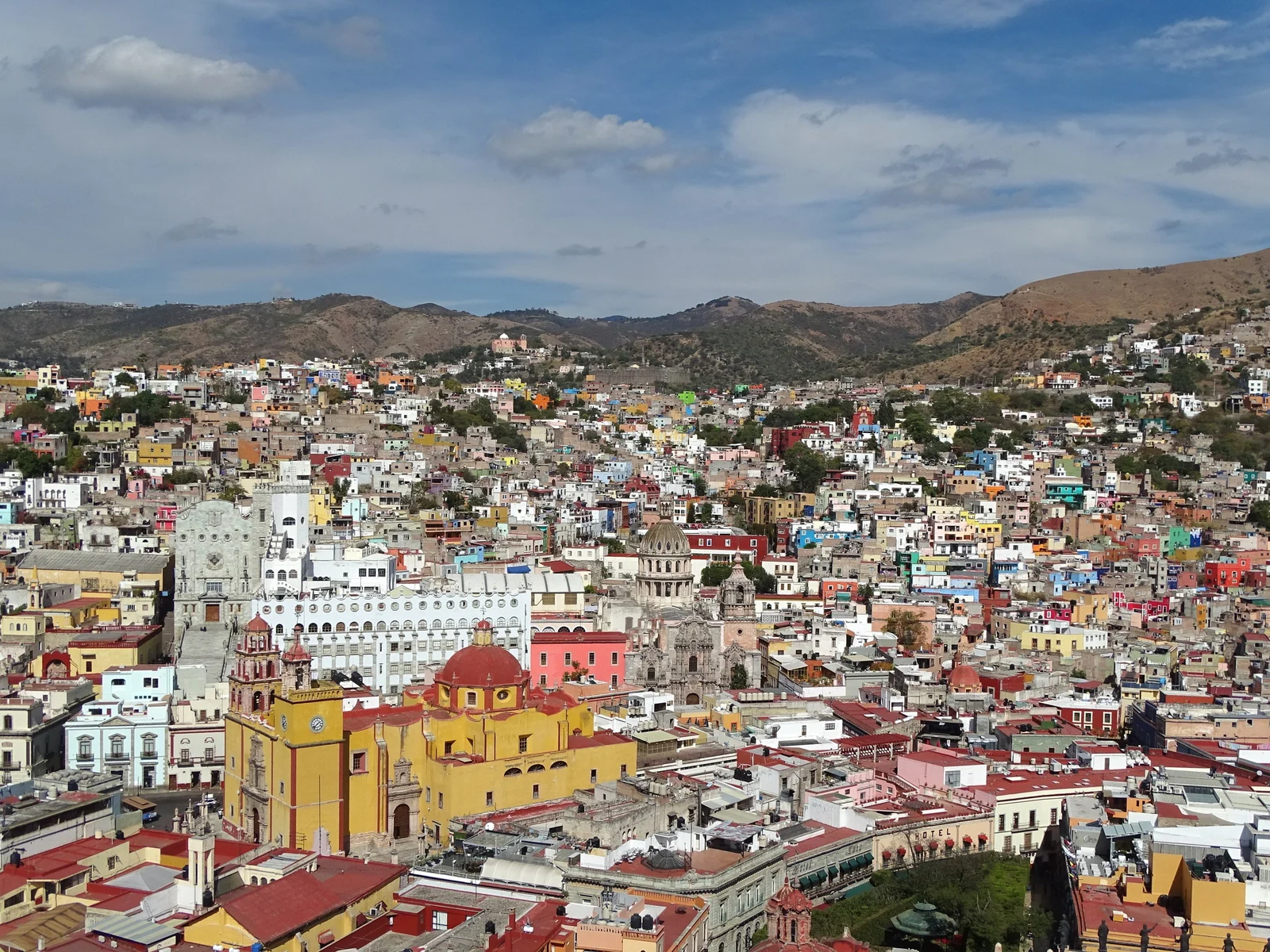
Go late in the afternoon, when the light softens, and stay for the first lights. UNESCO inscribed the Historic Town of Guanajuato and Adjacent Mines in 1988, citing its Baroque and Neoclassical buildings and the mining infrastructure that made the city rich in the eighteenth century.
Alhóndiga de Granaditas and the Historic Center
The Alhóndiga de Granaditas was built as a grain warehouse and finished in 1809. A year later, on September 28, 1810, insurgents under Miguel Hidalgo and Ignacio Allende captured it in one of the first major battles of the Mexican War of Independence. Later it served as a prison, and since 1958 it has been the regional museum.
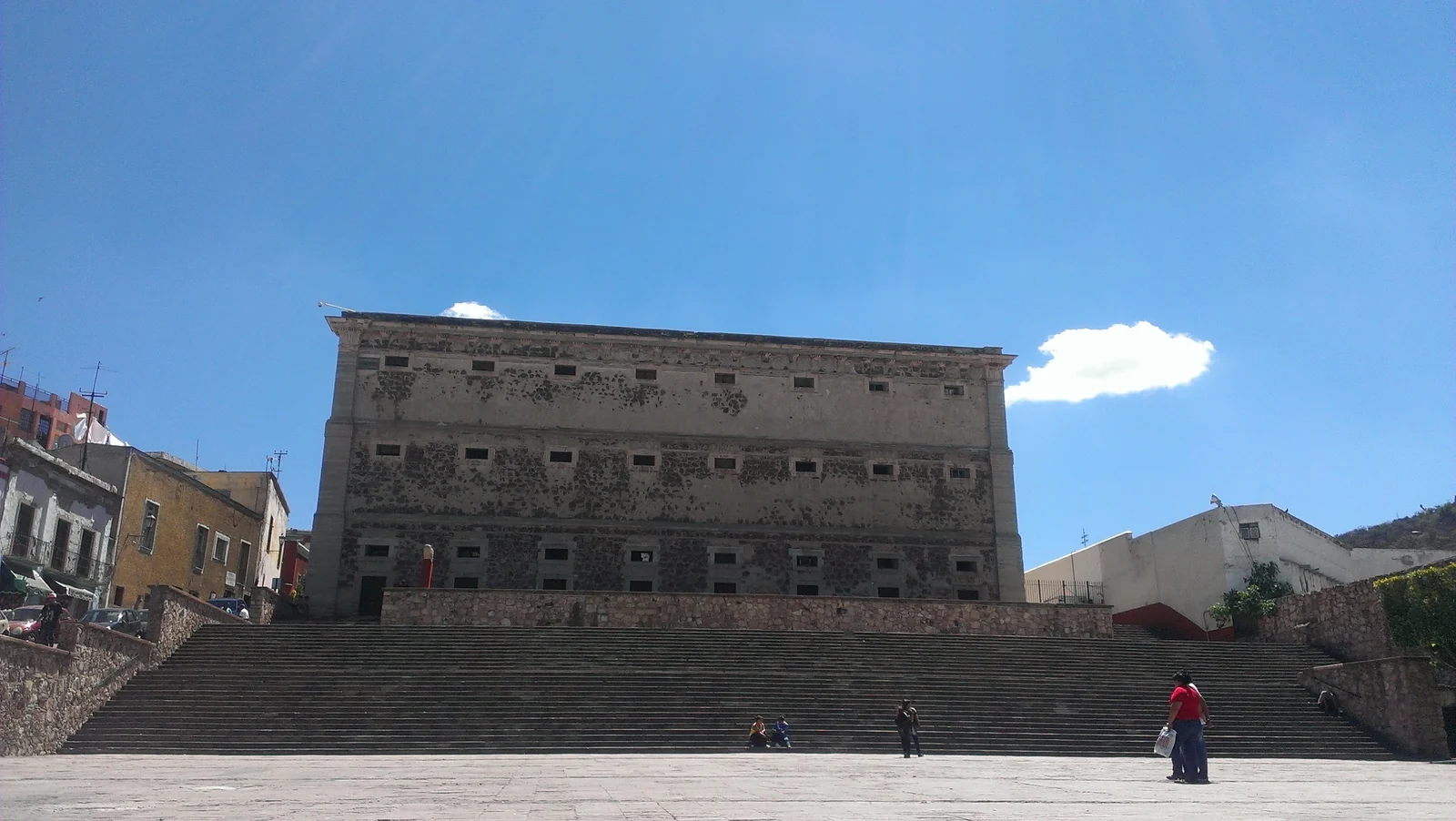
Inside, look for José Chávez Morado's murals on the staircases, which retell the city's history in bold color. Opening days and ticket details are on the INAH site for the museum.
Plazas and the Teatro Juárez
The center is small enough to cover on foot. Jardín de la Unión is the social heart, a triangular garden ringed by cafés, with the Teatro Juárez on one side. The theater opened in 1903 and is worth entering even if you skip a performance. Nearby, the Basílica Colegiata de Nuestra Señora de Guanajuato anchors the main plaza in yellow Baroque stone.
Guanajuato also hosts the Festival Internacional Cervantino, a major arts festival held every October. Rooms fill early then, so book well ahead if your dates overlap.
Tunnels, Callejones and the Mummy Museum
Guanajuato's strangest feature is its network of underground streets. Cars and buses run through old tunnels that were originally cut to deal with a river and flooding, and many now serve as roads. It feels odd to emerge from a tunnel into a plaza, and you will quickly learn to read street signs with arrows pointing below ground. Do not rely on a map app alone; the signal drops and the GPS gets confused.
Above ground, the city is a maze of callejones, narrow stepped alleys that climb between houses. The most famous is the Callejón del Beso, the Alley of the Kiss, where the balconies on either side are so close that neighbors could lean across and touch. Local legend says couples who kiss on a particular step will have good luck together.
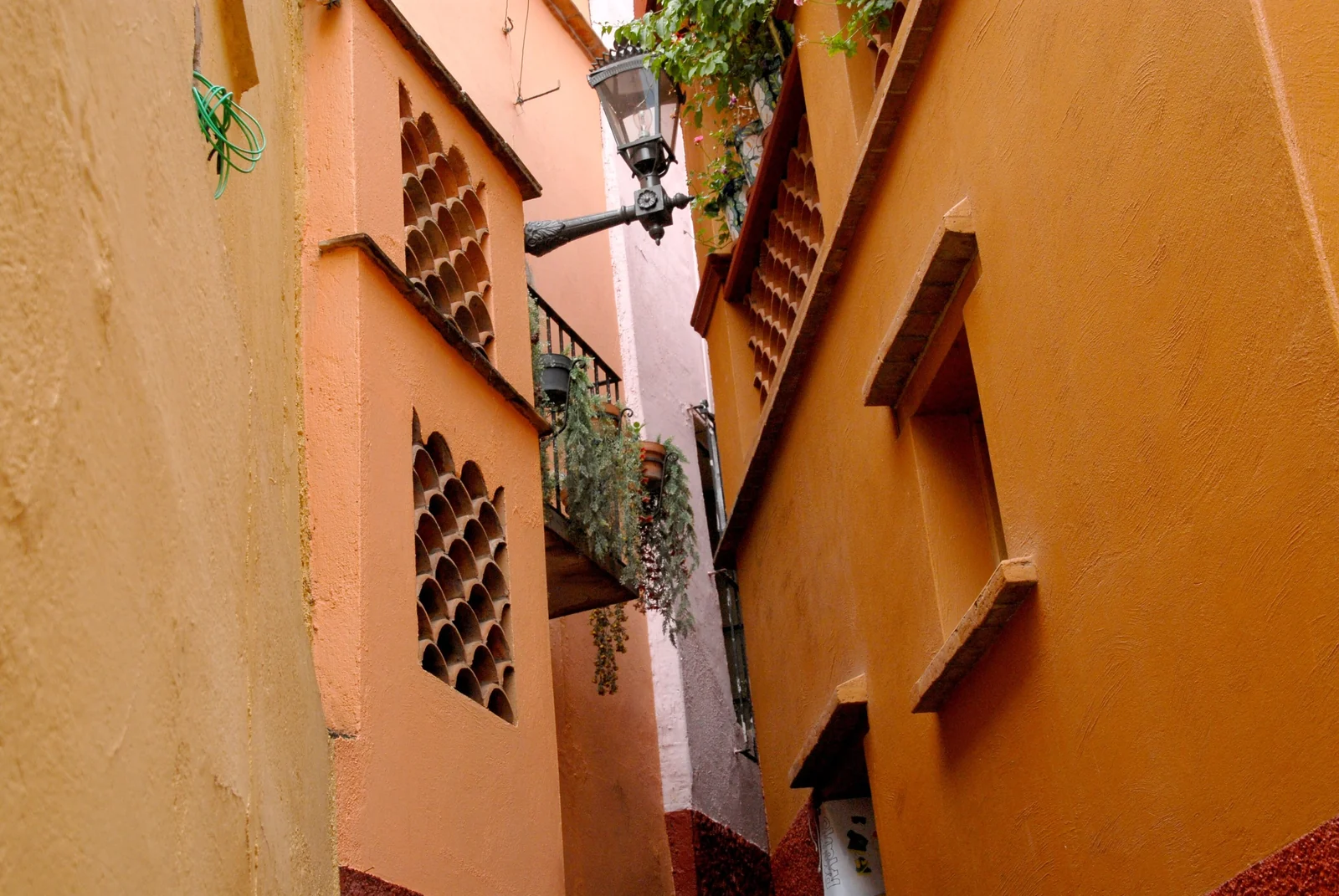
Go in the morning if you want the alley to yourself. By midday there is a line of couples waiting for photos, which is part of the entertainment.
The Museo de las Momias
The Mummy Museum is Guanajuato's most unusual attraction and, depending on your taste, either a highlight or a hard pass. The bodies on display were naturally mummified in the municipal cemetery, the Panteón de Santa Paula. From 1865, relatives had to pay a grave fee, and when it went unpaid the body was exhumed. Workers found that many were remarkably well preserved and began to keep them. The collection became a museum in 1969.
It is genuinely macabre, with some exhibits showing the faces of the dead in vivid detail, and it is not suitable for young children or anyone squeamish. It sits a short ride from the center, so plan on a taxi or local bus. Allow about an hour, and check current opening hours locally.
San Miguel de Allende and Its Parroquia
San Miguel's symbol is the Parroquia de San Miguel Arcángel, a rose-colored church with a pointed neo-Gothic facade facing the main square, the Jardín Allende. The older church dates back centuries, but the soaring front was added from around 1880 by Zeferino Gutiérrez, a self-taught stonemason who worked from European images of Gothic cathedrals. The result is more fairy tale than medieval, and it photographs beautifully at dusk.
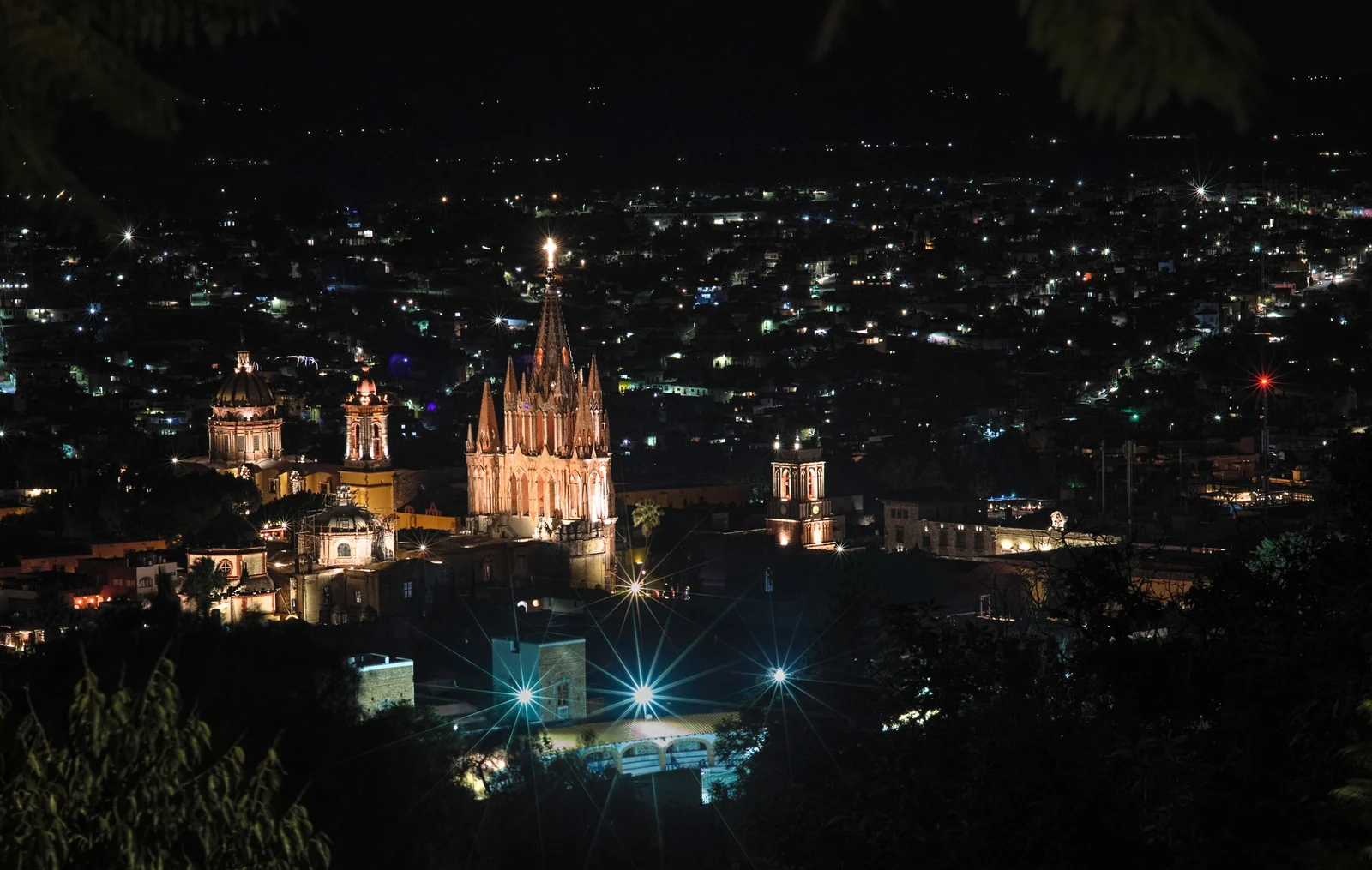
Beyond the church, spend your time wandering. Cobbled streets lead to craft shops, small galleries and courtyard restaurants, and many hotels have rooftop terraces with views of the Parroquia. San Miguel was inscribed by UNESCO in 2008, together with the Sanctuary of Atotonilco, as an example of cultural exchange between Europe and Latin America; the UNESCO listing explains why.
Atotonilco: The Sanctuary Outside Town
A short drive from San Miguel, the Sanctuary of Jesús Nazareno de Atotonilco is a pilgrimage church whose interior is covered in painted murals and sculpture. It is part of the same UNESCO listing as San Miguel. The plain exterior hides a dense, theatrical interior that some visitors compare to a Baroque painted cave.
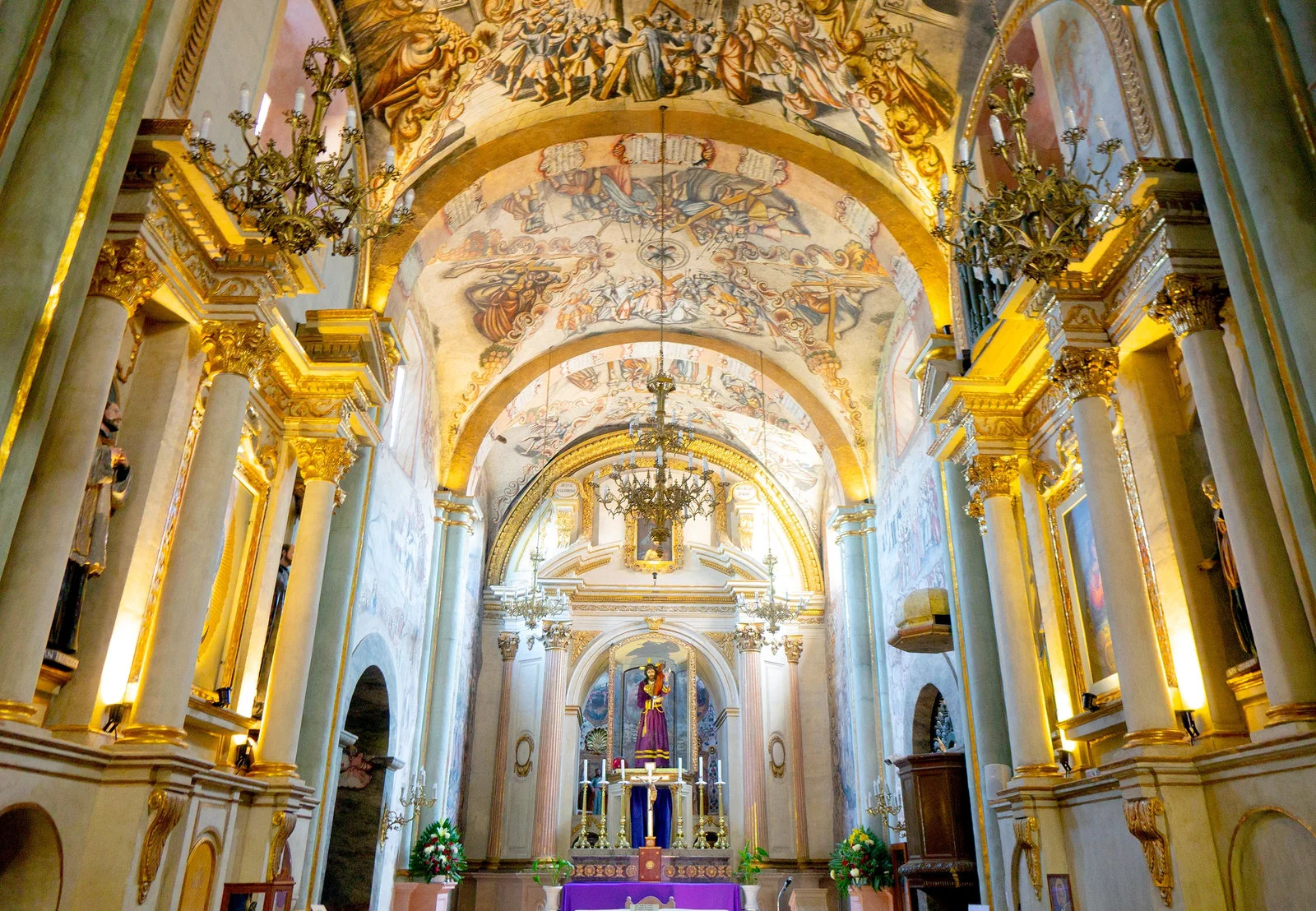
It is a working place of worship, so dress modestly and keep your voice down. A taxi or a tour from San Miguel is the easiest way to get there; ask your hotel to arrange a driver who will wait.
How to Get There from Mexico City, Querétaro and León
- From Mexico City: long-distance buses run from the Terminal Norte to both towns, typically taking roughly four to six hours depending on the operator and traffic. Drivers should expect toll roads.
- From Querétaro: this is the easiest gateway for San Miguel de Allende, with frequent buses and a fairly short road trip. It is a good stop on its own for its historic center.
- From León: the Del Bajío International Airport (BJX) serves the region, and it lies in Silao, roughly half an hour by road from Guanajuato city. Taxis, shuttles and buses reach both towns.
- Between the two towns: direct buses and private shuttles link Guanajuato and San Miguel. Check current schedules with the bus companies before you travel.
A rental car is not needed. Both towns are walkable, parking is awkward, and Guanajuato's tunnels and one-way streets are stressful for first-time drivers.
Where to Base Yourself
Base in Guanajuato if you care about history, nightlife and lower prices, and in San Miguel if you want comfort and polish. Each can serve as a base for day trips to the other, but the transit time makes it more relaxing to split your stay.
- Guanajuato, near Jardín de la Unión: the most convenient spot, close to restaurants, theaters and the funicular. Expect evening noise.
- Guanajuato, residential lanes above the center: quieter and often cheaper, but steep. Pack light.
- San Miguel, near the Jardín Allende: all the main sights on foot, and most boutique hotels. Cobblestones are hard on wheeled suitcases.
- San Miguel, the neighborhoods around the center: a calmer option with the same walkability.
Best Time to Visit and Practical Tips
At about 2,000 meters above sea level, the highlands have mild days and cool nights for much of the year, so bring a light jacket in any season. The dry months from roughly November to April are the most comfortable for walking. Summer brings afternoon rain, which keeps the hills green. October is lively thanks to the Cervantino festival in Guanajuato, but book early. Check forecasts before you pack, since conditions vary.
Practical Tips for Both Towns
- Shoes: bring comfortable soles. Both towns are paved in uneven stone, and Guanajuato's staircases add up quickly.
- Altitude: the highlands sit high enough that you may tire faster on the first day. Drink water and take it slowly.
- Cash: cards are common in hotels and restaurants, but small museums, market stalls and taxis often prefer pesos.
- Churches: dress modestly and avoid flash photography during services.
- Safety: the historic centers are busy and generally easy to walk at night, but check current official travel advice before you go and use licensed taxis late in the evening.
A Simple 4-Day Route
Days 1 and 2: Guanajuato
Arrive, walk the center and have dinner on Jardín de la Unión. The next morning, visit the Alhóndiga and the Callejón del Beso, then spend the afternoon at the Mummy Museum or the Teatro Juárez. Finish at El Pipila at dusk.
Days 3 and 4: San Miguel de Allende
Transfer in the morning, drop your bags and walk to the Parroquia. Use day four for Atotonilco, then shop and eat on the way back. If you want more of Mexico afterward, our guides to Oaxaca and the Yucatán Peninsula are good next stops, and the full Mexico category has more.
Guanajuato and San Miguel de Allende FAQ
How many days do you need for Guanajuato and San Miguel de Allende?
Four days is a comfortable minimum: two in Guanajuato and two in San Miguel, with a half day for Atotonilco. Five days adds breathing room. A single day in each works for a rushed overview, but you will miss the evenings, which are when both towns are at their best.
Is Guanajuato or San Miguel de Allende better?
It depends on what you like. Guanajuato is livelier, more historic and generally cheaper, with tunnels and a university atmosphere. San Miguel is quieter, more polished and better for design shops and relaxed dining. Many travelers visit both.
How do you get from Mexico City to Guanajuato?
Most visitors take a long-distance bus from Mexico City's Terminal Norte, which usually takes roughly four to six hours. You can also fly into Del Bajío International Airport near León and Silao, or drive on toll roads. Check current bus schedules with the operators.
Can you visit Guanajuato and San Miguel de Allende in one day?
It is possible but not recommended. Travel between the two takes time, and both towns need walking and unhurried evenings. If you are short on time, choose one town for a full day and see the other on a separate trip.
Is the Mummy Museum worth visiting?
If you are curious about unusual history, yes. The bodies were naturally mummified in the Santa Paula cemetery, and the museum opened in 1969. It is intense and graphic, so skip it with small children or if you dislike morbid displays.
What is the Callejón del Beso?
It is a very narrow alley in Guanajuato where balconies on opposite sides nearly touch. Local legend says couples who kiss on a certain step will stay together. It is free to visit and best seen in the morning before the crowds arrive.
Do you need a car in Guanajuato and San Miguel de Allende?
No. Both historic centers are compact and walkable, buses and taxis connect the towns, and parking is difficult. Guanajuato's tunnels and one-way streets can be confusing for drivers. A car is only useful if you plan to visit several rural sites in one day.