


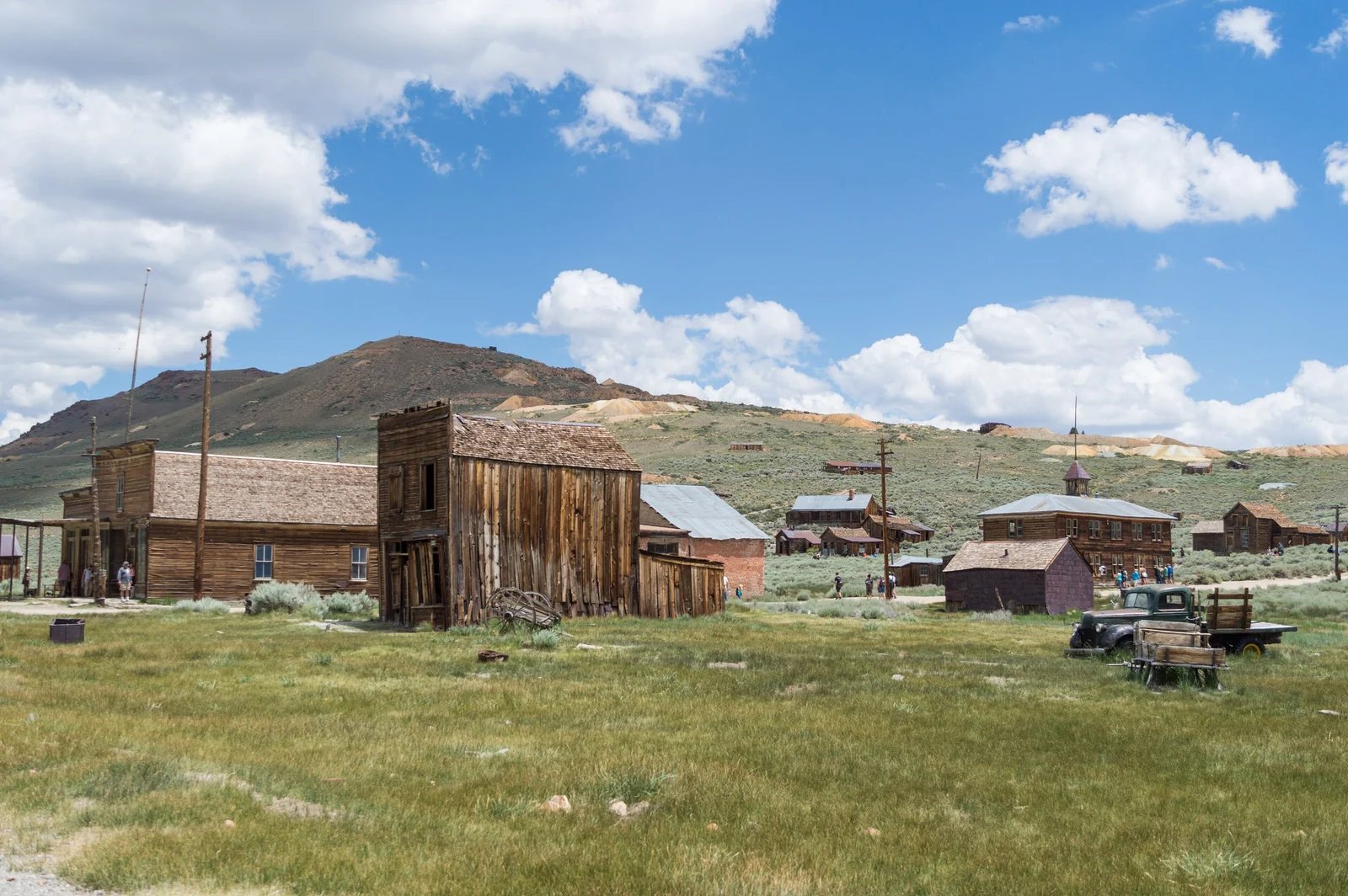
Bodie is a gold-rush ghost town in the eastern Sierra Nevada of California, kept as Bodie State Historic Park, and you reach it by a paved state route followed by a short stretch of unpaved road off Highway 395. Dozens of buildings still stand on a bare, windy plateau, with furniture, tools and shop goods left more or less where they were. The base towns are Bridgeport to the north and Lee Vining, beside Mono Lake, to the south.
It is one of the best-known ghost towns in the American West, and it earns that reputation by doing something unusual: nothing. Nobody has restored it into a theme park. If you are building a wider western trip, our Utah national parks road trip is a natural companion for the next leg east.
What Bodie Is and Why It Feels Different
Bodie sits at about 8,400 feet (roughly 2,550 m) in sagebrush country with almost no shade. The town is preserved in what California State Parks calls a state of arrested decay. That phrase means the buildings are not rebuilt or repainted to look new. They are stabilized, so they keep leaning, peeling and fading at a slower pace.
The result is quieter and stranger than a restored frontier street. Look through a window and you may see a stocked shelf, a crooked bed or a billiard table. The park describes the interiors as remaining as residents left them. You will not find a gift-shop saloon or costumed actors, and I think that is exactly why it works.
Gold-Rush History: From 1859 to the 1880s
Gold was found in the hills north of Mono Lake in 1859 by a prospector usually named as Waterman S. Bodey (also written Body or William Bodey). The town took its name from him, and the spelling changed along the way to Bodie. For years it stayed a small, scrappy camp.
The turn came in the mid-1870s. California State Parks says a mine cave-in exposed rich ore in 1875, and the Standard Company bought the mine in 1877. Strikes at the neighboring Bodie Mine in 1878 drew even more people. By 1879 estimates put the population somewhere between 7,000 and 10,000, with about 2,000 buildings, while the 1880 census counted 5,417 residents. Sources differ on the peak, so treat any single figure as a range.
The decline began in the early 1880s as the richest ore ran thin. Fires in 1892 and in 1932 destroyed much of the business district, and the last mines closed in 1942 under a wartime order. The Bodie Historic District was designated a National Historic Landmark in 1961, and the town became a state historic park in 1962.
How to Get to Bodie: Highway 395 and Bodie Road
There is one normal way in. From U.S. 395, take State Route 270, known as Bodie Road, east for about 10 miles to the end of the pavement. The final 3 miles are unpaved. California State Parks warns that this last stretch can be rough and asks you to slow down and call the park about road conditions.
In dry weather the dirt section is usually manageable for an ordinary car driven patiently, and the washboard is more of an annoyance than a danger. After rain or snowmelt it can turn muddy, and the park itself suggests checking conditions before you leave. Do not trust a phone map to tell you the road is open. Another rough road continues south toward Mono Lake, but it is not the route to plan around.
Carry water, fuel up before you leave the highway, and expect little or no cell signal near the town. A full tank and a good spare tire are cheap insurance. Distances out here are long even by American standards; our guide to how big Alaska really is puts the scale of the country in perspective.
Where to Base Yourself: Bridgeport, Lee Vining and Mono Lake
There is no lodging inside the park, and camping is not allowed, so you sleep in a nearby town. Two bases make the most sense, and a third works if you are touring more widely.
| Base | Best for | Trade-off |
|---|---|---|
| Bridgeport | Shortest drive to Bodie, with the Bodie Road turnoff close to town on Highway 395 | Quiet, with fewer sights of its own |
| Lee Vining | Mono Lake, the Tioga Road and Yosemite's east side | A longer drive for the Bodie day |
| Mammoth Lakes area | Mountain scenery and more lodging choice | Bodie becomes a full day trip |
Lee Vining is the better base if Bodie is one stop among several, because it sits at the junction with Highway 120. In summer that road climbs over Tioga Pass into Yosemite National Park. The National Park Service says Tioga Road typically opens in late May or June and closes sometime in November, and snow can delay reopening, so check its page before you rely on the crossing.
Bridgeport wins if you want to be at the gate when it opens. Whichever you choose, book ahead in summer and on fall weekends, since lodging in this corner of the Sierra is limited.
What to See in Bodie: Mill, Churches, Hall and Cemetery
Bodie is best walked slowly. The streets are laid out on a grid, so you cannot really get lost, and the parking area is a short walk from the main street. Most buildings can only be seen through windows. Some are locked, and a few open at times, so go with a loose plan.
The Standard Mill
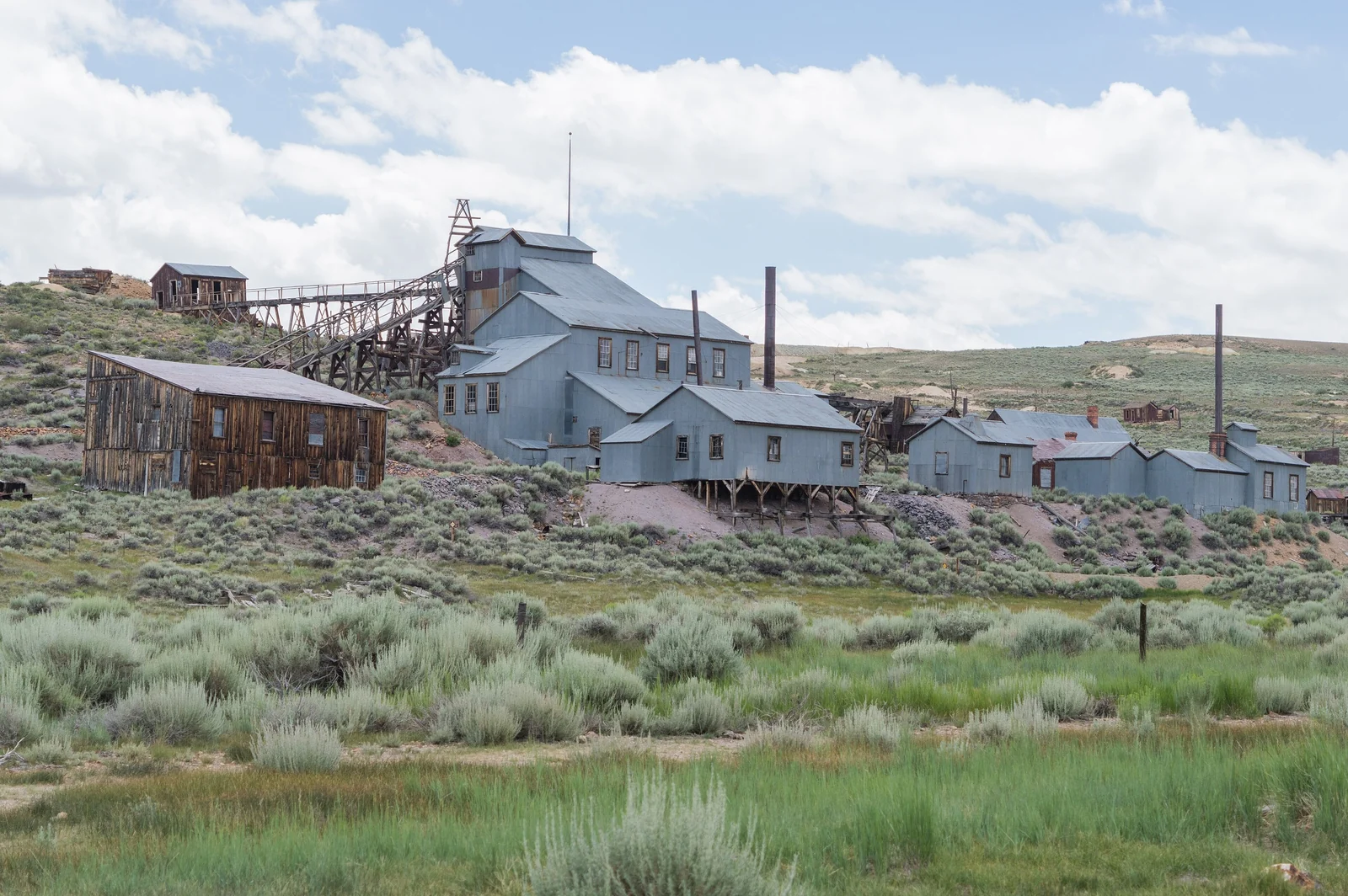
The Standard Mill dominates the hillside above town, a big, dark, stepped timber structure. It was built to crush ore from the Standard mine and, according to Wikipedia, was powered from 1892 by electricity from a hydroelectric plant at Dynamo Pond. State Parks refers to it as the stamp mill and has offered mill tours on a limited basis, so check what is running on the day. Even from outside, it tells you more about the scale of the operation than any sign.
The Methodist Church
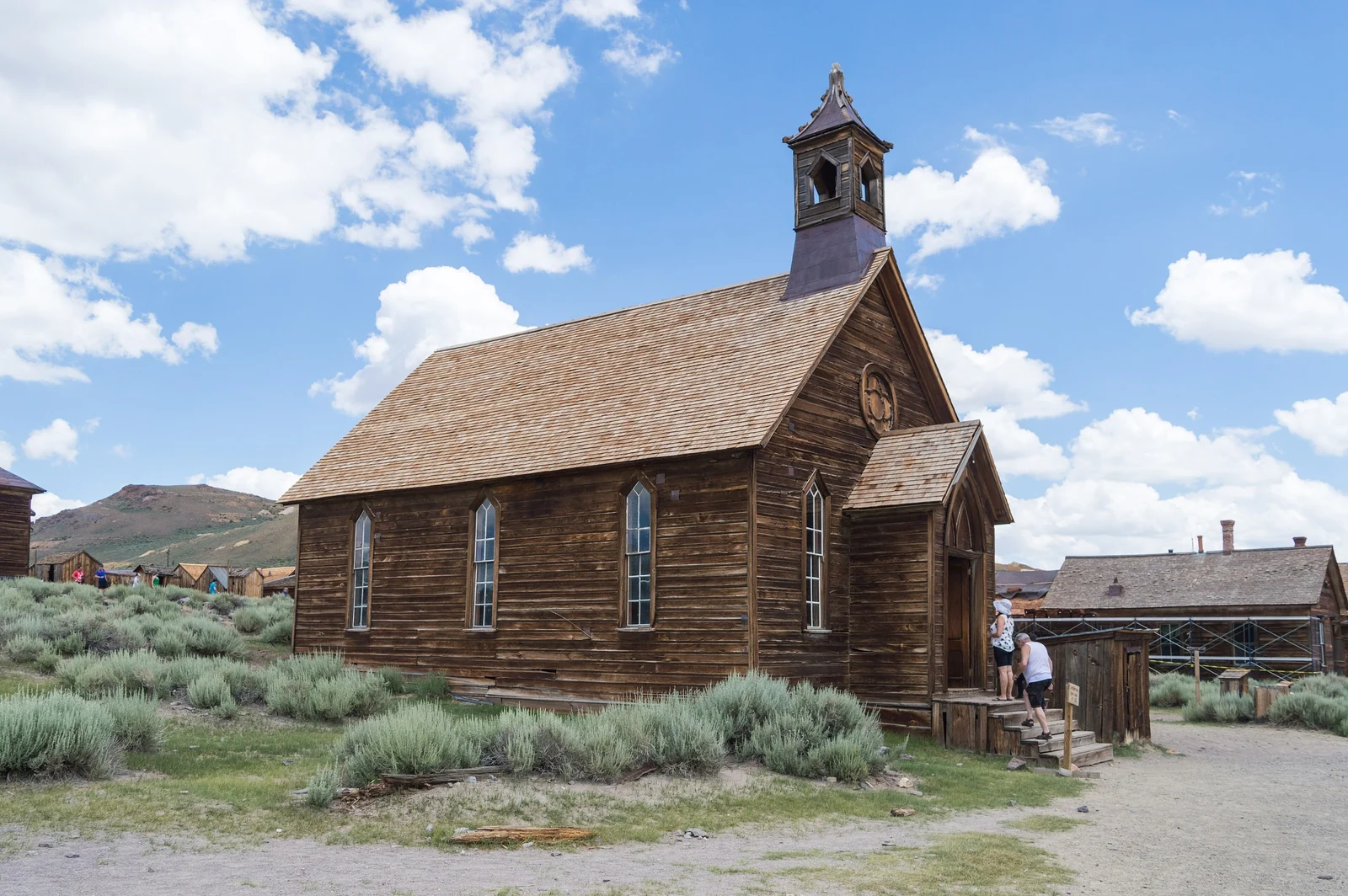
The Methodist church, erected in 1882, is the building most people photograph first. Its white steeple stands out against the brown hills, and the interior is dim and surprisingly intact when you look through the door. If you only have time for one portrait of Bodie, this is probably it.
The Miners Union Hall
On Main Street, the Miners Union Hall was the meeting place for the town's labor unions and also hosted dances, concerts, plays and school recitals. It now serves as a museum, so it is one of the few places where you can see exhibits on mining life without squinting through glass.
The Cemetery
The cemetery lies on the edge of town. It includes a Miners Union section and a cenotaph for President James A. Garfield. It is a sober place, a reminder that this was a hard, dangerous town and not only a photo set.
Streets, Garages and Everyday Objects
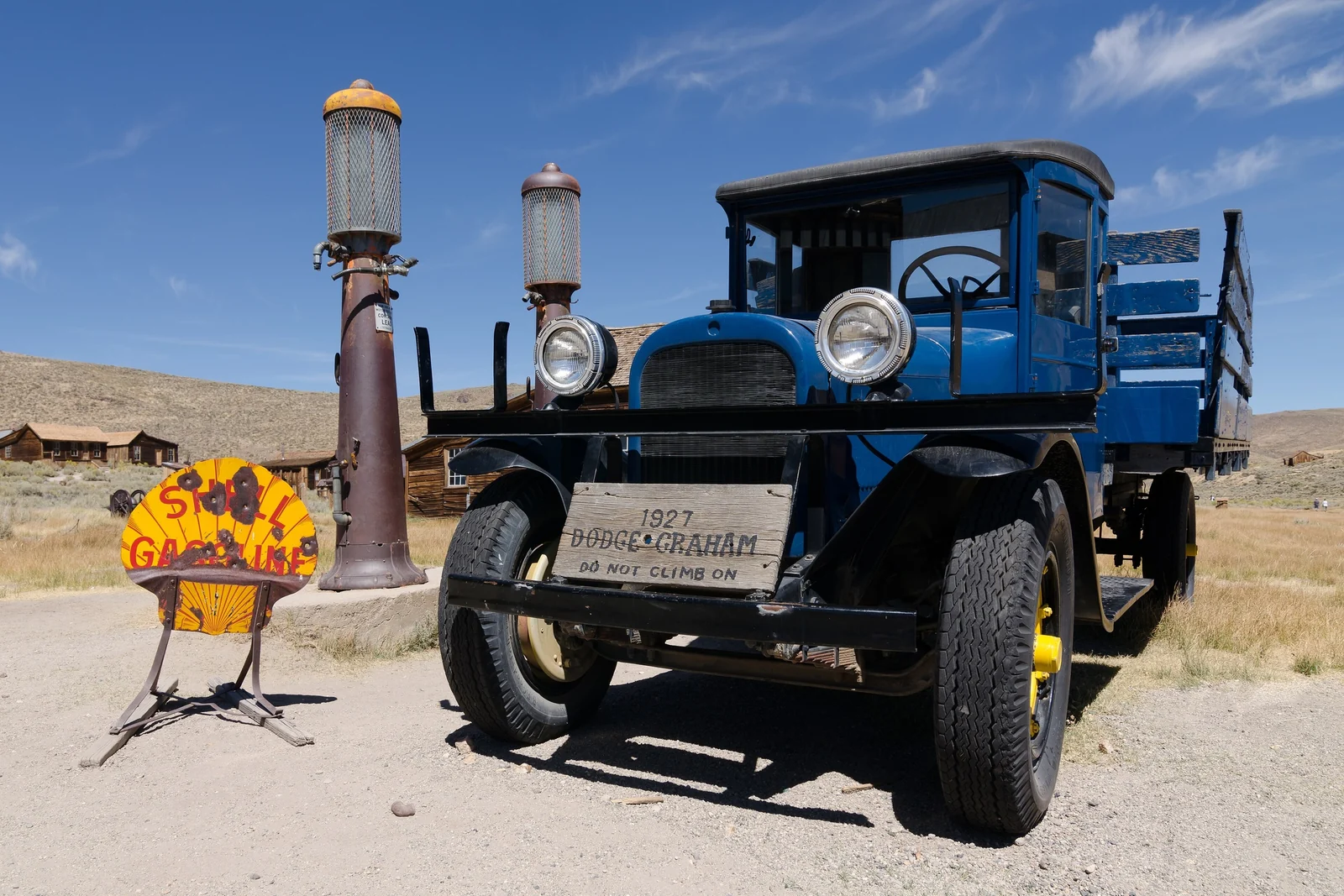
Do not skip the small things. Old cars rust beside gas pumps, shops hold faded goods and a schoolhouse still has its desks. These everyday objects are what make Bodie feel inhabited rather than excavated.
Rules at Bodie: Leave Everything Where It Is
The rule that matters most is the simplest: nothing leaves the park. State Parks bans collecting or removing anything, including rocks and plants, and metal detectors are not allowed. Drones are prohibited. Dogs must be leashed and are not allowed inside historic buildings or the museum.
There is a practical reason beyond the law. Arrested decay depends on every nail and bottle staying where it landed. If one visitor takes a souvenir, thousands will do the same. Also keep out of closed buildings, off the machinery and away from fragile porches and stairs.
Bring your own water and snacks. Services are limited on the plateau, so plan as you would for a short desert hike, and check the official park page for what is open on your day.
Best Time to Visit: Season, Hours and Winter Access
Bodie is open year-round, but the experience changes sharply with the calendar. State Parks lists longer daily hours in summer and shorter ones in winter, with the switch around the start of May and the start of November. Hours and fees change, so check the park's page before you go instead of relying on a blog.
| Season | What to expect | Watch out for |
|---|---|---|
| Late spring | Cool air and fewer people | Mud on the dirt road, lingering snow early on |
| Summer | Longest hours and the easiest road; pairs well with Tioga Pass | Strong sun, afternoon thunderstorms, more visitors |
| Early fall | Crisp light and cooler walking | Shortening days; early snow is possible later |
| Winter | Stark, empty and photogenic | Skis, snowshoes or snowmobiles only; real cold and danger |
For time of day, early morning and the last hour before closing give the softest light and thinnest crowds. Midday is flat and hot in summer. State Parks warns that in winter, at about 8,400 feet, you can reach the town only on skis, snowshoes or snowmobiles, and conditions can be dangerous, so treat a winter visit as a proper backcountry trip.
Allow at least two to three hours for the town. Photographers will want more.
Photography at Bodie
Casual photography is part of the visit, and the light and textures are excellent: peeling paint, glass, rust, big sky. Special photography tours with extra access to buildings have been offered at times, but I could not confirm current details, so look at the official park pages or call before you plan around one. Professional work done for publication needs a permit from the California Film Commission, according to State Parks.
Keep the gear light, stay on the marked ways and do not move anything for a better composition. The unedited scene is the whole appeal.
Mono Lake and the Eastern Sierra Loop
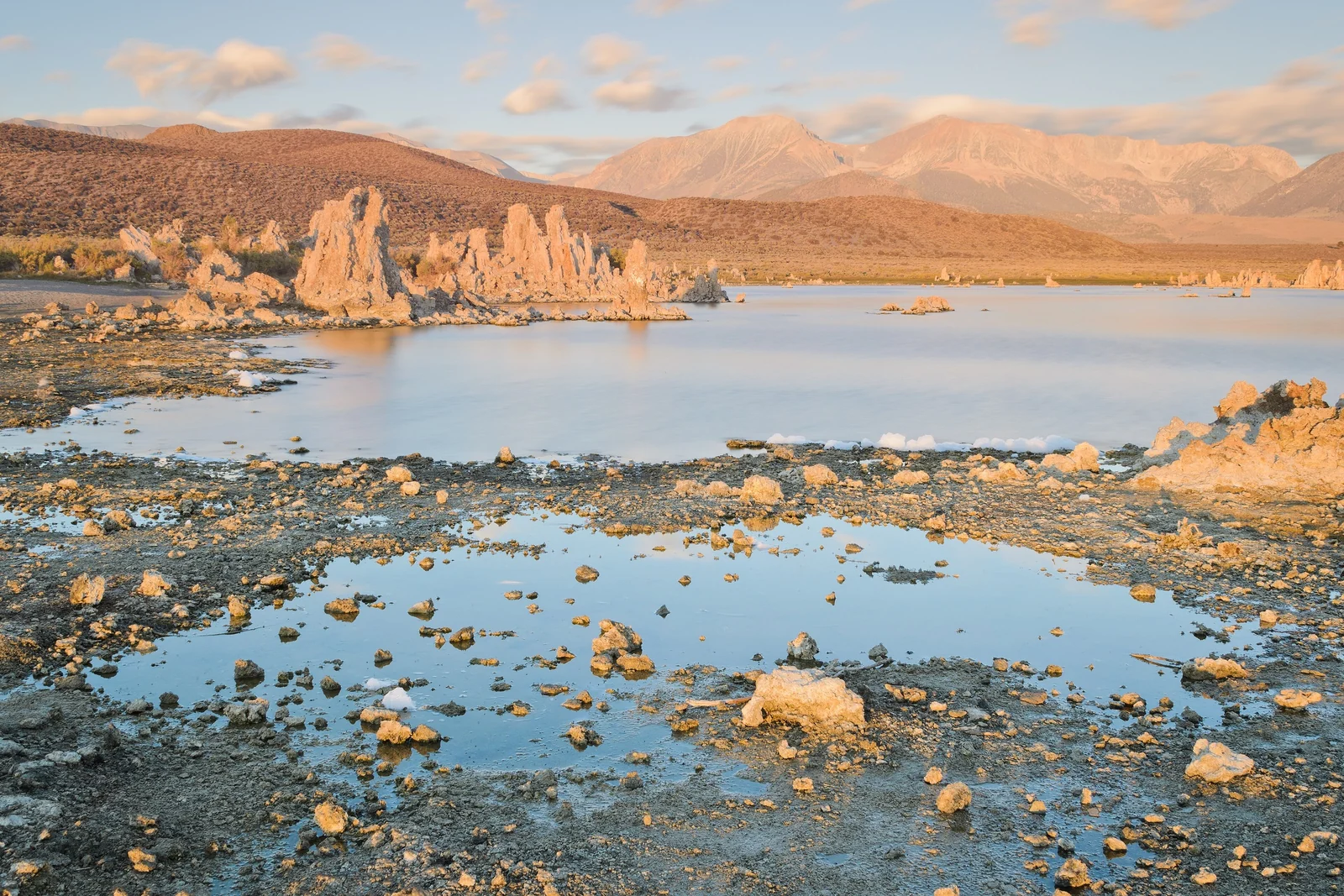
Pair Bodie with Mono Lake, to the south. The lake is a saline body of water famous for its tufa towers, mineral spires that rise along the shore. The South Tufa area is the classic place to walk among them, best at sunrise or sunset when the light is low.
From Lee Vining you can also continue west over Tioga Pass into Yosemite when the road is open. A day in the park, a night in Lee Vining and a morning at Bodie make a tidy loop that needs no luggage reshuffling.
Bodie Compared With Other Ghost Towns
Not all ghost towns are equal. Some, like Virginia City in Nevada, are living towns that lean hard into the tourist trade. Others have been rebuilt or restored, which makes them easier to browse but less honest. Bodie sits at the opposite end, undisturbed and a bit demanding to reach.
Elsewhere, the closest comparisons are a desert company town and an island. In Chile, Humberstone shows what a preserved industrial community looks like in dry air. In Italy, Craco is a hill town you visit with a guide, while Gunkanjima in Japan is a coal island reached by boat. Closer in spirit to Bodie, if far smaller, are the ghost towns of Scotland.
Bodie Ghost Town FAQ
Is Bodie a real ghost town?
Yes. It was a booming gold-mining town in the late 1870s and early 1880s, and it is preserved today as Bodie State Historic Park. Only part of the original town survives, kept in a state of arrested decay rather than restored.
Is the road to Bodie paved?
Mostly. State Route 270 is paved for about 10 miles off Highway 395, then the last 3 miles are unpaved. That stretch can be rough, so slow down and call the park about conditions before you drive.
Can you visit Bodie in winter?
Yes, but the park says winter access is limited to skis, snowshoes or snowmobiles, which must stay on designated roads. Conditions can be dangerous, so check with the park first and treat it as a serious trip.
How long do you need at Bodie?
Plan on two to three hours to walk the town, see the Miners Union Hall museum and look at the Standard Mill. Photographers and history fans often stay longer, especially if a mill tour is available that day.
Where should you stay when visiting Bodie?
There is no lodging or camping in the park. Bridgeport is the closest base. Lee Vining, beside Mono Lake and the Tioga Road junction, works well if you also want Yosemite's east side. Book ahead in busy seasons.
Can you take anything from Bodie?
No. Collecting or removing anything, including rocks and plants, is prohibited. Metal detectors and drones are also banned. Leaving every object in place is what keeps the town in its preserved state.
Is Bodie worth the drive?
For anyone interested in the American West, yes. The unrestored buildings, the high-desert setting and the Mono Lake scenery nearby make it one of the most atmospheric ghost towns you can visit, provided you accept a bumpy last stretch of road.