For a first visit, stay in Baixa or Chiado. Both sit in the flat, central core of Lisbon, close to the metro and within walking distance of most major sights. If you want old-world atmosphere and don't mind stairs, pick Alfama. If you want nightlife, pick Bairro Alto or Cais do Sodré. If you want quiet streets and good cafés, pick Príncipe Real.
Lisbon is a compact capital, but it is built on hills, and the neighborhood you choose changes your trip more than the hotel itself. This guide explains what each area is like at street level, who it suits, and what to check before you book. For things to do once you arrive, see our full Lisbon travel guide.
Where to Stay in Lisbon at a Glance
| Neighborhood | Best for | Feel | Watch out for |
|---|---|---|---|
| Baixa | First-timers, short stays | Flat grid of shopping streets and squares | Crowds and busy restaurants aimed at visitors |
| Chiado | Couples, café lovers | Elegant, central, theaters and bookshops | Steep streets toward Bairro Alto |
| Bairro Alto | Nightlife | Narrow lanes, bars, late noise | Light sleepers should avoid street-facing rooms |
| Alfama | Atmosphere, fado, views | Oldest quarter, stairs and tiny squares | Hills and no direct metro |
| Príncipe Real | Quiet, boutiques, good food | Leafy and polished | Fewer budget options |
| Cais do Sodré | Food and bars, day trips | Transport hub with a lively night scene | Late-night noise on weekends |
| Belém | Monuments, families | Spacious, riverside, calmer | Far from the central nightlife |
How Lisbon's Hills Affect Your Choice
Lisbon is famously a city of seven hills, and the layout is simple once you see it. Baixa is the flat valley between two hills. Alfama and the castle rise on one side, Chiado and Bairro Alto on the other. The river is at the bottom, and almost every route from the center to a viewpoint is either a climb or a tram ride.
That matters if you travel with a stroller, a heavy suitcase or anyone who finds stairs hard. A hotel on a flat street in Baixa saves you real effort. A lovely apartment up four flights of stone steps in Alfama may be the highlight of your trip or the biggest regret, depending on who is carrying the bags. Before you book, check the street, not only the neighborhood, and ask whether there is a lift.
Baixa and Chiado: The Central Base
Baixa
Baixa was rebuilt on a regular grid after the 1755 earthquake, which is why it is the easiest part of Lisbon to read. Broad pedestrian streets such as Rua Augusta run down to the huge Praça do Comércio on the river, and the Rossio square and station are at the top. The metro, trams, buses and Rossio's trains to Sintra are all close.
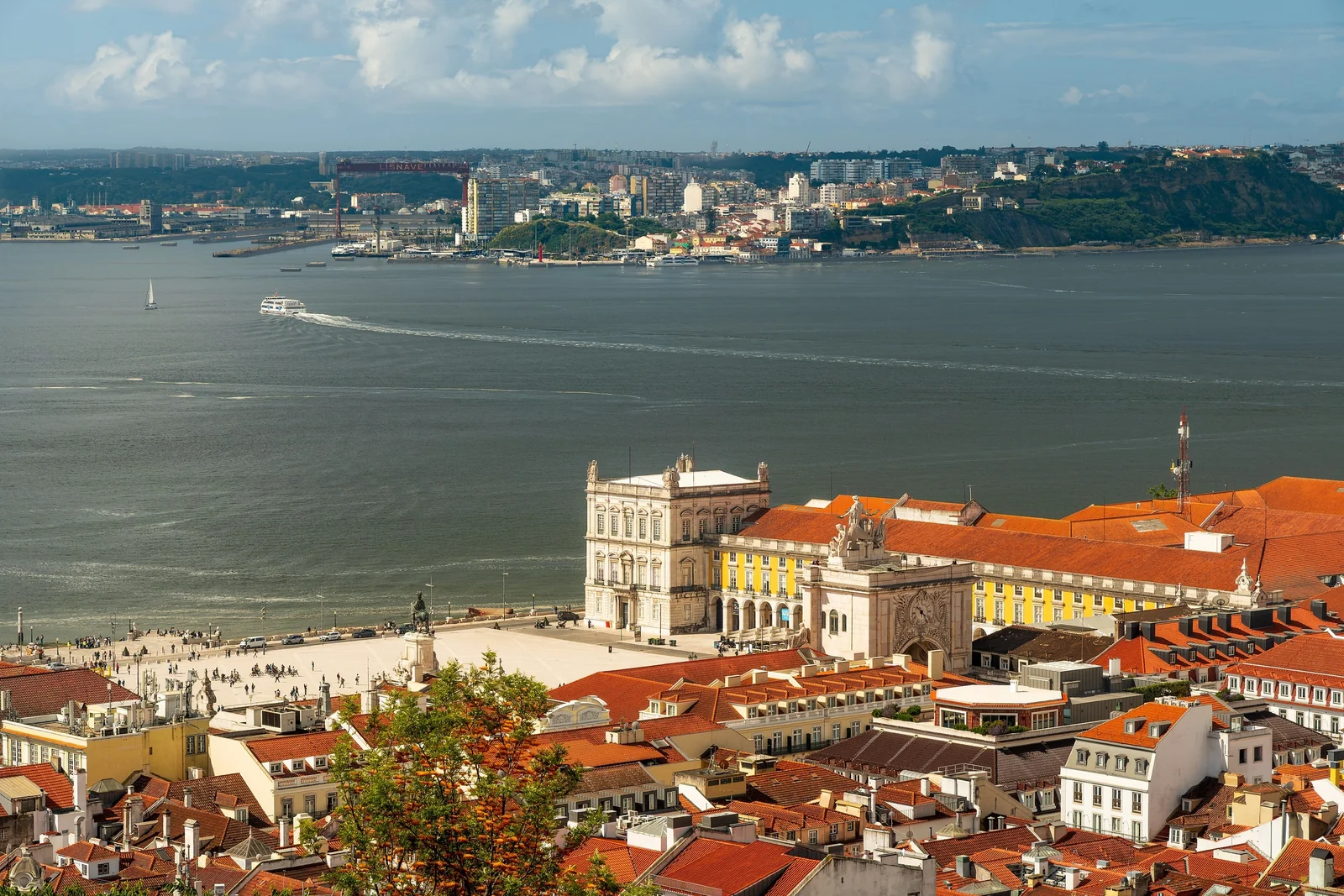
The trade-off is that Baixa is where most visitors walk, so restaurants near the main streets tend to cater to tourists and you will want to eat a few blocks away. Choose a room on a side street if you value quiet. It is the best pick for a first trip of two to four days.
Chiado
Chiado sits on the slope between Baixa and Bairro Alto and feels more polished. Old cafés, bookshops, theaters and the roofless ruins of the Carmo Convent give it character, and the area rebuilt itself after a major fire in 1988. The Baixa-Chiado metro station connects two lines, which makes Chiado very convenient despite the hill.
It suits couples and anyone who likes to start the day with coffee in a historic room. The streets are steep in places, so test your route to the metro before you commit.
Bairro Alto: The Nightlife District
Bairro Alto is a grid of narrow lanes high above Baixa. In the early evening it is a pleasant place to eat, with small restaurants, tables on the cobbles and locals heading home. After dark it turns into one of the city's main bar districts, and the street party often continues late, especially on weekends.
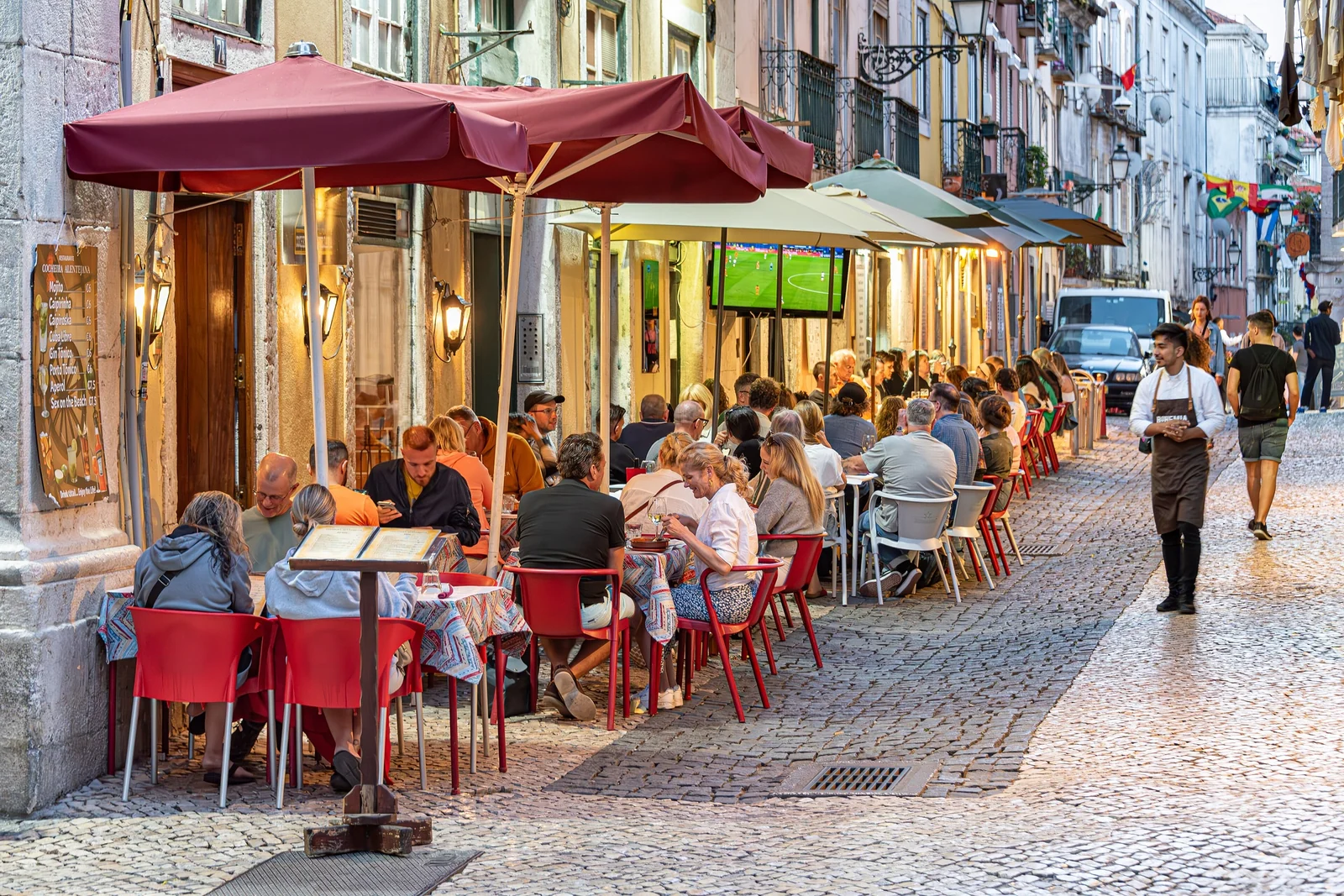
Stay here if you plan to go out and want to walk home. Skip it if you sleep lightly. If you do book in Bairro Alto, ask for a room facing a courtyard or the back of the building, and read recent reviews for the word "noise" before you pay.
Alfama: Old Lisbon on Foot
Alfama is the oldest neighborhood in Lisbon and was less damaged by the 1755 earthquake than most of the city, so its medieval street plan survives. Expect stairways, tiny squares, washing hung across alleys and small restaurants where fado is sung in the evening. The Castelo de São Jorge crowns the hill, and viewpoints such as Santa Luzia and Portas do Sol are a short climb away.
It is the most atmospheric place to wake up, and the most demanding. There is no direct metro into the heart of Alfama, taxis cannot reach every door, and the climbs are real. Choose it for a romantic trip when you travel light, and look for a property reachable by a street rather than a stairway. Be aware that the neighborhood is especially busy during the city's festivals in June.
Príncipe Real and Avenida da Liberdade: Quiet and Polished
Príncipe Real
Príncipe Real is a leafy, residential-feeling district with a pretty garden square, design shops, antique dealers and some of the city's best-regarded restaurants and bars. It is calmer than Bairro Alto next door, though still within walking distance of it. The nearest metro stop is Rato.
Avenida da Liberdade
The tree-lined Avenida da Liberdade runs from Restauradores north to Marquês de Pombal and is lined with luxury shops and grand hotels. It is flat, well served by the metro and quiet at night. It works well for travelers who want comfort, easy transport and a more upscale base, and who are happy to walk or ride a few minutes to the old center.
Cais do Sodré: Food, Bars and Day Trips
Cais do Sodré is a riverside transport hub. The metro, the ferries across the Tagus and the commuter trains to Belém and Cascais all meet here. It was once a rough port district, and it is now known for the Time Out Market food hall in the Mercado da Ribeira and for Pink Street, whose pink-painted pavement is lined with bars.
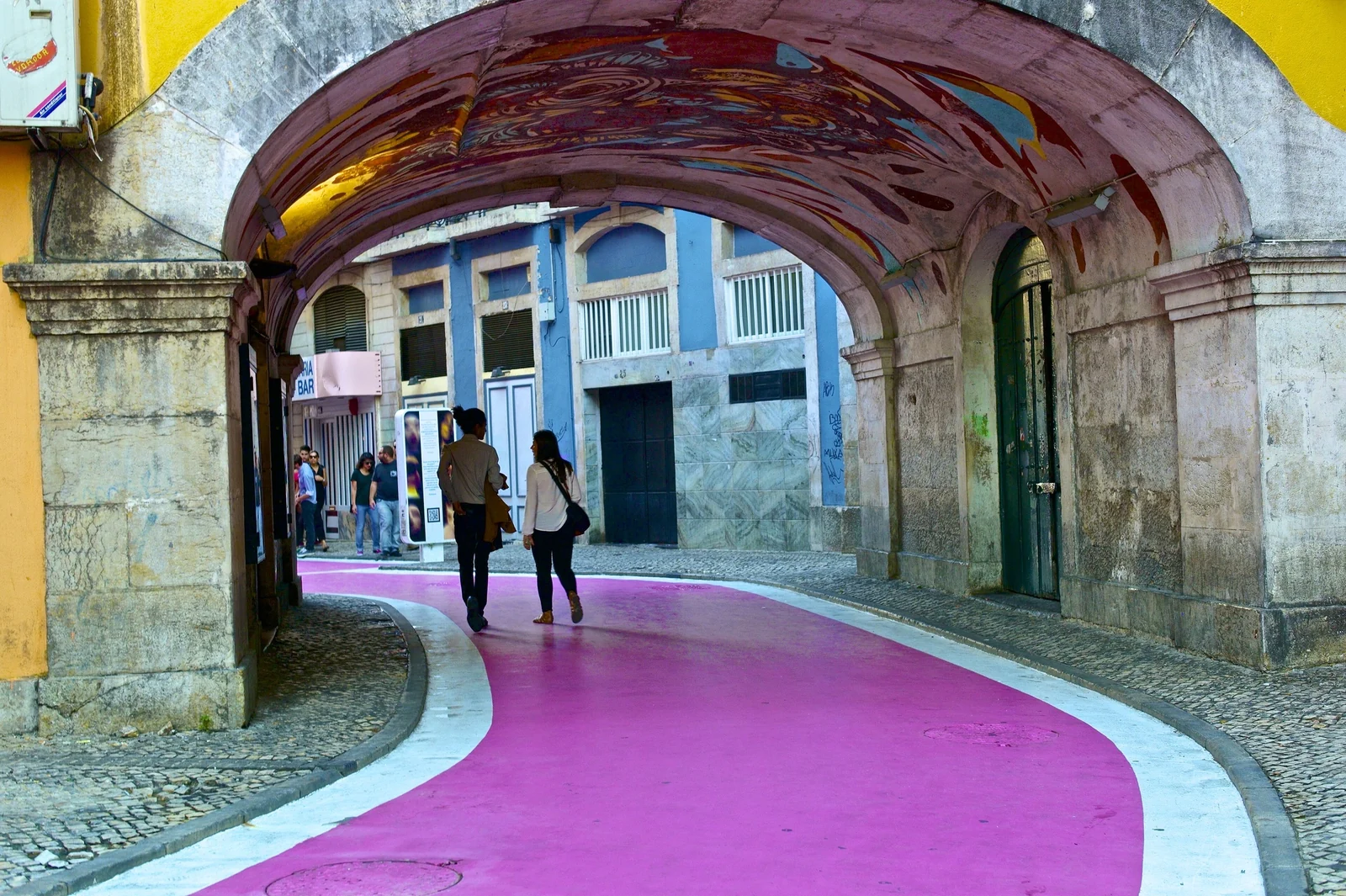
It is a smart base if you plan several day trips by train, because Cascais is roughly 40 minutes from the station. The downside is the same as Bairro Alto's: weekend nights can be loud, so ask for a room away from the street.
Belém, Parque das Nações and Campo de Ourique: Beyond the Center
Belém
Belém is home to the Jerónimos Monastery and the Belém Tower, both part of a UNESCO World Heritage listing since 1983. The area is open and green beside the river, and it is quieter at night than the center. It suits families and monument lovers who plan to spend days on the western side. The train on the Cascais line reaches the center in a short ride, and our review of the Pestana Palace Lisboa shows what a historic stay in the area looks like.
Parque das Nações
This modern district was built for the 1998 World Exposition and holds the Oceanário, a riverside promenade and the Gare do Oriente station. It is clean, flat and family-friendly, with larger rooms and a short metro ride to the airport. The price of that convenience is distance from the historic sights.
Campo de Ourique
Campo de Ourique is a residential neighborhood with a covered food market and the end of the famous tram 28. Choose it for a longer stay when you want to live like a resident, and accept that you will take a tram or bus to reach the main sights.
Choosing Between Hotels, Apartments and Hostels
- Hotels give you a front desk, luggage storage and often a lift, which is worth a lot in Alfama, Chiado and Bairro Alto.
- Apartments suit stays of four nights or more and families, but check the floor, the lift and the street noise.
- Hostels are plentiful in Baixa and Bairro Alto, and many have private rooms as well as dorms.
- Historic palaces and boutique hotels are concentrated on the Avenida da Liberdade, in Chiado and in Belém.
Most stays in the city add a small municipal tourist tax per person per night, usually collected at check-in or checkout. Check the current rules on the official Visit Lisboa website so the final bill holds no surprises.
Getting to Your Neighborhood and Booking Tips
The airport is inside the city and has its own metro station on the Red Line. For Baixa and Chiado, the usual route is Red Line to Alameda, then the Green Line to Baixa-Chiado, about 25 minutes in total. Taxis and ride-hailing cars are the easier choice for Alfama and for heavy luggage. See the Lisbon Metro website for the current map and fares.
- Book early for the summer months and for June, when the city's festivals fill the central neighborhoods.
- Read reviews from the last few months for noise, heat and lift problems.
- Check the exact address on a map for slopes and stairs, not only the distance to the metro.
- Air conditioning matters in summer, and older buildings may not have it.
- Plan a day trip to Sintra or Cascais? Stay near Rossio or Cais do Sodré for the trains.
- Traveling on to the north afterward? Our Porto travel guide covers the next stop.
Where to Stay in Lisbon FAQ
What is the best area to stay in Lisbon for first-timers?
Baixa and Chiado are the best choice for a first visit. They are flat or gently sloped, central, well served by the metro and within walking distance of Alfama, Bairro Alto and the river. You can reach most major sights on foot.
Is Alfama a good place to stay?
Alfama is excellent for atmosphere, fado and views, but it has steep stairs, narrow lanes and no direct metro to its heart. It works best for couples who pack light. Check the exact street and ask whether the building has a lift.
Where should I stay in Lisbon for nightlife?
Bairro Alto and Cais do Sodré have the most bars and clubs. Both are loud on weekend nights, so pick a room away from the street or choose a quieter area such as Chiado and take a short walk or taxi home.
Is Lisbon safe to stay in?
Lisbon is generally considered safe for visitors, but pickpocketing is common on crowded trams, in tourist areas and around the metro. Keep bags closed, watch your phone and use common sense at night.
Where should families stay in Lisbon?
Belém and Parque das Nações are good for families because they are open, flatter and calmer, with larger rooms. Baixa also works well for short stays because everything is close and the ground is level.
Should I stay in the city center or near the airport?
Stay in the center. The airport is inside the city, so the metro takes about 25 minutes to Baixa-Chiado, and staying central saves time and money on a short visit. Only choose an airport hotel for an early flight.
How many days do you need in Lisbon?
Three days cover the main areas and sights, and four or five let you add Belém, a day trip to Sintra or Cascais, and slower evenings. Pick your neighborhood based on how long you will stay.