If you only have one day, pick Sintra for palaces, forest and fairy-tale scenery, and pick Cascais for sea air, beaches and an easy, unhurried pace. Both are less than an hour from central Lisbon by train, and both are worth the trip, but they make very different days out. The right choice depends on what kind of traveler you are, the season and how much energy you have for hills and queues.
This guide to Sintra vs Cascais as a day trip from Lisbon explains what each place actually offers, how the trains and buses work, whether you can realistically do both and what a sensible combined day looks like. If you are still building your Lisbon plan, start with our Lisbon travel guide, and find more ideas in the Portugal travel guides.
Sintra or Cascais: The Quick Verdict
Choose Sintra if you want sights. The town sits in a wooded range of hills where 19th-century royals and eccentric aristocrats built palaces, and UNESCO protects the whole area as a cultural landscape. It is the more dramatic day, and the more tiring one. Expect steep paths, timed entries and a lot of walking between monuments.
Choose Cascais if you want atmosphere. It is a former fishing town that became a royal summer resort in the late 1800s, and today it is a relaxed seaside base with a sandy bay, a waterfront promenade, cafés and cliffs a short walk or bike ride away. You can do very little here and still have a good day.
With several days in Lisbon you can do both on separate days. With a single day, the rule is simple: go to Sintra on a first visit to Portugal if the weather is dry, and go to Cascais if it is hot, if your group dislikes crowds or if you want a gentler day after several days of city sightseeing.

What Sintra Offers
Sintra is a cluster of sights spread over hills, not a single attraction. Most visitors pick two or three. The managing body, Parques de Sintra, sells tickets for its monuments online.
Pena Palace and Park
The Pena Palace is the one on the postcards: a hilltop palace in red, yellow and blue-tiled blocks, built in the mid-1800s under King Ferdinand II on the site of an older monastery. The surrounding park is large, with ponds, paths and viewpoints, so give it real time rather than sprinting through the rooms. Check the official site for ticket options, which separate the park from the palace interior.
Quinta da Regaleira
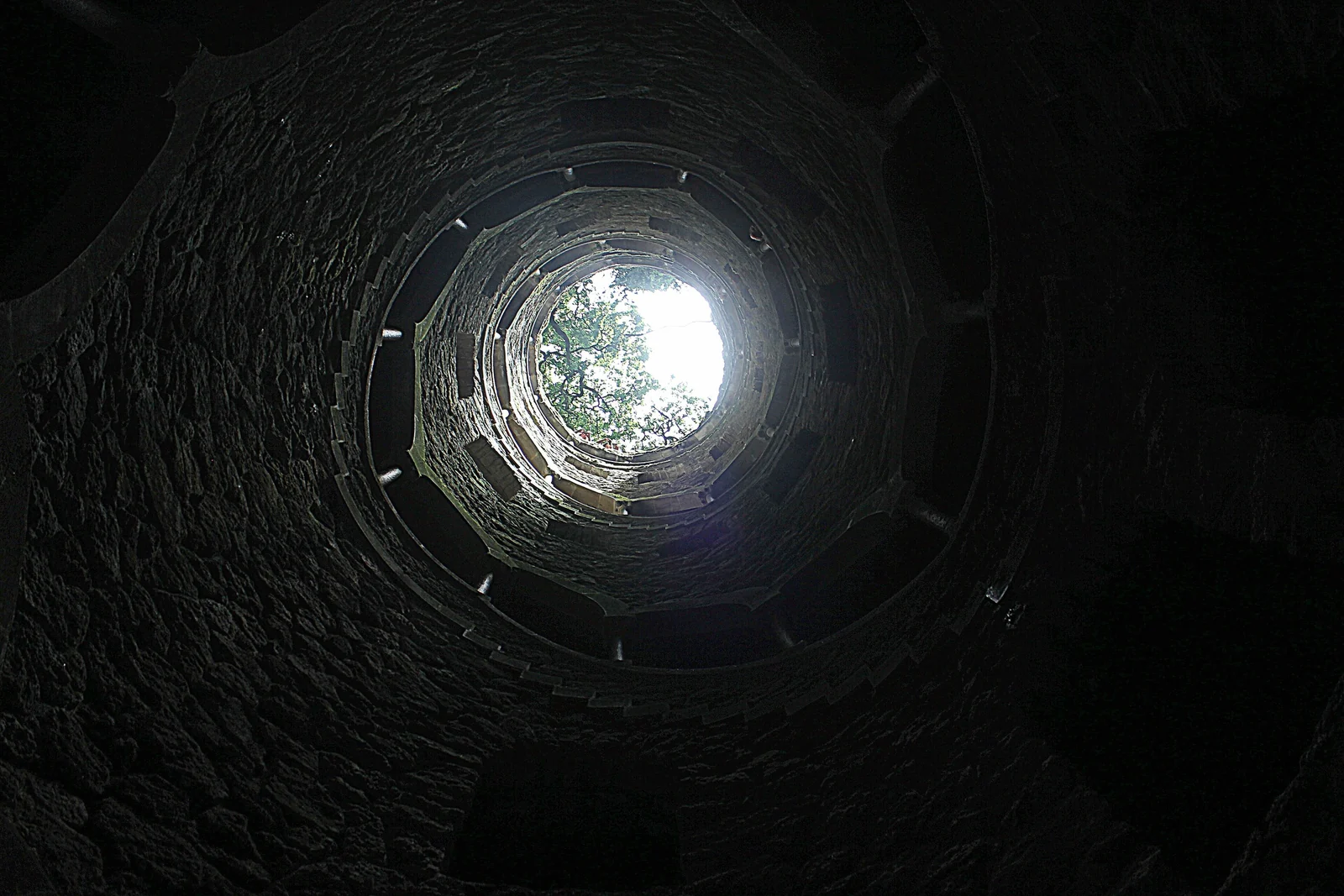
Regaleira is a romantic estate from the early 1900s with a small palace, chapel, grottoes and tunnels. Its best-known feature is the Initiatic Well, a spiral stairway that descends underground. It is more of a playground than a museum, which suits curious travelers and anyone who finds royal interiors dull.
Moorish Castle and the National Palace
The Moorish Castle is a ruined medieval fortress whose walls climb along a ridge, with views over the town and out to the coast. It rewards you with fresh air and scenery more than with things to look at inside. The National Palace of Sintra, in the old town center, is the opposite: a compact walk through royal rooms, recognizable from outside by its two huge conical chimneys.
Hills, Forest and Fog
Sintra's microclimate is part of its character. The hills catch sea cloud, so the forest can be damp and misty when Lisbon is bright. Bring a light jacket in any season. Mist can make the palaces moodier and more atmospheric, but it can also erase the views you climbed for.
What Cascais Offers
Cascais is a town and a coastline, and the second matters as much as the first. The center is walkable and the best things are mostly outdoors.
Beaches and the Seaside Promenade
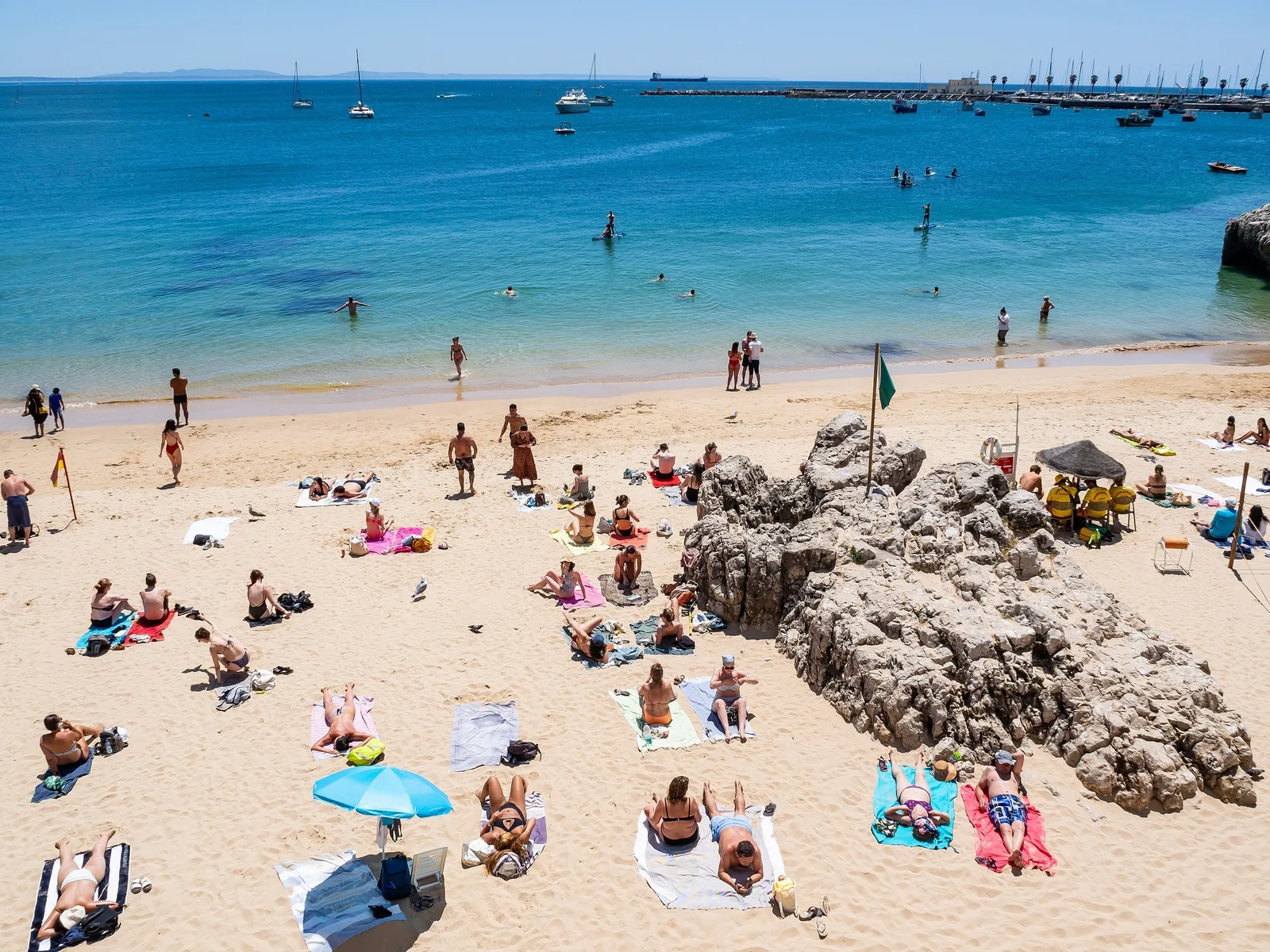
The municipality has a string of beaches, from small coves close to the center, such as Praia da Rainha, to the wide, windy sands of Guincho to the northwest, better known for surfing, windsurfing and kitesurfing than for relaxed paddling. The calmer beaches lie to the east. A coastal promenade connects Cascais with the resort town of Estoril, and walking or cycling it is the classic way to spend an afternoon.
Boca do Inferno and the Cliffs
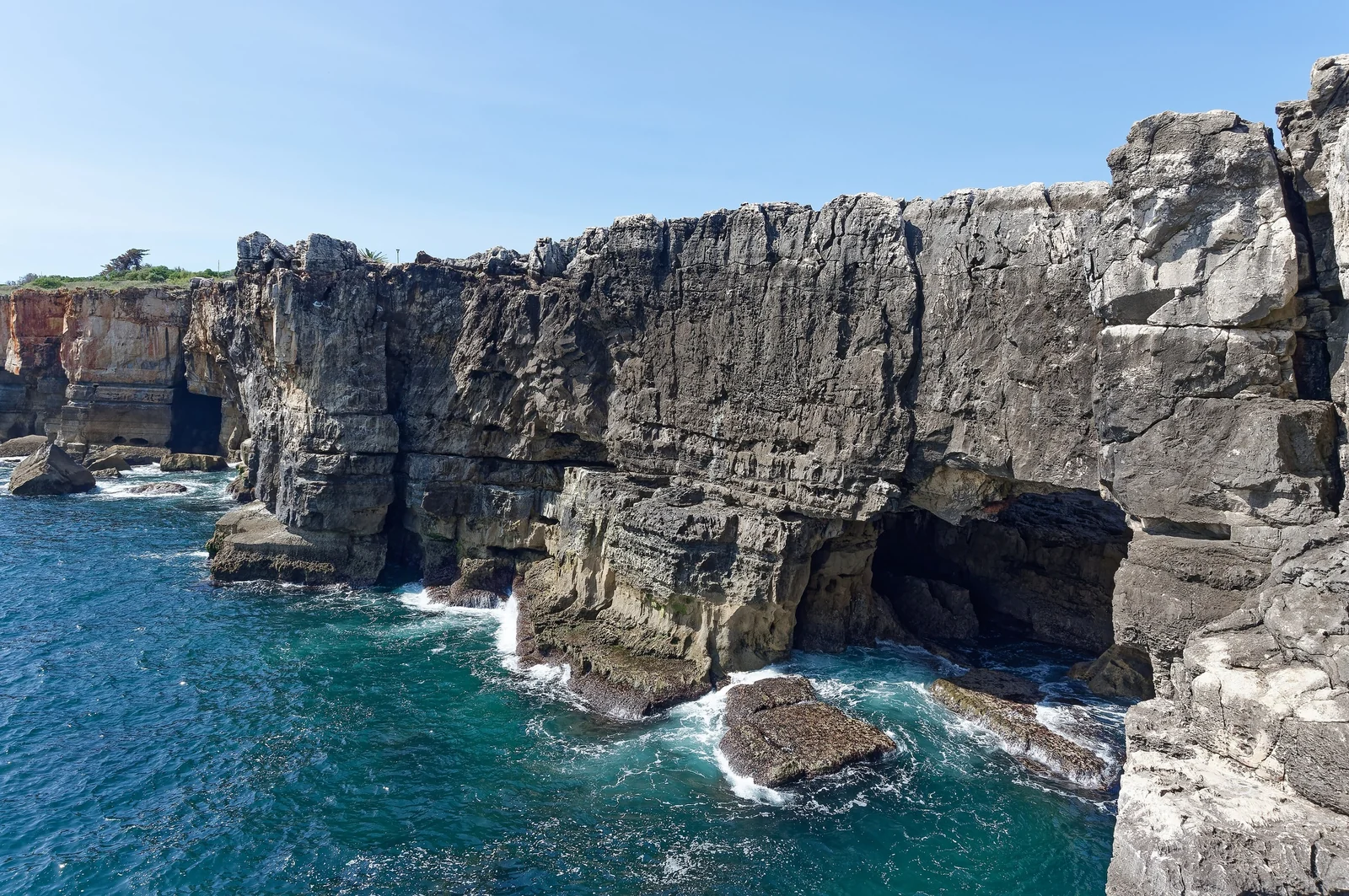
The Boca do Inferno, or Mouth of Hell, is a sea cave and chasm in the limestone cliffs just west of the center, a short walk or ride from town. The waves can be spectacular when the sea is rough, and the views are free. Beyond it the coast road runs on toward Guincho and the wild Atlantic edge of the Sintra-Cascais Natural Park.
Cabo da Roca, the Edge of Europe
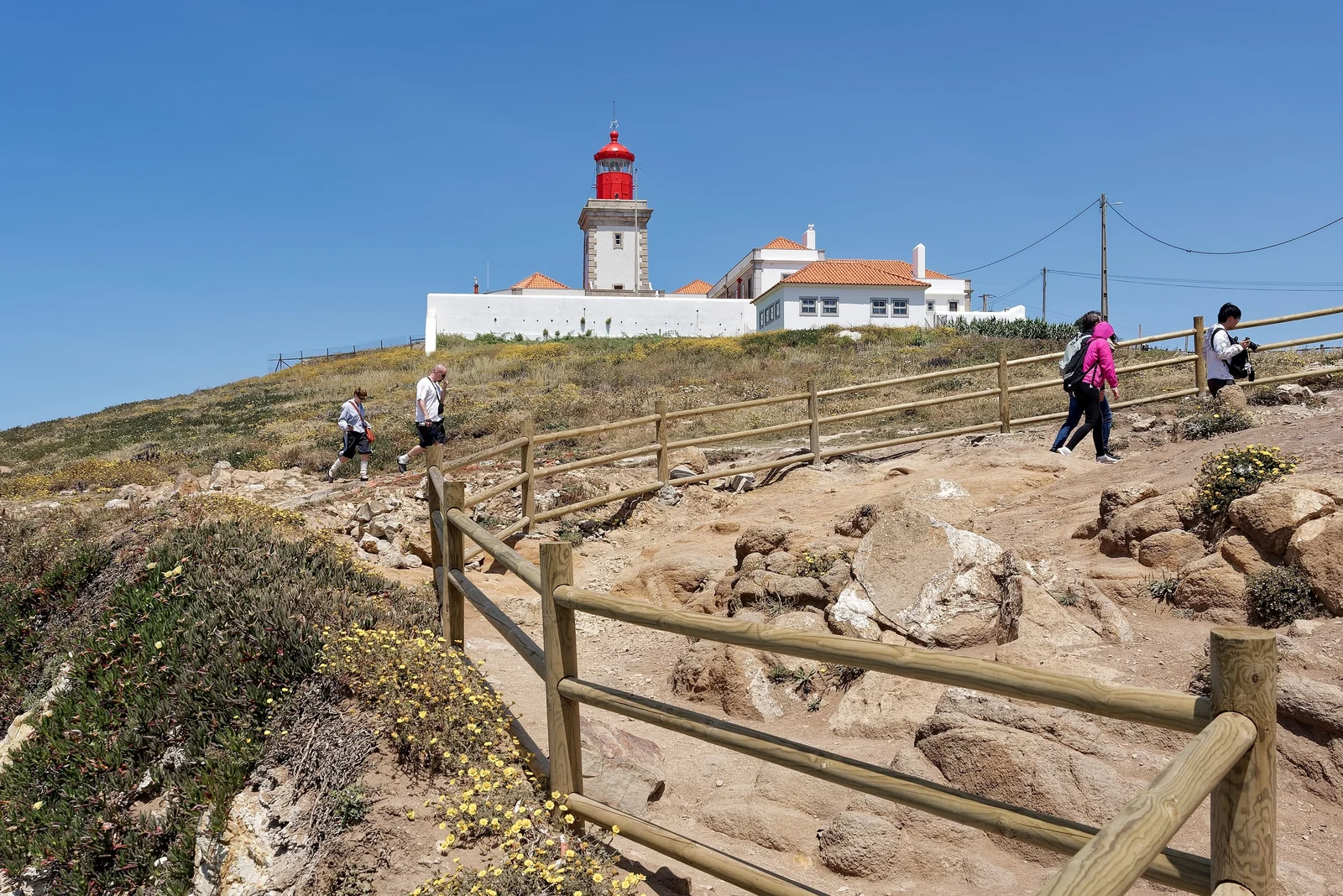
Cabo da Roca is the westernmost point of mainland Europe, with cliffs more than 100 meters high and a lighthouse that has operated since 1772. Administratively it belongs to Sintra, but it sits between the two towns and fits into either day. Bring a windbreaker; the exposure is real.
Sintra vs Cascais at a Glance
| Sintra | Cascais | |
|---|---|---|
| Best for | Palaces, gardens, forest walks | Beaches, sea air, a relaxed town |
| Main sights | Pena Palace, Quinta da Regaleira, Moorish Castle, National Palace | Bay and beaches, promenade, Boca do Inferno, Guincho |
| Train from Lisbon | From Rossio station, roughly 40 minutes | From Cais do Sodré station, about 40 minutes |
| Pace | Busy, steep, timed entries | Slow, flat in the center, flexible |
| Crowds | Heavy at the main monuments | Heavy on summer beach days, lighter off-season |
| Weather risk | Mist and rain can hide the views | Wind on the exposed coast |
| Time needed | A full day for two or three sights | Half a day, or a full day with Guincho or Cabo da Roca |
| With kids | Good for castle-loving school-age kids | Easier for all ages, especially in beach season |
How to Get There from Lisbon
Both towns have direct suburban train lines run by Comboios de Portugal. They leave from different Lisbon stations, which matters when you choose where to sleep. Our guide to where to stay in Lisbon covers the areas: a base near Rossio makes Sintra easy, while one near Cais do Sodré suits Cascais.
- Lisbon to Sintra: trains run from Rossio station to Sintra on a line of about 27 km with 15 stations. The trip takes roughly 40 minutes and trains are frequent. Check the current timetable and fares on the Comboios de Portugal site.
- Lisbon to Cascais: trains run from Cais do Sodré along the Tagus and then the coast, about 25 km, in around 40 minutes. The line passes Belém, which makes a stop there easy on the way back.
- Sintra station to the monuments: the station is not at the palaces. Scotturb runs lines 434 and 435, linking the station and historic center with Pena Palace, the National Palace and Monserrate, and Parques de Sintra sells a transport-only 24-hour pass as well as combined tickets. Walking is possible but steep.
- Sintra to Cabo da Roca: Carris Metropolitana line 1253 runs from outside Sintra station to Cabo da Roca and takes around 45 minutes.
- Cascais to Sintra by bus: line 1624, also Carris Metropolitana, links Cascais and Sintra and stops at Cabo da Roca. Line 1623 is the more direct option and skips the cape. The older 403 number that many guides still mention has been retired.
Bus numbers and timetables in this area have been reorganized before, so check current routes on the Carris Metropolitana site or in a transit app on the day. Fares change too, so check current prices rather than trusting a figure in an old guide.
Combining Sintra and Cascais in One Day
It can be done, and it is the best use of one day for people who want both hills and sea, but only if you accept doing less of each. Plan on one main sight in Sintra, a stop at Cabo da Roca and a late afternoon in Cascais, then the train back to Cais do Sodré.
The logic is geography. Start in Sintra, where the monuments are best in the morning, ride the bus over the hills to the cape, then continue down the coast to Cascais, where you can finish with a beach walk or dinner by the water. Going the other way round works less well, because Sintra's closing times and the timed entries leave you rushed.
Do not try to add Quinta da Regaleira, Pena and the Moorish Castle to the same day as Cabo da Roca and Cascais. Each of those sights can consume half a day on its own.
Crowds, Weather and the Best Season
Sintra gets crowded at the big monuments, especially in the middle of the day and in high season. The simplest fixes are to buy tickets online in advance, take an early train, start at the farthest sight and avoid weekends when you can. Some sites close earlier than you might expect, so check current opening hours.
Cascais is busiest on hot summer weekends, when the beaches fill and the Lisbon train is packed with day-trippers. Outside the summer months it is calm, and the promenade and cliffs are pleasant on a clear day in any season.
Spring and early autumn are the sweet spot for a combined trip: mild enough to walk Sintra's hills and often warm enough for the coast. Summer is best for Cascais beaches but the hardest time for Sintra's queues. In winter Sintra is often misty and wet and Cascais is quiet, so keep a flexible plan with an indoor option.
Sintra or Cascais With Kids
For young children, Cascais is the easier day. There are beaches, flat paths, ice cream stops and room to run, and nobody has to whisper in a palace. Sintra works well for school-age kids who like castles, towers and tunnels, particularly the Moorish Castle and Quinta da Regaleira. Expect hills and stairs everywhere, so a stroller is more of a burden than a help at the hilltop sights.
Parques de Sintra offers a family ticket restricted to members of the same household, so check what applies to your group. With toddlers, I would skip the monuments entirely and do Cascais.
Sample Combined Itinerary: Sintra, Cabo da Roca and Cascais
This plan assumes dry weather and an early start. Treat the times as approximate and check timetables the evening before.
- Early morning: take a train from Rossio to Sintra and catch the 434 bus up to Pena Palace. Book your entry online in advance and spend the morning on the palace and park.
- Late morning: head back down by the same bus. If you have energy left, add the National Palace in the old town, but not all three big sights.
- Lunch: eat in Sintra's old town before the afternoon crowds peak.
- Early afternoon: take the 1253 from Sintra station to Cabo da Roca and spend 30 to 45 minutes at the cliffs and lighthouse.
- Late afternoon: continue to Cascais by bus (line 1624 stops at the cape), checking the last departures first, and walk along the bay.
- Early evening: if the light is good, go to Boca do Inferno, then have dinner in Cascais.
- Night: take the train from Cascais back to Cais do Sodré.
If the bus connections at Cabo da Roca look tight, drop the cape. Going straight from Sintra to Cascais on the direct bus is predictable, and the cliffs of Boca do Inferno give you a taste of the Atlantic edge anyway. For a lazier version, skip Sintra's second monument and add Guincho instead.
Sintra or Cascais FAQ
Is Sintra or Cascais better for a day trip from Lisbon?
Sintra is better for palaces, gardens and scenery, and Cascais is better for beaches and a relaxed day by the sea. For a first visit to Portugal, most people prefer Sintra. In hot weather or with small children, Cascais is the easier choice.
Can you do Sintra and Cascais in one day?
Yes, with limits. Visit one main monument in Sintra in the morning, take the bus via Cabo da Roca, and spend the late afternoon in Cascais before taking the train back to Lisbon. Trying to see several Sintra sights as well will leave you rushed.
How do you get from Lisbon to Sintra and Cascais?
Take the train from Rossio station to Sintra, and from Cais do Sodré station to Cascais. Both journeys take roughly 40 minutes. Check the official Comboios de Portugal site for current timetables and fares.
How do you get from Sintra to Cabo da Roca?
Carris Metropolitana line 1253 runs from outside Sintra station to Cabo da Roca and takes around 45 minutes. Line 1624 links Cascais and Sintra and also stops at the cape. Older guides mention a 403, which has been retired, so check current routes.
How much time do you need for Sintra?
Plan a full day for two or three sights, including the transfers between them. Pena Palace and its park alone can fill a morning. If you also want Quinta da Regaleira, start early and skip the other monuments.
When is the best time to visit Sintra and Cascais?
Spring and early autumn are usually best for combining both. Summer suits Cascais beaches but brings crowds to Sintra, while winter can be misty in the Sintra hills. Go early in the day in any season.
Do you need to book tickets in advance for Sintra?
Booking online is advisable for the busiest monuments, especially Pena Palace, because entry is often timed. Parques de Sintra sells tickets and combined passes on its official site. Check current prices and availability before you go.