


Amsterdam is the capital of the Netherlands, a compact city of brick gables, tree-lined canals and some of the finest art collections in Europe. It rewards slow walking more than box-ticking, and three days is enough to cover the canal ring, the big museums and a couple of neighborhoods without running yourself ragged.
This Amsterdam travel guide covers what to see, how to book the sights that sell out, what to eat, how not to get run over by a bicycle, and which day trips are worth the train fare. For more of the country, browse our Netherlands travel guides.
The Canal Ring: Amsterdam's UNESCO-Listed Core
The heart of the city is a set of concentric waterways dug in the 17th century, when Amsterdam was one of the richest trading ports in the world. The three great canals, Herengracht, Keizersgracht and Prinsengracht, curve around the medieval center beyond the older Singel. UNESCO listed the Seventeenth-Century Canal Ring Area in 2010, recognizing it as a planned port city of canals, bridges and merchant houses.
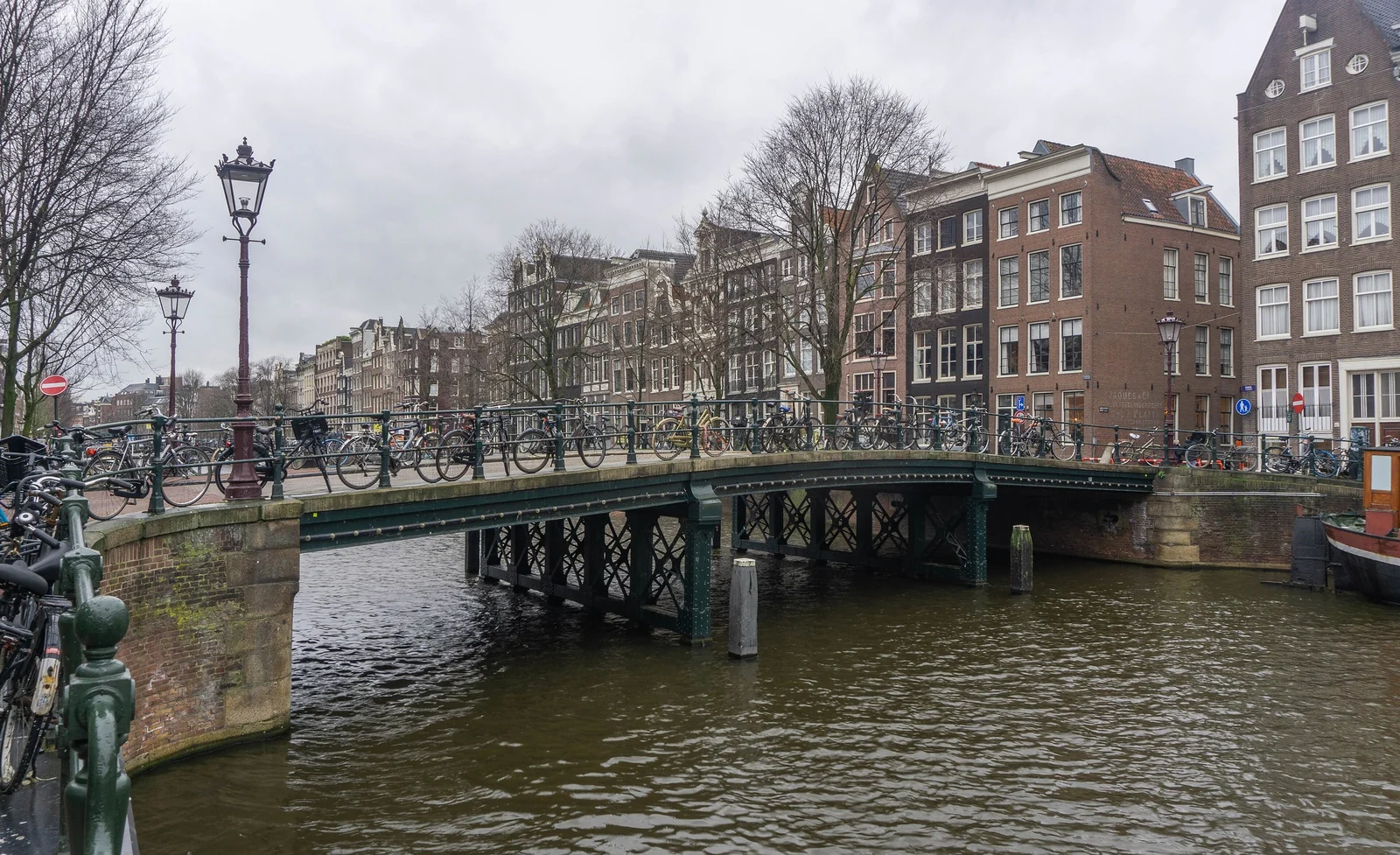
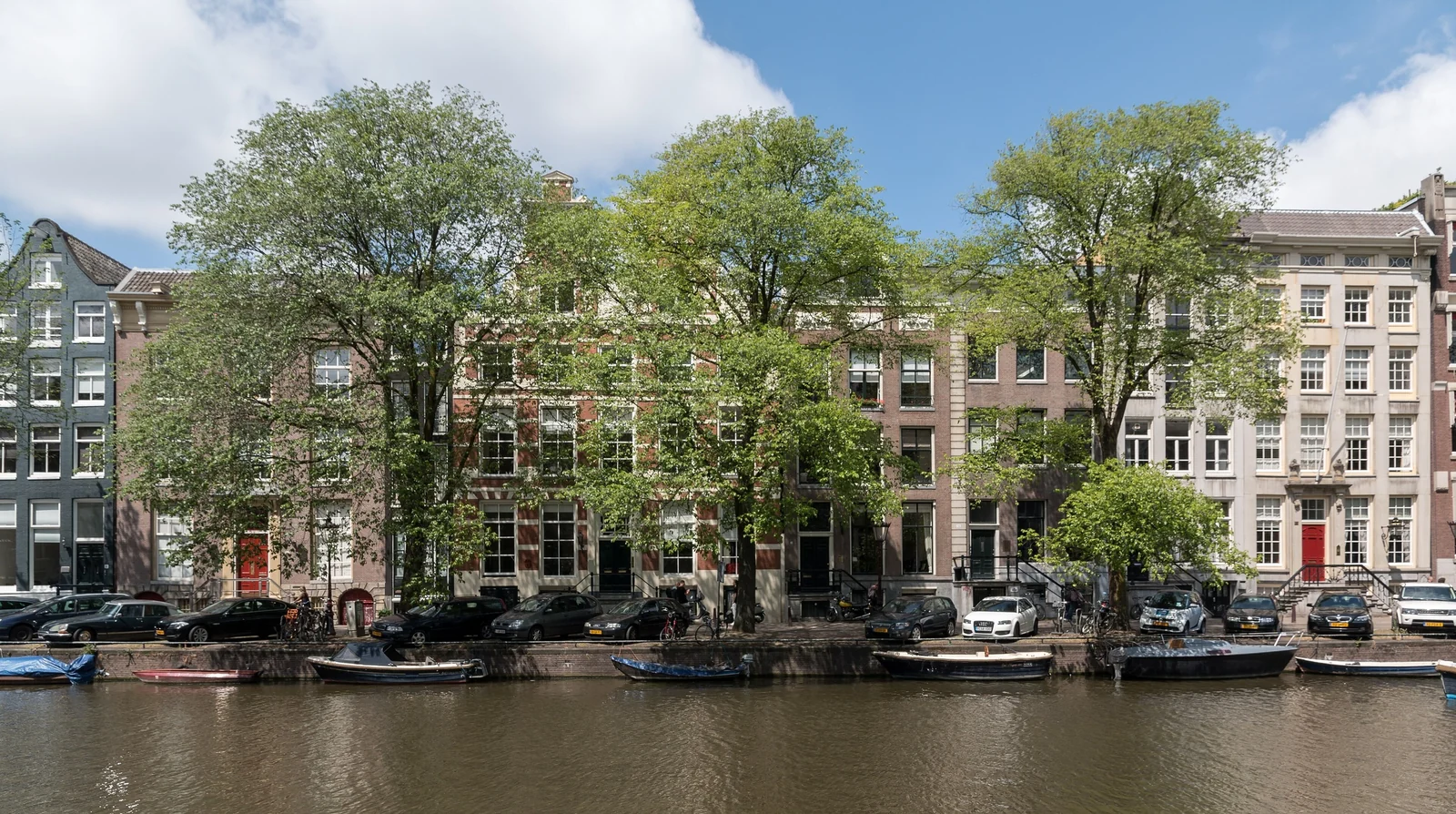
The best way to enjoy it is on foot, ideally early, when delivery boats are the only traffic. Look up at the gables, which come in neck, bell and step shapes, and at the hoisting beams under the rooflines. Stairs were narrow, so furniture went in through the windows. Some houses lean forward on purpose to make that easier, and a few lean sideways because of the wooden piles they stand on.
Where to Walk
The stretch of Keizersgracht and Herengracht between the Westerkerk and the Amstel is the classic walk. The Prinsengracht is more relaxed, with houseboats and cafe terraces. A canal cruise gives a different angle and is a decent first-day orientation, but pick a small boat over a big glass-roofed one if you can, and avoid the sunny midday departures.
Rijksmuseum, Van Gogh Museum and Anne Frank House
Amsterdam's headline sights are popular enough that you should book ahead for all three. Choose timed slots on the official websites, and go as early as you can.
The Rijksmuseum
The national museum traces its roots to 1798 and has occupied Pierre Cuypers's red-brick building since 1885. After a long renovation it reopened in 2013, and it now shows around 8,000 objects from a collection of about a million. The star is Rembrandt's The Night Watch from 1642, but the quieter rooms of Vermeer and Dutch Golden Age still lifes are where many people end up lingering.
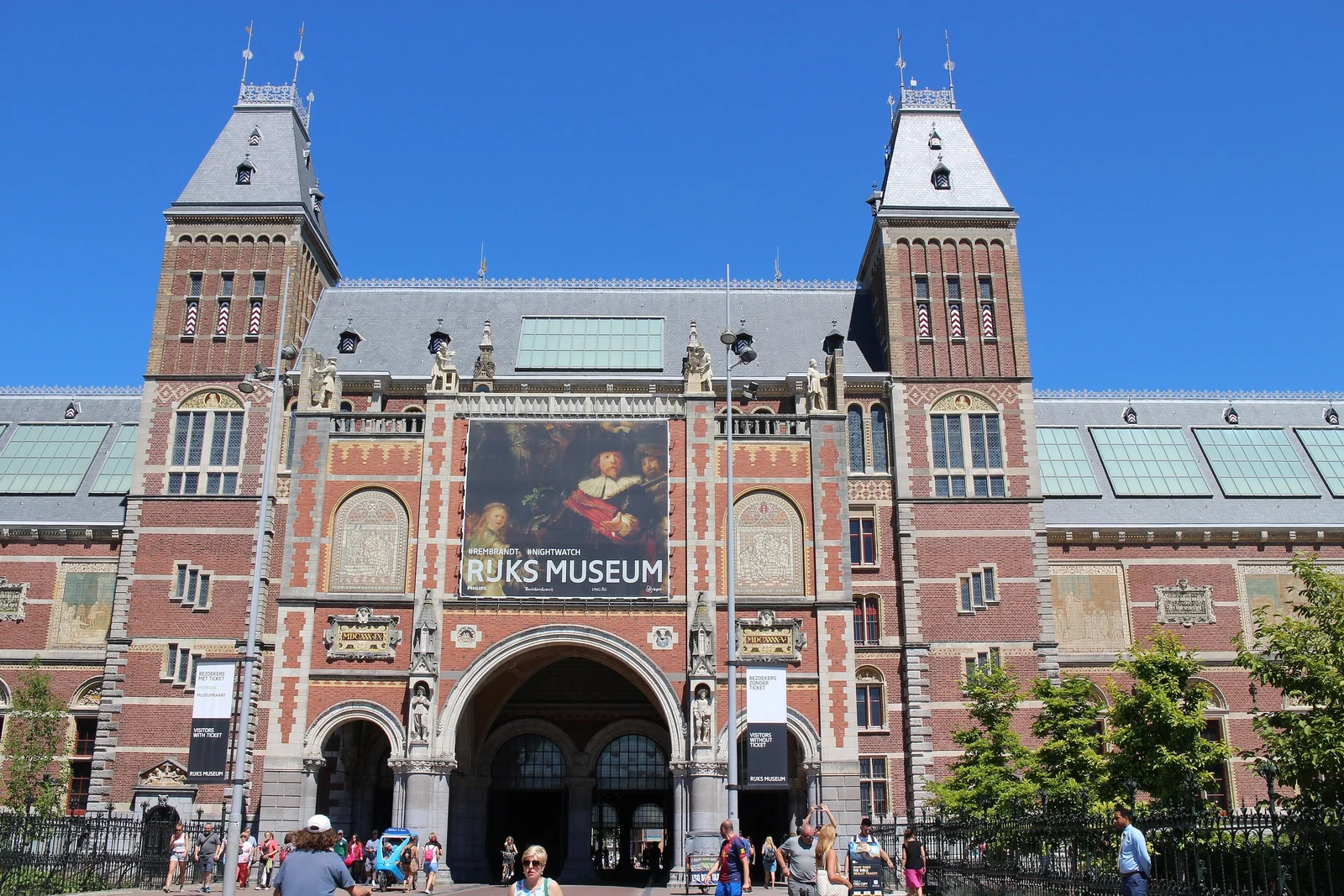
Do not try to see everything. Pick the Golden Age highlights, take a break in the garden and leave when your feet tell you to. Three hours is a good visit.
The Van Gogh Museum
Just across Museumplein, the Van Gogh Museum opened in 1973 in a building by Gerrit Rietveld, with a later wing by Kisho Kurokawa. It holds about 200 paintings, 400 drawings and 700 letters, the largest Van Gogh collection anywhere. The layout follows his short career from dark Dutch peasant scenes to the color of the south of France. It is always busy, so book a timed ticket and expect the afternoons to be the most crowded.
The Anne Frank House
The canal-side building where Anne Frank and seven others hid during the Second World War is among the most moving places in the city. Tickets are sold online only, not at the door, for a set time slot, and they are released ahead of the visit and go quickly. Check the official Anne Frank House ticket page for the current release schedule, and make this the first thing you reserve. Plan on about an hour, and expect a quiet, crowded and sober walk through the rooms.
Jordaan, De Pijp, Vondelpark and NDSM
The Jordaan
West of the canal ring, the Jordaan was once a working-class district and is now one of the most pleasant neighborhoods to wander. Narrow streets, small hofjes (almshouse courtyards), brown cafes and boutiques make it good for getting lost. Stop at a cafe for apple pie with whipped cream when the drizzle starts.
De Pijp and the Albert Cuyp Market
South of the center, De Pijp is livelier and more mixed, with restaurants from around the world. Its anchor is the Albert Cuypmarkt, which has been running since 1905 and is open most days. Come for cheese, flowers, fresh fish and stroopwafels made on the spot, and watch locals shop with ruthless efficiency.
Vondelpark
Opened in 1865 as the Nieuwe Park and covering about 47 hectares, Vondelpark is where the city goes to jog, picnic and lie on the grass. It sits a short walk from the Rijksmuseum and the Van Gogh Museum, so it is the obvious place to recover after the art. A small open-air theater hosts free performances in summer.
NDSM and Amsterdam Noord
For something rougher and more creative, take a ferry from behind Centraal station across the IJ. The former NDSM shipyard in Amsterdam Noord now holds street art, studios, a flea market on certain weekends and waterside food stalls. It is a good counterweight to the museum-heavy days, and the ferry ride is a bonus. Check GVB for current ferry details.
What to Eat: Stroopwafels, Herring and Bitterballen
- Stroopwafels: two thin waffle layers glued with caramel syrup. Eat one warm from a market stall and you will understand the hype. Perch a packaged one on a hot cup of coffee for a minute to soften it.
- Herring: served raw and lightly cured, usually with chopped onion and pickles, or in a bun at a fish stand. Locals hold it by the tail and tilt their heads back. Nobody will judge you for taking the bun.
- Bitterballen: crisp, deep-fried balls of beef ragout, eaten hot with mustard alongside a beer in a pub. Burn your tongue once and learn.
- Pancakes and cheese: poffertjes, thin pannenkoeken and aged Gouda from a market stall make a cheap, filling lunch.
For a proper sit-down meal, De Pijp and the Jordaan have the best concentration of restaurants. Book dinner a day or two ahead on weekends.
Cycling in Amsterdam: Etiquette and Safety
Bikes rule here, and the red-tinted cycle lanes are not an extension of the sidewalk. Visitors get hit when they step into them without looking. Rent a bike if you are comfortable in dense traffic, and otherwise walk or take the tram.
- Never stand or walk in the cycle lane. If you are taking a photo, move to the pavement.
- Look both ways, then look again. Cyclists come from behind, and scooters share many lanes.
- Signal your turns with an arm, ride on the right and keep to the speed of the lane.
- Lock the bike properly to a fixed rack. Theft is common, and the canals swallow a lot of bikes.
- Mind the trams. Cross rails at an angle so your wheel cannot slip into the groove.
- Use lights after dark. A front and rear light are expected.
A 3-Day Amsterdam Itinerary
Day 1: Canals and the Jordaan
Start at the Anne Frank House at your booked time, then walk along the Prinsengracht into the Jordaan for lunch. Spend the afternoon on a small-boat canal cruise, and finish with bitterballen at a brown cafe.
Day 2: Museums, Vondelpark and De Pijp
Go to the Van Gogh Museum when it opens, cross to the Rijksmuseum for the late morning and early afternoon, and rest in Vondelpark. Walk into De Pijp for the Albert Cuyp area and dinner.
Day 3: Noord or a Day Trip
Take the ferry to NDSM for a slower morning, or use the day for one of the trips below. Haarlem or Zaanse Schans fit neatly into half a day. If you are continuing around Europe, our Copenhagen guide covers another bike-friendly capital.
Day Trips from Amsterdam
| Destination | How to get there | Best for |
|---|---|---|
| Zaanse Schans | Train to Zaandijk Zaanse Schans (about 18 minutes from Centraal), then a short walk | Windmills, a living museum village |
| Haarlem | Direct train from Centraal, roughly 15 minutes | Old town, Grote Markt, a relaxed pace |
| Keukenhof | Train or bus toward Lisse; check official transport options | Spring bulb gardens in tulip season |
| Utrecht | Direct train, around half an hour | Canals with wharf cellars, the Dom Tower |
| Delft and The Hague | Direct train options; check NS for current timetables | Delft's old center, The Hague's art museums |
Zaanse Schans
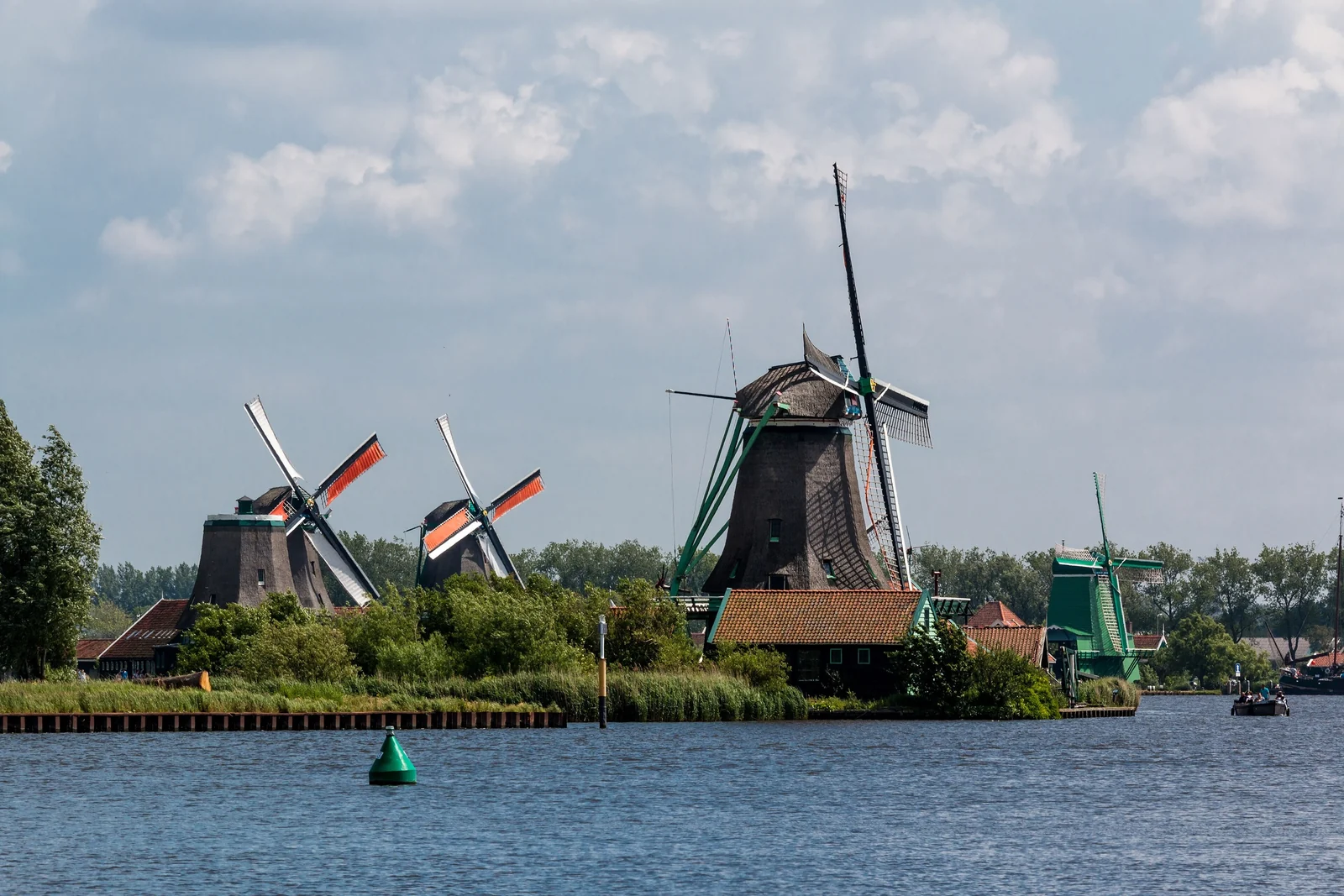
A cluster of historic windmills, workshops and wooden houses on the Zaan river. Some mills saw timber or press oil and are open to visitors. It is tidier than most villages, closer to an open-air museum than a lived-in place, so go on a weekday to avoid tour groups.
Haarlem and Keukenhof
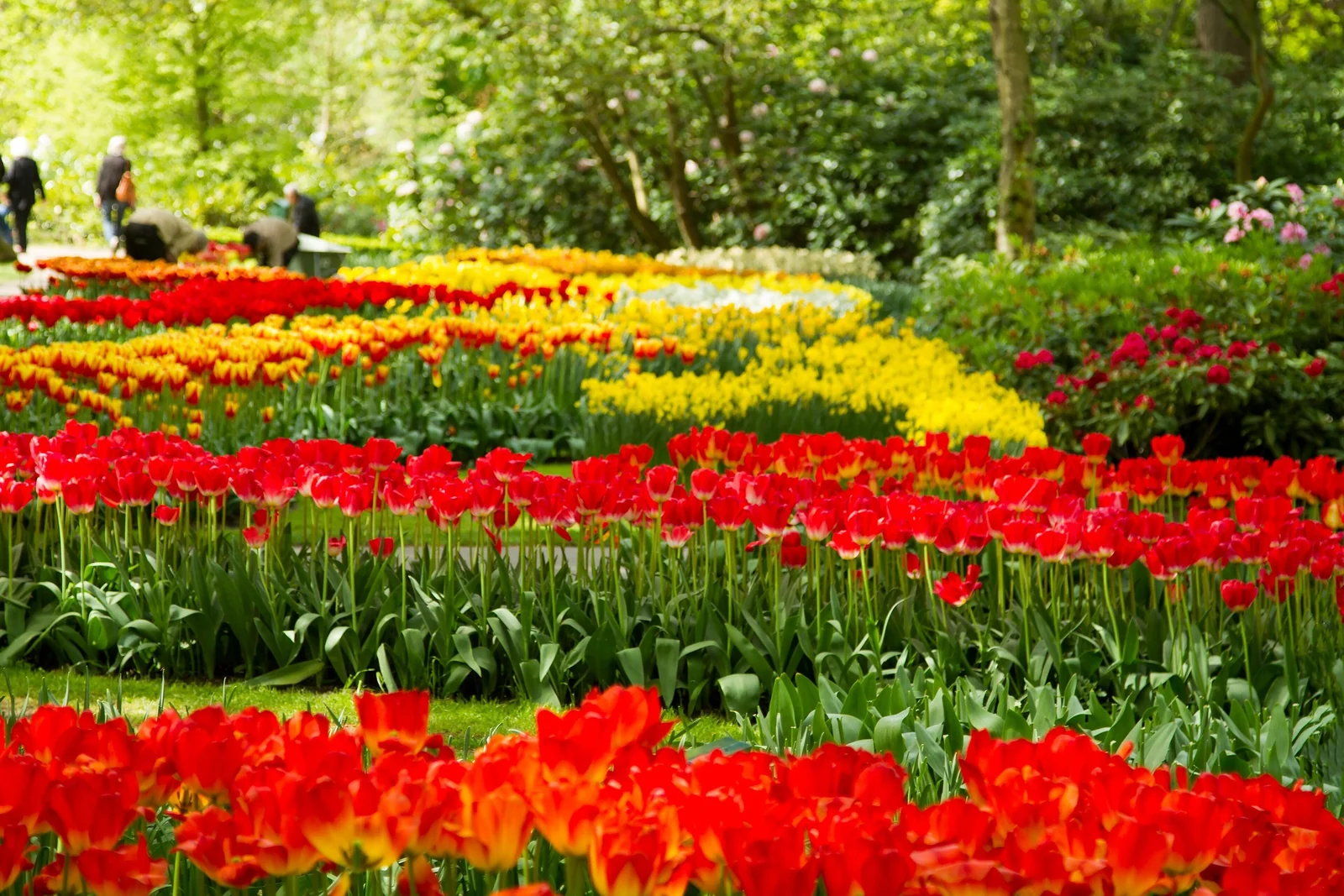
Haarlem is the easiest escape: a handsome small city with canals, a big market square and a great church, and a slower pace than the capital. Keukenhof, near Lisse, is a bulb garden that opens for only about two months, usually from mid-March to mid-May, when millions of tulips and daffodils bloom. Check the official Keukenhof site for the season dates and tickets, and go on a weekday morning.
Utrecht, Delft and The Hague
Utrecht has canals with sunken wharf-side cafes and the Gothic Dom Tower, about 112 meters tall, finished in 1382. Delft is small and elegant, and The Hague is the seat of government with serious art museums. All three work as day trips by train, and they combine easily if you head on through the country.
Best Time to Visit Amsterdam
- Spring (late March to May): tulip season, mild days and long evenings. It is also popular, so book the museums early.
- Summer (June to August): the warmest and busiest months, with terraces full and the canals crowded. Pack for the odd shower.
- Autumn (September to October): softer light, fewer crowds and better hotel value.
- Winter (November to February): cold, damp and dark early, but cozy pubs, quieter museums and canal lights in early December.
Getting Around and Where to Stay
Trams, Metro and Ferries
The center is small enough to walk, and GVB runs trams, buses, metro lines and the IJ ferries. The network is cashless: you check in and out with a transit card or a contactless bank card or phone. The official I amsterdam transport page explains the options. Trains from Schiphol Airport reach Centraal station in a short ride, and national trains use the same OV-chipkaart system.
Where to Stay
- Canal ring: the most scenic base, close to everything, with higher prices and steep staircases.
- Jordaan: quiet streets and good cafes, though rooms are small.
- Museum Quarter: refined, near the big museums and Vondelpark, and well served by trams.
- De Pijp: lively, food-focused and good value for a first visit.
- Near Centraal station or Noord: practical for trains, with a more modern feel. Noord suits you if you want creative energy.
Planning a longer trip? Compare it with our guides to London and Prague, or browse all European destinations.
Amsterdam Travel FAQ
How many days do you need in Amsterdam?
Three days is comfortable for the canal ring, the Rijksmuseum, the Van Gogh Museum, the Anne Frank House and a neighborhood or two. Two days works if you skip the day trips; add a fourth for Haarlem, Zaanse Schans or Utrecht.
Do you need to book the Anne Frank House in advance?
Yes. Tickets are sold online only, for a set time slot, and they sell out. Reserve as soon as you know your dates and use the official site. Do not rely on turning up on the day.
Is Amsterdam walkable?
Very. The canal ring, Jordaan, Museum Quarter and De Pijp are all connected by pleasant walks, and trams cover the longer gaps. Watch for bike lanes and cross them carefully.
When is tulip season near Amsterdam?
Tulips bloom in spring, generally from late March into May, depending on the weather. Keukenhof opens for roughly two months in that window, so check the official site for the exact season before you plan.
Can you use contactless payment on Amsterdam public transport?
Yes. GVB trams, buses and metro accept contactless bank cards and phones, or a transit card. Check in at the reader on boarding and check out when you leave, using the same card or device each time.
What should you eat in Amsterdam?
Try a warm stroopwafel at a market, raw herring with onions, bitterballen with mustard and a beer, and Dutch pancakes. Aged Gouda is a good cheese to take home.
Which Amsterdam neighborhood is best for a first visit?
The canal ring puts you closest to the sights, while the Jordaan feels quieter and more local. De Pijp is the better pick for restaurants and value. All three are within walking or short tram distance of each other.