Malta is a small island country in the central Mediterranean, roughly 80 kilometers south of Italy, made up of three inhabited islands: Malta, Gozo and tiny Comino. It covers about 316 square kilometers, so almost everything is a short bus ride away. In that space you get a fortified capital, a walled medieval hill town, some of the oldest free-standing stone buildings on Earth and swimming water that looks Photoshopped.
A Malta travel guide works best when it sorts the island by mood. Valletta and the Three Cities are for history and harbor views, Mdina is for quiet lanes, Gozo is for a slower pace and Comino is for the Blue Lagoon. This guide covers all of them, plus the ancient temples, how the buses and ferries really work, the best seasons and what to eat. For more ideas nearby, browse our Malta travel guides.
Valletta: Malta's Fortress Capital
Valletta was founded in 1566, right after the Knights of St John survived the Great Siege of 1565 and decided to build a stronghold on the peninsula between the Grand Harbour and Marsamxett Harbour. The result is a compact grid of steep, straight streets, honey-colored limestone and balconies in every shade of painted wood. UNESCO listed the whole city in 1980, and it was a European Capital of Culture in 2018.
You can see the center in a long day, but it rewards two. Enter through City Gate, where the main bus terminus sits, and walk down Republic Street. Then drop onto the side streets, which run steeply to the water and are far quieter than the main drag.
St John's Co-Cathedral
From outside it looks sober, almost military. Inside, the church built by the architect Girolamo Cassar between 1573 and 1578 is wildly Baroque, with gilded vaults and a marble floor of knights' tombstones. The headline work is Caravaggio's The Beheading of Saint John the Baptist, painted in 1608. It is the largest canvas he ever made and the only one he signed, and it hangs in the oratory, so leave time for it. Admission is charged; check opening hours and dress expectations on the museum's own site before you go.
Upper Barrakka Gardens and the Grand Harbour
The best free view in Malta is from the arcaded terrace of the Upper Barrakka Gardens, where the whole Grand Harbour opens out below: ferries, fortresses, the Three Cities opposite and cruise ships sliding by. A saluting battery below the gardens fires a ceremonial gun every day, so check the posted times if you want to hear it. Come in the late afternoon, when the stone turns gold.
Streets, Markets and Small Museums
The Three Cities Across the Grand Harbour
Across the water from Valletta lie Birgu (also called Vittoriosa), Senglea and Cospicua, collectively the Three Cities. They are older than Valletta. The Knights made Birgu their capital when they arrived in 1530, because Mdina was inland and no use to a naval order, and it was Birgu that took the worst of the Ottoman assault in 1565. After the siege the town earned the title Città Vittoriosa, the Victorious City.
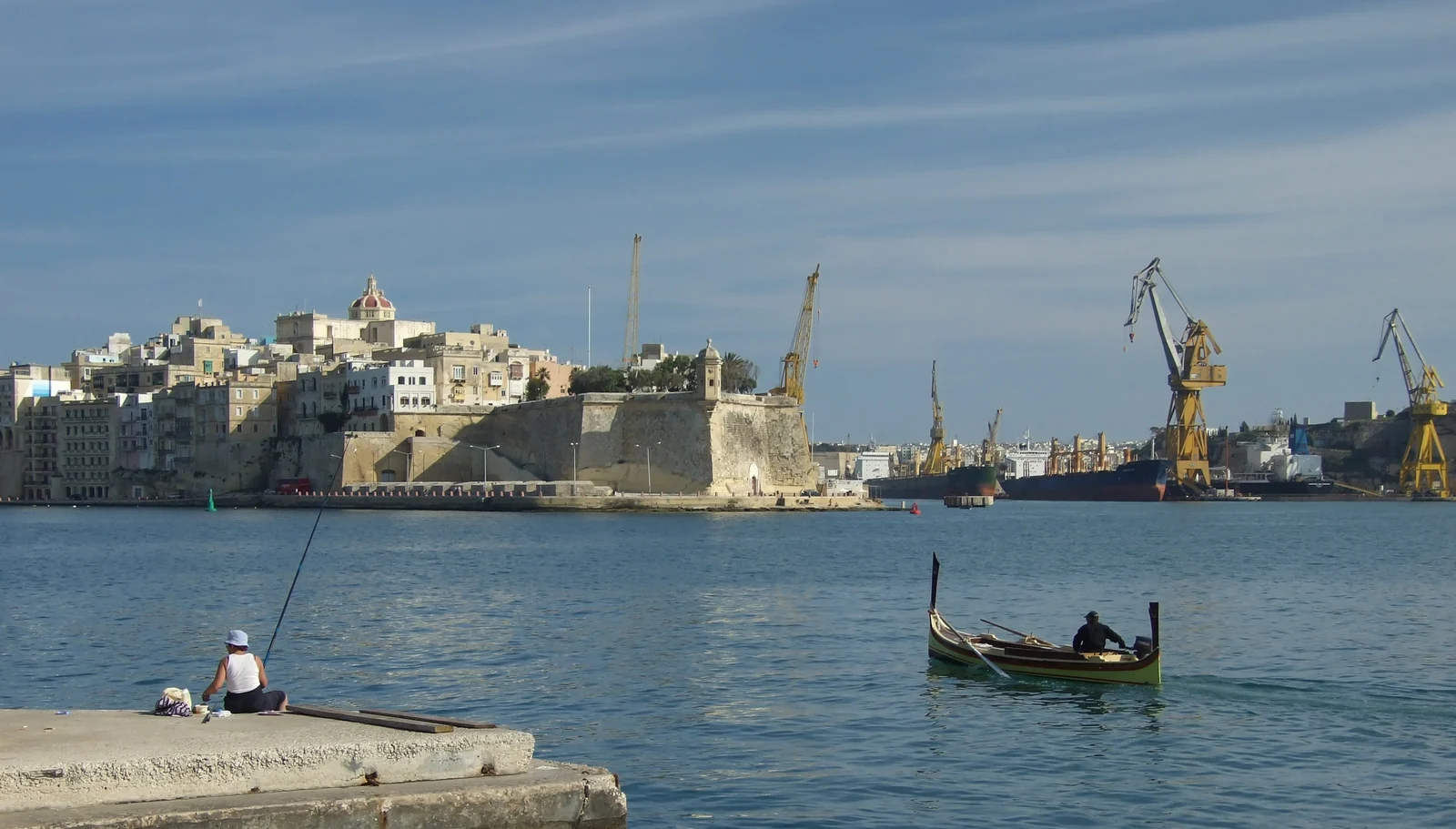
Start in Birgu. Fort St Angelo guards the harbor mouth, the Malta Maritime Museum fills the Knights' former treasury on the waterfront, and the lanes behind are a maze of old houses with far fewer visitors than Valletta. Then walk or take a short bus ride to Senglea, whose Gardjola garden and its watchtower at the very tip of the peninsula give a view back at Valletta that many people prefer to the Upper Barrakka one.
Small ferries cross the Grand Harbour between Valletta and the Three Cities, which is the most enjoyable way to arrive. A half day is enough for a first visit.
Mdina and Rabat: The Silent City
Mdina sits on a hill in the middle of the island and was Malta's capital from antiquity until the Knights moved to Birgu in 1530. The Romans called it Melita. Ever since it lost its status, it has stayed small, walled and hushed, hence the nickname Silent City. Cars are banned apart from a few residents, emergency vehicles and wedding cars, which is a large part of why it feels so calm.
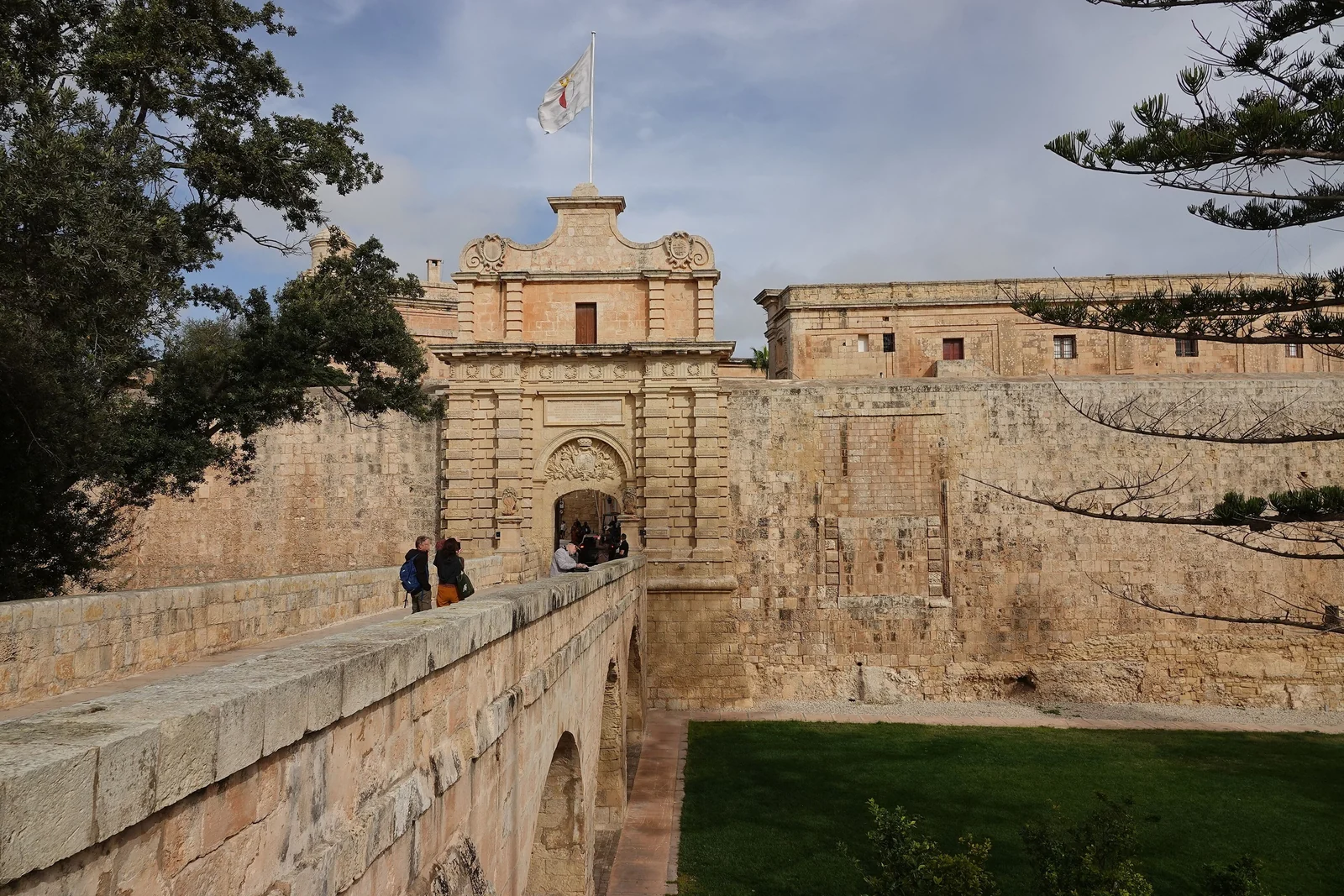
Walk in over the bridge and the Main Gate, then just follow the narrow lanes. St Paul's Cathedral, rebuilt in the Baroque style by Lorenzo Gafà between 1697 and 1703 after the 1693 earthquake, is the main landmark. Fans of television will recognize the setting: the first season of Game of Thrones used Mdina as King's Landing. The bastions on the far side give broad views across the island, and a coffee on a terrace there costs more than in the valley but is worth it.
Gozo and the Citadel
Gozo is Malta's greener, quieter sister. It covers about 67 square kilometers, roughly the size of Manhattan, and has fewer than 40,000 residents. Hills and terraced fields replace the sprawl of the main island, and the pace drops the moment you step off the ferry. If you only have a day, you can still cover the main sights; with two or three nights, Gozo becomes a real holiday on its own.
Victoria and the Cittadella
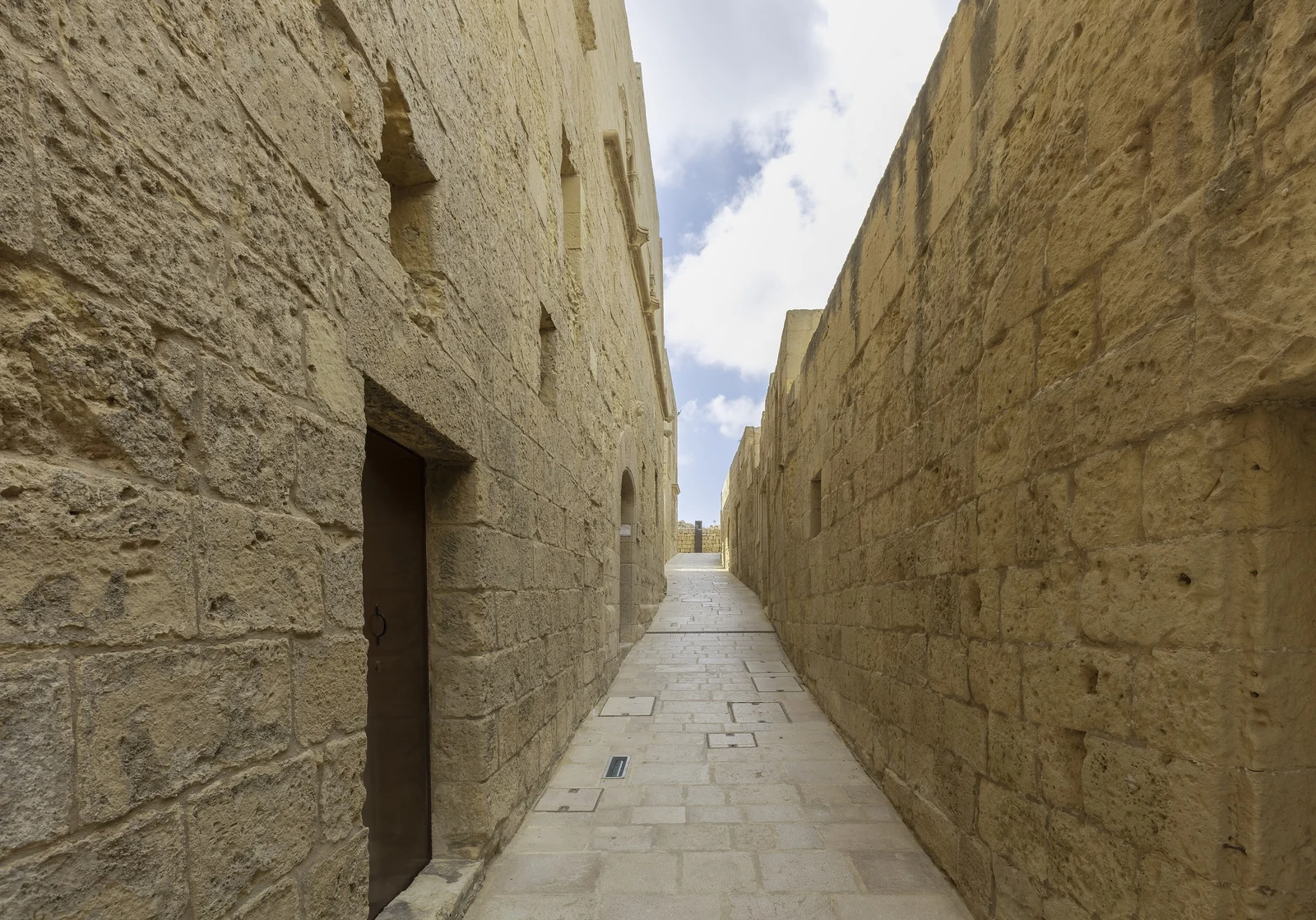
Gozo's main town is Victoria, also known by its older name Rabat. Above it stands the Cittadella, the fortified hilltop that has protected Gozo's inhabitants for centuries and still holds the cathedral. Walk the ramparts for a full circle of island views, then drop down into the market streets around Independence Square for lunch.
Ġgantija, Ramla Bay and the Coast
In Xagħra, the Ġgantija temples date to around 3600 BC and are among the oldest free-standing stone structures in the world, older than Stonehenge and the pyramids of Egypt. The name means "belonging to the giants", which tells you what locals once thought about who could have lifted those stones. Ramla Bay, one of the few sandy beaches on the island, is nearby, and the cliffs near Dwejra are worth a visit even though the famous Azure Window arch collapsed into the sea in 2017.
Comino and the Blue Lagoon
Comino is a car-free island of about 3.5 square kilometers between Malta and Gozo with a permanent population that can be counted on one hand. Its draw is the Blue Lagoon, a sheltered channel between Comino and the islet of Cominotto with pale sand underneath and water in several shades of turquoise.
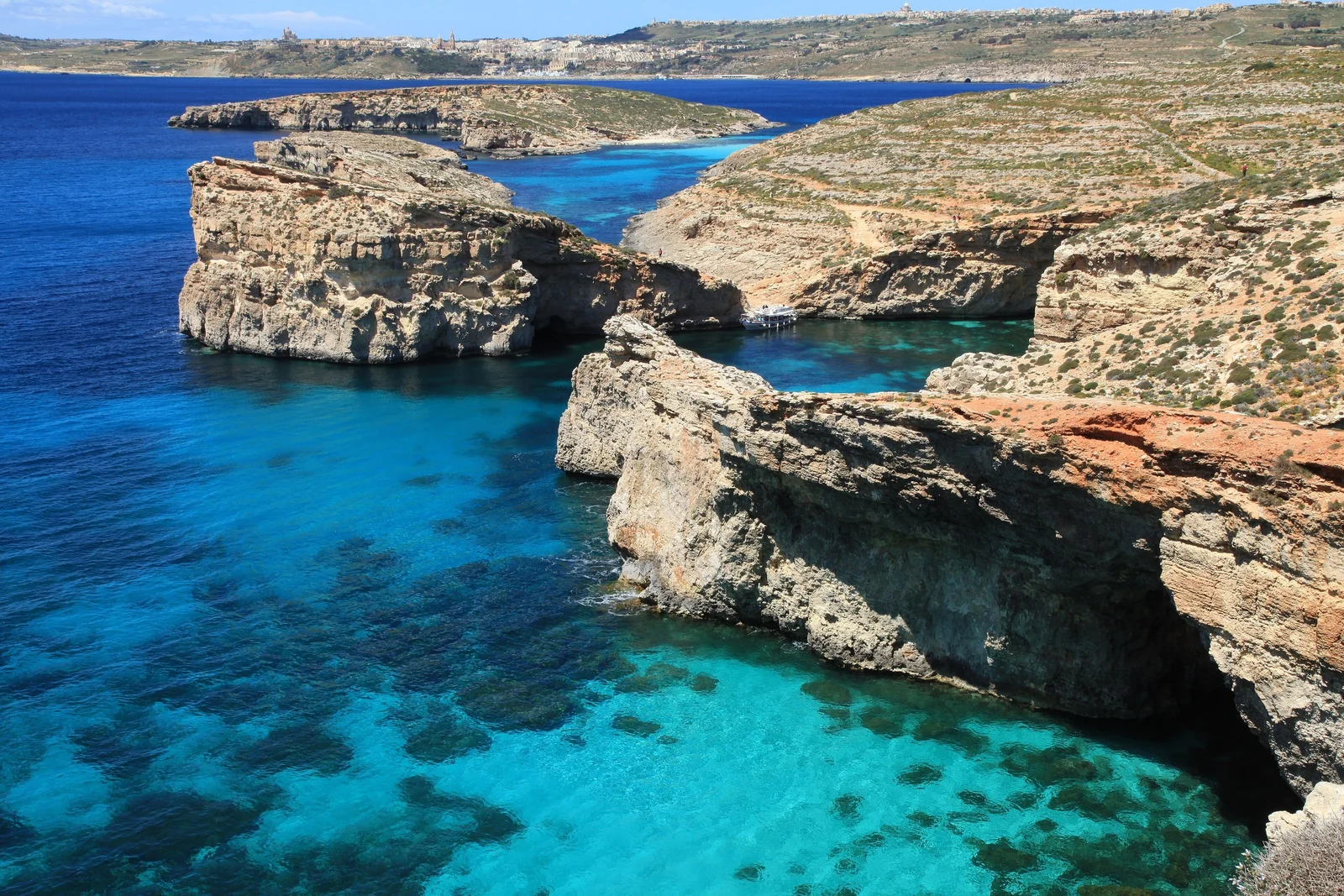
The honest warning: it is crowded in peak season, and sunbeds and umbrellas go up early. Go as early in the day as you can, or late in the afternoon when the excursion boats have left. Ferries run from Ċirkewwa on Malta and Mġarr on Gozo, larger group boats leave from resorts such as Sliema and Bugibba, and schedules change with the season. If swimming is the goal, walk away from the lagoon to the quieter rocks and coves around the island.
Ancient Temples and the Hypogeum
Malta's prehistoric sites are its quiet superpower. Several megalithic temples are UNESCO-listed, including Ġgantija on Gozo and, on the main island, Ħaġar Qim, Mnajdra and Tarxien. They were built in the Neolithic period, beginning around 3600 BC, and nothing else in Europe quite matches them for age.
| Site | Where | Why go | Planning note |
|---|---|---|---|
| Ġgantija | Xagħra, Gozo | Among the world's oldest free-standing stone buildings | Pair it with Ramla Bay |
| Ħaġar Qim and Mnajdra | Southern Malta, near the cliffs | Temples above the sea | Best early or late in the day |
| Tarxien Temples | Tarxien, near Valletta | Carved spirals and animal reliefs | Easy by bus from the capital |
| Ħal Saflieni Hypogeum | Paola, near Valletta | An underground complex carved into the rock | Very limited tickets; book far ahead |
The Ħal Saflieni Hypogeum in Paola is the one that needs forward planning. This underground complex of chambers, cut into the rock over thousands of years, is protected so strictly that only around 80 visitors a day are admitted, in small groups, to protect the humidity and temperature inside. Tickets sell out well in advance in busy months. Book through the official Heritage Malta page and be there early for your slot; late arrivals can lose the ticket.
Buses, Ferries and Getting Around Malta
Malta has a good public bus network, and most visitors never need a car. Valletta's bus terminus near City Gate is the hub, with routes fanning out to Mdina and Rabat, the south, the beaches and the ferry port at Ċirkewwa. Buses can be slow in summer traffic and sometimes full, so build in extra time. Fare structures and passes change; the Tallinja card is the usual way to save money, and the current options are listed on the public transport website.
- Airport to Valletta: a direct bus and taxis both run, and the trip takes well under an hour in normal traffic.
- Malta to Gozo: the car ferry from Ċirkewwa to Mġarr takes about 25 minutes. Foot passengers pay a return fare of a few euros, collected on the Gozo side. Check the timetable on the Gozo Channel site.
- Valletta and the Three Cities: cross the Grand Harbour by small ferry, then walk.
- Driving: traffic keeps to the left. A car makes sense for Gozo or for reaching remote beaches, but it is a liability in Valletta and Mdina.
- Taxis and ride apps: handy for late nights and for getting between places the bus network connects badly.
Best Time to Visit Malta
Malta has a Mediterranean climate: mild winters, hot summers and rain that falls mostly in autumn and winter. August daytime highs average about 31 °C, with warm nights, so the peak of summer suits beach days far more than sightseeing.
| Season | What to expect | Best for |
|---|---|---|
| Spring (March to May) | Mild, green countryside, fewer crowds | Walking, Mdina, temples, Gozo |
| Summer (June to August) | Hot and dry, the busiest beaches and boats | Swimming, Comino, nightlife |
| Early autumn (September to October) | Warm sea, softer light, thinner crowds | Beaches plus sightseeing |
| Winter (November to February) | Cooler and wetter, quietest | Valletta museums, food, low rates |
Spring and early autumn are the sweet spots for most travelers. The sea is warm enough for swimming into October, the heat is easier on long days of walking, and Comino is much more pleasant than in July. Winter is a good time to see Valletta and Mdina without crowds, as long as you pack a rain jacket.
What to Eat in Malta
Maltese food sits between Sicilian, North African and British influences. Start with pastizzi, flaky pastries filled with ricotta or peas, sold hot at small shops for very little money. Order ftira (a flat, sourdough-style bread, often topped or filled with tomatoes, olives, tuna and capers) and rabbit stew, the traditional national dish.
On Gozo, look for ġbejna, a small local sheep or goat cheese eaten fresh, dried or peppered. Beer from the local brewery and the island's wines are easy to find. English is an official language alongside Maltese, so ordering is never an issue. If you are linking Malta with another Mediterranean trip, our guides to Puglia and Crete pair well with it, and you can browse all European destinations for more.
Where to Stay and How Long to Spend
- Valletta: the atmospheric choice for history and evenings, with no beach and steep streets. Rooms are often small.
- Sliema and St Julian's: the resort-style area, with seafront promenades, restaurants and nightlife, and easy transport. Louder and more modern.
- Mdina and Rabat: a calm base in the island's middle if you want quiet evenings.
- Gozo: farmhouses and small hotels for a slow trip, especially if you plan to hike, dive or swim.
- Three Cities: a local, harbor-side option with few visitors at night.
Four days is a comfortable minimum: two for Valletta and the Three Cities, one for Mdina and the temples and one for Gozo or Comino. With a week you can add beaches, diving and a slower pace. The official Malta tourism site lists current events and practical information.
Malta Travel FAQ
How many days do you need in Malta?
Four days cover Valletta, the Three Cities, Mdina and one island trip. Five to seven days give you time for Gozo, Comino, the temples and some beach time without rushing between sights.
Is Malta easy to visit without a car?
Yes. Buses reach most towns and the ferry ports, and Valletta, Mdina and the Three Cities are best seen on foot. A car helps mainly on Gozo or for remote beaches, though traffic and parking can be stressful.
How do you get from Malta to Gozo?
Take the ferry from Ċirkewwa to Mġarr, which takes about 25 minutes. Foot passengers pay a short return fare on the Gozo side. A bus runs to Ċirkewwa from Valletta and other towns, and the ferry timetable is on the Gozo Channel website.
How do you visit the Hypogeum?
Book in advance through Heritage Malta's official site. Only around 80 people a day are admitted, in small groups, so tickets sell out in busy months. Arrive early for your slot, since late arrivals may lose the booking.
When is the best time to visit the Blue Lagoon?
Go early in the morning or in the late afternoon, outside peak summer if possible. The lagoon is busiest at midday in July and August, when boats arrive and sunbeds are set up. May, June and September are calmer.
What is Mdina known for?
Mdina is a walled hill town and Malta's former capital, nicknamed the Silent City because cars are largely banned. It is known for its medieval lanes, St Paul's Cathedral and its use as King's Landing in the first season of Game of Thrones.
Is English widely spoken in Malta?
Yes. English and Maltese are both official languages, and you can use English in shops, restaurants, hotels and on public transport. Road signs and most information are bilingual. Learning a word or two of Maltese is appreciated.