Crete is the largest of the Greek islands, a long, mountainous strip of land between the Aegean and the Libyan Sea. It is less a single destination than a small country: Venetian harbor towns on the north coast, a Bronze Age palace outside Heraklion, snow-streaked peaks in the middle and some of the most photographed beaches in the Mediterranean in the far west.
This Crete travel guide focuses on the west and center, where the classic highlights sit within a few hours' drive of each other: Chania, Rethymno, Heraklion and Knossos, the Samaria Gorge hike and the beaches of Balos and Elafonissi. It also covers Cretan food, whether you need a rental car and when to go. For the wider picture, start with our Greece travel guides.
How to Plan a Trip to Crete
The first thing to accept is the scale. Crete is roughly 260 kilometers from end to end, and the mountain roads are slower than the map suggests. Drive the new highway along the north coast and you can cross from Chania to Heraklion in about two hours, but a trip from Chania to the southwest beaches takes longer than the distance implies.
That is why most first-time visitors pick one base in the west and one in the center, rather than sleeping in a different town every night. Ten days is comfortable for the route in this guide. A week works if you skip Heraklion or drop one of the big beach days.
| Place | Region | Best for | Suggested time |
|---|---|---|---|
| Chania | West | Old town, harbor, base for gorges and beaches | 3 to 4 nights |
| Rethymno | Center-north | Compact Venetian-Ottoman old town, fortress | 1 to 2 nights |
| Heraklion and Knossos | Center-north | Minoan palace, archaeological museum | 1 to 2 nights |
| Samaria Gorge | Southwest | Full-day hike to the Libyan Sea | 1 day |
| Balos and Gramvousa | Northwest | Lagoon, boat trip, old fortress | 1 day |
| Elafonissi | Southwest | Shallow water, pale sand | 1 day |
Chania: Venetian Harbor and Old Town
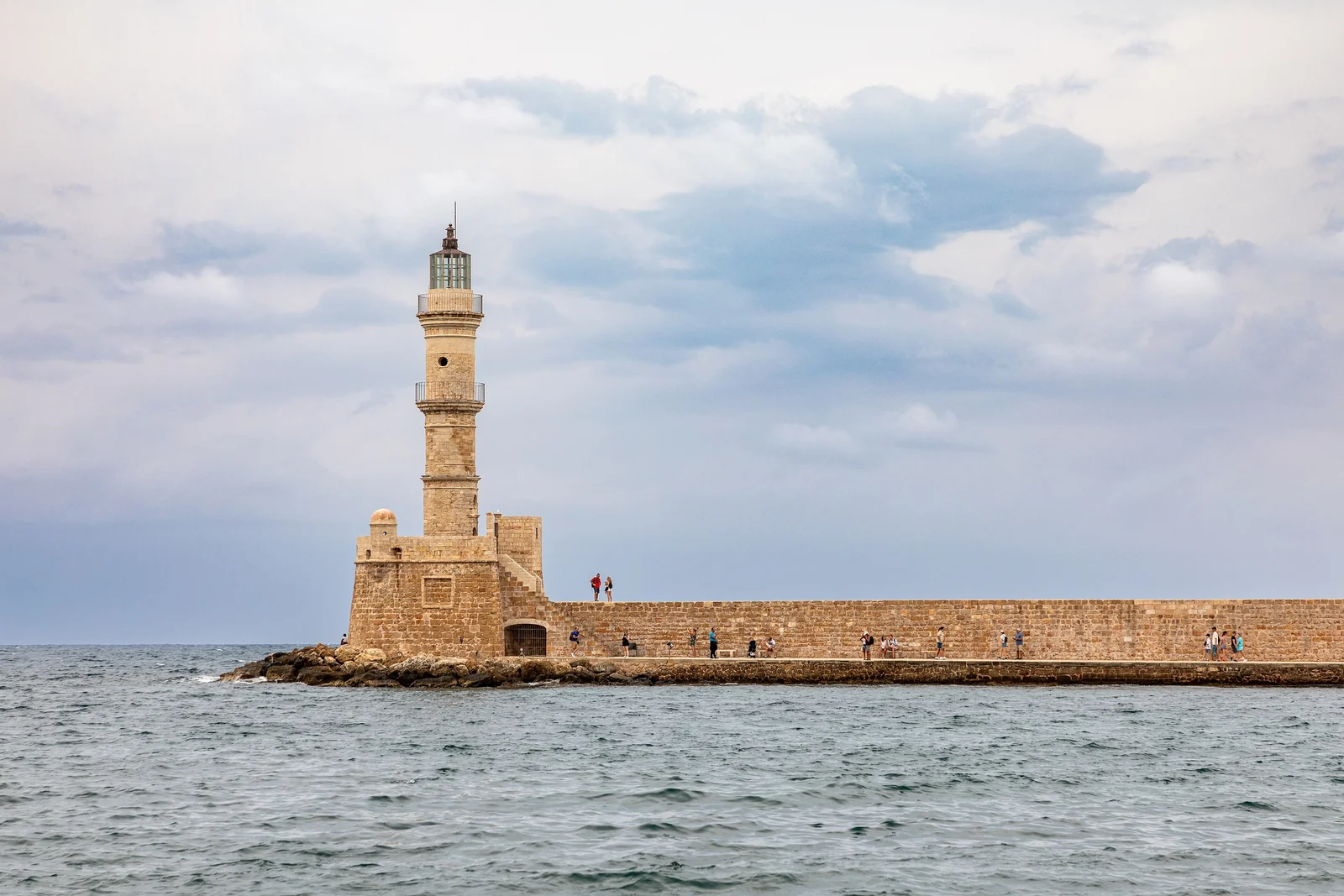
If you only base yourself in one Cretan town, make it Chania. The old town wraps around a curved Venetian harbor, with a stone lighthouse at the end of the breakwater, the domed Mosque of the Janissaries on the quay and a row of arched Venetian shipyards on the far side. Venetian rule left the lanes and townhouses, and the Ottoman centuries added minarets and balconies.
The pleasure here is walking without a plan. Follow the harbor out to the lighthouse in the late afternoon, then cut back through the lanes of the old town, where workshops sell leather, ceramics and Cretan herbs. The covered Municipal Market, a cross-shaped hall from the early 20th century, is a good stop for cheese, olives and honey to take home.
Where to Stay in Chania
Inside the old town, small restored houses and guesthouses put you steps from the harbor, though lanes near the waterfront get loud on summer nights. The Nea Chora area to the west is quieter and has a city beach. If you rent a car, check whether your accommodation has parking, because the old town's lanes are narrow and mostly closed to traffic.
Rethymno: Fortress and Old Town
Between Chania and Heraklion, Rethymno is smaller and calmer. Its old town keeps a tight grid of Venetian mansions and Ottoman wooden balconies, with the little Venetian harbor and lighthouse at its northern edge. A half day is enough to cover the lanes, a coffee in a shaded square and the climb to the Fortezza.
The Fortezza is a large 16th-century Venetian fortress on a hill above the sea, with thick walls, a mosque and sweeping views over the roofs. Opening hours and ticket prices change, so check the current details before you go. Come in the late afternoon, when the stone turns warm and the day-trip crowds have thinned.
Heraklion and the Palace of Knossos
Heraklion is Crete's largest city and its main airport and ferry hub. It is busy and not conventionally pretty, but it holds the island's most important archaeology. Knossos, about five kilometers south of the center, was the largest ceremonial and political center of the Minoan civilization, which flourished on Crete in the Bronze Age.
Visiting Knossos
The British archaeologist Arthur Evans began excavating the site in 1900 and rebuilt sections in concrete, painting columns red and black and adding copies of the frescoes. Scholars still argue about those reconstructions, but they do help you picture a multi-story palace with light wells, storerooms and a throne room. Knossos is part of the Minoan Palatial Centres, inscribed on the UNESCO World Heritage List in 2025.
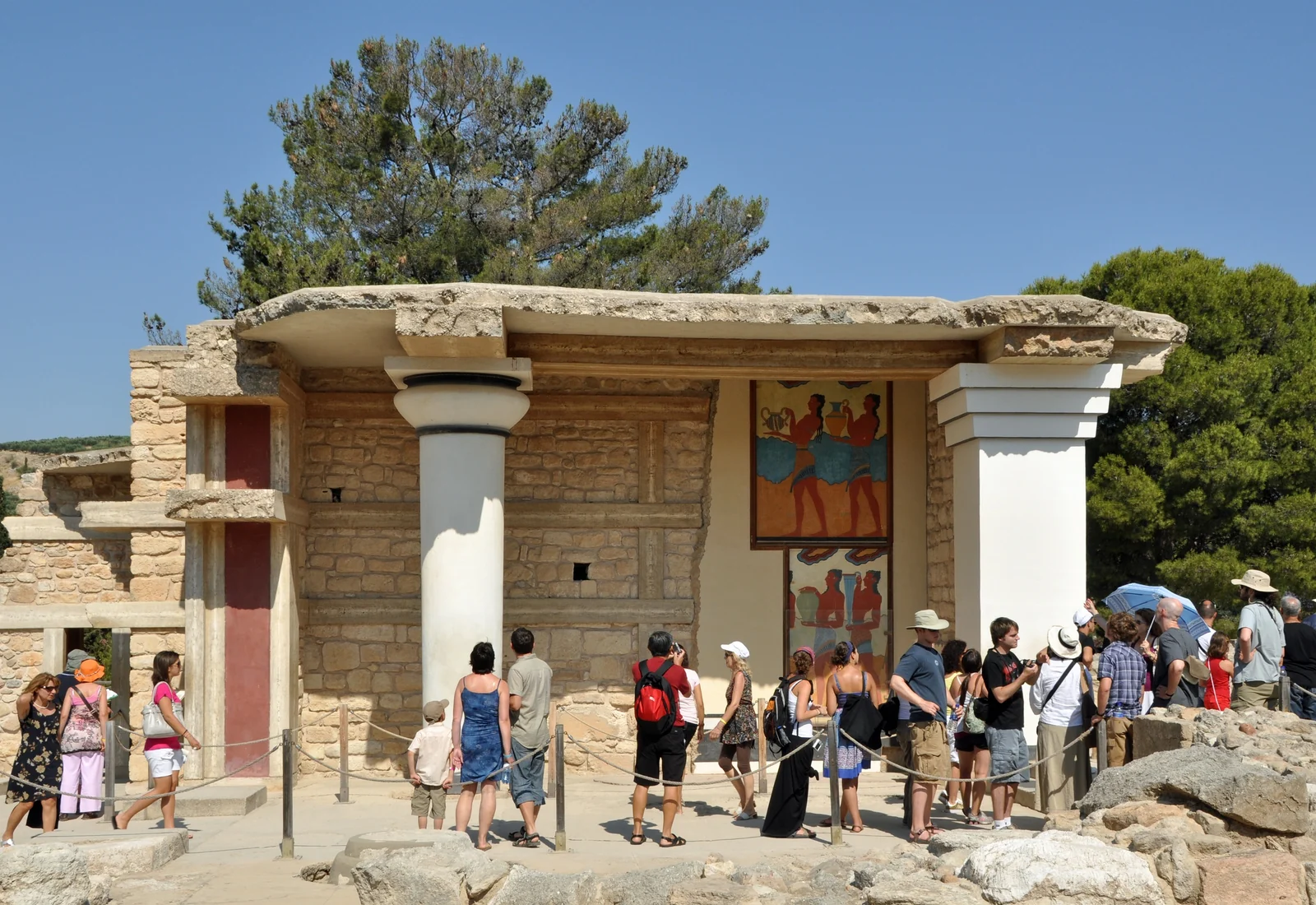
Go early or late, because the site has little shade and summer heat is punishing. Bring water and a hat. A guide, or a good book, makes a big difference; without context the ruins can look like an elaborate set of low walls.
Heraklion Archaeological Museum
The museum is where the originals live. It holds Minoan frescoes from Knossos, the famous snake goddess figurines and the Phaistos Disc, a clay disc stamped with a script that nobody has convincingly deciphered. Visit the museum before or after the palace, not in place of it; the two make sense together.
Samaria Gorge: The Classic Hike
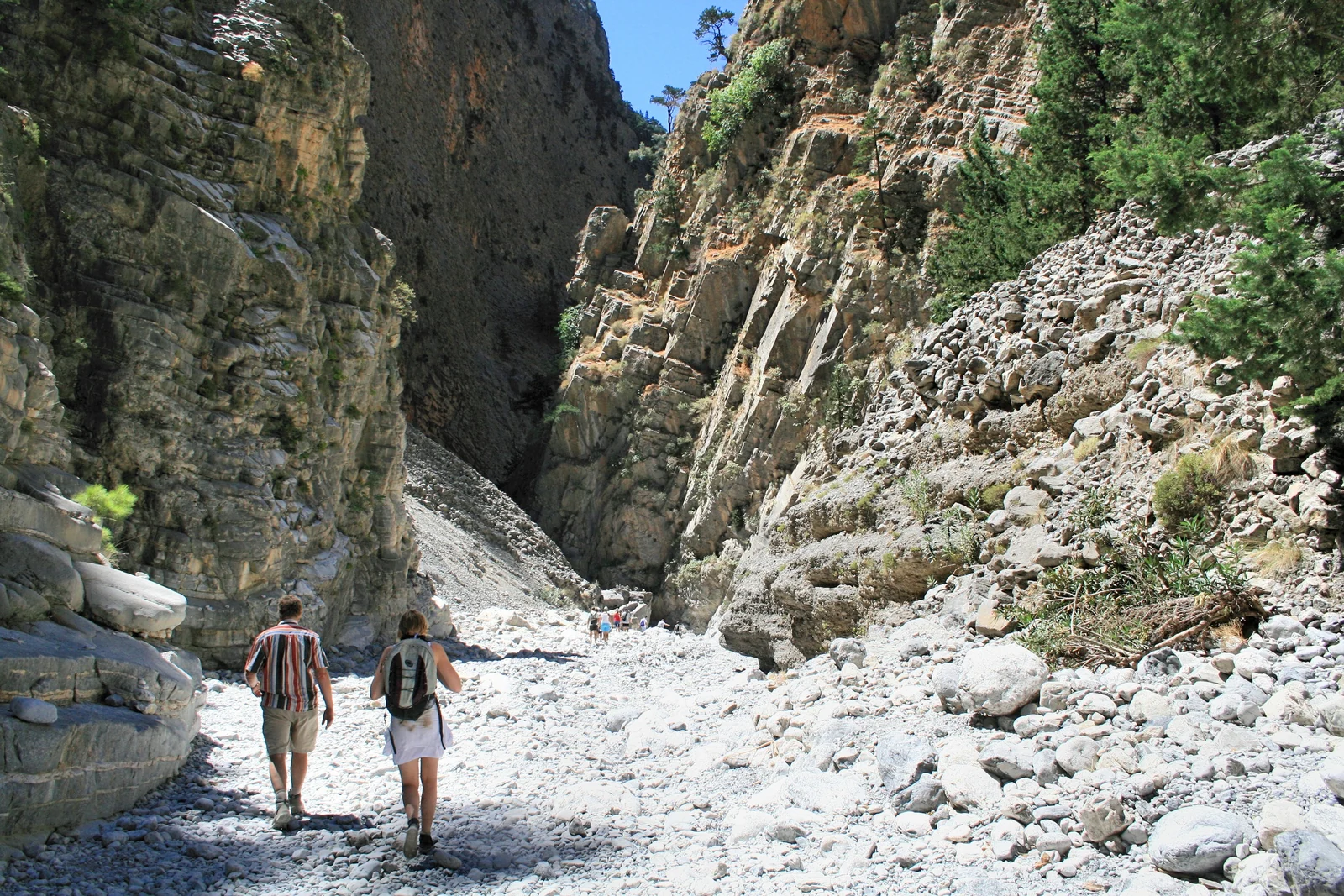
The Samaria Gorge is the most famous walk in Greece and a national park. The gorge itself runs about 16 kilometers from the Omalos plateau, at roughly 1,250 meters, down to the Libyan Sea at Agia Roumeli. Within the park boundary the path is about 13 kilometers, plus a further walk of roughly two kilometers from the park exit to the village on the coast.
What the Walk Is Like
You start with a steep stepped descent from the plateau through pines, then follow a rocky stream bed for hours. The most dramatic stretch is the Iron Gates (Sideroportes), where the walls close in to roughly four meters apart and rise close to 300 meters. The gorge is also a refuge for the kri-kri, a wild goat native to Crete, though you will only see one with luck.
It is a long, downhill day on uneven stone. Plan on most of the day, solid hiking shoes, a hat, plenty of water and food. Tired knees at the bottom are normal. Most people finish with a swim at Agia Roumeli, then take a ferry along the coast to Sougia or Chora Sfakion and connect by bus back to Chania.
When the Gorge Is Open
The gorge generally opens in late spring and closes in autumn, but exact dates depend on the weather and conditions, and it can close at short notice after heavy rain or in high winds. Check the park's current status before you commit, and book transport and the return ferry with some slack. Organized tours from Chania handle the transfers and are the easiest option without a car.
Balos and Elafonissi: Crete's Famous Beaches
Crete has hundreds of beaches, but two draw the crowds, and both are worth the effort if you pick your timing. Balos in the northwest and Elafonissi in the southwest are about as different from each other as two white-sand beaches can be.
Balos Lagoon
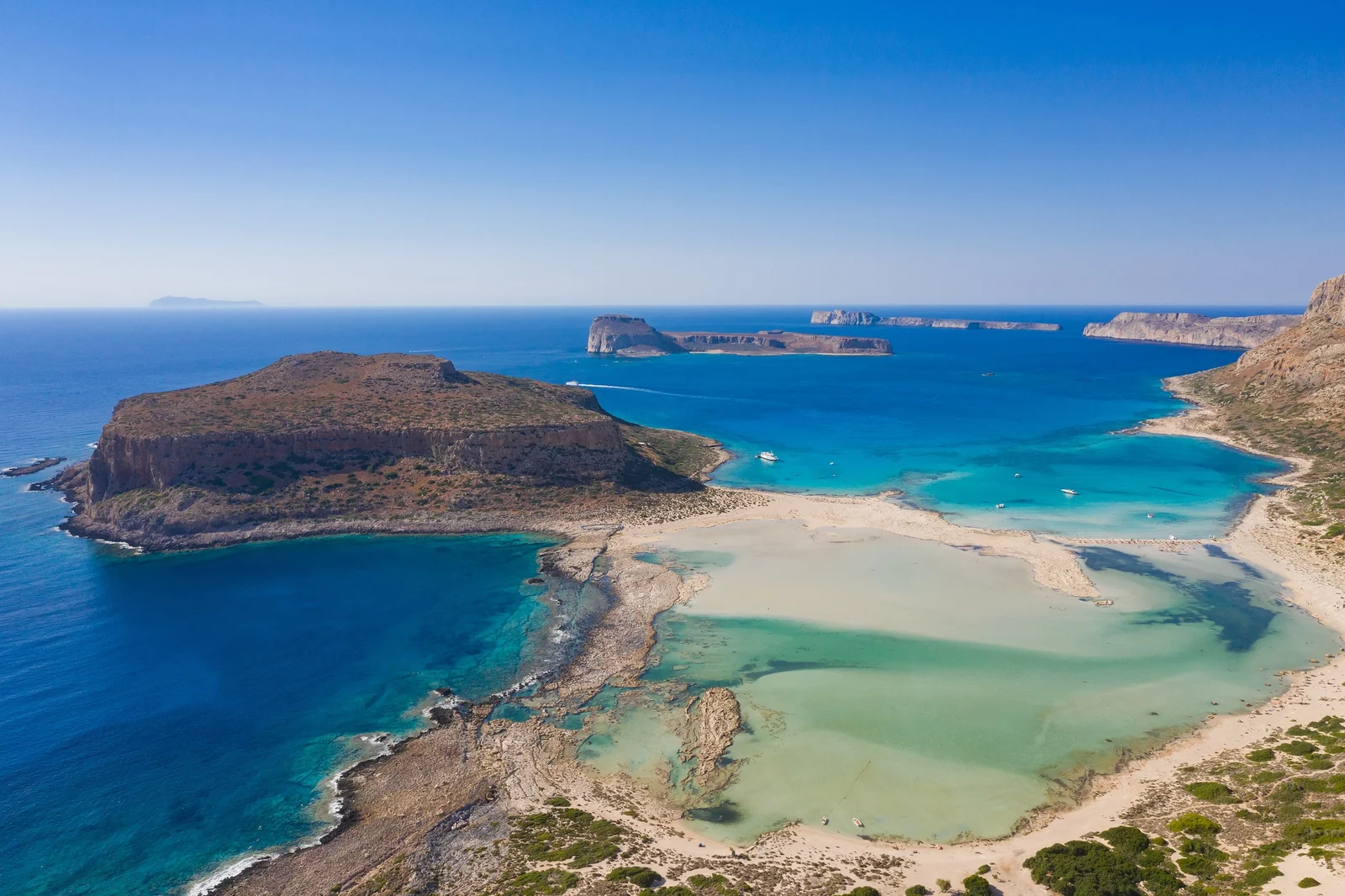
Balos sits at the tip of the Gramvousa peninsula, a shallow lagoon of pale sand and layered turquoise water, sheltered by a rocky headland. You can reach it by boat from Kissamos, which usually also stops at the island of Imeri Gramvousa and its Venetian fortress, or drive to the end of the unpaved track and walk down. The track is rough, and many rental agreements do not cover damage on unpaved roads, so read yours.
Elafonissi Beach
Elafonissi is a protected area on the southwest corner of the island. Its draw is the warm, shallow water and the sand, which turns pinkish in places where crushed shells wash up. You can wade across to a small islet at low tide. The beach is open, with little natural shade, so bring a hat and sunscreen.
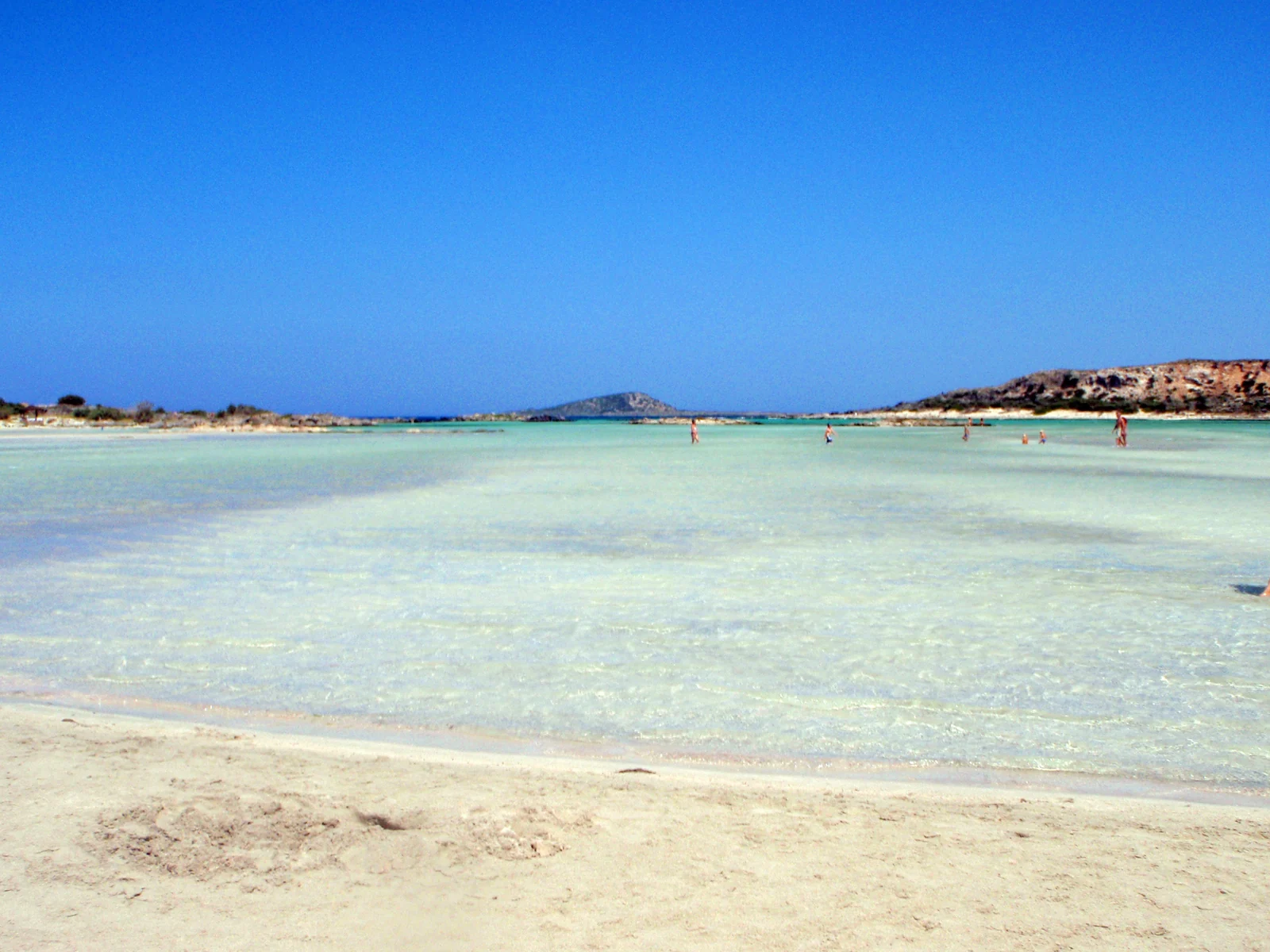
Both beaches get very busy in peak summer. Arrive early, before the tour buses, or come in late spring and early autumn when the water is still swimmable and the sand is not wall to wall. Neither is a place to leave valuables in the car.
What to Eat in Crete
Cretan food is simple, local and good, built on olive oil, vegetables, wild greens, cheese and grilled meat. Lunch in a village taverna is often the best meal of the trip. Order a few dishes to share, and ask what the kitchen made that day.
- Dakos: a barley rusk softened with grated tomato, topped with soft cheese and olive oil.
- Graviera and mizithra: the island's best-known cheeses, one firm and nutty, the other fresh and mild.
- Kalitsounia: small pies filled with cheese or wild greens, sometimes sweetened with honey.
- Lamb or goat: slow-cooked with herbs or potatoes, especially in mountain villages.
- Horta: boiled wild greens with lemon and olive oil, a staple side.
- Raki (tsikoudia): the clear grape spirit that often arrives free at the end of a meal.
Renting a Car in Crete
A car is the best way to see Crete if you want Balos, Elafonissi and villages away from the coast. Public buses connect the main northern towns well, and they run to some beaches, but schedules thin out in the south and west. You can base yourself in Chania and cover the highlights with a mix of buses and organized tours, but you will lose flexibility.
- Traffic drives on the right, and the north coast highway is fast and straightforward.
- Mountain and village roads are narrow, winding and sometimes unpaved. Allow more time than the map suggests.
- Read the insurance terms for unpaved roads, tires and underbody damage before you accept the keys.
- Check whether your home license is enough or you also need an international driving permit.
- Pick up at the airport in Chania or Heraklion to avoid city traffic on your first day.
Best Time to Visit Crete
Crete has a long season, and the best month depends on what you want to do. The sea is warmest in late summer, but the island is hottest and busiest then, and hiking or ruins in midday heat can be miserable.
| Season | What to expect | Good for |
|---|---|---|
| April to May | Mild days, green hills, wildflowers, cooler sea | Sightseeing, Knossos, walking |
| June | Warm and sunny, long days, busier but not peak | Beaches, boat trips, Samaria |
| July to August | Hot, crowded, strong northern winds at times | Swimming, early starts only for sights |
| September to October | Warm sea, thinner crowds, softer light | Beaches, food, relaxed touring |
| November to March | Cooler, wetter, many seasonal businesses closed | Cities, museums, quiet travel |
Spring and early autumn are the sweet spot for most people. If Samaria Gorge is a priority, aim for the shoulder of its season, when the path is cooler and less crowded.
Getting to Crete and Onward Travel
Crete has two main airports, Heraklion and Chania, with a wide range of direct flights from Europe in the warmer months and connections via Athens year-round. Overnight ferries also run from Piraeus, the port of Athens, to Heraklion and Chania. Our Athens travel guide is a good way to start or end a trip.
Crete also fits into a longer island-hopping route. If you want to compare it with other Greek islands, read our guides to Santorini and Rhodes, or browse all European destinations. The official Visit Greece page for Crete lists regional information and events.
Crete Travel FAQ
How many days do you need in Crete?
Seven days covers Chania, Knossos and one or two big beach days. Ten days lets you add Rethymno, the Samaria Gorge and a slower pace. Crete is large, so two weeks is easy to fill if you want the east and south as well.
Is Chania or Heraklion a better base?
Most visitors prefer Chania. It has a beautiful harbor, a walkable old town and easy access to the gorges and western beaches. Heraklion is a practical stop for Knossos and the museum, but it is more of a working city than a base.
Can you visit Knossos and the museum in one day?
Yes. Knossos is about five kilometers from central Heraklion. Visit the palace early, before the heat, and spend the afternoon in the Archaeological Museum. Allow roughly two hours for each, more if you enjoy museums.
How hard is the Samaria Gorge hike?
It is long rather than technical. The route is about 16 kilometers over rough stone, mostly downhill, so it suits anyone with reasonable fitness and good shoes. Start early, carry water and check that the gorge is open that day.
Do you need a car to see Balos and Elafonissi?
It helps. Balos is reachable by boat from Kissamos, and tours run to both beaches from Chania. With your own car you choose your timing and can arrive before the crowds, but check your rental insurance for unpaved roads.
When is the best time to visit Crete?
Late spring and early autumn are the best balance of warm sea, pleasant sightseeing weather and smaller crowds. July and August are hot and busy. Winter is quiet and mild but wetter, and many seasonal businesses close.
What should you eat in Crete?
Start with dakos, local cheeses such as graviera, wild greens, slow-cooked lamb or goat and a plate of kalitsounia. Finish with raki, which many tavernas serve free after dinner. Village tavernas often beat polished harbor restaurants.