The best Sicily itinerary for a first trip runs in a loose circle: Palermo and its Norman monuments in the northwest, the Greek temples of Agrigento on the south coast, then the east side for Syracuse, Noto, Taormina and Mount Etna. Seven days covers the highlights if you move quickly; ten lets you slow down and sleep in the places you like.
This guide gives a route that works, how many nights each stop deserves, whether to rent a car or lean on trains and buses, and what to eat along the way. Sicily is bigger than it looks on a map, so the real skill is deciding what to skip. If you are pairing the island with the mainland, our Italy travel guides cover the rest of the country.
How to Plan a 7 to 10 Day Sicily Route
Sicily is the largest island in the Mediterranean, and driving across it takes longer than the distances suggest, because many roads are slow and winding. The simplest plan is a one-way route between two airports, flying into Palermo and out of Catania, or the reverse. That avoids backtracking, though one-way car rental charges vary, so compare quotes.
| Stop | Suggested nights | Why go |
|---|---|---|
| Palermo (with Monreale and Cefalù) | 3 | Arab-Norman churches, markets, street food, sea at Cefalù |
| Agrigento | 1 | Valley of the Temples, the best Greek ruins on the island |
| Syracuse and Ortigia (with Noto) | 2 to 3 | Greek theater, island old town, Sicilian baroque |
| Taormina and Etna | 2 | Ancient theater with a volcano view, Etna hikes |
With seven days, give Palermo three nights, Agrigento one, Syracuse two and Taormina one, and treat Etna as a half-day stop on the way. With ten, add a night in Noto or Cefalù and a full day on Etna. Our guide to the islands of Italy helps if you are weighing Sicily against Sardinia or the smaller islands.
Palermo: The Arab-Norman Capital
Palermo is loud, crumbling in places, and one of the most layered cities in Europe. Arabs, Normans, Spanish rulers and Bourbon kings all left buildings behind, and in the 12th century the Norman kings of Sicily blended Byzantine, Islamic and Latin styles into something new. UNESCO recognized a group of these monuments in 2015 as Arab-Norman Palermo and the Cathedral Churches of Cefalù and Monreale.
What to See in Palermo
- Cappella Palatina: the royal chapel inside the Norman Palace, covered in gold mosaics, with a carved wooden ceiling in an Islamic style.
- Palermo Cathedral: a mix of centuries, from Norman origins to later additions, with royal tombs inside.
- San Giovanni degli Eremiti: a small church with red domes that looks more North African than European.
- Quattro Canti and Teatro Massimo: the baroque crossroads of the old center and one of Europe's largest opera houses.
- The street markets: Ballarò, Capo and Vucciria are loud, crowded and the fastest way to understand the city's food.
Two full days suit Palermo. Opening hours for the palace and chapel change with events and the season, so check them before you plan your mornings.
Palermo Street Food
Palermo is Italy's street-food capital, and you eat it standing up. The classics are panelle (chickpea fritters, often stuffed into a sesame roll), arancine (fried rice balls, with a ragù or a ham-and-cheese filling), sfincione (a thick, spongy pizza) and pani ca meusa, a spleen sandwich that is more approachable than it sounds. Eat at the market stalls at lunchtime, when the turnover is fastest.
Monreale and Cefalù: Two Day Trips from Palermo
Monreale Cathedral
Monreale sits on a hill above Palermo, a short bus or taxi ride from the center. Its cathedral was begun in the 1170s under William II, and the interior is wrapped in Byzantine-style mosaics, with a huge figure of Christ in the apse. Don't skip the cloister next door, where paired columns carry carved capitals, each one different.
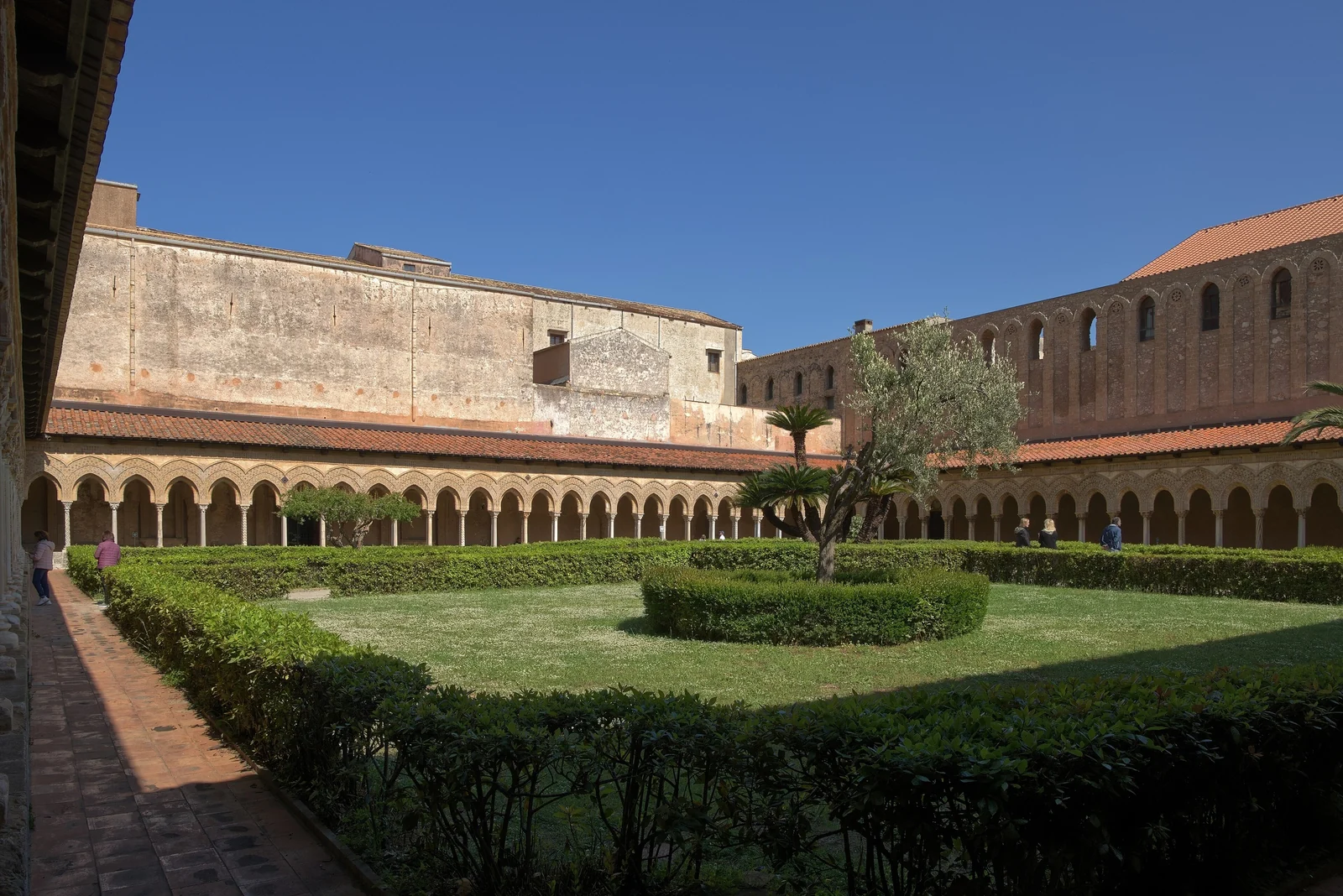
Allow half a day. Go early if you can, because tour groups arrive late morning and the nave gets crowded.
Cefalù: Beach and Cathedral
Cefalù is a fishing town beneath a rock, roughly an hour from Palermo by train, with a sandy town beach and a medieval street grid. Its cathedral was founded by Roger II in 1131 and is part of the same UNESCO listing as Palermo and Monreale. It makes a calm break after the city. You can swim, climb La Rocca for the view and be back in Palermo for dinner, or stay overnight if you prefer a slower pace.
Valley of the Temples, Agrigento
Agrigento's archaeological area is the finest Greek site in Sicily and was inscribed by UNESCO in 1997; see the Archaeological Area of Agrigento listing. The ancient city was founded in the sixth century BC, and the temples sit along a ridge above the sea. The Temple of Concordia is the star, one of the best-preserved Greek temples anywhere, largely because it was later converted into a church.
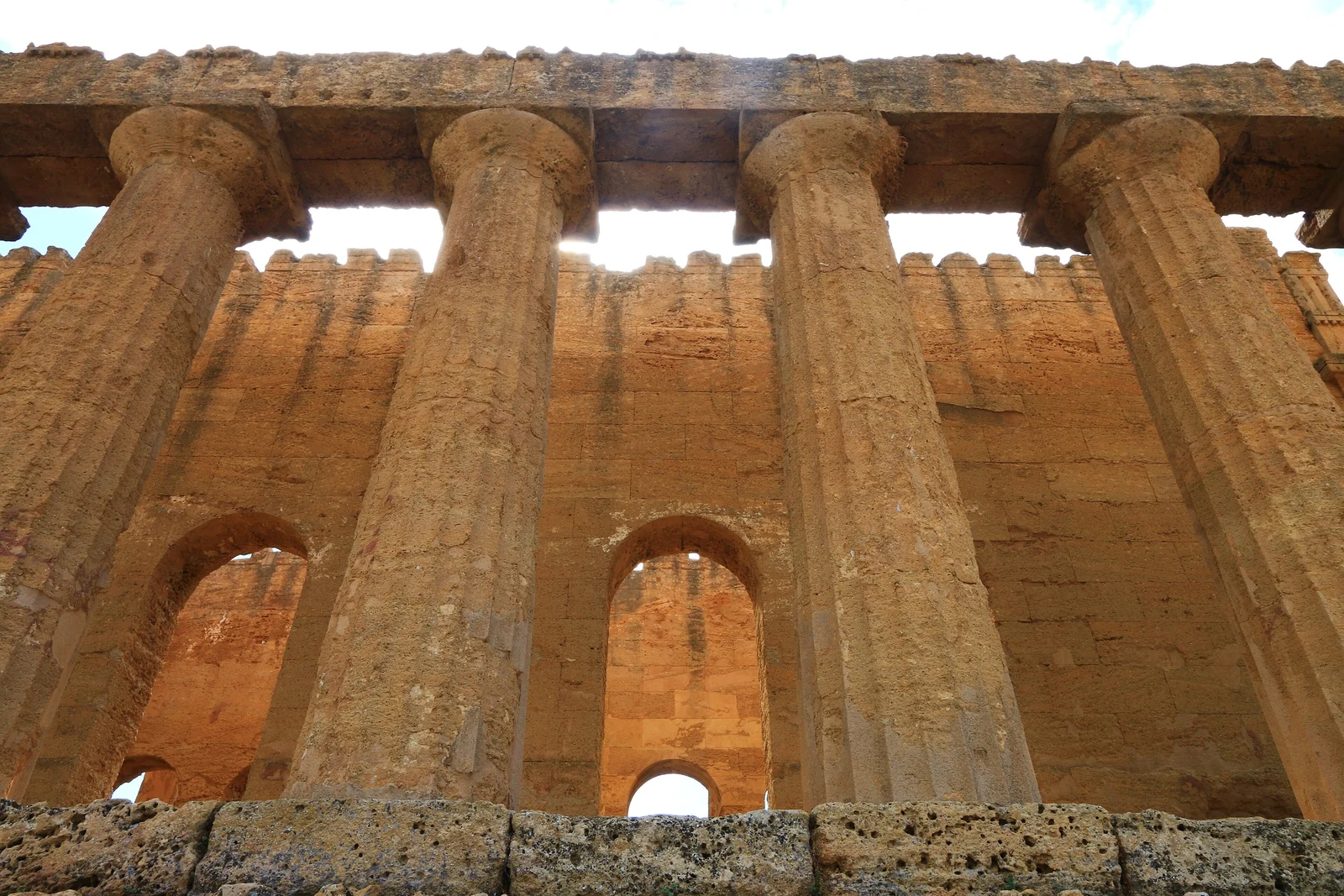
The park is large and exposed, so go in the early morning or late afternoon, bring water and a hat, and expect little shade in summer. Many visitors come at golden hour for the light on the limestone. Check ticket details and hours on the official park website before you go, since evening openings run only in some seasons.
Agrigento itself is an ordinary hill city, so most people use it as a single-night stop. Staying overnight beats a rushed day trip, because you can see the temples in cooler light.
Syracuse and Ortigia
In the ancient world Syracuse rivaled Athens. Today the headline is Ortigia, a small island joined to the mainland by short bridges, where narrow lanes open onto the broad Piazza Duomo. The cathedral there is built around the columns of a Greek temple of Athena, and you can still see them in the side walls. UNESCO lists the city together with the Rocky Necropolis of Pantalica; see the Syracuse listing.
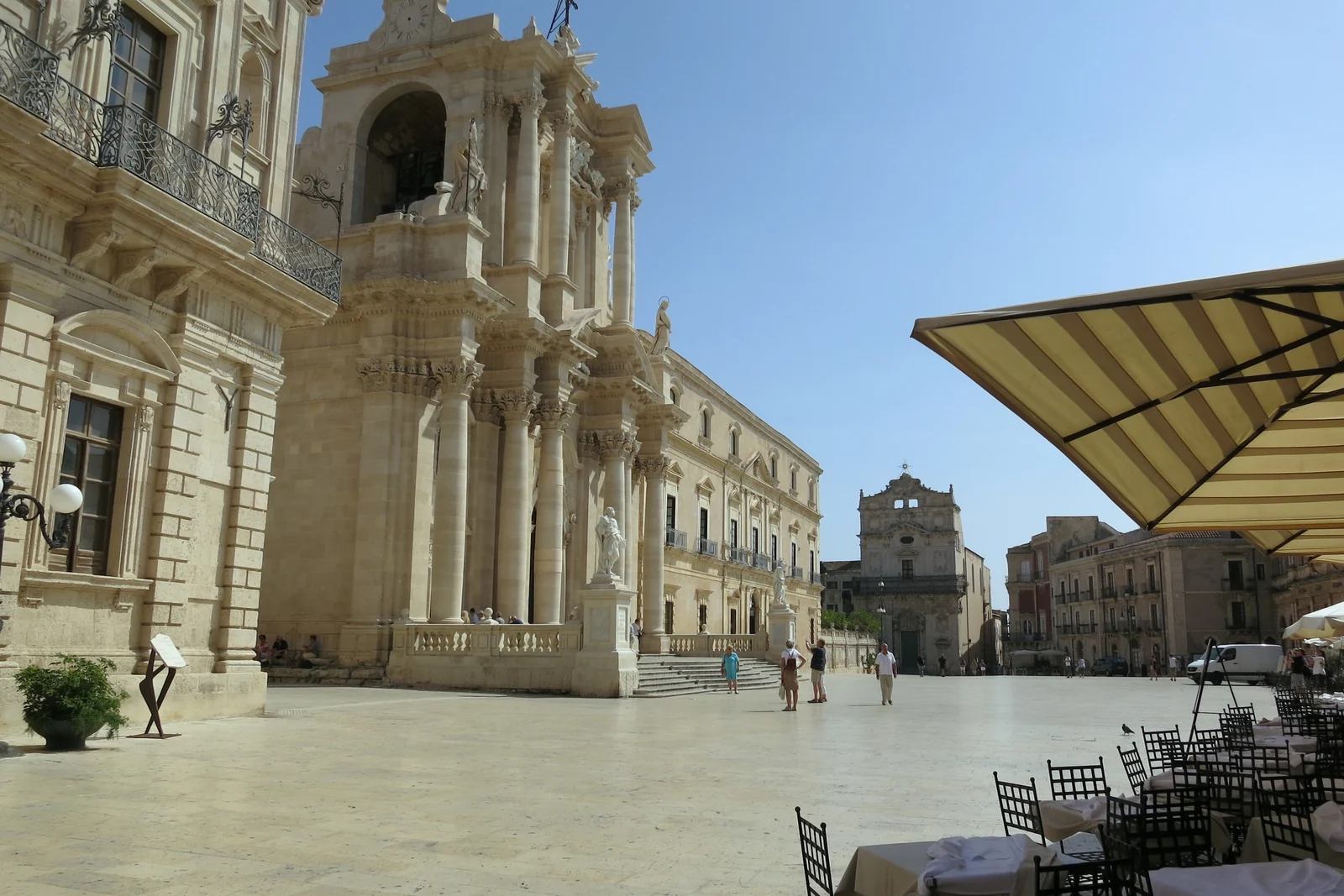
The Neapolis Archaeological Park
On the mainland side, the Neapolis park holds a large Greek theater cut into the hillside, a Roman amphitheater and the limestone quarries known as the Ear of Dionysius, a cave with unusual acoustics. The theater dates from the fifth century BC and is still used for classical drama in season. Spend a morning here and an afternoon in Ortigia.
Eating in Ortigia
The morning market near the old town is a good place to buy fruit, cheese and seafood, and plenty of stalls will assemble a sandwich on the spot. Fresh fish, sea urchin in season and almond pastries are the local themes. Dinner on the waterfront is pleasant, though side streets are better value.
Noto and the Baroque Towns of the Val di Noto
A powerful earthquake destroyed much of southeastern Sicily in 1693, and the towns were rebuilt in an exuberant late baroque style that UNESCO recognizes as the Late Baroque Towns of the Val di Noto. Noto is the showpiece. Its main street, Corso Vittorio Emanuele, runs past honey-colored limestone palaces and the San Nicolò cathedral, and the stone glows orange in the late afternoon.
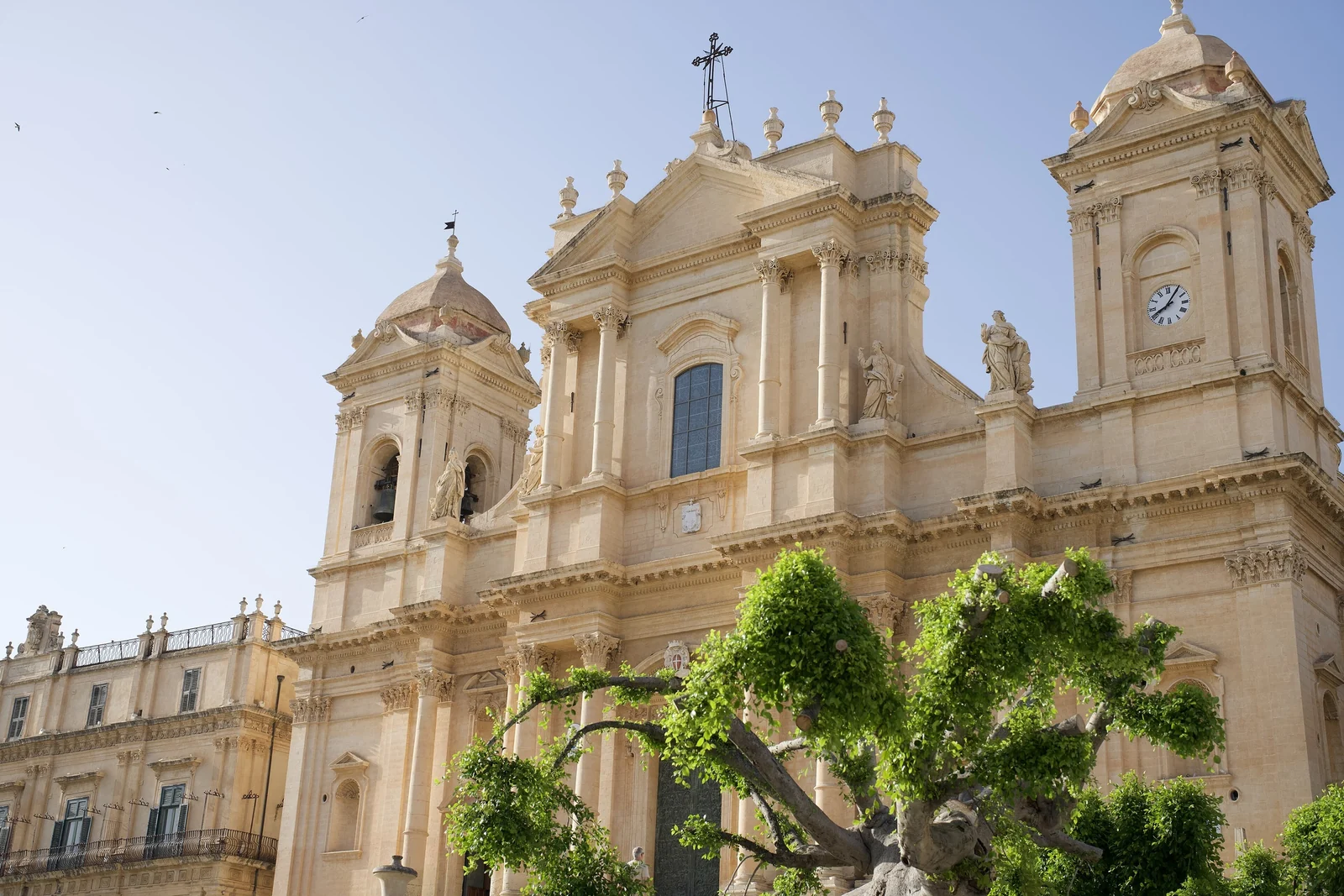
Noto is close enough to Syracuse for a half-day trip, and it is a good place for granita and gelato. Modica and Ragusa, also in the Val di Noto, reward an extra night if you have the time. Modica is known for chocolate made in a grainy, old-style method.
Taormina and Mount Etna
Taormina: The Ancient Theater and the View
Taormina clings to a ridge above the Ionian Sea and is the most polished town on the island. The reason to come is the ancient theater, a Greek construction later remodeled by the Romans, whose seats face Mount Etna and the coast. Sit near the top and let the view do the work. Afterward, walk Corso Umberto, find a terrace for an aperitivo and watch the evening crowds.
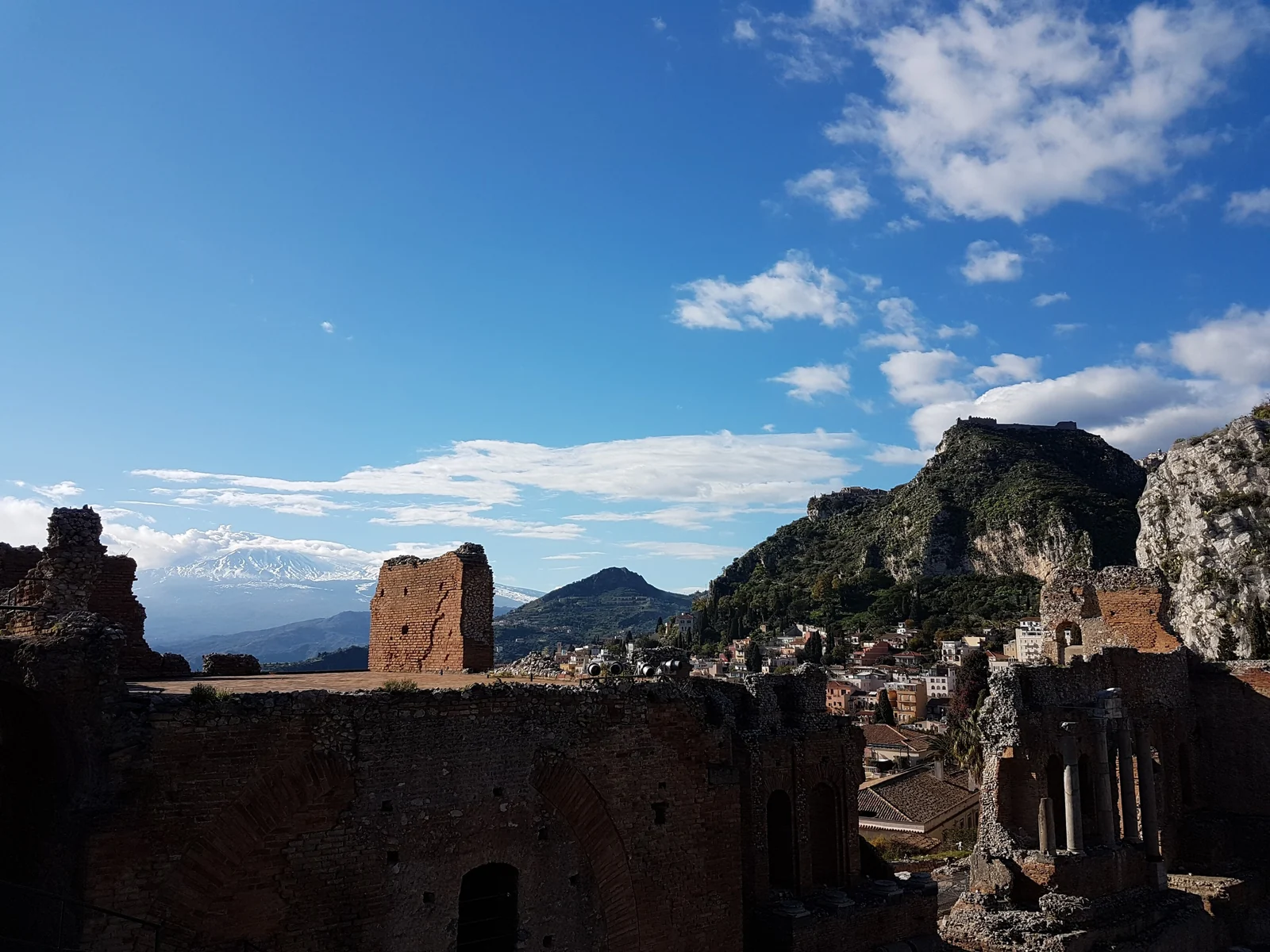
Taormina is busy and expensive in high season. If that bothers you, stay in a quieter coastal town nearby and take the bus up for the day.
Mount Etna: Europe's Most Active Volcano
Etna rises more than 3,300 meters above the sea, and its height changes with eruptions. It is among the most active volcanoes in the world and has been on the UNESCO World Heritage list since 2013. You do not need to be a mountaineer to enjoy it. A cable car and 4x4 buses serve higher elevations on the south side, and guided hikes lead toward the craters. Access to the summit area depends on volcanic activity and local rules, so book a guide and check conditions on the day.
Bring warm layers even in summer; it is much colder at altitude than on the coast. Wear closed shoes with grip, as lava rock is sharp. Many visitors add a winery visit on the slopes, where Etna's volcanic soils produce distinctive red and white wines.
Car or Train: Getting Around Sicily
Trains run well on the main coastal lines, including Palermo to Cefalù and Messina, and Catania to Syracuse and Taormina. Buses fill many gaps, including Palermo to Agrigento and Syracuse to Noto. Rail through the interior is slower and thinner. A car gives you freedom for Etna's wineries, the countryside and smaller towns.
| Option | Best for | Watch out for |
|---|---|---|
| Rental car | Etna, wineries, inland towns, flexible schedule | Narrow streets, restricted traffic zones in old centers, parking, one-way fees |
| Train | Palermo, Cefalù, Syracuse, Taormina area | Slower on the south coast; stations sometimes far from the old town |
| Bus | Agrigento, Noto, Monreale | Fewer services on Sundays; check timetables locally |
If you do rent a car, skip it in Palermo and Ortigia. Many historic centers restrict traffic to permit holders, and fines are mailed to the rental company. Park outside the center and walk in.
Best Time to Visit Sicily
- April to June: warm, green and flowering, with fewer crowds. The best window for sightseeing.
- September to October: sea still warm, heat easing, harvest season on the slopes of Etna.
- July and August: hot and busy. Temple visits are best at opening time, and beaches are crowded.
- November to March: mild on the coast and quiet, with some seasonal places closed. Snow can fall on Etna.
For official visitor information and event listings, see the Sicily regional tourism site.
Where to Stay and What to Eat
Stay in the historic center of Palermo, near Quattro Canti or the markets, for atmosphere, and in Ortigia for Syracuse. Choose Taormina for the view or Catania for a livelier, cheaper base with an airport. In Agrigento, a place near the temples saves a drive.
- Pasta alla Norma: a Catania classic with eggplant, tomato and salted ricotta.
- Pasta con le sarde: sardines, wild fennel and pine nuts, a Palermo staple.
- Cannoli and cassata: ricotta desserts that are worth ordering from a pastry shop that fills them to order.
- Granita with brioche: a breakfast habit on the east coast; coffee, almond and pistachio are the standard flavors.
- Seafood: swordfish, tuna and sea urchin appear on menus along the coast.
If you are planning a longer Italy trip, compare this route with the Amalfi Coast or the Puglia road trip, both of which pair well with a week in Sicily.
Sicily Itinerary FAQ
How many days do you need in Sicily?
Seven days covers Palermo, Agrigento, Syracuse and Taormina at a fast pace. Ten days is more comfortable and leaves room for Noto, Cefalù and a full day on Etna. Fewer than five days works only if you stay in one region.
Is it better to fly into Palermo or Catania?
Either works. Palermo suits a west-to-east route and Catania an east-to-west route, so many travelers fly into one and out of the other. Check one-way car rental fees against the time you save by avoiding backtracking.
Do you need a car in Sicily?
A car is not essential for the main cities, which trains and buses link, but it helps for Etna, wineries and small towns. Avoid driving inside Palermo and Ortigia, where traffic zones are restricted.
What is the best order for a Sicily road trip?
A one-way loop works best: Palermo, Monreale or Cefalù, Agrigento, Syracuse and Noto, then Etna and Taormina, ending in Catania. It follows the island's main roads and avoids doubling back.
Can you climb Mount Etna without a guide?
Lower trails and the areas around the cable car are open to all, but access to the summit craters depends on volcanic activity and local regulations. Book a licensed guide for higher elevations and check conditions on the day.
When is the best time to visit Sicily?
April to June and September to October offer warm weather and manageable crowds. July and August are hot, and temple sites are best visited early. Winter is mild on the coast but quiet, and some places close for the season.
Is Sicily good for food lovers?
Yes. Palermo's street food, Ortigia's fish markets, Catania's pasta alla Norma and the pastry shops of the east coast make food a main reason to go. Eat at market stalls for lunch and in small family restaurants for dinner.