The best Tuscany road trip is not a race through every famous village. It is a loop of roughly a week that starts in Florence, drops south through Chianti to Siena, crosses the Val d'Orcia for Pienza, Montepulciano and Montalcino, and swings back by way of San Gimignano, Lucca and Pisa. You drive short distances, eat long lunches and stop wherever the light looks good.
This guide gives you a workable 7-day Tuscany itinerary with Florence as the starting point, plus the practical parts people get wrong: ZTL zones, parking, when to go and how much driving to expect. For help choosing between the big cities first, read our Rome or Florence comparison.
Is a Tuscany Road Trip Worth It?
Yes, with one condition: you need to want the countryside as much as the cities. Tuscany's best moments happen between the towns, on white gravel lanes lined with cypresses, in a roadside farm shop or at a viewpoint nobody mentioned. Buses and regional trains reach Siena, Lucca and Pisa without trouble, but the Val d'Orcia and most of Chianti are far easier with your own wheels.
The region is also compact. Distances between the main stops are mostly one to two hours, so you rarely lose a whole day to the road. That is why a car works so well here, and why a week feels full without feeling rushed.
The Route at a Glance
Here is the loop this guide follows. Swap the order of the last days if you fly out of Pisa instead of Florence.
| Day | Base | Main stops | Driving |
|---|---|---|---|
| 1 | Florence | Duomo, Piazzale Michelangelo, pick up car at the end of the day | None |
| 2 | Siena | Chianti Classico drive, Greve, Castellina, Siena evening | Moderate |
| 3 | Siena | Piazza del Campo, Duomo, Torre del Mangia | Minimal |
| 4 | Val d'Orcia | Pienza, Montepulciano, sunset on the cypress roads | Moderate |
| 5 | Val d'Orcia | Montalcino, wine tasting, abbey or hot springs stop | Short |
| 6 | San Gimignano or Lucca | San Gimignano towers, then on to Lucca | Long |
| 7 | Pisa | Lucca walls, Piazza dei Miracoli, return car | Moderate |
Day 1: Florence, Your Starting Point
Florence is the easiest place to begin because you can do it on foot and skip the car entirely. Spend the day with the cathedral and its dome, the Uffizi if you have booked ahead, the Ponte Vecchio and the lanes of the Oltrarno across the river. The historic center is a UNESCO World Heritage Site, listed in 1982, and it is small enough to cross in about twenty minutes.
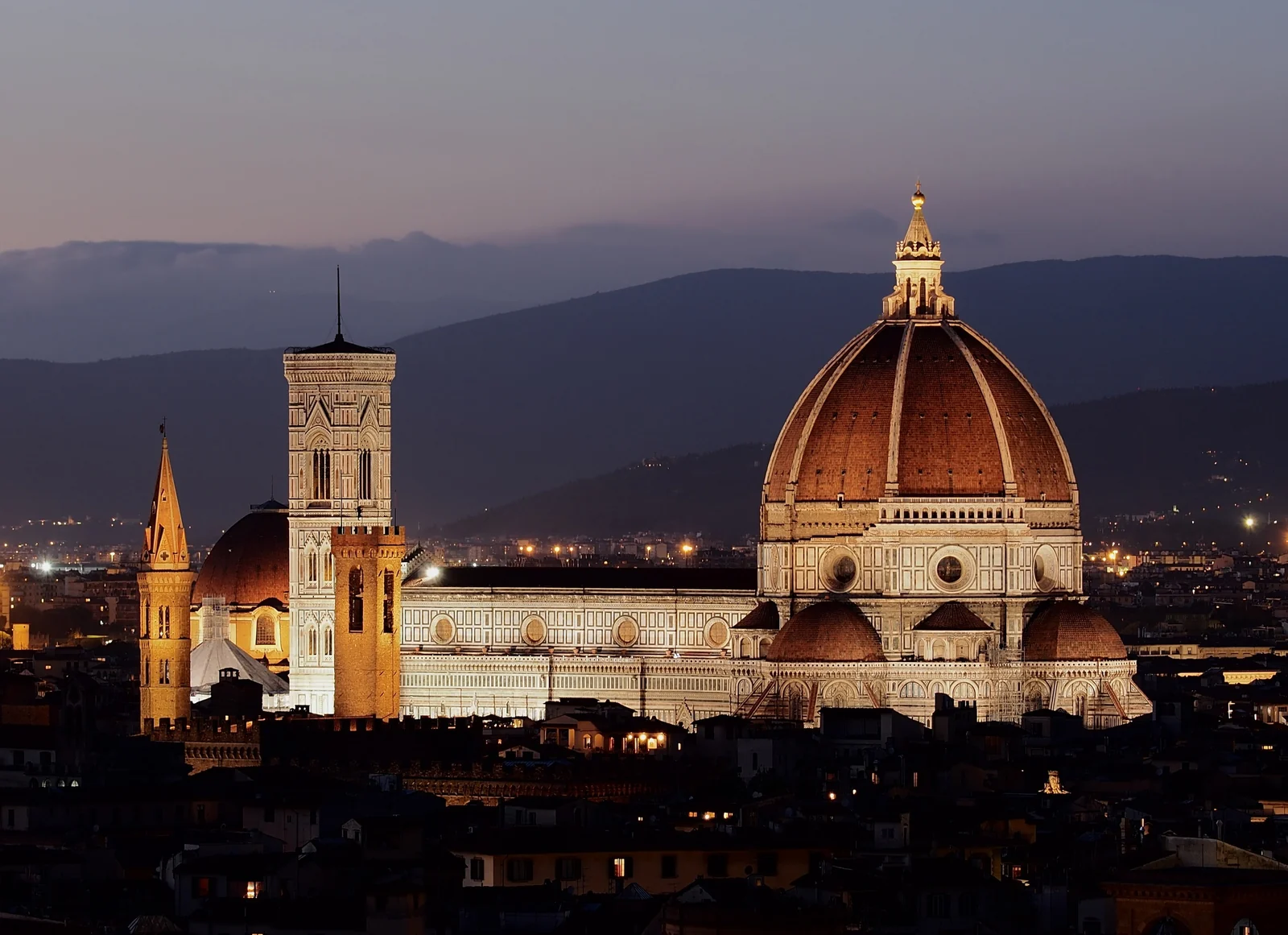
Finish at Piazzale Michelangelo for the view over the rooftops. Collect your rental car on the morning of day 2, ideally from an office on the edge of the center rather than near the cathedral, so you avoid the restricted zone described below.
Day 2: Chianti Classico to Siena
The old road between Florence and Siena, known as the Chiantigiana, winds through the wine hills of Chianti. You can do the direct run in a little over an hour on the main roads, but the point is to take your time. Plan on three or four stops: a wine estate, a village such as Greve in Chianti or Castellina in Chianti, and a lunch table somewhere with a view.
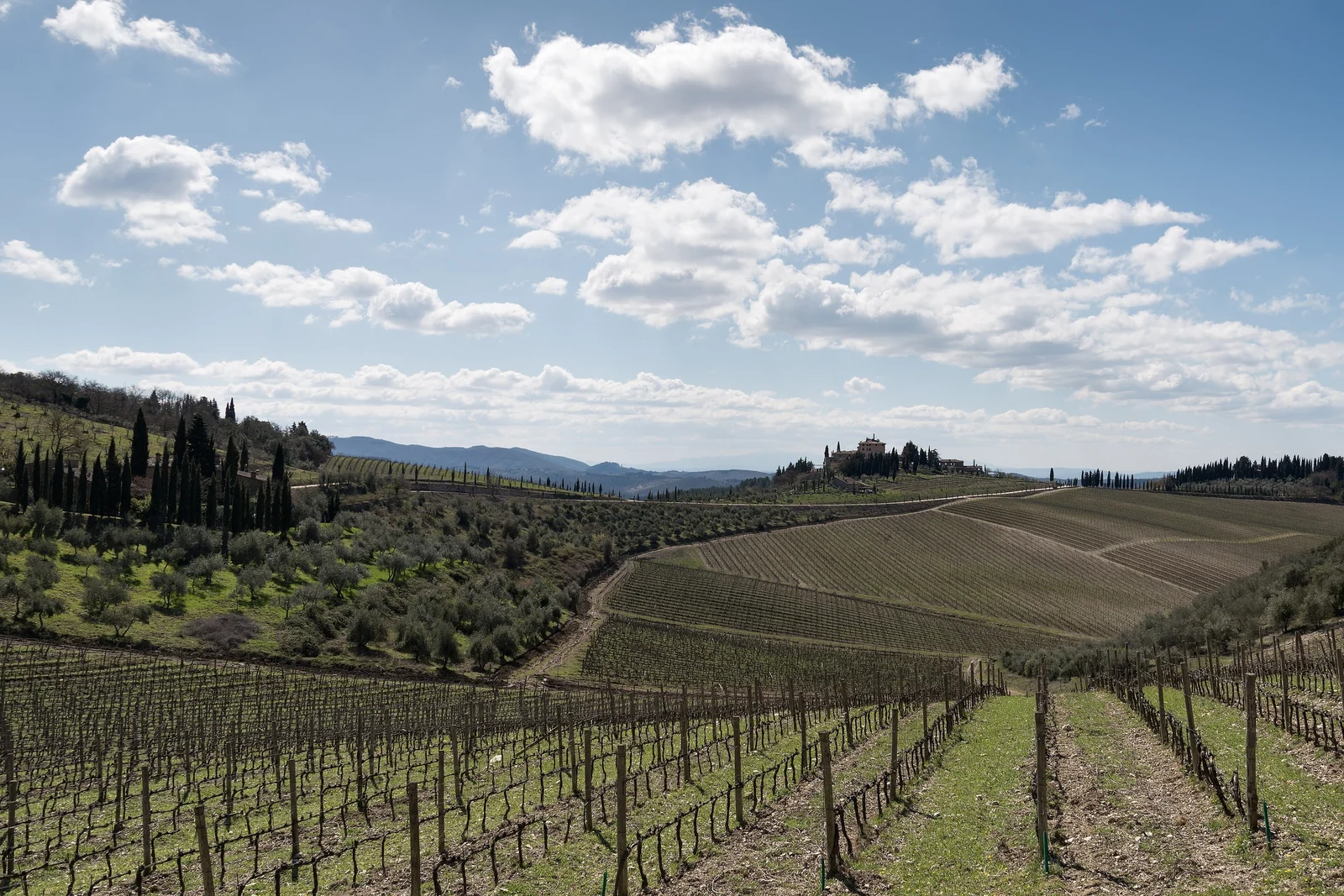
Book any winery visit ahead and designate a driver, since Italy takes drink-driving seriously. Arrive in Siena in the late afternoon and park outside the historic center, where you will not need the car for a full day.
Siena: Piazza del Campo and the Duomo
Siena is a medieval city that still feels like a single design. Its historic center was added to the UNESCO list in 1995, and the heart of it is the Piazza del Campo, a shell-shaped square that slopes toward the Palazzo Pubblico and the tall Torre del Mangia. Locals and visitors sit on the bricks at all hours.
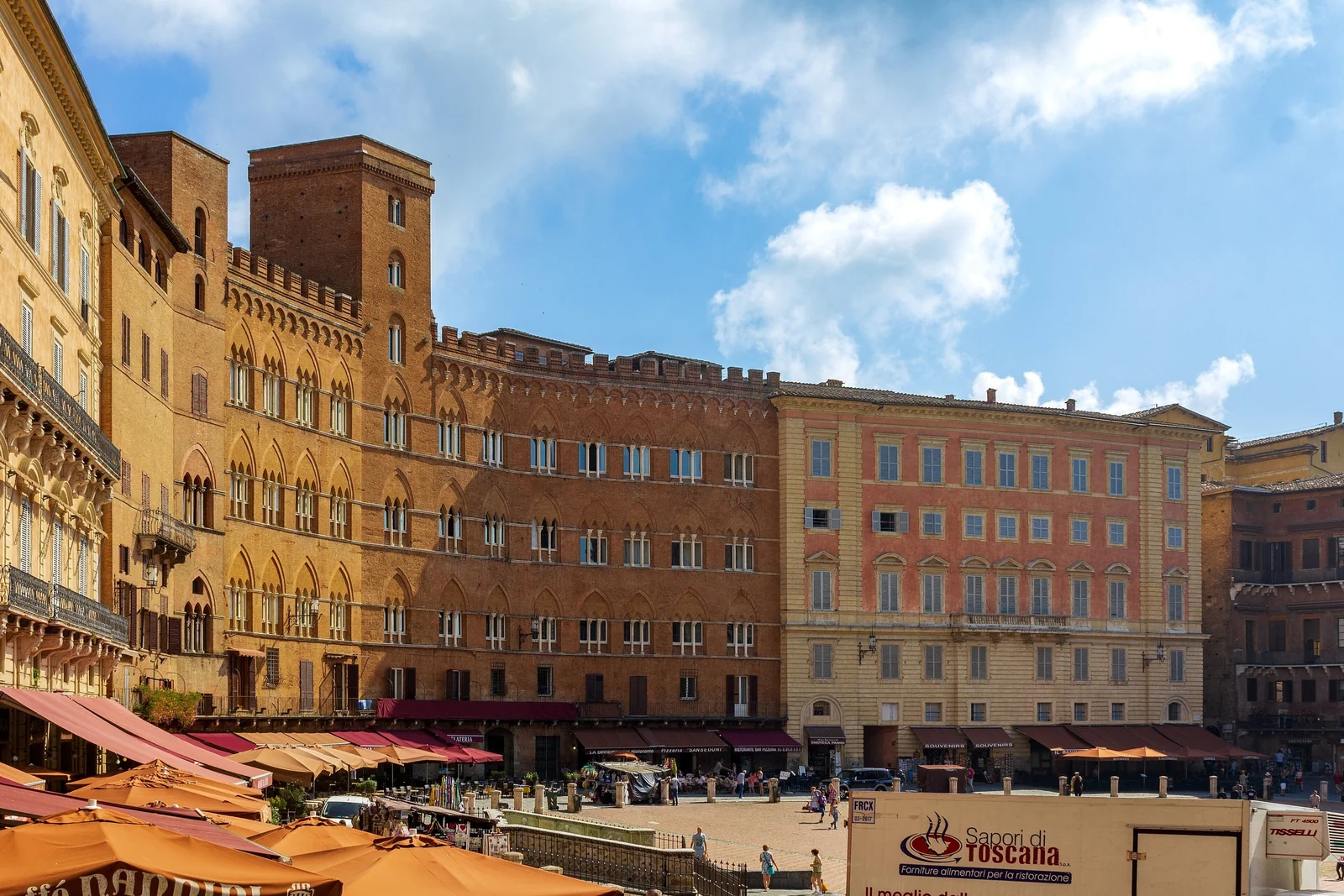
Climbing the Torre del Mangia is a good morning plan, since the queue for the stairs grows as the day goes on and the view over the roofs is worth the effort. Then walk to the striped black-and-white Duomo, whose inlaid marble floor is one of the highlights of the city. Check hours and combined ticket options on the official sites before you go, because opening times change.
If your dates allow, know about the Palio, the horse race held in the Campo on July 2 and August 16. It is intense, crowded and brilliant, but plan lodging far in advance and expect large crowds.
Val d'Orcia: Pienza, Montepulciano and Montalcino
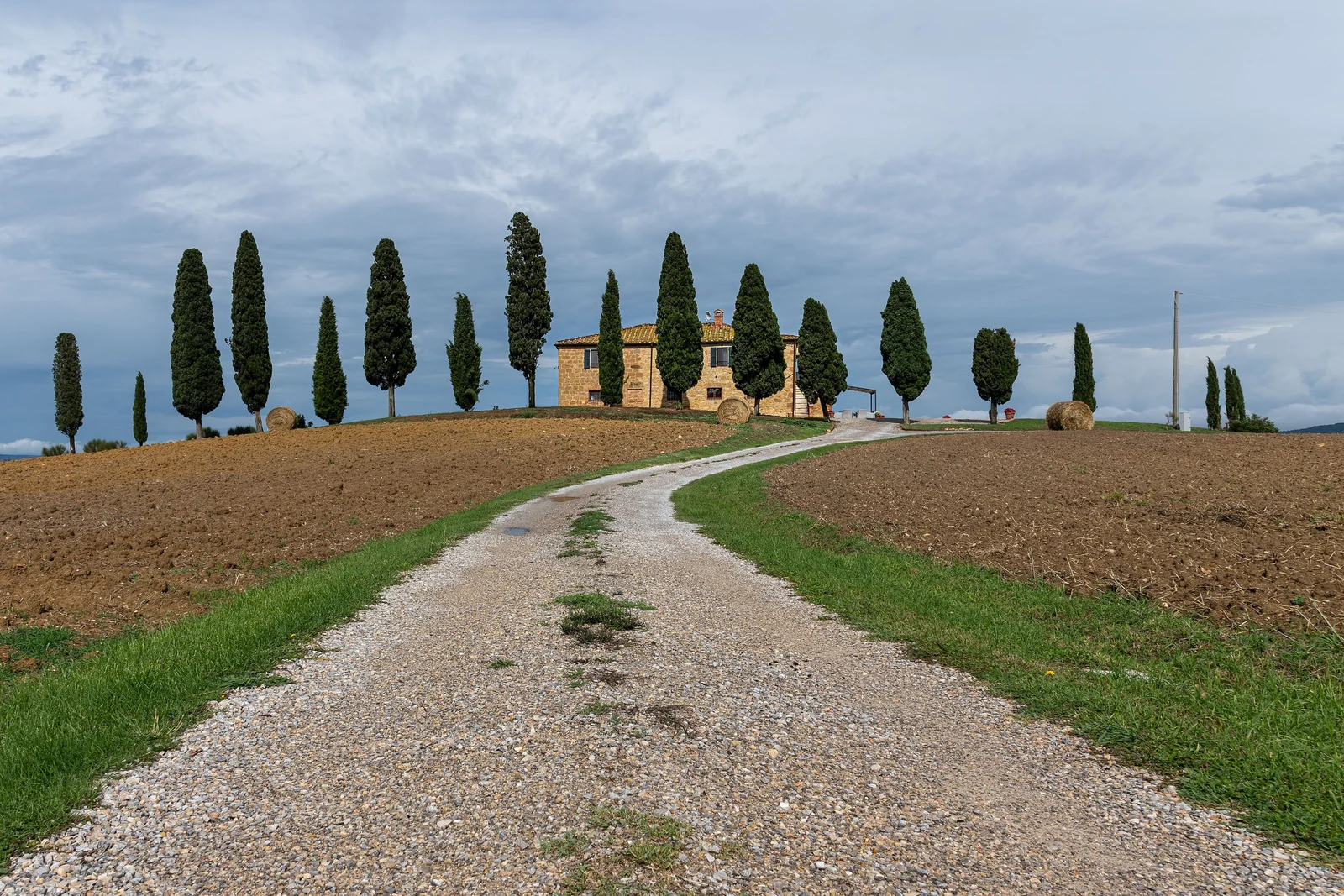
The Val d'Orcia is the Tuscany of postcards: pale hills, lone farmhouses, lines of cypresses and small hilltop towns every few miles. The valley has been a UNESCO World Heritage cultural landscape since 2004, and the UNESCO listing explains why. Base yourself here for two nights and let the stops fall around your own pace.
Pienza
Pienza is a small town rebuilt from 1459 by Pope Pius II, who was born there, as an ideal Renaissance town. The planned square, cathedral and palace make it feel unusually coherent, and the town was inscribed by UNESCO in 1996. Walk the city wall path at the edge of town for the valley view, then buy pecorino, the local sheep's cheese, from one of the shops along the main street.
Montepulciano
Montepulciano sits on a long ridge and climbs steeply, so wear sturdy shoes. It is known for Vino Nobile di Montepulciano, which you can taste in cellars right in the old town. Walk up to the main square at the top and enjoy the view toward Lake Trasimeno on a clear day.
Montalcino
Montalcino is the home of Brunello di Montalcino, one of Italy's most respected red wines. The town is small, with a fortress at its high point and wine bars on almost every corner. A tasting at a nearby estate is the best way to understand why the wine has its reputation, but reserve ahead and, again, choose a designated driver.
The Cypress Roads
Between the towns, take the minor roads rather than the fastest ones. The most photographed stretches are around Pienza and San Quirico d'Orcia. Go early morning or in the hour before sunset for soft light, and pull off only where you can park safely, not in the middle of the lane.
San Gimignano, Lucca and Pisa
Day 6 is the longest drive, so treat it as a transfer with one good stop in the middle. San Gimignano is the obvious choice, a hill town whose skyline is defined by medieval stone towers. Fourteen survive today, a fraction of the many that rival families once built to show off. The historic center has been UNESCO-listed since 1990.
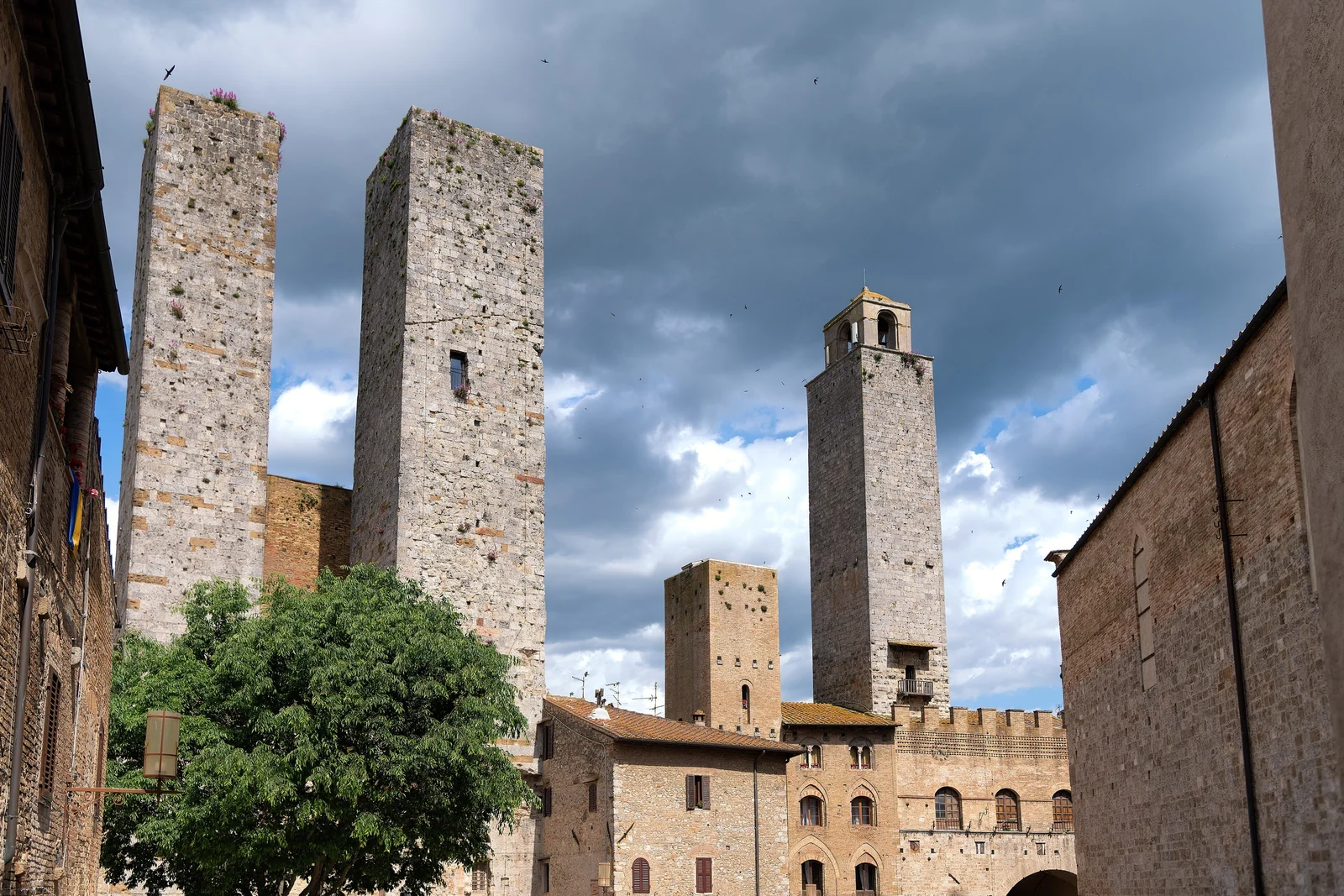
Come early or stay late. Tour buses fill the main street in the middle of the day, and the town is much more pleasant in the evening. Then drive on to Lucca, a walled city with a ring of Renaissance ramparts you can walk or cycle on top of, with a leafy path along the way.
On the last day, take an early look at Lucca's walls and its oval Piazza dell'Anfiteatro, then drive to Pisa. The Piazza dei Miracoli, with the cathedral, baptistery and Leaning Tower, has been a UNESCO site since 1987. You do not need more than two or three hours, and tower access is by timed ticket, so book it before you arrive.
Driving in Tuscany: ZTL Zones, Parking and Roads
Driving here is easy once you understand a handful of rules, and expensive if you ignore them. The most important one is the ZTL, the zona a traffico limitato. Almost every historic town center, including Florence, Siena, Lucca, Pienza and Montepulciano, has one. Cameras read your plate, and entering without authorization can bring a fine that arrives at your home months later.
- Watch the signs: a white circle with a red border and a camera sign marks the ZTL. If the display says it is active, do not enter.
- Park outside the walls: use the paid lots on the edge of town. Blue lines mean paid parking, white lines are usually free and yellow lines are reserved.
- Hotels inside a ZTL: ask your hotel in advance. Some can register your plate for access; do not assume they will.
- Pick a small car: country lanes and town garages are tight. A compact manual is the cheapest option, so reserve an automatic early if you need one.
- Roads: motorways (autostrada) are tolled. Many back roads are narrow and winding, so allow extra time over what a map suggests.
- International permit: visitors from outside the EU should check whether they need an international driving permit with their license before booking.
For up-to-date rules and regional information, see the official Visit Tuscany site. Always confirm ZTL hours locally, since they vary from town to town.
Best Time to Visit Tuscany by Car
| Season | What to expect | Verdict |
|---|---|---|
| April to early June | Green hills, mild days, wildflowers, fewer crowds than summer | Best overall |
| July and August | Hot, busy and expensive, with long evenings and festivals | Doable, book early |
| September to October | Grape harvest, warm days, golden light, truffle season starting | Best for food and wine |
| November to March | Cool and often rainy, some rural places closed, quiet towns | Cheap and calm, shorter days |
If you only get one window, aim for late spring or early autumn. The famous green of the Val d'Orcia is at its best in spring, while harvest brings the richest food and wine experiences. In midsummer, start your sightseeing early and keep the afternoon for a pool or long lunch.
Where to Stay on a Tuscany Road Trip
- Florence: stay near the center but outside the restricted zone if you will have a car on day 1. Otherwise, any central base works.
- Siena: staying inside the walls is atmospheric, but check your ZTL access. A hotel on the edge with parking is simpler.
- Val d'Orcia: a farm stay (agriturismo) is the classic choice, with breakfast, views and a parking space included.
- San Gimignano or Lucca: either works for night six. Lucca has more restaurants and an easier evening, while San Gimignano is better at dawn.
- Pisa: close to the airport, so it is a practical final night before a flight.
Book your first and last nights early, and leave the middle open if you like to improvise. Rural farm stays in peak months fill up fast.
If Tuscany is one part of a longer trip, our Italy travel guides cover the rest of the country, including the Amalfi Coast and Puglia's trulli and Salento coast.
Tuscany Road Trip FAQ
How many days do you need for a Tuscany road trip?
Seven days is a comfortable length for Florence, Chianti, Siena, the Val d'Orcia, San Gimignano, Lucca and Pisa. Five days works if you drop Lucca and Pisa. A long weekend can cover Florence, Chianti and Siena only.
Do you need a car in Tuscany?
For Florence, Siena, Lucca and Pisa, trains and buses are enough. For the Val d'Orcia, Chianti wineries and small hill towns, a car makes things far easier, because public transport is sparse and runs on limited schedules.
What is a ZTL and how do you avoid fines?
A ZTL is a restricted traffic zone in a historic center, enforced by cameras. Park outside it, watch for the red-ringed signs and ask your hotel whether it can register your plate. Fines usually arrive by mail after you return home.
Is it hard to drive in Tuscany?
Not on the main roads. The hard parts are narrow town streets, tight parking and the ZTL system. Choose a small car, use navigation, leave town centers to pedestrians and give yourself extra time on winding country roads.
What is the best time of year for a Tuscany road trip?
Late April to early June and September to October are ideal, with comfortable temperatures, good light and lighter crowds than midsummer. July and August are hot and busy, while winter is quiet and some rural businesses close.
Should you base yourself in Florence or Siena?
Florence suits first-time visitors and city lovers, and is easy to reach by train. For a driving trip, a base in Siena or the Val d'Orcia gets you into the countryside faster, with less traffic and easier parking.
Which Tuscan hill towns are worth visiting?
Pienza, Montepulciano and Montalcino are the Val d'Orcia favorites, and San Gimignano is the best known for its towers. If you want fewer people, go early in the morning or stay overnight in a smaller village.