
The best way to get from Rome to Naples is a high-speed train: Frecciarossa and Italo services link Roma Termini with Napoli Centrale in a little over an hour. From Naples, a local line called the Circumvesuviana carries you on to Pompeii and Herculaneum in well under an hour. Done in that order, you can see a Roman city frozen by a volcano and be back in Rome the same night, though you will not enjoy the rush much.
This guide to Rome to Naples and Pompeii by train explains which trains to choose, how the Circumvesuviana works, whether a day trip or an overnight stay suits you better, and what to book before you leave. If Rome is still on your list, start with our Rome travel guide.
Rome to Naples: High-Speed vs Regional Trains
Two kinds of train run between the cities, and the gap between them is large. The high-speed trains are Trenitalia's Frecciarossa and the private operator Italo. Both leave from Roma Termini and arrive at Napoli Centrale, and the quickest services take a little over an hour. Seats are assigned, tickets are tied to a specific departure, and fares generally rise as the day approaches.
The alternative is the regional service, which stops at many more stations and takes much longer, roughly double the high-speed time or more. Regional tickets are cheaper and normally not tied to one departure, but you validate them before boarding, and the carriages are older. Unless your budget is very tight, the saved hours are worth the extra fare.
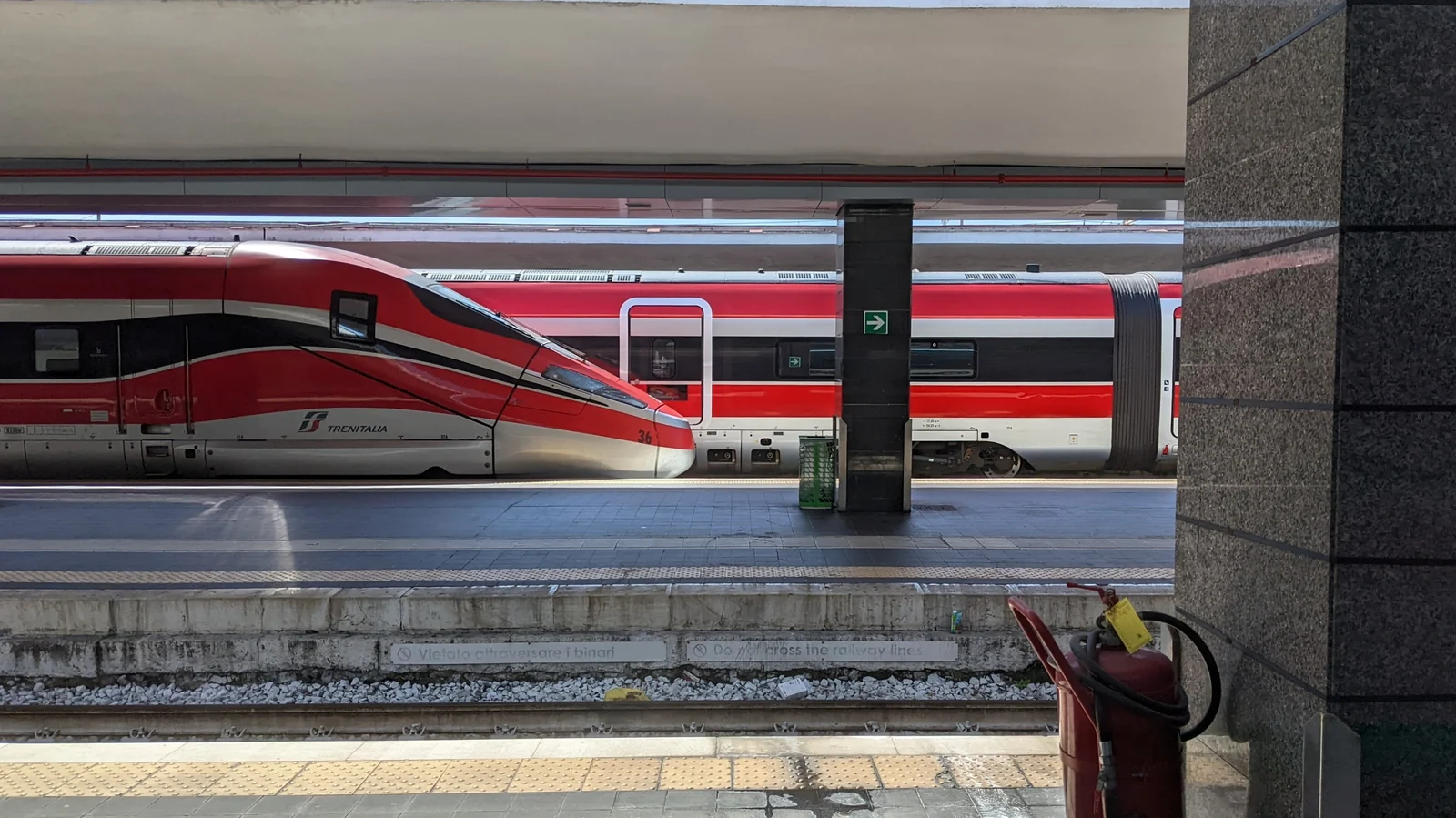
Frecciarossa or Italo?
For this route the two are close in speed and comfort, so choose by departure time and fare. Compare both on the Trenitalia and Italo sites before you commit, since the cheapest ticket moves between them from one day to the next. Both sell directly online, and buying from the operator avoids booking fees that resellers add.
Which station in Naples?
Almost everything arrives at Napoli Centrale, on Piazza Garibaldi. It is a busy, rough-edged station area, but it is the hub for the Circumvesuviana, the metro and most buses, so you will pass through it whatever you do. Have your next move planned before you step off the platform.
Rome to Naples and Pompeii at a Glance
| Leg | Best option | Time (approx.) | Booking |
|---|---|---|---|
| Rome to Naples | Frecciarossa or Italo | A little over 1 hour | Reserved seat, book ahead for the best fares |
| Rome to Naples, budget | Regional train | Roughly double or more | Usually no fixed departure; validate before boarding |
| Naples to Pompeii Scavi | Circumvesuviana, Sorrento line | Around 35 minutes | Local ticket at the station |
| Naples to Herculaneum | Circumvesuviana, Sorrento line | Around 20 minutes | Local ticket at the station |
| Pompeii or Herculaneum entry | Site ticket, timed at Pompeii | Half a day each | Buy on the official site |
| Vesuvius crater trail | Park trail ticket | About 2 to 3 hours on the trail | Online only, pre-purchase |
Treat every time here as approximate. Check the live timetable on the operator's site, especially for the Circumvesuviana, where frequency and routing can change.
Getting From Naples to Pompeii and Herculaneum
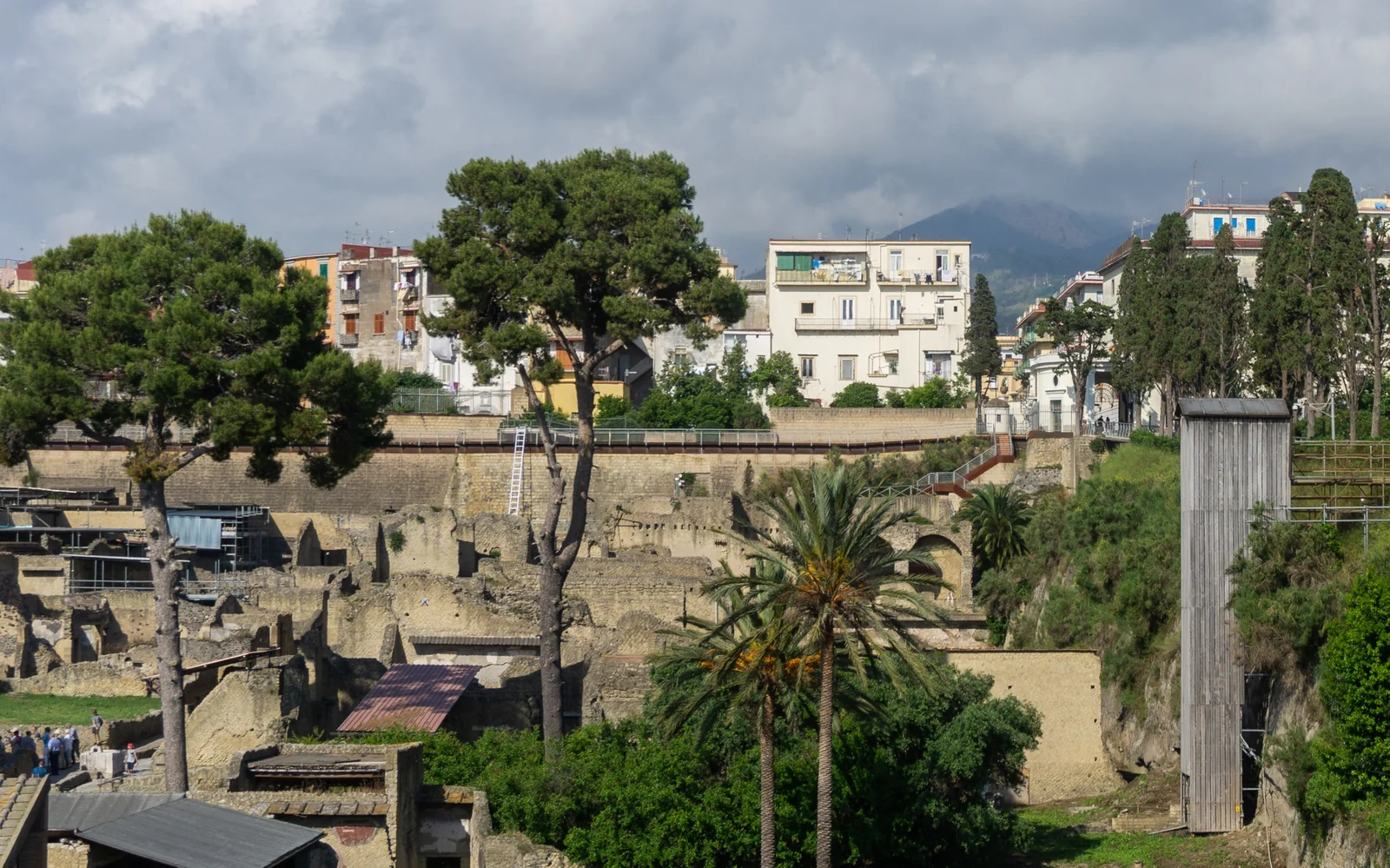
The Circumvesuviana is the commuter railway that circles the foot of Vesuvius. You want the line toward Sorrento, which calls at both archaeological sites. It runs from its own platforms at Napoli Garibaldi, on the lower level of the main station complex. Sources disagree about which Naples station some trains use, so read the departure board and confirm the platform before you queue.
Two stops matter. Ercolano Scavi is for Herculaneum, about 20 minutes from Naples. Pompei Scavi-Villa dei Misteri is for the Pompeii excavations, around 35 minutes out. Do not confuse it with the town of Pompei, which is served by Trenitalia trains. Board one of those by mistake and you face a longer walk to the main entrance.
Circumvesuviana tips
- Allow slack. These are commuter trains, not tourist shuttles. Delays and crowding happen, so do not plan a tight connection back to Rome.
- Watch your pockets. Crowded carriages and platforms are where petty theft happens in this region. Keep your phone and wallet in a front pocket or a zipped bag.
- Mind the stop name. You want the stop with Scavi (excavations) in the name, not just the town.
- Keep the ticket. You may need it again to leave the platform or if an inspector asks.
Day Trip or Overnight in Naples?
A day trip from Rome is feasible, and plenty of people do it. An early high-speed train, the Circumvesuviana to Pompeii, a late lunch in Naples and a train back in the evening works if you accept that you will rush. You get a strong taste of Pompeii and a glance at Naples, and nothing more. A big part of the day also disappears into stations and carriages.
An overnight stay changes the trip. You arrive without a deadline, see Pompeii or Herculaneum when the day is cooler and the crowds thinner, and still have an evening in a city that is best after dark. My view: if you can spare one night, take it. Naples deserves more than a late lunch.
| Day trip from Rome | One night in Naples | |
|---|---|---|
| Pace | Rushed, with a fixed return train | Relaxed, with time for the city |
| What you see | Pompeii or Herculaneum, plus a short stroll in Naples | One ancient site, the historic center and a proper dinner |
| Luggage | Daypack only | Leave bags at the hotel, travel light to the sites |
| Best for | Tight schedules, one-day stopovers | Most travelers, especially first visits |
If you want both Pompeii and Herculaneum, add a second night or pick one. Herculaneum is smaller and easier to cover in a morning, while Pompeii is large enough to fill most of a day. Many travelers also continue south from Naples, and our Amalfi Coast travel guide covers the next step.
Visiting Pompeii: What to Know
Pompeii was buried by the eruption of Vesuvius in 79 CE, and its streets, houses, shops and bathhouses lay under ash and pumice until excavation began centuries later. Together with Herculaneum and the villas at Torre Annunziata, it was inscribed as a UNESCO World Heritage Site in 1997. It is a big site, and a visit means a lot of walking on uneven stone with little shade.
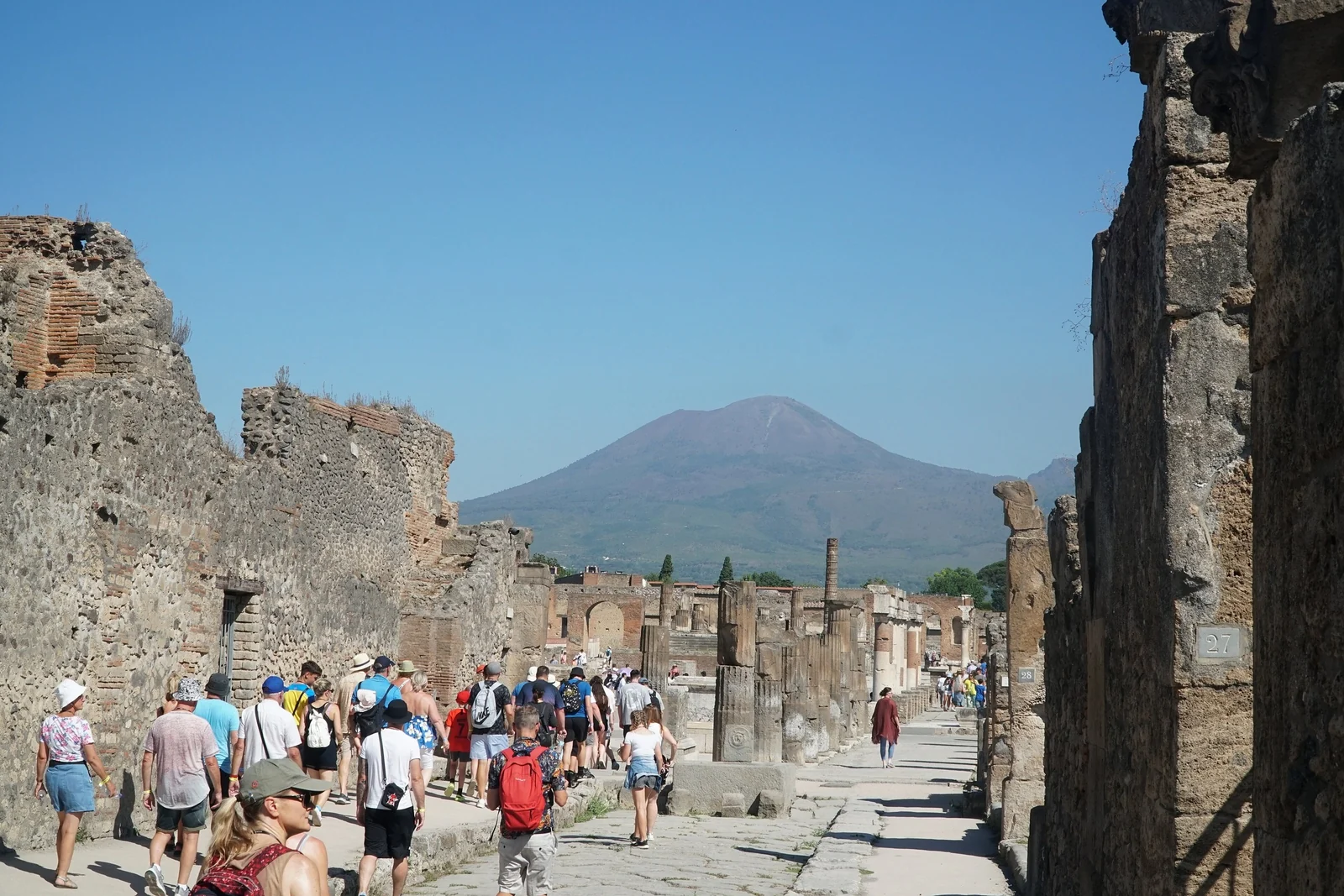
The park runs a timed-entry system with a daily visitor cap, and tickets are sold through the official seller linked from the Pompeii Archaeological Park site. Bags are limited to small sizes, listed there at about 30 by 30 by 15 centimeters, so a big suitcase will not get in. Rules, hours and ticket types change, so read the current page rather than relying on a blog.
A sensible route
Start at the entrance nearest where you arrive, head for the Forum first, then wander the side streets. The bathhouses, the amphitheater and the plaster casts of victims are the best known. Do not try to see everything. Pick a few areas, go slowly, and accept that the farthest corners will wait.
What to bring
- Comfortable shoes with grip, because the paving is rough and often slick.
- A water bottle and a hat, since shade is scarce on much of the site.
- A small bag that fits the size rules.
- A screenshot or printed copy of your ticket, in case signal is poor at the gate.
Herculaneum: The Smaller, Better Preserved Option
Herculaneum was also buried in 79 CE, but under a hot volcanic flow instead of falling ash, which is why wooden beams, upper floors and even some furniture survived in better shape than at Pompeii. The site is compact, you can see a lot in two to three hours, and it sits right in the modern town of Ercolano, a short walk from the station.
If you are short on time or traveling with someone who tires easily, Herculaneum is the easier choice. Tickets are sold through the park's official channels. I could not confirm an official joint ticket with Pompeii, so check the official pages before assuming one exists.
Climbing Mount Vesuvius
Vesuvius is the volcano that did it, and you can walk up toward the rim of the Gran Cono. According to the national park, access to this trail is allowed only with a ticket bought in advance online, entry is timed, and groups are accompanied by a guide. The shortest route takes up to about two hours round trip and a longer loop up to three.

Trail sales close on days when the regional civil protection service issues weather alerts at orange level or above, so have a fallback plan. The practical issue is time: Vesuvius plus Pompeii in one day is too much. Pair Vesuvius with Naples instead, and leave Pompeii for a second day. Full details are on the Vesuvius National Park site.
What to See in Naples
Naples rewards people who slow down. It is loud, dense and a bit chaotic, and it is also one of the great food and history cities of Italy. The historic center is a UNESCO World Heritage Site, listed in 1995.
- Spaccanapoli. The long, straight street that cuts the old center in two. Walk it for the churches, shrines, workshops and the washing hung overhead.
- National Archaeological Museum. It holds many of the finest finds from Pompeii and Herculaneum, so it is a natural partner to the sites, or a good substitute if you have no time to go there.
- Galleria Umberto I. A glass-roofed 19th-century arcade near the opera house, worth a short stop.
- Pizza. Naples is the birthplace of pizza, and the craft of the Neapolitan pizza maker is on UNESCO's intangible heritage list. Eat at least one here.

Hold off on the checklist. An afternoon of wandering the old streets and eating well is a better use of time than trying to hit every museum.
Luggage, Safety and Booking Ahead
Naples has a reputation, partly earned, for petty theft. Most visitors have no trouble, and a few habits cover the risk: keep valuables out of back pockets, carry bags in front on crowded trains, and do not leave phones on café tables. Be wary of anyone who offers unasked help at ticket machines, and use the official machines or windows.
Luggage is the real constraint on a day trip. Pompeii only admits small bags, and you will not want to haul a suitcase through the ruins. Leave larger bags at your hotel, or ask whether the station or your accommodation offers storage, and confirm that before you rely on it.
- Book the high-speed train a few days to weeks ahead for the best fares and your preferred time.
- Book Pompeii on the official site, because of timed entry and daily limits.
- Book the Vesuvius trail online before you travel, since it cannot be bought at the gate.
- Check Herculaneum opening times on the official ticket page.
- Keep a buffer for the return train to Rome, especially if you hold a non-flexible ticket.
If you are choosing where to go next, our Italy travel guides show where else the rail network can take you.
Rome to Naples and Pompeii FAQ
How long does the train from Rome to Naples take?
The fastest high-speed trains take a little over an hour from Roma Termini to Napoli Centrale. Regional trains take roughly twice as long or more. Check the operator timetable for the exact time of the service you plan to use.
Is it better to take Frecciarossa or Italo?
Both are fast, comfortable and similar in journey time on this route. Compare fares and departure times on both sites, and choose the one that suits your schedule. Buying from the operator directly usually avoids extra booking fees.
How do I get from Naples to Pompeii by train?
Take the Circumvesuviana toward Sorrento from Napoli Garibaldi and get off at Pompei Scavi-Villa dei Misteri, around 35 minutes away. That stop is beside the excavations, unlike the town station of Pompei, which is farther from the main entrance.
Can I visit Pompeii as a day trip from Rome?
Yes, and many travelers do. Take an early high-speed train, go straight to Pompeii, and allow generous time for the return. It works, but a night in Naples makes the day far less rushed and the city far more enjoyable.
Do I need to book Pompeii tickets in advance?
Booking ahead is wise. The park uses timed entry and a daily visitor limit, and tickets are sold through the official seller linked from the park site. Check the current rules on the official page before you travel.
Is Naples safe for tourists?
Mostly yes, with normal big-city care. Petty theft is the main concern, particularly on crowded trains and around the station. Keep valuables in front, stay alert in crowds and use official ticket machines or windows.
Can I climb Vesuvius without a ticket?
Not the Gran Cono crater trail. The national park states that this trail is accessible only with an online pre-purchased ticket for a set time. Other lower paths on the mountain are separate, so check the park site for current rules.