A Meteora day trip from Athens is doable, but it is a long one. Meteora is a cluster of sandstone and conglomerate pillars in Thessaly, central Greece, with monasteries perched on top of them. Six of those monasteries are still inhabited and open to visitors, and the whole site has been on the UNESCO World Heritage List since 1988.
The honest answer to "day trip or overnight?" is that one very full day works if you leave early and accept that you will see two or three monasteries and probably miss the sunset. One night in Kalambaka or Kastraki makes the trip far better. This guide covers how to get there, which monasteries to choose, the dress code, the best sunset spots, the hiking trails and when to go. For the city you are starting from, see our Athens travel guide.
What Meteora Is and Why It Looks Like That
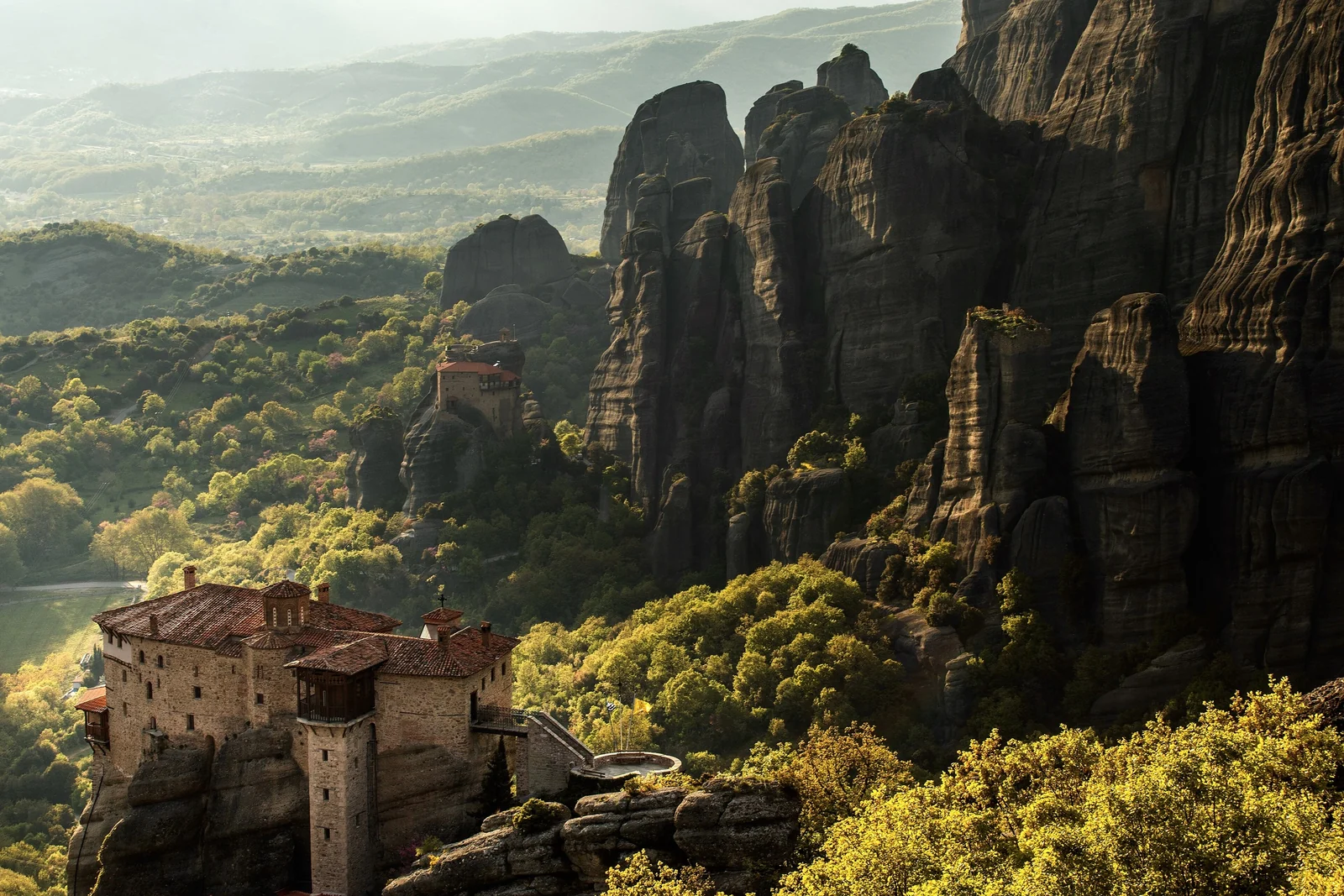
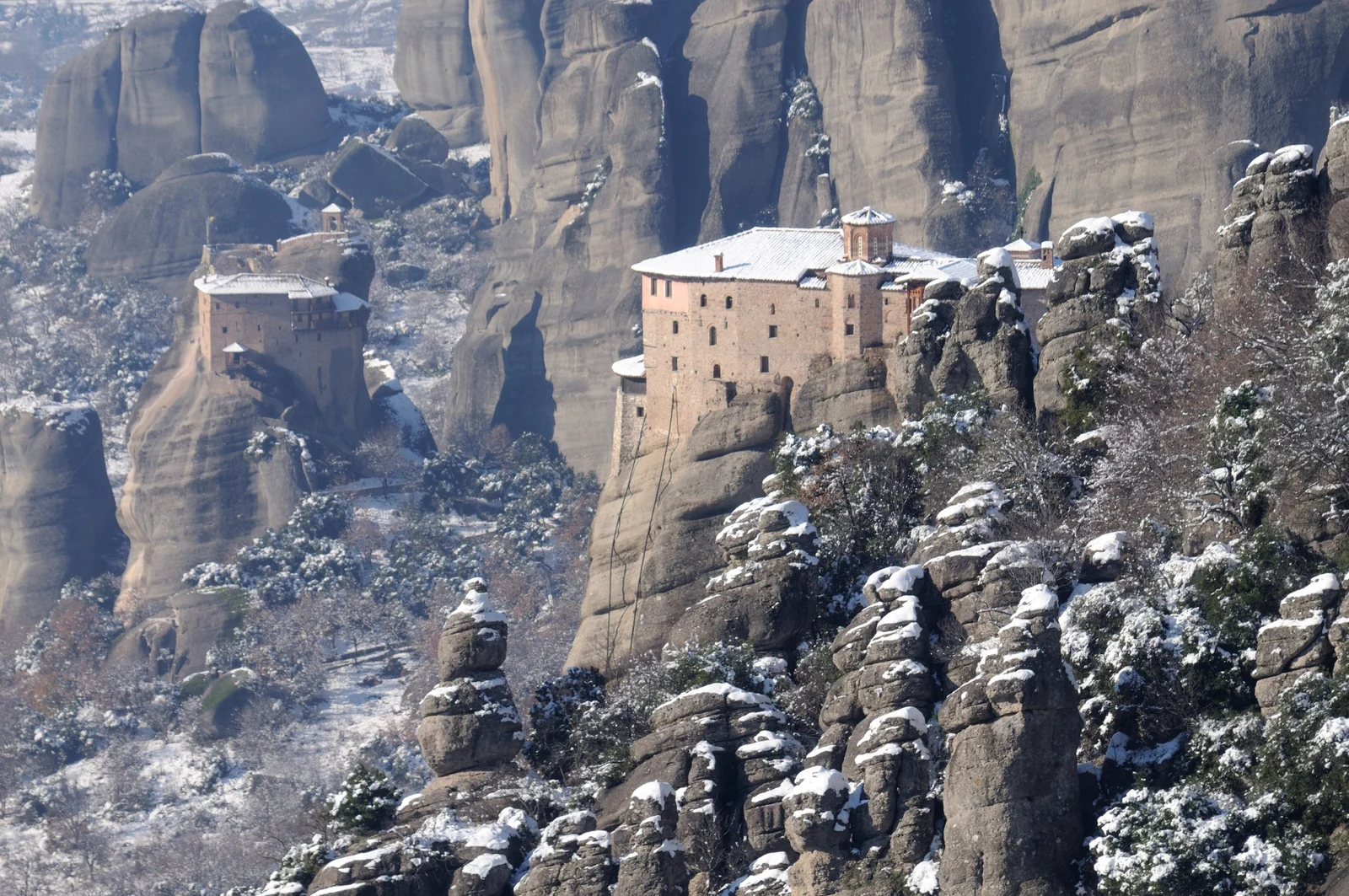
The pillars rise high above the Pineios plain, grey and smooth, some of them sheer on every side. They are made of sandstone and conglomerate, laid down by rivers and shaped over millions of years by uplift, cracking and weathering. Nothing else in Greece looks like them. The nearest comparison on this site is the rock landscape of Cappadocia, though Meteora is harder, darker and more vertical.
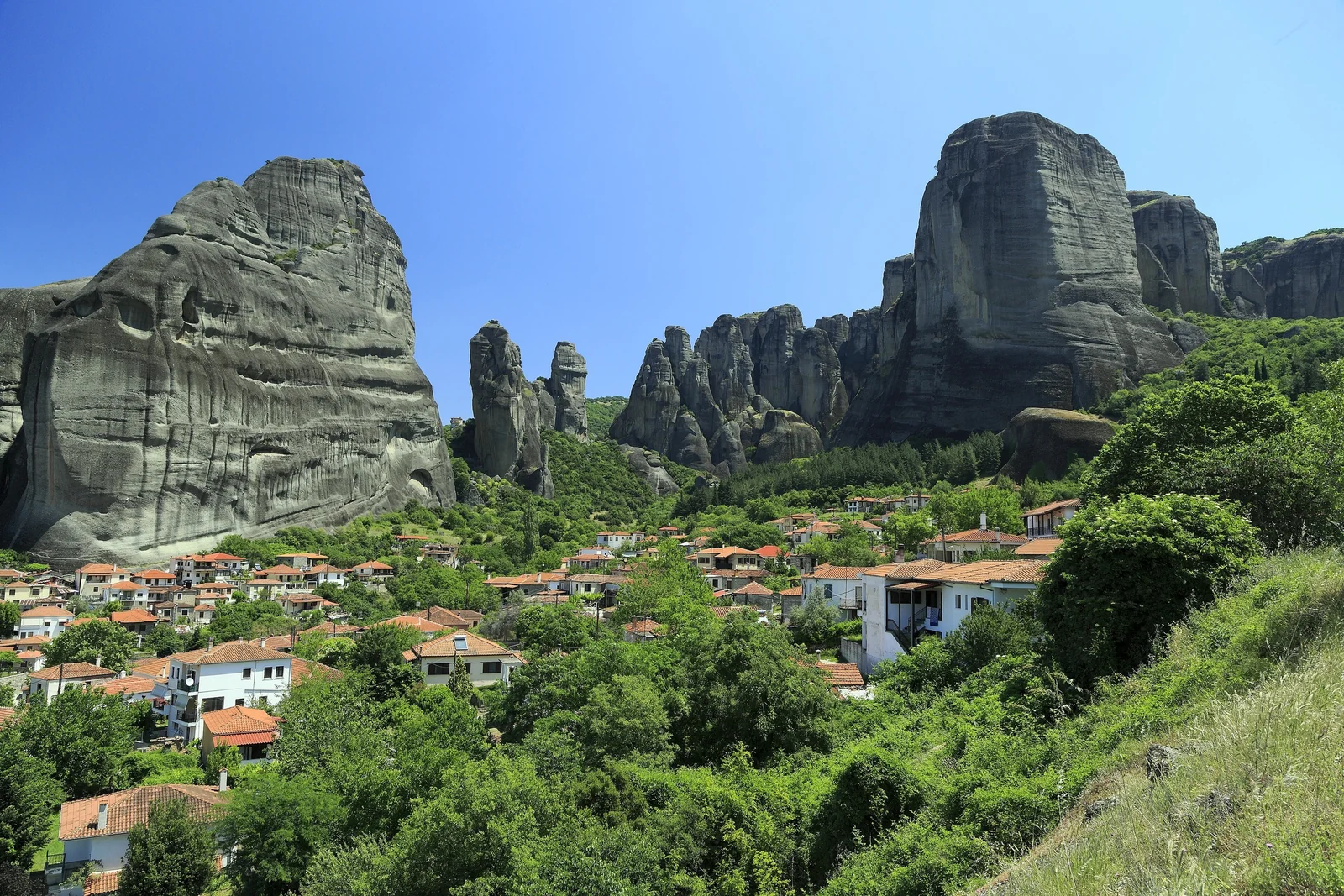
The name comes from a Greek word meaning "suspended in the air," which is exactly how the buildings read from the valley floor. The monasteries sit between the town of Kalambaka and the village of Kastraki, so those two are where most visitors sleep and eat.
A Short History of the Hermits and Monasteries
Monks were living in the caves and rock hollows here by the 11th century. They were hermits, each in a separate crack or ledge. The pillars were an ideal retreat: remote, hard to reach and, in a century of raids, hard to attack.
The organized community began when Athanasios the Meteorite arrived from Mount Athos in the 1340s. He founded the Great Meteoron on the broadest rock, and more monasteries followed. At their peak in the 16th century there were 24. Most were later abandoned or fell into ruin, leaving the six that you can visit today. Two of the surviving monasteries are home to nuns.
Until the 1920s, access was by long ladders and by nets hauled up on ropes. Stairs cut into the rock and bridges replaced them, which is why a visit today is a walk rather than a ride in a basket.
Which Monasteries to Visit
The six active monasteries are the Great Meteoron, Varlaam, Roussanou, Holy Trinity, St. Stephen and St. Nicholas Anapausas. You do not need to see all of them. Each has a church with frescoes, and after the third the details start to blur. A sensible day covers two or three.
Great Meteoron and Varlaam
The Great Meteoron is the largest and the oldest, and it has the most to see inside. It is also the busiest. Varlaam sits on a neighboring pillar and is a good second stop. Both involve a climb of stairs, so plan for it.
Roussanou and St. Nicholas Anapausas
Roussanou is the one you have seen in the photographs, with its walls running right to the edge of the rock. It is reached by a short bridge and is run by nuns. St. Nicholas Anapausas sits on a tall pillar close to the main road, so it combines easily with Roussanou if you are short on time.
Holy Trinity and St. Stephen
Holy Trinity has a dramatic setting and steps to match, so it suits people who are comfortable with stairs. St. Stephen is reached by a bridge instead of a long staircase, which makes it the easiest choice for anyone who wants to limit the climbing.
Closing Days, Hours and Tickets
Each monastery closes on one weekday, and the days are staggered so that most of them are open on any given day. The exact day for each monastery, the opening hours and the winter schedule differ between sources and change over time, so check the date you plan to go before you book a train or a tour. Do not assume that a day that worked for a friend will work for you.
- Pick your two or three monasteries first, look up their closing days, then choose your travel day around them.
- Hours are shorter in winter, and the last entry is before the closing time.
- Entry is charged per monastery, usually at the door and often in cash. Children below a certain age are often exempt, but confirm the current rules on the day.
- Allow roughly 45 minutes to an hour for each monastery, plus time for parking and stairs.
Dress Code and Etiquette
The Meteora monasteries dress code is strict, because these are working religious communities. Shoulders must be covered for everyone. Men wear long trousers, and women wear a skirt or dress that reaches below the knee. Most monasteries lend wrap skirts at the entrance, but there is no need to rely on that.
- Carry a light scarf or shawl. It covers shoulders and, if asked, your head.
- Wear shoes with grip, since stairs and bridges can be slick when wet.
- Photography is usually fine outside, but many churches restrict it inside, and some restrict flash. Follow the signs.
- Keep your voice down in the churches and do not touch the icons or frescoes.
Shorts are the gray area. Some visitors report that longer shorts are tolerated in summer, others that they are not. If you want to avoid the question, pack light trousers or a long skirt.
Athens to Meteora: Train, Bus, Tour or Car
Athens to Meteora by train was once simple: a direct service to Kalambaka took around four hours from Athens Larissa station. Track damage after severe floods interrupted the final stretch, and the arrangement has been a train to Palaiofarsalos followed by a connecting bus to Kalambaka, which makes the journey noticeably longer. Check the current timetable and whether the direct service has resumed on the Hellenic Train website before you plan around it.
| Option | Rough one-way time | Best for | Watch out for |
|---|---|---|---|
| Train (with a bus transfer if needed) | About 5 hours or more | Overnight stays, relaxed travel | Timetable changes, transfer time, a late return |
| Long-distance bus | Roughly 4.5 to 6 hours | Budget travelers who like fixed times | Some routes change at Trikala |
| Organized day tour | Full day, mostly by road | One-day visitors who want no planning | Short time at each stop, tour-chosen monasteries |
| Rental car | Roughly 4 to 5 hours of driving | Flexibility and sunset viewpoints | Long drive, mountain roads, parking at the monasteries |
For a true one-day trip, a guided tour or a car is usually the realistic choice, because the train and bus combination leaves very little daylight on site. Taking the train and staying the night is the better version of the same plan. Once you are in Kalambaka, you can use a taxi or a local shuttle for the monastery road, or walk if you are fit.
Kalambaka or Kastraki: Where to Stay
Kalambaka is the town. It has the train station, the bus terminal, shops and the widest choice of restaurants and rooms, and the rocks loom over the north side of town. Kastraki is a small village a short drive away, right under the pillars. It is quieter and closer to the hiking trails and the sunset terraces.
If you arrive by public transport, choose Kalambaka. If you have a car or want to be on a trail at dawn, Kastraki is more atmospheric. Either way, book early for the busy months, and ask your host about a pickup from the station.
Meteora Sunset Spots
The Meteora sunset spots that people talk about most are the rock terraces and viewpoints along the monastery road, where the pillars catch the last light and the plain turns pink. Popular choices include the lookout area near Roussanou and a rock called Psaropetra, a common stop on sunset tours. The main terrace gets crowded, so arrive well before the sun goes down.
- Aim to be at your spot at least an hour early, because parking and good places fill up.
- Bring a light jacket, since it cools quickly once the sun disappears.
- If you are driving back in the dark, go slowly. The road is narrow with tight bends.
- The monasteries close before sunset, so treat the sunset as a separate activity from your visits.
A day-tripper on a tour often sees the rocks in golden light only on the way out. If sunset matters to you, stay overnight and watch it from a terrace in your own time.
Hiking Trails Around the Rocks
Meteora is a good walking destination as well as a sightseeing one. Old paths used by the monks link Kastraki and Kalambaka with the monasteries and pass hermit caves, ruined cells and small chapels. They are rocky, sometimes steep and not always well signed, so a map, a charged phone and proper shoes are not optional.
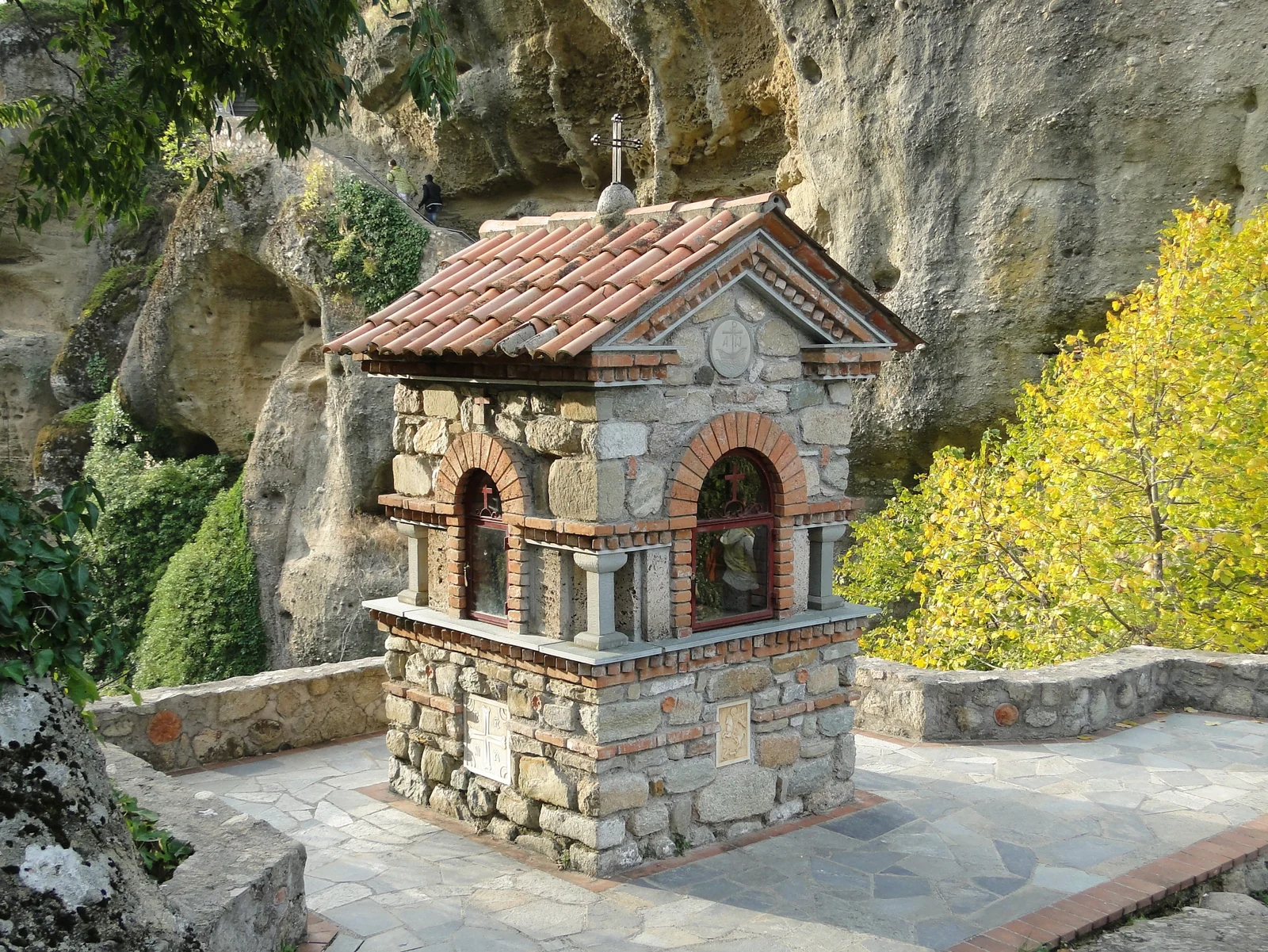
Guided sunset hikes of a few hours leave from Kastraki and visit hermit caves, the rock called Holy Spirit and viewpoints away from the main road. They are a good way to see the pillars from below. If you walk on your own, avoid wet or windy weather, carry water and tell someone where you are going.
Best Season and a One-Day Plan
Spring and autumn are the most comfortable seasons, with mild temperatures, clear views and fewer visitors than in the height of summer. Summer is hot and crowded, particularly in the middle of the day. Winter can be cold and snowy, which makes the rocks look dramatic, but hours may be shorter and the stairs can be icy.
| Season | What to expect |
|---|---|
| Spring | Green plain, mild days, good light |
| Summer | Hot, busy, long daylight for sunset |
| Autumn | Warm, quieter, clear air |
| Winter | Cold, possible snow, shorter hours |
If you only have one day, follow this order:
- Leave Athens as early as you can, by tour or car, or take the first train and bus connection.
- Start at the monastery with the longest climb, while you are fresh.
- Visit a second and, if you have the energy, a third monastery before they close.
- Eat lunch in Kalambaka or Kastraki.
- Stop at a viewpoint on the way out, and head back to Athens.
More of Greece is worth adding to a longer trip. See our Crete travel guide, or browse all the Greece guides. For another town built into rock, try our Matera guide.
Meteora Day Trip FAQ
Is Meteora worth a day trip from Athens?
Yes, if you start early and accept that you will see two or three monasteries rather than everything. The travel time is long, so many visitors prefer one night in Kalambaka or Kastraki, which also allows time for a sunset and a walk.
How do you get from Athens to Meteora by train?
You travel from Athens Larissa station toward Kalambaka. A direct service used to run, but the final stretch has needed a train to Palaiofarsalos with a connecting bus. Check the Hellenic Train website for the current arrangement before booking.
What is the dress code for the Meteora monasteries?
Cover your shoulders. Men wear long trousers, and women wear a skirt or dress below the knee. Most monasteries lend wrap skirts at the entrance, but bringing a scarf and suitable clothes is easier and more respectful.
Which Meteora monasteries are open, and on which days?
Six are active: the Great Meteoron, Varlaam, Roussanou, Holy Trinity, St. Stephen and St. Nicholas Anapausas. Each closes one day a week, and the days differ, so check opening days for the date you plan to visit.
Where are the best Meteora sunset spots?
Look for the rock terraces and lookouts along the monastery road, including the area near Roussanou and the rock called Psaropetra. They are popular, so arrive early and bring a light jacket for the cool air afterward.
Should I stay in Kalambaka or Kastraki?
Choose Kalambaka if you arrive by train or bus, because it has the station and the most restaurants. Choose Kastraki for a quieter base right under the rocks and closer to the hiking trails and sunset spots.
How many monasteries can you see in one day?
Most visitors manage two to four, depending on the closing days, the stairs and the time they have. Each takes about 45 minutes to an hour, plus the time to travel between them and wait at the entrance.