


Most visitors to Greece see the same handful of places: Athens, Santorini, Mykonos and perhaps Crete. Yet some of the country’s most memorable destinations are lesser-known places in Greece that many international travelers never reach, from stone villages above a deep gorge in Epirus to a medieval town hidden on a rock off the Peloponnese.
This guide lists 12 underrated destinations in Greece, grouped by region, with what makes each special, how to reach it and when to go. If you are planning your very first trip and want the classic highlights, start with our Greece travel guide instead; this list is for travelers who want to go further.
Why Go Beyond the Famous Greek Destinations
Greece’s headline islands are wonderful but can be crowded and expensive in summer. Quieter regions offer lower prices, more authentic village life, and landscapes that surprise people who think of Greece only as beaches: lakes full of pelicans, forested mountains, castles and caves. Many of these places are busiest with Greek visitors on weekends and holidays, so international travelers often have them largely to themselves on weekdays.
| Destination | Region | Best for |
|---|---|---|
| Zagori and Vikos Gorge | Epirus | Hiking, stone villages |
| Ioannina | Epirus | Lakeside city, history |
| Prespa Lakes | Western Macedonia | Birdwatching, remote villages |
| Kastoria | Western Macedonia | Byzantine churches, lake |
| Edessa | Central Macedonia | Waterfalls, short break |
| Pelion | Thessaly | Mountain villages and beaches |
| Nafpaktos | Western Greece | Venetian harbor |
| Monemvasia | Peloponnese | Medieval fortress town |
| Mani Peninsula | Peloponnese | Tower houses, caves, road trip |
| Methoni and Pylos | Peloponnese | Castles, Mycenaean palace, beaches |
| Amorgos | Cyclades | Hiking, cliffside monastery |
| Symi | Dodecanese | Colorful harbor, day trips from Rhodes |
Northern Greece: Mountains and Lakes
1. Zagori and the Vikos Gorge
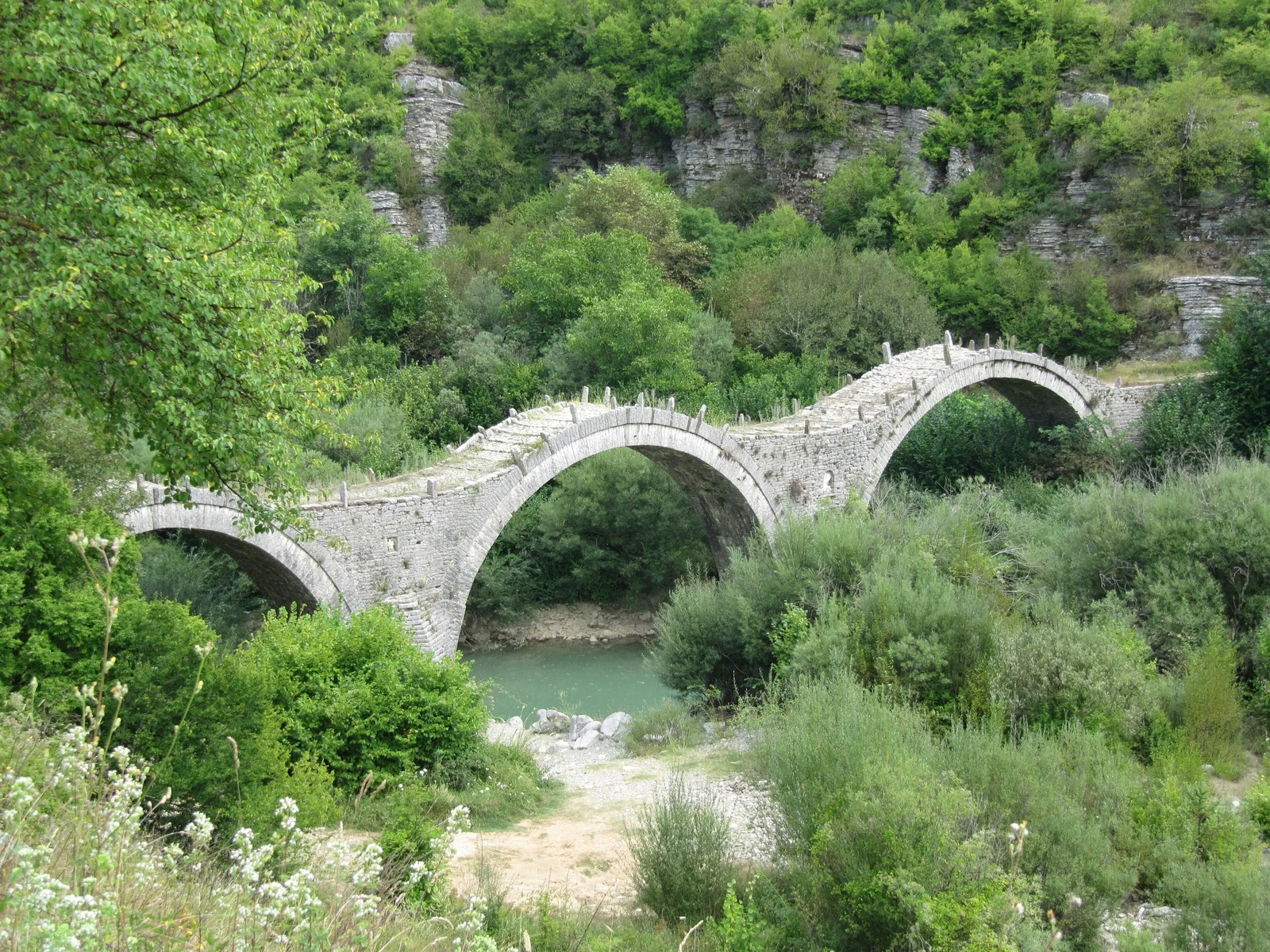
In the Pindus mountains of Epirus, the Zagori region is made up of 46 villages of grey stone houses, slate roofs and cobbled paths, linked by more than 160 arched stone bridges built mostly in the 18th and 19th centuries. In 2023 the Zagori Cultural Landscape was added to the UNESCO World Heritage List.
The Vikos Gorge, reaching about 990 meters deep near Monodendri, is one of the deepest gorges in the world relative to its width and lies within the Vikos–Aoös National Park. Hike the gorge floor between Monodendri and Vikos village, or enjoy the views from the Oxya and Beloi viewpoints. Villages such as Papigo, Monodendri and Kipi make good bases.
2. Ioannina
The capital of Epirus sits on the shore of Lake Pamvotis. Its walled castle quarter holds the Fethiye Mosque, the tomb associated with Ali Pasha, the powerful Ottoman-era ruler of the region, and museums of Byzantine art and silversmithing. Take the short boat ride to the lake’s inhabited island, where the Ali Pasha Museum occupies the monastery in which he was killed in 1822. Ioannina is also the natural gateway to Zagori.
3. The Prespa Lakes
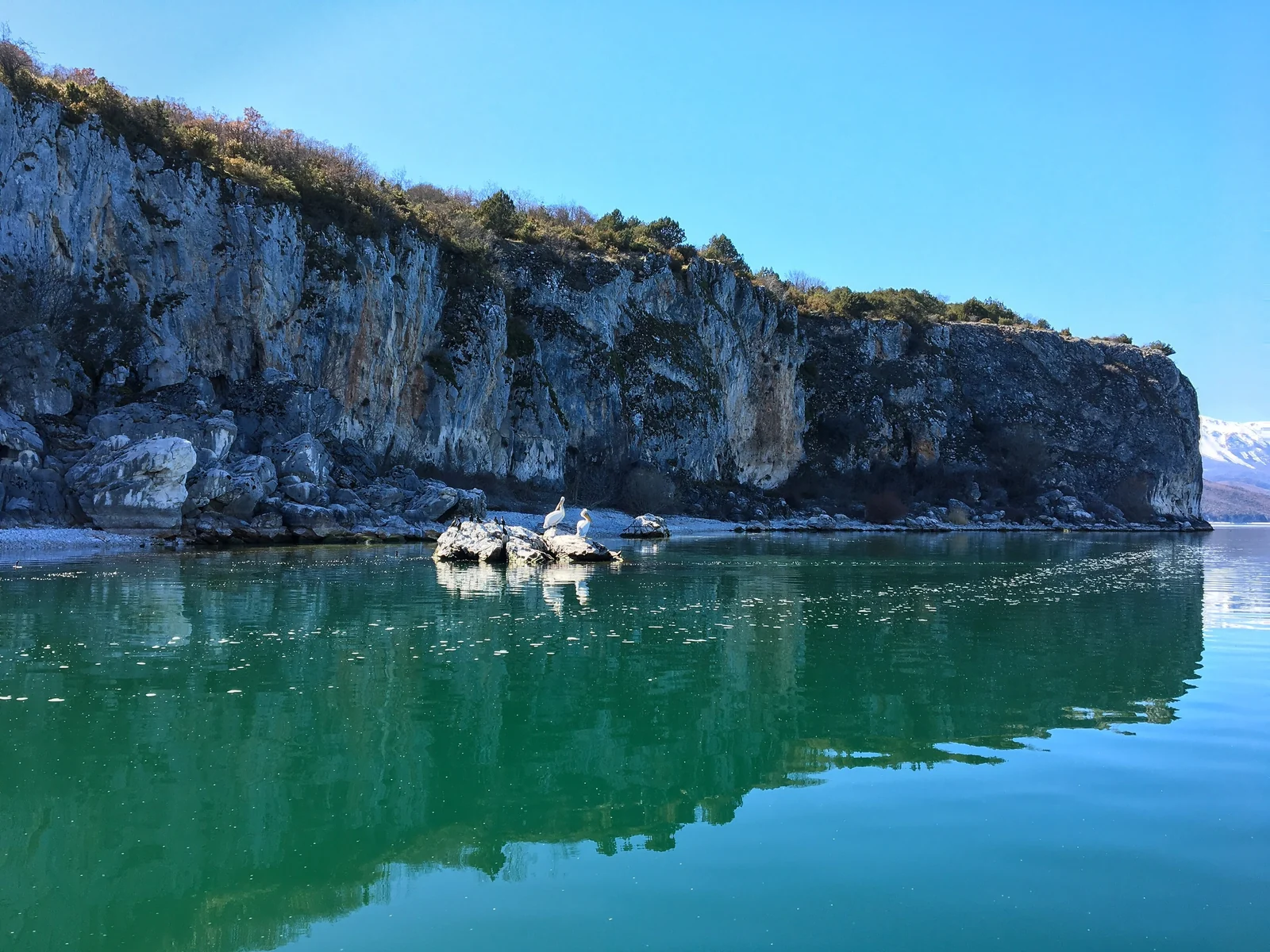
In the far northwest, Great Prespa is shared by Greece, Albania and North Macedonia, while Small Prespa lies almost entirely in Greece. The area is protected as a national park and wetland of international importance, and it is one of the most important breeding places in Europe for Dalmatian and great white pelicans. Walk the floating footbridge to the islet of Agios Achilleios, with the ruins of a Byzantine basilica, or take a boat from Psarades to see rock-painted hermitages along the shore.
4. Kastoria
Built on a peninsula in Lake Orestiada, Kastoria is known for dozens of small Byzantine and post-Byzantine churches with painted interiors, and for grand Ottoman-period mansions built by wealthy fur merchants, a trade still linked to the town. A lakeside walk around the peninsula is the best way to see it.
5. Edessa
Edessa, in Central Macedonia, is famous for the waterfalls that tumble over a cliff right at the edge of the town. A park with paths and viewing platforms surrounds them, and you can walk down beside the falls. Old textile mills and the nearby Loutra Pozar hot springs make it an easy weekend trip from Thessaloniki.
Central Greece: Pelion and the Gulf of Corinth
6. Pelion
The mountainous peninsula of Pelion rises above the port city of Volos. In mythology it was the home of the centaurs; today it is known for stone villages such as Makrinitsa and Tsagarada, beech and chestnut forests, old cobbled mule paths and beaches on both the Aegean and the Pagasetic Gulf sides. It is green and cool when much of Greece is scorched, and a year-round destination with skiing in winter.
7. Nafpaktos
On the north shore of the Gulf of Corinth, Nafpaktos has a small, perfectly enclosed Venetian harbor and a castle whose walls climb the hill above town. Known to Italians as Lepanto, it gave its name to the naval Battle of Lepanto in 1571, fought further west, in which Miguel de Cervantes was wounded; a statue of the writer stands by the harbor. The Rio–Antirrio bridge nearby connects it with the Peloponnese.
The Peloponnese: Castles and Wild Coasts
8. Monemvasia
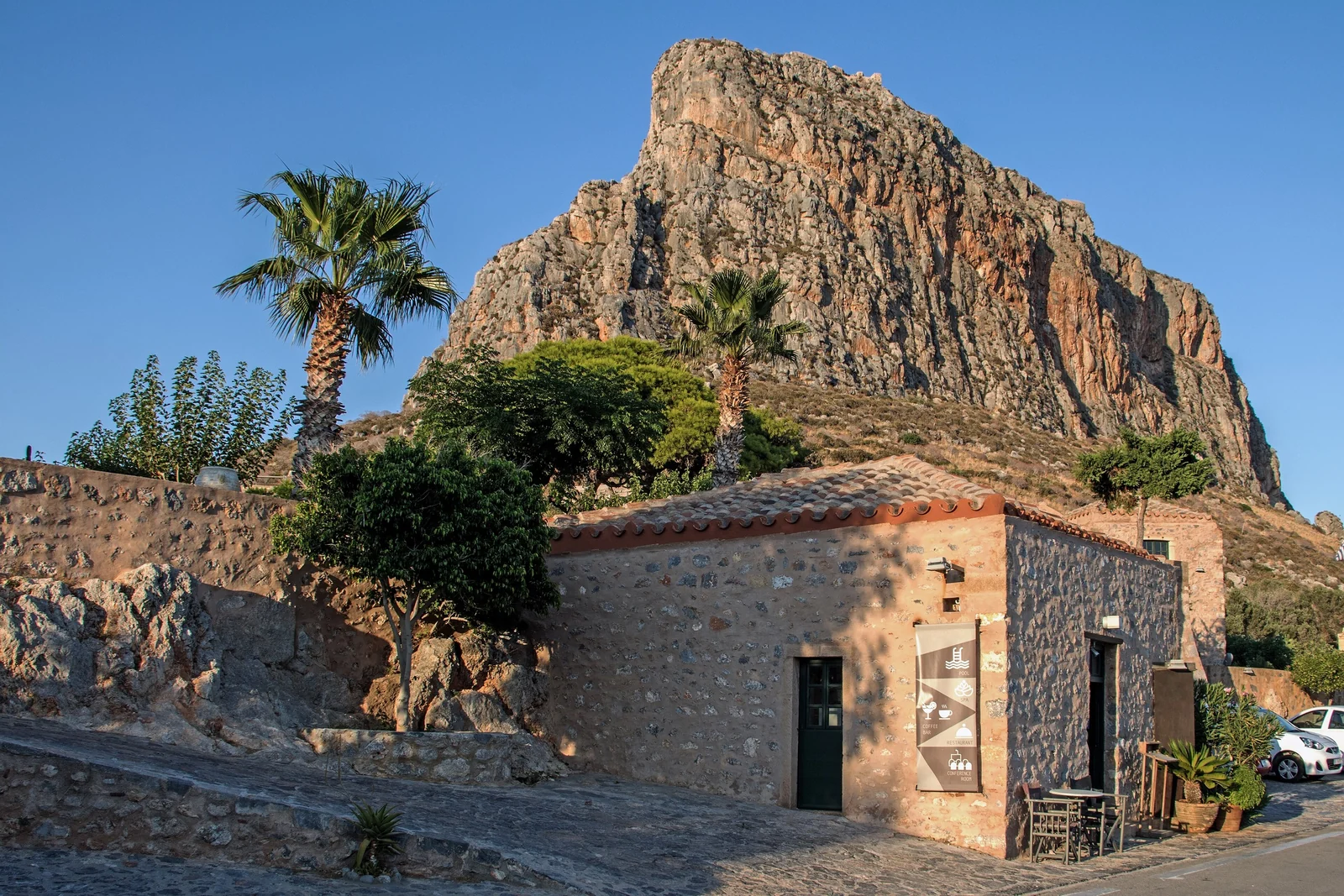
Monemvasia occupies a huge rock off the southeast coast of the Peloponnese, linked to the mainland by a short causeway. Its name means “single entrance,” and from the road you see almost nothing of the town until you pass through its only gate. Inside, the car-free lower town has stone houses, churches and vaulted lanes, while a path climbs to the ruined upper town and the church of Agia Sofia on the clifftop. The town gave its name to Malvasia wine.
9. The Mani Peninsula
The Mani, the central finger of the southern Peloponnese, is a dry, rugged land of stone tower houses built by feuding clans. Drive south from Areopoli through villages such as Vathia to Cape Tenaro, the southernmost point of mainland Greece. Near Pyrgos Dirou, boat tours glide through the flooded chambers of the Diros caves.
10. Methoni and Pylos
On the southwest coast, Methoni has a vast Venetian fortress on a promontory ending in a small octagonal sea tower called the Bourtzi. Nearby Pylos overlooks Navarino Bay, site of a decisive naval battle in 1827 during the Greek War of Independence. About 17 kilometers north of Pylos, the Mycenaean Palace of Nestor reopened in 2016 under a new protective roof, and the horseshoe-shaped Voidokilia beach is close by.
Underrated Greek Islands
11. Amorgos
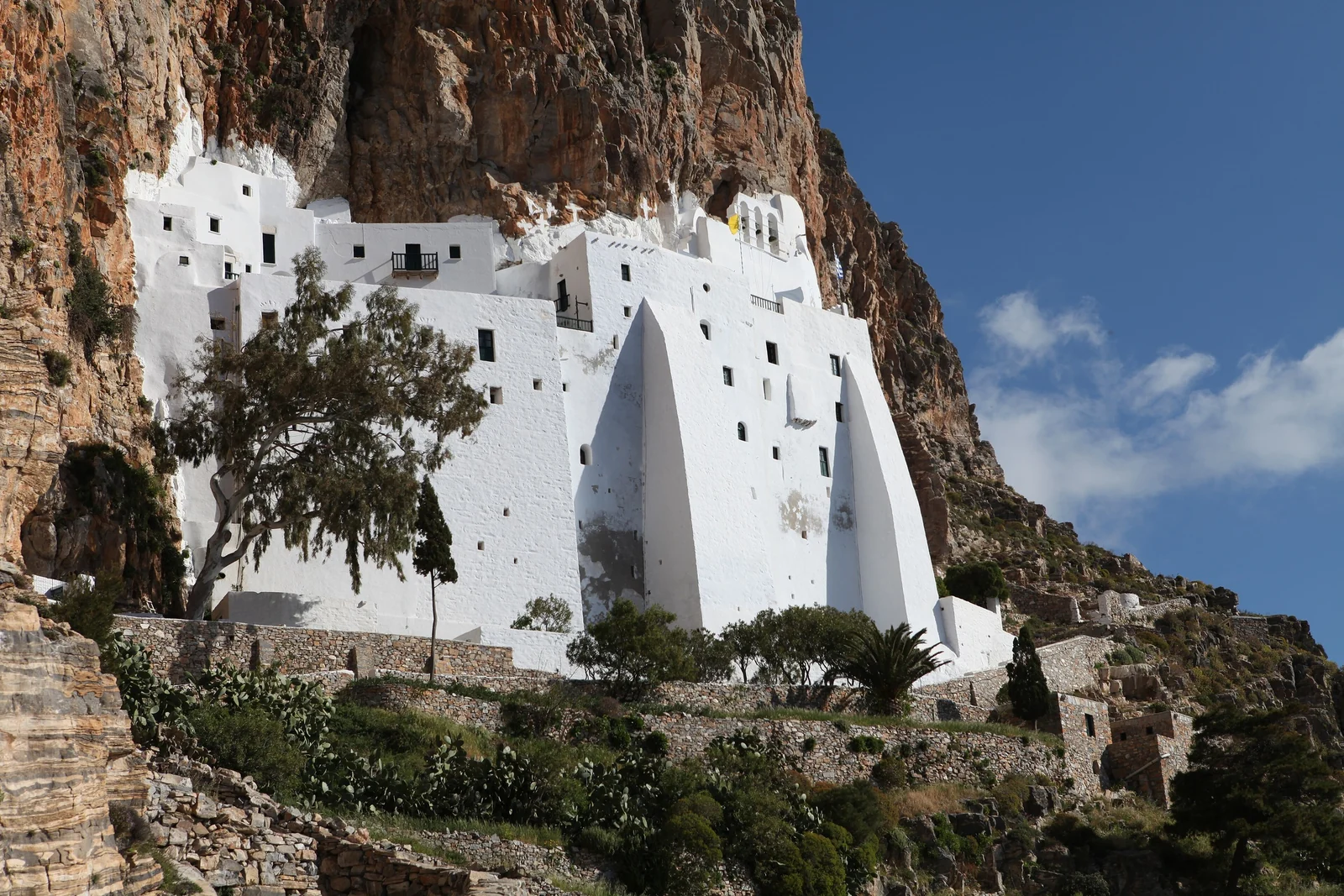
The easternmost of the Cyclades, Amorgos is a long, mountainous island with a network of old footpaths, clear water and a relaxed pace. Its landmark is the Monastery of Panagia Hozoviotissa, a white building wedged into a cliff about 300 meters above the sea; its history reaches back to the Byzantine era. Visitors should dress modestly. Amorgos is also reachable by ferry from Naxos and Santorini, which makes it an easy add-on to a Cyclades trip.
12. Symi
Symi’s harbor, Gialos, is lined with pastel neoclassical houses built during the island’s prosperous era of shipbuilding and sponge diving. Climb the Kali Strata steps to the upper town for the view, or take a boat to the Monastery of Panormitis in the south. Symi is a popular day trip from Rhodes, but staying overnight lets you enjoy it after the day boats leave.
More quiet islands to consider
- Serifos: a rocky Cycladic island with a dramatic hilltop Chora and sandy bays, close to Piraeus.
- Karpathos: a wild Dodecanese island where the mountain village of Olympos keeps strong traditions.
- Lefkada: an Ionian island connected to the mainland by a road, with high cliffs above turquoise beaches.
Planning a Trip to Lesser-Known Greece
Most of the mainland destinations above are best explored by car. Ioannina, Thessaloniki, Kalamata and Volos have airports with domestic or seasonal international flights, and KTEL buses link larger towns, but services to villages are limited. Island destinations rely on ferries that may run only a few times a week outside summer, so check schedules before you plan fixed dates.
- Best time: May, June, September and October suit most places. The mountains of Epirus, Pelion and Prespa are pleasant in summer and beautiful in autumn; winter brings snow at altitude.
- Combine regions: Ioannina, Zagori and Prespa fit well together in the north; Monemvasia, the Mani, Methoni and Pylos make a classic Peloponnese loop.
- Book weekends early: Greek families fill Zagori, Pelion and Monemvasia on long weekends and holidays.
- Respect protected areas: stay on trails in national parks and keep distance from nesting birds at Prespa.
For general information, the official Visit Greece website covers regions and transport. Browse all our Greece destination guides for more trip ideas.
Lesser-Known Greece FAQ
What are the most underrated places in Greece?
Good candidates include the Zagori villages and Vikos Gorge in Epirus, the Prespa Lakes, the medieval rock town of Monemvasia, the Mani Peninsula, Pelion and islands such as Amorgos and Symi. All offer striking scenery or history with far fewer international visitors than Santorini or Mykonos.
Where can I avoid crowds in Greece in summer?
Head for the mountains of mainland Greece, such as Zagori, Pelion and the Prespa area, which are cooler and quieter than the islands. Among islands, smaller or harder-to-reach ones such as Amorgos, Serifos and Karpathos are calmer than the famous Cyclades, though August is busy almost everywhere.
Is Zagori worth visiting?
Yes, especially for walkers. The 46 stone villages, old arched bridges and the Vikos Gorge form a landscape unlike anywhere else in Greece, and since 2023 the Zagori Cultural Landscape has been a UNESCO World Heritage Site. Allow at least two or three nights.
Do I need a car to explore lesser-known Greece?
For the mainland, a car is strongly recommended. Buses connect the main towns, but reaching villages, viewpoints and trailheads without one is slow. On islands such as Amorgos and Symi, local buses, taxis and boats are usually enough.
Can you stay overnight in Monemvasia?
Yes. The lower town inside the walls has guesthouses in restored stone buildings, and there are more options in the modern village of Gefyra across the causeway. Staying overnight lets you see the old town in the quiet evening after day visitors have left.
Where can you see pelicans in Greece?
The Prespa Lakes in northwestern Greece host one of Europe’s most important breeding colonies of Dalmatian and great white pelicans. Spring and early summer are the best times for birdwatching; follow the national park rules and keep your distance from nesting areas.