The easiest Cyclades island hopping itinerary for a first trip is ten days that link Naxos, Paros, Milos and Santorini by ferry from Athens, with Mykonos and Sifnos as swaps depending on your taste. Naxos is the big, easygoing one, Paros the all-rounder, Milos the beach and rock-formation island, and Santorini the volcanic showpiece you can see in a day or two.
Ferries tie it all together, so the plan below is built around boat logistics first and sightseeing second. You will find a day-by-day route, sample sailing times, a note on the summer meltemi wind that can upset schedules, the best season, and a quick guide to which island suits which kind of traveler. For the mainland leg, see our Athens travel guide.
How Cyclades Island Hopping Works
The Cyclades are a scatter of islands in the central Aegean. Most travelers reach them from Piraeus, Athens' main port, though Rafina and Lavrio also serve some islands. Several islands have airports too, including Naxos, Paros, Milos, Mykonos and Santorini, so you can fly one way and sail the other.
Two types of boat do the work. Conventional ferries are large, cheap and slow, with open decks and a cafeteria. High-speed catamarans cut the journey time substantially but cost more and are the first to be canceled in rough weather. Neither type is automatically better; it depends on your schedule and your stomach.
Schedules are the real constraint. Not every pair of islands is linked directly, and some routes run only in the busy months, so build the itinerary around what sails on your dates, not the other way round. A map is misleading here: two islands that look like neighbors can have no direct boat at all.
A 10-Day Cyclades Itinerary at a Glance
| Days | Base | Why go | Getting there |
|---|---|---|---|
| 1–3 | Naxos | Old town, Portara, beaches, mountain villages | Ferry from Piraeus |
| 4–5 | Paros | Parikia, Naoussa, Lefkes, Antiparos day trip | Short hop from Naxos |
| 6–7 | Milos | Sarakiniko, boat trips, fishing villages | Check seasonal links from Paros |
| 8–9 | Santorini | Caldera, Oia, Fira, Akrotiri | Ferry from Milos or via Paros or Naxos |
| 10 | Santorini or Athens | Departure | Flight or ferry back |
Eight nights is the minimum for this route; ten days lets you absorb a delayed boat. Every island change eats a morning, so resist the urge to add a fifth island. If you want to include Mykonos or Sifnos, replace one of the Naxos or Paros nights rather than squeezing in extra transfers.
Naxos: Where the Trip Starts
Naxos is the largest of the Cyclades, and it feels like a real place rather than a postcard. Farming villages sit in the hills, the beaches along the west coast run for miles, and the main town, Chora, tumbles up from the harbor to a Venetian kastro.
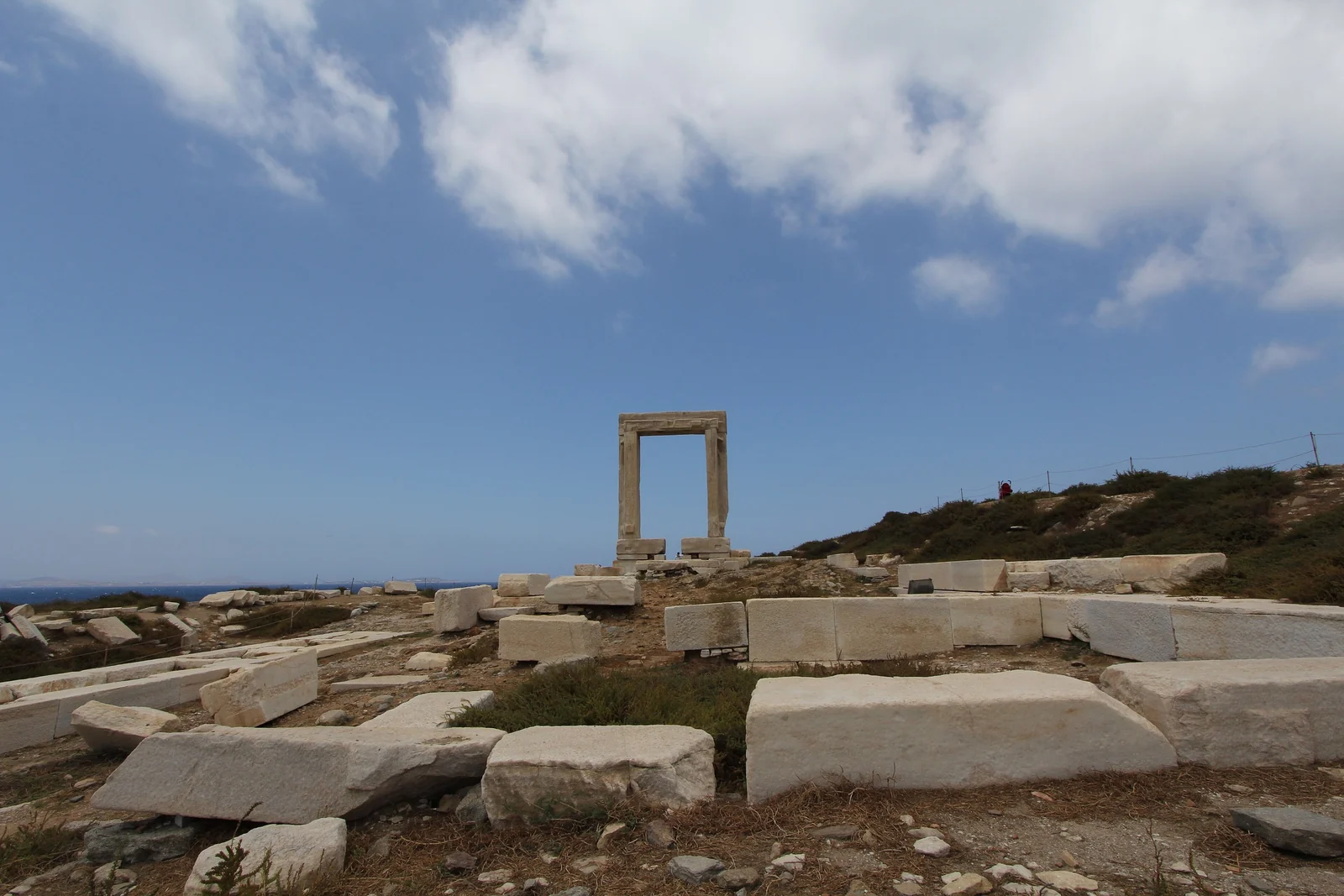
The symbol of the island is the Portara, a huge marble doorway on the islet of Palatia beside the harbor. It is the entrance to a temple of Apollo begun in the sixth century BCE and never finished. Walk out at sunset, when the town fills with people doing the same thing.
What to Do on Naxos
- Chora's old town: a maze of whitewashed lanes under the kastro. Get lost on purpose.
- Beaches: the west coast has long sandy stretches, and the water is shallow and easy for families. Rent a car or scooter to reach the quieter ones.
- Mountain villages: the interior, around Halki and Apiranthos, is green, marble-paved and slow, and it makes a good half-day drive.
- Food: Naxos is known for its local produce, from cheese and potatoes to grilled meat, so eat where the menu is short.
Paros: The All-Rounder
Paros is a short hop from Naxos and one of the best-connected islands in the group, so it often works as a hinge in the route. It suits mixed groups well: there is a lively harbor town, a prettier fishing village, hill villages and plenty of beach.
Parikia and Naoussa
Parikia is the port and main town, with a kastro built partly of ancient marble, a lively waterfront and a small old quarter. Naoussa, on the north coast, is a harbor village of lanes, fish tavernas and nightlife, and it is the better base if you want evenings out. Lefkes and Marpissa, inland, are quieter villages with marble streets.
Antiparos
A short boat from Paros takes you to the small island of Antiparos, which feels slower and more relaxed. It makes an easy day trip if you want a different pace without another long ferry.
Milos: Beaches and Strange Rock
Milos is volcanic, and the sea has carved its coast into pale rock, sea caves and colored cliffs. It is also where the Venus de Milo statue was found, in 1820, and the island has a long history as a source of obsidian.
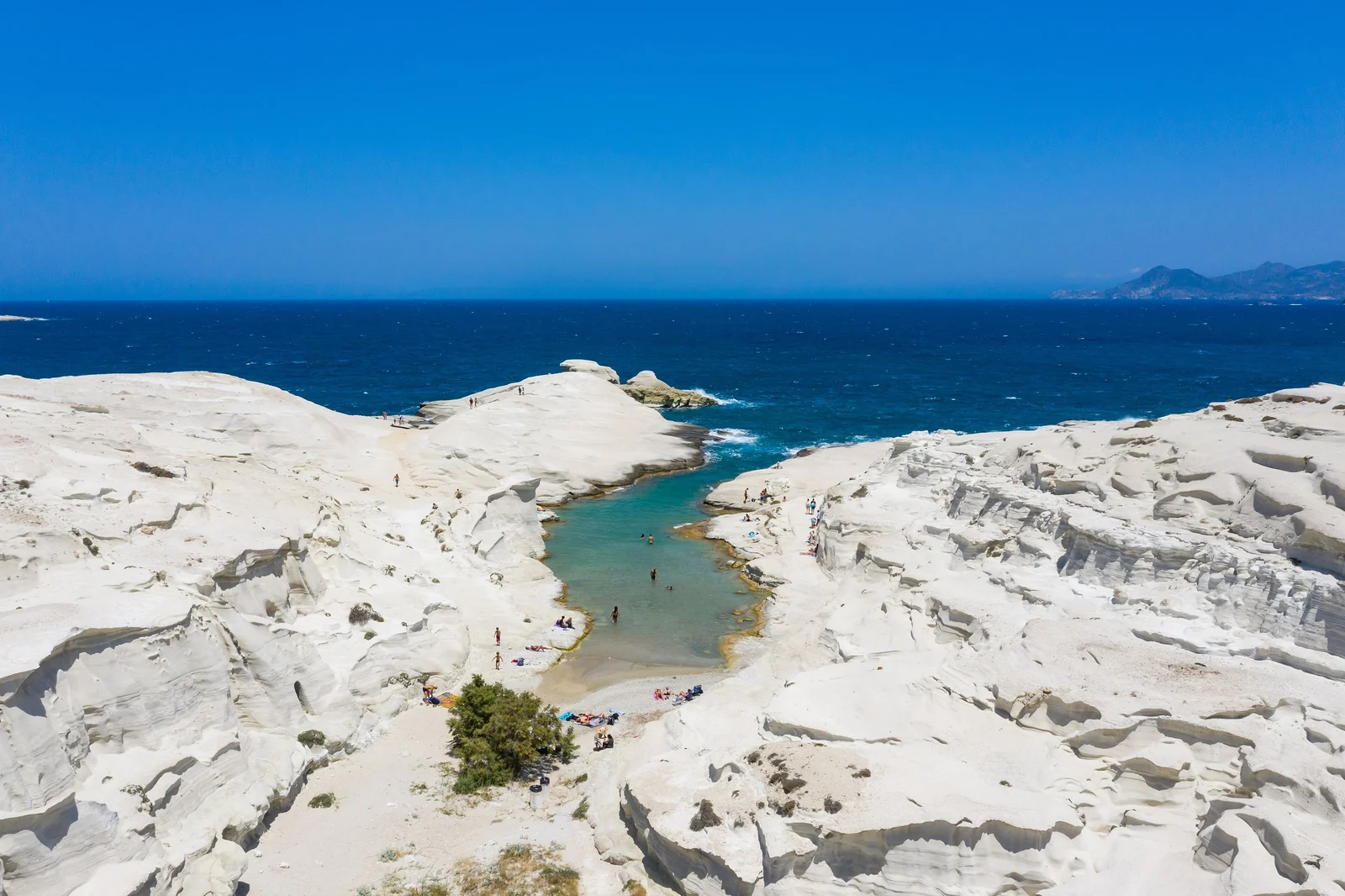
Sarakiniko is the island's best known spot, a bay of smooth white rock shaped by wind and waves, where people jump into the sea from the ledges. It is beautiful and busy, so go early or late. A boat trip around the island is the best way to see the sea caves and the coast that roads do not reach.
Plaka, the hilltop village, and the fishing hamlets with colorful boat garages are the other draws. Milos is spread out, so a car or scooter makes a big difference. In summer, book it in advance.
Santorini: Caldera and Crowds
Santorini is the Cyclades' most famous island and also the most crowded. The caldera was formed by a huge volcanic eruption in the Bronze Age, roughly 3,600 years ago, and the villages on the rim look straight into the flooded crater. That view is real, and it is worth seeing once.
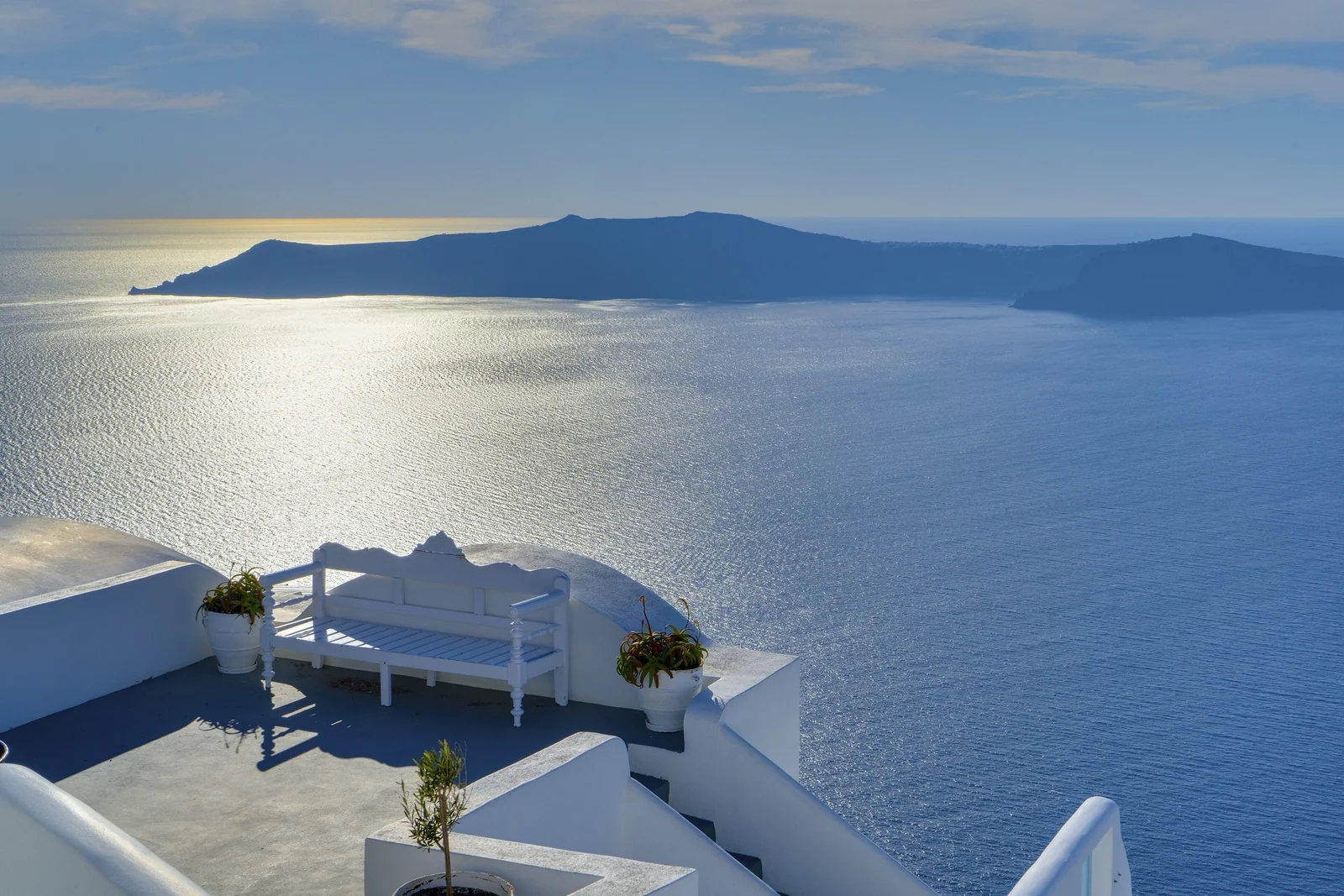
Oia is the postcard village and gets packed at sunset. Fira is the main town, with the best transport links and plenty of places to eat. Imerovigli is quieter and has a good view. For a bit of history, visit Akrotiri, a Bronze Age settlement buried by the eruption. Read more in our Santorini guide.
Two nights is enough. Santorini works better as the finale than the opener, because the rest of the Cyclades feel gentler by comparison and the island is easy to leave by air or sea.
Mykonos and Sifnos: The Swaps
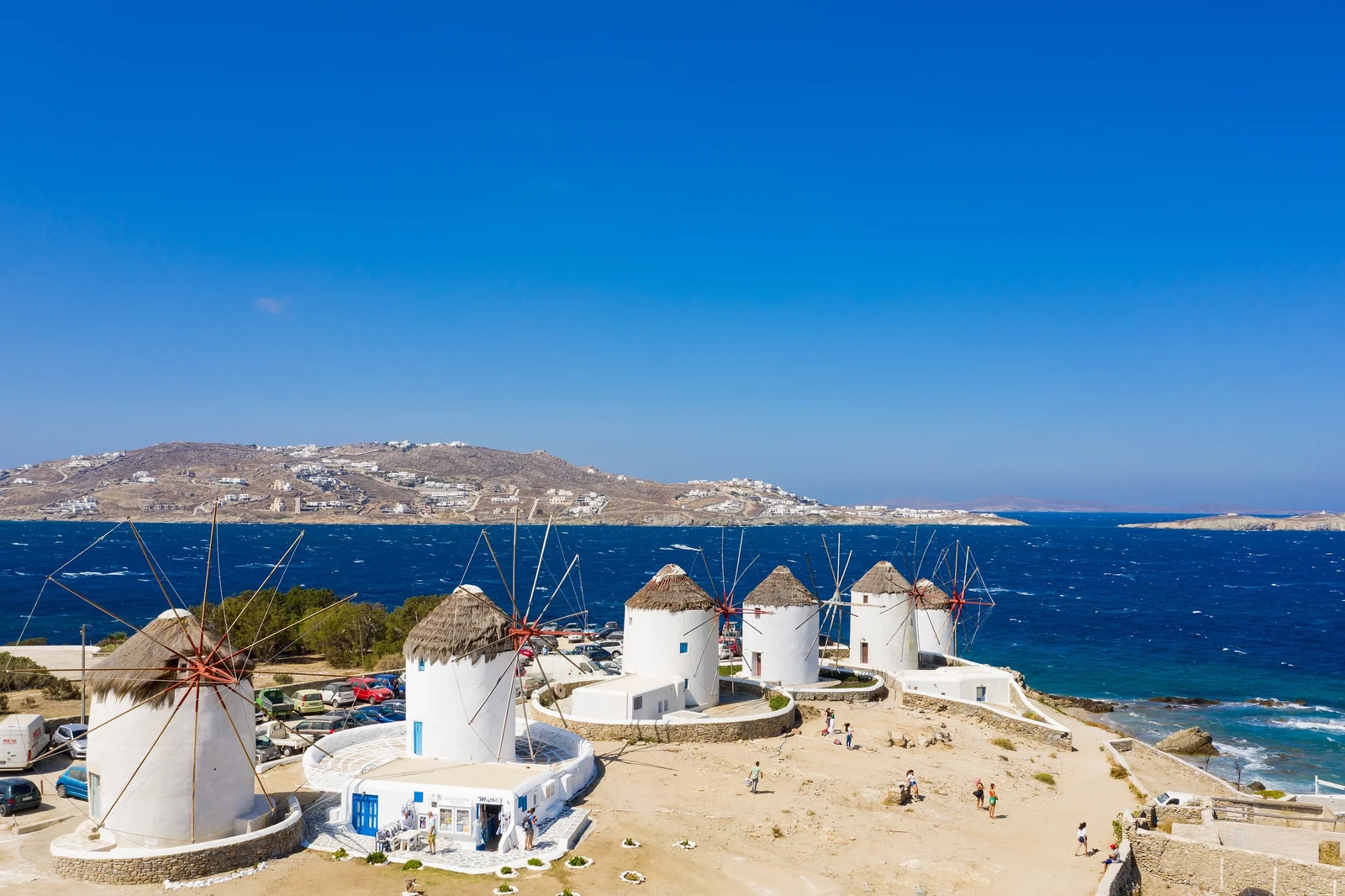
Mykonos is the party island. It has windmills above Little Venice, a polished old town, and the best-known nightlife in the Aegean. It is also expensive and exposed to the wind, which is why the meltemi hits ferry departures here hard.
Sifnos is the opposite: a quiet island known for its pottery tradition, its food and its walking paths between whitewashed villages. It has no airport, so you arrive by ferry, and it pairs naturally with Milos. If you prefer cooking and coastal walks to nightlife, swap Sifnos in for Santorini.
Cyclades Ferries: How to Book and What to Expect
Ferries run all year but are far more frequent in the warm months. Book ahead for high season, especially for cars and for the fastest boats on the popular routes. The main operators, such as Blue Star Ferries, Seajets and Hellenic Seaways, publish timetables on their own sites, and booking platforms compare them all.
| Route | Conventional ferry | High-speed boat |
|---|---|---|
| Piraeus to Naxos | About 5 hours | About 3 to 4 hours |
| Piraeus to Paros | About 4 to 5 hours | Under 3 hours |
| Piraeus to Santorini | About 8 hours | About 4.5 hours |
Treat these as rough figures. Times vary by operator and by how many islands the boat stops at on the way, so check the timetable for your exact sailing. Keep your passport handy, and arrive at the port well before departure.
- Prices: they vary by season, vessel and seat type, so compare operators close to your dates.
- Seasickness: catamarans are quick but can be rough on windy days. Take tablets before you sail, not after.
- Luggage: large bags go in racks at the stern or in a hold. Keep valuables with you.
- Flights between islands: some islands connect to Athens by plane, and it can beat a long boat when the weather turns.
The Meltemi Wind and Your Plans
The meltemi is a dry northerly wind that blows across the Aegean in summer, and it is strongest in July and August. It keeps the heat bearable and the skies clear. It can also blow hard enough to delay or cancel ferries, especially fast ones, and Mykonos, Tinos and the other northern Cyclades are among the most exposed.
A few habits make this a nuisance instead of a crisis:
- Leave a buffer day before any flight or other fixed commitment. Do not plan a boat for the morning of an international departure.
- Choose conventional ferries when timing matters, because large boats are less likely to stay in port.
- Pick lodging with flexible cancellation when you can, and check your operator's page on the morning of each crossing.
- Pack a windbreaker, and expect hats and umbrellas to blow away.
Best Time for Cyclades Island Hopping
- May to June: warm, green, and uncrowded. Sailings are frequent and the wind is mild. This is the best balance for most people.
- July to August: hottest, busiest and most expensive, with the strongest meltemi. Everything is open, but book early and plan buffers.
- September to early October: the sea is warmest and the crowds thin. Sailings begin to drop off later in the month.
- Winter: many hotels and restaurants close, and ferries are limited. It suits travelers who want empty islands, not beaches.
Which Cyclades Island Suits You?
| Island | Best for | Think twice if |
|---|---|---|
| Naxos | Families, beaches, villages, value | You want nightlife |
| Paros | Mixed groups, first-timers, easy transfers | You want something remote |
| Milos | Beaches, boat trips, scenery | You do not want to rent a vehicle |
| Santorini | Views, sunsets, history | You dislike crowds |
| Mykonos | Nightlife, beach clubs, style | You are on a tight budget |
| Sifnos | Food, walking, quiet | You want big nightlife or a large beach scene |
If you can add days, Crete is the logical extension. See our Crete travel guide, or browse more in our Greece travel guides. For general planning, the national tourism board's site, Visit Greece, is a reliable starting point.
Cyclades Island Hopping FAQ
How many days do you need for Cyclades island hopping?
Ten days is comfortable for four islands, with two or three nights each. A week works for two or three islands. Every island change costs part of a day, so fewer stops usually means a better trip.
Which Cyclades islands are best for a first trip?
Naxos and Paros are the easiest starting pair: good beaches, villages, food and frequent ferries. Add Santorini for the views or Milos for the coastline. Mykonos is better if nightlife is a priority.
How do you get from Athens to the Cyclades?
Most travelers take a ferry from Piraeus, with some routes from Rafina and Lavrio. Several islands also have airports with flights from Athens. Compare sailing time and price on the operator sites before choosing.
What is the meltemi wind?
The meltemi is a strong, dry northerly wind that blows across the Aegean in summer, strongest in July and August. It cools the islands but can delay or cancel ferries, especially fast boats. Leave a buffer day before flights.
When is the best time for Cyclades island hopping?
May, June and September give the best mix of warm weather, open businesses, frequent ferries and fewer crowds. July and August are hotter, busier and windier. Winter has limited ferries and many closures.
Do you need to book Cyclades ferries in advance?
In high season, yes, especially for cars and fast boats on popular routes. In shoulder months you can often buy tickets close to departure. Check operator sites and confirm your sailing the day before.
Is it better to fly or take the ferry between islands?
Ferries are cheaper, run more often and are part of the experience. Flights save time between a few islands and Athens and are useful when weather disrupts boats. Most itineraries use ferries between islands.