


Albania packs a lot into a small country on the Adriatic and Ionian seas, between Montenegro and Greece. In ten days you can drink espresso in Tirana's former party-elite district, walk through a Cold War bunker, sleep in an Ottoman stone town listed by UNESCO and swim off pale pebble beaches with Corfu on the horizon.
This Albania travel guide is written for a first trip. It covers Tirana, the Albanian Riviera from Dhërmi to Ksamil, the museum towns of Berat and Gjirokastër, the ancient city of Butrint, how buses, furgons and rental cars work, when to go, what to eat and a realistic 10-day route. For more ideas around the country, browse our Albania travel guides.
Tirana: Skanderbeg Square, Bunk'Art and Blloku
Most trips start in the capital, and it deserves more than an overnight stop. Tirana is loud, colorful and changing fast, and two days cover the main sights.
Skanderbeg Square
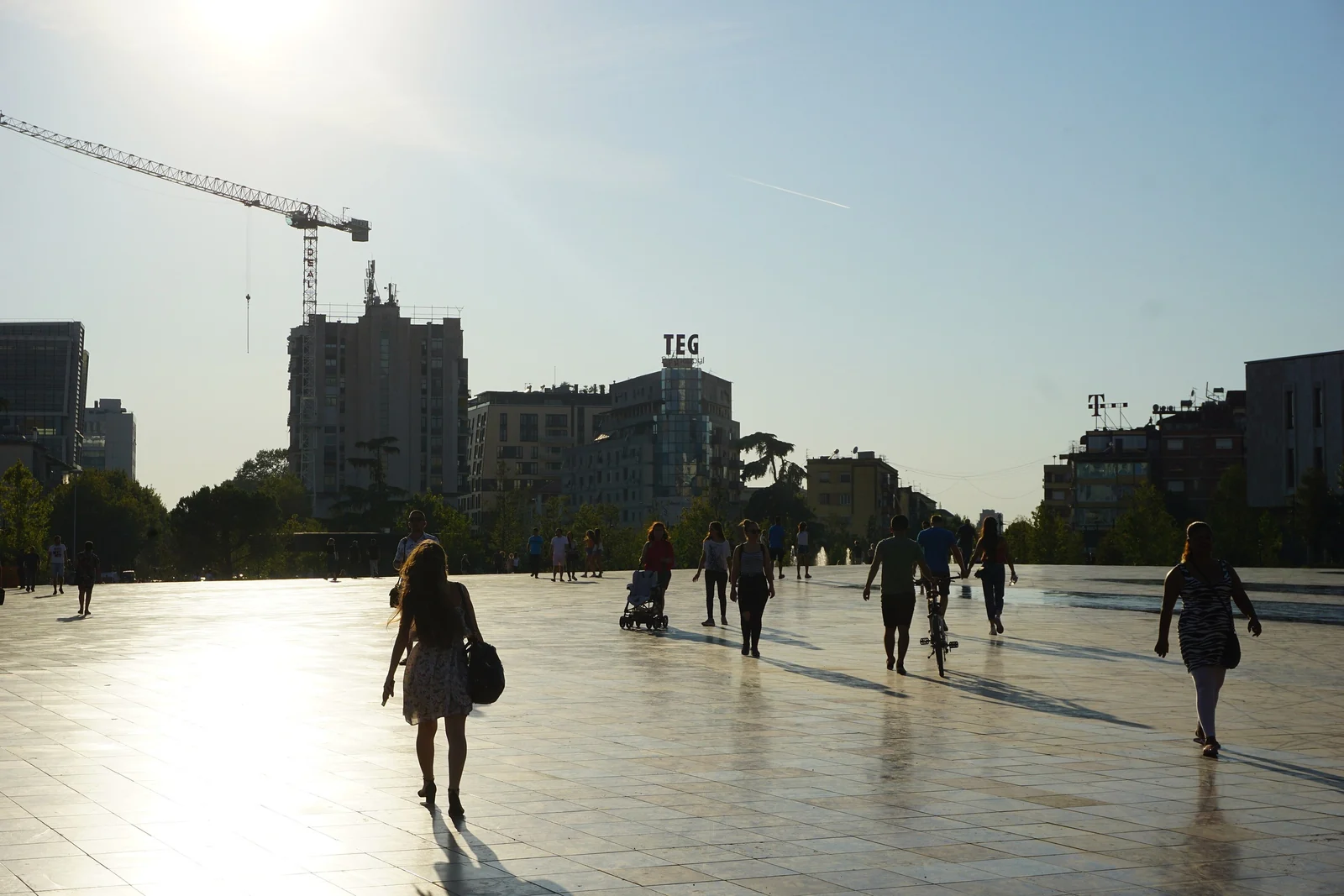
The vast central square, named after the 15th-century national hero whose statue stands on it, was redesigned and largely pedestrianized in 2017, paved with stone from around Albania. Around its edges stand the National History Museum, with its huge socialist-realist mosaic, the Et'hem Bey Mosque and the Clock Tower.
Bunk'Art 1 and Bunk'Art 2
Under communist leader Enver Hoxha, Albania built hundreds of thousands of concrete bunkers against an invasion that never came. Two of the largest are now museums. Bunk'Art 1, on the city's eastern edge near the Dajti cable car, opened in 2014 inside a five-floor underground complex built for the regime's leadership; it tells the story of Albania's 20th century through its rooms and corridors. Bunk'Art 2, opened in 2016 just off Skanderbeg Square, focuses on the Sigurimi secret police and its victims.
With time for only one, Bunk'Art 2 is quicker and central, while Bunk'Art 1 is bigger and more atmospheric. Check hours and tickets on the official Bunk'Art site.
Blloku and the Pyramid
Blloku, south of the river, was closed to ordinary Albanians during the communist era because the party leadership lived there; Hoxha's villa still stands on its edge. Today it is the city's café and bar district. Nearby, the Pyramid of Tirana, built as a museum to the dictator in 1988, now houses a youth tech center, and you can climb its steps for the view.
Berat and Gjirokastër: Albania's UNESCO Stone Towns
These two Ottoman-era towns share a single UNESCO listing, the Historic Centres of Berat and Gjirokastra. Gjirokastër was inscribed in 2005 and Berat added in 2008. They look related on paper, but they feel quite different, and a first trip should include both.
Berat, the Town of a Thousand Windows
Berat climbs both banks of the Osum River. The white houses of the Mangalem quarter stack up the slope so tightly that their windows earned the town its nickname, and Gorica mirrors it across an old stone bridge. Come to the river promenade in the evening for the xhiro, the daily stroll.
Above sits the Kala, a castle district people still live in. Walk up early, before the heat, past Byzantine churches and family homes. The Onufri Museum, in the Church of the Dormition of St. Mary, holds icons by the 16th-century painter Onufri, famous for his red. One night is enough; two let you add the Osum Canyon.
Gjirokastër, the City of Stone
Gjirokastër is grayer, higher and more dramatic. Its tower houses have thick stone walls and roofs of heavy slate slabs, and they cling to a mountainside below one of the largest castles in the Balkans. The old bazaar, where several steep lanes meet, is the place for coffee, carpets and the local stuffed rice balls called qifqi.
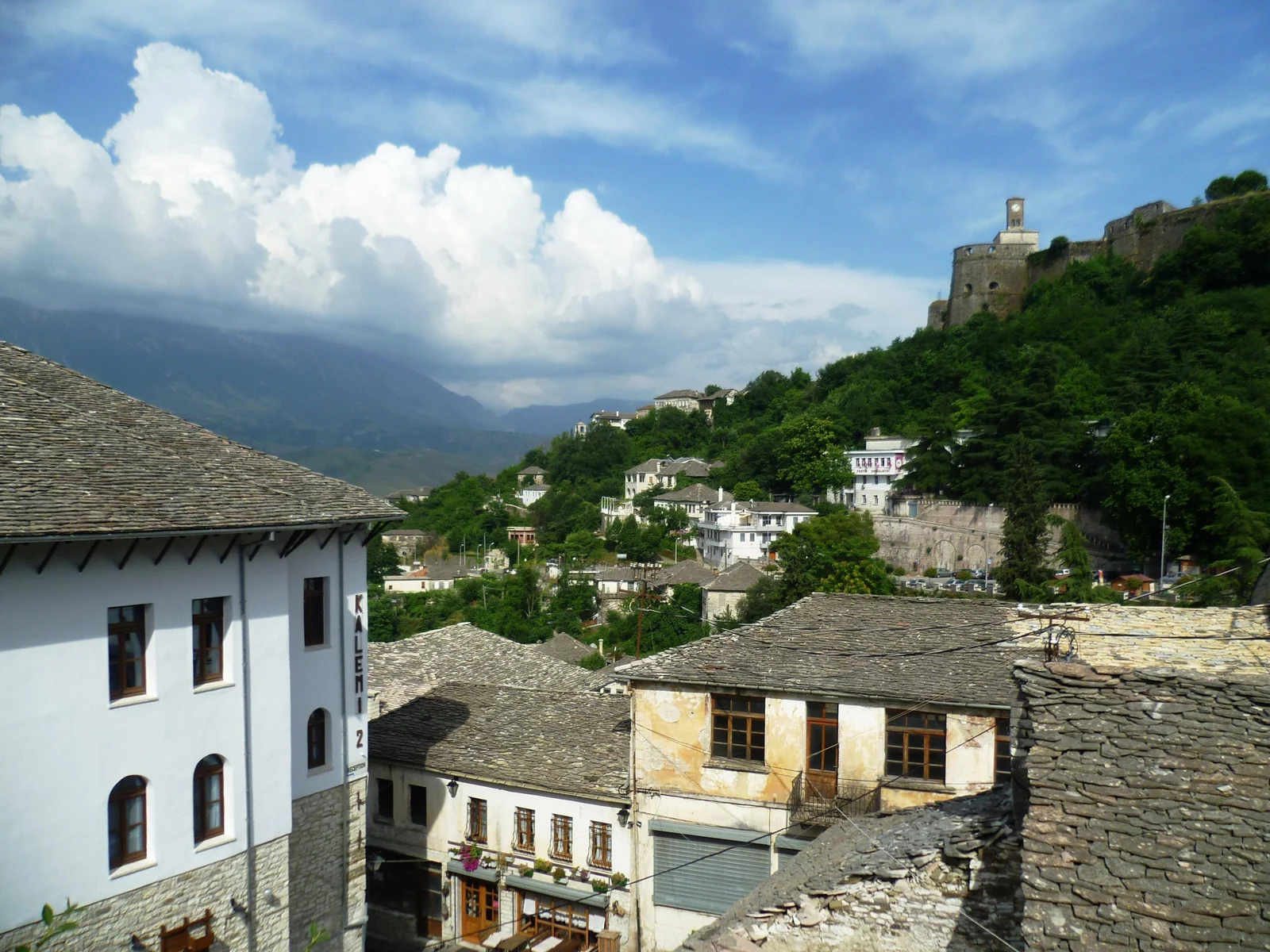
Inside the castle, an arms museum displays old artillery, and on the ramparts sits an American Lockheed T-33 jet that landed in Albania in 1957 and became a Cold War trophy. In town, the Skenduli and Zekate houses show how wealthy families lived, and the writer Ismail Kadare, born here in 1936, has a house museum. Wear shoes with grip: the limestone lanes are slippery.
The Albanian Riviera: Llogara, Dhërmi, Himarë and Ksamil
South of Vlorë, the coastal road climbs over the mountains and drops to the Ionian Sea, following it to Sarandë past clear blue water, white pebble beaches and hillside villages.
The Llogara Pass
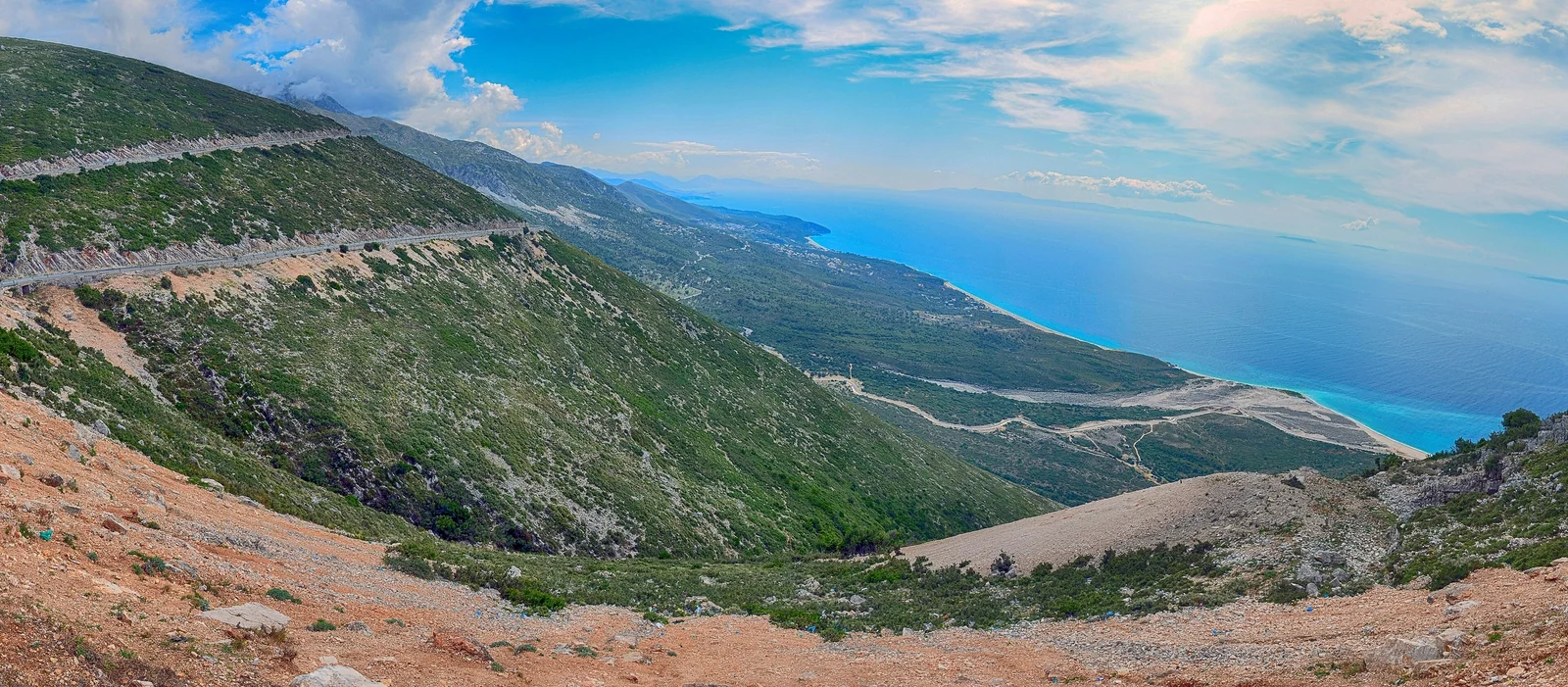
The road from Vlorë rises through the pines of Llogara National Park to a pass at 1,027 meters, then the Riviera opens up below in a series of hairpins. Stop at the viewpoints; on clear days you can see Corfu.
Dhërmi and Gjipe
Dhërmi is the best-known beach village below the pass: a long pebble shore below an old village of stone houses and churches. It has the Riviera's liveliest summer scene, with beach clubs and late nights in July and August. A short drive south, Gjipe is a cove at the mouth of a canyon, reached by a short hike down a track from the road. Bring water and shade, as facilities there are basic.
Himarë and Porto Palermo
Himarë is a real town with a harbor, a seafront promenade and an old upper village crowned by a castle, which makes it a good central base. Just south, the small fortress at Porto Palermo stands on a spit in a sheltered bay and is linked with Ali Pasha of Tepelenë, the Ottoman-era ruler of the region.
Ksamil and Sarandë
Ksamil, at the far south, is famous for its tiny wooded islands and shallow, glassy water, and is the most crowded spot on the coast in high summer, when sunbeds cover nearly every patch of sand. In June or September it is far calmer. Sarandë, the port town to the north, has the most hotels and ferries to Corfu.
Compare it with our Dalmatian coast itinerary: the Albanian side is wilder between the towns and easier on the budget.
Butrint and the Blue Eye
Butrint was Albania's first UNESCO World Heritage Site, listed in 1992. The ruins sit on a wooded peninsula inside Butrint National Park, a short drive south of Ksamil, and span more than two thousand years: a Greek theater, Roman baths and houses, a Byzantine baptistery with a mosaic floor, city walls with the Lion Gate and a small Venetian-era castle with a museum on the hilltop.
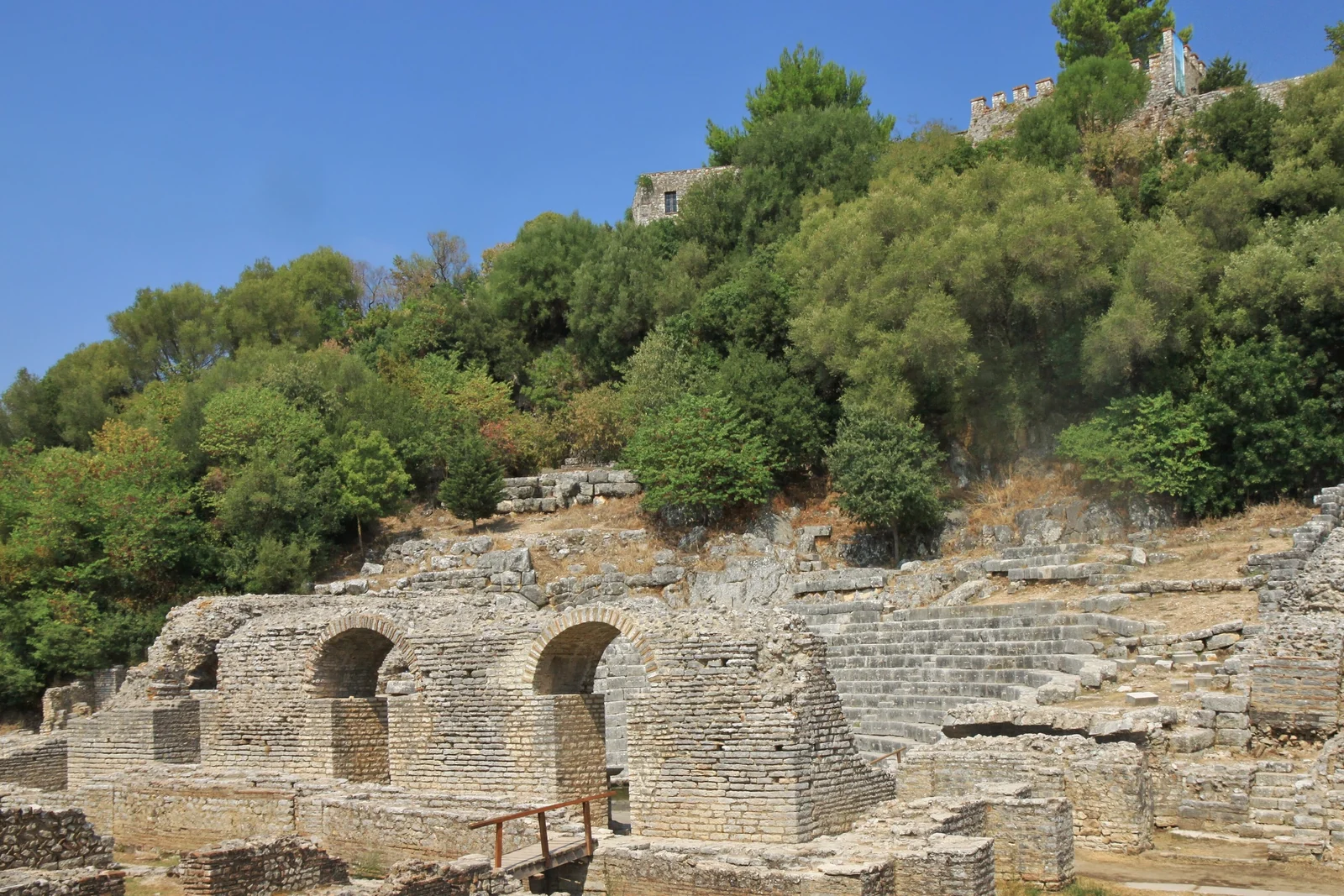
Allow two to three hours and arrive at opening time in summer, before the heat and the day-trippers from Corfu. Bring insect repellent for the marshy edges.
On the road between Sarandë and Gjirokastër, the Blue Eye (Syri i Kaltër) is a karst spring where intensely blue water wells up under plane trees. It makes an easy stop between the coast and the mountains; swimming is not allowed.
Getting Around Albania: Buses, Furgons and Driving
Most visitors fly into Tirana International Airport at Rinas, which has a regular bus to the center, or arrive by ferry from Corfu to Sarandë. Passenger rail is minimal, so you will travel by road.
Buses and Furgons
Public transport is cheap and covers every place in this guide. Buses run between the main towns and furgons, shared minibuses, fill the gaps. Many leave when full rather than on a timetable, and departures thin out after lunch. Ask your guesthouse where they leave from, and carry small lek notes.
Driving in Albania
A rental car makes the Riviera far easier. Main roads are mostly decent, but local driving is assertive, and livestock, potholes and unlit stretches appear without warning. Avoid night driving outside towns and check that your insurance covers any border crossings.
| Route | Approx. driving time | Notes |
|---|---|---|
| Tirana to Berat | 2 to 2.5 hours | Frequent buses; easy first leg |
| Berat to Gjirokastër | About 3 hours | Few direct buses; often via a change |
| Gjirokastër to Sarandë | About 1 to 1.5 hours | Blue Eye is a short detour on the way |
| Sarandë to Ksamil and Butrint | 20 to 40 minutes | Local buses in summer |
| Sarandë to Himarë | About 1.5 to 2 hours | Coastal road with many curves |
| Himarë to Vlorë via Llogara | About 1.5 to 2 hours | Hairpins over the pass |
| Vlorë to Tirana | About 2 to 2.5 hours | Motorway for much of the way |
A 10-Day Albania Itinerary
This loop starts and ends in Tirana and works by car or by public transport, though the Riviera days are easier with wheels.
- Days 1 and 2: Tirana. Skanderbeg Square, the National History Museum and Bunk'Art 2 on day one; Bunk'Art 1, the Dajti cable car if the weather is clear, and an evening in Blloku on day two.
- Days 3 and 4: Berat. Morning bus or drive south. Climb to the Kala, visit the Onufri Museum, and join the evening stroll. Use day four for the Osum Canyon or a slower look at Gorica.
- Days 5 and 6: Gjirokastër. Castle, bazaar and the old houses on day five. On day six, drive or ride to Sarandë via the Blue Eye.
- Day 7: Butrint and Ksamil. Butrint at opening time, then an afternoon swim in Ksamil.
- Days 8 and 9: Himarë and Dhërmi. Move up the coast, stopping at Porto Palermo. Spend a day on the beaches around Himarë, Gjipe and Dhërmi.
- Day 10: Llogara and back to Tirana. Cross the Llogara Pass in the morning light, stop at the viewpoints, and continue via Vlorë to Tirana or the airport.
With more time, add the northern Alps around Theth and Valbona; with less, cut Tirana to one day.
Best Time to Visit Albania
Albania has a Mediterranean climate on the coast and colder, wetter winters inland and in the mountains. The sweet spots for a mixed trip are late spring and early fall.
- May and June: green hills, wildflowers and warm days. The sea is swimmable by June, and the coast is still calm.
- July and August: hot, sometimes very hot inland, with the Riviera at its busiest and priciest. Domestic and diaspora visitors fill the beaches, and you should book rooms well ahead.
- September to early October: arguably the best balance, with warm sea, thinner crowds and comfortable sightseeing in Berat and Gjirokastër.
- November to April: good for Tirana and the UNESCO towns at low prices, but many Riviera hotels and restaurants close for the season.
What to Eat in Albania
Albanian food sits between Italian, Greek and Turkish traditions and is built on olive oil, tomatoes, cheese, lamb and herbs.
- Byrek: flaky pastry filled with spinach, cheese or meat, sold warm from bakeries for breakfast.
- Tavë kosi: lamb baked with rice under a thick yogurt and egg crust, a national favorite from Elbasan.
- Fërgesë: a rich bake of peppers, tomatoes and cottage cheese, often served in a clay dish.
- Qifqi: fried rice balls with herbs and egg, the specialty of Gjirokastër.
- Seafood on the coast: grilled fish, mussels from the Butrint lagoon and octopus, best where the catch is shown before cooking.
- Raki and local wine: grape raki is offered as a welcome almost everywhere; Berat's area is one of the country's wine regions.
Heading south afterward? See our guide to popular destinations in Greece or browse more European destinations.
Practical Tips for a First Trip to Albania
- Money: the currency is the lek. Euros are often accepted on the coast, but at a poor rate; pay in lek where you can. Cards work in cities and larger hotels, while small guesthouses, furgons and beach bars often want cash.
- Entry: citizens of many countries, including the EU, the UK and the US, can visit without a visa for short stays. Check your own nationality's rules before you travel.
- Where to stay: family-run guesthouses are the best value in Berat and Gjirokastër, often in restored old houses. On the coast, Himarë and Sarandë have the widest choice; Ksamil and Dhërmi fill up first in summer.
- Language: Albanian is the national language. Younger people often speak English, and Italian and Greek are widely understood, especially in the south.
- Body language: many Albanians nod to mean no and shake the head to mean yes, the reverse of most of Europe. When in doubt, ask again.
- Planning help: the official tourism site, albania.al, lists regions, attractions and events.
Albania Travel FAQ
Is Albania safe for tourists?
Albania is generally considered safe for visitors, and people are famously hospitable. The main risks are on the road: fast, assertive driving and unlit mountain stretches. Use normal city precautions in Tirana and check your government's current travel advice before you go.
How many days do you need in Albania?
Ten days is a good first trip, covering Tirana, Berat, Gjirokastër, Butrint and the Riviera at a comfortable pace. A week works if you skip some beach time. Two weeks lets you add the northern Alps around Theth and Valbona.
Do you need a car in Albania?
No, buses and furgons connect every main stop in this guide. A car is most useful on the Riviera, where coves, viewpoints and villages are spread out and some have little public transport. Avoid night driving and allow extra time on mountain roads.
Which is better, Berat or Gjirokastër?
Visit both if you can. Berat feels softer, with white houses along a river and an inhabited castle quarter. Gjirokastër is steeper and more dramatic, with slate-roofed tower houses and a huge castle. If you only have time for one, pick the one that fits your route.
When is the best time to visit the Albanian Riviera?
June and September are ideal: the sea is warm, the weather is reliable and the beaches are far calmer than in July and August. In midsummer, Ksamil and Dhërmi get very crowded and rooms need booking well ahead. Many places close from late autumn to spring.
Can you visit Corfu from Albania?
Yes. Ferries cross from Sarandë to Corfu Town, and the crossing is short, so a day trip or a combined Albania and Greece route is easy. Carry your passport, since you are leaving the country, and check current schedules with the ferry operators.
What currency do they use in Albania?
Albania uses the lek. Euros are accepted in many tourist spots on the coast, usually at a rounded, less favorable rate. ATMs are common in towns, but carry cash for guesthouses, furgons, small restaurants and beach bars, which often do not take cards.