


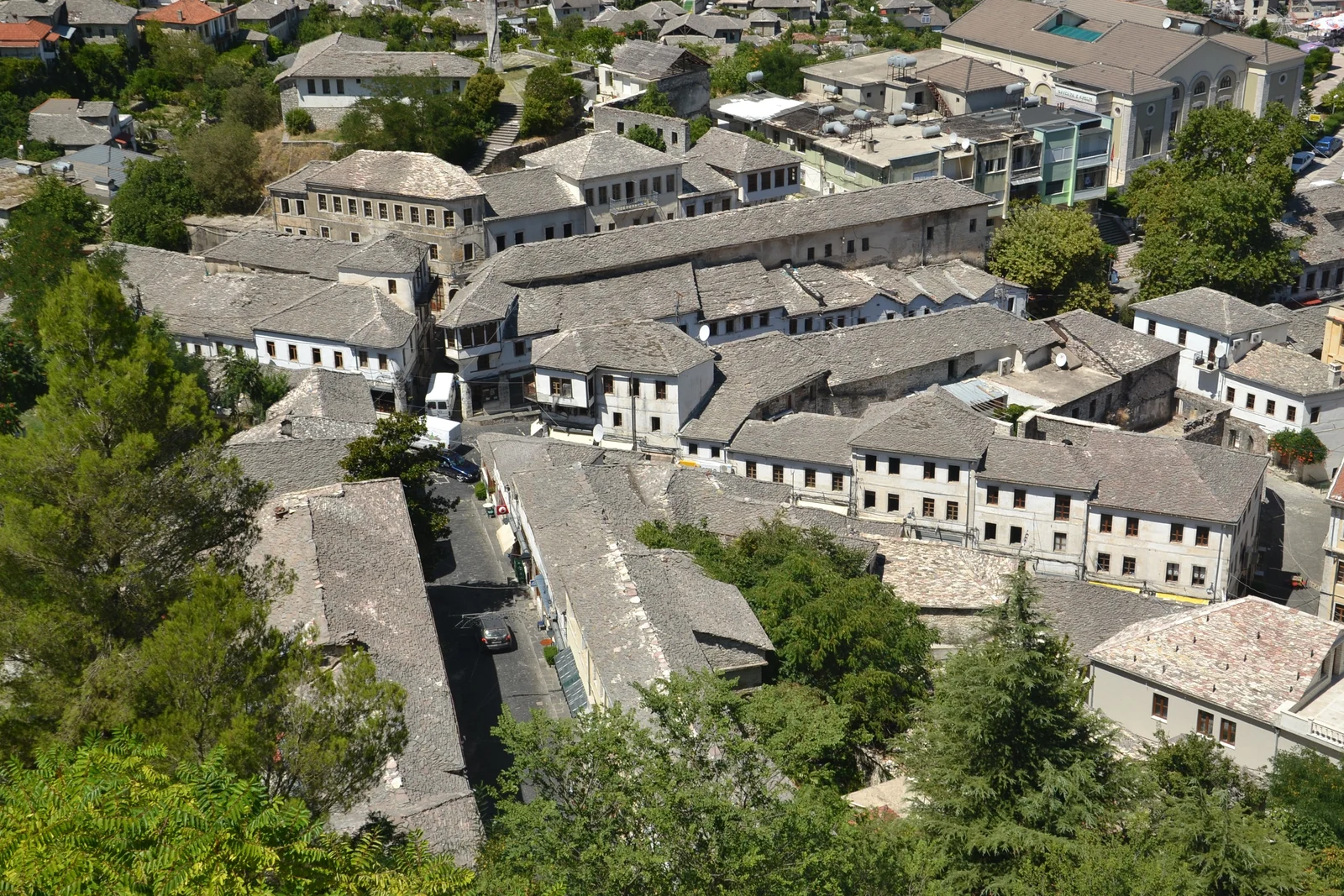
A Gjirokaster day trip from Saranda is one of the best uses of a day on the Albanian coast. The stone city sits about 53 km inland, roughly an hour by car and a little longer by bus, and it looks like nothing you will see on the beach strip. Gray slate roofs climb a steep hillside, a huge castle sits on the ridge, and the old Ottoman bazaar below still feels like a working street.
The short answer: go, and give it five to six hours on the ground. Add a stop at the Blue Eye spring on the way and you have a full, easy day. This guide covers what to see, how to get there by bus, car or tour, how long to stay, when to go and who should skip it. If you are still planning the wider country, our Albania travel guide shows where this fits.
Why Gjirokaster Is Worth a Day From Saranda
Gjirokaster (Gjirokastër in Albanian) sits at about 300 meters above sea level in the Drino valley. Its historic center was inscribed on the UNESCO World Heritage List in 2005, together with Berat, as an example of a well-preserved Ottoman-era town. What makes it special is the architecture: tall fortified houses of dark stone, with thick walls, small windows and heavy slate roofs, stacked up the slope.
It also carries a lot of history for a small town. The novelist Ismail Kadare grew up here and wrote about it in Chronicle in Stone, and the communist dictator Enver Hoxha was born here too. You do not need to know any of that to enjoy the walk, but it explains why a castle, grand houses and a Cold War tunnel all sit within a few minutes of each other.
Getting From Saranda to Gjirokaster
The road runs north from Saranda, passes the turn for the Blue Eye, then joins the main route up the Drino valley. The distance is around 53 km. A private car or taxi usually takes about an hour, a regional bus often closer to an hour and a half. Albanian intercity timetables are not published in one central place and shift with the season, so confirm times at the bus station or with your accommodation the day before.
| Option | Typical time | Best for | Main catch |
|---|---|---|---|
| Rental car | About 1 hour each way | Flexibility, stopping at the Blue Eye and viewpoints | Steep, narrow streets in town; park low and walk up |
| Regional bus | About 1 to 1.5 hours each way | Budget travelers, no driving | Daytime departures only; the last return can be early, so check it |
| Private driver or taxi | About 1 hour each way | Small groups who want a fixed price and a local driver | Agree the price and waiting time before you start |
| Organized day tour | Full day | Hands-off trips with a guide | Fixed schedule, often a short time in town |
By Bus
Buses leave Saranda during the daytime only. Pay the driver in cash, ask which stop is closest to the old bazaar, and ask about the last return before you get off. The return bus is the one thing that can ruin the day, so write down the time and arrive early for it.
By Car
Driving gives you the best day. You can stop at the Blue Eye on the way up and at a viewpoint over the Drino valley on the way down. In Gjirokaster itself, do not try to drive into the old town. Park near the bottom of the bazaar area and walk. The streets are cobbled, steep and slippery when wet.
By Tour or Private Driver
Many Saranda operators sell a Gjirokaster day with the Blue Eye included. That is easy, but you will often get a tight slot in town. If you want to see the castle and a house museum properly, a private driver who waits for you is usually the better choice. Compare itineraries and ask exactly how many hours you get in the city itself.
On the Way: The Blue Eye (Syri i Kaltër)
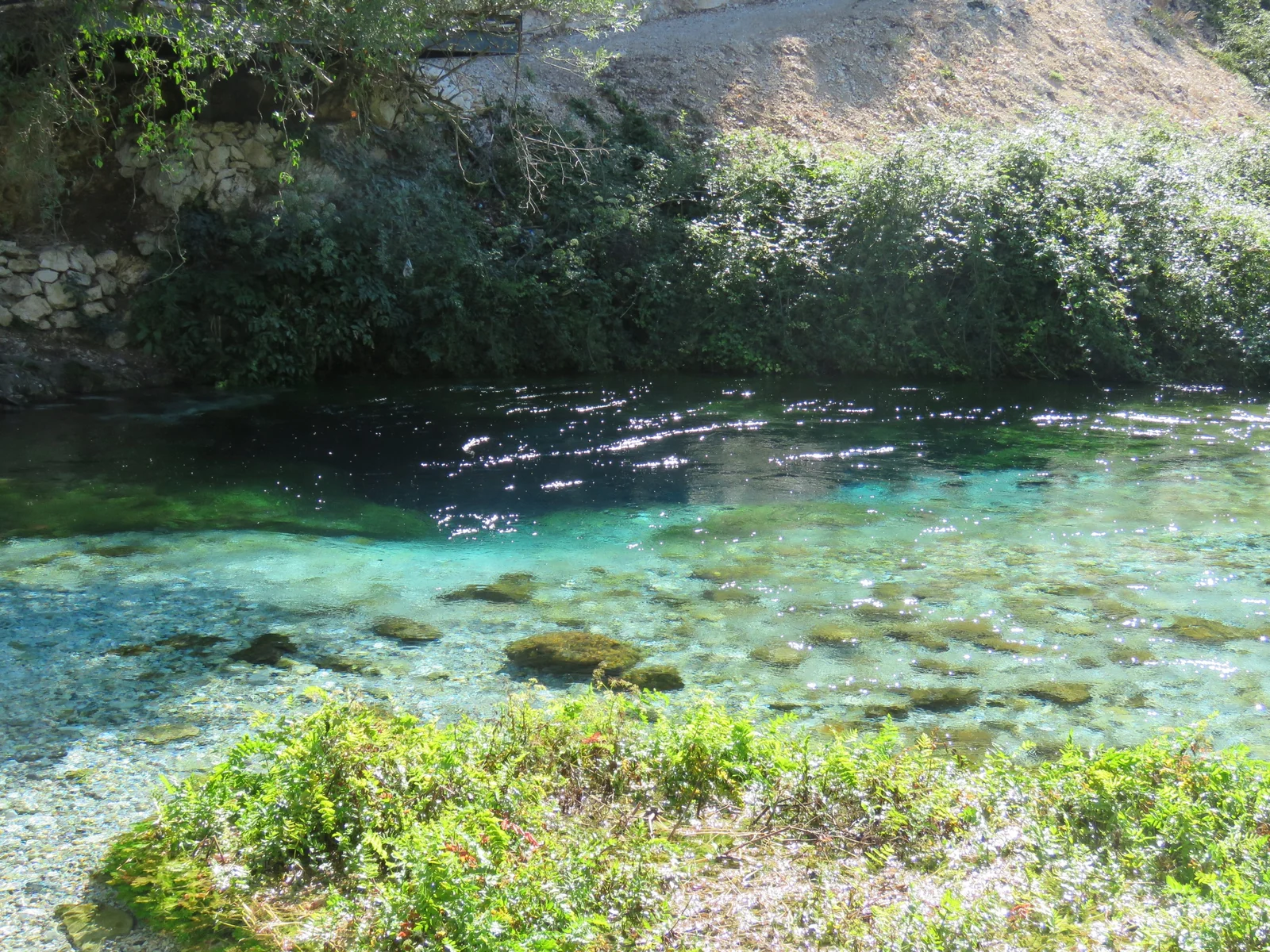
The Blue Eye is a natural spring near Muzine, close to the Saranda to Gjirokaster road. Water rises from a deep shaft and forms a pool with a dark blue center ringed by pale turquoise, then flows out as a clear stream through the forest. The water stays very cold all year, around 10°C according to most sources, and the exact depth is not known.
Swimming at the Blue Eye is not allowed and the upward current is strong, so treat it as a viewpoint and a short, shady walk rather than a swim stop. Thirty to forty-five minutes is enough. Go early on a summer morning, because parking and the viewing platforms fill up by midday.
The Old Bazaar and the Stone Houses
Start in the bazaar, the oldest commercial street in town. It dates from the 17th century and was rebuilt in the 19th century after a fire, and a mosque built in 1757 dominates it. Today you will find cafes, souvenir stalls, small bakeries and shops selling woven goods and local sweets. It is more relaxed than you might expect, and best before the tour groups arrive.
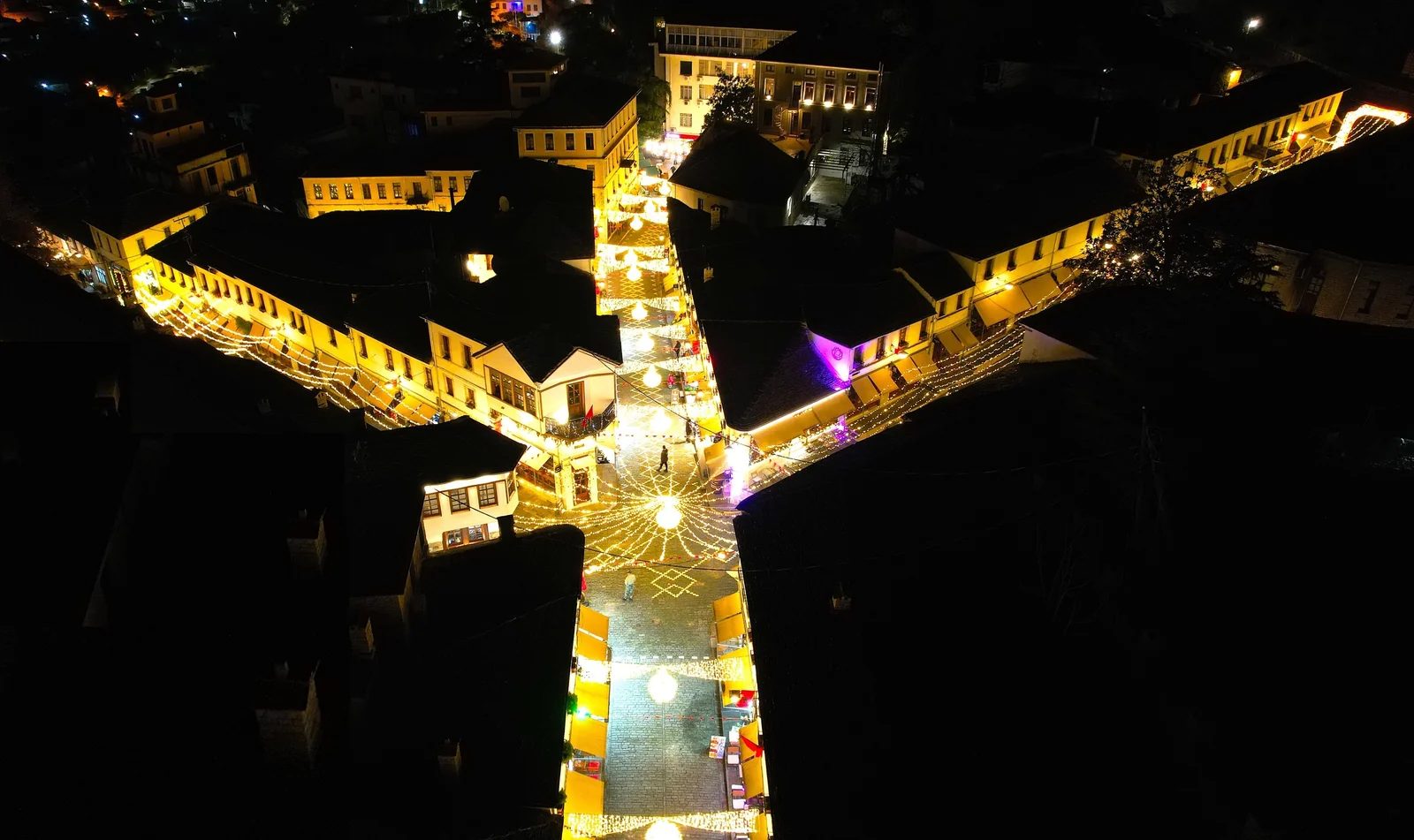
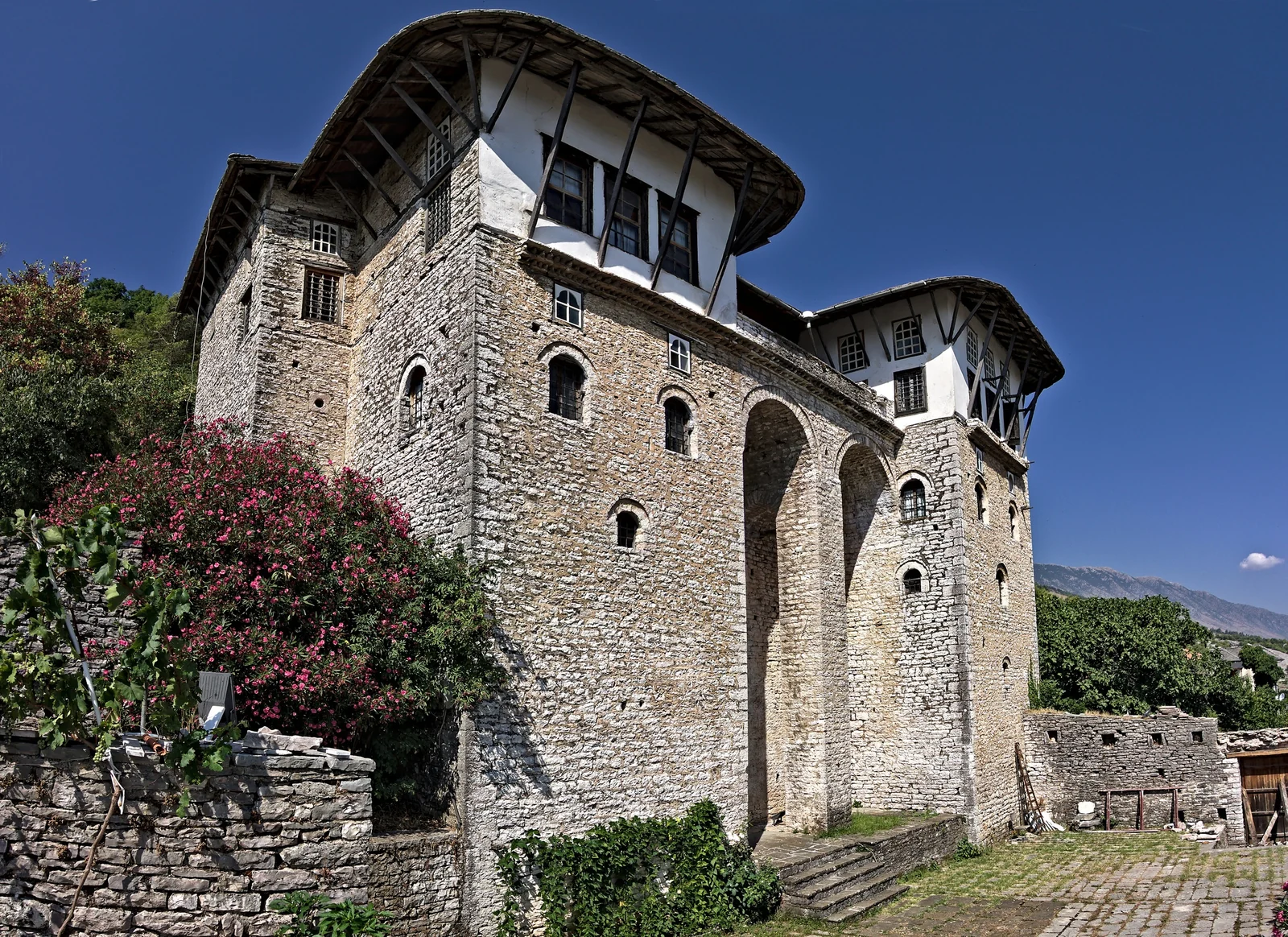
From there the streets climb steeply to the great houses. Gjirokaster is famous for its tower houses, built by wealthy Ottoman-era families like small fortresses, with ground floors for storage, upper floors for living and a guest room facing the view.
Zekate House
The Zekate House is the one most visitors pick. It is a large early 19th-century house with a distinctive double-towered front, and you can walk through the rooms to see the carved ceilings, the guest room and the layout of a prosperous family home. Check the opening hours locally before you climb.
Skenduli House
The Skenduli House is another historic family house open to visitors. It gives a more personal view of what living in one of these buildings meant, and it is a good second stop if you want a different feel from Zekate. Hours depend on the season, so ask when you arrive or have your host call ahead.
What About the Ethnographic Museum?
The town also has an ethnographic museum with local arts and crafts, worth adding if you have extra time and enjoy displays of daily life. If you only have time for one house, pick Zekate. If you enjoy houses, add Skenduli and skip the extra museum.
Gjirokaster Castle and Its Museum
The castle is the city's anchor and the biggest single sight. People have fortified this ridge for many centuries. Ali Pasha extended it after 1812, and King Zog's government expanded the prison here in 1932, which later held political prisoners under the communist regime. It is a big, solid, partly rough place, and that is its charm.
Inside, the museum covers local history and weapons, with captured artillery and material from the communist resistance in the Second World War. The oddest exhibit is a captured United States Air Force plane. Climb the clock tower, walk the walls and look out over the Drino valley. Allow about an hour and a half, longer if you read all the displays.
The climb from the bazaar is steep. Wear shoes with real grip, because the stone is polished smooth by centuries of feet. In summer, do the castle either early or late, since there is very little shade up there.
The Cold War Tunnel
Beneath the city center is a communist-era bunker tunnel, built in secret in the early 1970s as a shelter in case of attack. It is about 800 meters long with some 59 rooms, according to the local tourism site, and the rooms were planned for offices, sleeping areas, power and water. Hoxha reportedly feared a foreign invasion, and the tunnel was designed with nuclear war in mind.
The visit is short, around 20 minutes, and it is damp and cool, which is a nice break in summer. The entrance is near the municipality building. It is a sober contrast to the beauty up the hill. Opening hours differ between summer and winter, so check locally, and see the local tourism page for the tunnel.
How Long to Stay in Gjirokaster
Five to six hours in town is the sweet spot for a day trip from Saranda. That gives you time for the bazaar, one house, the castle and a long lunch without checking your watch every ten minutes. With less than four hours, you will have to choose between the castle and the houses.
- Morning: leave Saranda early, stop at the Blue Eye, and reach town before the heat and the crowds.
- Late morning: bazaar, then Zekate House.
- Lunch: a traditional restaurant in the old town. Ask what is fresh and what the kitchen is proud of.
- Early afternoon: castle and museum, then the tunnel if you want it.
- Late afternoon: drive or ride back, ideally with a viewpoint stop.
If you want to see the streets in the evening and have a calm dinner, stay overnight. Gjirokaster is a good place for it, and it also lets you continue to Berat or Tirana without doubling back.
Combining It With Lekursi Castle and Butrint
Butrint is the ancient site south of Saranda, and Gjirokaster lies in the opposite direction. That means they do not fit into one comfortable day. Give Butrint its own half or full day, and keep the Gjirokaster trip separate. If you only have one free day, choose Gjirokaster for the town and Butrint for the archaeology, depending on which interests you more.
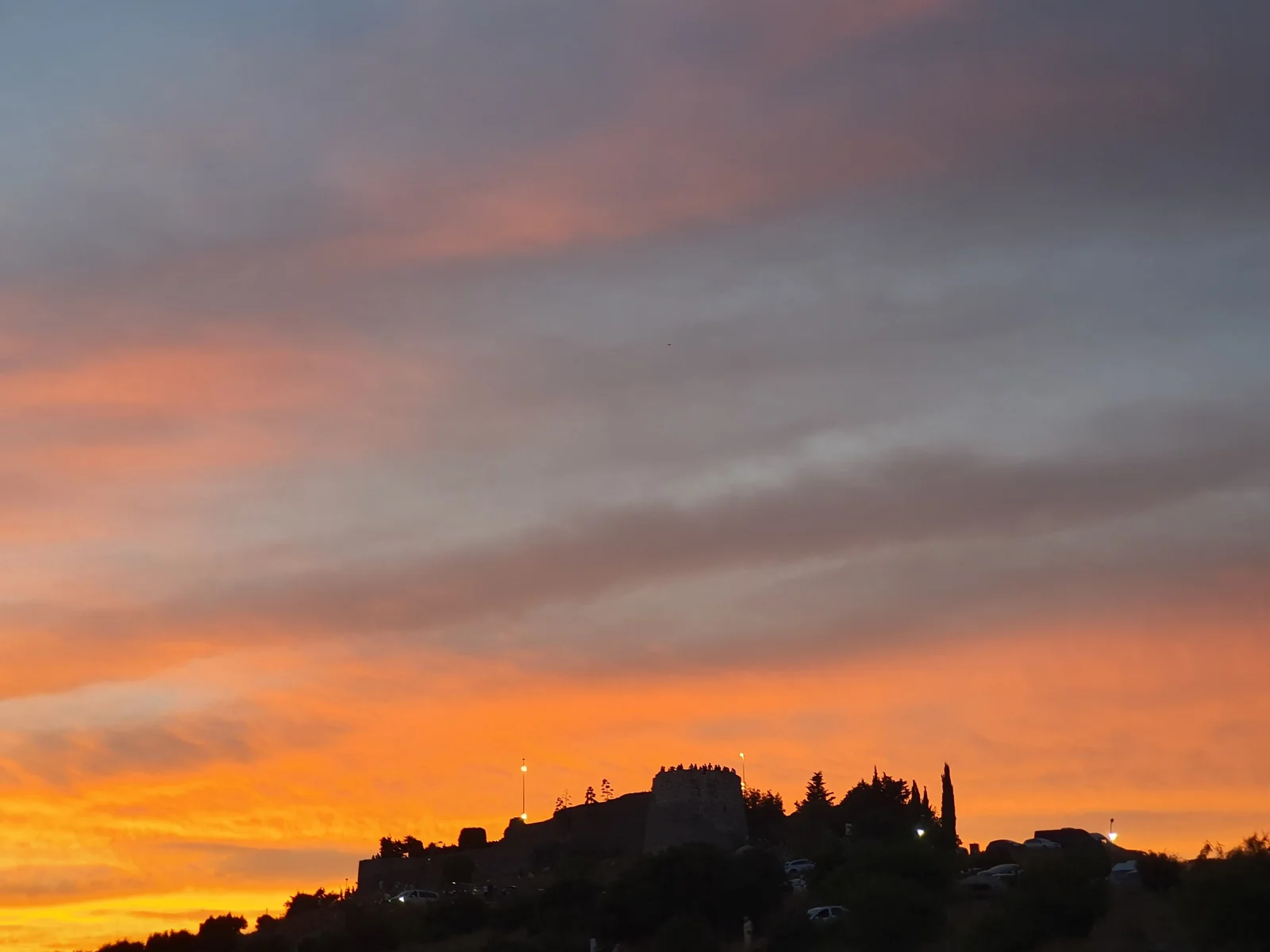
Lekursi Castle is the easy add-on for your return. The Ottoman fortress above Saranda was built under Suleiman the Magnificent in 1537 and sits on a hill about a kilometer from the center. The view over the bay and toward the Ksamil islands is the point of the visit. It is a good place for sunset after a long day.
Best Time to Go and Who Should Skip It
Spring and autumn are the most comfortable times. The air is cool enough for the castle climb and the light on the slate is excellent. Summer works, but the stone city gets hot, so start early and finish with a cool drink. In winter, some sights close earlier and rain can make the cobbles slick, so check hours in advance.
- Skip it if you have mobility issues, since the streets and castle are steep and uneven.
- Skip it if you dislike winding roads or long days. The ride is fine, but it still costs you a beach day.
- Skip it if you already plan to see Berat or Tirana and want only one Ottoman town. Gjirokaster is the more dramatic of the two, but you may not need both.
- Choose it if you like old towns, architecture and a bit of dark modern history. It pairs well in spirit with other Balkan stone towns, like the one in our Mostar day trip guide.
Practical Tips for the Day
- Carry some cash in Albanian lek. Small cafes, buses and house museums may not take cards.
- Wear sturdy shoes, bring water and a hat, and carry a light layer for the tunnel.
- Check the current opening hours of the castle, houses and tunnel on the local tourism site.
- Decide your return bus or driver time before you climb. Do not leave it to the end.
- Leave bigger luggage at your accommodation in Saranda.
For a longer trip through the country, the Albania section has more ideas, and our Theth to Valbona hike guide covers the mountains of the north. The town's listing is on the UNESCO World Heritage site.
Gjirokaster Day Trip FAQ
How far is Gjirokaster from Saranda?
It is about 53 km by road. By car or taxi the drive takes around an hour, and a regional bus is usually a bit slower, often an hour to an hour and a half. Allow extra time if you stop at the Blue Eye or hit traffic.
Is Gjirokaster worth a day trip from Saranda?
Yes for most visitors. The stone houses, the bazaar, the castle and the tunnel give you a very different feel from the beach resorts. If you dislike hills and long days, a lighter coastal day may suit you better.
How many hours do you need in Gjirokaster?
Five to six hours is comfortable: the bazaar, one house museum, the castle and lunch. With about four hours you can still see the main sights, but you will need to skip either the tunnel or a second house.
Can you swim at the Blue Eye?
No. Swimming is not allowed, and the water is very cold with a strong upwelling current. Treat the Blue Eye as a scenic stop of about half an hour, and follow the signs on site.
Can you do Gjirokaster and Butrint in one day?
It is possible on paper, but not enjoyable. Butrint lies south of Saranda and Gjirokaster to the north-east, so you would spend most of the day in transit. Plan them on separate days.
Is it better to take a bus, drive or join a tour?
Driving or hiring a private driver gives the most flexibility, including the Blue Eye stop. The bus is cheapest but has fixed daytime times. A group tour is easy, though you may get limited time in town.
Should you stay overnight in Gjirokaster?
A day trip covers the highlights, but an overnight stay is calmer and lets you see the town after the day visitors leave. It is a good idea if you also want to continue to Berat or Tirana afterward.