



For a first trip to Australia, the must-visit destinations are the ones that show the country’s range: Sydney and its harbor, Melbourne and the Great Ocean Road, Uluru in the Red Centre and the Great Barrier Reef in tropical Queensland. Together they cover city life, coast, desert and reef.
The challenge is distance. This guide gives you a short, realistic bucket list, explains how much time each stop needs and turns it into two- and three-week itineraries that do not spend half the trip in airports.
The Australia First-Trip Bucket List
These six stops are the backbone of most first visits. Each one delivers something the others do not.
| Stop | Why go | Time needed |
|---|---|---|
| Sydney | Harbor, Opera House, beaches, coastal walks | 3–4 days |
| Blue Mountains | Sandstone cliffs, eucalypt forest, lookouts | 1–2 days from Sydney |
| Melbourne | Laneways, food, culture, sport | 3 days |
| Great Ocean Road | Coastal drive, Twelve Apostles, rainforest | 2–3 days |
| Uluru and Kata Tjuta | Red Centre, Aboriginal culture, desert sunsets | 2–3 nights |
| Cairns and the Great Barrier Reef | Snorkeling, diving, Daintree Rainforest | 4–5 days |
Sydney
Most first trips start in Sydney, and for good reason. Walk from the Opera House through the Royal Botanic Garden, take the ferry to Manly, do the Bondi to Coogee coastal walk and explore The Rocks. Our Sydney guide has the full list of sights and neighborhoods.
The Blue Mountains
Trains from Sydney’s Central Station reach Katoomba in about two hours, which makes the Blue Mountains an easy day trip. Stay overnight if you want to walk the cliff-top tracks at sunrise, when the Three Sisters glow and the valleys fill with mist.
Melbourne
Melbourne is less about landmarks and more about atmosphere: coffee in the laneways, street art in Hosier Lane, galleries, markets and live sport. If you only have time for one of the two big cities, our Sydney vs Melbourne comparison will help you choose.

The Great Ocean Road
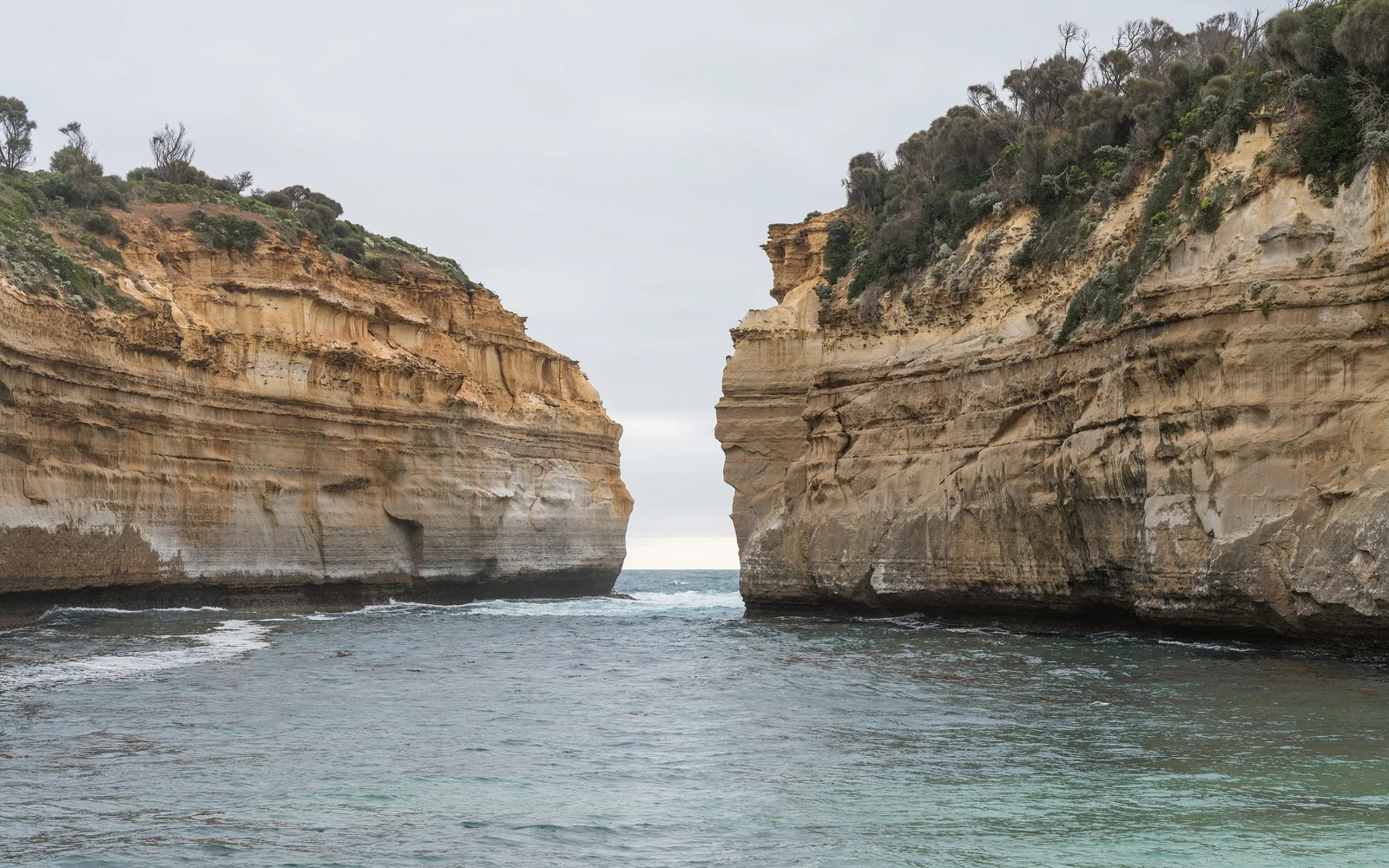
Southwest of Melbourne, the 243-kilometer Great Ocean Road runs past surf beaches, the Otway rainforest and the limestone stacks of the Twelve Apostles. You can see the highlights on a long day tour, but a self-drive with one or two nights along the way, for example in Lorne, Apollo Bay or Port Campbell, is far more relaxed.
Uluru and Kata Tjuta
Fly to Ayers Rock Airport and stay at nearby Yulara, the resort town that serves Uluru-Kata Tjuta National Park. Two or three nights give you time for a sunrise, a sunset, the base walk and the Valley of the Winds at Kata Tjuta. You need a park pass from Parks Australia, and climbing Uluru is not permitted.

Cairns and the Great Barrier Reef
Cairns is the easiest base for a first reef trip, with day boats to the outer reef and quick access to the Daintree Rainforest and Kuranda. Port Douglas, an hour north, is a quieter alternative. Our guide to Queensland beyond the Gold Coast covers the reef, the Whitsundays and K’gari in more depth.
How Long Do You Need for a First Trip to Australia?
Two weeks is the realistic minimum to see three or four of the stops above without rushing. Three weeks lets you add the Great Ocean Road and slow down. With only one week, choose one region, such as Sydney and the Blue Mountains or Cairns and the reef, rather than trying to cover the country.
Plan on flying between regions. According to Tourism Australia, Sydney to Melbourne is about 90 minutes by air and Sydney to Cairns about three hours, while the drive from Sydney to Melbourne alone is close to 900 kilometers.
Two-Week First-Trip Itinerary
This route covers city, desert and reef with three internal flights.
- Days 1–4, Sydney: harbor, Opera House, a ferry to Manly and the Bondi to Coogee walk.
- Day 5, Blue Mountains: day trip by train or tour to Katoomba and the Three Sisters.
- Days 6–8, Uluru: fly to Ayers Rock Airport; sunrise, sunset, the base walk and Kata Tjuta.
- Days 9–13, Cairns and Port Douglas: one outer-reef day, one Daintree and Cape Tribulation day, Kuranda and a spare day for weather.
- Day 14: fly out of Cairns or connect home through Sydney or Brisbane.
Three-Week Australia Itinerary
With a third week, add Melbourne and the Great Ocean Road. The order below flows south to north, which suits the dry season in the tropics.
- Days 1–4, Melbourne: laneways, markets, galleries and a day trip to Phillip Island for the penguins.
- Days 5–7, Great Ocean Road: self-drive with overnight stops, returning to Melbourne or ending in Adelaide.
- Days 8–11, Sydney and the Blue Mountains: fly from Melbourne and spend at least one night in the mountains.
- Days 12–14, Uluru: three nights for the national park and a sunrise at Kata Tjuta.
- Days 15–20, Tropical North Queensland: the reef, the Daintree and a couple of slow beach days in Port Douglas.
- Day 21: fly home from Cairns or via a major city.
Booking an open-jaw international ticket, arriving in one city and leaving from another, saves you from backtracking. If you would rather build a trip around beaches, food or wildlife than around classic sights, see our guide to the best holiday destinations in Australia by travel style and season.
Best Time for a First Trip to Australia
A classic first-trip route mixes the temperate south with the tropical north and the desert, so the shoulder seasons work best. From May to September the north and the Red Centre are dry and pleasant, although the south is cool. In September, October, April and May you usually get comfortable weather in most of these places at once.
| Months | Sydney and Melbourne | Uluru | Cairns and the reef |
|---|---|---|---|
| December to February | Hot, beach season | Very hot | Wet season, stingers |
| March to May | Warm to mild | Pleasant | Wet season easing |
| June to August | Cool | Warm days, cold nights | Dry and sunny |
| September to November | Mild to warm | Warm, getting hot | Dry, warming up |
First-Trip Planning Tips
- Book accommodation at Uluru early; there is only one resort town, and it fills up in the cooler months.
- Leave a buffer day in Cairns in case your reef trip is rescheduled because of weather.
- Keep one slow day for every four or five travel days; jet lag and long flights are tiring.
- Most visitors need a visa or an ETA before flying; check our practical Australia travel guide for entry rules, costs and getting around.
- Want to add more nature? Our list of Australia’s natural wonders shows which ones fit which season.

First Trip to Australia FAQ
What should you not miss on a first trip to Australia?
Most first-time visitors should include Sydney, Uluru and the Great Barrier Reef, which together show the city, the outback and the tropics. If you have three weeks, add Melbourne and the Great Ocean Road for food, culture and one of the world’s great coastal drives.
Is two weeks enough for Australia?
Two weeks is enough for a satisfying first trip if you limit yourself to three or four regions and fly between them. A good example is Sydney with the Blue Mountains, Uluru, and Cairns with the reef and the Daintree. Trying to add Perth or Tasmania usually means rushing.
Should I fly or drive between Sydney and Melbourne?
Fly if time is short. The flight takes about 90 minutes, while the drive is close to 900 kilometers. Driving makes sense only if you want the coastal route with overnight stops, which turns the transfer into a road trip of several days.
Which is better for a first trip, Sydney or Melbourne?
Sydney has the bigger landmarks, the harbor and beaches, so it suits sightseeing. Melbourne is stronger on food, laneways, arts and sport. On a two-week trip, most first-timers choose Sydney and add Melbourne only if they have three weeks.
How many days do you need at Uluru?
Two to three nights is ideal. That gives you at least one sunrise and one sunset at Uluru, time for the base walk or a guided cultural walk, and a morning at Kata Tjuta. One night is possible but leaves little margin for flight times or heat.
What order should I visit Australia in?
Follow the weather and avoid backtracking. In the southern winter, finish in the tropical north; in summer, spend more time in the south. Book an open-jaw international ticket so you can arrive in one city, such as Sydney, and leave from another, such as Cairns.