


Australia’s natural wonders are among the oldest and most distinctive landscapes on Earth: a sandstone monolith sacred to its Traditional Owners, the largest coral reef system in the world, one of the world’s oldest rainforests and limestone stacks battered by the Southern Ocean.
Below are ten icons, most of them on the UNESCO World Heritage List, grouped by landscape, with the best season and the practical way to reach each one. Several are thousands of kilometers apart, so use the table and planning tips to decide which ones fit your trip.
Australia’s Natural Wonders at a Glance
| Natural wonder | State or territory | Gateway | Best time |
|---|---|---|---|
| Great Barrier Reef | Queensland | Cairns, Port Douglas, Airlie Beach | May to October |
| Uluru and Kata Tjuta | Northern Territory | Ayers Rock Airport (Yulara) | May to September |
| Kakadu National Park | Northern Territory | Darwin | May to September |
| Daintree Rainforest | Queensland | Cairns, Port Douglas | May to October |
| Twelve Apostles | Victoria | Melbourne | November to April |
| Purnululu (Bungle Bungle Range) | Western Australia | Kununurra | April to October (park open) |
| Ningaloo Reef | Western Australia | Exmouth, Coral Bay | March to August for whale sharks |
| Shark Bay | Western Australia | Denham, Monkey Mia | April to October |
| Tasmanian Wilderness | Tasmania | Launceston, Hobart | November to April |
| Greater Blue Mountains | New South Wales | Sydney | Year-round |
Reef and Coastal Wonders
1. The Great Barrier Reef, Queensland
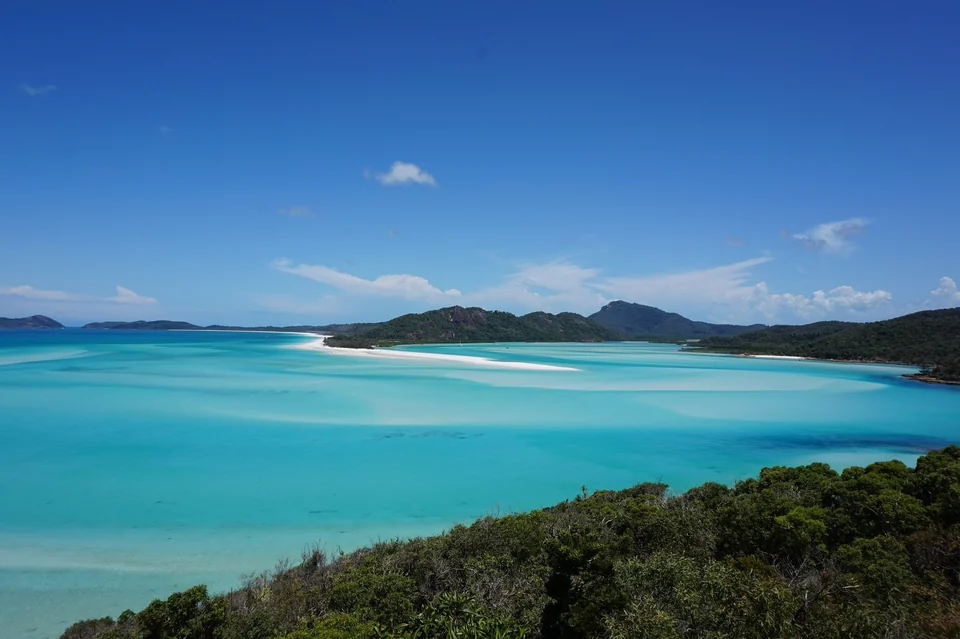
Stretching roughly 2,300 kilometers along the Queensland coast, the Great Barrier Reef is the world’s largest coral reef system and has been World Heritage listed since 1981. Day boats from Cairns and Port Douglas reach the outer reef, while the Whitsundays combine reef trips with island beaches. Our guide to Queensland beyond the Gold Coast compares the bases in detail.
2. Ningaloo Reef, Western Australia
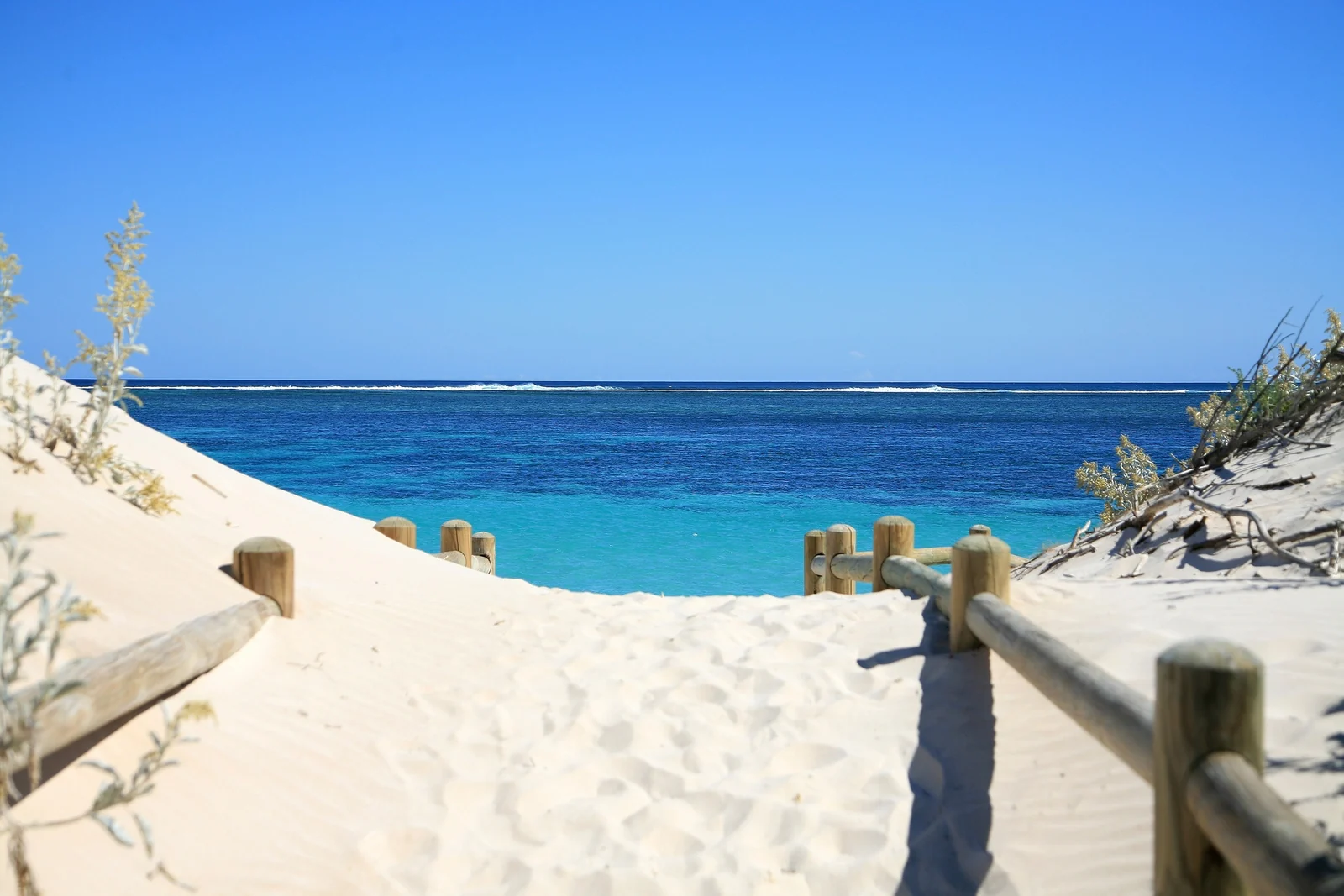
Ningaloo is a fringing reef, which means the coral starts just meters from the beach. Part of the Ningaloo Coast World Heritage Area since 2011, it is best known for licensed swims with whale sharks, usually from about March to August, and humpback whales later in the dry season.
3. Shark Bay, Western Australia
World Heritage listed in 1991, Shark Bay protects vast seagrass meadows, the stromatolites of Hamelin Pool, which are living relatives of some of the earliest life on Earth, and Shell Beach, made almost entirely of tiny white shells. Wild dolphins visit the shore at Monkey Mia.
4. The Twelve Apostles, Victoria
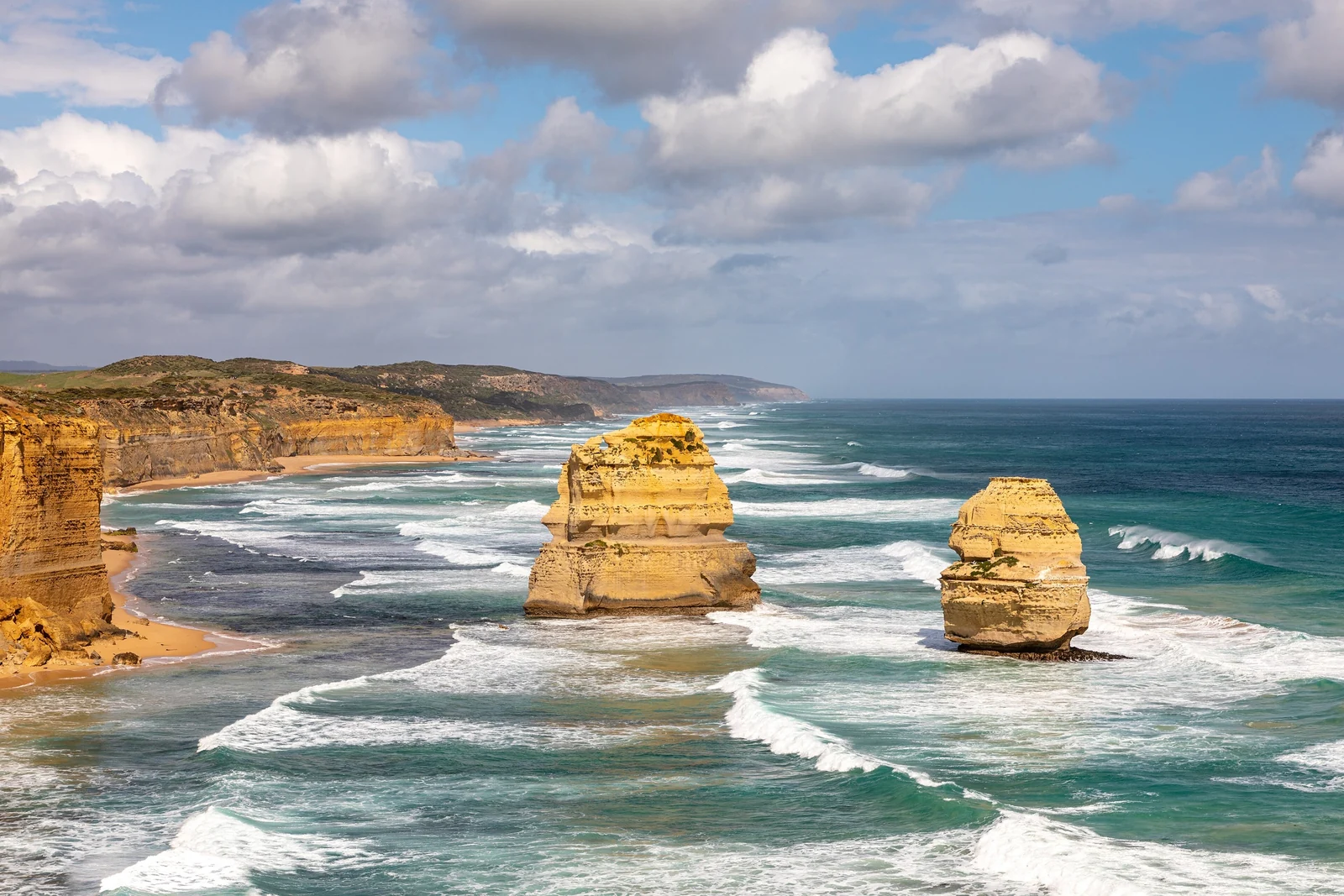
These limestone stacks rise from the Southern Ocean in Port Campbell National Park on the Great Ocean Road. Despite the name, there were never twelve: seven remain today after one collapsed in 2005. The 243-kilometer road itself was built by returned soldiers between 1919 and 1932 and is considered the world’s largest war memorial. Visit at sunrise or sunset for the best light and fewer tour buses.
Outback Wonders: Uluru, Kata Tjuta and the Bungle Bungles
5. Uluru and Kata Tjuta, Northern Territory
Uluru rises 348 meters above the surrounding plain and has a perimeter of about 9.4 kilometers. Together with the 36 domes of Kata Tjuta, about 25 kilometers to the west, it forms Uluru-Kata Tjuta National Park, which is World Heritage listed for both its natural and cultural values. The park is owned by the Aṉangu people and jointly managed with Parks Australia.
Climbing Uluru has been prohibited since October 26, 2019, out of respect for its cultural significance. Instead, walk the base, join a ranger or Aṉangu-guided walk and watch the rock change color at sunrise and sunset. You need a park pass, which you can buy through the official Uluṟu-Kata Tjuṯa National Park site.
6. Purnululu (Bungle Bungle Range), Western Australia
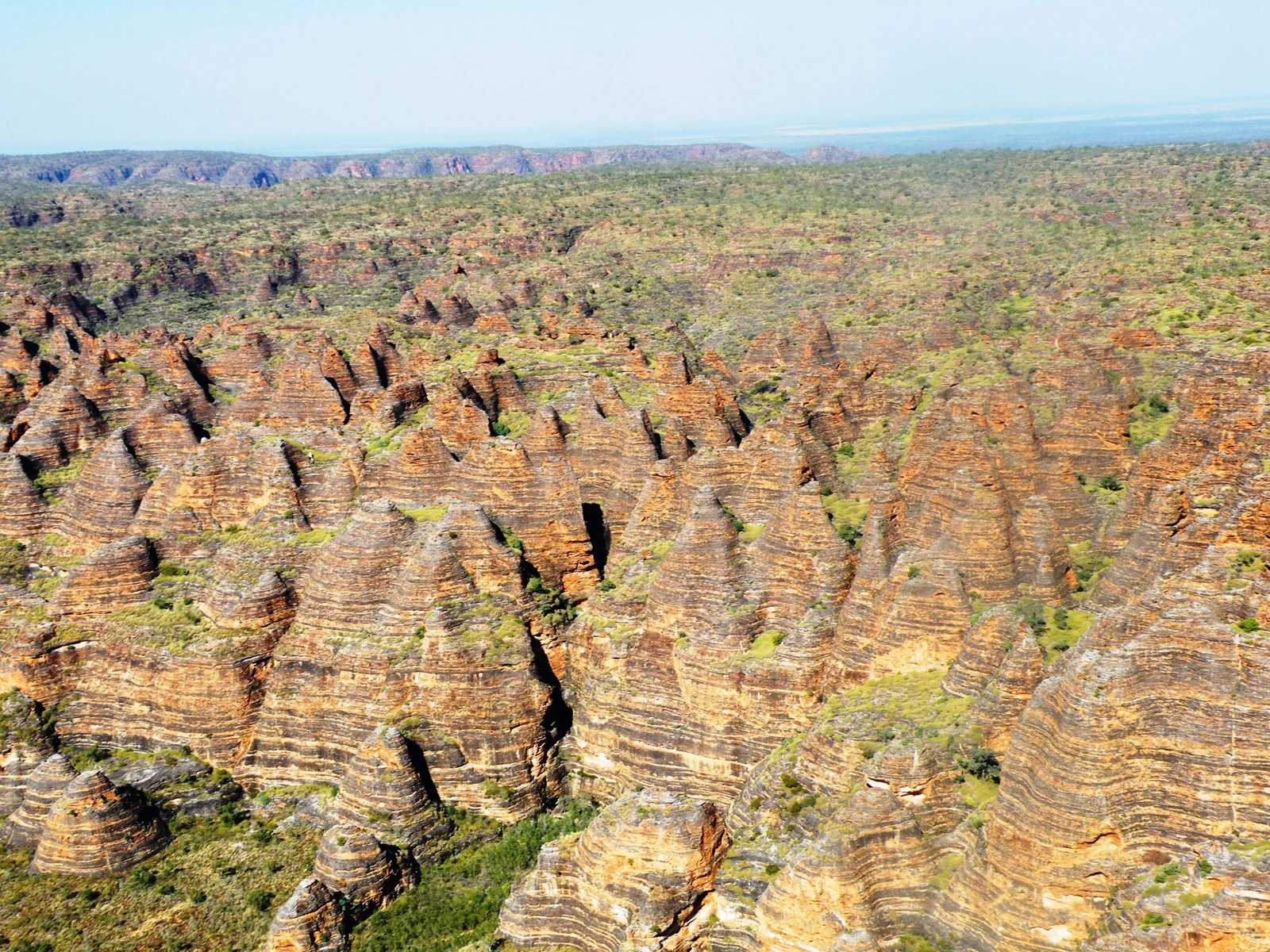
In the East Kimberley, the orange-and-black striped sandstone domes of the Bungle Bungle Range were World Heritage listed in 2003. The park is only open in the dry season, usually from April to October, and access is by high-clearance 4WD or on a scenic flight from Kununurra, which is the best way to grasp their scale.
Tropical Wonders: Kakadu and the Daintree
7. Kakadu National Park, Northern Territory
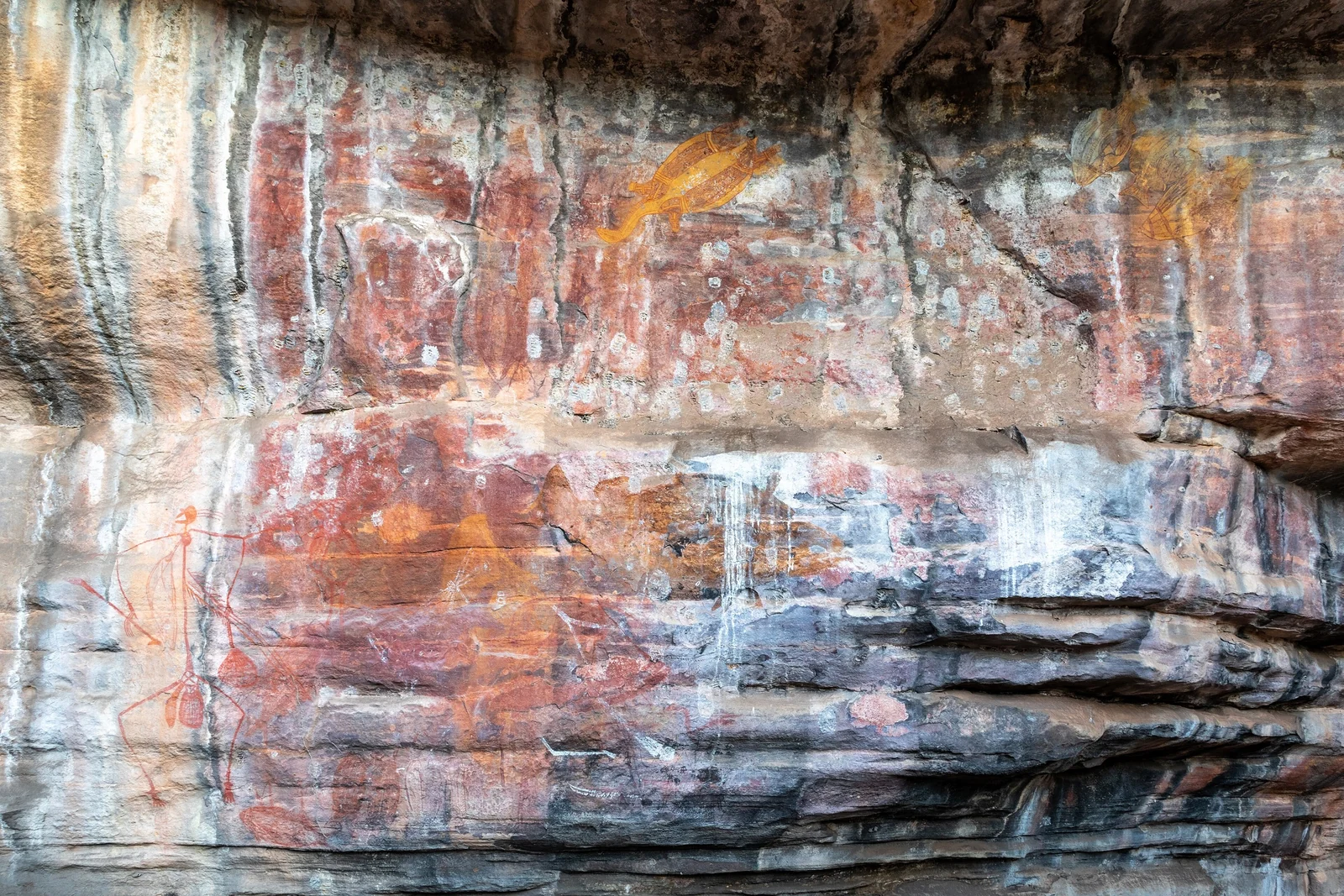
Kakadu covers nearly 20,000 square kilometers of wetlands, escarpments and monsoon forest east of Darwin, and it is World Heritage listed for both nature and culture. Its Traditional Owners, the Bininj/Mungguy people, recognize six seasons rather than two. Highlights include the rock art galleries at Ubirr and Burrungkuy (Nourlangie), Yellow Water cruises for crocodiles and birdlife, and waterfalls that are reachable only in the dry season.
A park pass is required, and many roads and sites close during the wet season from around November to April. Check current access on the official Kakadu site before you go.
8. The Daintree Rainforest, Queensland
Part of the Wet Tropics World Heritage Area, the Daintree is often described as one of the oldest rainforests on Earth. At Cape Tribulation it meets the Great Barrier Reef, one of the few places where two World Heritage areas meet. Since 2021, Daintree National Park has been owned by the Eastern Kuku Yalanji people and jointly managed with Queensland.
Mountain and Wilderness Wonders
9. The Tasmanian Wilderness
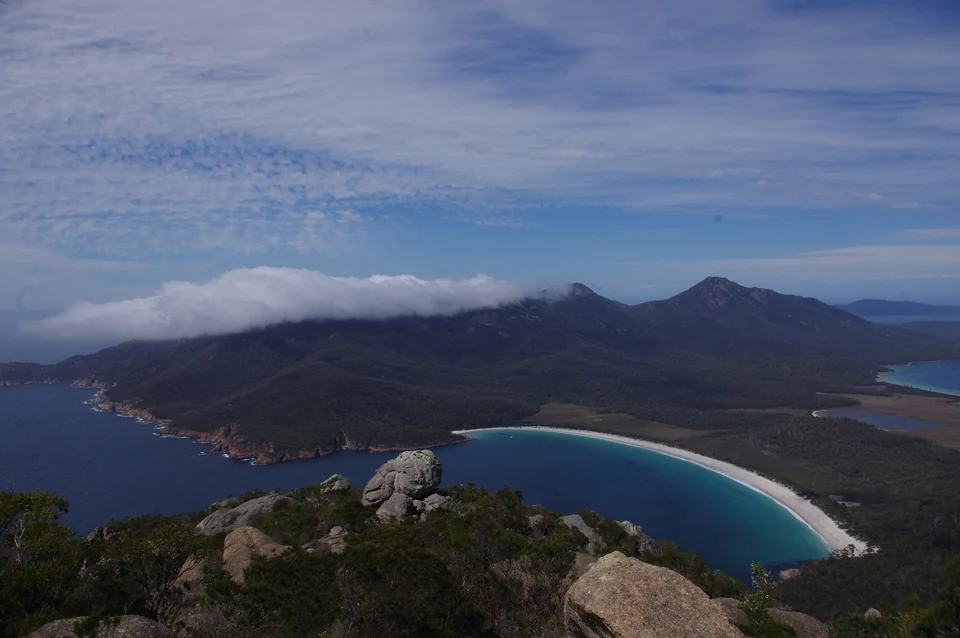
Listed in 1982, the Tasmanian Wilderness World Heritage Area covers about a fifth of the island. Cradle Mountain and Dove Lake are the easiest introduction, and the multi-day Overland Track runs south through the park to Lake St Clair. Summer brings the most reliable walking weather, but conditions can change fast in any month.
10. The Greater Blue Mountains, New South Wales
West of Sydney, the Greater Blue Mountains were World Heritage listed in 2000 for their eucalypt diversity. The blue haze that gives them their name comes from oils released by the trees. The Three Sisters at Katoomba are the classic view, and the area is an easy train ride from the city, which makes it the most accessible wonder on this list.
How to See Several Wonders in One Trip
Most of these places are far apart, and they peak in different seasons. The easiest combinations are:
- Dry-season north (May to September): Uluru, Kakadu and the Great Barrier Reef with the Daintree, linked by domestic flights.
- Western Australia road trip (April to August): Shark Bay and Ningaloo on a coastal drive north from Perth, or the Kimberley with Purnululu.
- Southern summer (November to April): the Blue Mountains, the Great Ocean Road and the Tasmanian Wilderness.
For a first trip that balances nature with Sydney and Melbourne, see our first-trip bucket list and 2–3 week itinerary. For visas, seasons by region and getting around, read our practical Australia travel guide, and if you want to plan around a style rather than sights, see the best holiday destinations in Australia.
Visiting Australia’s Natural Wonders Responsibly
- Respect cultural rules: some sites at Uluru and elsewhere ask visitors not to photograph specific areas.
- Carry more water than you think you need in the outback and walk early in the day in hot weather.
- Take crocodile warning signs seriously in the Top End and Far North Queensland.
- Do not touch coral, stromatolites or rock art, and stay on marked paths.
- Buy the required park passes and check seasonal road closures before driving.
Australia Natural Wonders FAQ
What is the most famous natural wonder in Australia?
The Great Barrier Reef and Uluru are the best known. The reef is the world’s largest coral reef system, stretching about 2,300 kilometers along the Queensland coast, while Uluru is a sandstone monolith in the Red Centre that is sacred to the Aṉangu people.
Can you still climb Uluru?
No. Climbing Uluru was permanently prohibited on October 26, 2019, in line with the wishes of its Traditional Owners. You can walk the full base, which is around 10 kilometers, join guided cultural walks, and view the rock from sunrise and sunset viewing areas.
How many of the Twelve Apostles are left?
Seven stacks remain today. There were never twelve; the name was chosen for tourism, and one of the remaining stacks collapsed in 2005. Erosion continues, so new stacks may form as cliffs are worn away over time.
When is the best time to visit Kakadu?
May to September, in the dry season, when most roads, walks and waterfalls are open and the weather is warm rather than humid. The wet season brings dramatic storms and full waterfalls best seen from the air, but many areas are closed.
How many World Heritage sites does Australia have?
Australia has more than 20 World Heritage properties, including the Great Barrier Reef, Uluru-Kata Tjuta, Kakadu, the Tasmanian Wilderness, Shark Bay, Purnululu and the Ningaloo Coast. Check the UNESCO list for the current total.
Can you see the Great Barrier Reef and Uluru on the same trip?
Yes. Fly between Ayers Rock Airport and Cairns, directly if a service runs on your dates or via a major city. The pairing works best in the dry season from May to September, when both are at their best. Allow two to three nights at Uluru and three or more near the reef.