


Chiang Mai is the capital of northern Thailand, a low-rise city in a river valley ringed by forested mountains. King Mangrai founded it in 1296 as the seat of the Lanna kingdom, and the square, moated Old City he laid out still holds more than enough temples to fill several slow days. Add some of the best food in Thailand and easy mountain day trips, and many travelers stay longer than planned.
Four or five days is the right amount of time: two for the Old City and Doi Suthep, one for food and markets, and one or two for the mountains or Chiang Rai. This Chiang Mai travel guide covers the temples worth your time, where to eat khao soi, how to pick an elephant sanctuary that treats animals well, the festivals, the smoky season to avoid, and how to get around. For the rest of the country, see our Thailand travel guides.
The Old City Temples of Chiang Mai
The Old City is a square enclosed by a moat, with crumbling brick bastions at the corners and rebuilt gates on each side. Tha Phae Gate on the east is the usual meeting point. You can walk across it in about 20 minutes. Go early: temple courtyards are quiet and cool before 9 a.m., and monks are often sweeping or chanting.
Wat Chedi Luang
If you see one temple, make it this one. Its great brick chedi was begun in the late 14th century and was once the tallest structure in the kingdom, until an earthquake in the 16th century brought down the upper section. What remains is still enormous, guarded by naga stairways and stone elephants. The Emerald Buddha, now in Bangkok, sat here in the 15th and 16th centuries. Also in the grounds is the shrine of the city pillar, Sao Inthakhin, and some afternoons monks sit at tables for informal "monk chat" conversations with visitors.
Wat Phra Singh
At the western end of Ratchadamnoen Road, Wat Phra Singh dates to the 14th century and is the city's most revered temple. The small Wihan Lai Kham holds the Phra Buddha Sihing image, which is carried through the streets during the Songkran festival in April, and its walls are covered in old Lanna murals showing daily life.
Wat Chiang Man
Tucked into the northeast corner, Wat Chiang Man is considered the oldest temple in the city, traditionally linked to King Mangrai's founding. Look for the chedi ringed by stone elephants that seem to carry it on their backs, and for two small, venerated Buddha images kept in a side hall, one of them carved from crystal. It sees far fewer tour groups than the big two, which is a good reason to go.
Temple etiquette: cover your shoulders and knees, take off your shoes before entering any hall, don't point your feet at Buddha images, and women should not touch monks or hand things to them directly. A light scarf or sarong in your daypack solves the dress code everywhere.
Doi Suthep and the Mountain Above the City
Wat Phra That Doi Suthep, high on the mountain west of the city, is the temple Chiang Mai residents care about most. Legend says a white elephant carrying a Buddha relic climbed the mountain in the 14th century, stopped, and died on this spot, which was taken as a sign to build. A staircase of more than 300 steps, flanked by long naga serpents, leads to a gleaming golden chedi; a small funicular runs alongside if your knees object.
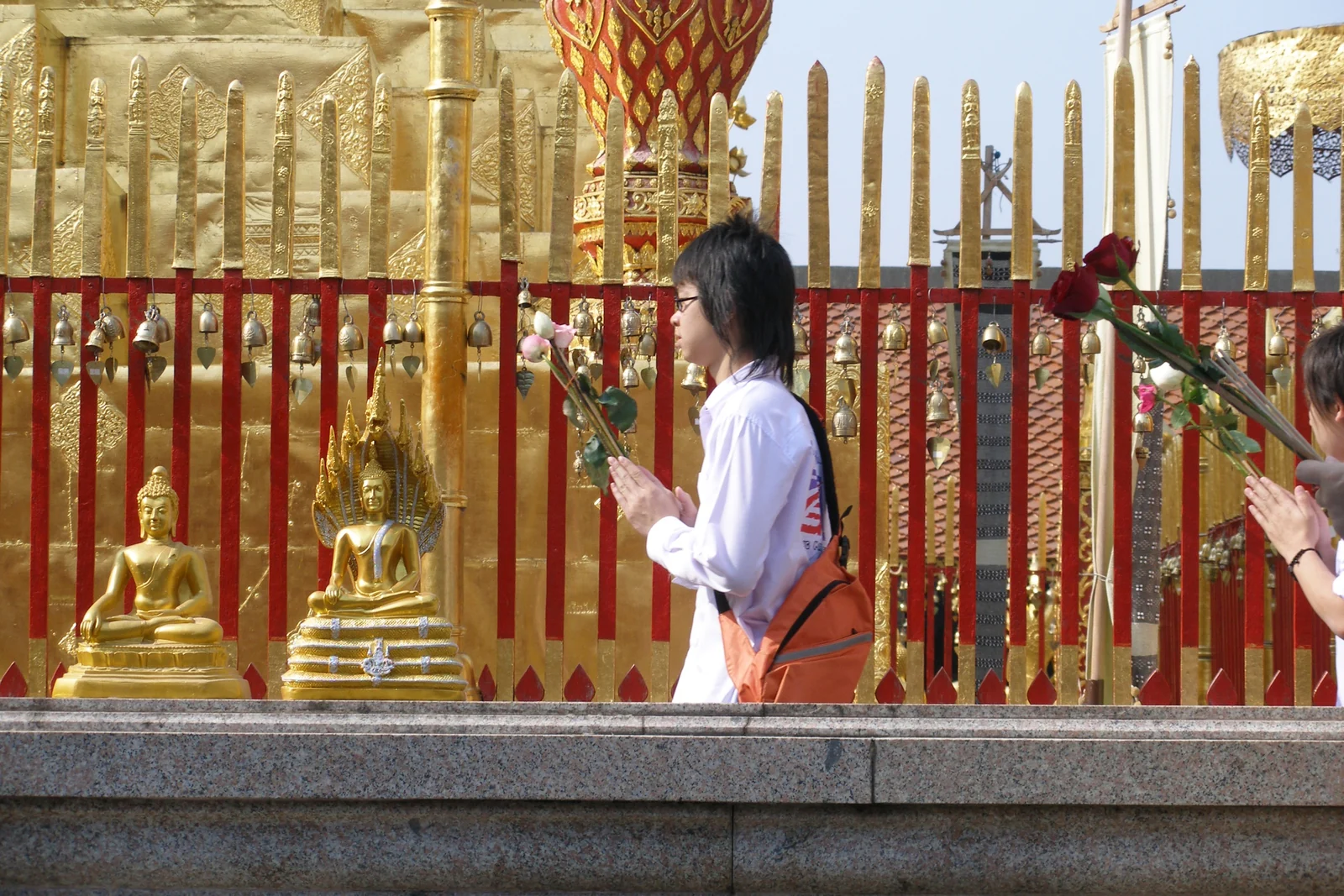
Shared red songthaews leave from near Chiang Mai University and wait until they fill up, or you can book a Grab both ways. The fit and curious can hike up the forest path known as the Monk's Trail, passing the small jungle temple of Wat Pha Lat on the way. Go on a weekday morning, before the clouds and the coaches arrive.
Nimman and Chiang Mai's Modern Side
West of the Old City, Nimmanhaemin Road and its numbered side lanes (sois) are where the city's student population and its remote workers meet. Expect specialty coffee roasted from northern-grown beans, design shops, cocktail bars and a couple of modern malls at the Huay Kaew Road end. It is pleasant rather than profound, but a good base if you prefer late dinners to temple bells at dawn.
Sunday Walking Street and the Night Bazaars
Chiang Mai does markets better than almost anywhere in Thailand. Each one has a different personality, so plan your evenings around them.
- Sunday Walking Street: every Sunday from late afternoon, Ratchadamnoen Road is closed to traffic from Tha Phae Gate to Wat Phra Singh, and temple courtyards along the way turn into food courts. Handicrafts are better here than in the night bazaar. Arrive before dark.
- Saturday Walking Street: Wua Lai Road, just south of the Old City, is the smaller sibling, known for its silversmith workshops and the silver-clad temple of Wat Sri Suphan.
- Night Bazaar: the nightly market along Chang Khlan Road is more about souvenirs and clothing than craft. Come for the food halls and bargain politely.
- Warorot Market: the daytime market near the Ping River, where locals buy northern sausage, chili pastes, dried fruit and fabric. Go in the morning.
Khao Soi and Northern Thai Food
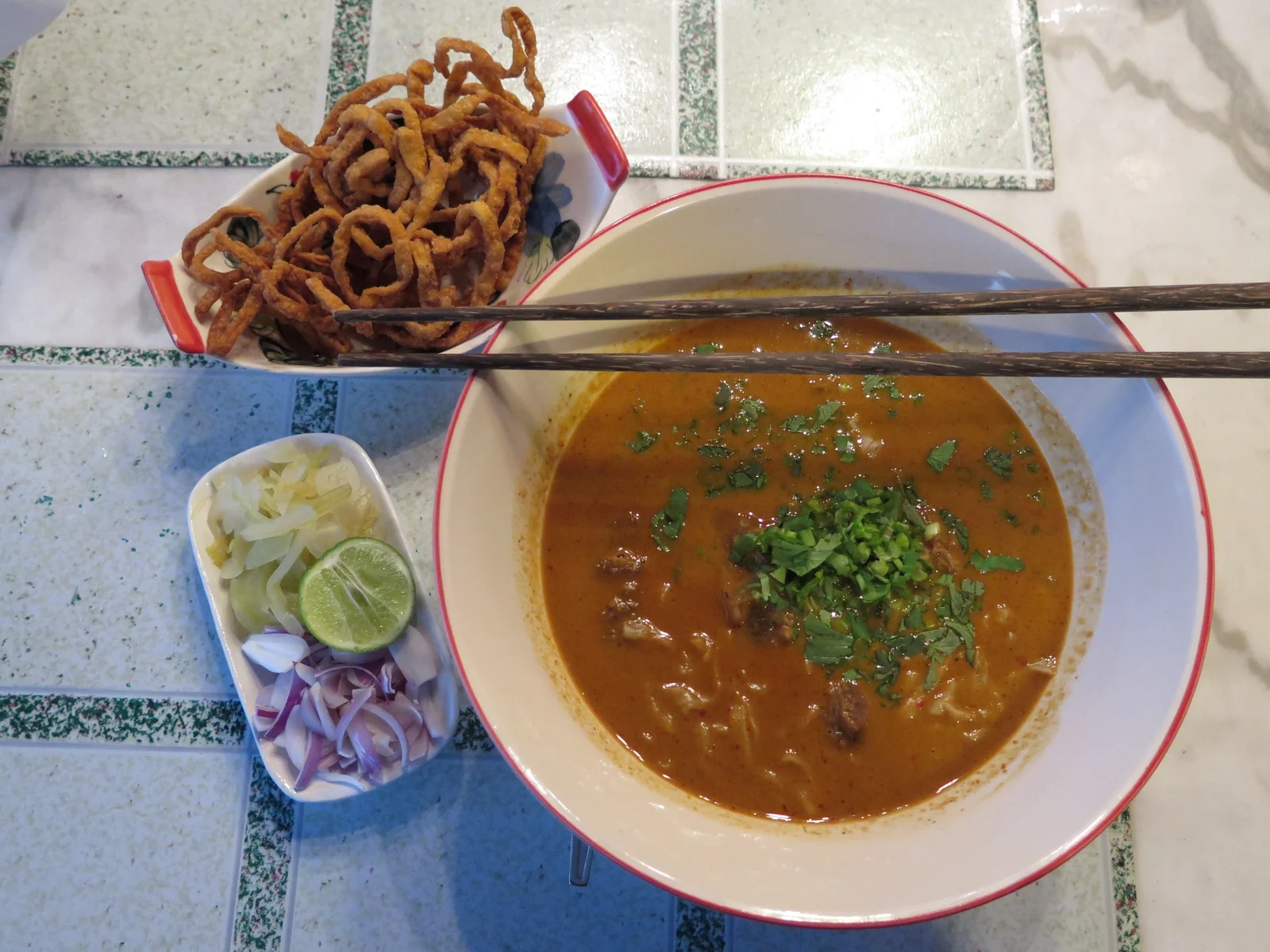
Northern Thai cooking is earthier and less sweet than the dishes most people know from Bangkok, with more herbs, more pork and sticky rice on the side. The signature dish is khao soi, egg noodles in a rich coconut curry broth, usually with chicken or beef, topped with a nest of crispy fried noodles and served with pickled mustard greens, shallots and lime to add yourself. The best bowls often come from shophouses that close once the pot is empty.
What Else to Order
- Sai ua: a coarse, herb-heavy grilled pork sausage with lemongrass and makrut lime leaf.
- Nam prik noom and nam prik ong: a smoky green chili dip and a mild tomato and pork dip, eaten with pork crackling and raw vegetables.
- Kaeng hang lay: a slow-cooked pork curry with ginger and tamarind, Burmese in origin.
- Khantoke: a traditional set dinner of several northern dishes served on a low pedestal tray, often with dance performances.
Taking a Cooking Class
Chiang Mai is the cooking class capital of Thailand, and a class is one of the best-value things you can do here. Most run a half or full day, start with a guided visit to a local market and then let you cook four to six dishes at your own station. Compare group size, whether northern dishes are on the menu, and whether vegetarian versions are offered before you book.
How to Choose an Ethical Elephant Sanctuary
Dozens of camps around Chiang Mai now call themselves sanctuaries, and the word means nothing on its own. Many former riding camps simply removed the saddles and added bathing sessions. Animal welfare groups such as World Animal Protection recommend venues where you watch elephants behave naturally from a distance rather than touch them. Use these questions to judge a place before you pay:
- No riding of any kind, including bareback rides marketed as gentle or traditional.
- No shows, painting or tricks. Any trained behavior for an audience means harsh training behind it.
- Little or no direct contact. Bathing and hand-feeding sessions are crowd-pleasers, but the best places limit or avoid them.
- Freedom to roam. Elephants should spend most of the day moving and foraging, not standing chained between visitor slots.
- No bullhooks in sight and no baby elephants kept apart from their mothers for photos.
- Small groups and honest answers about where the animals came from and how the money is used.
A visit that respects these rules feels more like a wildlife walk than a photo session. That's the point.
Day Trips: Doi Inthanon, Chiang Rai and Pai
| Destination | How to get there | Approx. travel time | Best for |
|---|---|---|---|
| Doi Inthanon National Park | Tour, private driver or rental car | About 2 hours each way | Thailand's highest peak, cloud forest, waterfalls |
| Chiang Rai | Intercity bus from Arcade bus station, or a tour | About 3 hours each way | The White Temple, Blue Temple, Baan Dam |
| Pai | Minivan or motorbike over the mountain road | About 3 hours each way | Valley scenery, hot springs, a slower pace |
| Doi Suthep | Songthaew, Grab or hiking trail | 30 to 45 minutes | The city's holiest temple, views |
Doi Inthanon
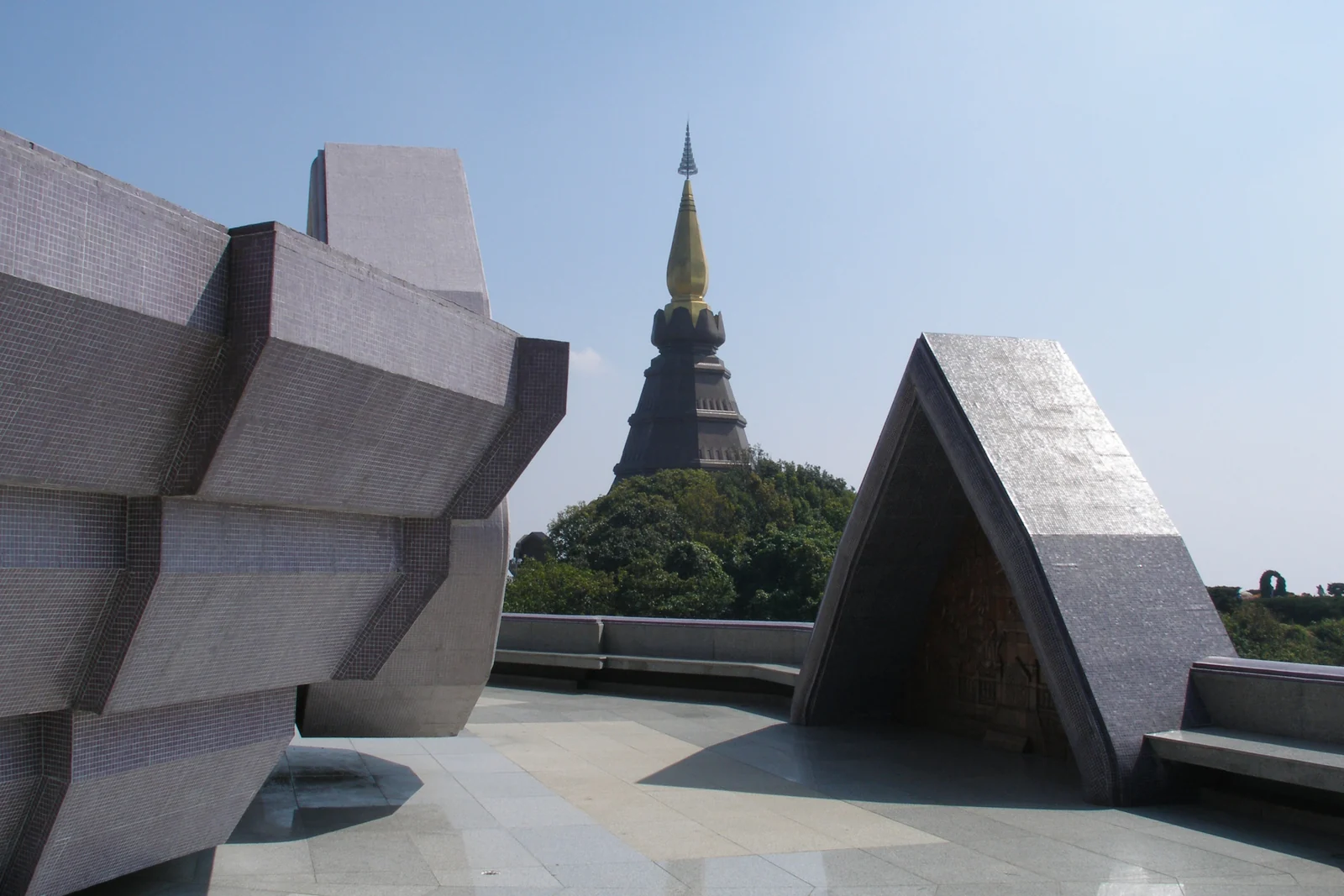
At 2,565 meters, Doi Inthanon is the highest mountain in Thailand, and its summit is often surprisingly cold, so bring a fleece. The classic day combines the summit and the short boardwalk through mossy cloud forest, the twin royal chedis built to honor King Bhumibol and Queen Sirikit, and waterfalls such as Wachirathan on the way up. Thai national parks charge foreigners a higher entry fee than residents.
Chiang Rai and the White Temple
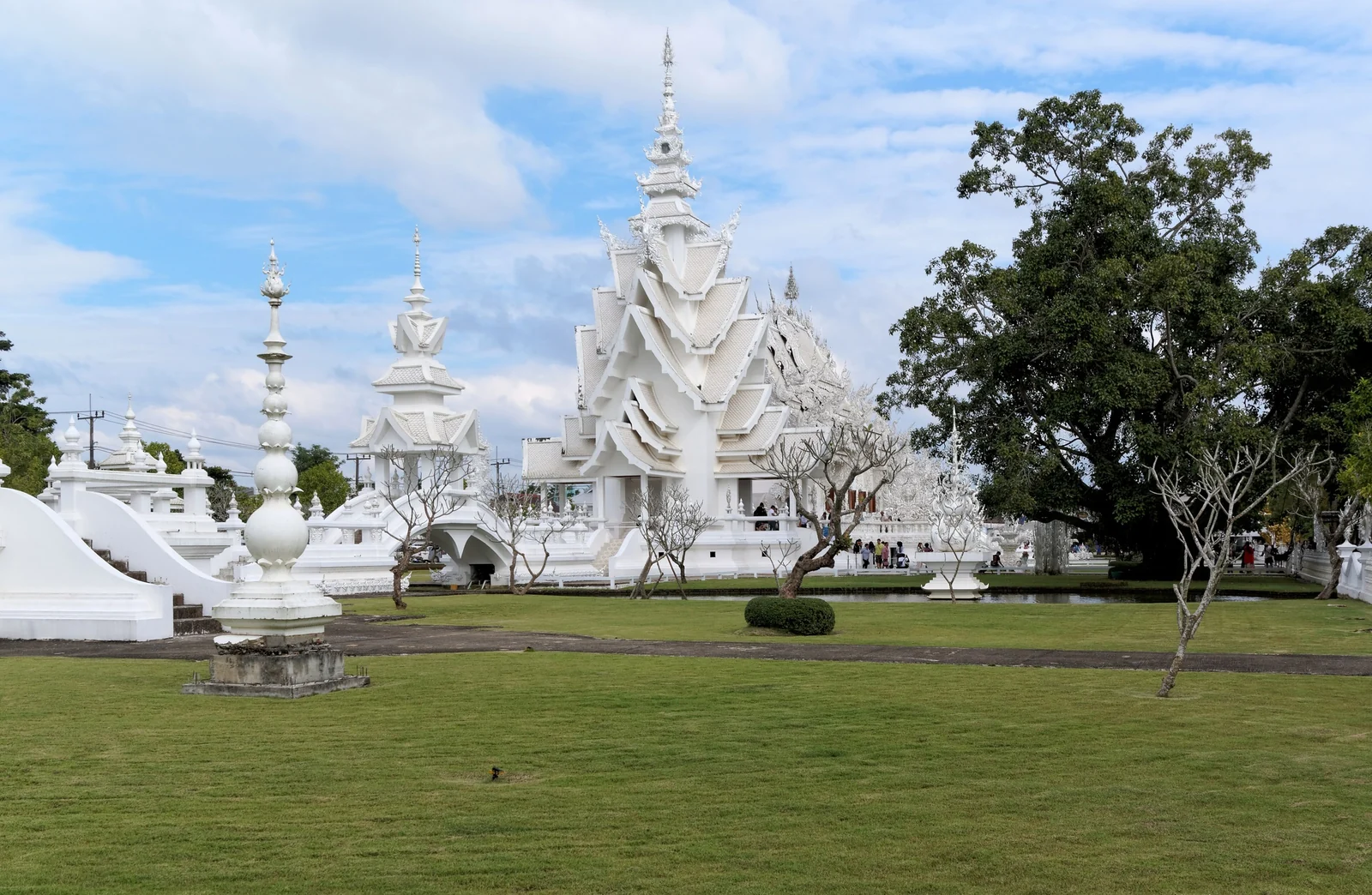
Chiang Rai works as a long day trip but is better with a night. Its star is Wat Rong Khun, the White Temple, the ongoing life project of artist Chalermchai Kositpipat, who began rebuilding it in the late 1990s. The all-white exterior, inlaid with mirror glass, is reached by a bridge over a sea of reaching hands. Combine it with the sapphire-blue Wat Rong Suea Ten and Baan Dam, the dark, eccentric museum-compound known as the Black House.
Pai
Pai is a small town in a green valley near the Myanmar border, famous for its laid-back cafes, hot springs, a sunset canyon and a road with hundreds of hairpin bends. Treat it as an overnight trip at least; doing it in a day means six hours in a minivan. Only ride a motorbike if you are experienced and licensed.
Best Time to Visit Chiang Mai
| Season | Months | What to expect |
|---|---|---|
| Cool season | November to early February | Dry, sunny days and cool nights; peak season and the best weather |
| Hot and burning season | Late February to April | Rising heat and smoky haze from crop and forest fires; poor air quality |
| Rainy season | May to October | Green landscapes, afternoon downpours, fewer visitors, lower prices |
Yi Peng and Loy Krathong in November
Chiang Mai's most photogenic festival falls on the full moon of the twelfth Thai lunar month, usually in November. Loy Krathong sees people float small decorated baskets on the Ping River, while the Lanna festival of Yi Peng fills temples and streets with paper lanterns. The mass sky-lantern releases you see in photos are mostly ticketed events, and releases are restricted near the airport flight path, so check the official rules for the dates you're there. Book rooms well ahead.
Burning Season Haze
From roughly late February into April, agricultural burning and forest fires across the region can leave Chiang Mai under thick smoke, and the city regularly ranks among the most polluted in the world on bad days. Views from Doi Suthep vanish, and outdoor activity is unpleasant. If you can only travel then, check an air-quality app daily, pack N95 masks and plan for indoor days.
Getting to Chiang Mai and Getting Around
Arriving by Air, Train or Bus
Chiang Mai International Airport (CNX) sits just southwest of the Old City, a short taxi or Grab ride from most hotels. Domestic flights from Bangkok take a little over an hour, and there are regional international routes. The overnight sleeper train from Bangkok is slow, taking well over 10 hours, but a lower berth is comfortable. Long-distance buses arrive at Arcade bus station, northeast of the center.
Songthaews, Grab and Bikes
The red songthaews, pickup trucks with two benches in the back known locally as rot daeng, work as shared taxis. Flag one down, say where you're going and agree the fare before you get in; it will drop other passengers along the way. Grab and Bolt operate in the city and remove the haggling. The Old City itself is best on foot or by rented bicycle. The Tourism Authority of Thailand publishes festival dates and regional travel information.
Where to Stay
- Old City: walkable to the main temples and the Sunday market, with guesthouses at every budget.
- Nimman: cafes, bars and modern apartments; better for longer stays and late evenings.
- Riverside and Night Bazaar area: bigger hotels, river views and easy access to Warorot Market.
- Santitham: residential, local and good value, between the Old City and Nimman.
Planning a longer loop through the region? Our Vietnam itinerary from north to south and two weeks in Sri Lanka pair well with northern Thailand, and you can browse all our Asia destinations.
Chiang Mai Travel FAQ
How many days do you need in Chiang Mai?
Four or five days works well. Spend two on the Old City temples and Doi Suthep, one on markets, food and a cooking class, and one or two on Doi Inthanon or a trip to Chiang Rai.
What is the best time to visit Chiang Mai?
November to early February brings dry, sunny weather and cool evenings, which is why it's peak season. Avoid late February to April if you can, when smoke from burning often brings poor air quality. The rainy season from May to October is green and quieter.
When are Yi Peng and Loy Krathong in Chiang Mai?
Both are held around the full moon of the twelfth Thai lunar month, which usually falls in November. Dates move each year with the lunar calendar, so check the Tourism Authority of Thailand for exact days and for current rules on sky-lantern releases.
Can you visit the White Temple as a day trip from Chiang Mai?
Yes. Chiang Rai is about three hours away by bus or car, so a day trip is long but doable, especially on a tour that combines the White Temple, the Blue Temple and the Black House. Staying a night makes the trip far more relaxed.
How do I know if an elephant sanctuary is ethical?
Look for places with no riding, no shows or painting, little or no direct contact, small visitor groups and elephants free to roam rather than chained. Be wary of camps selling bathing sessions as ethical, and ask where the animals came from.
Is Grab available in Chiang Mai?
Yes, Grab and Bolt both operate in Chiang Mai, including airport pickups. Red songthaews are the local alternative: they work as shared taxis, so agree the fare before getting in.