


Two weeks is the right amount of time for a first Sri Lanka itinerary. The island is small on a map but slow on the ground, and fourteen days let you link its four big experiences without rushing: the ancient cities and rock fortresses of the Cultural Triangle, Kandy and its Temple of the Tooth, the hill-country train through the tea estates to Ella, and a stretch of south coast with Galle Fort, beaches and whales.
The loop below starts and ends near Colombo, runs clockwise through the interior and finishes by the sea. It works best between December and April, when the south and west coasts are dry. Below: a day-by-day plan, what each stop is really like, the monsoons, transport, food and paperwork.
For more on the island, browse our Sri Lanka travel guides.
Two-Week Sri Lanka Itinerary at a Glance
Travel times are approximate; roads are narrow and winding, so treat any estimate as a minimum.
| Days | Base | Highlights | Getting there |
|---|---|---|---|
| 1 | Negombo or Colombo | Arrival, rest, sunset on the beach or Galle Face Green | Short drive from the airport |
| 2–5 | Sigiriya or Habarana | Sigiriya, Pidurangala, Dambulla caves, Polonnaruwa, optional Anuradhapura | Roughly 4 hours by car |
| 6–7 | Kandy | Temple of the Tooth, Kandy Lake, Peradeniya gardens | Roughly 3 hours by car via Dambulla |
| 8 | Nuwara Eliya | Tea factory visit, cool-climate town | Train from Kandy to Nanu Oya |
| 9–10 | Ella | Little Adam's Peak, Nine Arch Bridge, Ella Rock | Train from Nanu Oya |
| 11 | Udawalawe or Yala | Afternoon or next-morning jeep safari | A few hours by car |
| 12–14 | Galle and Mirissa | Galle Fort, beaches, whale watching | A few hours by car, then back to Colombo to fly home |
Short on time? Drop Anuradhapura and Nuwara Eliya. Extra days? Add beach time, not more sights.
Arriving in Colombo and the First Night
International flights land at Bandaranaike International Airport near Katunayake, roughly an hour north of central Colombo depending on traffic. Many long-haul flights arrive late at night or very early, so the beach town of Negombo, a short drive from the terminal, is the easy first base.
Colombo itself rewards a half day more than a full one: the seafront at Galle Face Green at sunset, the Gangaramaya Temple and the restored Dutch Hospital arcade in Fort. Save it for the end if your flight home leaves late.
The Cultural Triangle: Sigiriya, Dambulla, Polonnaruwa and Anuradhapura
The dry plains north of Kandy hold most of Sri Lanka's ancient capitals, and several of its UNESCO World Heritage Sites sit within a couple of hours of each other. Base yourself around Sigiriya or Habarana for three or four nights and make day trips.
Sigiriya Rock Fortress
Sigiriya is the image everyone knows: a sheer block of rock rising about 180 meters from the forest, with the ruins of King Kashyapa's late fifth-century palace on top. The climb passes water gardens, painted frescoes, the polished Mirror Wall and the giant stone paws of a former lion gateway. UNESCO listed the Ancient City of Sigiriya in 1982.
Start at opening time. By late morning the stairs are hot and crowded, and the final section is a narrow iron staircase on the open rock face, which is uncomfortable for anyone nervous about heights.
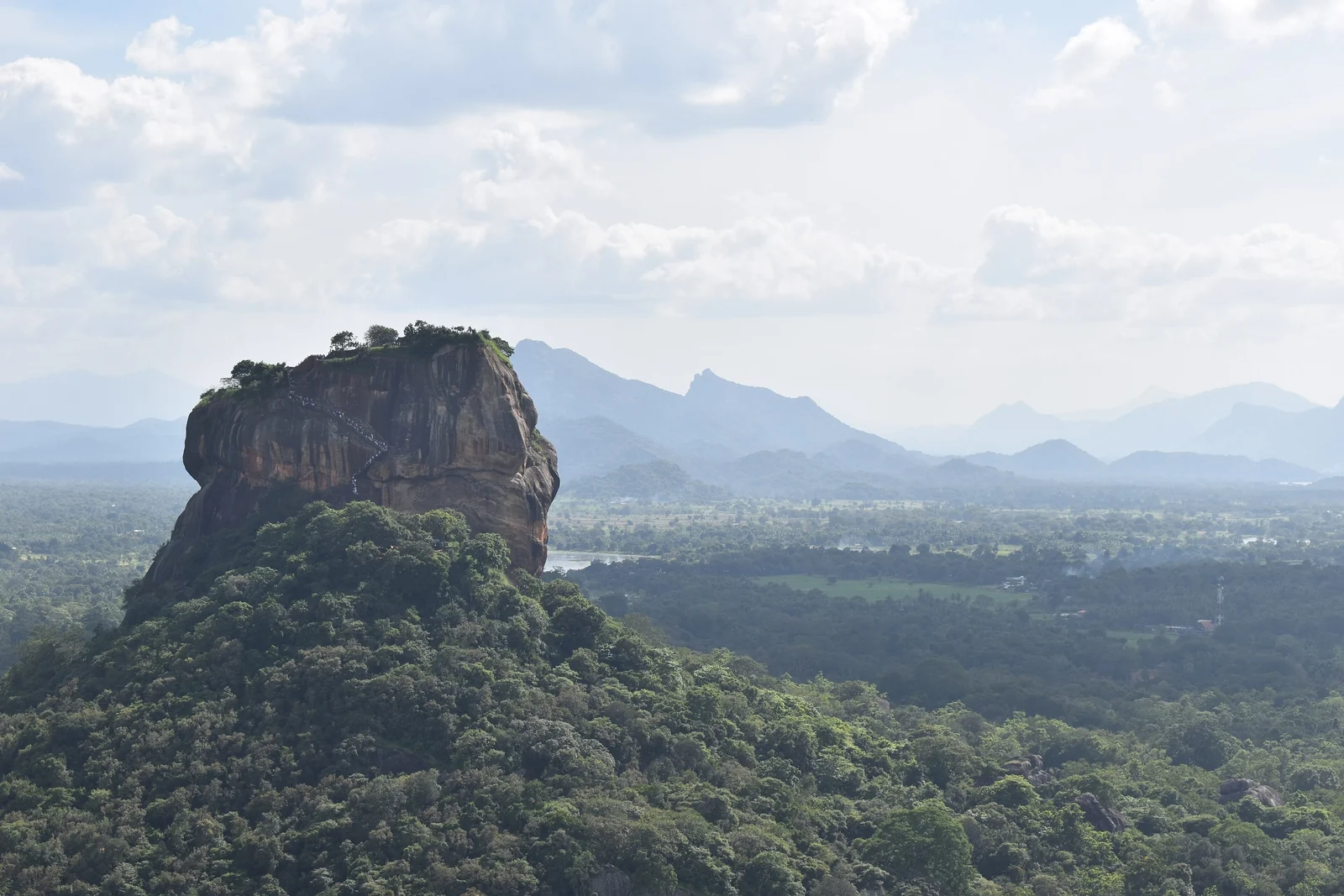
For the classic view of Sigiriya, climb neighboring Pidurangala Rock at sunrise or late afternoon. It is cheaper and rougher, with a short scramble over boulders near the top.
Dambulla Cave Temples
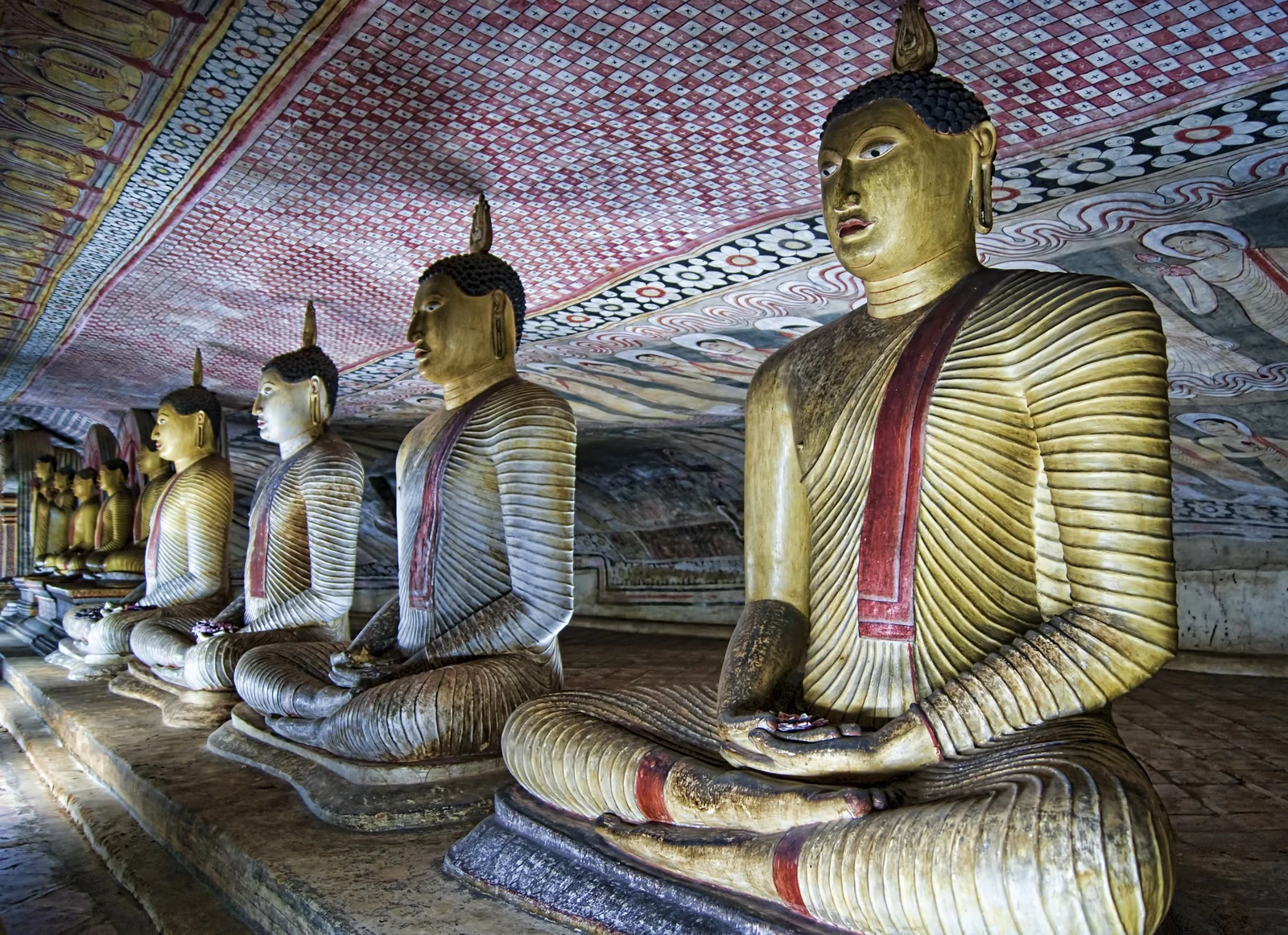
The Golden Temple of Dambulla, a UNESCO site since 1991, is a set of five caves under a granite outcrop, filled with Buddha statues and ceiling murals painted over many centuries. It has been a place of pilgrimage for more than two thousand years and still is, so cover your shoulders and knees and remove shoes and hats. Plan an hour on the way to Kandy.
Polonnaruwa
Polonnaruwa, the island's medieval capital, is the most rewarding of the ancient cities for a first visit. The ruins are compact, and a rented bicycle is the best way around. The highlight is Gal Vihara, a group of Buddha figures carved from a single granite face, including a long reclining Buddha of great calm. Go early or late and carry water.
Anuradhapura
Anuradhapura was Sri Lanka's first great capital and remained the seat of kings for well over a thousand years. Its huge white dagobas and the sacred Sri Maha Bodhi tree draw pilgrims daily. It is a long day trip from Sigiriya; history fans only.
Kandy and the Temple of the Tooth
Kandy, the last royal capital before the British took over in 1815, sits around a lake in the hills and its old core is a UNESCO site. The center is congested, so stay a little above town for quiet evenings.
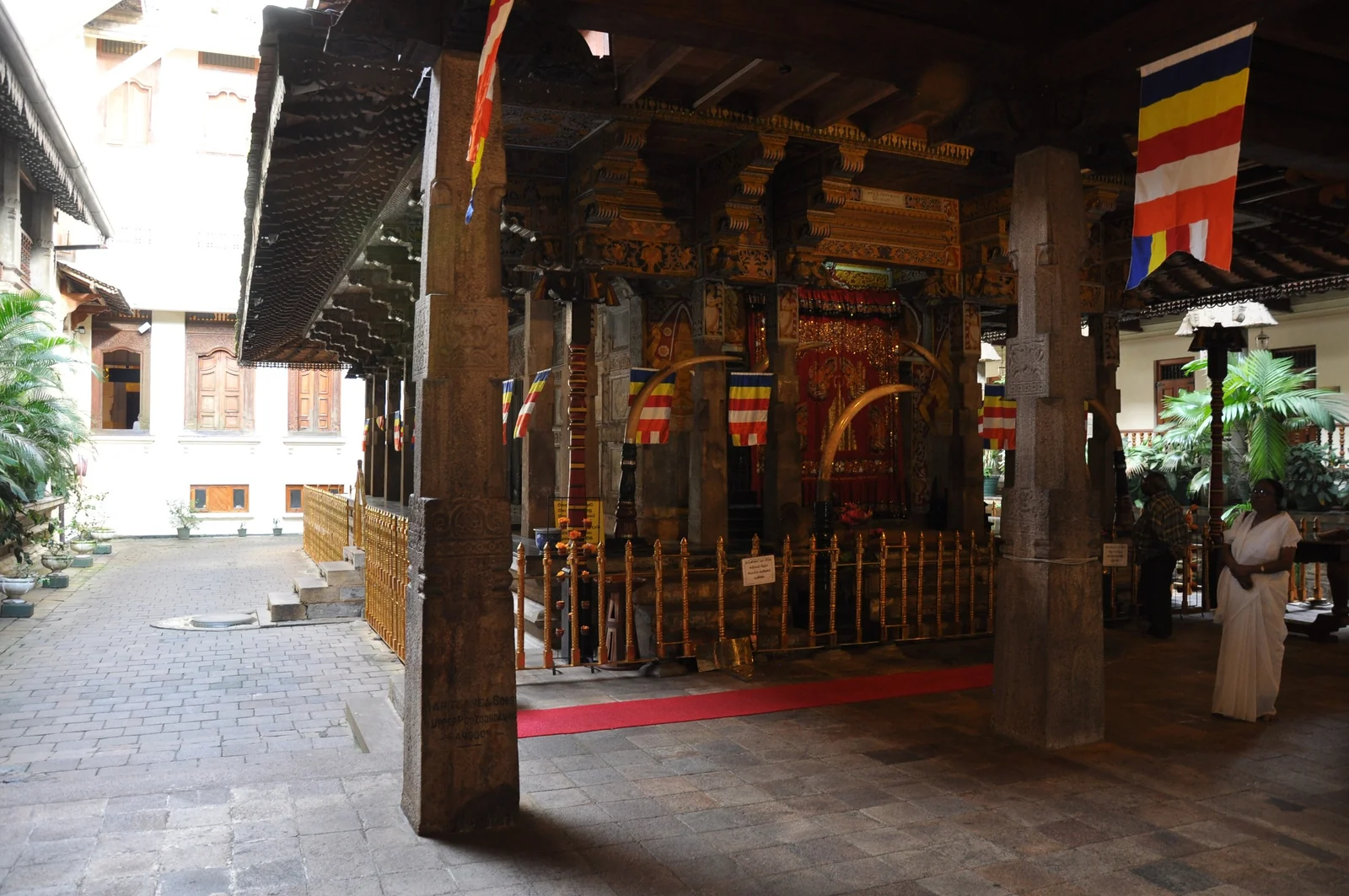
The Temple of the Sacred Tooth Relic (Sri Dalada Maligawa) houses what Buddhists believe is a tooth of the Buddha, kept in a gold casket that visitors do not see directly. Time your visit for one of the daily ceremonies, when drums sound and the inner shrine doors open; the morning and evening sessions are the most atmospheric. Dress modestly, in white if you have it, and expect a security check.
Use the second day for the Royal Botanic Gardens at Peradeniya, a short ride outside town. In July or August, Kandy hosts the Esala Perahera, a series of night processions with drummers, dancers and decorated elephants; rooms book out far ahead.
The Hill Country Train, Tea Estates, Nuwara Eliya and Ella
The railway from Kandy to Ella is the most talked-about part of any Sri Lanka trip, and it deserves the attention. The line climbs through forest, past waterfalls and endless tea terraces. The full journey usually takes around six to seven hours, often longer.
Booking the Kandy–Ella Train
Reserved seats in first and second class sell out quickly in the high season, so book as soon as you can through the Sri Lanka Railways system or ask your guesthouse to help. Unreserved second- and third-class tickets are sold on the day and are cheap, but you may stand for hours.
Nuwara Eliya and the Tea Estates
Breaking the train ride at Nanu Oya, the station for Nuwara Eliya, splits a long day in two. Nuwara Eliya sits high enough to need a sweater at night and was nicknamed "Little England." The real reason to stop is tea: several estates around town run factory tours where you watch leaves being withered, rolled and dried, followed by a tasting.
Ella, Little Adam's Peak and the Nine Arch Bridge
Ella is a small village that has grown into a backpacker hub, with cafes, guesthouses and views down the Ella Gap toward the plains. Two easy walks fill a day. Little Adam's Peak is a gentle climb through tea bushes with a big payoff at the top; go at sunrise. The Nine Arch Bridge near Demodara, a masonry railway viaduct completed in 1921, is a pleasant walk from town or a short tuk-tuk ride.
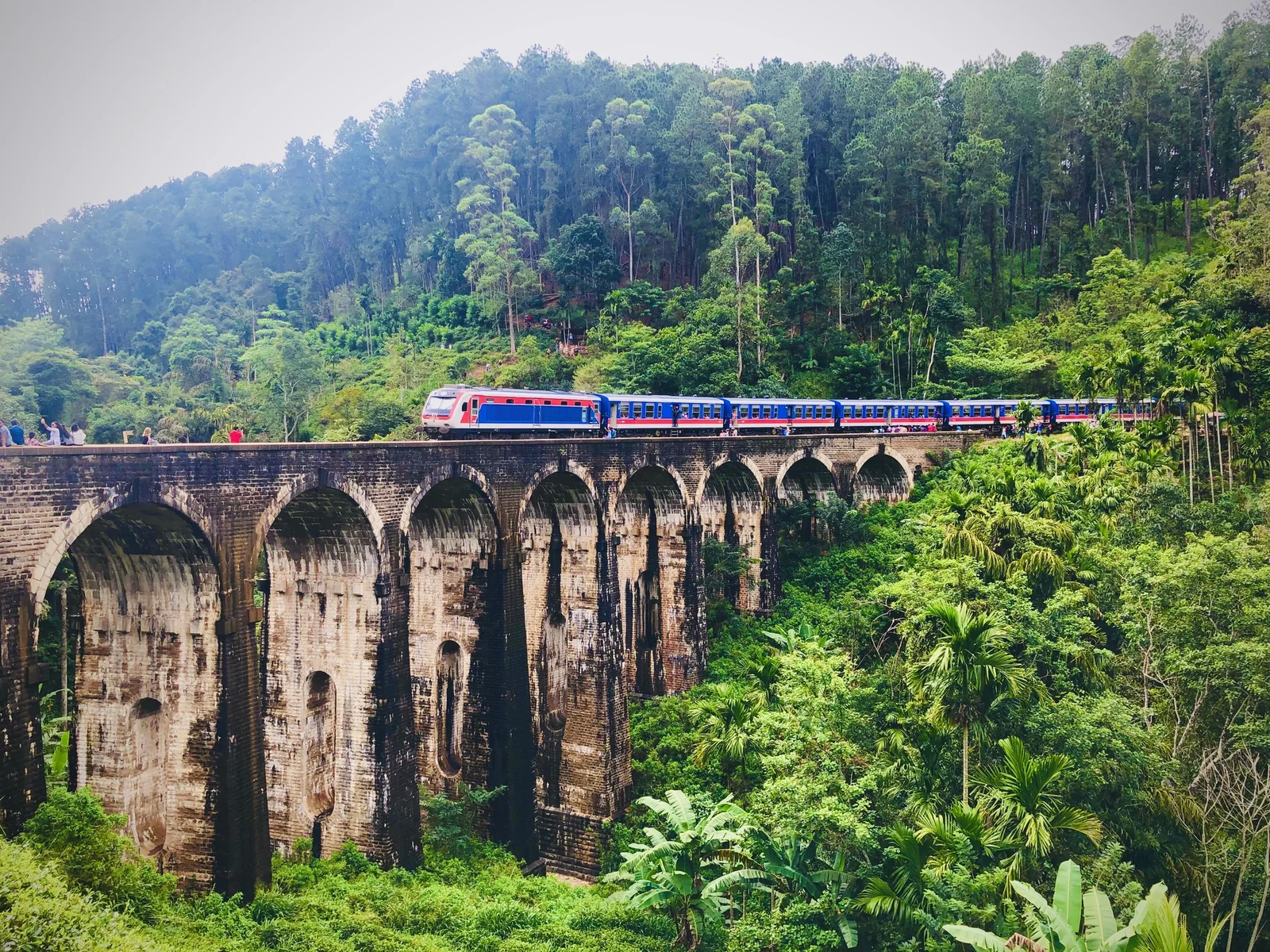
Ask locally for train times and arrive a little before one is due; watching a train curve across the arches is the whole point.
Choosing a Safari: Yala or Udawalawe
Two national parks lie between the hills and the south coast. Go by jeep, early morning or late afternoon.
- Yala National Park: the famous one, known for one of the best chances of seeing a leopard in Asia, plus elephants, crocodiles, sloth bears and a lot of birds. The popular block gets crowded with jeeps, and parts of the park often close for a few weeks in the driest months, so check before you plan around it.
- Udawalawe National Park: the reliable choice for elephants, which gather around the reservoir in open grassland. Fewer vehicles and easier to reach from Ella. Nearby is the Elephant Transit Home, where orphaned calves are raised before release.
The South Coast: Galle Fort, Mirissa and Whale Watching
End the trip at sea level. The south coast is a string of beaches, fishing harbors and small towns linked by a coastal road and a seaside railway.
Galle Fort
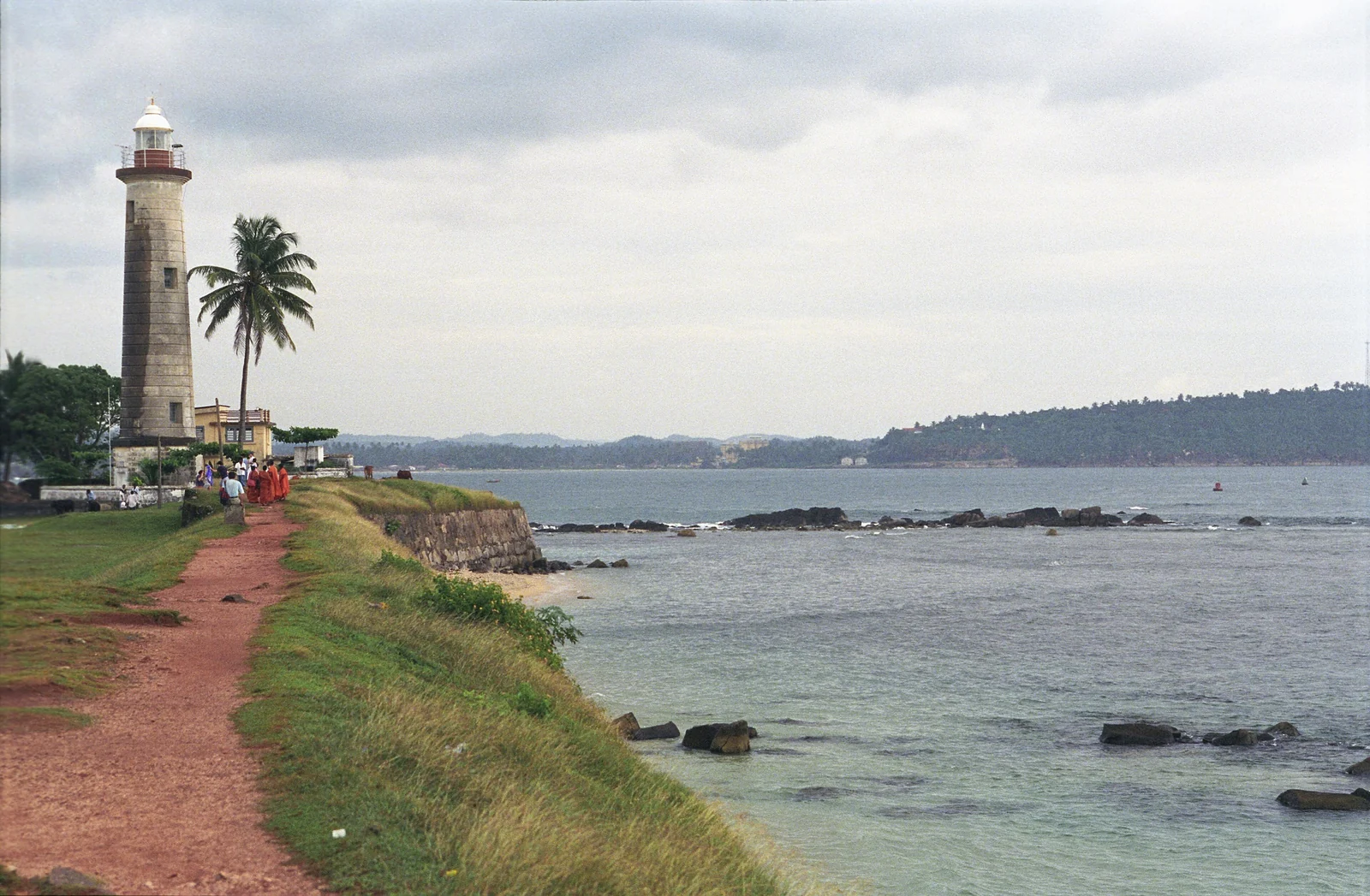
The walled old town of Galle was first fortified by the Portuguese and then rebuilt and greatly expanded by the Dutch in the 17th century. UNESCO listed the Old Town of Galle and its fortifications in 1988. Inside are quiet streets of colonial houses, churches, a mosque and cafes. Walk the walls in the late afternoon, from the lighthouse past the Flag Rock bastion, as the light softens and locals come out for cricket and sea breezes.
Mirissa and the Beaches
Mirissa is the liveliest of the beach towns, with a curved bay and plenty of restaurants. Unawatuna is close to Galle; Hiriketiya and Tangalle, farther east, feel quieter. Ask about currents before you swim.
Whale Watching from Mirissa
Boats leave Mirissa harbor early in the morning to look for blue whales, sperm whales and spinner dolphins, roughly from November to April when the sea is calmer. Choose an operator that keeps a respectful distance from the animals rather than the cheapest boat on the quay.
Best Time to Visit Sri Lanka and the Two Monsoons
Sri Lanka has two monsoons that hit different coasts at different times, which is why some part of the island is almost always dry.
- Southwest monsoon (roughly May to September): brings rain to the west and south coasts and the hill country. The east coast, around Trincomalee and Arugam Bay, is at its best then.
- Northeast monsoon (roughly November to February): brings rain to the north and east. The west and south coasts, Galle and Mirissa included, dry out from around December.
- Inter-monsoon periods (around October and April): afternoon thunderstorms can roll in across much of the island.
The route in this guide is at its best from December to April. If you can only travel in July or August, swap the south coast for the east coast and keep the rest of the loop.
What to Eat in Sri Lanka
Sri Lankan food is spicier and more varied than many visitors expect. Eat where locals do at lunchtime, when rice and curry is freshest.
- Rice and curry: a mound of rice with several small curries of lentils, vegetables, fish or chicken, plus coconut sambol.
- Hoppers: bowl-shaped pancakes of fermented rice flour and coconut milk, crisp at the edges. Order an egg hopper with a spoon of chili sambol.
- Kottu roti: chopped flatbread stir-fried on a griddle with vegetables, egg or meat; you'll hear the clatter of metal blades before you see the stall.
- Tea and fruit: Ceylon tea is everywhere, and the fruit, from king coconut to mangosteen and rambutan in season, is excellent.
Practical Tips: Getting Around, Visas and Money
Getting Around: Trains, Buses and Private Drivers
Distances are short, but average speeds are low on narrow, winding roads. Don't pair a long drive with a big sight.
- Trains: slow, cheap and scenic. Use them for the hill-country stretch and the coastal line between Colombo and Galle. Reserve seats where possible.
- Buses: they go everywhere and cost very little, but drivers are fast and buses get packed. Fine for short hops with light luggage.
- Private driver: the most popular option for a first trip. You hire a car and driver for some or all of the route, which makes the Cultural Triangle and the safari leg far easier. Agree the route and inclusions in writing.
- Tuk-tuks and ride-hailing apps: ideal for short trips in towns. Agree the fare first, or book through an app such as PickMe where it operates.
Visas, Etiquette and Money
Most foreign visitors need an Electronic Travel Authorization (ETA) before they fly. Apply only through the official Sri Lanka ETA website run by the Department of Immigration and Emigration, and ignore lookalike agency sites that add fees. Your passport should be valid for at least six months. Rules and fees for specific nationalities change, so check the official site when you book.
- Money: the currency is the Sri Lankan rupee. Cards work in hotels and larger restaurants, but carry cash for tuk-tuks, buses, small eateries and temple donations. ATMs are common in towns.
- Temple etiquette: cover shoulders and knees, remove shoes and hats, never pose with your back to a Buddha statue and don't point your feet toward one.
- Official information: the Sri Lanka Tourism site lists attractions, festivals and registered operators.
Planning a longer trip around Asia? Our north-to-south Vietnam itinerary follows a similar mix of culture and coast, and the Maldives are a short flight from Colombo if you want a few days of pure beach afterward. You'll find more ideas across our Asia destinations.
Sri Lanka Itinerary FAQ
Is two weeks enough for Sri Lanka?
Yes, two weeks is enough for a first trip that covers the Cultural Triangle, Kandy, the hill-country train to Ella, one safari and a few days on the south coast. You won't see the north or the east coast, which are better saved for a second visit.
What is the best month for a Sri Lanka itinerary?
For the classic loop through Sigiriya, Kandy, Ella and Galle, December to April is best, because the south and west coasts are dry. From May to September, the east coast has the better beach weather while the southwest gets monsoon rain.
Do I need a visa for Sri Lanka?
Most foreign visitors need an Electronic Travel Authorization before departure, applied for online through the official ETA site of the Department of Immigration and Emigration. Requirements and fees vary by nationality, so check the official site before you book flights and avoid unofficial agencies.
How long is the train from Kandy to Ella?
The scenic train from Kandy to Ella usually takes around six to seven hours, and delays are common. Many travelers break the journey at Nanu Oya for Nuwara Eliya. Reserve first or second class seats early in high season, or expect crowded unreserved carriages.
Is Yala or Udawalawe better for a safari?
Choose Yala for the best chance of seeing leopards, along with elephants and sloth bears, but expect more jeeps. Choose Udawalawe if you mainly want elephants, which are easy to spot there, with fewer vehicles and an easier route from Ella.
When can you see whales in Mirissa?
Whale watching from Mirissa runs roughly from November to April, when the sea on the south coast is calmer. Blue whales, sperm whales and dolphins are the main sightings. Boats leave early in the morning, and trips can last several hours.