


Vietnam is long and thin, which makes it one of the easiest countries in Asia to plan: you start at one end and travel to the other. This Vietnam travel guide follows that line from Hanoi to Ho Chi Minh City, by way of the limestone bays of the north, imperial Hue, lantern-lit Hoi An and the Mekong Delta.
Two to three weeks is right for the full route. With ten days you'll fly more and skip the mountains and the delta. Below you'll find the itinerary, the regional weather that should shape it, transport, and the practical details that trip up first-timers. For more, browse our Vietnam guides.
Vietnam Weather by Region and the Best Time to Go
There's no single best month for all of Vietnam. The north has a real winter, the central coast gets its heaviest rain in autumn, exactly when the north is at its best, and the south is hot all year, simply switching between dry and wet.
| Region | Key stops | Most comfortable | Tricky months |
|---|---|---|---|
| North | Hanoi, Ha Long Bay, Ninh Binh, Sapa | March–April and late September–November | June–August (hot, humid, storms); December–February is cool and often gray, cold in the mountains |
| Central | Hue, Da Nang, Hoi An | February–August (hot by midsummer) | September–December: heavy rain, flooding and typhoon risk |
| South | Ho Chi Minh City, Mekong Delta, Phu Quoc, Mui Ne | December–April (dry season) | May–November: wet season, usually short afternoon downpours |
For decent odds everywhere at once, aim for March or April. If you travel in October or November, keep your central Vietnam days flexible in case storms arrive.
A North-to-South Vietnam Itinerary
Book an open-jaw flight into Hanoi and out of Ho Chi Minh City, or the reverse. Backtracking to your arrival airport wastes a full day.
The Three-Week Version
- Days 1–3, Hanoi: Old Quarter, Hoan Kiem Lake, Temple of Literature, street food.
- Days 4–5, Ha Long Bay or Lan Ha Bay: one night on a cruise boat.
- Days 6–7, Ninh Binh: Trang An by boat, Tam Coc by bike.
- Days 8–10, Sapa or Ha Giang (optional): or add the days to Hanoi and Hoi An.
- Days 11–12, Hue: overnight train or flight south, then the Imperial City and royal tombs.
- Day 13: over the Hai Van Pass to Hoi An.
- Days 14–16, Hoi An and Da Nang: Ancient Town, beach, tailors.
- Days 17–19, Ho Chi Minh City: museums, markets, Cu Chi Tunnels.
- Days 20–21, Mekong Delta or a beach: a night in Can Tho, or Mui Ne or Phu Quoc.
The 10-Day Version
Cut the mountains and the delta, and fly the long legs. Two nights in Hanoi, one on a bay cruise, one in Ninh Binh, then fly to Da Nang. Give Hoi An three nights with Hue as a day trip over the Hai Van Pass, and finish with two nights in Ho Chi Minh City.
Northern Vietnam Highlights from Hanoi to Ninh Binh
Hanoi's Old Quarter and Hoan Kiem Lake
Hanoi is the best possible introduction to Vietnam, mostly because it refuses to slow down for you. The Old Quarter's streets are still loosely organized by trade, with whole blocks selling tin boxes, paper offerings or silk. Stay here or near Hoan Kiem Lake and you can walk almost everywhere.
Walk the lake early, when locals do tai chi and the red bridge to Ngoc Son Temple is still quiet. On weekend evenings the lakeside streets close to traffic. Give the Temple of Literature an unhurried hour, then eat: pho for breakfast, bun cha for lunch, egg coffee in the afternoon.
Ha Long Bay or Lan Ha Bay?
The limestone islands off the northeast coast are Vietnam's most famous view. UNESCO listed Ha Long Bay in 1994 and in 2023 extended it to the Cat Ba Archipelago, now inscribed together as Ha Long Bay–Cat Ba Archipelago. Lan Ha Bay lies on the Cat Ba side.
Ha Long Bay is the classic, with the most boats and departures from Ha Long city, roughly two and a half to three hours from Hanoi. That also means more traffic on the water. Lan Ha Bay, reached via Hai Phong or Cat Ba, usually feels quieter and includes more kayaking. Either way, book one night on board; day trips are mostly road time.

Ninh Binh, Trang An and Tam Coc
If the bays feel too packaged, try Ninh Binh, about 100 kilometers south of Hanoi. The same karst towers rise from rice paddies and rivers instead of the sea. The Trang An Landscape Complex became a UNESCO World Heritage Site in 2014, and its rowed boat trips pass through low caves.
Trang An's routes are longer and more varied; Tam Coc is shorter and more about rice fields. Stay a night so you can cycle in the morning and climb the few hundred steps at Hang Mua before the tour buses arrive.

Sapa or Ha Giang, and Do You Need Either?
Both mean mountains, terraced rice fields and Hmong, Dao and other minority communities. Sapa is easier: buses from Hanoi take around five to six hours, and you can trek between villages with a local guide. The town itself is heavily built up; the reward is walking out of it.
The Ha Giang Loop near the Chinese border is wilder, usually done over three or four days by motorbike. Unless you're an experienced rider, ride pillion with a local driver and check your insurance covers it. On a two-week trip, skip both rather than rushing one.
Central Vietnam Between Hue, the Hai Van Pass and Hoi An
Hue and the Imperial City
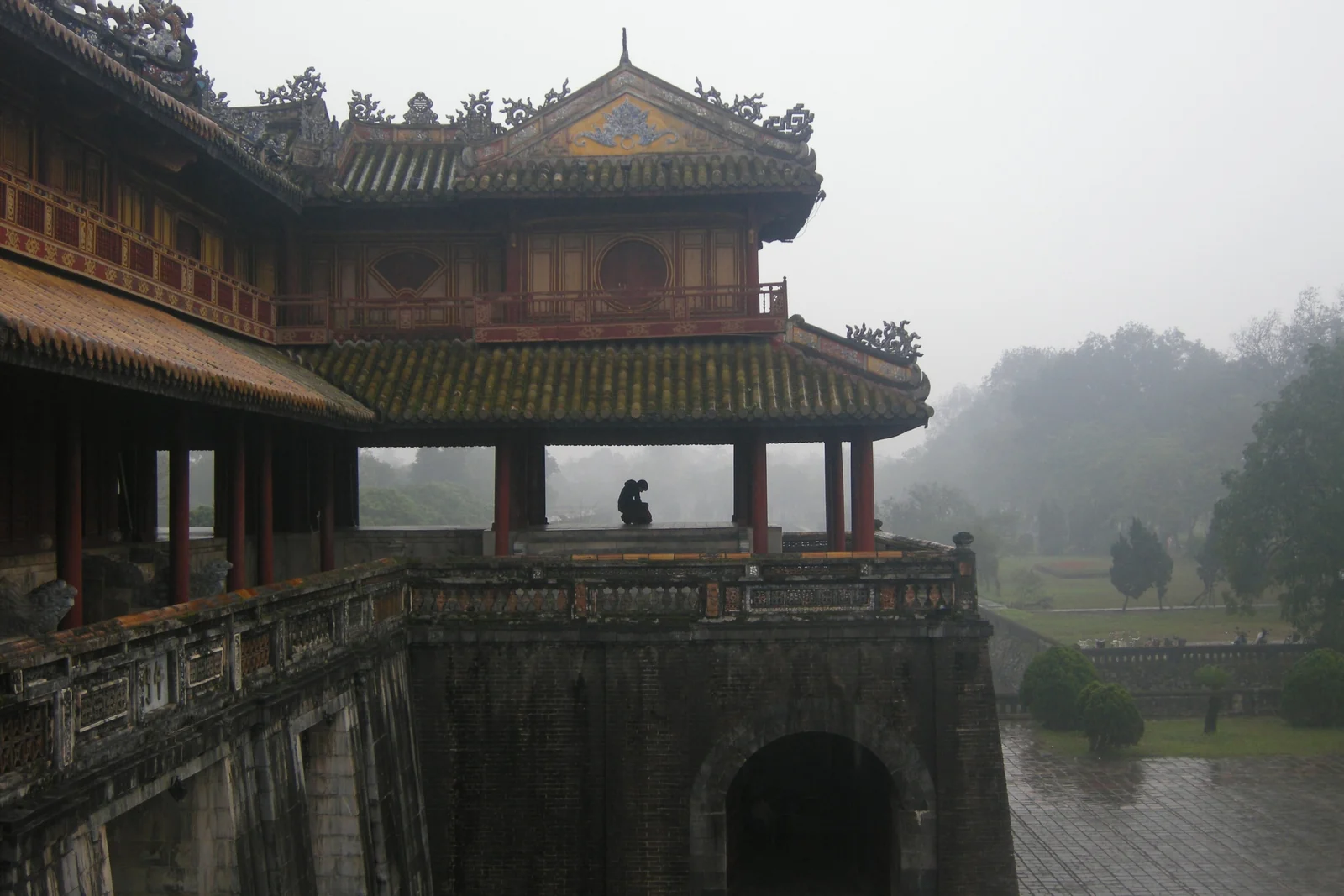
Hue was the capital of the Nguyen dynasty, and its walled citadel on the Perfume River holds the Imperial City, entered through the Meridian Gate. Much was damaged during the war and restoration continues, so expect rebuilt halls alongside open, grassy spaces. The Complex of Hue Monuments was UNESCO-listed in 1993.
Give Hue two days: one inside the citadel, one at the royal tombs south of the city, where a hired driver makes sense. Try bun bo Hue, a spicy lemongrass beef noodle soup, before you leave.
Crossing the Hai Van Pass
Between Hue and Da Nang, the old highway climbs about 21 kilometers over a mountain spur that runs into the sea, topping out near 500 meters. Since the road tunnel opened in 2005, most trucks skip it. Hire a car and driver and stop at the top and at Lang Co lagoon. On a clear day the coastal views are superb; in fog you'll see very little.
Hoi An's Ancient Town, Lanterns and Tailors
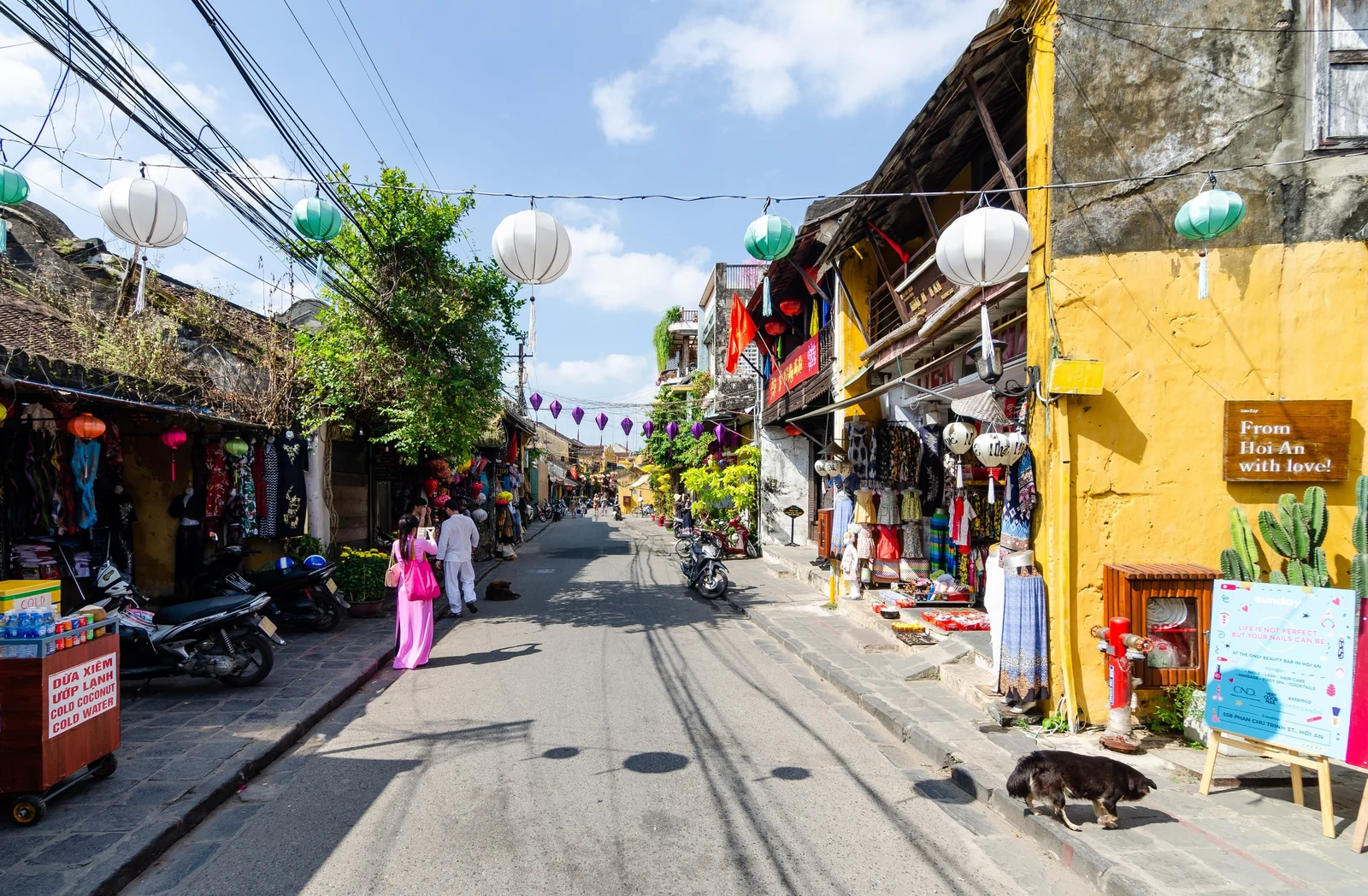
Hoi An was a trading port for centuries, and its yellow shophouses, Chinese assembly halls and Japanese Covered Bridge earned UNESCO status in 1999. Foreign visitors buy a ticket covering entry to a set number of historic buildings. Come early, before the day-trippers, and again after dark when lanterns glow along the Thu Bon River.
On the 14th day of each lunar month, the town holds a full-moon lantern night with many electric lights switched off. For tailoring, order early in your stay so there's time for two fittings, and agree on fabric and price before anyone cuts cloth.
Da Nang
Da Nang is a modern beach city and the region's main airport. Most travelers sleep in Hoi An, about 30 kilometers away, and give Da Nang a half day for My Khe Beach and the Marble Mountains, limestone hills hiding caves and pagodas.
Southern Vietnam Around Ho Chi Minh City and the Mekong Delta
Ho Chi Minh City
Saigon, as most people still call it, is faster and more commercial than Hanoi. Base yourself in District 1. The War Remnants Museum is hard going but essential, and the Independence Palace shows how the war ended. A half day at the Cu Chi Tunnels adds context, though the tight spaces aren't for everyone.
The real pleasure here is eating. Have com tam, grilled pork over broken rice, for breakfast like half the city does.
The Mekong Delta
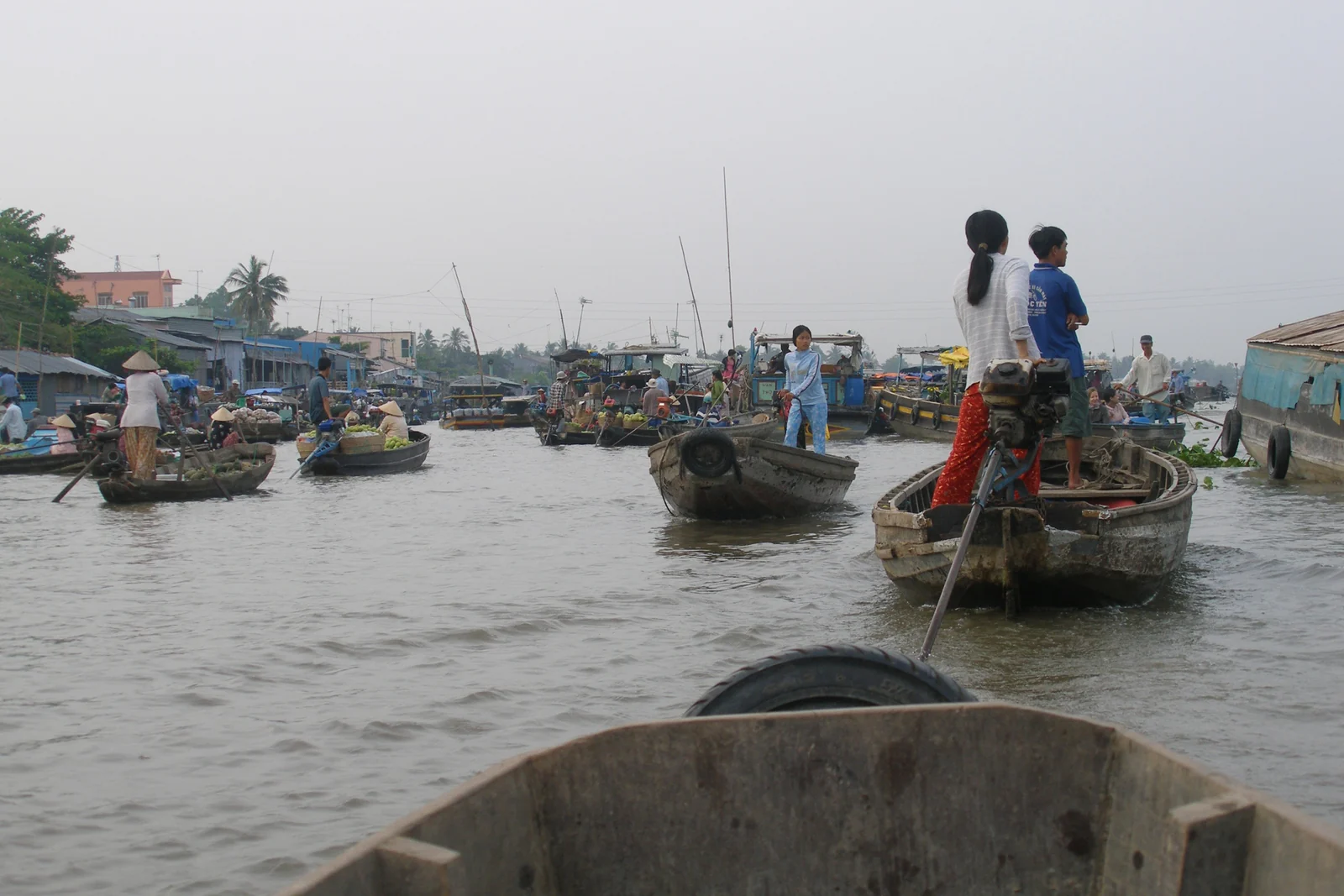
Day tours from Saigon tend to be scripted. Spend a night in Can Tho instead, around 170 kilometers southwest of the city, so you can board a boat before sunrise for the Cai Rang floating market, where wholesalers sell produce from boats, then explore smaller canals.
A Beach at the End: Mui Ne or Phu Quoc
After weeks of cities, a beach makes a good finish. Mui Ne, a few hours by road from Saigon, is known for sand dunes and kitesurfing. Phu Quoc is an island in the Gulf of Thailand with short flights and a bigger resort scene. Both are best in the southern dry season, roughly December to April.
Getting Around Vietnam by Plane, Train and Bus
Domestic flights link Hanoi, Da Nang and Ho Chi Minh City many times a day. Book well ahead around Tet, the Lunar New Year, when the whole country travels home.
The Reunification Express covers roughly 1,700 kilometers between Hanoi and Saigon in over 30 hours, too long for most trips. Use it for sections: the overnight train from Hanoi to Hue saves a hotel night, and the daytime run between Hue and Da Nang hugs the coast. Book a soft sleeper.
Sleeper buses are cheapest, but berths are short and night driving isn't relaxing. Save them for hops like Hanoi to Sapa. In cities, use Grab for cars and motorbike taxis so the price is fixed upfront.
What to Eat in Vietnam, Region by Region
Dishes change as you go south, which is reason enough to travel the full length. If you liked our guide to South Korea's night markets, Vietnam's sidewalk kitchens will feel familiar, only with more herbs.
- Pho: Hanoi's clear beef noodle soup, usually a breakfast dish.
- Bun cha: grilled pork with rice noodles and a sweet-sour dipping broth, a Hanoi lunch staple.
- Banh mi: the baguette sandwich, everywhere and arguably best in Hoi An.
- Cao lau: chewy noodles with pork, greens and crunchy croutons; eat it in Hoi An, where it comes from.
- Mi Quang: central Vietnam's turmeric noodles.
- Com tam: Saigon's broken rice with grilled pork chop and pickles.
A busy stall full of locals on plastic stools is usually a safer bet than an empty restaurant with an English menu.
Vietnam Visa, Money, SIM Cards and Budget
E-Visa and Entry Rules
Since August 2023, Vietnam has offered e-visas to citizens of all countries, valid for up to 90 days with single or multiple entry. Apply only on the official portal, evisa.gov.vn, since look-alike sites charge extra, and allow at least a week.
Some nationalities, including the UK, Germany, France, Japan and South Korea, can enter visa-free for a limited stay; US, Canadian and Australian travelers need a visa. Confirm on the official Vietnam tourism e-visa guide before booking.
Money and Payments
The currency is the Vietnamese dong. Cards work in hotels and many restaurants, but street food and markets run on cash, and ATMs are easy to find. The 500,000 and 20,000 dong notes are a similar blue, so check before paying. Bargain at markets, not in shops with marked prices.
SIM Cards, eSIM and Apps
Buy a SIM at the airport from Viettel, Vinaphone or Mobifone (bring your passport), or set up an eSIM before landing. Download Grab and an offline map before day one.
How Much a Vietnam Trip Costs
Vietnam remains one of the better-value destinations in Asia. A street food meal often costs a few dollars. The big expenses are the bay cruise, domestic flights and boutique hotels in Hoi An. Budget more around Tet, when prices rise and many businesses close.
Etiquette and Common Mistakes in Vietnam
- Dress for temples. Cover shoulders and knees, and remove shoes when others do.
- Ask before photographing people, especially in minority villages in the north.
- Cross the street slowly and steadily. Motorbikes flow around you; sudden dashes cause trouble.
- Keep your cool. Raising your voice rarely helps.
- Don't overpack the schedule. Trying to see everything means spending half the trip in transit.
Tipping isn't traditionally expected, but guides and boat crews appreciate it. Building a longer trip? Our Asia travel guides and Indonesia's volcano lakes pair well with Vietnam.
Vietnam Travel FAQ
How many days do you need in Vietnam?
Two to three weeks lets you travel from Hanoi to Ho Chi Minh City at a comfortable pace, including Ha Long Bay, Hue, Hoi An and the Mekong Delta. In ten days you can cover the highlights if you fly the long legs and skip the mountains.
What is the best month to visit Vietnam?
March and April are the best compromise for a north-to-south trip, with mostly dry weather in all three regions. Late September to November is lovely in the north, but central Vietnam is then in its rainy, stormy season.
Should I visit Ha Long Bay or Lan Ha Bay?
Ha Long Bay is the classic and easiest to reach from Hanoi, with the most cruises. Lan Ha Bay, on the Cat Ba side of the same UNESCO site, usually has fewer boats and more kayaking. Either is best with one night on board.
Do I need a visa for Vietnam?
Many travelers do, including US, Canadian and Australian citizens. The e-visa is open to all nationalities, valid up to 90 days with single or multiple entry, via the official portal. Some European and Asian passports get a limited visa-free stay.
Is it better to travel Vietnam north to south or south to north?
Either works, so let the weather and flight prices decide. Starting in Hanoi is a gentler introduction, and ending in the south lets you finish on a beach. In late autumn, going south to north reaches the north at its best.
Is the Reunification Express worth taking?
End to end it takes more than 30 hours, so it rarely suits a short trip. Sections are worth it: the overnight Hanoi to Hue train saves a hotel night, and the Hue to Da Nang stretch runs along the coast.
Can you use Grab in Vietnam?
Yes. Grab works in Hanoi, Da Nang, Hoi An, Ho Chi Minh City and other cities for cars and motorbike taxis. The fare is fixed before you ride, which avoids haggling, and you can pay cash or by card.