


Bangkok is Thailand's capital and its biggest city, a sprawling river metropolis where gilded temples, canal-side wooden houses and glass towers share the same skyline. The essentials sit close together: the Grand Palace, Wat Pho and Wat Arun cluster along the Chao Phraya River, Chinatown is a short boat or train hop away, and some of the best street food in Southeast Asia is on almost every corner.
Three full days is a comfortable minimum, and four lets you add a day trip. This Bangkok travel guide covers the big temples, how to use the boats, BTS and MRT, what to wear, when to go, which neighborhood to sleep in and a realistic 4-day plan. Heading north afterward? Our Chiang Mai travel guide picks up the story, and the rest of the country is in our Thailand travel guides.
The Grand Palace, Wat Pho and Wat Arun
Rattanakosin, the old royal district on the east bank of the river, is where Bangkok began. King Rama I moved the capital here in 1782, and the temples built around that moment are still the city's main sights. You can see all three in one long day if you start early, because heat and crowds both build fast after about 10 a.m.
The Grand Palace and Wat Phra Kaew
The Grand Palace complex was begun in 1782 and housed the monarch for generations. Today it is a ceremonial and sightseeing site, and the part everyone comes for is Wat Phra Kaew, the Temple of the Emerald Buddha. The small green Buddha sits high on a gilded altar inside the main hall, while the courtyards outside glitter with mosaic-covered chedis, painted galleries and towering guardian giants.
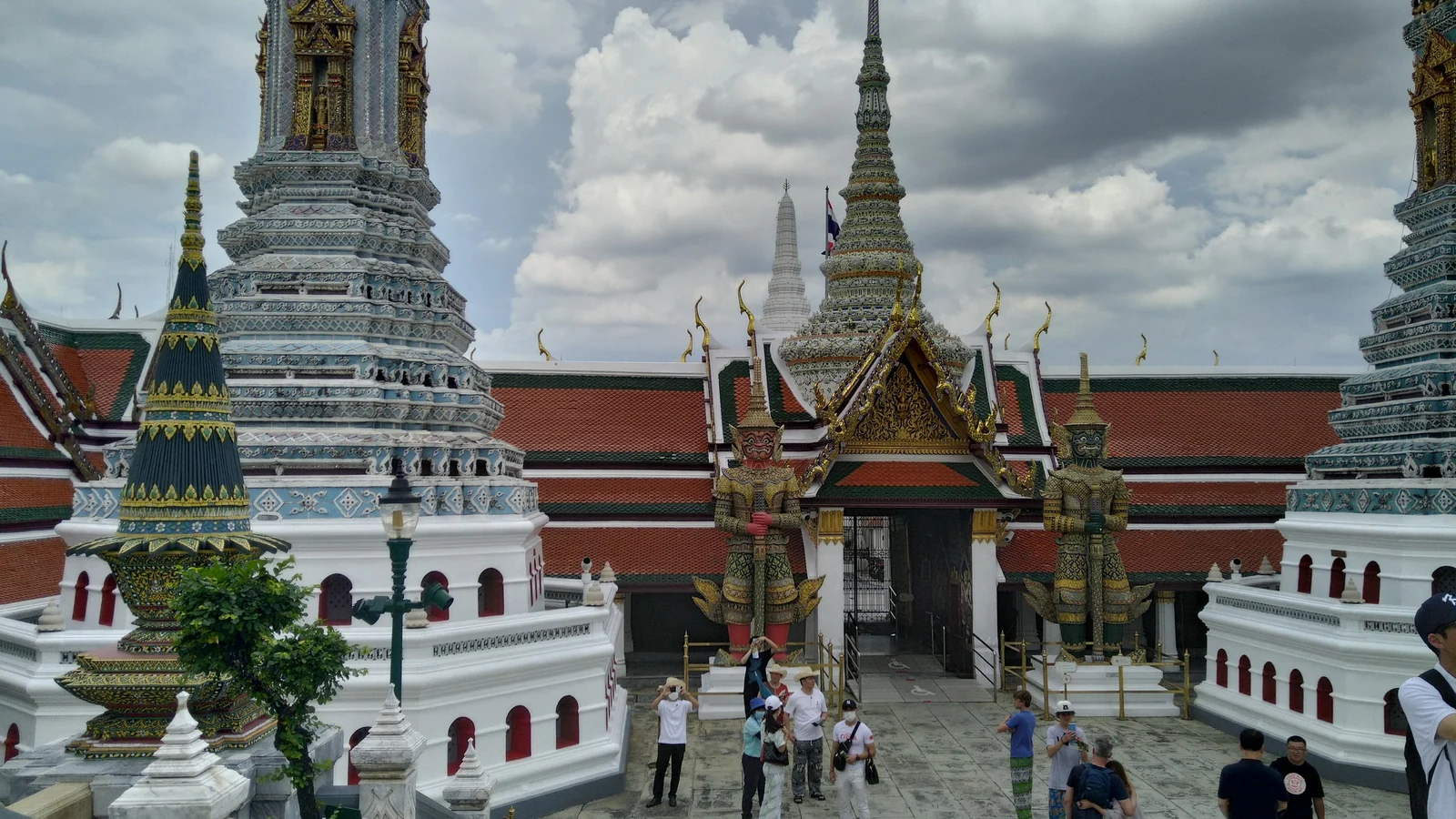
Go at opening time, dress properly (see the dress code section below) and ignore anyone outside the gate who says the palace is closed and offers a tuk-tuk tour instead. That is a well-known scam. Check hours, ticket details and any closures for royal ceremonies on the official Grand Palace website, because the complex can shut at short notice.
Wat Pho and the Reclining Buddha
A few minutes' walk south, Wat Pho is one of Bangkok's oldest and largest temple complexes. The star is the Reclining Buddha, a gilded figure about 46 meters long and 15 meters high that fills its hall so completely you can only take it in a section at a time. Look at the feet, inlaid with mother-of-pearl symbols, and listen for the coins people drop into the row of bowls along the wall.
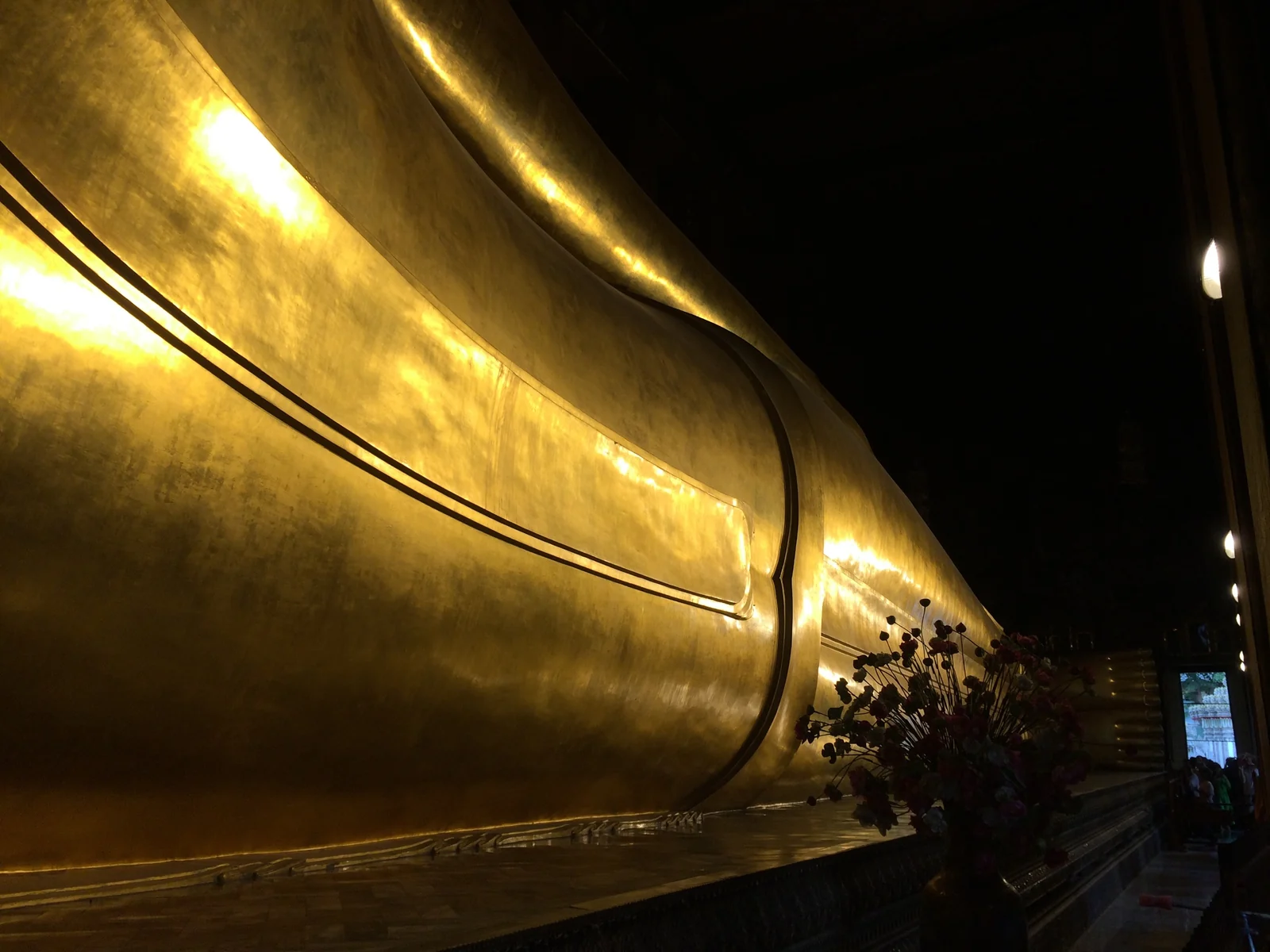
Wat Pho is also known as a birthplace of traditional Thai massage, and a training school operates on the grounds.
Wat Arun, the Temple of Dawn
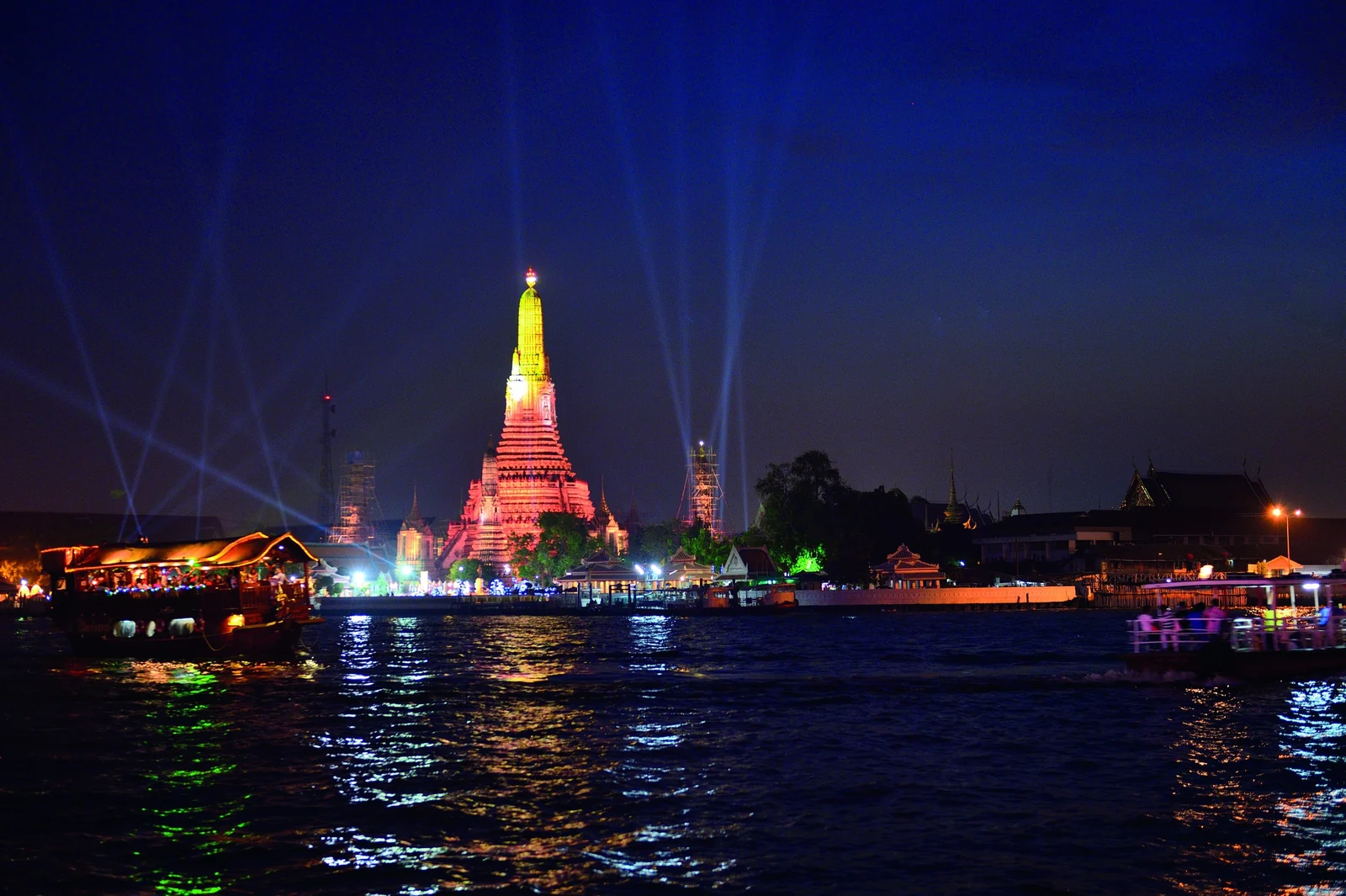
Cross the river on the short ferry from Tha Tien pier and you land at the foot of Wat Arun, whose central prang rises more than 70 meters and is decorated with pieces of porcelain and seashell. The steep stairs let you climb partway for a view back across the water to the palace. Come late in the afternoon, when the light turns the tower warm, and stay for the evening illumination if you like the temple lit against the sky.
Temple Dress Code and Etiquette
The rules are simple and strictly applied at the Grand Palace, where staff will turn you away at the gate. At other temples, enforcement is looser, but the same expectations apply.
- Cover shoulders and knees. No sleeveless tops, short shorts, tight leggings or see-through fabric. Loose, lightweight trousers and a T-shirt work in the heat.
- Take off your shoes before entering any temple hall, and step over the threshold rather than on it.
- Keep your feet pointed away from Buddha images when you sit, and never climb on a statue for a photo.
- Keep your head lower than monks and images. Women should not touch a monk or hand things to him directly.
- Be quiet in prayer halls and ask before photographing people who are worshipping.
- Respect the monarchy. Thailand has strict laws on criticizing the royal family, so keep jokes and commentary to yourself.
If you arrive underdressed, there are usually sarong or shirt rental points near the entrance.
The Chao Phraya River by Boat
The river is Bangkok's most pleasant road, and it spares you the traffic. The ferries known as the Chao Phraya Express Boat run along a long stretch of the river, with flag colors that mark the service, and they stop at the piers for Rattanakosin, Chinatown and the riverside hotels. Check the operator's current routes and fares before you go, and note that boats stop running in the evening.
- Sathorn (Central Pier): connects to the BTS Skytrain at Saphan Taksin, the easiest starting point.
- Tha Chang and Tha Maharaj: the closest stops for the Grand Palace.
- Tha Tien: for Wat Pho and the cross-river ferry to Wat Arun.
- Ratchawong: the usual stop for Chinatown and the flower market.
Long-tail boats also run through the quieter canals of Thonburi on the west bank. They can be fun, but agree the route and price before boarding, and treat any very cheap tour with caution.
Chinatown and Bangkok Street Food
Yaowarat Road is the heart of Bangkok's Chinatown and the best place to eat at night. By late afternoon the pavements fill with carts and charcoal grills, neon signs light up the street and the crowd thickens. It is loud, hot and delicious, and it is the one evening that deserves a proper appetite.
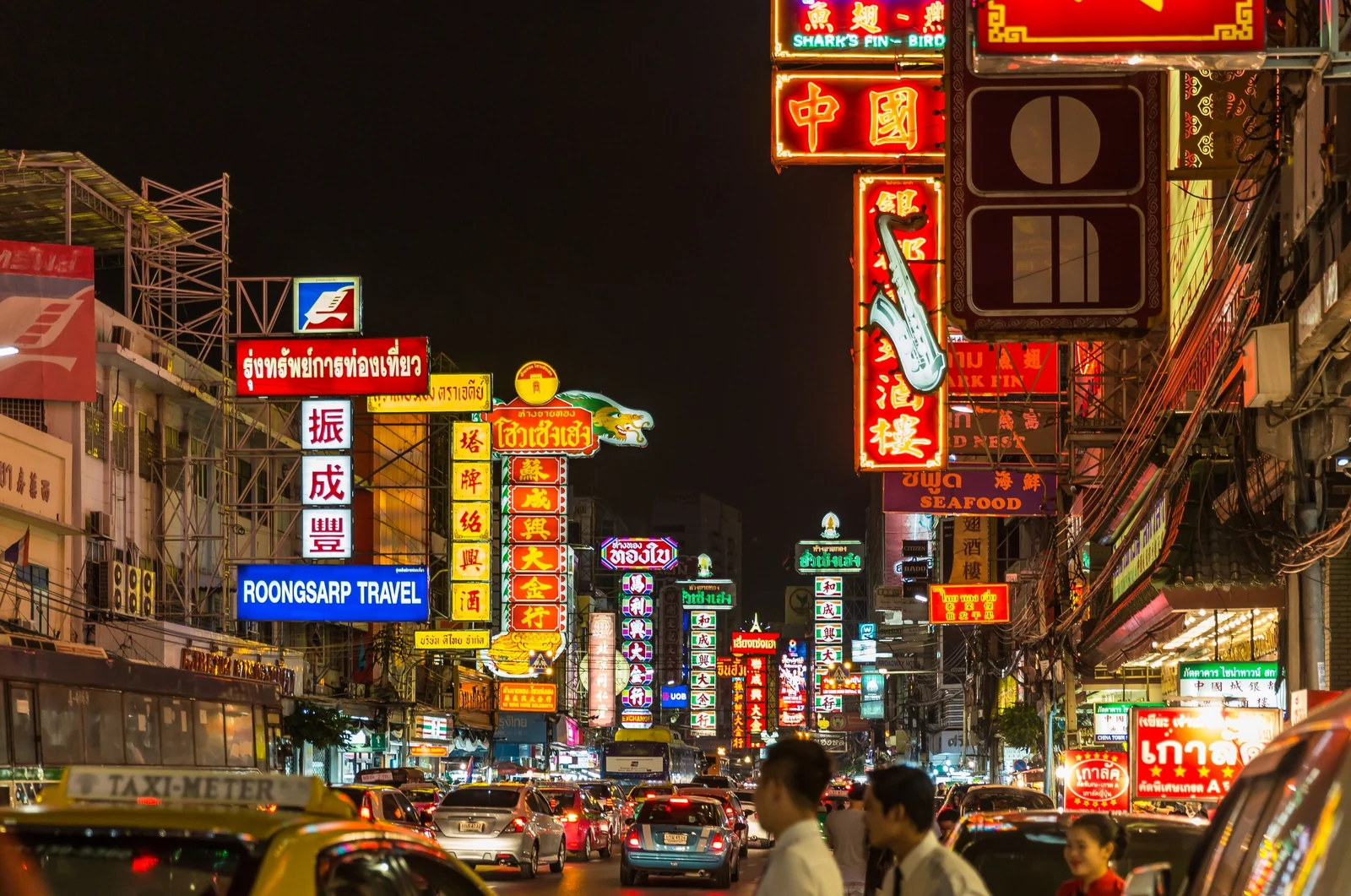
Beyond Yaowarat, street food is everywhere, and the best approach is to follow the queues of locals. Dishes worth hunting down include pad kra pao (stir-fried basil with chili and a fried egg), khao man gai (chicken rice), boat noodles, som tam (green papaya salad), grilled pork skewers and mango with sticky rice for dessert. Plates are small and cheap, so you can try a lot in one evening.
- Choose busy stalls with fast turnover, and watch your food being cooked.
- Say "mai phet" (not spicy) if you cannot handle chili, and remember that "phet nit noi" means a little spicy.
- Drink bottled or sealed water rather than tap water, and carry small notes.
- In Chinatown, also look for Wat Traimit, which houses a solid gold Buddha, and the narrow Sampeng lane for wholesale shopping.
Chatuchak and Other Markets
Chatuchak Weekend Market is one of the world's biggest markets, with thousands of stalls selling clothing, ceramics, plants, vintage goods and street snacks. It is open mainly on weekends, so check current hours before you plan around it. Go early, wear light clothes and bring a map or screenshot, because the lanes are a maze. The MRT stations Chatuchak Park and Kamphaeng Phet and the BTS station Mo Chit all put you at the edge of the grounds.
For something more local, wander the Pak Khlong Talat flower market near the river, best at night or early morning, or the small neighborhood markets that appear along any residential street.
Bangkok Neighborhoods and Where to Stay
Bangkok is huge, and the area you choose shapes your trip more than the hotel itself. Traffic is heavy, so sleep near a BTS, MRT or river pier if you can.
| Area | Best for | Getting around | Trade-off |
|---|---|---|---|
| Rattanakosin and Old Town | Temples and the Grand Palace on foot | River boats, taxis | Few trains, quieter evenings |
| Khao San and Banglamphu | Budget rooms, backpacker nightlife | Walking, short taxi rides | Noisy and touristy |
| Riverside and Sathorn | Views, river boats, relaxed evenings | BTS Saphan Taksin and boats | Higher prices |
| Siam and Ratchathewi | Malls, museums, easy rail access | BTS | Busy and crowded |
| Sukhumvit | Restaurants, bars, wide hotel choice | BTS, MRT | Heavy traffic, far from the temples |
| Chinatown | Street food and a local feel | MRT Wat Mangkon, Ratchawong pier | Crowded and hot |
First-timers usually do best at Siam or Sukhumvit for rail access and a wide choice of rooms, or along the river for a calmer base with boat access. Choose the Old Town if temples are your priority and you do not mind taking taxis at night.
Getting Around Bangkok: BTS, MRT, Boats and Taxis
Bangkok's elevated BTS Skytrain and underground MRT cover the modern center and skip the city's notorious traffic. Neither goes directly to the Grand Palace, so combine them with a boat, or a taxi for the last stretch. The Airport Rail Link connects Suvarnabhumi Airport to the city, and Don Mueang, the second airport, has bus and rail connections too.
- BTS and MRT: fast, air-conditioned and the best option in rush hour. Check current ticket and stored-value card options at the station.
- Taxis and ride-hailing apps: insist on the meter, or use a ride-hailing app that shows the fare upfront.
- Tuk-tuks: fun for a short ride, but agree on the price first and ignore offers of shopping stops.
- River boats: the most scenic option on the Rattanakosin side.
- Walking: good within a district, tiring between them in the heat.
For visas, entry rules and travel updates, use the Tourism Authority of Thailand and your own government's travel advice, since requirements change.
Best Time to Visit Bangkok: Heat and Rainy Season
Bangkok is hot all year, and the real question is how hot and how wet. The cool, dry season from roughly November to February is the most comfortable and the busiest. March to May is the hottest stretch, when midday highs can reach the mid-90s °F (mid-30s °C) with heavy humidity. The rainy season runs from about June to October, usually with short, intense downpours in the afternoon rather than all-day rain, and the heaviest rain tends to arrive toward the end of it.
- November to February: best weather, higher prices, crowded temples.
- March to May: very hot, so plan outdoor sightseeing for early morning and evening.
- June to October: green, cheaper and quieter, but carry a rain jacket or umbrella and expect some flooded streets after storms.
Day Trips: Ayutthaya and the Floating Markets
Ayutthaya
Ayutthaya was the capital of the Siamese kingdom from the 14th century until Burmese forces sacked it in 1767, and its brick temples and chedis are now a UNESCO World Heritage Site, listed in 1991. The ruins sit about 80 kilometers north of Bangkok. Trains run from the capital in roughly an hour and a half, and you can rent a bicycle or hire a tuk-tuk to cover the park. See the UNESCO page for Ayutthaya for background.
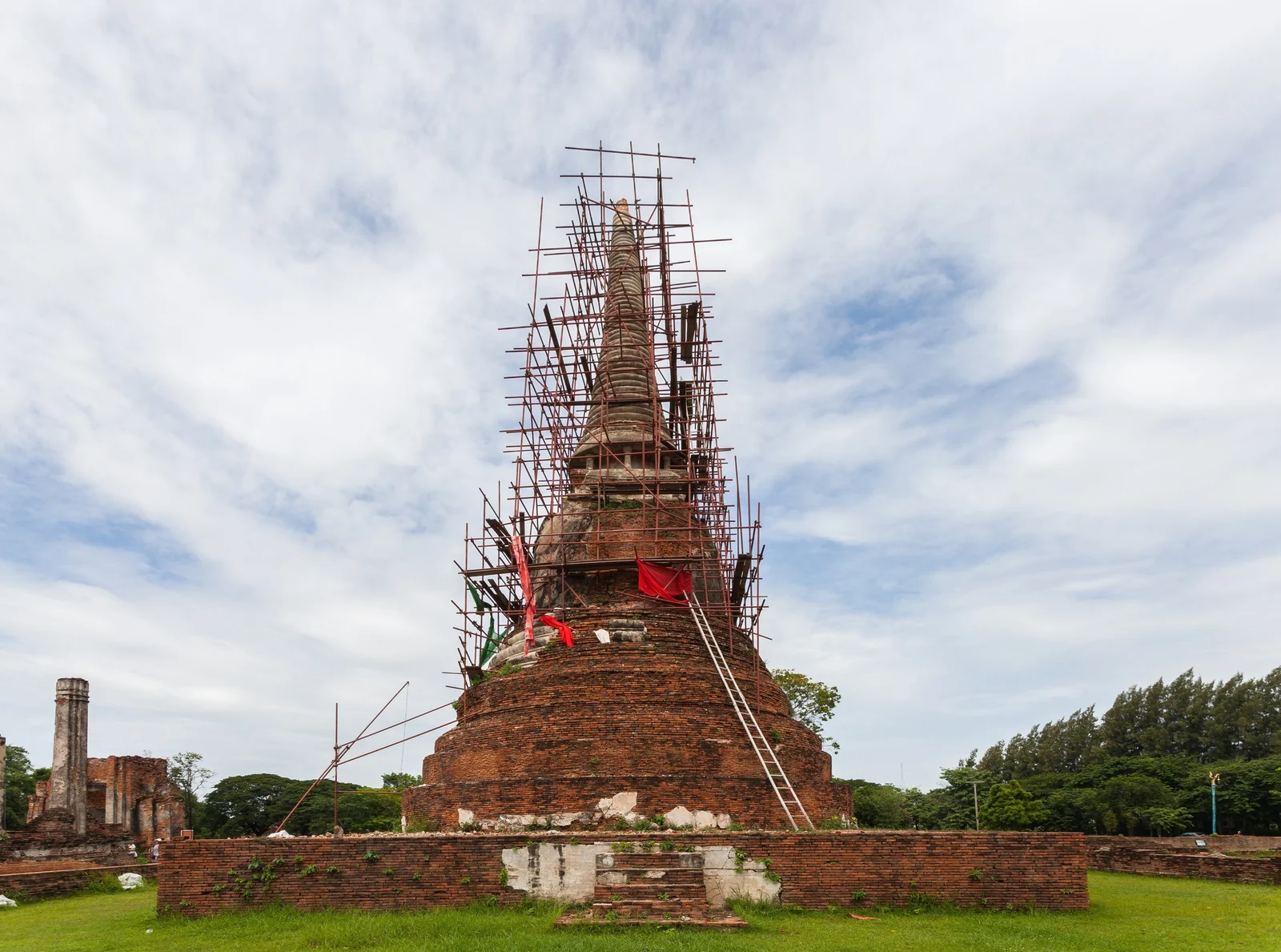
Wat Mahathat, with its famous Buddha head wrapped in tree roots, and Wat Chaiwatthanaram on the river are the two stops most people remember. Start early, bring sun protection and plan on a full day, since the sites are spread out.
Floating Markets
The floating markets near Bangkok are among the most photographed and least authentic things to do here. Damnoen Saduak, southwest of the city, is the best known and is heavily geared to tour groups. Amphawa, in the same direction, is more relaxed, with evening food boats at weekends. Go with a tour or arrange a driver, expect to spend several hours on the road and treat it as a lively food stop rather than a daily-life market.
A 4-Day Bangkok Itinerary
Day 1: Temples and the River
Arrive at the Grand Palace as it opens, then walk to Wat Pho. After lunch, take the ferry to Wat Arun and stay for sunset. Finish with a river-view dinner or an evening boat ride back toward Sathorn.
Day 2: Chinatown and Street Food
Spend the morning at Wat Traimit and the lanes around Sampeng and Pak Khlong Talat, then rest in the heat of the afternoon. Return to Yaowarat Road at dusk for a long, slow food crawl.
Day 3: Markets and Neighborhoods
If it is a weekend, start early at Chatuchak and eat there. Otherwise, explore Siam's malls and museums, walk through Lumphini Park in the late afternoon and see the Sukhumvit restaurant scene in the evening.
Day 4: Ayutthaya or a Floating Market
Take a train or a tour to Ayutthaya, or head southwest to Amphawa and Damnoen Saduak. Return in the early evening and spend your last night with a final bowl of noodles. Still planning the rest of Asia? Browse all our Asia destinations, or compare Bangkok with the temples and food of Vietnam.
Bangkok Travel FAQ
How many days do you need in Bangkok?
Three days cover the main temples, Chinatown and one market. Four days let you add a day trip to Ayutthaya or a floating market without rushing. If you love food and shopping, five days is easy to fill.
What should you wear to the Grand Palace?
Cover your shoulders and knees, and avoid tight, torn or see-through clothes. Closed shoes or sandals with a back strap are safest. Staff check at the entrance and can refuse entry, so dress properly before you leave your hotel.
What is the best time to visit Bangkok?
November to February is the coolest and driest, which makes it the most comfortable for sightseeing. March to May is very hot, and the rainy season runs from about June to October with afternoon downpours. Any month works if you plan around the heat.
Is Bangkok street food safe to eat?
Generally yes, if you choose busy stalls where food is cooked fresh in front of you. Avoid anything that has been sitting out, stick to bottled water and take it slowly if your stomach is not used to chili and fish sauce.
How do you get around Bangkok?
Combine the BTS Skytrain and MRT subway for the modern center, river boats for the old town and metered taxis or ride-hailing apps for the gaps. Traffic is heavy, so rail and boats are usually faster than road transport.
Can you visit Ayutthaya as a day trip from Bangkok?
Yes. Ayutthaya is about 80 kilometers north, and trains take roughly an hour and a half. Many visitors go by train and hire a tuk-tuk or bicycle there. Leave early so you have most of a day among the ruins.
Is Chatuchak Market open every day?
Chatuchak is mainly a weekend market, with some sections open on other days or evenings. Hours change, so confirm before you go. Arrive early on Saturday or Sunday to beat both the crowds and the heat.