A day trip from Marrakech to Aït Benhaddou is doable, scenic and tiring in equal measure. The ksar, a walled cluster of earthen towers and houses climbing a hillside above a river, has been a UNESCO World Heritage Site since 1987. You reach it by driving over the High Atlas on the Tizi n’Tichka pass, then dropping into the dry, red country south of the mountains.
Expect a long day: roughly four hours of driving each way before you stop for anything. This guide covers Marrakech to Aït Benhaddou by tour, driver or rental car, the Telouet kasbah detour, the best things to do in Ouarzazate, what to wear and when an overnight stay beats a same-day return. If you have not planned your Marrakech days yet, start with our Marrakech travel guide.
What Is Aït Benhaddou?
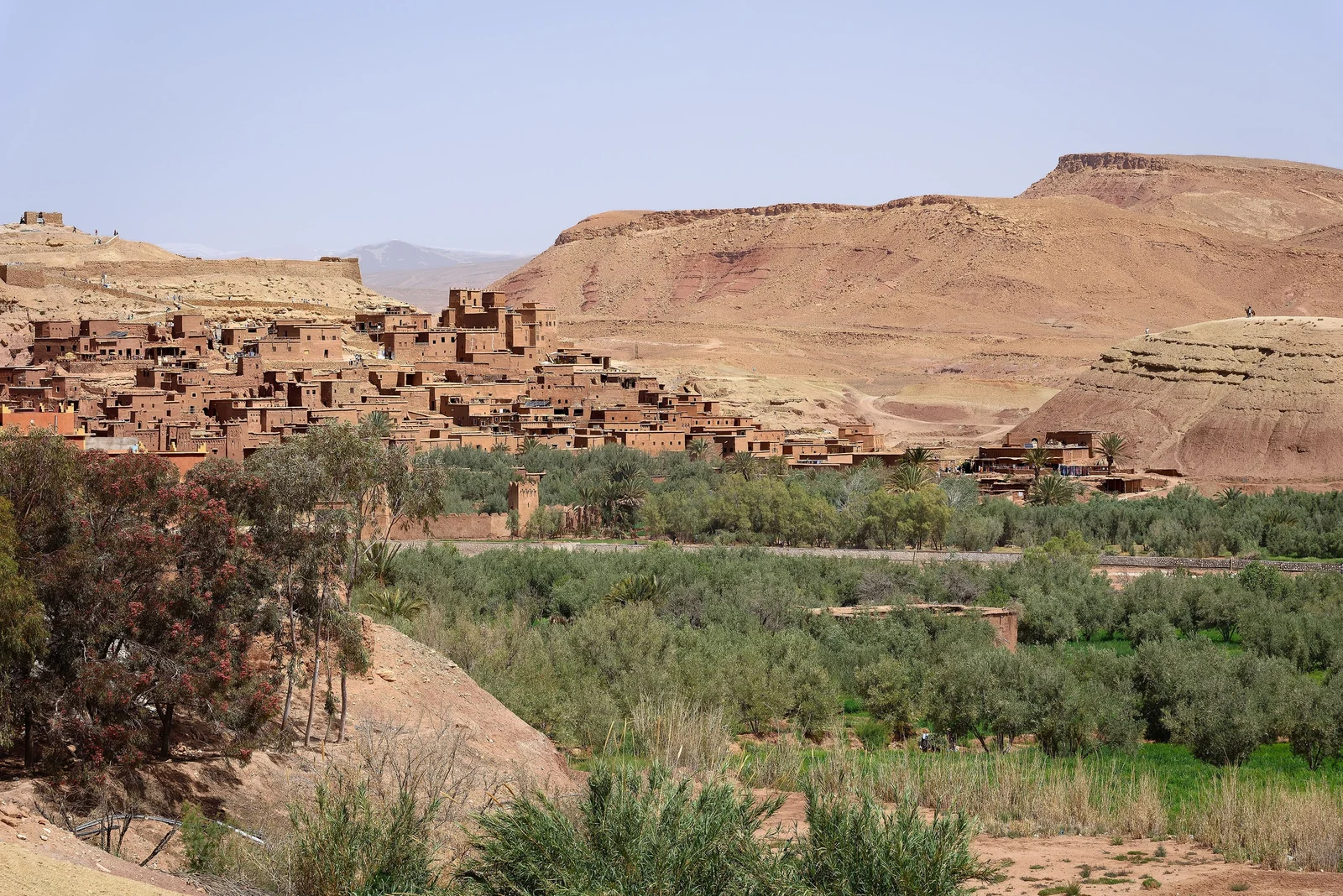
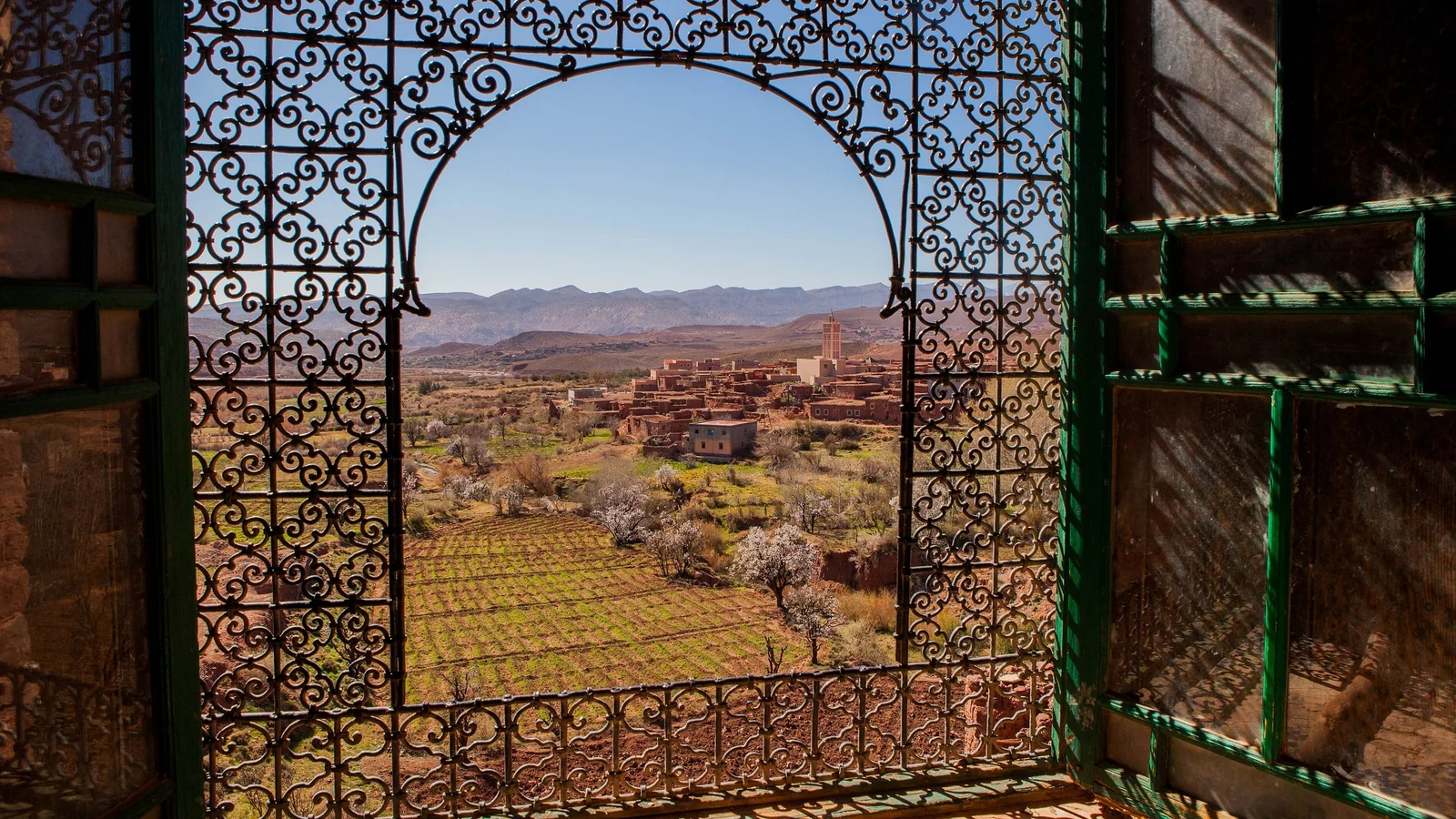
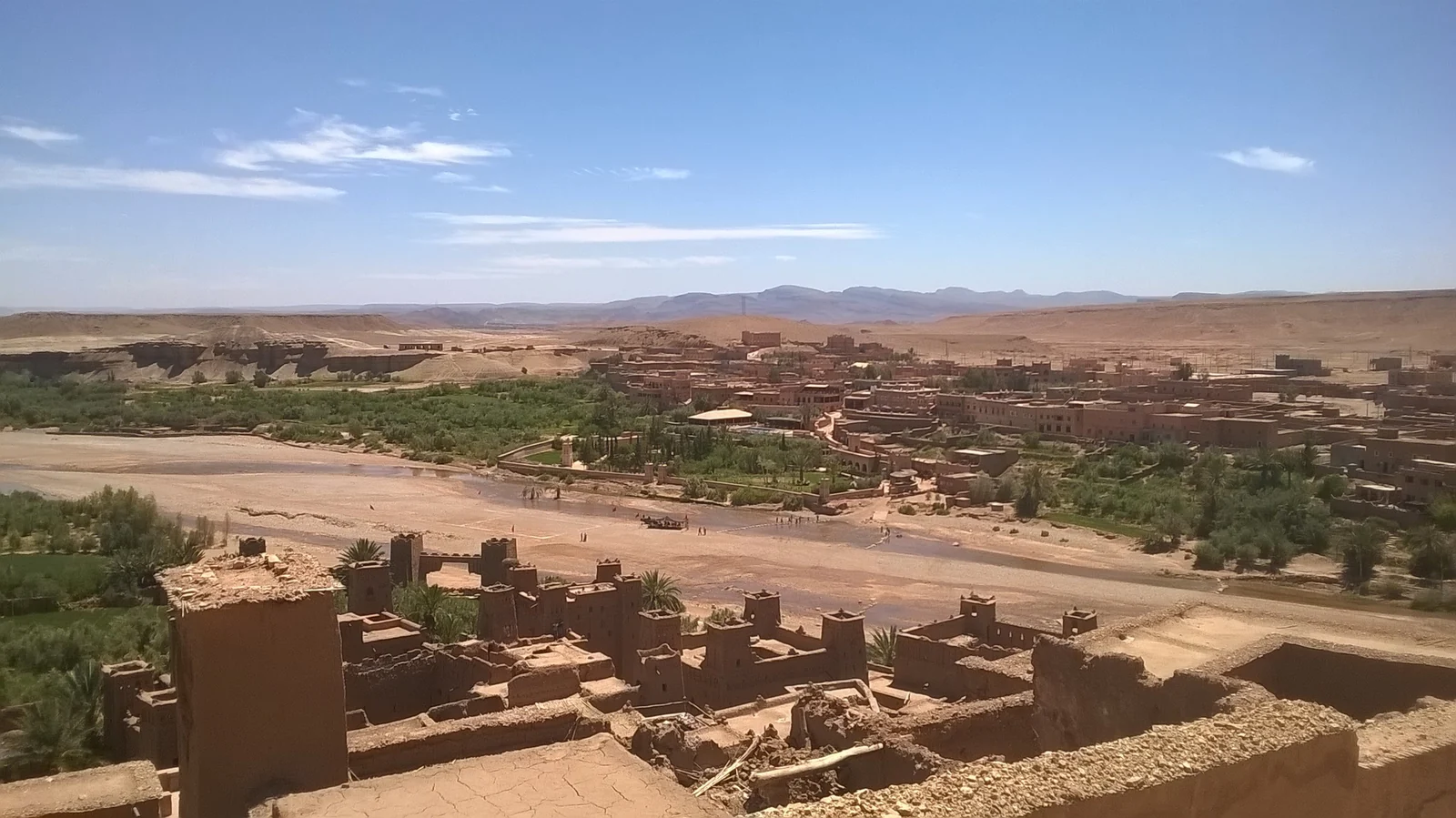
Aït Benhaddou is a ksar, a fortified village of the kind built across southern Morocco for protection and trade. It stands in the Ounila Valley in Ouarzazate Province. The old village rises in tiers up the slope, with a defensive wall around the base and a river below that is usually shallow enough to cross on foot. A footbridge also links the ksar to the modern village opposite.
The site has been fortified since the Almoravid period in the 11th century, though none of the buildings you see today are thought to be older than the 17th century. The setting explains the location: the ksar sat on a trans-Saharan route linking the desert with Marrakech, and caravans crossed the Atlas by way of Tizi n’Tichka. Only a few families still live inside the walls. Most residents have moved to the newer village across the river and work in farming or tourism.
UNESCO Status and Mud-Brick Architecture
UNESCO inscribed the Ksar of Aït-Ben-Haddou in 1987 under cultural criteria (iv) and (v). The official UNESCO listing describes it as an outstanding example of southern Moroccan earthen architecture, a group of buildings that shows the range of pre-Saharan building techniques in one place.
The materials are simple: sun-dried mud brick, rammed earth, wooden beams and straw. Walls are thick and keep interiors cooler in summer and warmer on winter nights. Look for the corner towers, the narrow windows set high on the walls and the geometric patterns pressed into the upper parts of the facades.
Earth is fragile, so rain and age wear the buildings down and they need regular repair. Parts of the ksar were also damaged in the earthquake that struck the Marrakech-Safi region, so some areas may be closed or under restoration when you visit.
Film History: Why the Ksar Looks Familiar
Aït Benhaddou is one of Morocco’s best-known film locations. Productions that have shot here, according to published filmographies, include Lawrence of Arabia, The Man Who Would Be King, The Jewel of the Nile, The Mummy, Gladiator and Kingdom of Heaven. Parts of Game of Thrones were filmed in the area too.
Treat the film connection as background rather than a checklist. Sets are dressed and then removed, and the ksar you walk through is a real village with its own layout, not a studio lot. The same mud-brick backdrop that suits ancient cities on screen is simply what southern Moroccan towns looked like for centuries.
The Drive Over the Tizi n’Tichka Pass
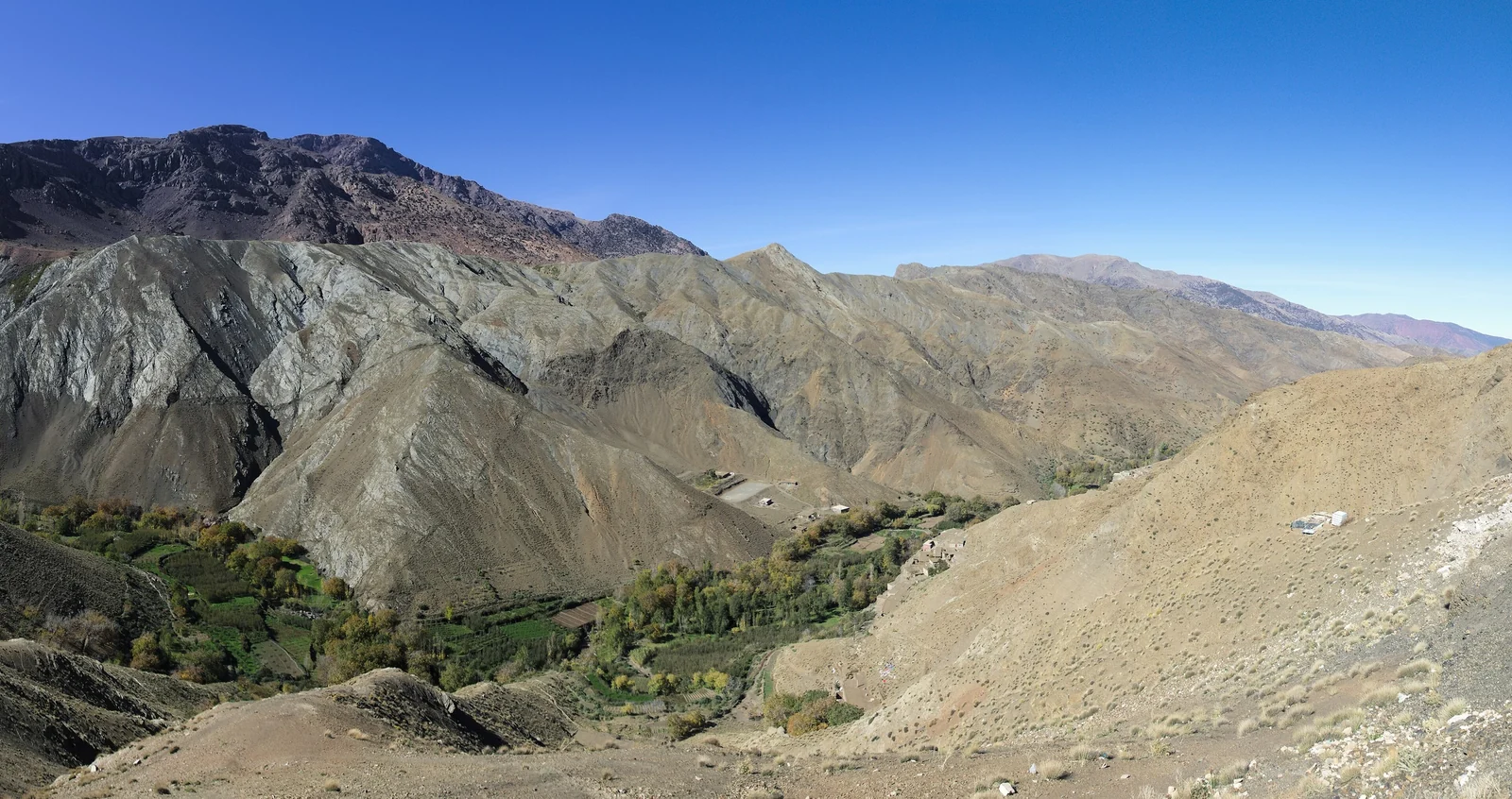
The route follows the N9 from Marrakech toward Ouarzazate. The French military built the road in 1936 along an old caravan trail, and it crosses the High Atlas at Tizi n’Tichka, at about 2,200 meters. Most of the climb is a long series of bends, with villages, roadside stalls selling minerals and fossils, and wide views of terraced valleys.
Road Conditions and Timing
The road is paved and busy with trucks and tour vans, so progress can be slow behind a lorry on the bends. Snow often falls on the pass from about November to March, and winter weather can slow traffic or briefly close the road. Check current conditions with your driver or hotel before you go, and leave early.
Anyone prone to car sickness should take medication beforehand, because the bends go on for a while.
Telouet Kasbah: The Detour Worth Taking
If you have a private driver or your own car, the best addition to the route is the Telouet kasbah, a side trip off the main road before you descend toward Aït Benhaddou. It was the stronghold of the Glaoui family, who controlled this stretch of the caravan route. Mohammed Ibiyet began the current building in 1860, and later members of the family expanded it as their power grew. After independence in 1957 the family’s property was confiscated.
Much of the palace is in ruins, but a set of upper-floor reception rooms has been restored and is open to visitors. They are decorated with zellij tilework, carved stucco and painted cedar ceilings, a striking contrast with the plain earthen exterior. Allow about an hour, and check the state of the road and opening arrangements before choosing this route. Some group tours skip it.
Walking Through the Ksar
Park or get dropped near the river, cross it on foot or by the footbridge and start climbing. The lanes are steep, uneven and sandy, so wear shoes with grip. Some families sell paintings, tea and crafts along the way, and you can say no politely and keep walking. A few houses can be entered for a small tip or fee; ask first before photographing people or going inside.
Climb to the top for the best view over the valley, the palm groves and the newer village. Allow one to one and a half hours for a relaxed visit, more if you stop for lunch with a terrace view. Midday sun is intense and there is almost no shade, so early morning or late afternoon is more comfortable and better for photographs.
Things to Do in Ouarzazate
Ouarzazate sits at about 1,150 meters on the desert side of the Atlas and is the usual lunch stop, or the base for an overnight stay. It grew into a garrison and administrative town during the French period and today is known as Morocco’s film city. If you add one or two stops after the ksar, these are the ones that matter.
Taourirt Kasbah
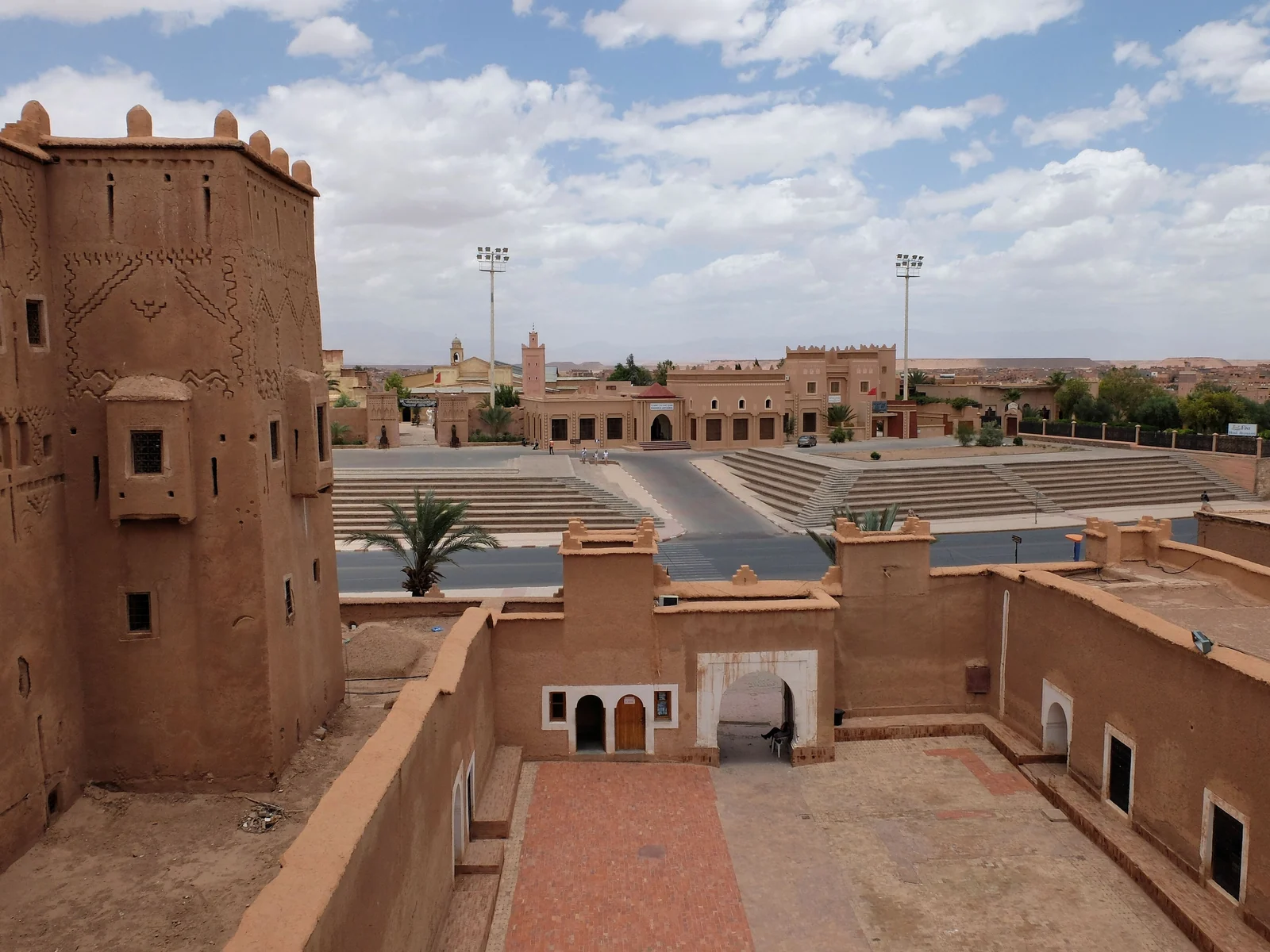
The Taourirt Kasbah is the town’s historic fortified residence, built mainly of rammed earth and owned and expanded by the Glaoui family in the late 19th and 20th centuries. Part of it has been restored, and you can walk through courtyards and rooms and look out from the upper levels. It is smaller than Aït Benhaddou but easier to enter, and it shows how a powerful family lived.
Atlas Studios
Atlas Studios opened in 1983 and is often described as one of the largest film studios in the world by land area. Productions filmed in the area include Gladiator, The Mummy, Kingdom of Heaven and Babel. Visitors can usually tour the lot to see leftover sets, though what is open depends on filming schedules. It can feel like an add-on if you only have one day, so decide before you go whether the time is better spent at the kasbah.
Day Trip Options Compared
| Option | Best for | Pros | Trade-offs |
|---|---|---|---|
| Group tour | Solo travelers, tight budgets | Lowest cost, no driving, hotel pickup | Fixed stops and timing, often rushed at the ksar, may skip Telouet |
| Private driver | Couples and families | Your own pace, Telouet and photo stops, a comfortable car | Higher cost, quality depends on the driver, agree the route in advance |
| Rental car | Confident mountain drivers | Full freedom, easy to add an overnight stay | Winding road, heavy trucks, police checks, parking at the ksar |
| Overnight stay | Anyone wanting less driving | More time at the ksar, softer light, Ouarzazate sights | An extra night to book and pack for |
Ask any tour company what is included before you pay: lunch, entry fees, the Telouet stop and the time you get at the ksar. Prices vary widely by season and group size, so compare a few written offers rather than relying on a number from a blog post.
Best Season and What to Wear
Spring and autumn are the most comfortable seasons: warm days, clear skies and cooler mornings. Summer is very hot on the south side of the Atlas, so go early and carry plenty of water. Winter is cold in the mountains, can bring snow on the pass, and nights in Ouarzazate drop sharply, but the light is clear and the ksar is quieter.
- Closed shoes with grip for steep, sandy lanes.
- Layers: the pass is much cooler than Marrakech or the desert floor.
- A hat, sunglasses and sunscreen, since there is little shade in the ksar.
- Modest clothing with covered shoulders and knees is a sign of respect in small villages.
- Cash in small bills for tips, tea and small purchases, and a refillable bottle of water.
How Long to Allow
A realistic same-day plan leaves Marrakech early, crosses the pass with a tea or photo stop, reaches Aït Benhaddou in time for lunch, spends one to two hours in the ksar and starts back in the afternoon. Add Telouet or Ouarzazate and you will be driving after dark, which on a mountain road many travelers prefer to avoid.
- Leave Marrakech as early as you can.
- Stop at a viewpoint near the top of Tizi n’Tichka.
- Optional: visit the Telouet kasbah.
- Walk the ksar and have lunch nearby.
- Optional: Taourirt Kasbah and Atlas Studios in Ouarzazate.
- Head back over the pass while there is still light.
Staying Overnight Instead
If you can spare a night, stay in Aït Benhaddou village or in Ouarzazate. You skip the same-day return, see the ksar in softer light and can add the two Ouarzazate sights without rushing. Aït Benhaddou has guesthouses and small hotels, while Ouarzazate has a wider choice.
Many travelers continue from here toward the desert. Our guide to the Sahara explains what the dunes are like, and you can browse more routes in our Morocco travel guides or across Africa.
Aït Benhaddou Day Trip FAQ
Is Aït Benhaddou worth a day trip from Marrakech?
Yes, if you like landscapes and historic architecture and do not mind a long drive. The ksar is a UNESCO site and the road over the Atlas is half the experience. If you dislike long car days, spend a night in Ouarzazate instead.
How long is the drive from Marrakech to Aït Benhaddou?
Plan on roughly four hours each way without stops, longer with photo breaks, a Telouet detour or slow traffic on the pass. Confirm the current estimate with your driver or operator, because road works and weather change it.
Is the Tizi n’Tichka pass dangerous?
It is a paved national road with many bends and heavy truck traffic, so it demands patience more than skill. Snow can affect it from around November to March. Drive in daylight and check conditions beforehand.
Can I visit Aït Benhaddou and Ouarzazate in one day?
Yes, but it makes for a very long day. The two are a short drive apart, so you can see Taourirt Kasbah after the ksar if you start early. An overnight stay is far more relaxing and leaves time for both.
Should I book a tour, a driver or rent a car?
A group tour is cheapest and simplest. A private driver gives you control over stops, including Telouet. Rent a car only if you are comfortable on mountain roads. The comparison table above sets out the trade-offs.
What is the best time of year to visit?
Spring and autumn offer the most comfortable temperatures. Summer is very hot, and winter can bring snow on the pass and cold nights, though the light is excellent and the ksar is quieter.
Do people still live in Aït Benhaddou?
A few families live inside the ksar. Most residents have moved to the modern village across the river. Be respectful when walking through, ask before taking photos of people and expect to tip if you enter a private home.