Chefchaouen from Fes looks easy on a map. It is a bit under 200 km, the photos are irresistible, and tour desks across the medina sell it as a day trip. The honest answer is that you can do it in a day, but you will spend most of that day in a vehicle. For most travelers, one night in the blue town is the better deal.
This guide lays out the real shape of the journey: how long it takes in general terms, how the bus, shared taxi, private driver and organized tour compare, whether a stop at Meknes and Volubilis is worth it, and what is actually worth seeing once you arrive. It also covers the origin of the blue, photography manners with locals, and how to fit Chefchaouen into a Fes to Tangier route.
Day Trip or Overnight? The Short Answer
Fes to Chefchaouen is roughly 190–200 km by road, and route planners put the drive at around three and a half hours without stops. The CTM coach is slower, typically a little over four hours. Do the math on a same-day return and you are looking at seven to nine hours of travel for a few hours on the ground.
A day trip works for one kind of traveler: someone with a private driver, an early start, a decent stomach for winding roads and a firm decision that the blue alleys are the whole point. If you have one spare night, stay over. Chefchaouen at dusk and early morning, after the day-trippers have left, is a different place.
The Road from Fes and Why One Day Is Mostly Driving
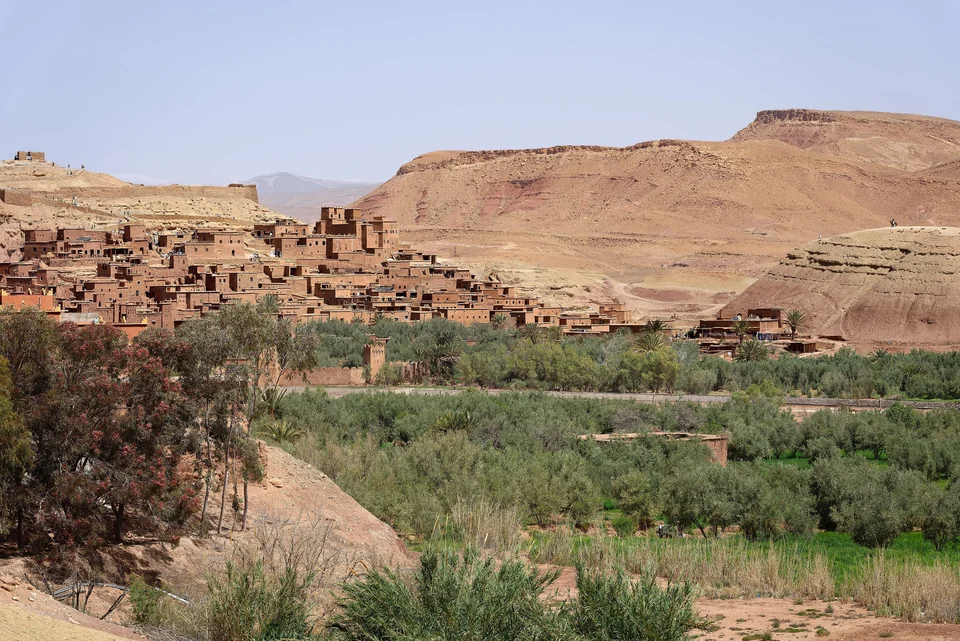
The first stretch leaves Fes across farmland and rolling hills. Then the road climbs into the foothills of the Rif Mountains, and the mood changes. Curves tighten, villages shrink, and the landscape turns greener than anything around Fes or Marrakech. Chefchaouen sits on a mountain slope in the Rif, a very different Morocco from the dry plains and desert edges of the south. If you know the southern side, our Aït Benhaddou day trip shows the opposite end of the country's scenery.
Treat any quoted drive time as a best case. Slow trucks, hill traffic, roadworks, a checkpoint or a tea stop can add a lot. A comfortable plan assumes each leg is a half-day affair, not an hour or two shorter than the map says.
Why one day is mostly driving
Leave Fes at dawn and you reach Chefchaouen in the late morning. You then get a few hours, enough for a walk, lunch and a look from the viewpoint, before you must turn around to be back in Fes at night. You will see the highlights, not the town at its calmest, and nothing outside it.
Add meals, photo stops and the climb to a viewpoint, and the margin is thin. One delay on the road eats the afternoon. Plenty of people come home with a clear memory of the van and a hazy one of the town.
Day trip vs overnight at a glance
| Day trip from Fes | Overnight in Chefchaouen | |
|---|---|---|
| Time on the ground | A few hours at best | A full afternoon plus a morning |
| Time in transit | Seven to nine hours round trip | The same total, split across two days |
| Light and crowds | Midday, peak visitors | Dawn and dusk, quieter lanes |
| Extras | Almost none | Viewpoint, waterfall, a hike |
| Flexibility | Tied to the driver or tour clock | Your own pace |
| Best for | Tight schedules with a private driver | Most travelers |
Bus, Shared Taxi, Private Driver or Tour
Prices change with season and group size, so none are quoted here. Ask for the current fare before you commit.
| Option | Comfort | Flexibility | Cost level | Best for |
|---|---|---|---|---|
| CTM coach | Good, assigned seats | Fixed departures | Lowest reliable | Overnight stays |
| Shared taxi | Basic, shared car | Leaves when full | Low | Patient, budget travelers |
| Private driver | Highest | Full control of stops | Highest | Day trips, groups, Volubilis |
| Organized tour | Good | Fixed schedule | Mid to high | Zero logistics |
CTM coach
CTM is Morocco's main long-distance coach company, with assigned seats, luggage handling and a reputation for running to schedule. Departures from Fes are limited and take a bit over four hours, so check the timetable and book ahead on the CTM website or at the station. It is the cheapest dependable option, and the one I would choose if you are staying a night.
Shared taxi
Grand taxis are shared, usually by six passengers, and they leave when full. They can be quicker than a coach but are less comfortable, and the Fes to Chefchaouen leg may involve a change. They suit flexible, budget-minded travelers with patience, not people on a tight clock.
Private driver
A private driver is the most comfortable way to go, and the only way a day trip starts to feel reasonable, because you control the stops. It costs far more than the coach, and the price depends on the vehicle and how many people split it. Agree the route, the waiting time and what is included before you leave, ideally through your riad or a licensed operator.
Organized tour
Group tours from Fes bundle transport, a guide and often a stop or two. The upside is zero logistics. The downside is a rigid clock and a short slot in town. Check how long you actually get in Chefchaouen, because cramming in Volubilis and Meknes too is how a tour turns into a blur.
Stopping at Meknes and Volubilis on the Way
Meknes and Volubilis lie northwest of Fes, broadly in the right direction, so they pair naturally with a private driver or rental car. Volubilis is a Roman provincial town on a fertile plain, UNESCO-listed in 1997, with mosaics and the Arch of Caracalla. Meknes, an imperial city listed in 1996, has a monumental gate, Bab Mansour, and a calmer medina than Fes.
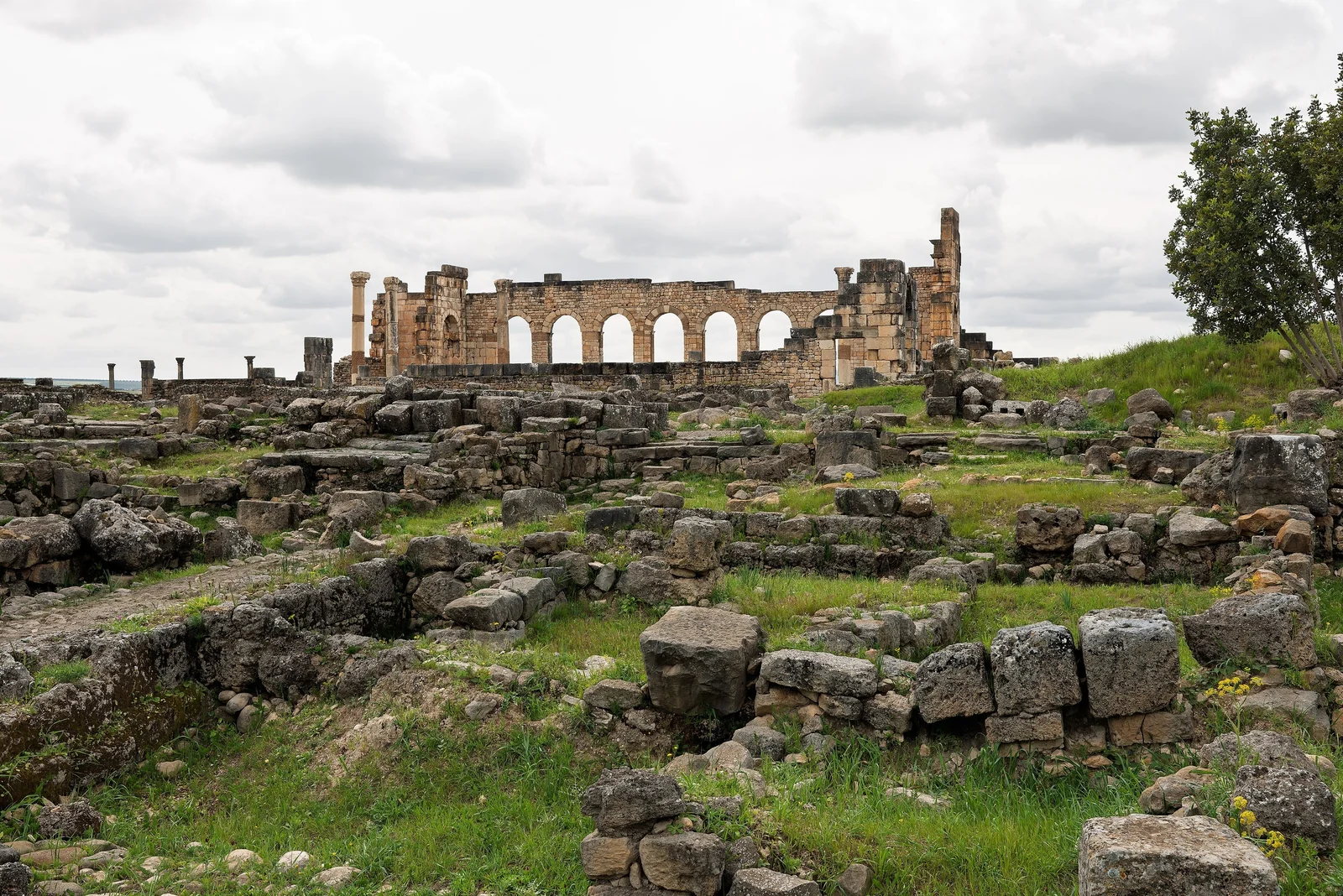
Add Volubilis to a day trip and you have turned a long day into a very long one. Add it to an overnight and the trip becomes a proper route: Fes, Volubilis and a late lunch, then Chefchaouen by evening. See the UNESCO page for Volubilis for background.
What to See in Chefchaouen
The town is small and easy to walk. A circuit of the main sights takes a few hours, but the real pleasure is wandering without a plan.
The blue medina
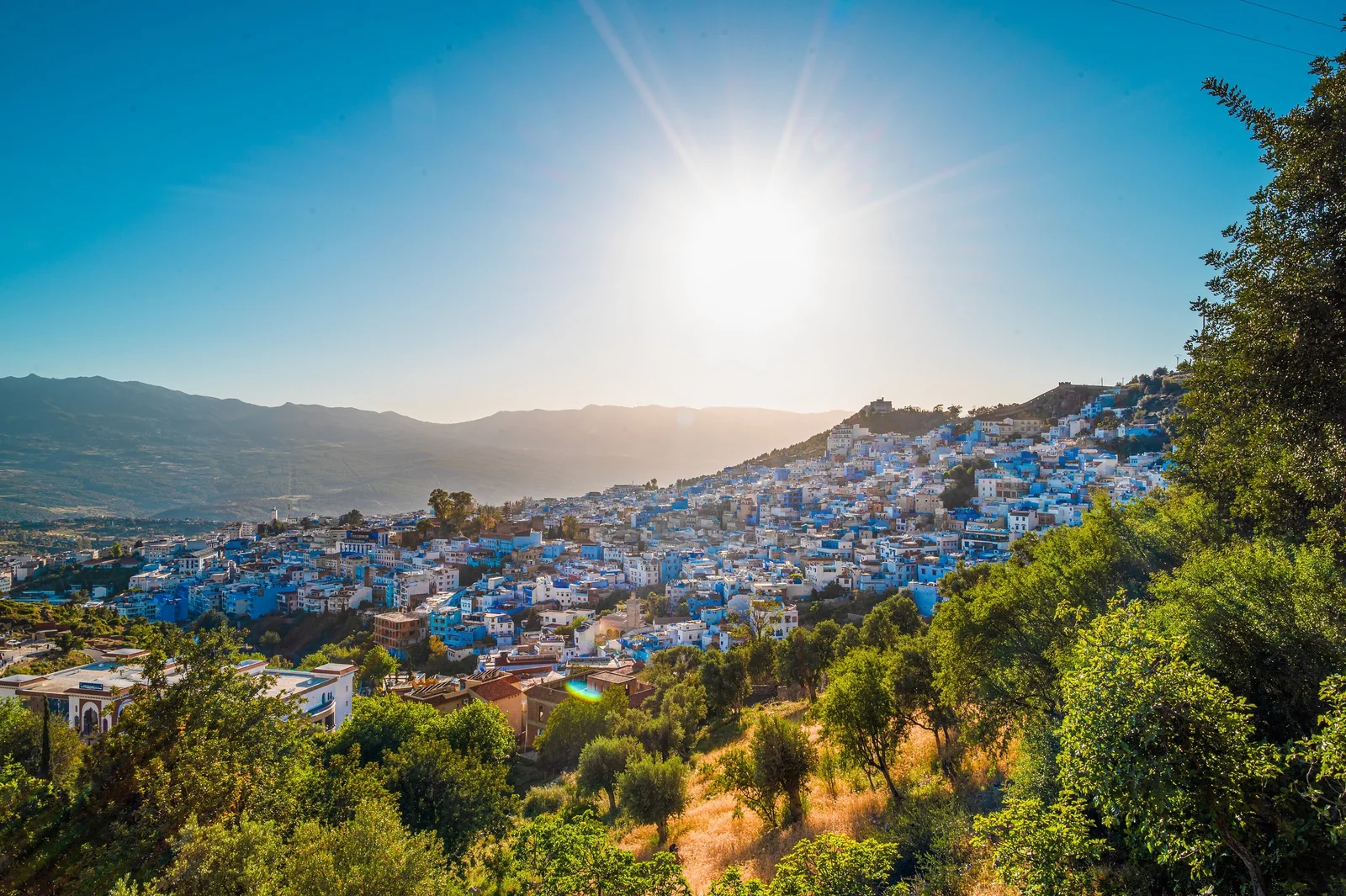
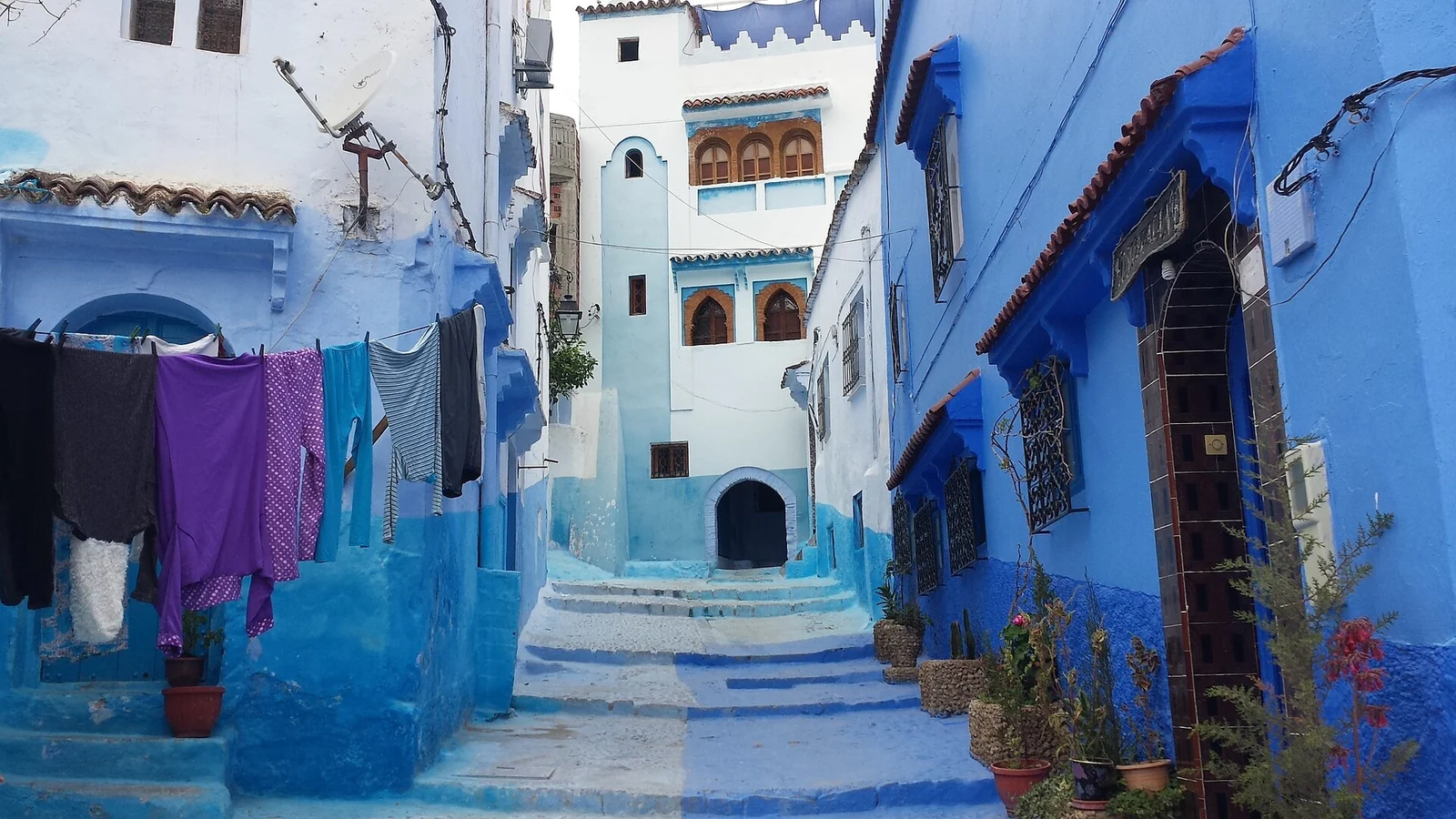
The old town is the headline, and it delivers: stairways, doorways, flowerpots and walls in every shade from sky to cobalt. Start early, before the lanes fill. Many of the blue-trimmed houses are private homes, so keep your voice down and do not block doorways.
Plaza Outa el Hammam and the kasbah
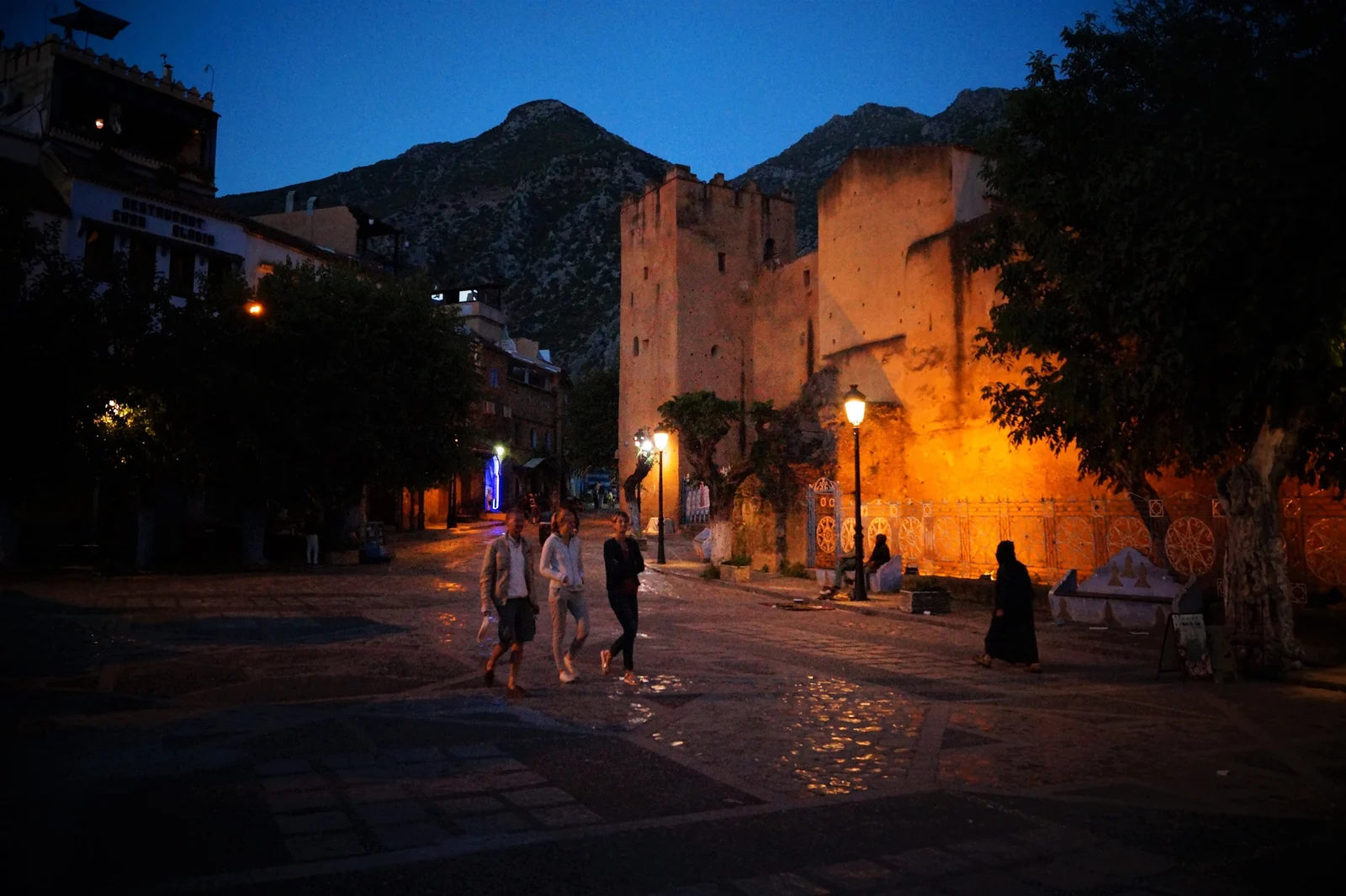
Plaza Outa el Hammam is the town's main square, lined with cafés and restaurants. Right beside it stands the kasbah, the fortress that began the town. Most sources date Chefchaouen's founding to 1471, as a small fort meant to counter Portuguese advances. Check the opening times of the kasbah and its museum on site, since they vary.
Ras el Maa waterfall
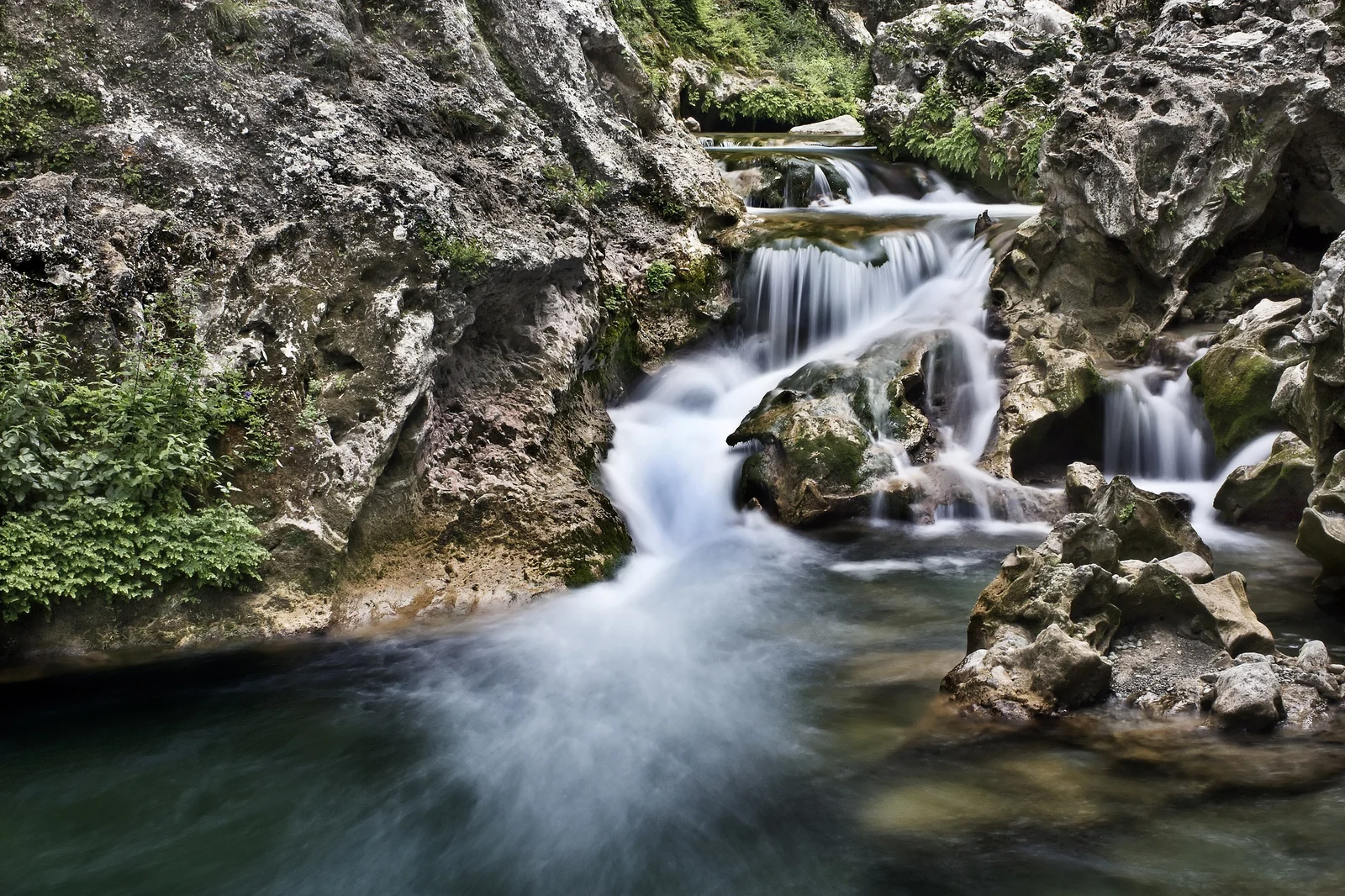
At the edge of the medina, the Ras el Maa spring feeds a stream and a small cascade where locals gather. It is not a big waterfall. It is a cool, pleasant corner.
Spanish Mosque viewpoint
The mosque on the hill across the valley, known as the Spanish Mosque, is a short uphill walk from the medina. The building itself is not the attraction. The view is: the whole town set against the Rif Mountains, at its best near sunset. Bring water.
Akchour: the hiking option
If you stay overnight, Akchour is the natural extra. It lies outside town, in the Talassemtane area, and is known for river pools, waterfalls and a trail through a gorge. Plan it as a half-day or more, wear proper shoes, and check trail conditions and transport options locally before you go.
Why Is Chefchaouen Blue? The Competing Theories
Nobody has pinned this down, and most of what you read online repeats the same handful of stories. Here are the main ones, with a sense of how much evidence stands behind each.
- Jewish refugees. The most cited explanation links the blue to Jewish families who settled in the town after fleeing Spain, bringing a tradition in which blue evokes the sky and the divine. Chefchaouen did take in Muslim and Jewish refugees from Spain, so it is plausible. But sources disagree on when the painting began, and direct documentation is thin.
- Mosquitoes. A popular local story says the blue wash keeps insects away. It is folklore, and I have not found solid evidence for it.
- Cooling and practicality. Another idea is that lime and blue pigment kept houses cooler and cleaner. That is believable in general terms, but it does not explain why this town and not its neighbors.
- Tourism. Some locals say the color spread or was reinforced to draw visitors. The town certainly keeps it up today, but that cannot explain the older versions of the story.
The sensible reading is that no single theory is proven, and the truth is probably a mix of tradition, practicality and later deliberate upkeep.
Why Chefchaouen Feels Different, and Photo Etiquette
A different pace from Fes
Fes is large, dense, ancient and relentless. Its medina is a maze of workshops, donkeys and sensory overload, and it rewards stamina. Chefchaouen is a small mountain town, cooler in the air and softer in tone, with a walkable scale and a lower hassle level. After Fes, the pace feels like an exhale, and you notice it far more when you are not watching the clock. Spanish is often heard here alongside Arabic, a reminder of the north's history with its neighbor across the strait.
Photography etiquette with locals
The town is photogenic, and it is also people's home. A few simple habits go a long way.
- Ask before you photograph a person, and accept a no without argument.
- Some people will ask for a tip in return for a photo. Decide your own policy in advance and stay polite either way.
- Do not photograph women or children without permission, and never aim a lens through open doorways.
- Do not stage photo shoots that block narrow lanes or stairs.
- Check the rules before flying a drone, and skip it in crowded areas.
Best Season and Planning Your Route
Season and practical tips
Spring and autumn are the usual favorites: comfortable for walking and kinder on the long drive. Summer can be hot on the road and busy in town, while winter brings cool air, rain and sometimes mist in the mountains. Because the town sits in the hills, pack a layer for the evening in any season.
- Wear comfortable shoes with grip. The lanes are steep and the steps are uneven.
- Carry some cash for small purchases, since not every shop or café takes cards.
- Book your return transport before you arrive if you have a fixed departure.
- If you have a car, check where to park near the medina before you arrive.
Fes, Chefchaouen and Tangier (or back)
The cleanest way to see Chefchaouen is as a stop between cities, not an out-and-back. Fes to Chefchaouen to Tangier costs you roughly one extra day compared with going straight, and you never retrace the same road. From Tangier you can take a ferry to Spain or continue elsewhere in northern Morocco. Going back to Fes works too, but plan the return as its own travel day.
A sensible outline is Fes, an optional Volubilis and Meknes stop, a night in Chefchaouen, then onward to Tangier the next morning. If Spain is next, our Seville and Andalusia travel guide picks up the trip on the other side of the strait. If you are building a longer Morocco loop, the Marrakech travel guide and the Sahara desert tour from Marrakech cover the south, and they combine well with a northern leg through Fes and Chefchaouen.
Verdict
Stay the night. The day trip is possible, but the road takes the best hours and leaves you with a rushed walk. One night turns the same journey into a real visit: the early quiet, the sunset view, an unhurried meal and, with another half-day, Akchour. If you truly have only one day, go with a private driver, skip Volubilis, leave early and accept what you will miss.
Chefchaouen from Fes FAQ
Is Chefchaouen worth a day trip from Fes?
It can be, but most of the day is spent on the road. With a private driver and an early start you will see the main sights. For a relaxed visit with sunset, early morning light and a hike, one night in Chefchaouen is much better.
How long does it take to get from Fes to Chefchaouen?
The drive is roughly three and a half hours in good conditions, and the CTM coach usually takes a bit over four hours. Mountain roads, traffic and stops add time, so treat any figure as a best case and plan with a buffer.
What is the best way to get from Fes to Chefchaouen?
The CTM coach is the best value and the most reliable for independent travelers. A private driver is the most comfortable and flexible, and the sensible choice if you add stops like Volubilis. Shared taxis are cheap but slower and less predictable.
Why is Chefchaouen blue?
There is no single proven answer. The most cited story links the color to Jewish refugees who settled in the town, while others point to mosquitoes, cooling or tourism. Sources disagree, so treat any one confident explanation with caution.
When is the best time to visit Chefchaouen?
Spring and autumn are usually the most comfortable for walking and for the long drive. Summer is hotter and busier, and winter can be cool and wet in the mountains. Bring a light layer for the evenings in any season.
Can I visit Volubilis and Meknes on the way to Chefchaouen?
Yes. With a private driver or a rental car they lie roughly on the way. It makes the day much longer, so it works best as part of an overnight plan rather than a same-day return to Fes.
Is it okay to photograph people in Chefchaouen?
Always ask first and accept a refusal politely. Some people may ask for a small tip. Avoid photographing women and children without permission, and do not block lanes or doorways for photo shoots.