


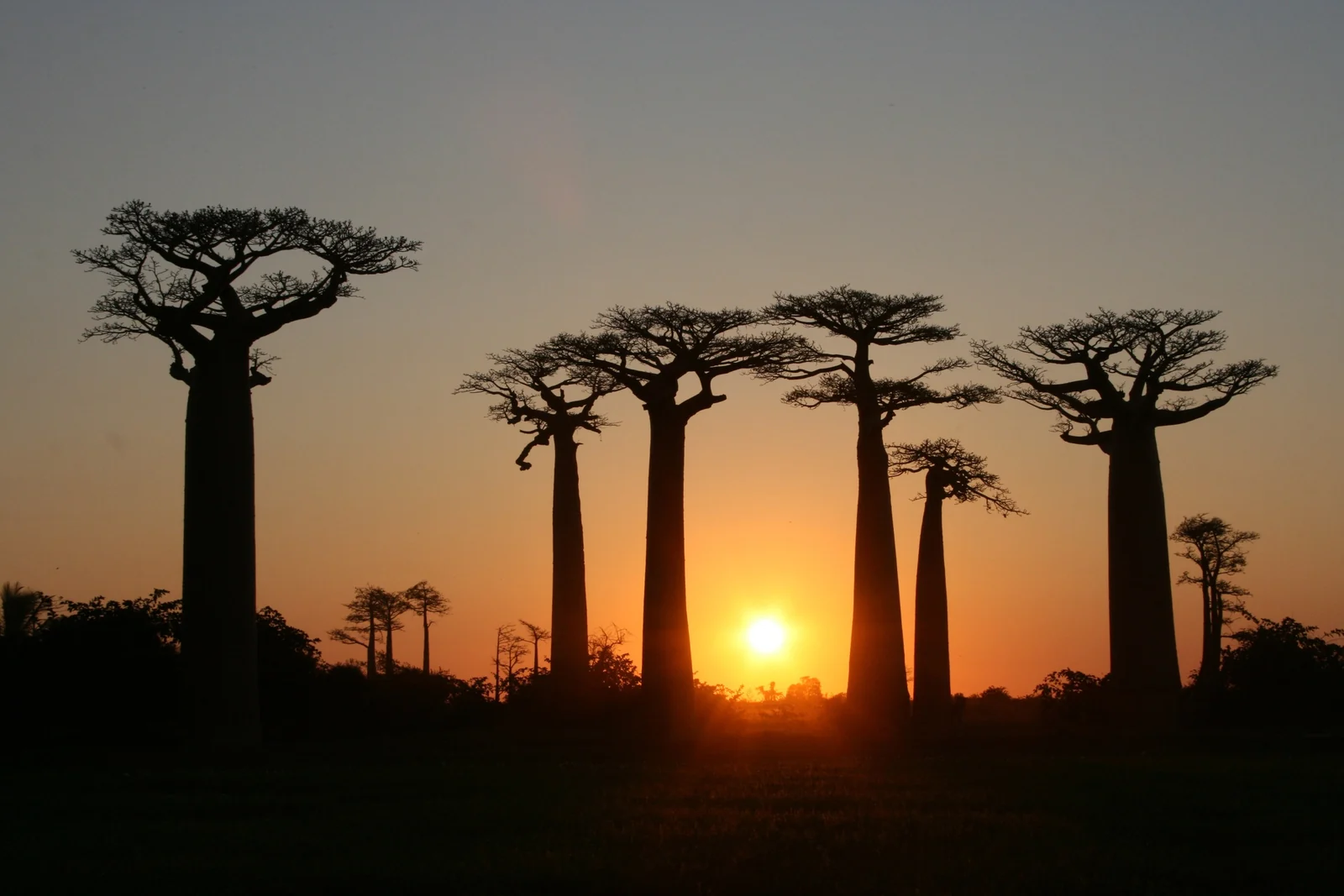
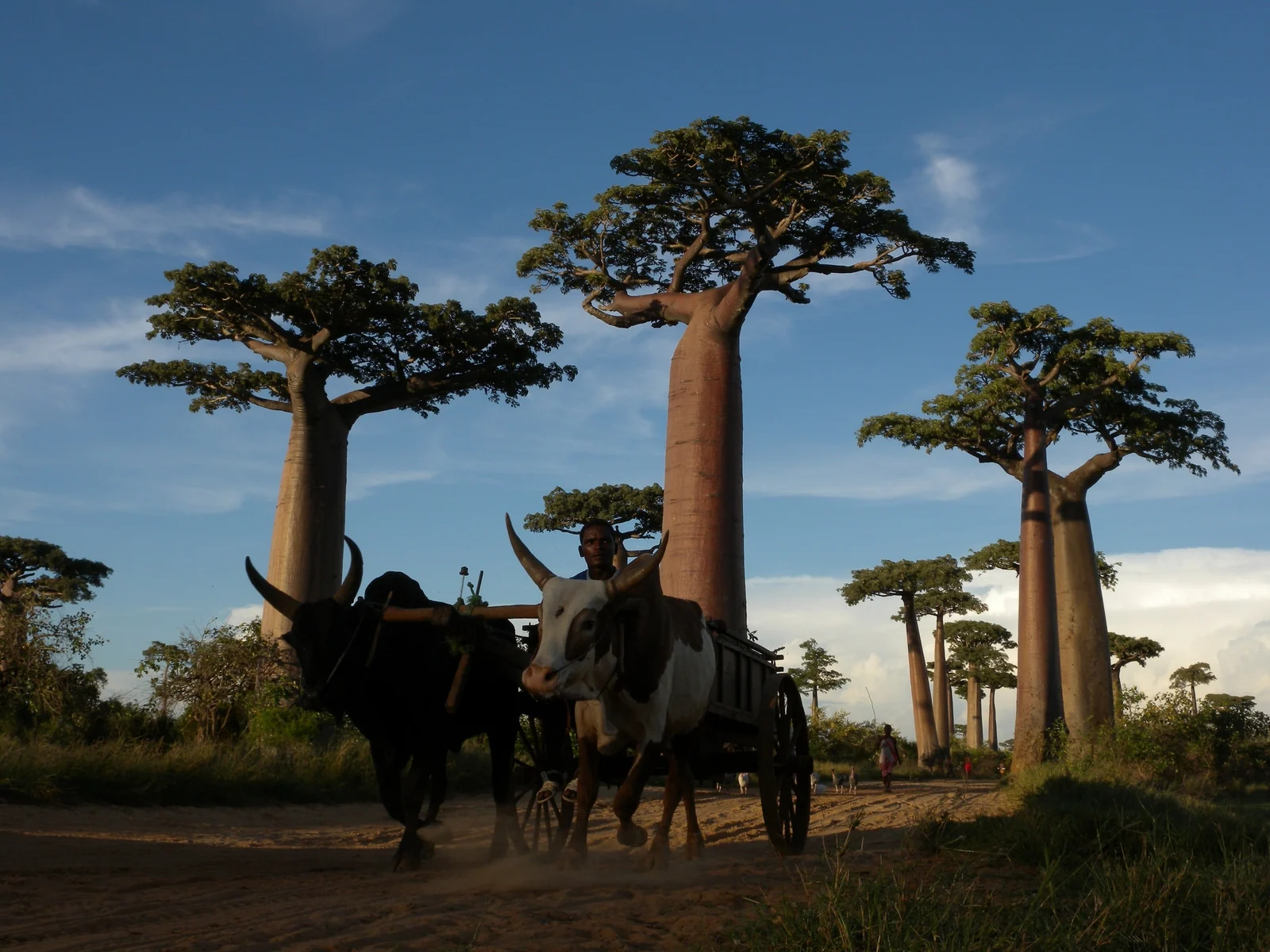
The Avenue of the Baobabs is a short stretch of red dirt road in western Madagascar lined by about two dozen giant Grandidier’s baobabs, some of them around 30 meters tall and hundreds of years old. It lies about 20 kilometers north of the coastal town of Morondava and is one of the most photographed places in Africa.
It is worth the long journey because nowhere else do so many of these endangered trees stand together beside a road, glowing orange at sunrise and sunset. This guide explains the trees and their stories, how to get there, when to go and what else to see on Madagascar’s baobab coast. For more on the island, see our Madagascar guides.
What Is the Avenue of the Baobabs?
The avenue, known in French as the Allée des Baobabs, is a roughly 260-meter section of the unpaved RN8 between Morondava and Belon’i Tsiribihina, in the Menabe region. Some 20 to 25 baobabs line the road here, with more scattered across the surrounding fields and rice paddies.
The trees are survivors. They once stood inside a dense dry forest, which was gradually cleared for farming. The baobabs were left standing, so today they rise alone from open land, which is exactly what makes the scene so striking. The site received temporary protection in 2007 and has been a protected natural monument since July 2015.
Grandidier’s Baobab: The “Mother of the Forest”
The trees on the avenue are Grandidier’s baobabs (Adansonia grandidieri), the largest and most famous of Madagascar’s baobabs. They grow 25 to 30 meters tall, with smooth, reddish-gray trunks up to about 3 meters across and a flat crown of branches at the very top. In Malagasy they are called renala or reniala, “mother of the forest.”
Of the eight recognized baobab species in the world, six grow only in Madagascar, and a 2024 genetic study published in Nature concluded that the genus most likely originated on the island. Grandidier’s baobab is listed as Endangered by the IUCN: its dry forest habitat has largely become farmland, and few young trees survive in disturbed areas.
- Flowers: large white flowers open around dusk between May and August and are pollinated by nocturnal fork-marked lemurs and hawk moths.
- Fruit: the pulp is rich in vitamin C, and the seeds are pressed for cooking oil.
- Fiber and wood: the bark provides fiber for rope, and the spongy wood has been used for roof thatch.
Baobab Legends and the Baobab Amoureux
Baobabs hold a special place in Malagasy culture, and some individual trees are treated as sacred, with offerings left at their base. When you visit, ask your guide before touching or photographing a tree that has offerings around it, and never climb the trunks.
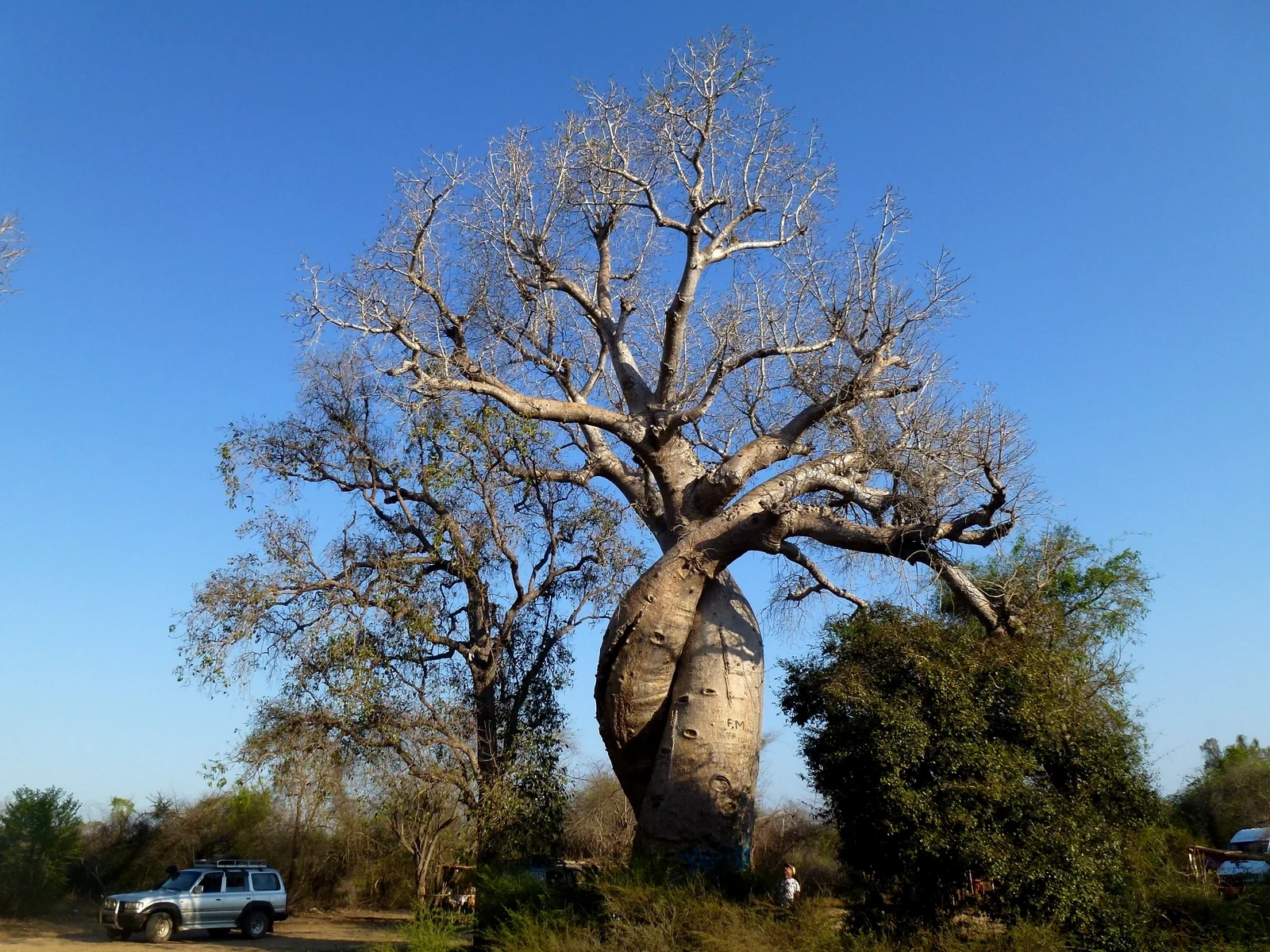
About 7 kilometers from the avenue stand the Baobab Amoureux, the “baobabs in love”: two za baobabs (Adansonia za) whose trunks twist around each other. Local legend tells of two young people from neighboring villages who were forbidden to marry and asked to be united forever, and the trees are said to be the answer to that wish.
How to Get to the Avenue of the Baobabs
Your base is Morondava, the capital of the Menabe region on the Mozambique Channel. From there the avenue is about 20 kilometers north along the RN8, a drive of well under an hour by 4x4 or taxi, depending on road conditions.
- By air: Morondava has an airport with scheduled domestic flights from Antananarivo. This is by far the quickest option; check current schedules, as domestic services change often.
- By road: the drive from Antananarivo via Antsirabe takes a full long day. A shared taxi-brousse takes around 12 hours; a private car with a driver is more comfortable and lets you stop on the way.
- From Morondava to the avenue: hire a driver or join a sunset tour arranged by your hotel. There is a small parking fee at the site, which supports the local conservation project.
Best Time to Visit the Avenue of the Baobabs
Go in the dry season, roughly April or May to November. Roads around Morondava are easiest then, and it is the only realistic time to combine the avenue with Kirindy and the Tsingy. From December to March, heavy rain can make secondary roads impassable, and the cyclone season runs from about November to April.
| Time of day | What to expect |
|---|---|
| Sunrise | Fewer visitors, soft light behind the trees and local life starting on the road |
| Midday | Harsh light and heat; better for seeing the trunks in detail than for photos |
| Sunset | The classic view, with trunks glowing then turning to silhouettes; busiest time |
| After dark | Night photography is possible with a guide, but avoid driving back late on unlit roads |
The trees are bare for much of the dry season and in leaf during the rains, so both seasons have their own look. Reflections in the flooded paddies beside the road are a bonus early in the dry season.
More Baobab Roads and Sights Near Morondava
The RN8 north of Morondava is one of the best baobab drives in Madagascar, and the avenue is just the start. Most travelers combine it with two nature areas further along the same road.
Kirindy Forest
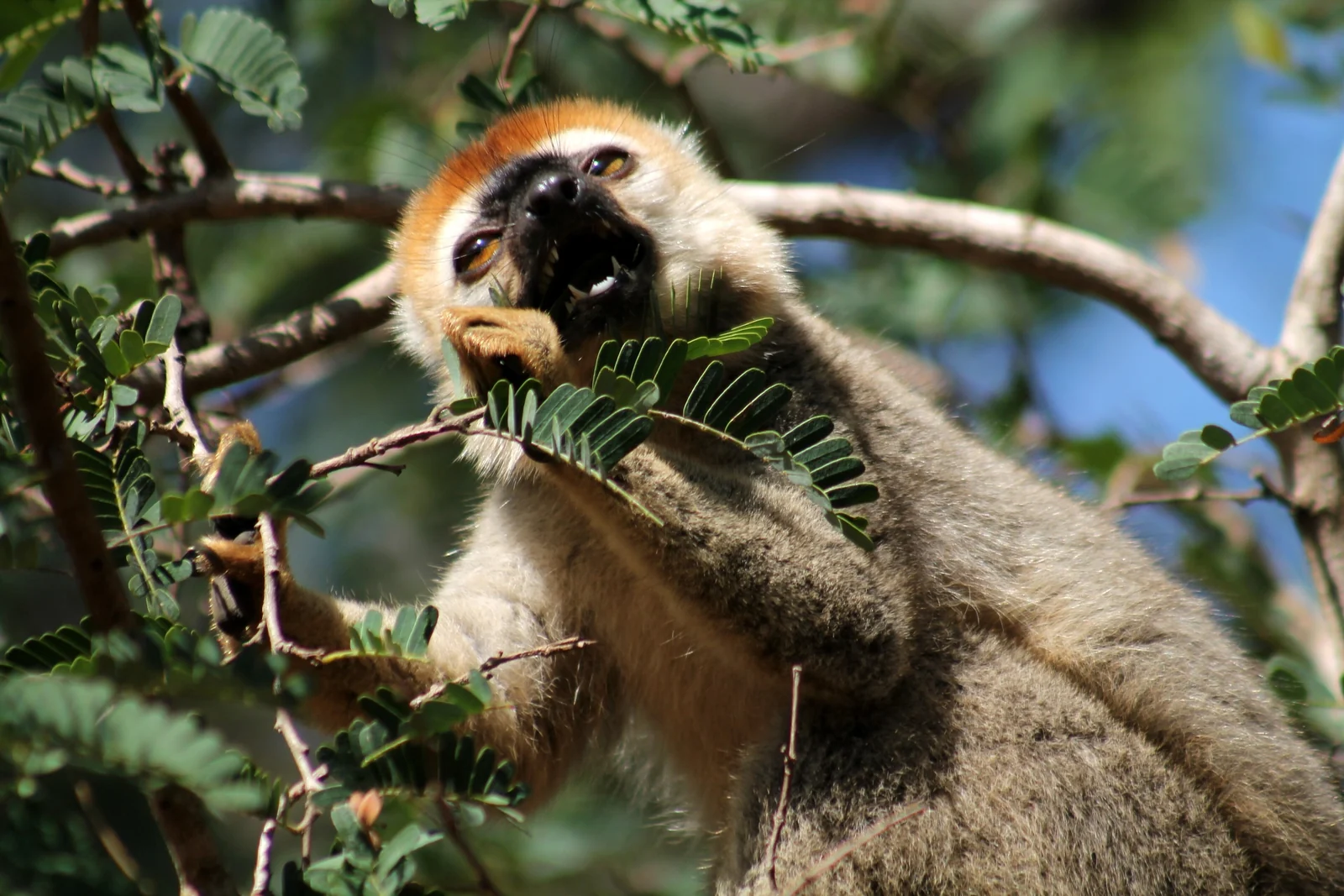
About 50 kilometers northeast of Morondava, the private Kirindy Forest reserve protects dry deciduous forest with three baobab species. It is one of the best places in Madagascar to see the fossa, the island’s largest predator, as well as the endangered giant jumping rat and Madame Berthe’s mouse lemur, the world’s smallest primate. Night walks are especially rewarding.
Tsingy de Bemaraha
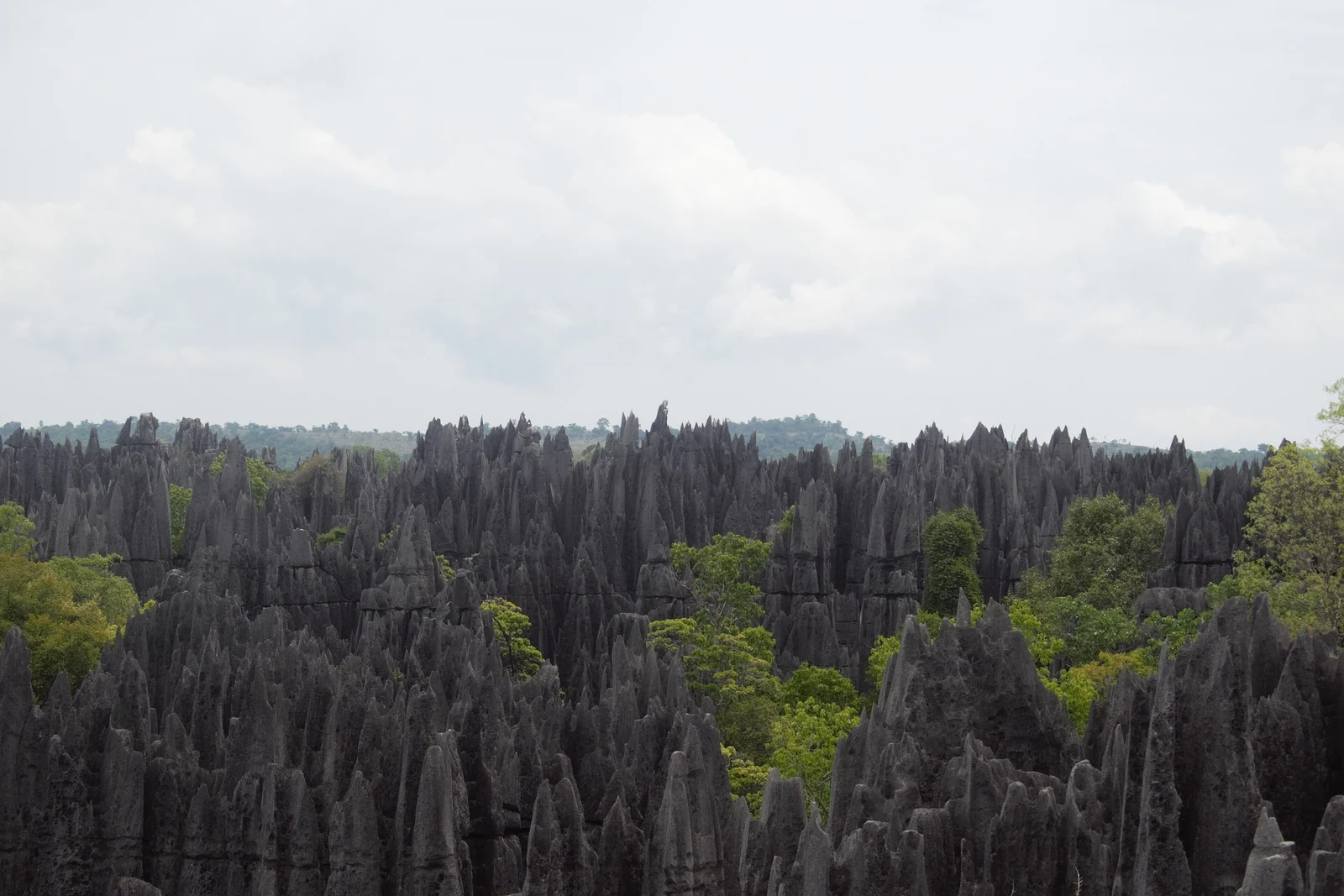
Further north, the Tsingy de Bemaraha Strict Nature Reserve, a UNESCO World Heritage Site since 1990, protects a forest of razor-sharp limestone pinnacles. Tsingy roughly means “where one cannot walk barefoot.” The journey from Morondava takes most of a day by 4x4, including river ferry crossings, and is only practical in the dry season.
Baobabs in southwest Madagascar
If you are traveling in the south, the small community-run Reniala reserve near Ifaty, north of Toliara, protects a patch of spiny forest with squat fony baobabs (Adansonia rubrostipa). They look nothing like the giants of Morondava, which is part of the fun of seeing both.
Safety and Responsible Travel Tips
Madagascar is a rewarding but demanding destination. Check your government’s advice before you go; the UK Foreign Office, for example, highlights crime in coastal areas including Morondava, the risk of political demonstrations and poor roads.
- Avoid driving at night; many vehicles have no lights and roads are unlit.
- Use hotel-arranged transport or a trusted driver, and keep valuables out of sight at the avenue at sunset.
- Stay on the road and paths; the fields around the trees are farmland.
- Do not carve, climb or lean on the trunks, and respect any offerings at sacred trees.
- Buy crafts and snacks from local sellers rather than bringing everything from town; tourism income helps protect the site.
If scenic roads are what draw you, browse our breathtaking routes for travel enthusiasts. Our Africa overview covers more of the continent’s highlights, and our list of Africa’s tallest waterfalls adds more natural wonders.
Avenue of the Baobabs FAQ
Where is the Avenue of the Baobabs?
It is in the Menabe region of western Madagascar, on the unpaved RN8 about 20 kilometers north of Morondava, between Morondava and Belon’i Tsiribihina. Most visitors come from Morondava by car or on a sunset tour arranged by their hotel.
How old are the baobabs on the Avenue of the Baobabs?
The trees are often described as up to around 800 years old. Baobabs have no reliable annual growth rings, so exact ages are hard to measure, but the largest Grandidier’s baobabs are certainly several centuries old.
When is the best time to visit?
The dry season, roughly April or May to November, is best because roads are passable and you can combine the avenue with Kirindy and the Tsingy de Bemaraha. Sunset is the most popular time of day; sunrise is quieter.
Is there an entrance fee?
There is no ticket to walk along the road, but a small parking fee is charged at the site to support local conservation and community projects. Amounts can change, so carry some small Malagasy ariary notes.
What kind of baobabs grow on the avenue?
The avenue is lined with Grandidier’s baobabs (Adansonia grandidieri), the tallest of Madagascar’s six endemic baobab species. They reach 25 to 30 meters and are listed as Endangered by the IUCN because their forest habitat has been cleared for farming.
Is it safe to visit the Avenue of the Baobabs?
Most visits pass without problems, but theft does occur in the Morondava area. Go with a trusted driver or hotel transport, keep valuables hidden, avoid driving after dark and check your government’s travel advice before you travel.