


Ask most people to name an African waterfall and they will say Victoria Falls. Yet the continent’s tallest waterfalls are far less famous: Tugela Falls in South Africa drops a total of about 948 meters, Mutarazi Falls in Zimbabwe more than 760 meters, and several others plunge over 190 meters into remote gorges most travelers never see.
This guide ranks Africa’s highest falls by total height, using figures from park authorities, UNESCO and published surveys, and explains where each one is, when it flows best and how realistic a visit is. Heights vary between sources because there is no single standard for measuring a waterfall, so we give ranges where surveys disagree.
Africa’s Tallest Waterfalls at a Glance
| Waterfall | Country | Approx. height | Type |
|---|---|---|---|
| Tugela Falls | South Africa | 948 m (five tiers) | Seasonal, multi-tier |
| Mutarazi Falls | Zimbabwe | About 760–770 m | Two-tier cascade |
| Lofoi Falls | DR Congo | 340 m | Single unbroken drop |
| Kalambo Falls | Zambia / Tanzania | About 220–235 m | Single drop |
| Maletsunyane Falls | Lesotho | 192 m | Single plunge |
| Ouzoud Falls | Morocco | 110 m (three drops) | Tiered cascade |
| Victoria Falls | Zambia / Zimbabwe | 108 m | Curtain, 1,708 m wide |
| Sipi Falls | Uganda | 95 m (main fall) | Series of three falls |
1. Tugela Falls, South Africa: The Continent’s Highest
Tugela Falls pours off the Amphitheatre, a five-kilometer basalt wall in Royal Natal National Park, KwaZulu-Natal. Its five free-leaping tiers add up to an official 948 meters, with the longest single drop around 411 meters. A 2016 survey put the total at about 983 meters, which is why some writers argue it beats Venezuela’s Angel Falls overall, although Angel Falls keeps the record for the tallest uninterrupted drop.
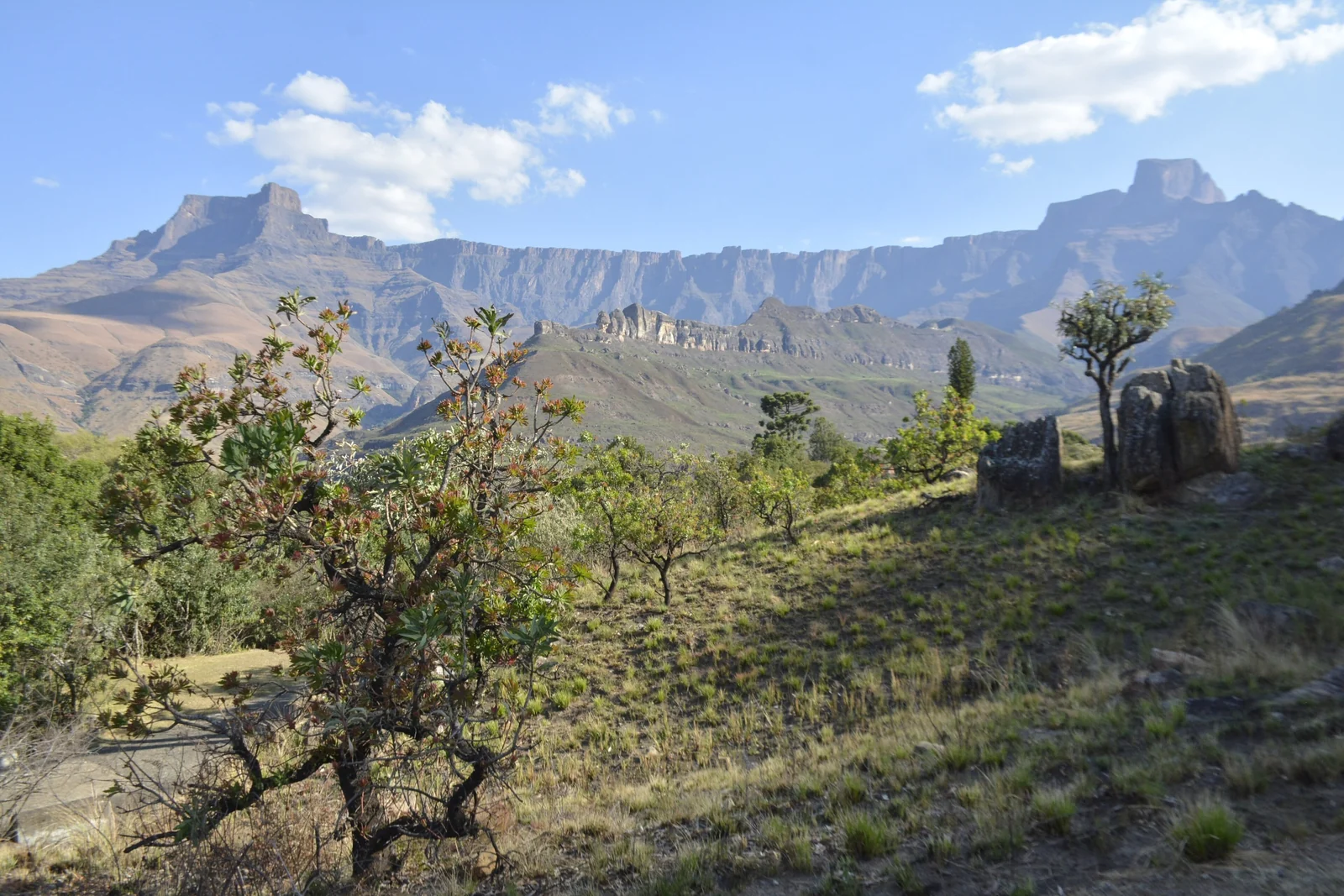
The park is part of the Maloti-Drakensberg Park World Heritage Site. There are two classic ways to see the falls:
- Tugela Gorge trail: a gentle walk of about 7 kilometers each way from the Royal Natal side, through forest to a boulder scramble with views up to the falls.
- Sentinel Peak route: a high-altitude hike from the Sentinel car park that climbs two chain ladders of roughly 50 rungs each to reach the top of the Amphitheatre and the lip of the falls.
Tugela is seasonal. It flows best in the summer rains (roughly November to March) and can freeze or dry to a trickle in winter, so time your trip if the falls themselves are the goal.
2. Mutarazi Falls, Zimbabwe: Over the Eastern Escarpment
In Zimbabwe’s Eastern Highlands, the Mtarazi River slides off the edge of the escarpment into the Honde Valley in two long tiers. Totals quoted for Mutarazi Falls range from about 762 to 772 meters, easily making it the second-highest waterfall in Africa. It lies in the small Mutarazi Falls National Park, which borders Nyanga National Park to the north.
The falls are reached by road from the Nyanga area, and a skywalk and zip line have been built at the rim for visitors. Like most highland falls, it is fullest after the summer rains.
3. Lofoi Falls, DR Congo: A 340-Meter Unbroken Drop
Lofoi Falls in Kundelungu National Park, Haut-Katanga Province, plunges an unbroken 340 meters, one of the longest single drops in Central Africa. It is also one of the least visited: the park has little tourist infrastructure, and the falls shrink considerably in the dry season from June to October.
Before considering a trip, read current government advice for the Democratic Republic of the Congo. As of September 2026, several governments advise against travel to the country or large parts of it, and an Ebola outbreak was ongoing in the northeast. Our guide to the Congo River explains the situation in more detail.
4. Kalambo Falls, Zambia and Tanzania: Waterfall and Prehistoric Site
On the border between Zambia and Tanzania, near the southern end of Lake Tanganyika, the Kalambo River drops about 220 to 235 meters in a single fall, among the highest uninterrupted drops in Africa. Below it, the Kalambo Gorge runs about 5 kilometers before opening into the Rift Valley.
Kalambo is just as important for archaeology. In 2023, researchers published evidence in Nature of interlocking logs shaped by hand at least 476,000 years ago, the oldest known wooden structure, made before our own species existed. The site is on UNESCO’s Tentative List and is protected as a national monument on both sides of the border. Most visitors come from Mbala in northern Zambia.
5. Maletsunyane Falls, Lesotho: The Smoking Falls of Semonkong
Near the mountain village of Semonkong, whose name means “place of smoke,” the Maletsunyane River leaps 192 meters from a basalt ledge into a deep green gorge. The spray hangs in the air much like the smoke the name describes, and the plunge pool echoes loudly, which local tradition explains as the cries of people drowned in the falls.
Maletsunyane is one of the easiest tall falls in southern Africa to reach on foot: a short walk leads to viewpoints on the rim. A lodge in Semonkong runs a guided abseil down the cliff beside the falls, recognized by Guinness World Records as the longest commercially operated abseil at 204 meters.
6. Ouzoud Falls, Morocco: North Africa’s Best-Known Cascade
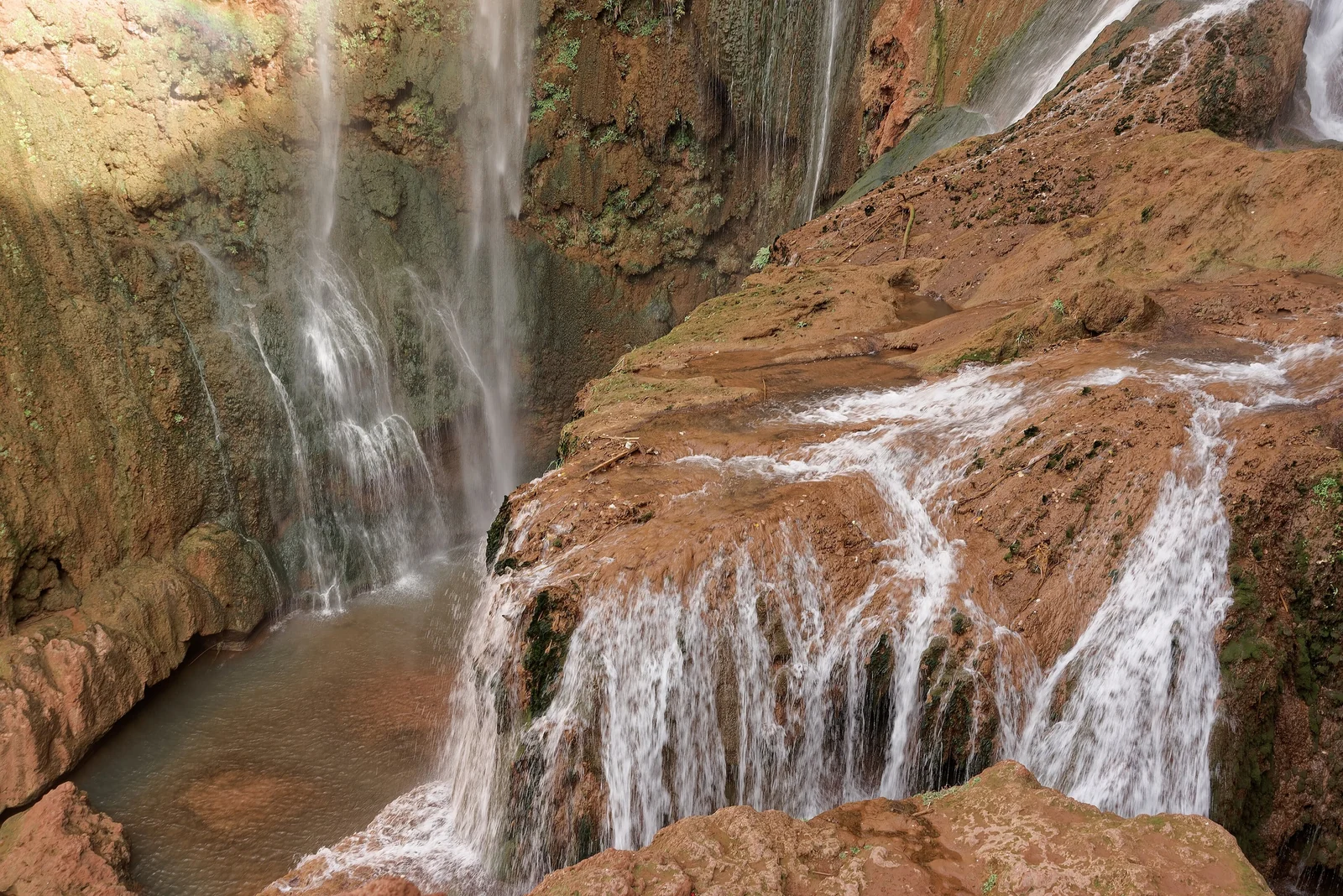
Ouzoud Falls tumble about 110 meters in three main drops into the gorge of the El-Abid River in the Middle Atlas, about 150 kilometers from Marrakesh. It is the most accessible waterfall on this list: a popular day trip from Marrakesh, with paths down to the pools, small boats at the bottom and Barbary macaques in the olive trees along the trail.
Combine it with a trip into the desert: our guide to the Sahara Desert covers Merzouga and the other gateways.
7. Victoria Falls: Not the Tallest, but the Largest Curtain
At about 108 meters, Victoria Falls is shorter than every waterfall above it, but at 1,708 meters wide it forms the largest single sheet of falling water in the world. Known locally as Mosi-oa-Tunya, “the smoke that thunders,” it is shared by Zambia and Zimbabwe and has been a UNESCO World Heritage Site since 1989.
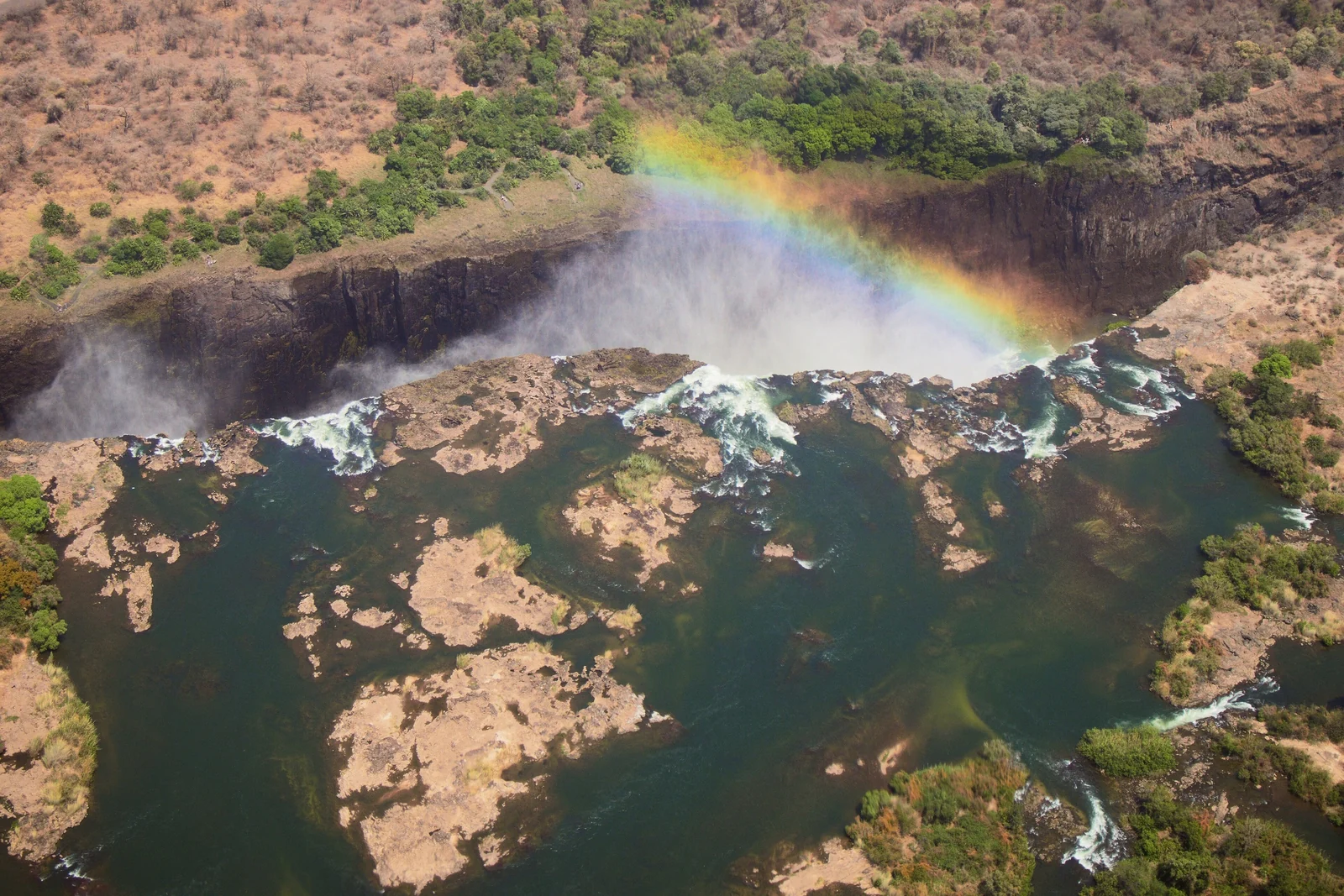
The Zambezi floods from about February to May, peaking in April, when the spray can hide the falls entirely. Lower water later in the dry season shows more of the rock face, especially on the Zambian side.
8. Sipi Falls, Uganda: Three Falls on Mount Elgon
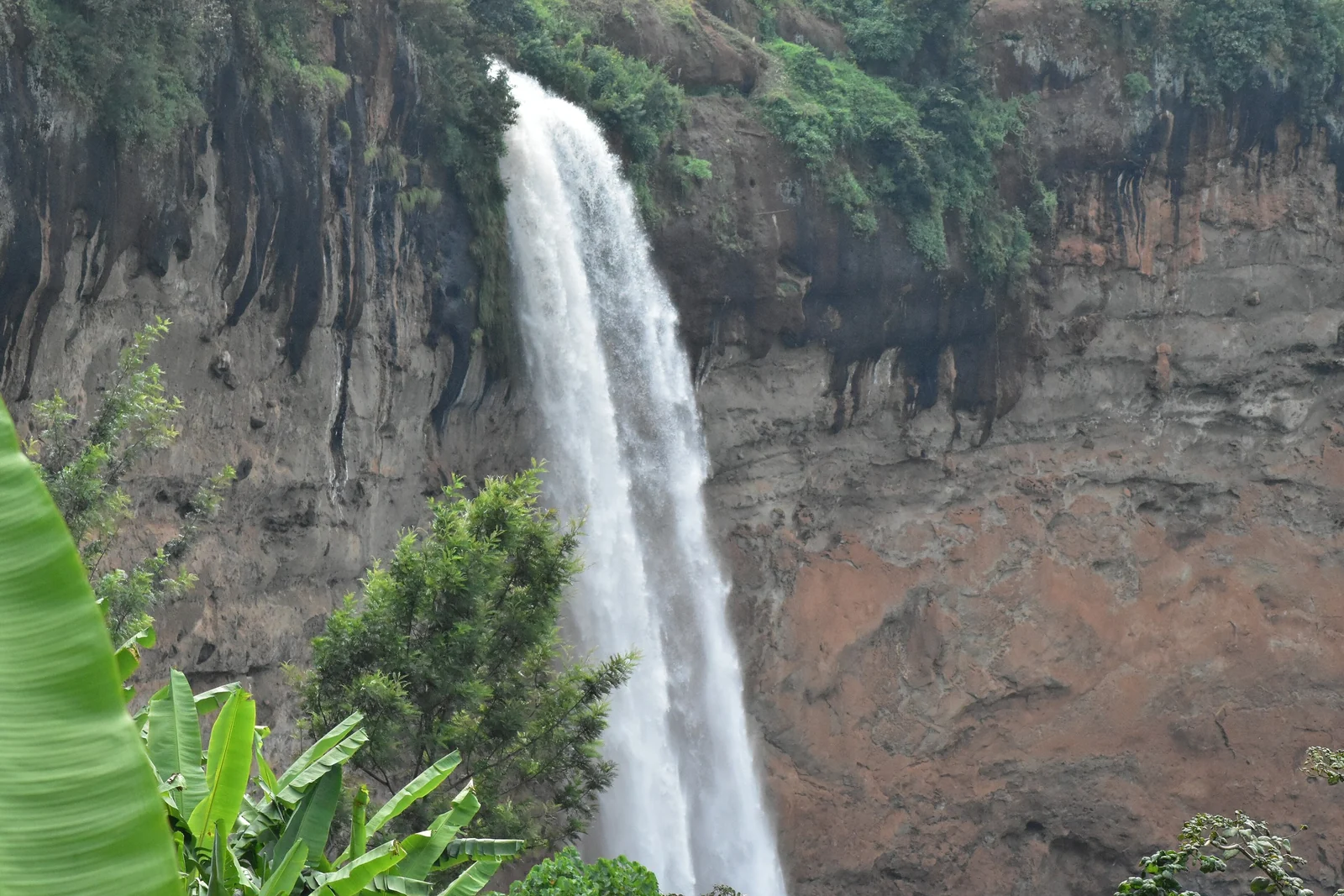
On the slopes of Mount Elgon in eastern Uganda, Sipi Falls is a chain of three waterfalls. The main fall drops about 95 meters, with the others at roughly 85 and 74 meters. Guided walks link all three through smallholdings where farmers grow Bugisu Arabica coffee, and many visitors add a coffee tour.
Planning a Waterfall Trip in Africa
Most of these falls depend on seasonal rain, so the best time to visit is shortly after the local wet season. Here is a rough guide:
- Southern Africa (Tugela, Mutarazi, Maletsunyane): summer rains from about November to March bring the strongest flow; winter can be very cold, and snow is possible in Lesotho.
- Zambia and Tanzania (Kalambo, Victoria Falls): the rainy season runs roughly November to April; high water follows at the end of it.
- Morocco (Ouzoud): spring usually brings the fullest flow and mild temperatures for the walk down.
- Uganda (Sipi): two rainy seasons mean flow is reasonable much of the year, but trails get slippery after heavy rain.
Always use marked viewpoints, keep well back from wet cliff edges and hire a local guide where one is offered. Several of these falls have no safety rails at the top.
A Note on Waterfalls We Left Out
Earlier versions of this list included falls that are not in Africa at all, such as Sekumpul Falls in Bali and Angel Falls in Venezuela, and names we could not verify. We have removed them. We also left out the Livingstone Falls on the lower Congo River: they are a long series of powerful rapids rather than a single tall waterfall. For more of the continent’s landscapes, see our guide to must-see places in Africa or browse all Africa travel guides.
Africa’s Tallest Waterfalls FAQ
What is the tallest waterfall in Africa?
Tugela Falls in South Africa’s Royal Natal National Park is the tallest, with an official total drop of 948 meters over five tiers. A 2016 survey measured about 983 meters, which would make it a contender for the tallest waterfall in the world by total height.
Is Tugela Falls taller than Angel Falls?
It depends on how you measure. Angel Falls in Venezuela has the tallest single uninterrupted drop, about 807 meters, and is usually listed as the world’s highest. Some newer measurements of Tugela’s total height across all tiers come out higher than Angel Falls’ total, but this has not been universally accepted.
Is Victoria Falls the tallest waterfall in Africa?
No. Victoria Falls is about 108 meters high, far lower than Tugela, Mutarazi or Kalambo. It is famous because it is so wide: its 1,708-meter curtain makes it the largest single sheet of falling water on Earth.
When is the best time to see Tugela Falls?
Visit during or just after the summer rains, roughly November to March, when the falls are fullest. In the dry winter months the flow can drop to a trickle and the top may even freeze, though the Amphitheatre views are still spectacular.
Can you hike to the top of Tugela Falls?
Yes. The Sentinel Peak route starts at the Sentinel car park and uses two chain ladders to reach the top of the Amphitheatre and the lip of the falls. It is a high-altitude day hike, so start early, carry warm clothing and check weather conditions first.
Why is Kalambo Falls important?
Besides its single drop of more than 200 meters, Kalambo is a major archaeological site. Researchers found wooden logs worked into a structure at least 476,000 years ago, the oldest known example of wood construction, along with a long record of stone tools.