


Torres del Paine is the trekking heart of Chilean Patagonia, and the first decision is which route to walk. The W trek is the classic: three to five days linking the granite towers, the French Valley and Grey Glacier. The O circuit adds the wild back side of the massif and takes seven to nine days. Short day hikes let you see the best of it from a base in Puerto Natales.
The short answer: choose the W if you have a week or less and want the famous views with beds and meals along the way. Choose the O if you have the time, solid fitness and a taste for solitude. Choose day hikes if you are short on days or hesitant about the weather. This guide compares the three, then covers booking, season, wind, getting there and gear. For the wider country, start with our Chile travel guides or the Chile travel guide.
Torres del Paine at a Glance
The park lies in the Magallanes region of southern Chile, about 112 km (70 miles) north of Puerto Natales and roughly 312 km (194 miles) north of Punta Arenas. It was created in 1959 as Parque Nacional de Turismo Lago Grey, took its present name in 1970, and became a UNESCO Biosphere Reserve in 1978. It covers about 181,000 hectares of mountains, lakes, glaciers and steppe.
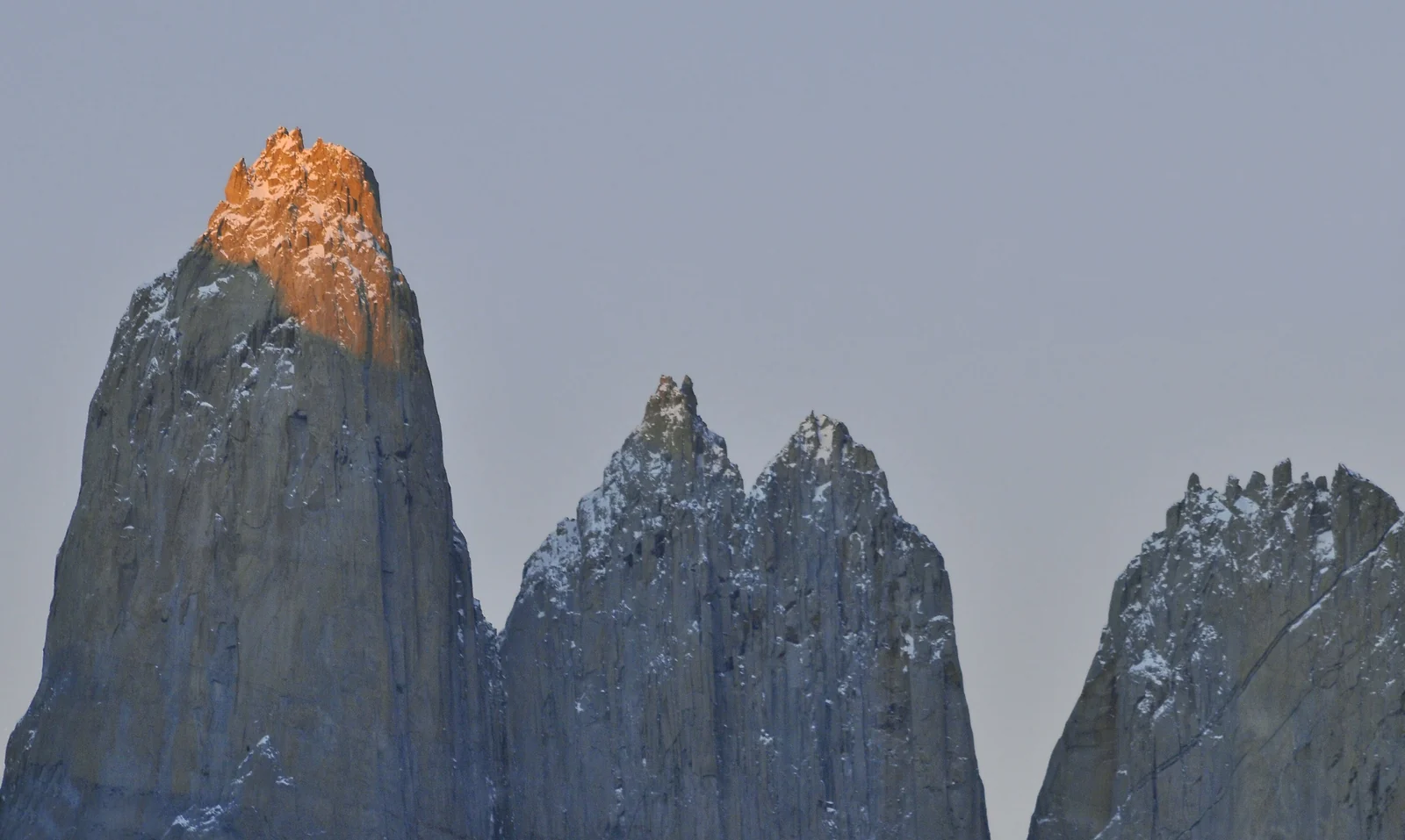
The centerpiece is the Paine Massif. Paine Grande, its highest summit, stands at 2,884 meters, and the Cuernos (the Horns) and the three granite Towers rise almost directly from turquoise lakes. On the western side, Grey Glacier flows from the Southern Patagonian Ice Field into Lago Grey. Guanacos graze the steppe near the entrances, and with luck you will spot a puma or a condor.
W Trek vs O Circuit vs Day Hikes
| W trek | O circuit | Day hikes | |
|---|---|---|---|
| Length | About 80 km (50 miles), 3 to 5 days | About 130 km (80 miles), 7 to 9 days | A few hours to a full day |
| Difficulty | Moderate to demanding; long days, steep sections | Demanding; adds a high pass and remote stretches | Easy to moderate, except the Base Torres climb |
| Highlights | Grey Glacier, French Valley, Base Torres | Everything on the W plus John Gardner Pass and the quiet back side | Mirador Base Las Torres, Lago Grey, Salto Grande |
| Sleeping | Refugios or campsites, booked ahead | Refugios or campsites, booked ahead | Your hotel in Puerto Natales or near the park |
| Crowds | Busy in high season | Much quieter beyond the W section | Busy at the main viewpoints |
| Best for | First-time trekkers with 4 to 5 days | Experienced hikers with a week or more | Short stays, mixed groups |
Distances vary by source, because trails are measured to refugios, campsites or junctions and the numbers rarely match. Treat the figures above as a planning range and carry the official park map. The honest ranking is simple: the W gives you most of the park's best scenery for roughly half the time.
The W Trek, Stage by Stage
The W is named for its shape on the map: three valleys connected by lakeside trail. You can walk it west to east or east to west, which is one reason it suits so many travelers. Most people take four or five days.
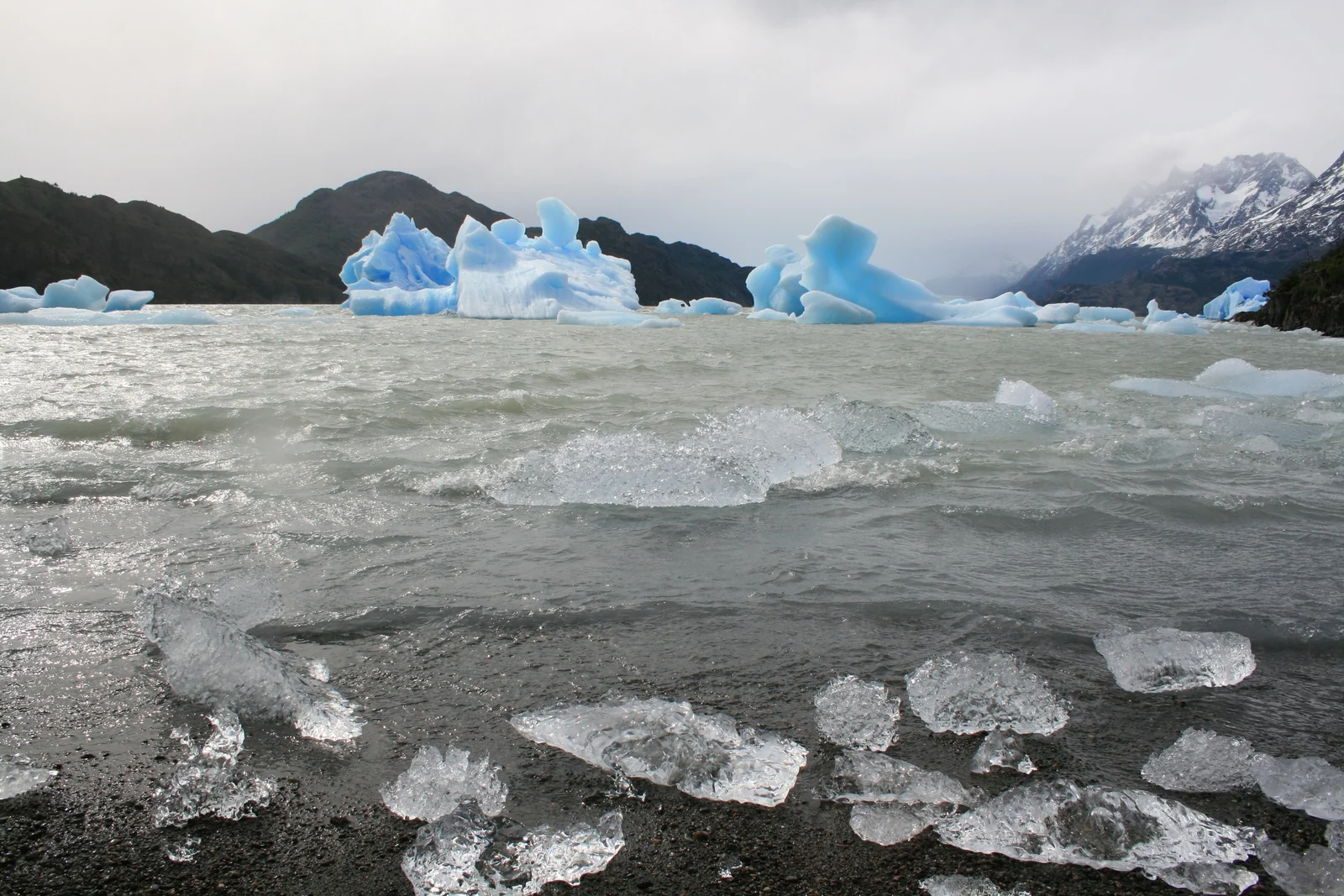
Grey Glacier
The western arm follows Lago Grey to a viewpoint over the glacier, which is about 15 km long. Icebergs often drift in the lake below. It is the gentlest leg in terms of climbing but one of the windiest, since the trail is open to gusts coming off the ice field. Boat trips on the lake are also sold from the Grey area.
French Valley
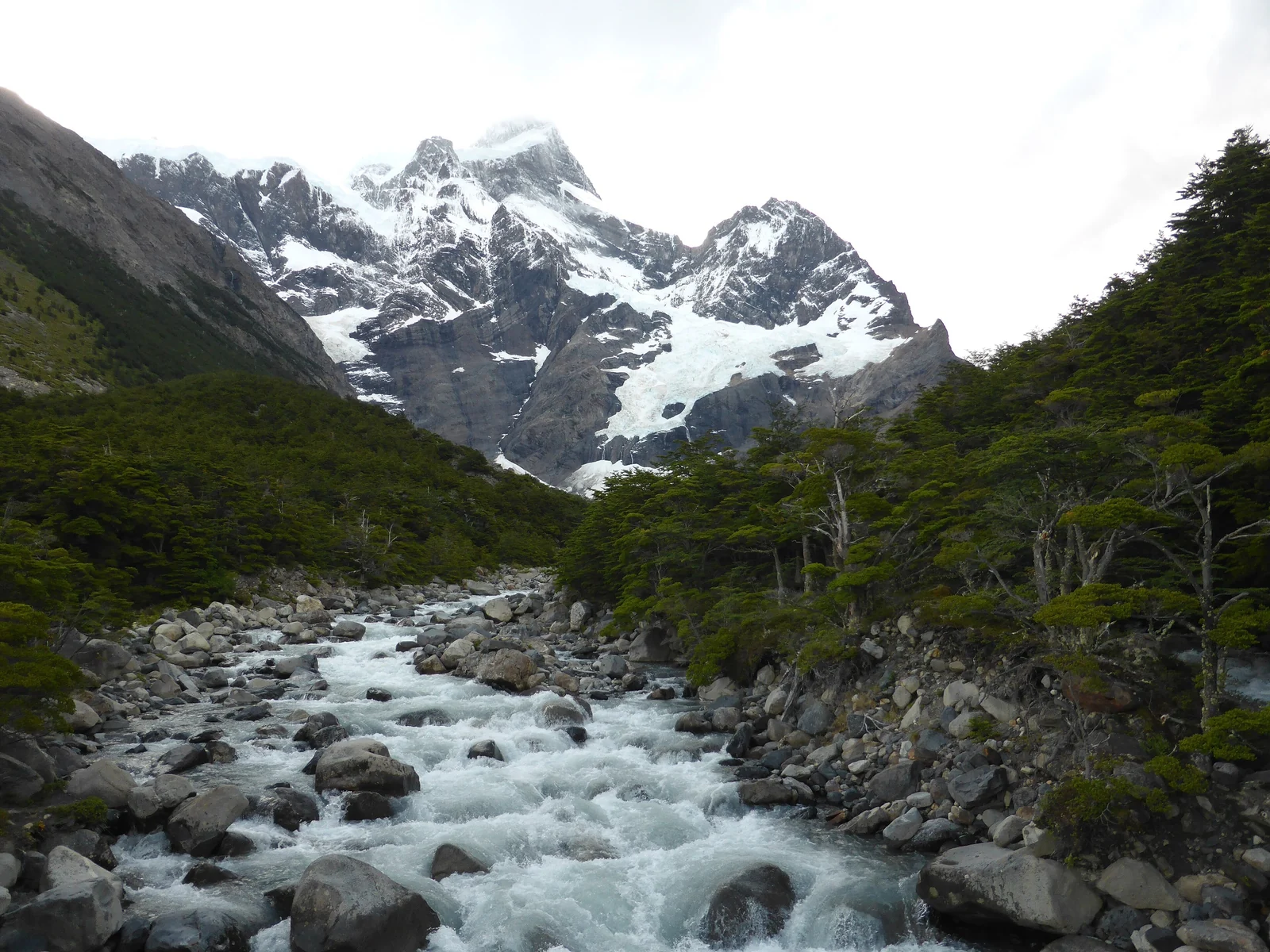
The French Valley (Valle del Francés) is the middle prong. You climb beside a hanging glacier and sheer granite walls, and the ice sometimes breaks away with a sound like distant thunder. The upper viewpoint, Mirador Británico, is the one many hikers call the best moment of the whole W. Leave your heavy pack at the camp below and go up with a daypack.
Los Cuernos and Lake Pehoé
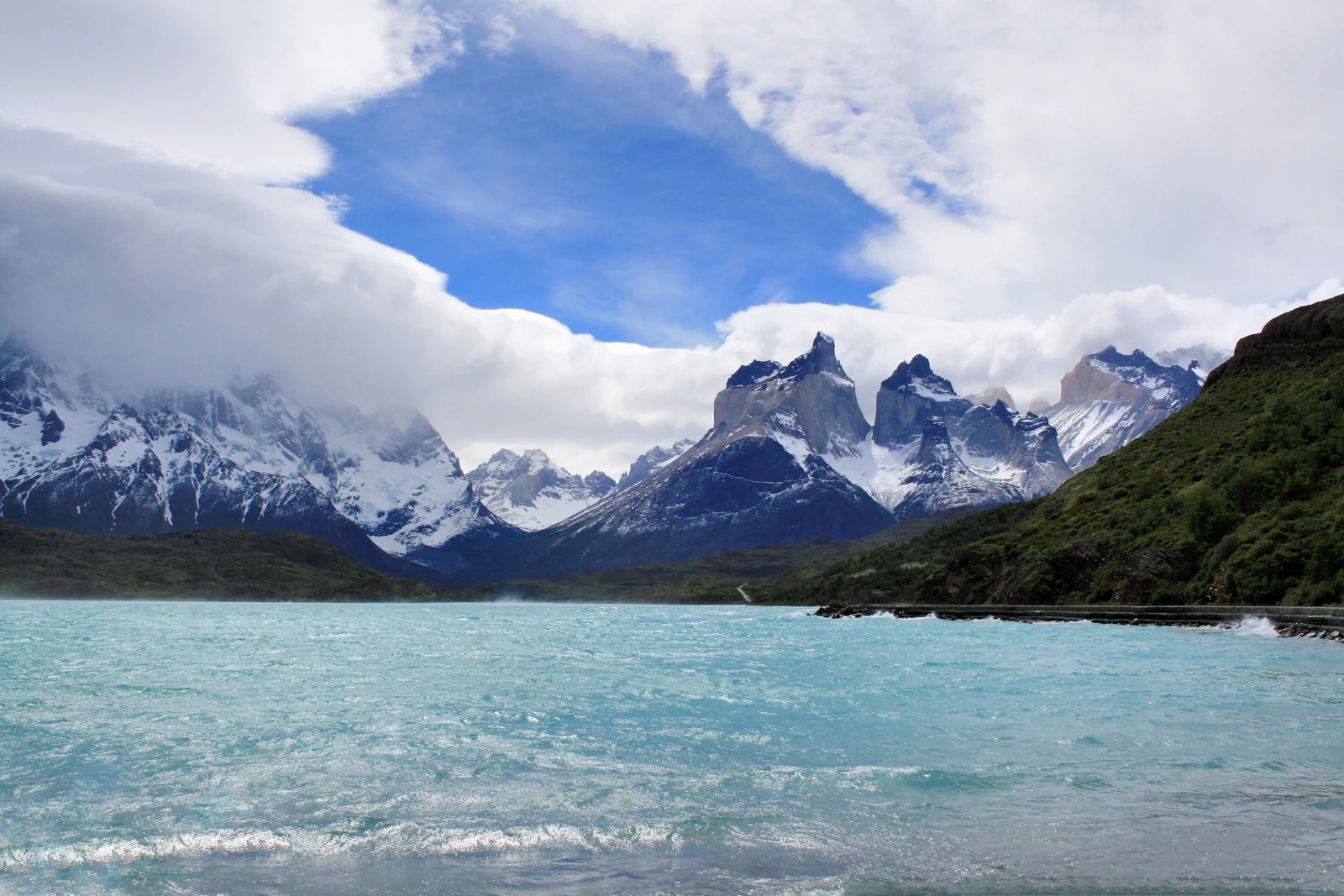
Between the French Valley and the Towers, the trail runs along the lakeshore beneath the Cuernos. The rock has two tones, dark sedimentary caps over pale granite, and the contrast is striking when the sun hits it. The route rolls up and down, so it is slower than it looks on the map.
Base of the Towers
The eastern prong climbs from the valley floor through forest, then up a final boulder field to a lake beneath the three granite Towers. It is steep and makes a long day return from the nearest refugio, so many people sleep high and go up before sunrise for the light on the rock. If clouds hide the Towers, the reward is smaller, so build in a spare day if you can.
The O Circuit: The Back Side of the Massif
The O circuit is the W plus a loop around the north and back of the massif. It must be walked counterclockwise, and it is generally started from the Laguna Amarga side. The crowd thins out once you leave the Towers behind, and the trail turns quieter, wetter and more remote.
The big day is the crossing of John Gardner Pass, the high point of the circuit, with views over the Southern Patagonian Ice Field. It is long, steep and exposed, and it can turn nasty in wind or snow. The descent toward Grey is hard on the knees. After the pass you join the western arm of the W, so the O gives you everything the W does.
The O suits people who have walked multi-day routes before, have booked their nights well ahead, and can handle a day when the weather forces a change of plan. If that is not you, the W is not second best. It is the sensible choice.
Day Hikes and Short Visits
You do not need to sleep in the mountains to see the park. The reservation rule applies to the W and O routes, and day hikes such as the Base Torres trail are treated differently, so check the official park information before you go. Many visitors drive in from Puerto Natales or join a tour that circles the main viewpoints.
- Mirador Base Las Torres: the classic day hike, a long, steep round trip to the lake under the Towers. Start early.
- Lago Grey and Grey Glacier: a shorter walk to viewpoints, or a boat trip on the lake.
- Salto Grande and Mirador Cuernos: an easy walk between Lake Nordenskjöld and Lake Pehoé with views of the Cuernos.
- Roadside viewpoints: for a rest day, the park roads pass several lookouts over the lakes and steppe.
Refugios, Camping and How to Book
Trekking the W or O requires confirmed reservations at authorized refugios or campsites inside the park, according to the official park site. Without them, access to the mountain area is not permitted. Wild camping is not allowed, so there is no improvising a bed along the trail.
A few private operators run the refugios and campsites, so a full route can mean booking with more than one company. Las Torres sells W and O packages through its own site, and other operators handle the western and central sections. Beds and sites are limited and popular dates fill fast, so start as soon as the portals open for the season, usually many months ahead. Opening dates change from year to year, so confirm them directly.
- Refugio: a bed in a bunk room, hot meals and showers. You still need a sleeping bag or liner unless you rent one.
- Campsite: a pitch, sometimes with a rented tent and mat. Cheaper, but you carry or rent more gear.
- Meal plans: usually sold with refugio beds. Camping guests can often buy meals or cook their own.
- Entry ticket: bought separately for the park. Prices and rules have changed in recent years, so check the official site for the current structure.
Plan the sequence of nights carefully. Because beds are sold by night and by operator, a gap on one night can break the whole route.
Best Season and Wind
The main trekking season runs from roughly October or November to March or April. Operators open and close their lodgings on their own calendars, so check dates for the sections you want, especially for the O circuit.
- November to February: long daylight and the best odds of open trails. It is also the busiest period and the windiest.
- Late February to March: a favorite among experienced visitors, with slightly fewer people and the first hints of autumn color.
- Shoulder months: quieter in principle, but with more closures, colder weather and the risk of snow on the pass.
Wind is the weather you will remember. The park is known for strong gusts that peak from November to January, the same months as peak tourism. They can knock you off balance on exposed ridges and make pitching a tent a team sport. Pack a good shell, secure everything and expect rain at least once, even in summer. The classic Patagonian line holds: you can get four seasons in a day.
Getting to Torres del Paine: Puerto Natales and Punta Arenas
The standard route is to fly into Punta Arenas, then continue north by road to Puerto Natales, the gateway town about 112 km from the park. Buses link the two towns, and transfers continue from Puerto Natales to the park entrances. If you are coming from elsewhere in Patagonia, you can also cross from Argentina by road, so check the border options for your route.
Puerto Natales is where you will rent gear, buy supplies and get your final briefing. Stay there before and after the trek unless you have booked a lodge or refugio inside the park. It has plenty of hostels, guesthouses and restaurants, and it is the base for day tours. For more of the region, our feature on glaciers and mountains in Patagonia is a good next read.
Inside the park there are several entrances, with Laguna Amarga serving the Towers and the start of the O. A catamaran crosses Lake Pehoé between Pudeto and Paine Grande, linking the W with the road. The schedule depends on the season, so check the current timetable and book ahead.
Difficulty and Fitness
The W is not technical, but it is long. Days often run well over 15 km with several hours of up and down, usually against the wind. You need to be comfortable walking six to nine hours with a pack.
The O is harder because of the remote sections, higher exposure and the long days around John Gardner Pass. Day hikes are within reach of most active travelers, but the Base Torres climb is steep and long enough to surprise people. Start early, turn around if the weather turns, and remember that rescue takes time in a park this size.
What to Pack for Torres del Paine
- Layers: a base layer, a warm mid-layer and a windproof, waterproof shell. Cotton is a mistake.
- Footwear: broken-in boots or sturdy trail shoes with good grip, plus camp shoes and warm socks.
- Poles: they help on the descents and in the wind.
- Sleeping gear: a sleeping bag rated for cold nights if you camp; a liner if you stay in refugios.
- Rain cover: a pack cover and dry bags for electronics and spare clothes.
- Sun and water: sunscreen, sunglasses, a hat and a reusable bottle. Ask rangers or your operator about current water advice.
- Extras: a headlamp, a small first-aid kit, a printed map and some cash for supplies.
Care with fire matters here. Large fires in 2005 and late 2011 burned big areas of the park, and both were linked to careless visitors. Use stoves only where they are allowed, and never light open fires.
Torres del Paine FAQ
How many days do you need for the W trek?
Most people take four or five days, though fit hikers can do it in three. Five days gives you a rest cushion and a better chance of clear weather at Base Torres and the French Valley.
Is the W trek or the O circuit better?
The W has the headline scenery in less time, so it suits most first visits. The O adds the quiet back side and John Gardner Pass but needs more time, fitness and planning. If you have only a week, choose the W and spend any spare days on day hikes.
Do you need reservations to trek in Torres del Paine?
Yes. For the W and O, the official park information says you need confirmed bookings at authorized refugios or campsites inside the park, and you will not be admitted to the mountain area without them. Day hikes are handled differently, so check the official page for current rules.
When is the best time to hike Torres del Paine?
November to March is the main season, with the longest days and the most open facilities. It is also the windiest and busiest period. Late February and March often feel a little calmer. Check opening dates for the O circuit in particular.
Can you visit Torres del Paine in a day?
Yes. From Puerto Natales you can take a day tour or drive in, then walk to Mirador Base Las Torres, see Lago Grey or stop at the lakes. It is a long day on the road and the main hike is steep, so start early.
Where should you stay before and after the trek?
Puerto Natales is the usual base. It has gear rental, supermarkets, restaurants and a range of guesthouses, and it sits about 112 km from the park. Punta Arenas, about 312 km away, is where most flights arrive. Pairing Patagonia with the north? See Uyuni or Atacama.
How windy is Torres del Paine?
Very. Gusts are strong across the park and peak from November to January. Expect hard wind on the Grey stretch, the Towers viewpoint and open lakeshore sections. A windproof shell, poles and a sturdy tent make a real difference.