


The best hidden places to watch the northern lights share three things: they sit near the auroral oval, they are genuinely dark, and they are far quieter than famous hubs like Tromsø, Rovaniemi or Reykjavík. Each of the 10 spots below meets those tests, and each has a good chance of clear skies in the season.
We have left Canada off this list on purpose. Yellowknife, Whitehorse, Churchill and Wood Buffalo National Park get their own detailed guide to aurora hunting in Canada’s Arctic. Here, the focus is Scandinavia, the North Atlantic, Alaska and Scotland.
How We Chose These Northern Lights Spots
“Hidden” here means quieter, not unknown. Every place on the list is reachable by regular transport, has somewhere to stay, and is documented by tourism boards or scientific sources as a good aurora location. We favored places with low light pollution, a record of clear skies or a strong local aurora climate, and fewer tour buses than the big names.
| Place | Country | Main season | Why it stands out |
|---|---|---|---|
| Abisko | Sweden | Late Aug to early Apr | Rain-shadow “blue hole” of clearer skies |
| Kilpisjärvi | Finland | Late Aug to early Apr | Fell landscape, very high aurora frequency |
| Inari | Finland | Late Aug to early Apr | Sámi culture and huge Lake Inari |
| Senja | Norway | Sep to Mar | Dramatic coast, far quieter than Tromsø |
| Lyngen Alps | Norway | Sep to Mar | Peaks rising straight from the fjord |
| Svalbard | Norway | Nov to Feb | Polar night; aurora even around midday |
| Kangerlussuaq | Greenland | Sep to Apr | Stable inland climate with many clear nights |
| Mývatn | Iceland | Sep to mid-Apr | Dark volcanic landscapes in North Iceland |
| Coldfoot and Wiseman | USA (Alaska) | Late Aug to early Apr | Remote Brooks Range above the Arctic Circle |
| Shetland | UK (Scotland) | Oct to Mar | Britain’s darkest northern skies, the “Mirrie Dancers” |
Hidden Northern Lights Spots in Sweden and Finland
1. Abisko National Park, Sweden
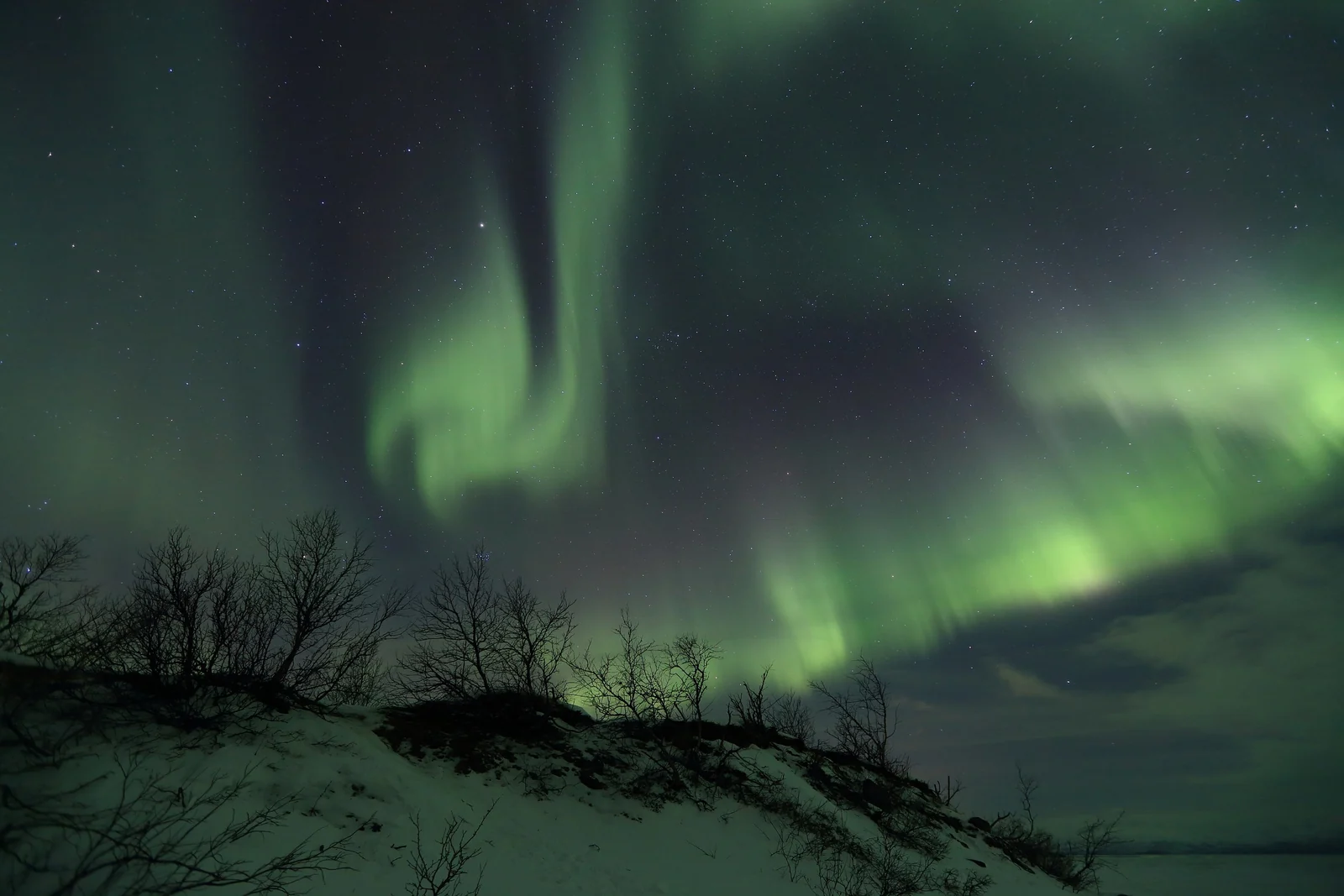
Abisko lies about 200 kilometers north of the Arctic Circle, on the shore of Lake Torneträsk. Mountains along the Norwegian border often block moist air from the Atlantic, creating a rain shadow that locals call the “blue hole,” a patch of clearer sky over the valley. A chairlift climbs Mount Nuolja to the Aurora Sky Station, run by the Swedish Tourist Association, at around 900 meters. Abisko has a train station on the line between Kiruna and Narvik.
2. Kilpisjärvi, Finland
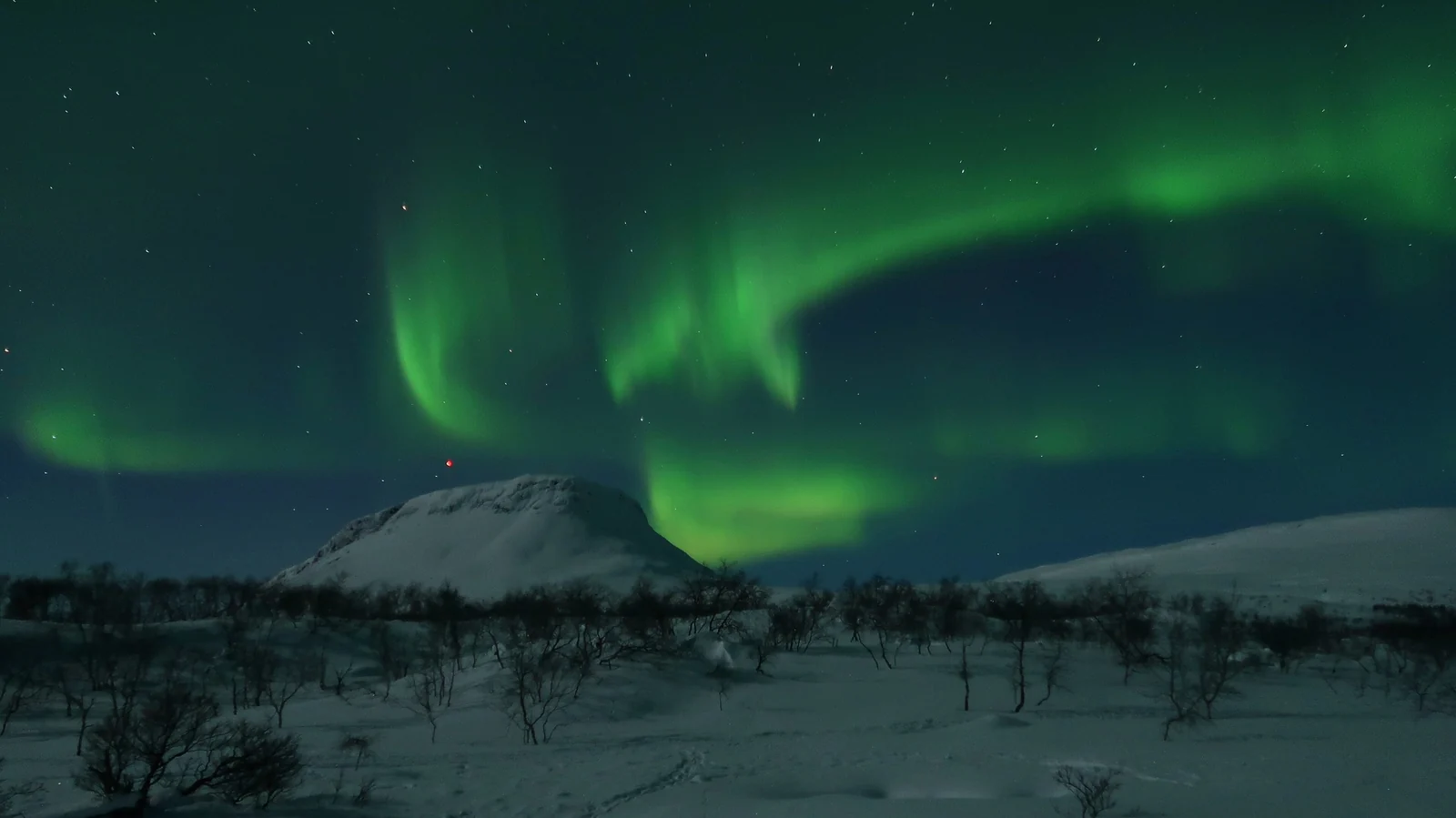
Kilpisjärvi is a tiny village in Finland’s far northwest “arm,” close to the point where Finland, Sweden and Norway meet. It sits beneath Saana, a fell sacred to the Sámi. According to the Finnish Meteorological Institute, auroras appear on about three out of four clear nights in northern Lapland’s Kilpisjärvi and Utsjoki area. It is a long drive from the nearest airports, which is exactly why the skies stay so dark.
3. Inari, Finland
Inari is the cultural center of the Finnish Sámi, home to the Siida Sámi museum and nature center and the Sámi Parliament building, Sajos. The village sits on Lake Inari, Finland’s third-largest lake, whose frozen surface makes a wide, open viewing platform in winter. The nearest airport is at Ivalo, a short drive south. Inari gives you a quieter alternative to the busy resorts farther south in Lapland.
Northern Norway and Svalbard Beyond Tromsø
4. Senja, Norway
Senja is Norway’s second-largest island, south of Tromsø and linked to the mainland by bridge at Finnsnes. Its outer coast, followed by the Senja National Tourist Route, is a wall of steep peaks and small fishing villages facing the open sea. Because the island is less developed than the Tromsø area, you can often find a dark beach or fjord viewpoint with nobody else around.
5. Lyngen Alps, Norway
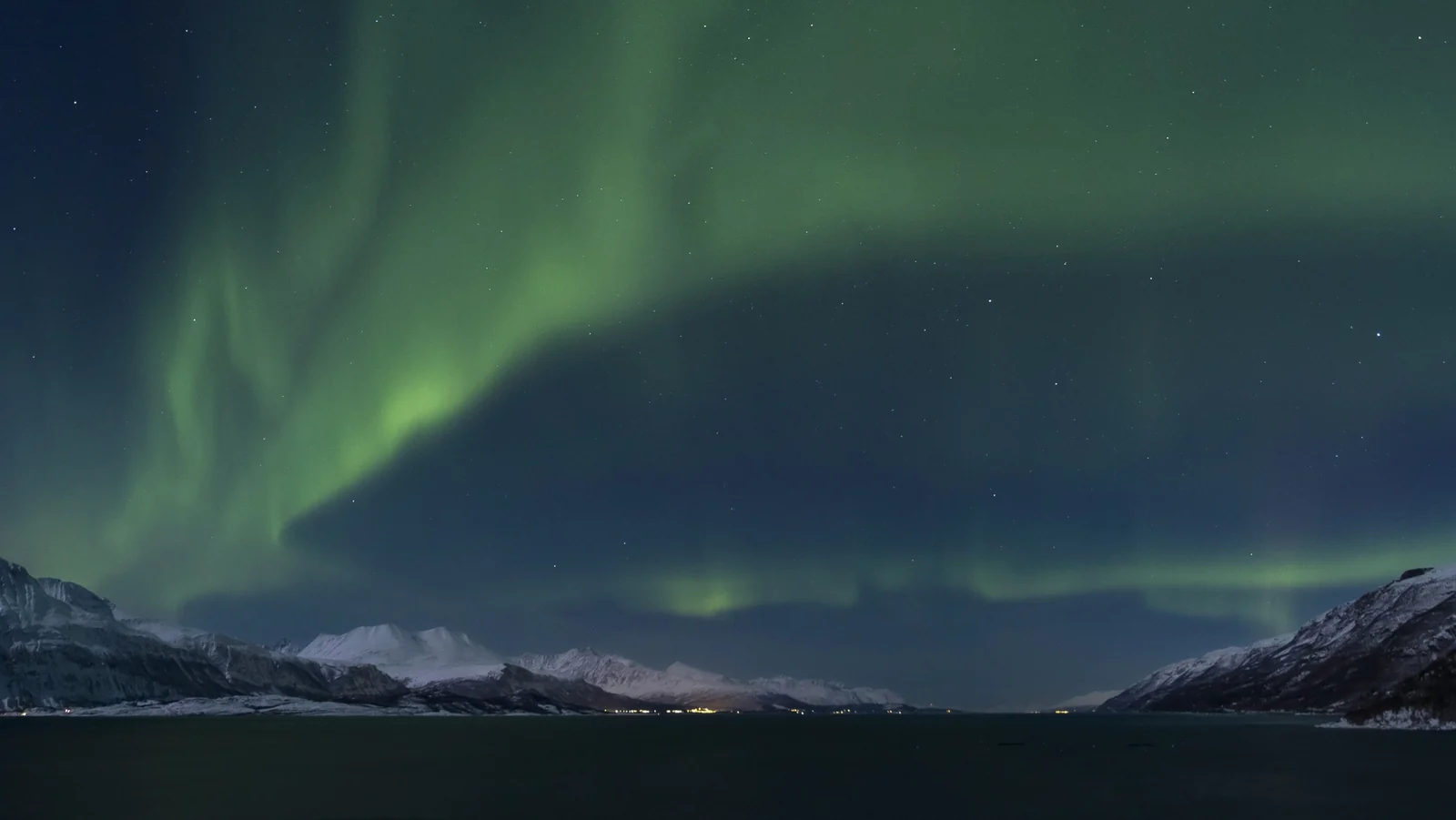
East of Tromsø, the Lyngen peninsula rises straight out of the fjord to peaks of more than 1,800 meters. The combination of sea, glaciers and jagged ridges makes one of the most dramatic aurora backdrops in Norway. Lyngen is best known for ski touring, but its small settlements and cabins also make a peaceful base for night-sky watching.
6. Svalbard, Norway
At about 78°N, Longyearbyen on Svalbard has polar night from roughly mid-November to the end of January, when the sun stays below the horizon all day. That makes it one of the few places where you can see the aurora around midday. Svalbard sits north of the main auroral oval, so displays are often softer, but the setting is unforgettable. Flights run from Oslo and Tromsø, and because of polar bears you should join a guided tour for anything outside the settlement.
Greenland and Iceland: Quiet Aurora Spots in the North Atlantic
7. Kangerlussuaq, Greenland
Kangerlussuaq lies at the head of a long fjord in West Greenland, close to the edge of the ice sheet. Its inland position gives it a stable, dry climate and many clear nights, which is why it is one of Greenland’s best-known aurora bases. It was long the country’s main international gateway; since Nuuk’s new airport opened in November 2024, transatlantic flights mostly land in Nuuk, so check current domestic connections. Read more about the island in our guide to Greenland’s glaciers. Many travelers from Europe fly in via Denmark, so our Copenhagen travel guide is useful if you plan a night or two there on the way.
8. Lake Mývatn, North Iceland
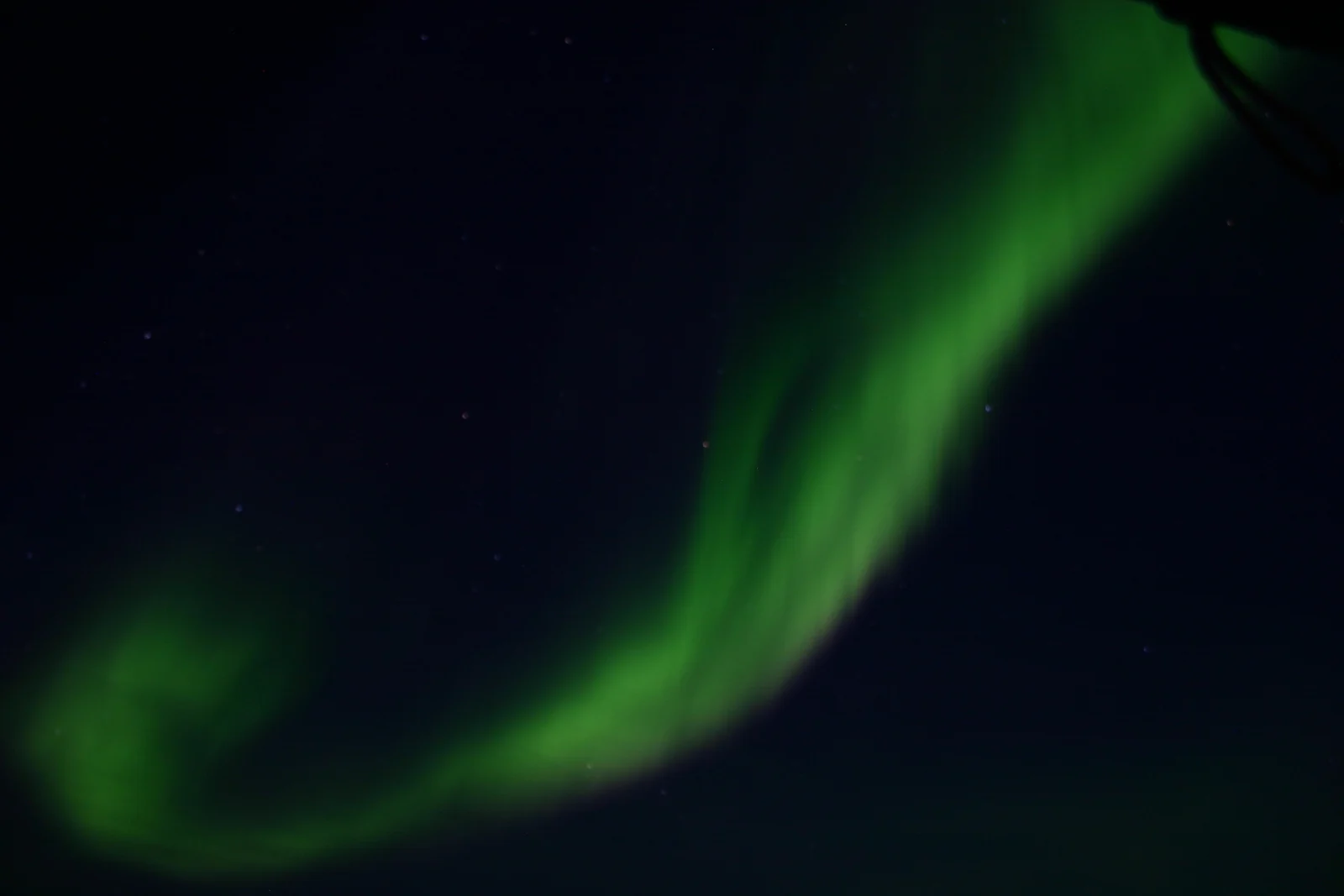
Most visitors chase the aurora on day trips from Reykjavík. North Iceland is quieter. Lake Mývatn, roughly 100 kilometers east of Akureyri by road, is surrounded by lava fields, pseudocraters and geothermal areas with very little artificial light. You can end a cold night in the Mývatn Nature Baths. For more of Iceland’s geothermal side, see our guide to Iceland’s hot springs.
Alaska: Beyond Fairbanks
9. Coldfoot and Wiseman, Alaska
Fairbanks is Alaska’s aurora capital, but for real darkness head north on the Dalton Highway. Coldfoot, a former mining camp and truck stop in the Brooks Range north of the Arctic Circle, and the tiny village of Wiseman just beyond it have almost no light pollution and a mountain skyline. The Dalton is a remote, largely gravel road, so most visitors come on guided trips by van or small plane from Fairbanks.
Scotland: Shetland’s Mirrie Dancers
10. Shetland, Scotland
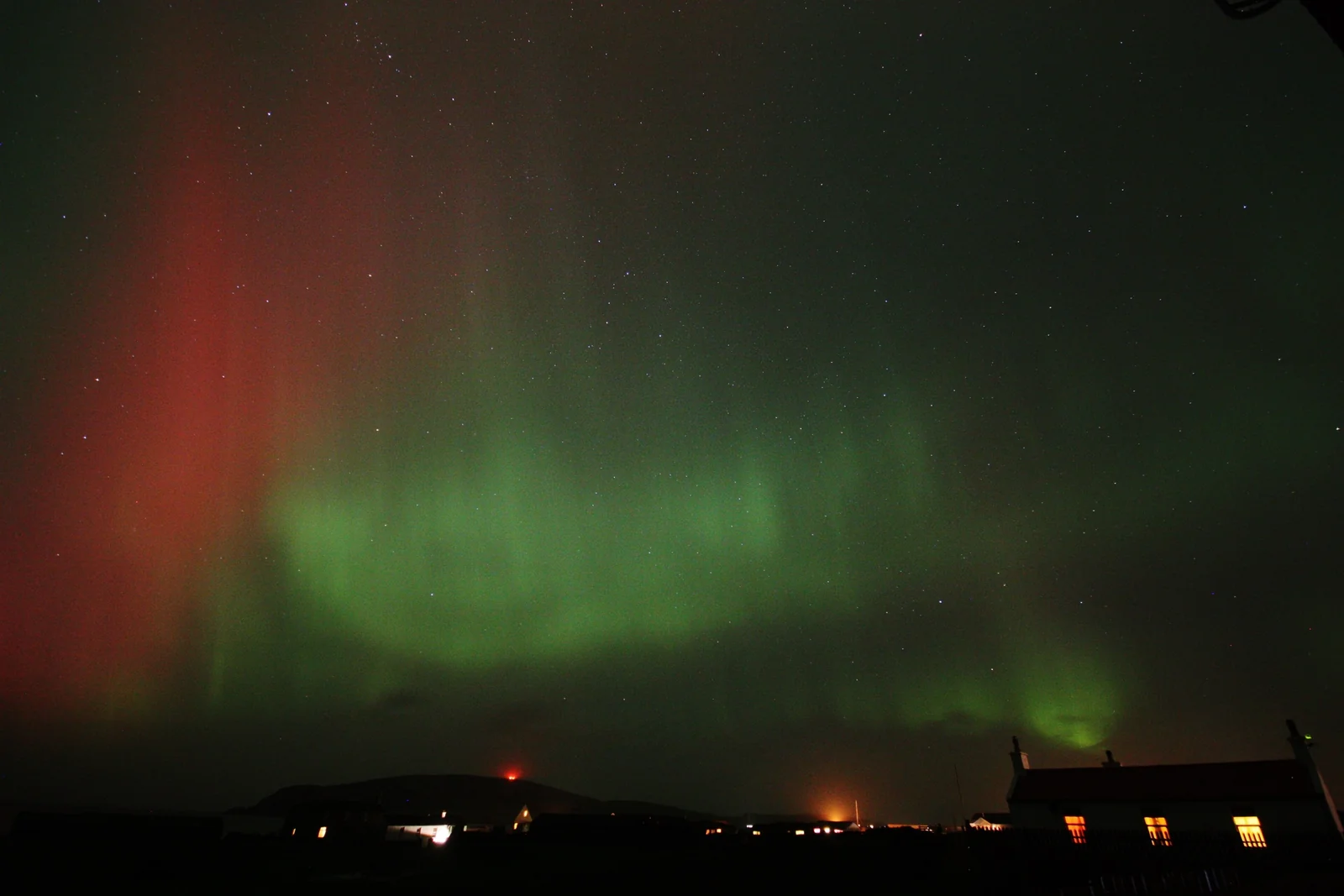
At about 60°N, Shetland is the UK’s northernmost archipelago, and locals call the aurora the “Mirrie Dancers.” It is farther south than the other places on this list, so you need stronger geomagnetic activity, but the islands’ dark countryside and long northern horizons make up for it. Shetland’s tourism site recommends October to March and places like Eshaness with a clear view north. Browse more of the country in our Scotland guides.
Best Time to See the Northern Lights Away From the Crowds
Across the Arctic, aurora season runs from roughly late August or September to March or early April; summer nights are simply too bright. Around the September and March equinoxes, geomagnetic activity tends to be a little higher, and in Scandinavia those months also avoid the deepest cold and the Christmas crowds.
- Stay several nights: three or more nights in one place gives you a buffer against cloud.
- Watch the moon: nights around the new moon make faint displays easier to see and photograph.
- Check two forecasts: space weather, such as NOAA’s Space Weather Prediction Center, and the local cloud forecast.
- Be patient late: activity often peaks between about 10 p.m. and 2 a.m. local time.
Tips for Aurora Hunting in Remote Places
Quiet places come with fewer services. Book accommodation early in small villages, rent a car only if you are confident driving on snow and ice, and carry warm layers, a headlamp with a red-light mode and spare batteries. Never stop on a road to look at the sky; pull fully off at a safe parking spot. Respect private land and Sámi reindeer areas, and keep drones grounded where they are restricted.
Hidden Northern Lights Places FAQ
Where can I see the northern lights without crowds?
Choose smaller places near the auroral oval rather than big hubs. Abisko, Kilpisjärvi and Inari in Scandinavia, Senja and the Lyngen Alps in Norway, Kangerlussuaq in Greenland, Mývatn in Iceland, Coldfoot in Alaska and Shetland in Scotland all offer dark skies with fewer visitors.
What is the best hidden place in Europe for the northern lights?
Abisko in Swedish Lapland is a strong choice because its rain-shadow “blue hole” often gives clearer skies than surrounding areas, and it is easy to reach by train. Kilpisjärvi in Finland is even quieter and, according to Finnish meteorologists, sees auroras on most clear nights.
When is the best month to see the northern lights?
Any month from September to March can be excellent in the Arctic. Around the equinoxes in September and March, activity tends to be slightly higher and temperatures are milder. December and January offer the longest nights, but often more cloud in coastal areas.
Can you see the northern lights in Scotland?
Yes. Shetland, Orkney and the far north of mainland Scotland can see the aurora when geomagnetic activity is moderate to strong. Shetland, known locally for its “Mirrie Dancers,” has dark countryside and open northern horizons, and October to March is the best period.
Is it possible to see the northern lights during the day?
Only where it is dark during the day. On Svalbard, polar night lasts from about mid-November to late January, so the sky is dark around midday and auroras can appear then. Elsewhere, daylight overwhelms the aurora even when activity is present.
How many nights do I need to see the northern lights?
Plan at least three nights in one location, and more if you can. The aurora depends on both solar activity and clear skies, and even the best places have cloudy spells. Several nights greatly improve your chances of at least one good display.