


Iceland’s hot springs and underground rivers are two sides of the same story. Heat from below warms groundwater into steaming pools and rivers, while meltwater from glaciers seeps through porous lava and resurfaces, decades later, as some of the clearest water on Earth. Lava tubes add a third wonder: tunnels left behind by rivers of molten rock.
This guide explains how these features form and where you can safely experience them, from a hot river in a mountain valley to snorkeling between two tectonic plates at Silfra. It covers managed spas, local pools, lava caves and the safety rules that matter in a landscape that is still very much alive.
Why Iceland Has So Many Hot Springs
Iceland sits on the Mid-Atlantic Ridge, where the North American and Eurasian plates are pulling apart, and above a volcanic hotspot. Rainwater and meltwater sink into cracked rock, are heated at depth and rise again as hot springs, steam vents, mud pots and geysers.
Icelanders have used this heat for centuries, first for bathing and washing and today for heating most homes. Some springs are close to boiling, so the rule is simple: only bathe where water is known to be safe, and never test an unfamiliar pool with your hand.
Best Geothermal Lagoons and Pools in Iceland
Blue Lagoon, Reykjanes Peninsula
Iceland’s most famous spa sits in a lava field on the Reykjanes Peninsula, not far from Keflavík Airport. Its milky-blue water is geothermal seawater rich in silica. Since late 2023, a series of eruptions on the nearby Sundhnúkur crater row has forced several temporary closures, so check the spa’s status and official civil-protection updates before you travel.
Secret Lagoon, Flúðir
The Secret Lagoon, or Gamla laugin (“the old pool”), was built in 1891 and is considered Iceland’s oldest swimming pool. It is fed by hot springs in a small geothermal area where a little geyser erupts every few minutes, and it makes an easy stop on a Golden Circle day.
Mývatn Nature Baths, North Iceland
In the volcanic landscape around Lake Mývatn, these baths offer a quieter, northern alternative to the Blue Lagoon. They fit best into a multi-day trip around the Ring Road or a stay near Akureyri.
Reykjavík’s public pools
For the most local experience, skip the spas and go where Icelanders go. Visit Reykjavík lists 18 geothermal swimming pools in the capital area, most with hot tubs and lanes. They are inexpensive, open year-round and a good place to see everyday Icelandic life.
Reykjadalur: Bathing in a Hot River
Reykjadalur, meaning “Steam Valley,” is a geothermal valley above the town of Hveragerði, about 45 kilometers from Reykjavík. A marked trail of roughly 3.5 kilometers each way climbs past steam vents and bubbling pools to a stream warmed by hot springs, where boardwalks and simple screens let you bathe in the river itself.
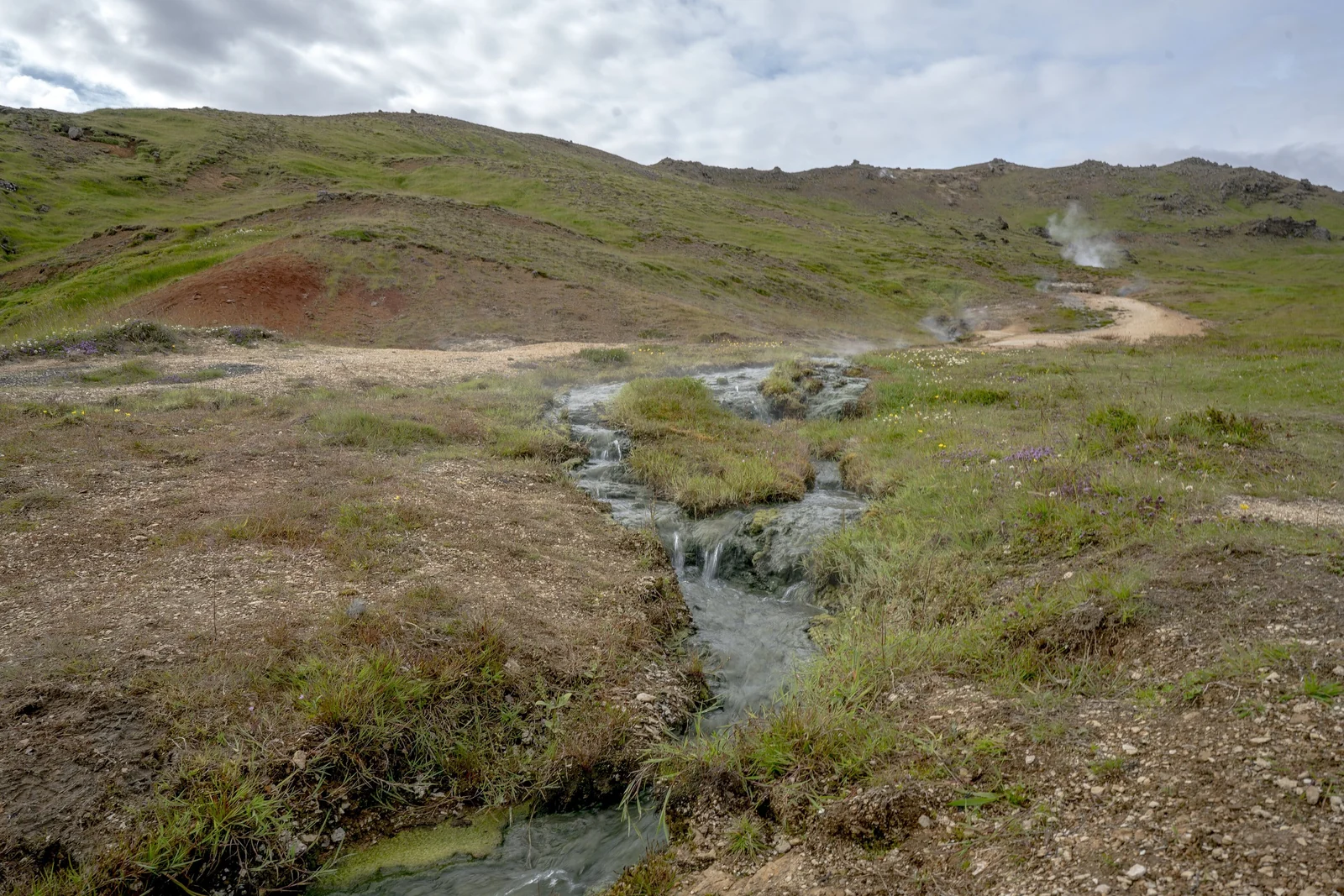
Allow around three hours for the round trip and a soak. Water temperature varies along the stream, so move upstream for warmer water and downstream for cooler. Stay on the path: the ground around the springs can be thin and scalding.
Silfra: Where Iceland’s Underground Water Resurfaces
Iceland’s most famous “underground river” is not a river in a cave, but water moving slowly through rock. Meltwater from the Langjökull ice cap sinks into porous lava and travels around 50 kilometers underground, a journey that takes decades, before emerging in springs at the northern end of Lake Þingvallavatn.
One of those outflows fills Silfra, a water-filled fissure in the rift valley of Þingvellir National Park. Filtered by lava for so long, the water is extraordinarily clear, with visibility often quoted at over 100 meters. It stays at around 2–4°C all year, so snorkelers and divers wear drysuits and must go with a licensed operator.
Because Silfra lies in the gap between the North American and Eurasian plates, you are often told you can touch two continents at once. Strictly, the fissure is within the wide boundary zone between the plates, but the setting is still one of the most memorable swims in the world.
Lava Caves: Rivers of Fire Turned to Tunnels
Lava tubes form when the surface of a lava flow cools into a crust while molten rock keeps flowing underneath. When the eruption ends and the lava drains away, a hollow tunnel is left behind. Iceland has hundreds of them.
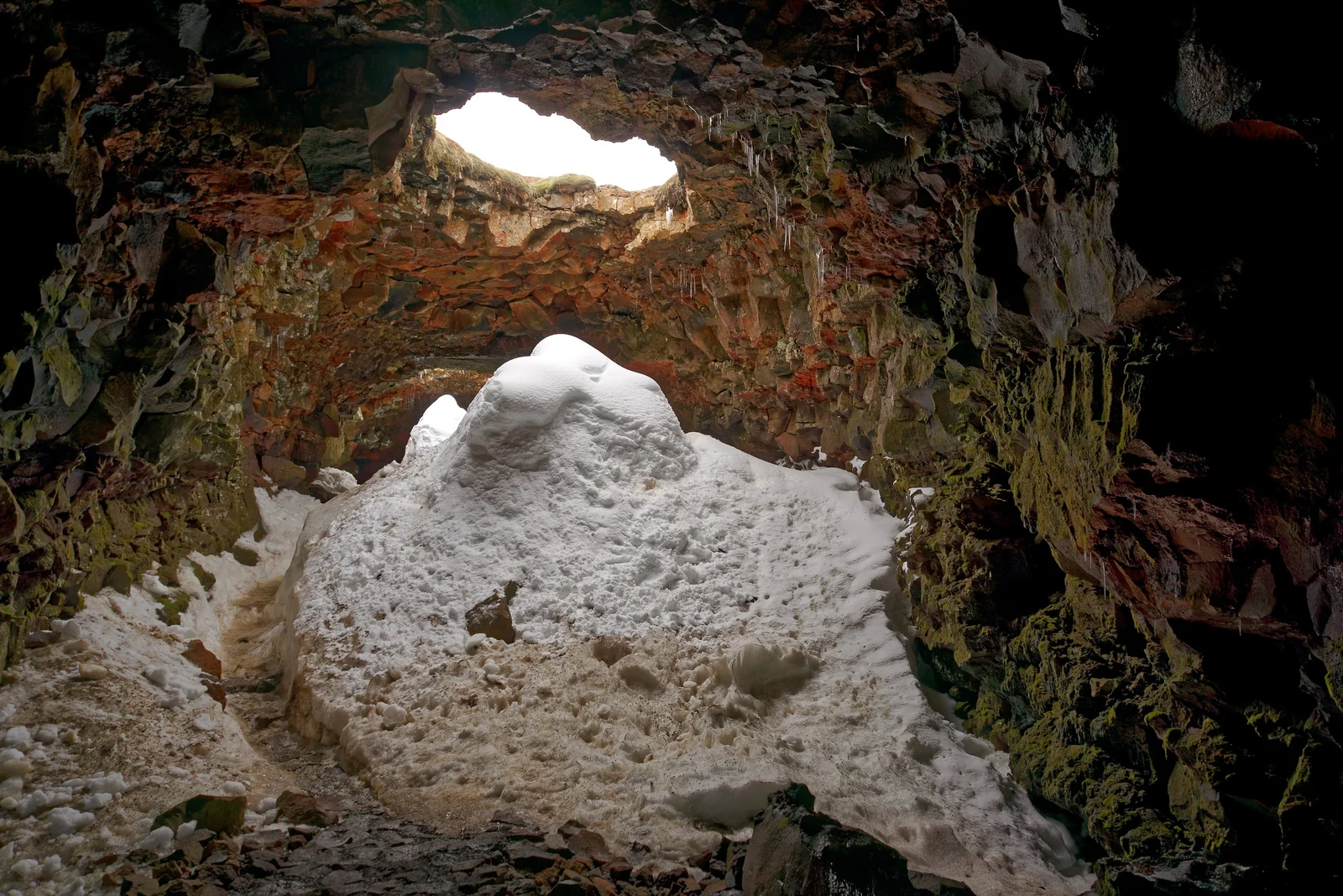
- Raufarhólshellir: about 1,360 meters long and within easy reach of Reykjavík, with guided tours on walkways.
- Víðgelmir: in the Hallmundarhraun lava field in West Iceland, about 1,585 meters long and the largest lava cave in the country by volume.
- Ice caves: a different phenomenon, formed by meltwater inside glaciers such as Vatnajökull. They change every season and should only be visited with a qualified guide, mainly in winter.
Deildartunguhver: Europe’s Most Powerful Hot Spring
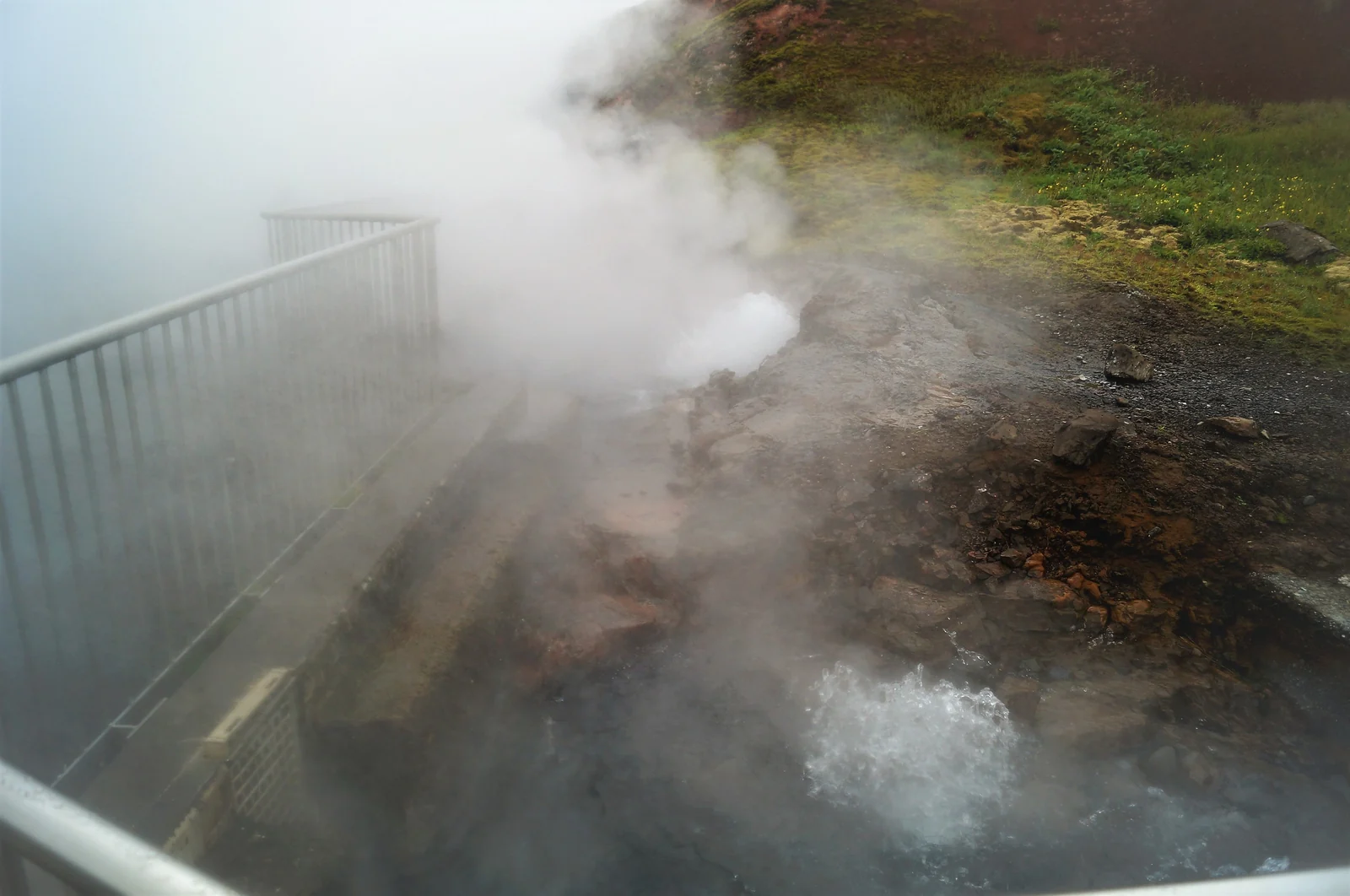
In Reykholtsdalur, West Iceland, Deildartunguhver is the highest-flow hot spring in Europe, pouring out around 180 liters of water per second at close to boiling point. Much of it is piped to heat homes in the towns of Borgarnes and Akranes. You cannot bathe in the spring itself, but a short path lets you watch it steam up close.
Safety and Etiquette at Iceland’s Hot Springs
- Shower first: at pools and spas, you must wash thoroughly without swimwear before entering. Staff take this seriously.
- Stay on marked paths: geothermal crust can be thin, and water or mud underneath can cause serious burns.
- Respect closures: private land, fragile vegetation and changing temperatures close some springs. Follow signs.
- Check conditions: use Safetravel.is for weather, road and volcanic alerts, especially on the Reykjanes Peninsula.
- Go guided underground: caves, ice caves and Silfra all require proper equipment and local expertise.
- Leave no trace: no soap in natural pools, no litter and no moving stones or cave formations.
Best Time to Visit Iceland’s Geothermal Sites
| Season | What to expect |
|---|---|
| Summer (June to August) | Long days, open highland roads, easiest hiking to Reykjadalur |
| Autumn (September to October) | Fewer visitors and the start of northern lights season |
| Winter (November to March) | Steaming pools in snow, northern lights, ice cave tours; short days and icy roads |
| Spring (April to May) | Lengthening days; trails can be muddy as snow melts |
Hot water feels best in cold weather, and a winter soak under the aurora is hard to beat. For more aurora ideas see our list of hidden places to watch the northern lights. If you are comparing destinations, our guides to Norway’s turquoise waters, Greenland’s glaciers and Antarctica’s volcanic hot springs explore similar landscapes.
Iceland Hot Springs FAQ
Can you swim in any hot spring in Iceland?
No. Many springs are close to boiling, some sit on fragile or private land and others are closed for safety. Bathe only at established pools, spas and known sites such as the Reykjadalur hot river, and follow any signs or closures.
Is Silfra an underground river?
Not exactly. Silfra is a water-filled fissure in Þingvellir National Park. Its water comes from the Langjökull ice cap and travels for decades through porous lava underground before surfacing, which is why it is so clear. You can snorkel or dive there with a licensed operator.
How cold is the water at Silfra?
Silfra stays at around 2–4°C all year. Snorkelers and divers wear drysuits with thermal layers underneath, supplied by the tour operator. Operators set minimum age, health and experience requirements, and divers need a drysuit certification, so check the rules when you book.
Is the Blue Lagoon open despite the eruptions?
The Blue Lagoon has stayed open most of the time, but eruptions on the Reykjanes Peninsula since 2023 have caused several temporary closures and evacuations. Check the spa’s official website and Safetravel.is shortly before your visit, and book flexible tickets if you can.
What is the Reykjadalur hot river hike like?
It is a marked trail of about 3.5 kilometers each way from the edge of Hveragerði, with a steady climb at the start. Most people take under an hour each way. The warm stream at the top has boardwalks and screens for changing. Bring a towel and wear sturdy shoes.
Can you visit lava caves in Iceland without a guide?
Some caves can be entered independently, but many are fragile or have uneven, icy floors. The easiest option is a guided tour of a developed cave such as Raufarhólshellir or Víðgelmir, which provide helmets, lights and walkways. Never enter an unknown cave alone.