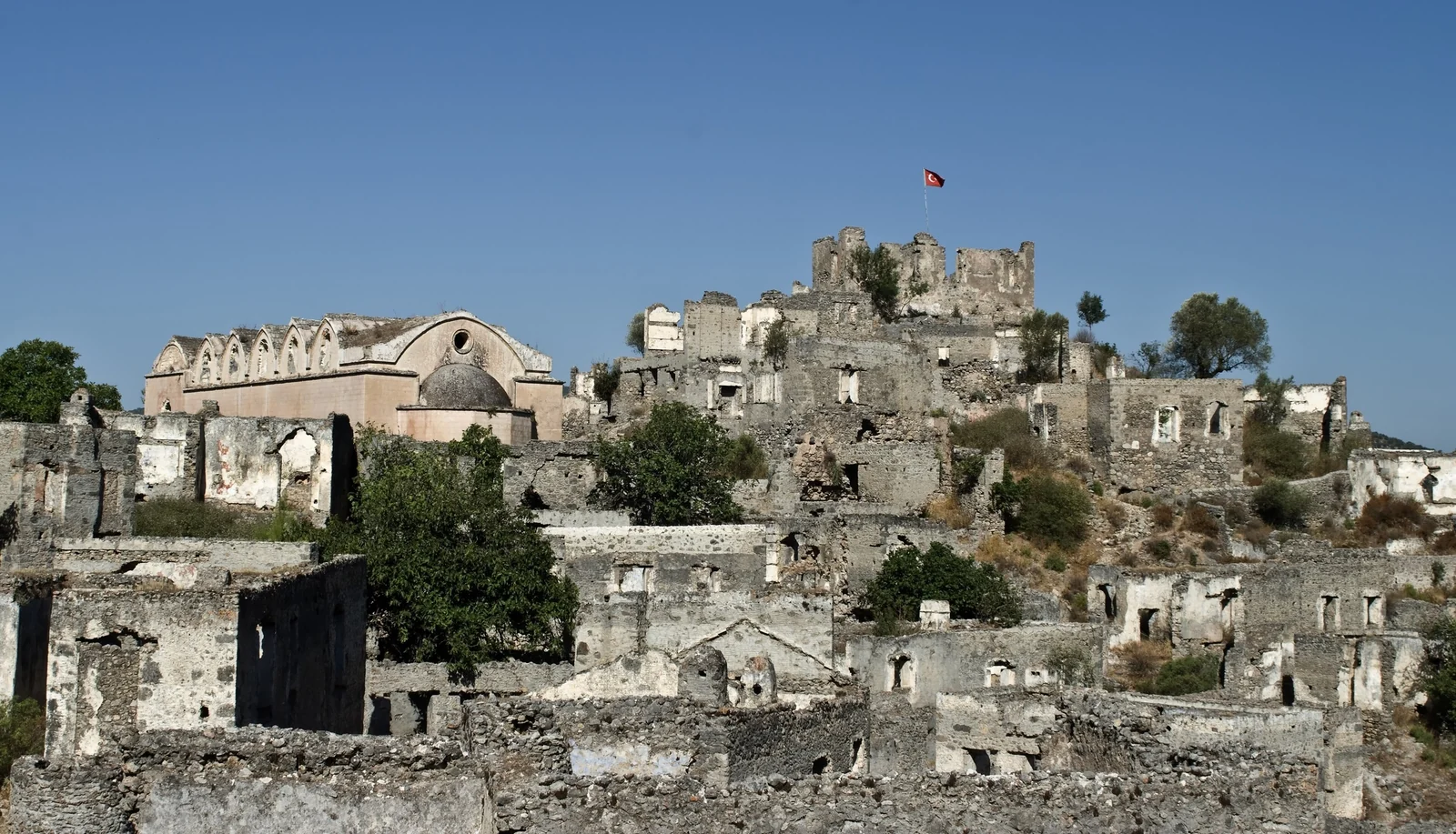
Kayaköy (also called Levissi) is a ghost village on a hillside about 8 km south of Fethiye, in southwest Türkiye. Hundreds of stone houses and two Greek Orthodox churches stand roofless in the open, left behind after the 1923 population exchange between Greece and Türkiye. You can reach it by minibus or car from Fethiye, Ölüdeniz or Hisarönü in well under an hour.
Plan on two to three hours, a hat and a full water bottle. Go early or late in the day, because there is almost no shade among the walls. This guide covers the history, how to get there, what to look at, how to combine the village with Ölüdeniz and the Lycian Way, and how Kayaköy compares with other abandoned villages around the Mediterranean.
The history of Kayaköy and Levissi
The village grew over many centuries as a Greek Orthodox settlement in the hills above the Fethiye coast. The valley had a Christian bishopric by around 640 AD, and the town you see today took its shape mostly in the 19th century, after an earthquake in 1856 and a fire in Fethiye in 1885 pushed the area to rebuild. By some accounts more than 6,000 Greek residents lived here, in a place with more than 20 churches and chapels. Sources disagree on exact numbers, so treat any single figure with caution.
Greeks and Muslims shared this part of the coast for generations. That changed with the First World War and the Greco-Turkish War that followed. Under the convention signed at Lausanne in 1923, Orthodox Christians in Türkiye were to move to Greece, and Muslims in Greece were to move the other way. The wider exchange uprooted several hundred thousand people on both sides, and Levissi emptied between 1922 and 1923. Its residents were resettled in Greece. The population exchange did not ask anyone how they felt about leaving.
Muslim families arriving from Greece were offered the empty houses, but most did not stay. The steep stone town was hard to farm from and built for a different way of life. A damaging earthquake in 1957 then struck the already abandoned buildings, and roofs and upper floors fell in for good. The place was later renamed Kayaköy, and a small modern village grew up in the valley beside it.
Kayaköy today: a museum village
Today Kayaköy is protected as a museum village and historical monument, and roughly 500 houses survive as ruins under state protection. A few restored buildings are lived in, and the lower edge of the site has a handful of cafes and stalls selling handmade goods. Past that line, the hillside belongs to the walls and the wild thyme.
The protection means two things for visitors. You can wander freely, but the ruins are fragile, so climbing on walls is a bad idea. The setting also remains unpolished. There are few signs and almost no reconstruction, which is exactly what makes it feel honest. Plans for hotel and tourism development on parts of the site have been discussed in the past, so check the current situation before you go.
The history has found its way into literature, too. Louis de Bernières set his novel Birds Without Wings in a fictional village that Kayaköy is widely presumed to have inspired. If you read it before your trip, the empty lanes feel far more crowded.
How to get to Kayaköy from Fethiye, Ölüdeniz and Hisarönü
Kayaköy sits in the Fethiye district of Muğla Province. The easiest base is Fethiye, and Ölüdeniz and Hisarönü are close on the same road network. Pick the option that matches where you are staying.
| Starting point | By dolmuş (minibus) | By car or taxi | On foot |
|---|---|---|---|
| Fethiye | Frequent minibuses from town; about half an hour | A short drive south, around 8 km | Not practical |
| Hisarönü | Local minibuses run along the road to Kayaköy | A few minutes by road | Possible, but roadside walking is dull |
| Ölüdeniz | Minibuses via Hisarönü, sometimes with a change | A short drive, usually under half an hour | Lycian Way, around 7 km one way |
Dolmuş minibuses are the budget choice and are used by locals every day. There is a stop near the entrance, and the driver will tell you where to get off if you say the village name. Timetables and frequencies shift with the season, so ask at your hotel or the minibus station about the last return trip. Do not leave this to chance in the evening.
With a car you have more freedom and can add other stops on the same day. There is parking by the site. A taxi from Fethiye or Ölüdeniz is easy to arrange and worth considering if you want to start early, when the light is soft and the tour groups have not arrived yet.
Entry, tickets and opening hours
The ruins are run as a protected site with a modest entry charge, paid at the gate. The amount changes, and printed figures vary widely between guides, so I will not quote one here. A national museum pass has been accepted at the ticket office in the past, which can save money if you are visiting several state-run sites in Türkiye. Ask on arrival.
Opening hours are typically daytime, with a closing time in the early evening. Check the current hours before you plan a sunset visit, since closing times can shift between seasons. Some visitors report that the lanes can be reached outside ticketed hours, but that is not something to rely on. Respect any barriers or signs you meet.
What to see in Kayaköy
The Upper Church (Taxiarchis)
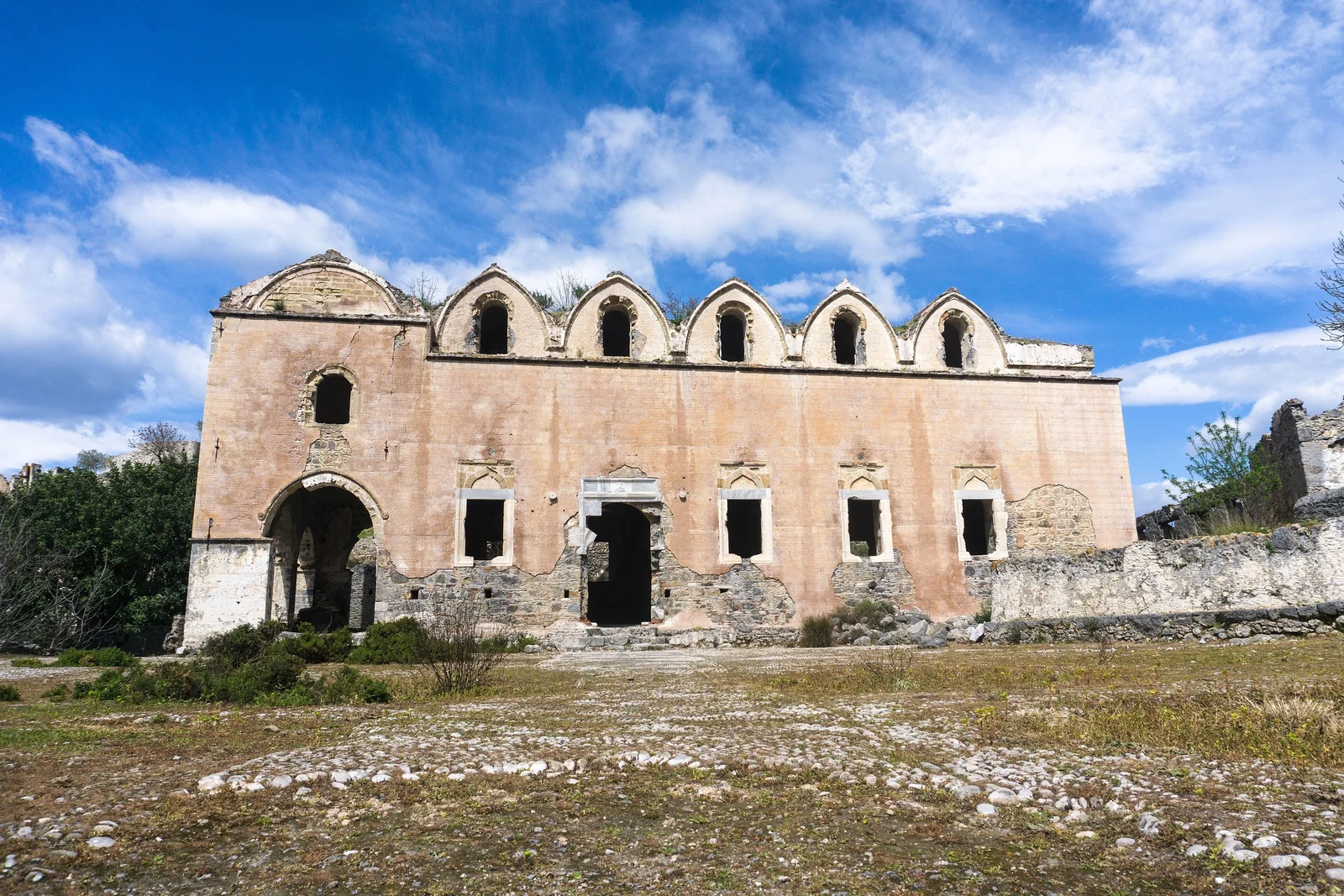
The big church of the Archangels is the dominant building and the first thing your eye lands on. Its tall façade stands over the ruins with arched niches along the roofline. It is the most complete building in the village and the best place to take in the proportions of what was once a prosperous town. Step inside to see how much the roofless walls still say about the space.
The Lower Church (Panagia Pyrgiotissa)
The second church sits lower on the slope, closer to the village center. It is smaller and more broken. Visit both churches, even if you are tired. They show how much the community invested in its religious life, and the contrast between the two makes the story easier to read.
The hillside houses and lanes
The houses are the real attraction. Most were built of local stone with plastered walls, small windows and arched doorways. Climb past the lower streets and you reach a rocky ridge where a flag flies over the top terrace. From there, the whole valley opens out and the scale of the village finally registers.
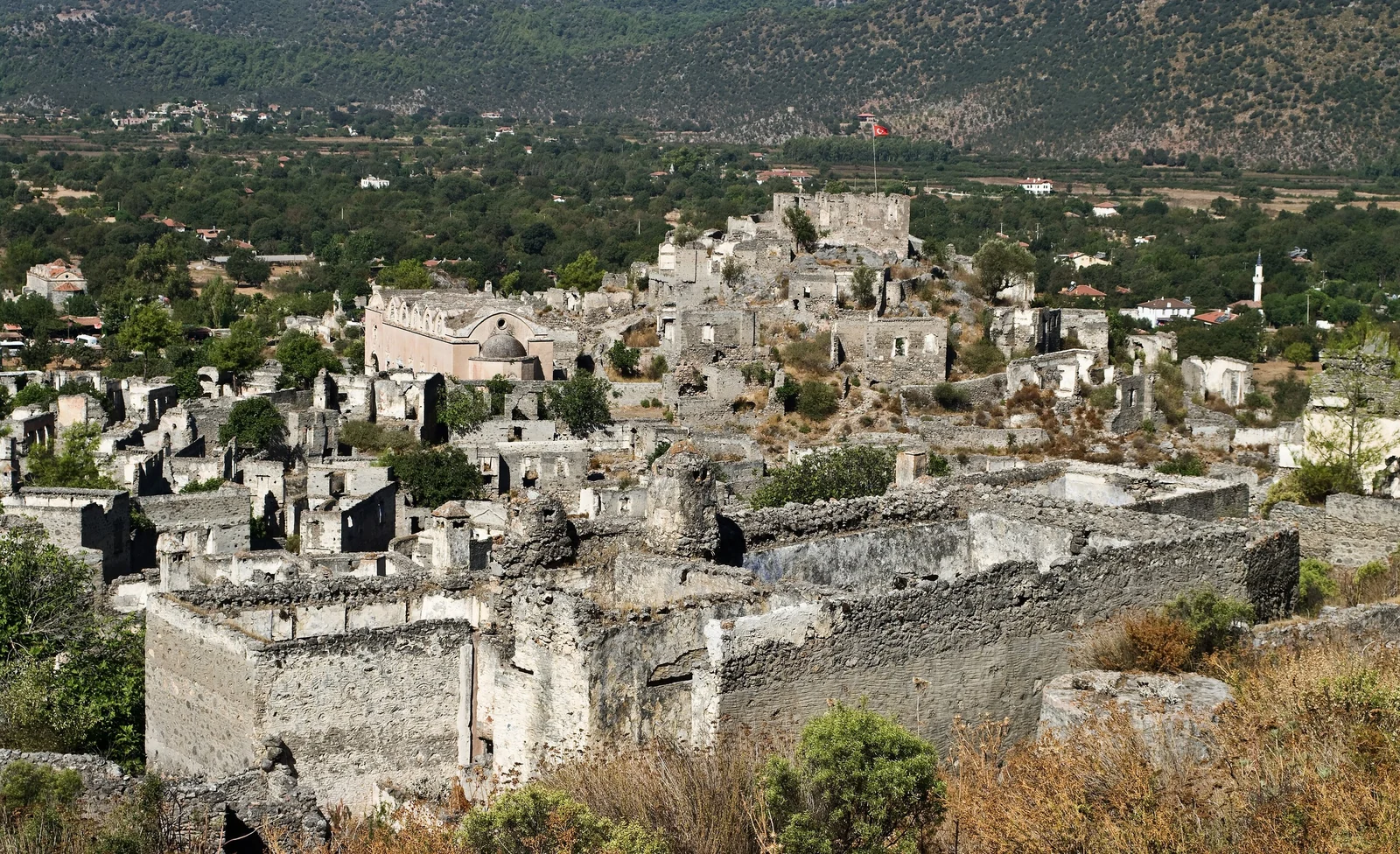
Look for small details as you go: niches in walls, fireplaces high up in broken rooms, old cisterns and a historic fountain in the center. There is also a small private museum about the town's history, which is worth a stop if you want names and dates to hang the walls on. Opening arrangements there are separate from the main site.
Walking, heat and the best time to go
Wear closed shoes with a good grip. The paths are rocky and steep in places, and loose stones are easy to slip on. A long afternoon here in July or August can be punishing, because there is little shade and the stone gives back the heat. Spring and autumn are the most comfortable seasons, and early morning or late afternoon is better than midday at any time of year.
Bring water, sun protection and a snack, because refreshments are limited once you are among the ruins. Allow two to three hours for a proper loop, a little longer if you climb to the top terrace and add the museum. Winter is quieter and greener, but days are short and rain can make the paths slick, so allow extra time and keep an eye on the weather.
Combine Kayaköy with Ölüdeniz, Butterfly Valley and the Lycian Way
Kayaköy is a half-day stop, so it pairs well with the coast. Ölüdeniz, with its Blue Lagoon and long beach, is the obvious partner. Lay out a day with the ruins in the morning and a swim in the afternoon, and you get two very different sides of this coast without much driving.
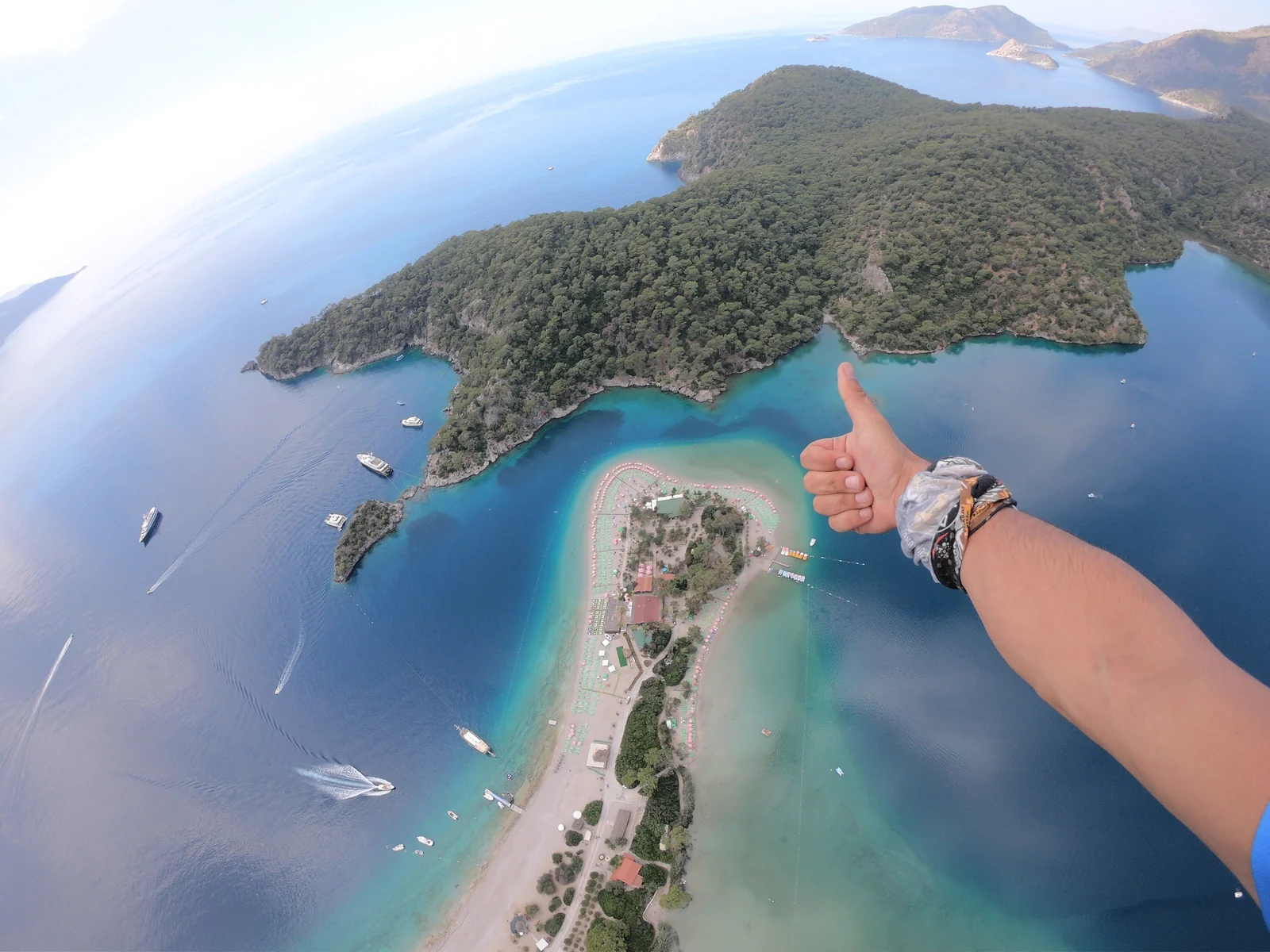
Butterfly Valley is a steep-sided cove below the cliffs near Ölüdeniz. It is usually reached by boat from the Ölüdeniz area in season, so check local boat schedules, and there is also a steep, demanding trail for confident hikers. It makes a good counterpoint to the dry stone of Kayaköy.
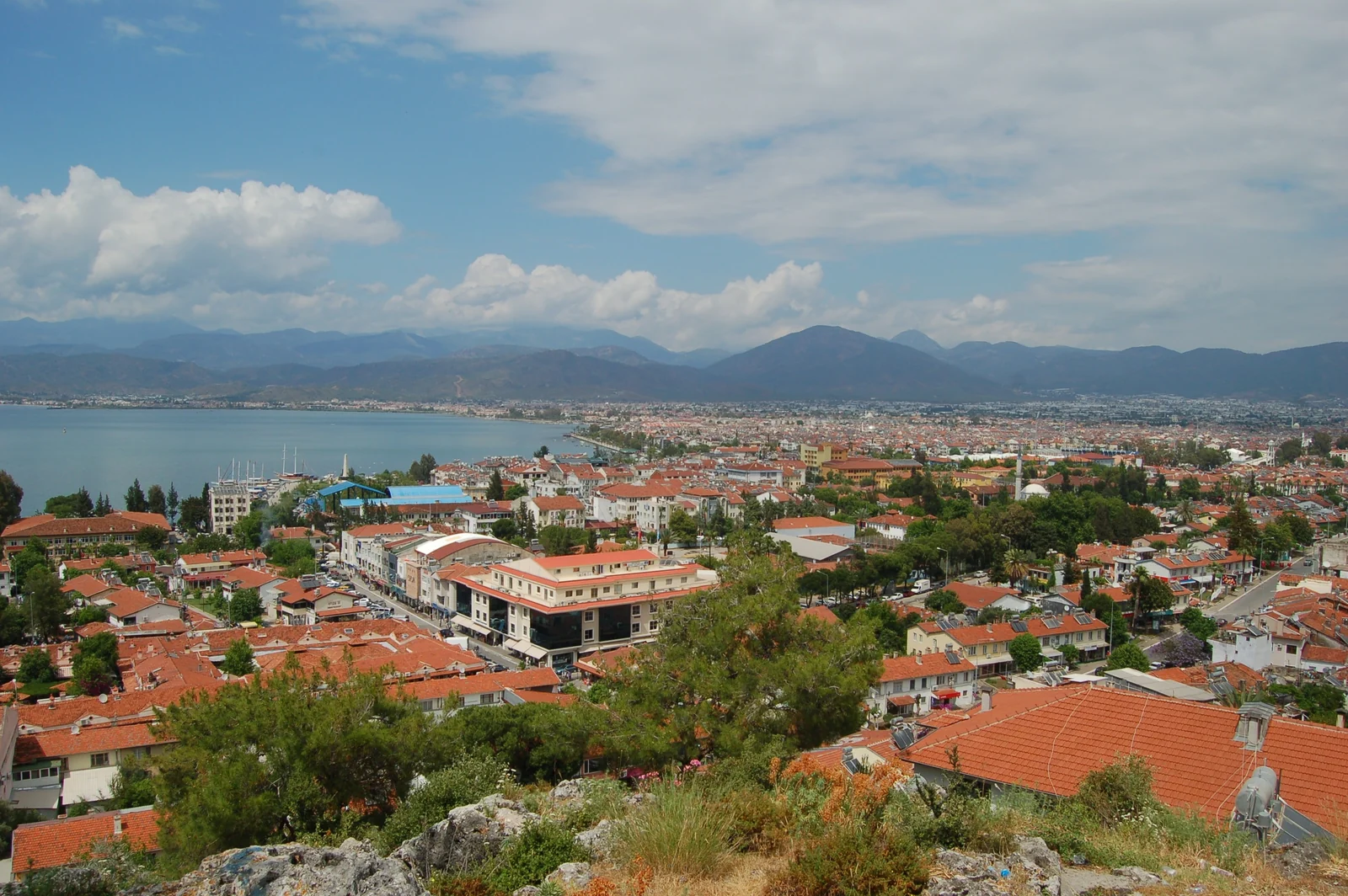
Saklıkent Gorge is farther away, a canyon inland from Fethiye that needs a longer day trip by car or tour. Do not try to squeeze it into the same day as Kayaköy unless you start very early, and ask locally about conditions before you commit.
The Lycian Way, the long-distance trail along Türkiye's southwest coast, passes through this area, and the stretch between Ölüdeniz and Kayaköy is a popular day walk, roughly 7 km one way. Most people walk one direction and return by minibus or taxi. Read the official Türkiye tourism page on the route for the wider picture, and carry offline maps, since signage can be sparse.
Kayaköy compared with other abandoned villages
Ghost villages differ in why they emptied, and the cause shapes the visit. Kayaköy is a case of forced migration, not slow economic decline, and that gives it a quieter, sadder edge than most. If you collect places like this, see how others compare in our guide to abandoned villages in Greece, the country on the other side of the exchange, and the abandoned places in Croatia.
| Place | Why it emptied | Visiting feel |
|---|---|---|
| Kayaköy, Türkiye | 1923 population exchange, then a 1957 earthquake | Large hillside town, two churches, heat and little shade |
| Greek ghost villages | Emigration, earthquakes, war and remote terrain | Varies, from single tower villages to whole castle towns |
| Istrian ghost villages, Croatia | Depopulation over time | Smaller sites, often wooded and reached on short walks |
Kayaköy is bigger and easier to reach than most of them, with a minibus line to the gate. That convenience brings visitors, and the middle of the day can be busy. For atmosphere, arrive early or stay late.
Practical tips and the wider Türkiye picture
- Dress for sun and rough ground: closed shoes, a hat and a refillable bottle.
- Respect the site. Do not climb on fragile walls, pull stones out or carve anything.
- Carry some cash for the entrance and small purchases, and ask for current prices at the gate.
- Arrive early if you want photographs without people in them.
- Check the return minibus time, so you are not stranded when service thins out in the evening.
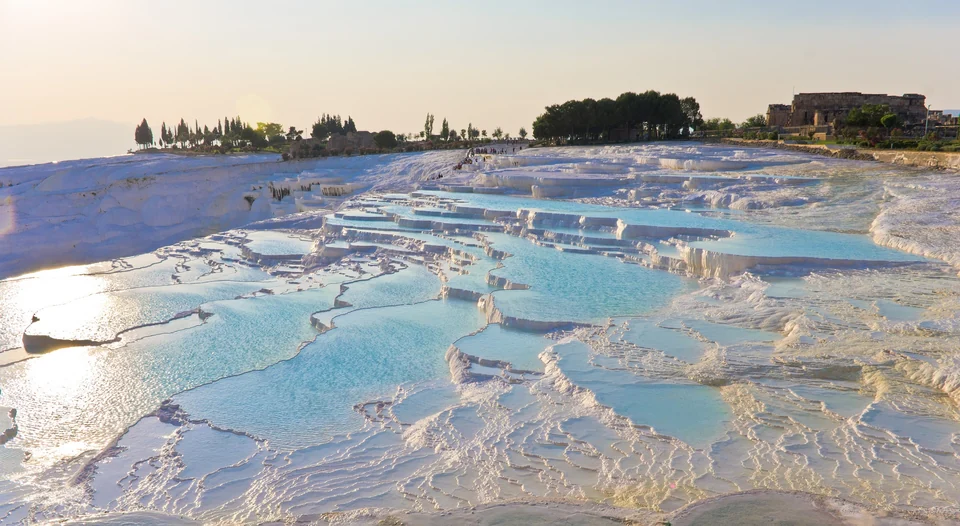
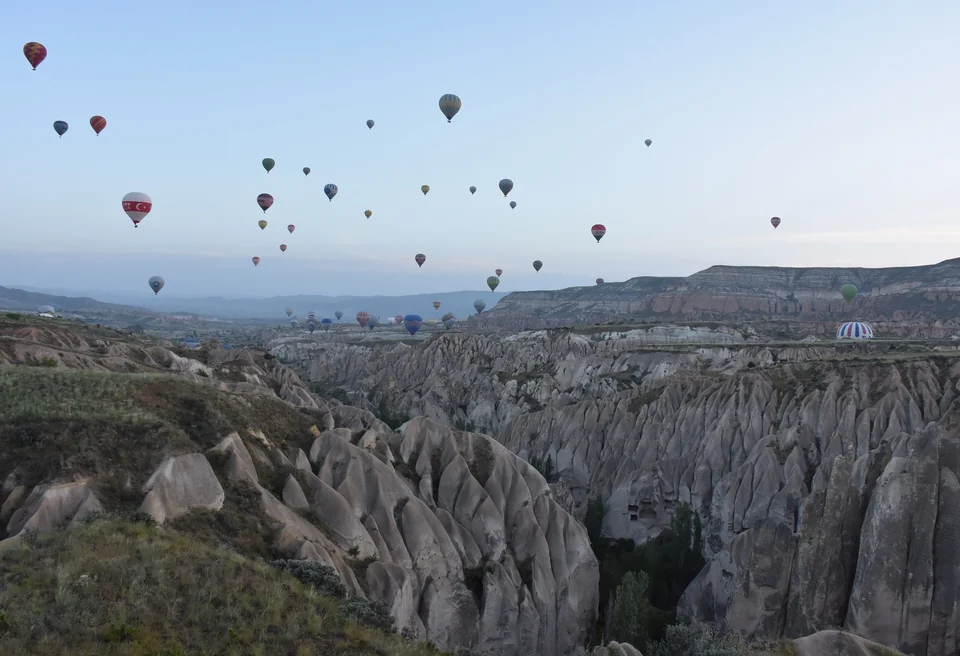
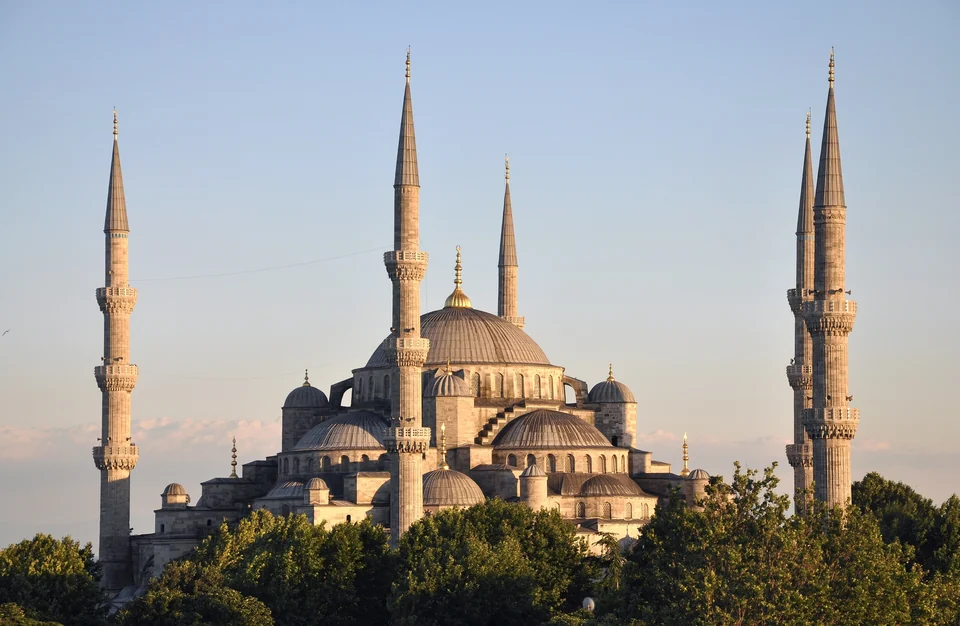
Kayaköy fits neatly into a longer Türkiye trip. If you are building a route, pair the Fethiye coast with the white terraces in our Pamukkale and Hierapolis guide, the rock valleys in the Cappadocia travel guide and the big-city layers of the Istanbul travel guide. Across the water, the Greek island of Rhodes is close by, and our Rhodes guide picks up the same shared Aegean story.
Kayaköy FAQ
Is Kayaköy worth visiting?
Yes, if you like history and atmosphere more than polished attractions. It is a quiet, large and open ruined town with real weight behind it. Give it a morning or late afternoon, and pair it with a swim at Ölüdeniz to balance the mood of the day.
How do I get to Kayaköy from Fethiye?
Minibuses run from Fethiye toward Kayaköy, and the ride takes roughly half an hour. A taxi or rental car covers the roughly 8 km by road. Ask about the last return service when you set off, because frequency drops later in the day.
Can you walk from Ölüdeniz to Kayaköy?
Yes. A section of the Lycian Way links the two, roughly 7 km one way. It climbs through pine and scrub with views of the coast. Most people walk one way and take a minibus or taxi back. Start early in summer and carry plenty of water.
How long do you need at Kayaköy?
Two to three hours covers both churches, the main lanes and the climb toward the top of the village. Add time if you want to visit the small museum or linger for photos. A quick look around the lower streets takes under an hour.
Is there an entry fee for Kayaköy?
The site has a modest entry charge, paid at the gate. Amounts change and published figures differ, so check locally. A national museum pass has been accepted at the ticket office in the past, so ask if you hold one.
What is the best time of day to visit?
Early morning or late afternoon. The ruins have little shade, and the stone holds heat through summer afternoons. Soft light also suits photography. In spring and autumn the temperature is gentler, so timing matters less, though crowds still thin out later in the day.
Why was Kayaköy abandoned?
Its Greek Orthodox residents left in 1922 and 1923 under the population exchange between Greece and Türkiye. Muslim families who arrived from Greece did not settle for long, and a 1957 earthquake wrecked the empty buildings, leaving the ruins you see today.