Ephesus is one of the best-preserved Greco-Roman cities in the Mediterranean, and it makes an easy day trip from Izmir, Kuşadası or even Bodrum. Plan on a morning among the marble streets, the Library of Celsus and the Great Theatre, then an afternoon split between Selçuk's museum, the Temple of Artemis and, if you have the energy, the hill village of Şirince.
The ruins sit near the town of Selçuk in Türkiye's Aegean region and were inscribed as a UNESCO World Heritage Site in 2015. This guide covers what to see, how to reach the site from each base, tickets in general terms, the best time of day, and whether a tour or independent travel suits you better. For more of the country, browse our Türkiye travel guides.
Why Ephesus Is Worth a Day
Many ancient sites are a field of broken stones that need a guide's imagination. Ephesus is different. You walk down a paved Roman street, past a theater, a library facade and the mosaic floors of private homes, and most of it is easy to read without help.
The city flourished under Rome as a major port and a center of the cult of Artemis, and it later became an early Christian hub. That layering is the draw: Greek foundations, Roman grandeur, and a Christian story that includes St. John and, by tradition, the Virgin Mary. If you also plan a trip inland, our Pamukkale and Hierapolis guide pairs well with this one.
The Library of Celsus and the Marble Road
The Library of Celsus is the image everyone knows. It was built in the early second century CE as a monument and tomb for Tiberius Julius Celsus Polemaeanus, a Roman governor of Asia, and finished by his son. The two-story facade you see was put back together from fragments during twentieth-century excavations, so it is partly a reconstruction, though a convincing one.
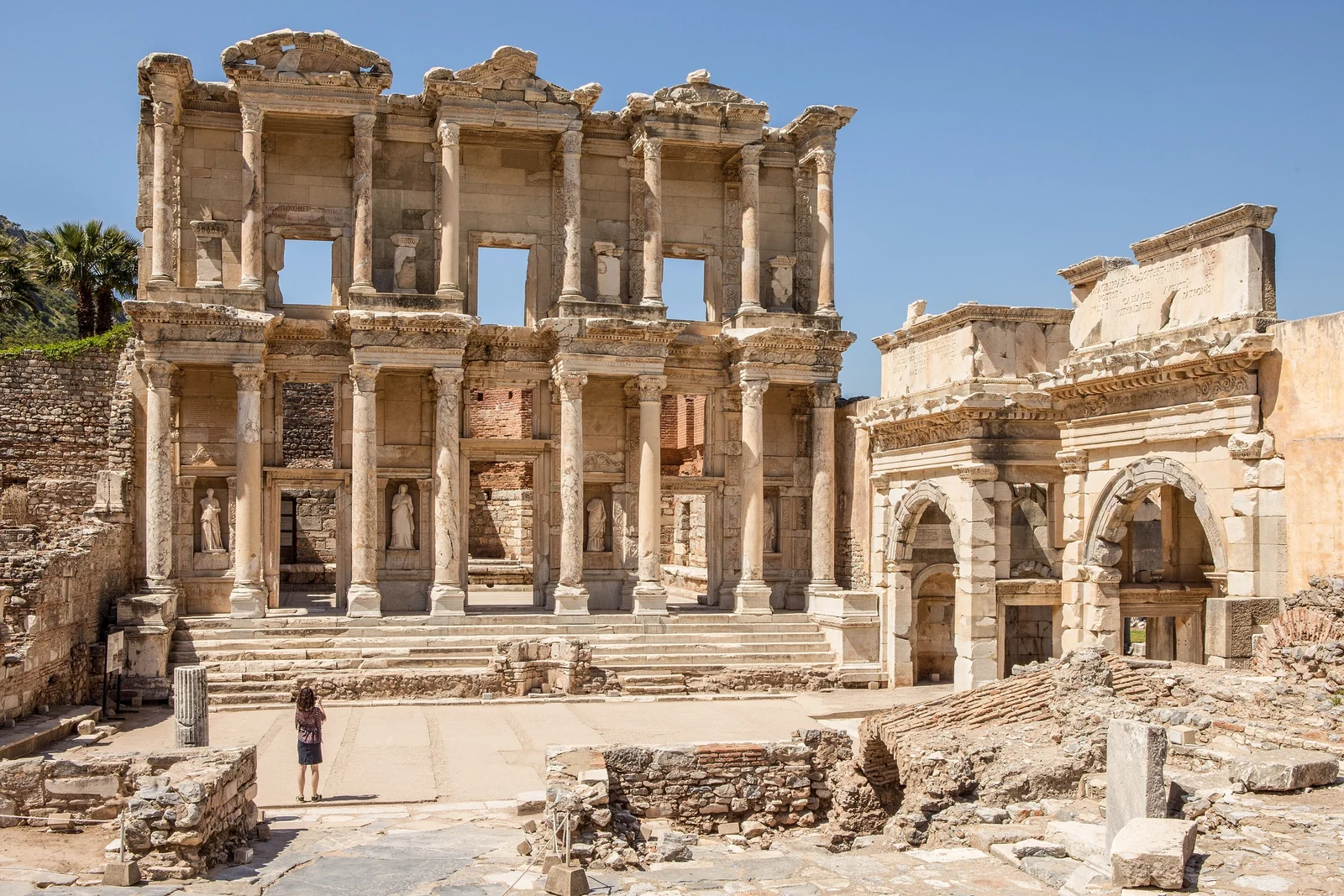
Just beside it, the Marble Road leads toward the Great Theatre. Look down: the stone is worn smooth by centuries of traffic, and guides like to point out carved marks in the paving. Arrive early and the light on the library is warm and the crowds are thin. By late morning, tour groups fill the square in front of it.
The Great Theatre and the Main Street
The Great Theatre is cut into the slope of Panayır Hill and was built to seat tens of thousands of people, so it dominates the view down the main street. Climb to the upper rows for a look along the old harbor road toward the plain where the sea once lay. The Acts of the Apostles places a riot of silversmiths protesting against St. Paul in this very theater.
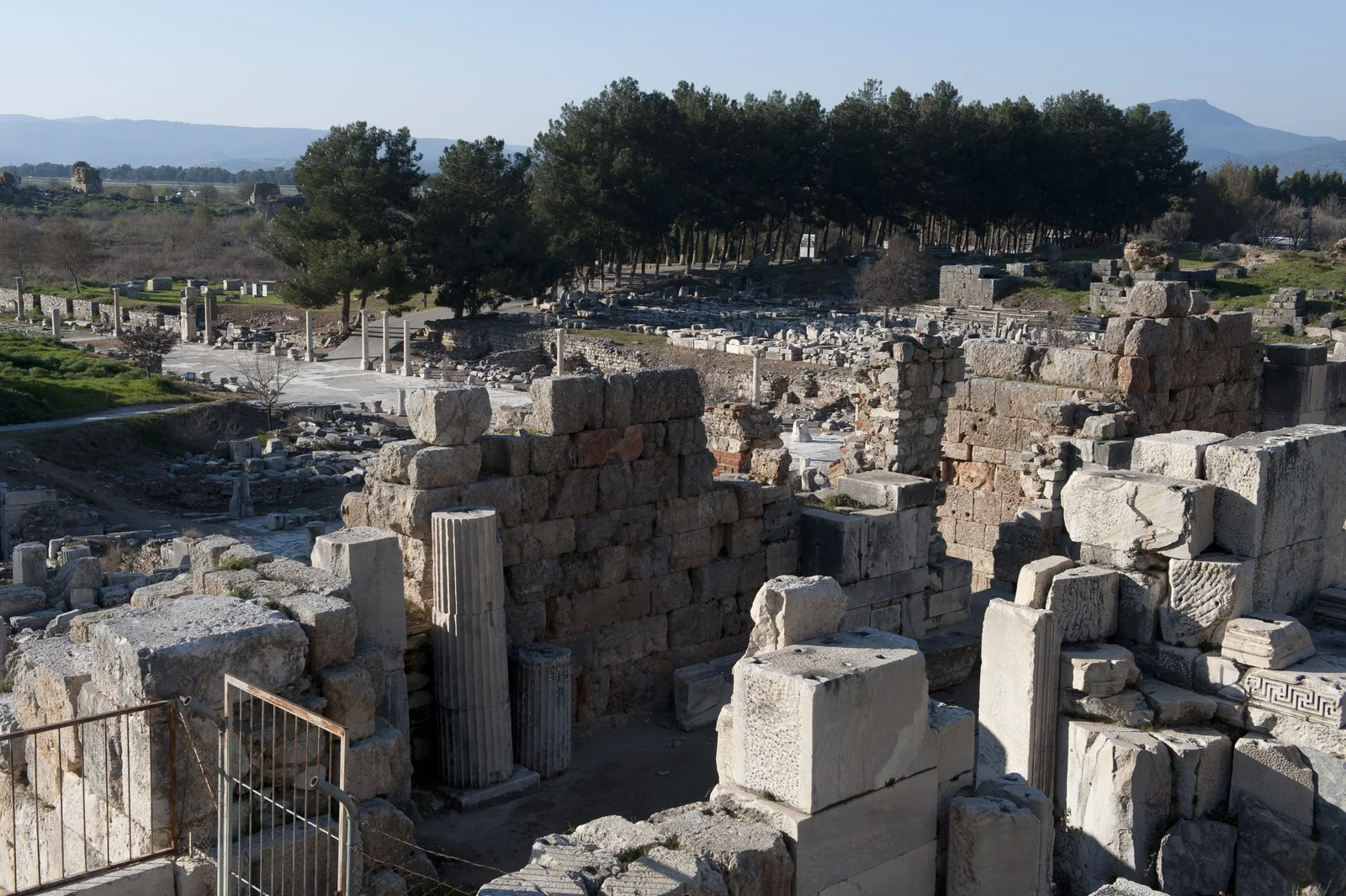
Along the way you pass the Curetes Street colonnade, the Temple of Hadrian with its carved arch, the public latrines and the Fountain of Trajan. The Temple of Hadrian is one of the best photo stops on the walk, and it sits right across from the entrance to the Terrace Houses.
Beyond the headline buildings, keep an eye out for the smaller stops on the way down: the Odeon, a small theater used for council meetings and concerts, the State Agora and the remains of the baths. None of them needs long, but together they explain how a Roman port city actually worked, with politics, commerce, entertainment and religion packed into a few hundred meters.
Terrace Houses: The Part Most Visitors Underrate
The Terrace Houses are a group of wealthy Roman homes on the hillside, protected under a large roof. They have painted walls, mosaic floors and a sense of daily life that the monuments lack. Of everything at Ephesus, this is where the ancient city feels most human.
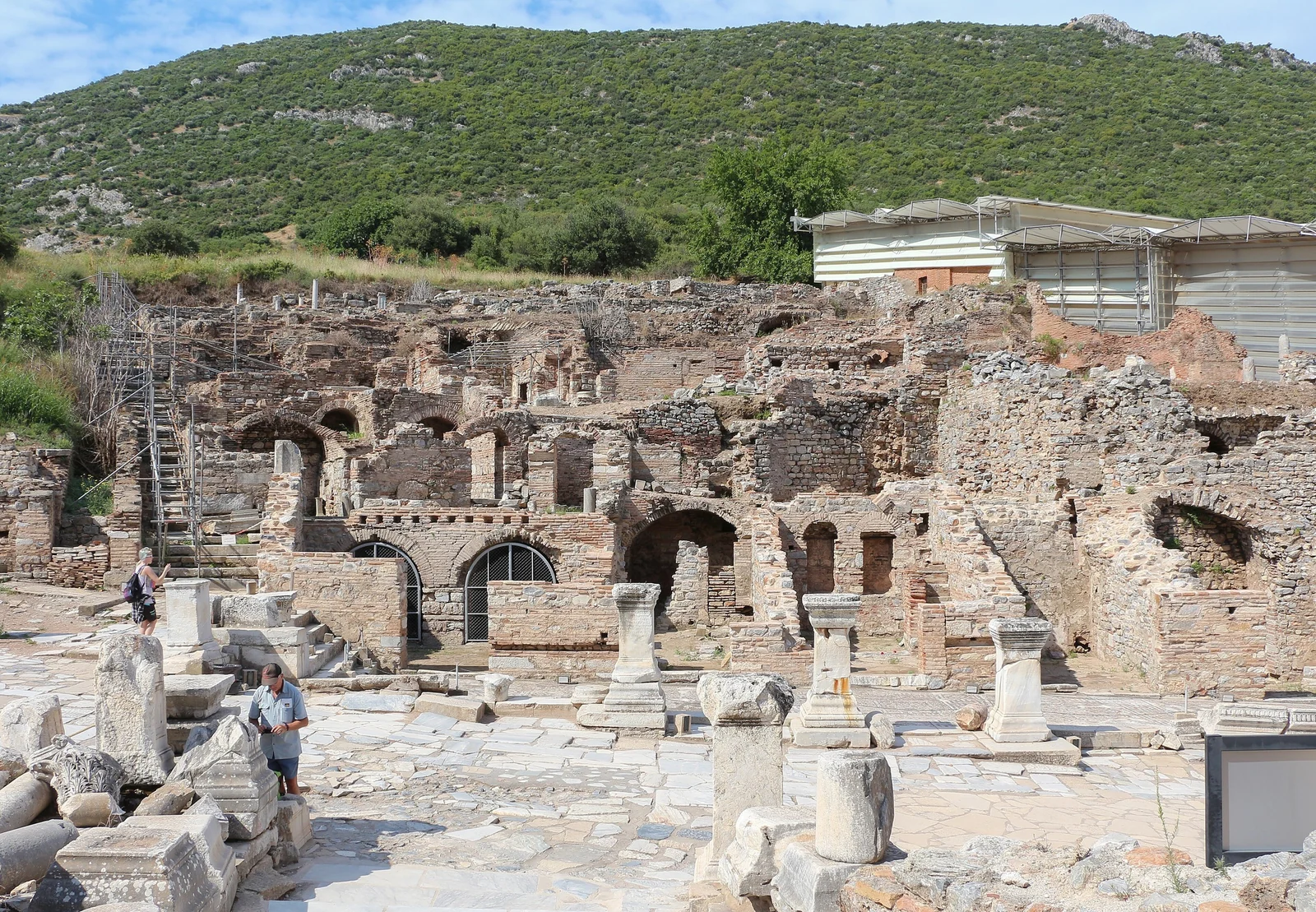
They usually need a separate ticket from the main site, and the walkways can be crowded. Go in early or late in the day to avoid the worst of the queues, and allow at least 45 minutes. Check the Ministry of Culture and Tourism museum portal for current prices and opening hours.
Temple of Artemis and the Selçuk Museum
The Temple of Artemis was one of the Seven Wonders of the Ancient World, and it is a short drive or a pleasant walk from Selçuk town center. Today you will find a marshy field with a single column assembled from fragments, often with a stork nest on top, and not much else. It is a ten-minute stop, but its history is worth knowing: the temple was once among the largest buildings in the Greek world.
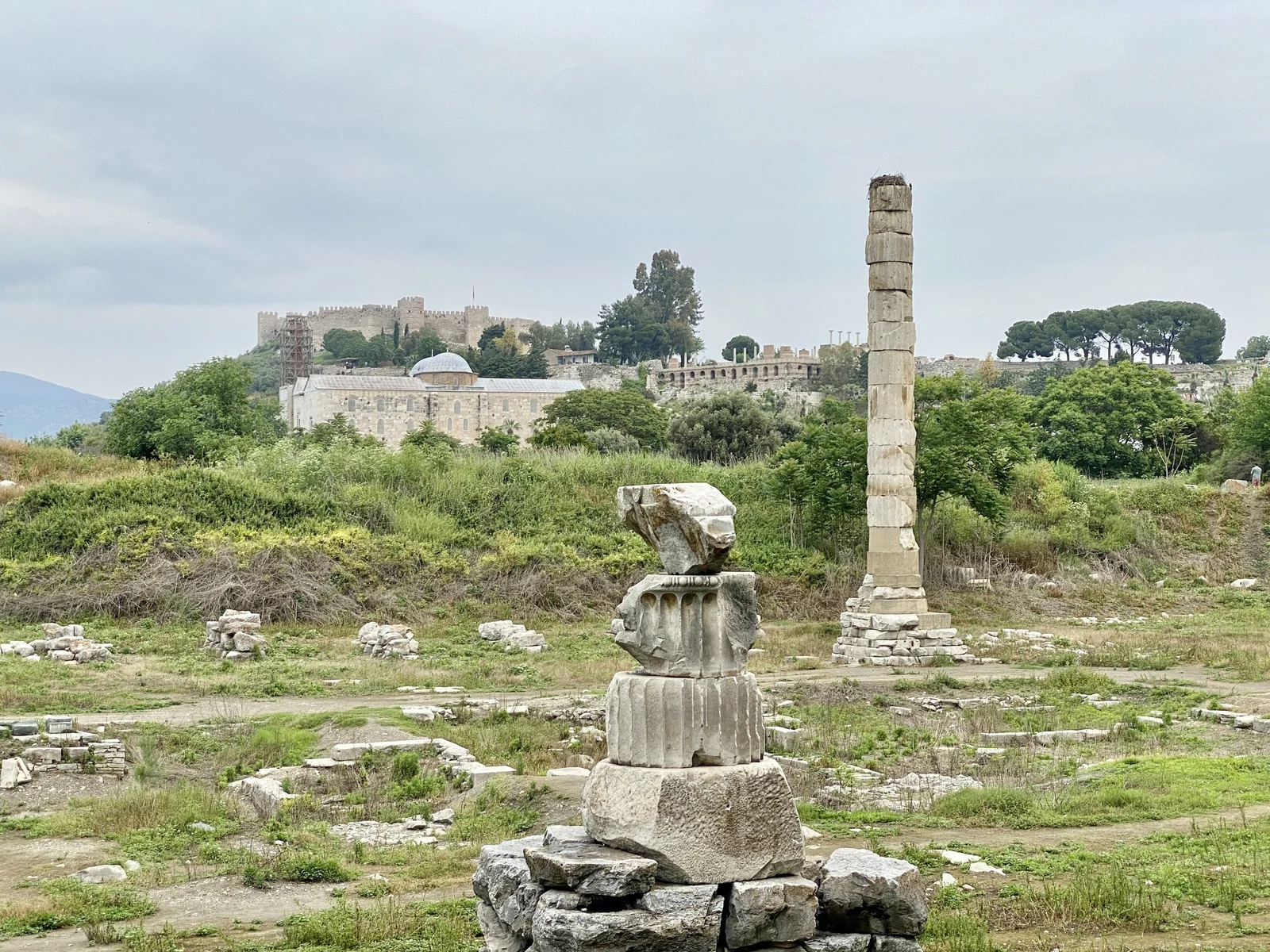
The Ephesus Museum in Selçuk is where many of the best finds ended up, including statues of Artemis and objects from the Terrace Houses. It is small and quiet, which makes it a good midday break. Selçuk itself also has the Basilica of St. John on Ayasuluk Hill, beneath a Byzantine fortress, and the fourteenth-century İsa Bey Mosque.
House of the Virgin Mary and Şirince
A few kilometers from the main site, the House of the Virgin Mary stands on Bülbül Mountain in a wooded setting. Tradition holds that St. John brought Mary to Ephesus, and the small stone chapel is a pilgrimage place for Christians and is also visited by many Muslims. The Catholic Church has never formally declared it authentic, and Pope Paul VI visited in 1967. Expect a quiet, respectful atmosphere and modest dress.
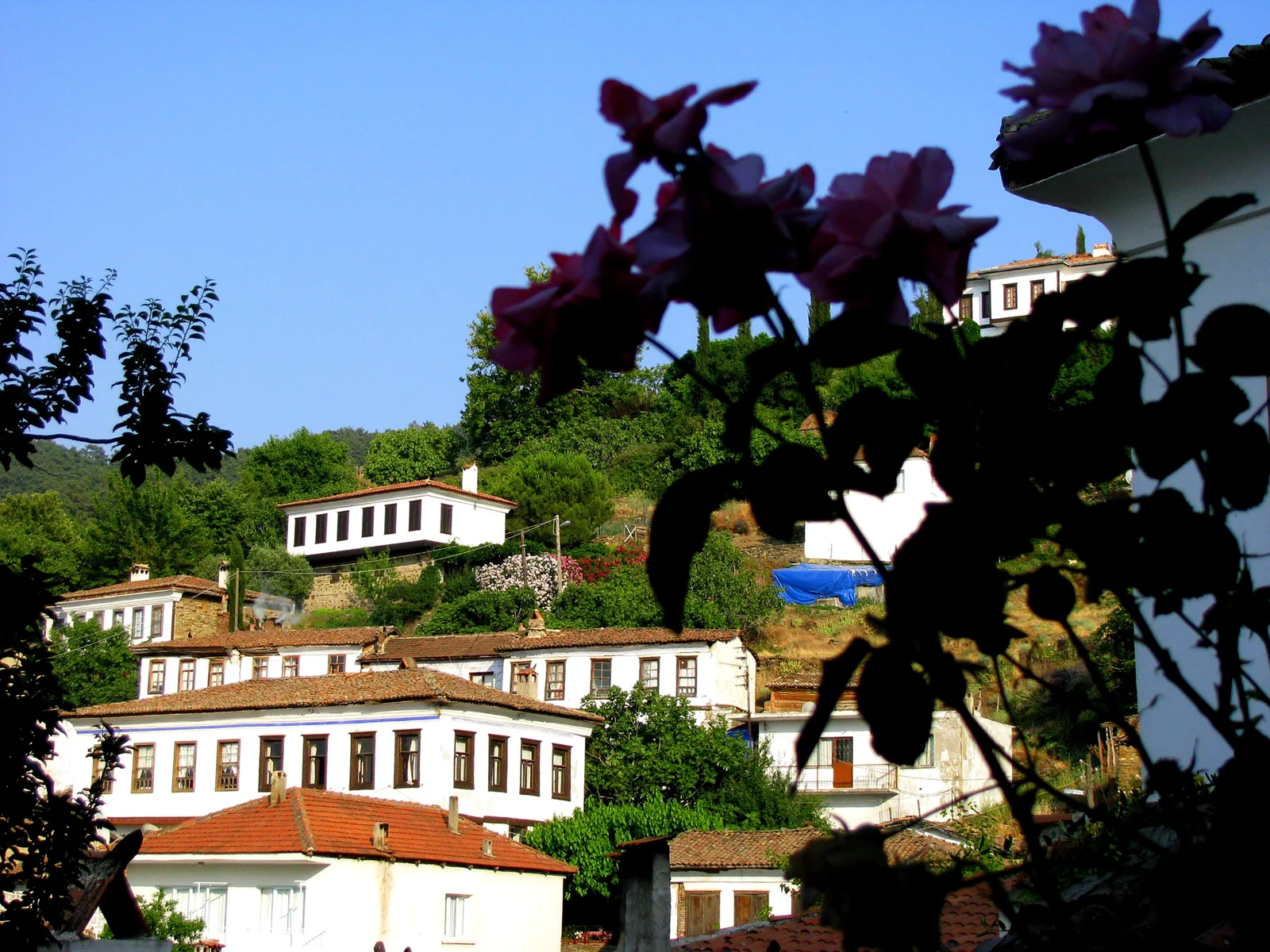
Şirince is a hillside village about 8 km from Selçuk, known for its stone-and-plaster houses, fruit wines and olive products. It gets busy with tour buses in the middle of the day. Come in the late afternoon if you can, and treat it as a place to wander and eat rather than a major sight.
How to Get There from Izmir, Kuşadası and Bodrum
Selçuk is the practical base, and the ruins are a short ride from it. Times below are approximate; check current schedules locally.
| Starting point | How to get there | Approx. time | Notes |
|---|---|---|---|
| Izmir | Suburban train (İZBAN) to Selçuk, then taxi or minibus; or car | About 1.5 hours by train; about 1 hour by car | Cheapest option and easy to do independently |
| Izmir airport (ADB) | Train from the airport station to Selçuk, or a pre-booked transfer | About 1 hour | Good if you land in the morning |
| Kuşadası | Minibus (dolmuş) to Selçuk or toward the site, or taxi | About 30 minutes | Cruise passengers often start here |
| Bodrum | Car, bus with a change, or an organized tour | About 2.5 to 3 hours each way | Long day; consider staying overnight |
The site has two entrances. The lower gate is closer to Selçuk, and the upper gate lets you walk the whole city downhill, which is easier on the legs. A taxi or a pre-arranged driver can drop you at the top and collect you at the bottom.
Tickets, Opening Hours and Best Time of Day
Prices and hours change, and they differ between the main site, the Terrace Houses and the museum, so rely on the official museum portal rather than a blog. In general, expect separate tickets for the site and the Terrace Houses, longer hours in summer, and no weekly closing day.
- Early morning: the coolest and quietest slot, and the best light on the library.
- Late afternoon: crowds thin again and the stone turns golden, but check the last-entry time.
- Midday: the hottest and busiest period, especially when cruise groups arrive. Save indoor stops such as the museum for this window.
- Season: April, May, October and early November are the most comfortable. Summer is very hot with little shade, so bring water, a hat and sturdy shoes.
Tour or Independent: Which Is Better?
Both work well. A guided tour handles transport and explains the carvings, but it follows a fixed schedule and tends to arrive with every other group. Independent travel costs less, lets you start early, and is simple because Selçuk is well connected by train.
| Option | Pros | Cons |
|---|---|---|
| Independent | Flexible timing, cheaper, easy to beat the crowds | Less context unless you hire a guide or read ahead |
| Group tour | Transport included, commentary, good from Kuşadası or Bodrum | Rigid schedule, peak-hour visits, shopping stops |
| Private guide or driver | Tailored pace, early start, fewer tourists | Costs more; confirm the price and what is included in writing |
If you do book a tour, ask whether entry tickets are included and whether the Terrace Houses and the museum are part of the plan. A good compromise is a private guide for the site and independent time in Selçuk afterward.
Where you sleep matters less than when you arrive. Staying in Selçuk puts you ten minutes from the gates and lets you beat the day-trip buses, while Izmir and Kuşadası offer more hotels and restaurants. Either way, the early start is the single best decision you can make.
Practical Tips Before You Go
- Footwear: the marble is slippery and uneven, so skip sandals with smooth soles.
- Shade and water: there is little cover along the main street, so carry a bottle and refill in Selçuk.
- Photos: for a library shot without crowds, arrive at opening or hang back until a group moves on.
- Dress: modest clothing is expected at the House of the Virgin Mary and at mosques in Selçuk.
- Cash and cards: carry some lira for small purchases, taxis and minibuses, even if the site accepts cards.
Accessibility is limited. The main street is paved but uneven, with slopes and steps, and some areas have ramps or alternate paths. If mobility is a concern, ask at the entrance which routes are practical and consider a private driver who can wait near the gates.
A Sample Day Plan
- Arrive at the upper gate shortly after opening and walk downhill along the Marble Road.
- See the Library of Celsus and the Great Theatre before the tour groups arrive.
- Visit the Terrace Houses, then exit at the lower gate.
- Have lunch in Selçuk and visit the Ephesus Museum while it is hot outside.
- Late afternoon: the Temple of Artemis and St. John's Basilica, or Şirince if you have transport.
If you are continuing north, our Istanbul travel guide is a natural next stop.
Ephesus FAQ
Is Ephesus worth visiting?
Yes. It is among the best-preserved ancient cities in the Mediterranean, with a theater, a library facade, a marble main street and decorated private houses. Most of the highlights are easy to understand without a guide, and the UNESCO listing dates to 2015.
How long do you need at Ephesus?
Plan about two to three hours for the main site and another 45 minutes for the Terrace Houses. Adding the museum, the Temple of Artemis and the House of the Virgin Mary turns it into a full day.
How do you get to Ephesus from Izmir?
Take the suburban train from Izmir to Selçuk, which takes roughly an hour and a half, then a taxi or minibus to the site. Driving takes about an hour. Pre-booked transfers and organized tours also run from the city and the airport.
Can you visit Ephesus from Kuşadası or Bodrum in a day?
From Kuşadası it is easy, about half an hour away. Bodrum is much farther, around 2.5 to 3 hours each way, so a day trip is long. Many people join a tour or stay a night in Selçuk instead.
Do you need a guide at Ephesus?
No, signage is decent and the main monuments are straightforward. A guide adds stories about the carvings and the Terrace Houses and can help you avoid the crowds, but reading ahead and starting early works well too.
What is the best time of day to visit Ephesus?
Go early in the morning or in the late afternoon. Midday is hot and crowded, especially in summer. Spring and autumn offer the most comfortable weather, and it is smart to bring water and a hat.
Is the House of the Virgin Mary authentic?
It is a place of tradition, not proven history. The Catholic Church has not formally declared it authentic, but it has been a pilgrimage site for over a century, and Pope Paul VI visited in 1967. Visitors of all faiths go.