


Kraków is the easiest great city in Central Europe to fall for. Its medieval center survived World War II largely intact, the whole Old Town fits inside a ring of parkland you can walk around in an hour, and a good dinner still costs noticeably less than in Paris, Vienna or Amsterdam. This Kraków travel guide covers what to see, where to eat, where to stay and how to plan the big day trips.
Three days is the sweet spot. That gives you one day for the Old Town and Wawel Hill, one for Kazimierz and Podgórze, and one for Wieliczka or Auschwitz-Birkenau. Add a fourth if you want the Tatra Mountains too. For more ideas in the region, browse our Poland travel guides.
Old Town and the Main Market Square
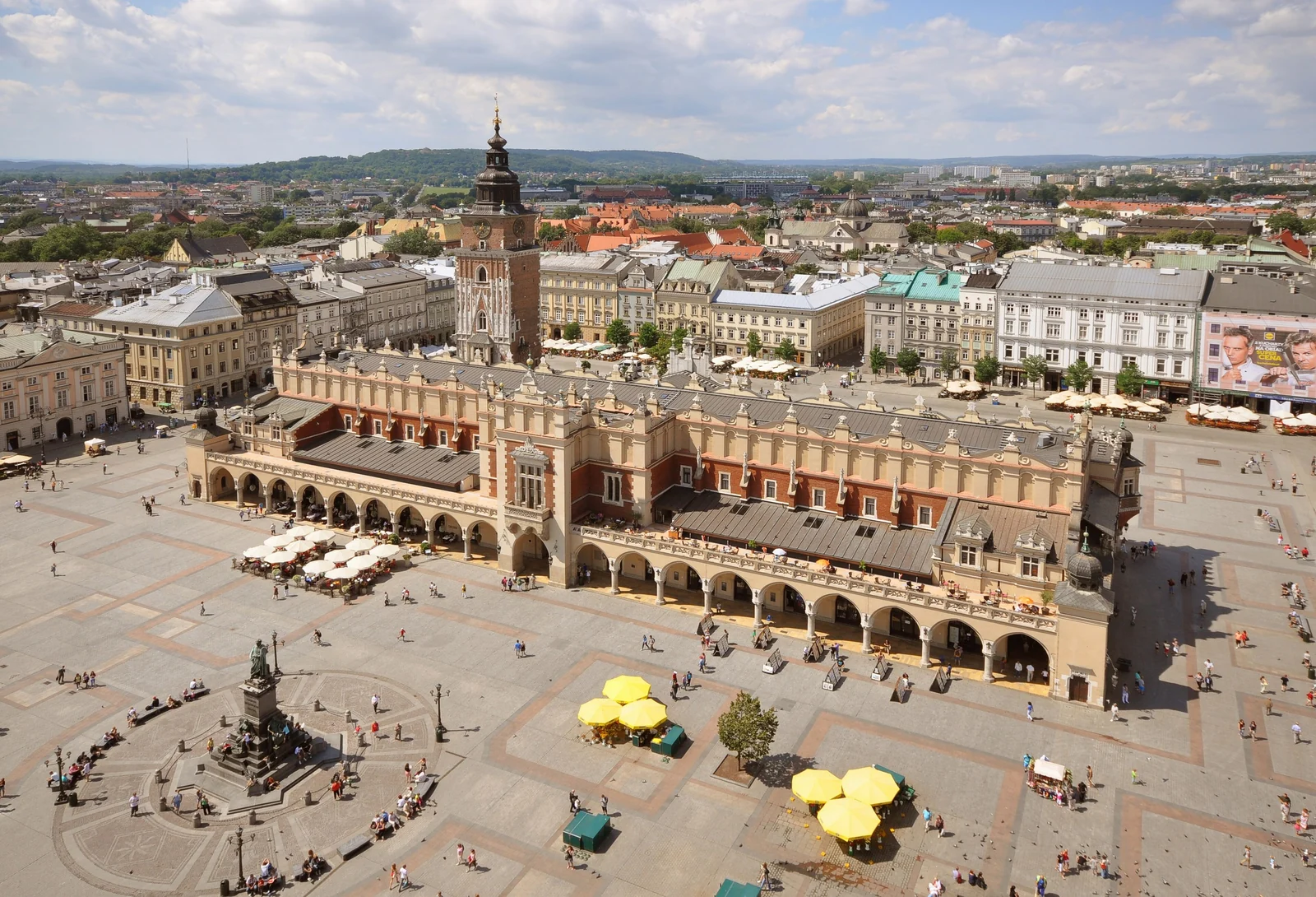
Everything starts at Rynek Główny, the Main Market Square. Laid out in 1257 and covering almost four hectares, it is often called the largest medieval town square in Europe. The Old Town around it was on UNESCO's very first World Heritage list in 1978.
St. Mary's Basilica and the Hejnał
The brick church with two unequal towers is St. Mary's Basilica, and the taller tower is where Kraków's most famous ritual happens. Every hour, on the hour, a trumpeter plays the hejnał, a short bugle call, out of a window in each direction. The melody stops abruptly mid-phrase. Legend says it honors a 13th-century watchman shot in the throat while warning the city of a Mongol attack.
The trumpeters are city firefighters, and many wave down to the crowd when they finish. Inside, the star is the carved wooden altarpiece by Veit Stoss, one of the largest Gothic altarpieces anywhere. Tourists use a side entrance with a small fee; keep voices low, as this is a working parish.
The Cloth Hall and Rynek Underground
The long Renaissance building in the middle of the square is the Cloth Hall, or Sukiennice. The arcaded ground floor is a market of amber, wood carvings and lace, pricier than elsewhere but fun to browse. Upstairs, a branch of the National Museum displays 19th-century Polish painting, and the café terrace offers one of the best views over the square.
Below your feet, Rynek Underground is a museum built into the excavated medieval layers beneath the square. It is a smart choice on a rainy afternoon.
Planty Park and the Royal Route
The Planty is a four-kilometer belt of gardens planted where the medieval walls once stood. Use it as your shortcut around the Old Town rather than as a sight in itself. On the north side, St. Florian's Gate and the round brick Barbican are surviving pieces of the old fortifications.
From the gate, Floriańska Street runs to the square and Grodzka Street continues south to Wawel. This was the coronation route of Polish kings, and walking it takes about 20 minutes without stops. You will stop.
Wawel Hill: Castle, Cathedral and Dragon's Den
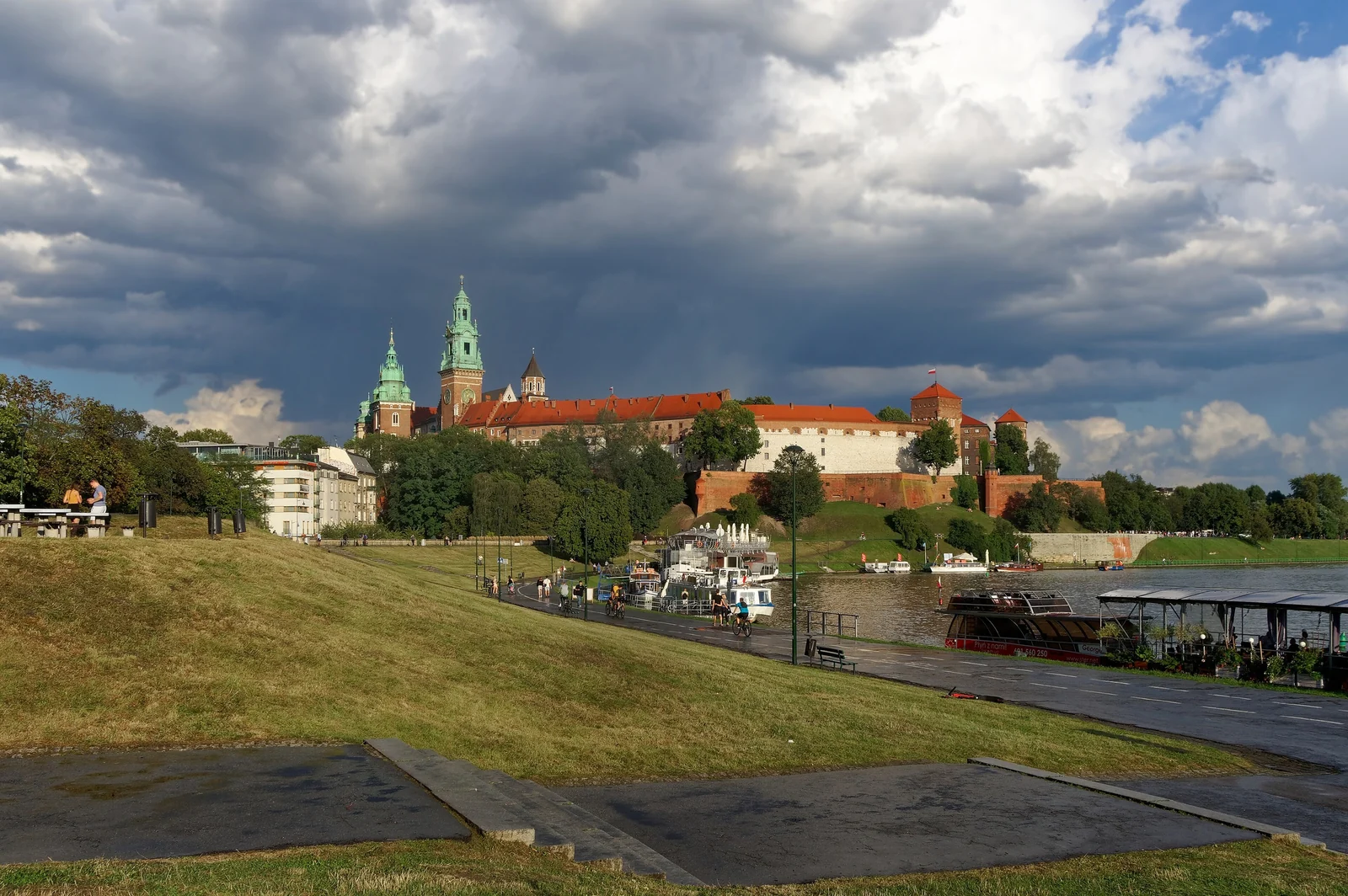
Wawel Hill was the seat of Polish kings for centuries, and it still feels like the country's symbolic heart. The courtyards and hill grounds are free to wander. The castle interiors are split into separate exhibitions, each with its own ticket and timed entry: the State Rooms, the Royal Private Apartments, the Crown Treasury and Armoury, and smaller displays.
Do not try to see everything. Pick the State Rooms, with their Flemish tapestries, plus one more exhibition. Daily numbers are limited, so buy tickets on the official Wawel Royal Castle website as soon as your date opens.
Wawel Cathedral
The cathedral is run by the church and has its own ticket office. Most Polish kings were crowned and buried here. Your ticket covers the royal crypts and the steep, narrow climb to the Sigismund Bell, rung only on major national and church occasions.
The Dragon's Den
Legend says a dragon lived in a cave under the hill until a shoemaker fed it a sheep stuffed with sulfur. The den opens seasonally, usually spring to autumn. You exit on the riverbank beside a metal dragon statue that breathes real fire every few minutes. Kids love it.
Kazimierz, Kraków's Historic Jewish Quarter
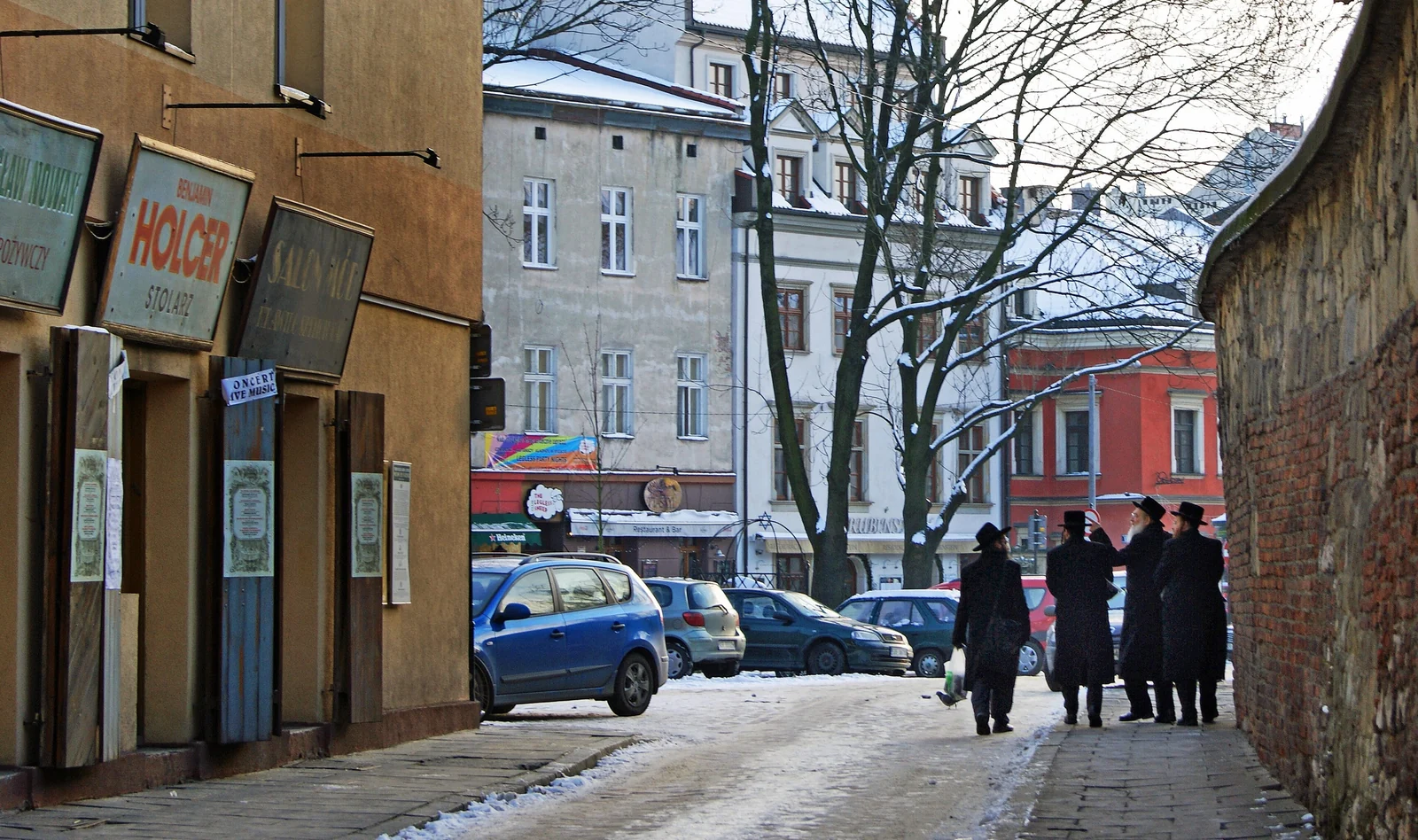
A 15-minute walk south of Wawel brings you to Kazimierz, for centuries one of the great centers of Jewish life in Europe. The community was destroyed in the Holocaust. Today the district is the city's favorite place to eat and drink, and also a place to slow down and remember.
Synagogues and Szeroka Street
Start on Szeroka Street. The Old Synagogue at its southern end is the oldest surviving synagogue building in Poland and now houses an exhibition on Jewish history and culture run by the Museum of Kraków. At the other end, the small Remuh Synagogue is still used for prayer, and its old cemetery behind it is one of the most moving corners of the city. Men cover their heads on entry.
The Tempel Synagogue on Miodowa Street is worth a look for its painted interior.
Plac Nowy, Cafés and Zapiekanki
Plac Nowy is the neighborhood's square, with a round market hall in the middle. At night its hatches sell zapiekanki, half a baguette baked with mushrooms and cheese, then loaded with sauces and toppings. Cheap, filling and exactly right after a few drinks.
The streets around it are full of candlelit bars and small restaurants, and they get loud on weekend nights. Ask for a room at the back.
Podgórze and Schindler's Factory
Cross the Father Bernatek footbridge over the Vistula and you are in Podgórze, where the Nazis forced Kraków's Jews into a ghetto in 1941. On Ghetto Heroes Square, rows of large empty bronze chairs stand as a memorial to the people deported from this spot.
A short walk east, Oskar Schindler's Enamel Factory holds the Museum of Kraków's exhibition on the city under Nazi occupation from 1939 to 1945. It is less about Schindler than about how ordinary people lived, resisted and died, and it deserves at least two hours. Entry is by timed ticket, so book online several days ahead.
Day Trips from Kraków
Each of these takes most of a day, so do not try to pair them.
| Day trip | Travel from Kraków | Time to allow | Book ahead? |
|---|---|---|---|
| Wieliczka Salt Mine | Short regional train, bus or car ride southeast of the city | Half a day | Yes, in summer |
| Auschwitz-Birkenau Memorial | About 1.5 hours by bus or train to Oświęcim | Full day | Yes, entry passes are online only |
| Zakopane and the Tatras | About 2 hours by bus or train | Full day or overnight | Not usually |
Wieliczka Salt Mine
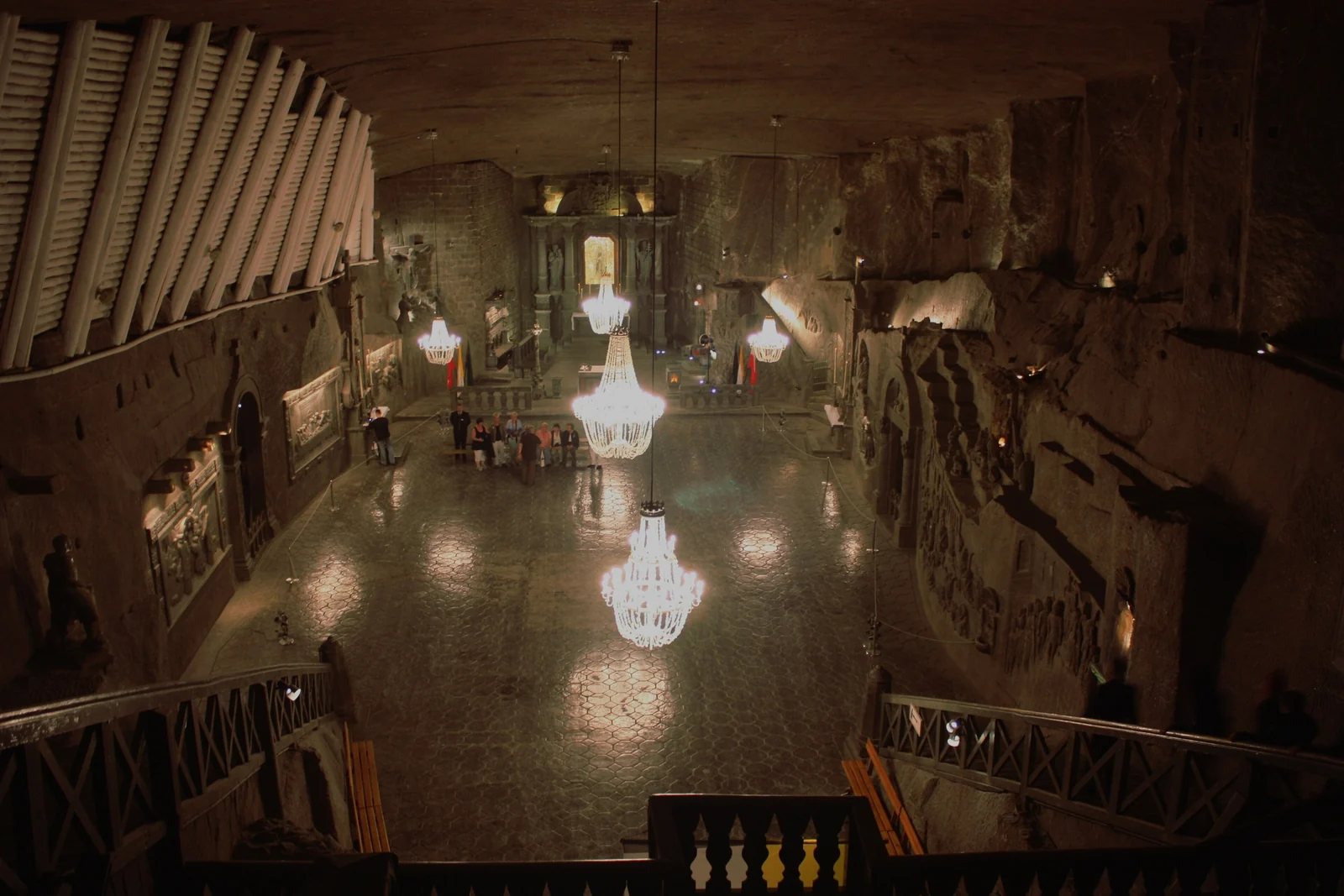
Salt was mined at Wieliczka for centuries, and the miners left behind chapels, statues and chandeliers carved from rock salt. The standard Tourist Route is guided only. It starts with a descent of around 800 steps and goes down to about 135 meters below the surface, and you return by lift. Plan on two to three hours underground.
The high point is the Chapel of St. Kinga, a vast underground hall where even the floor tiles and the relief of the Last Supper are salt. It stays cool all year down there, so bring a light layer in summer. Tickets and English tour times are on the official Wieliczka Salt Mine website.
Auschwitz-Birkenau Memorial and Museum
Visiting the former German Nazi concentration and extermination camp at Oświęcim is not sightseeing. More than a million people were murdered here, most of them Jews. Give it a full day and keep the evening quiet.
Admission to the grounds is free, but everyone needs an entry pass booked on the official Auschwitz-Birkenau Memorial website. Passes are not sold at the gate, and from spring to autumn they go weeks ahead. For much of the day, individual visitors enter only with a museum educator, which costs a fee and is the better option anyway. Unguided passes are limited to set hours.
- The standard guided visit lasts about three and a half hours and covers both Auschwitz I and Birkenau.
- Bags larger than 35 x 25 x 15 cm are not allowed inside; paid storage is available.
- The museum does not recommend visits for children under 14.
- Photography without flash is allowed in most areas, but not in the room with victims' hair or the basements of Block 11. Behave as you would at a cemetery.
If you buy a package tour from Kraków, check that it includes a museum educator rather than just transport.
Zakopane and the Tatra Mountains
About two hours south by bus or train, Zakopane sits at the foot of the Tatras, Poland's highest mountains. The main street is touristy, but the wooden villas, mountain views and smoked sheep's cheese, oscypek, make up for it. Hikers heading for Morskie Oko lake should stay a night. For more mountains and lakes in Central Europe, our Slovenia travel guide covers Lake Bled and the Julian Alps.
What to Eat in Kraków
Polish food is hearty and very good value. Look for these.
- Pierogi. Dumplings filled with potato and cheese (ruskie), meat, sauerkraut and mushroom, or summer fruit. Order a mixed plate and decide for yourself.
- Żurek. A sour rye soup with sausage and egg, sometimes served in a hollowed-out loaf of bread. Ideal on a cold day.
- Obwarzanek krakowski. The braided ring of bread sold from blue street carts all over town, topped with poppy seeds, sesame or salt. It has EU protected status and makes a perfect breakfast on the go.
- Milk bars. A bar mleczny is a no-frills canteen serving home-style Polish dishes at very low prices. You order at the counter, often from a Polish-only menu, and carry your tray to a shared table. Go at lunchtime when the food is freshest.
Restaurants directly on the Main Square charge for the view. Have a drink there and eat a block away.
Planning Your Trip to Kraków
Best Time to Visit Kraków
May, June and September are the best months: warm enough for café terraces, long evenings, and fewer crowds than July and August, when tour groups fill the Old Town. Winters are cold and gray, but December has a strong case. The Christmas market fills the Main Square from late November until just after Christmas, and in early December local craftspeople display szopki, glittering nativity scenes shaped like Kraków's churches, in a contest that UNESCO lists as intangible cultural heritage.
Getting to Kraków and Around
Kraków John Paul II Airport (KRK) is linked to the main station, Kraków Główny, by a direct train that takes around 20 minutes and runs at least twice an hour during the day. The station sits a few minutes' walk from the Old Town. Long-distance trains connect Kraków with Warsaw and other Polish cities.
Once you arrive, walk. The Old Town, Kazimierz and Podgórze are close together. Trams help on longer hops; buy tickets from machines at stops or on board, many of which take contactless cards, and validate them right away.
Where to Stay in Kraków
| Area | Best for | Keep in mind |
|---|---|---|
| Old Town | First visits, walking everywhere | Highest prices; streets near the square can be noisy late |
| Kazimierz | Food, bars, atmosphere | Weekend nights are lively |
| Podgórze | Quieter stays, better value | Short walk or tram ride to the Old Town |
| Near Kraków Główny | Early trains and day trips | Less character, very practical |
How Expensive Is Kraków?
Poland uses the złoty (PLN), not the euro. Compared with Western European capitals, hotels, meals, museums and transport in Kraków generally cost noticeably less, though Old Town prices have climbed. Cards work almost everywhere. If a terminal offers to charge you in your home currency, decline and pay in złoty.
The official Kraków tourism website lists current events, opening hours and museum changes. Check it the week before you travel.
A 3-Day Kraków Itinerary
Day 1: Old Town and Wawel
Grab an obwarzanek and enter through St. Florian's Gate. Catch the hejnał, see the Veit Stoss altarpiece and browse the Cloth Hall. Walk Grodzka Street to Wawel for your castle slot and the cathedral, then exit through the Dragon's Den to the Vistula.
Day 2: Kazimierz and Podgórze
Spend the morning on Szeroka Street and at the Remuh cemetery. Lunch at a milk bar, then cross the footbridge to Ghetto Heroes Square and your slot at Schindler's Factory. Return to Kazimierz for dinner.
Day 3: Wieliczka or Auschwitz-Birkenau
Choose based on your interests and energy. Wieliczka takes half a day and leaves the afternoon free for a museum or the Planty. Auschwitz-Birkenau needs the full day. If you have a fourth day, do the other one, or head for Zakopane and the mountains. A longer European trip can pair Kraków with another historic city such as Lisbon; see all our Europe travel guides for ideas.
Kraków Travel FAQ
How many days do you need in Kraków?
Three days covers the essentials: one for the Old Town and Wawel, one for Kazimierz and Podgórze, and one for a day trip to Wieliczka or Auschwitz-Birkenau. With four or five days you can do both day trips or add Zakopane and the Tatra Mountains.
Do you need to book Auschwitz in advance?
Yes. Entry to the Auschwitz-Birkenau Memorial is free, but every visitor needs an entry pass booked online on the official museum website, and none are sold at the entrance. From spring to autumn, passes and guided visits with a museum educator are often booked out weeks ahead.
Is Kraków cheaper than Western Europe?
Generally, yes. Accommodation, meals, museum tickets and public transport usually cost noticeably less than in Western European capitals. The Old Town is the priciest area, while Kazimierz, Podgórze and the city's traditional milk bars offer the best value.
What time does the hejnał play in Kraków?
The hejnał is played live every hour, on the hour, from the taller tower of St. Mary's Basilica on the Main Market Square. The trumpeter plays it toward each of the four directions and breaks off mid-melody, a tradition linked to the legend of a watchman shot during a Mongol attack.
How do you get from Kraków Airport to the city center?
The easiest option is the direct train from Kraków Airport to Kraków Główny, the main station next to the Old Town. The ride takes around 20 minutes and trains run at least twice an hour during the day. Buy a ticket from the machine at the airport station or on board.
When is the Kraków Christmas market?
The Christmas market on the Main Market Square usually opens in late November and runs until just after Christmas. Wooden stalls sell crafts, mulled wine and grilled food. Early December also brings the traditional szopki contest, when ornate nativity scenes are displayed in the square.