Italy has thousands of emptied villages, but only a few are safe and legal to walk through. The best abandoned villages in Italy for a visit are Craco in Basilicata, Pentedattilo in Calabria, Roscigno Vecchia in Campania, Gairo Vecchio in Sardinia and Bussana Vecchia in Liguria. Others, such as Poggioreale Vecchia, Consonno and Balestrino, are better seen from a distance or only with local confirmation.
This guide sorts the well-known ghost towns by what you can actually do there: walk in, join a guided visit, or look from outside the fence. For each one you get how to reach it, the access rules as far as they can be verified, and the safety issues. If your trip is built around the south, start with our Craco guided tour guide, which covers the most famous one in detail. For a broader list of the genre, the national tourism board has its own page on abandoned Italian villages.
Italy's Ghost Towns at a Glance
Italian villages empty out for four main reasons: earthquakes, landslides and floods, emigration, and failed development. The table groups the ones in this guide by region, cause and how open they are. Treat access as a starting point, because municipalities change rules after collapses, restorations and funding projects.
| Village | Region | Why it emptied | Access |
|---|---|---|---|
| Craco | Basilicata | Landslides in the 20th century | Guided visits only |
| Civita di Bagnoregio | Lazio | Erosion and depopulation (not abandoned) | Open, footbridge, entry fee |
| Pentedattilo | Calabria | Earthquake damage and emigration | Open on foot, steep climb |
| Poggioreale Vecchia | Sicily | 1968 Belice earthquake | Restricted, collapse risk |
| Consonno | Lombardy | Failed resort, road lost to a landslide | Reachable on foot, ruins unsafe |
| Roscigno Vecchia | Campania | Landslides, from 1902 | Open, small museum |
| Gairo Vecchio | Sardinia | 1951 flood and unstable ground | Open, no services |
| Balestrino | Liguria | Geological instability | View from below, check locally |
| Bussana Vecchia | Liguria | 1887 earthquake | Open, artists' community |
Ghost Towns You Can Walk Into
Craco: The Famous Ghost Town of Basilicata
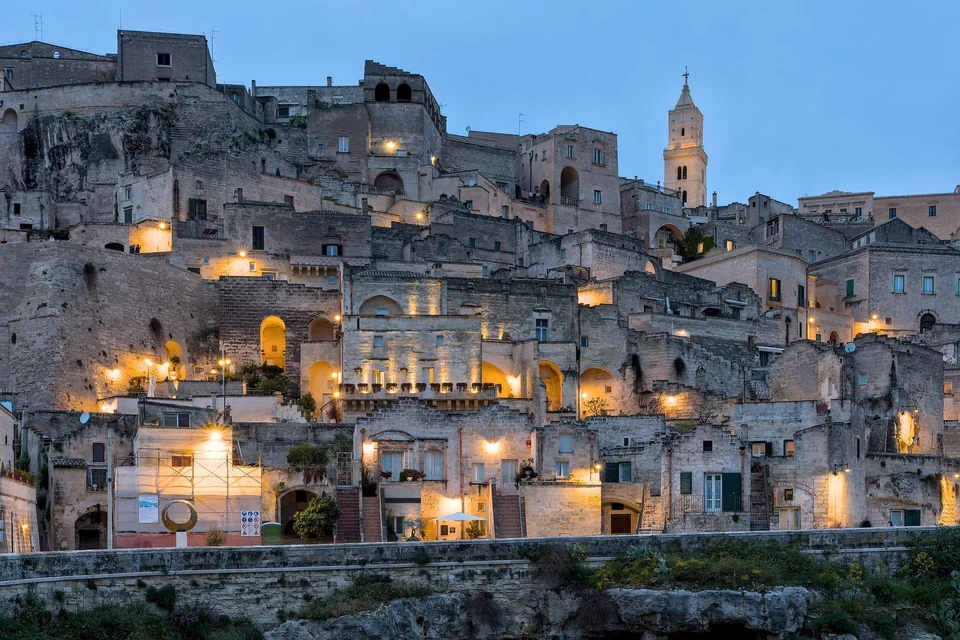
Craco is the one most travelers have seen in photos and films. It crowns a rocky ridge above the Basento valley, and landslides during the 20th century slowly drove its residents out. The empty stone houses and tower are now fragile, which is why you cannot simply wander in.
Visits are organized as guided tours, and you are expected to follow the guide and the protective gear rules. The base for most visitors is Matera, which has good road links. Our day trip to Craco from Matera explains how to book, what the tour covers and how long to allow. If you are still choosing between southern towns, Matera or Alberobello may help.
Civita di Bagnoregio: A Dying Town, Not an Abandoned One
Civita di Bagnoregio belongs on a list like this only with an honest label. It is not abandoned. A handful of people live there year-round, and the town is known in Italian as "la città che muore", the dying city. The name comes from erosion: Civita sits on a mesa of soft volcanic rock that has been crumbling for centuries, and the population has shrunk to almost nothing.
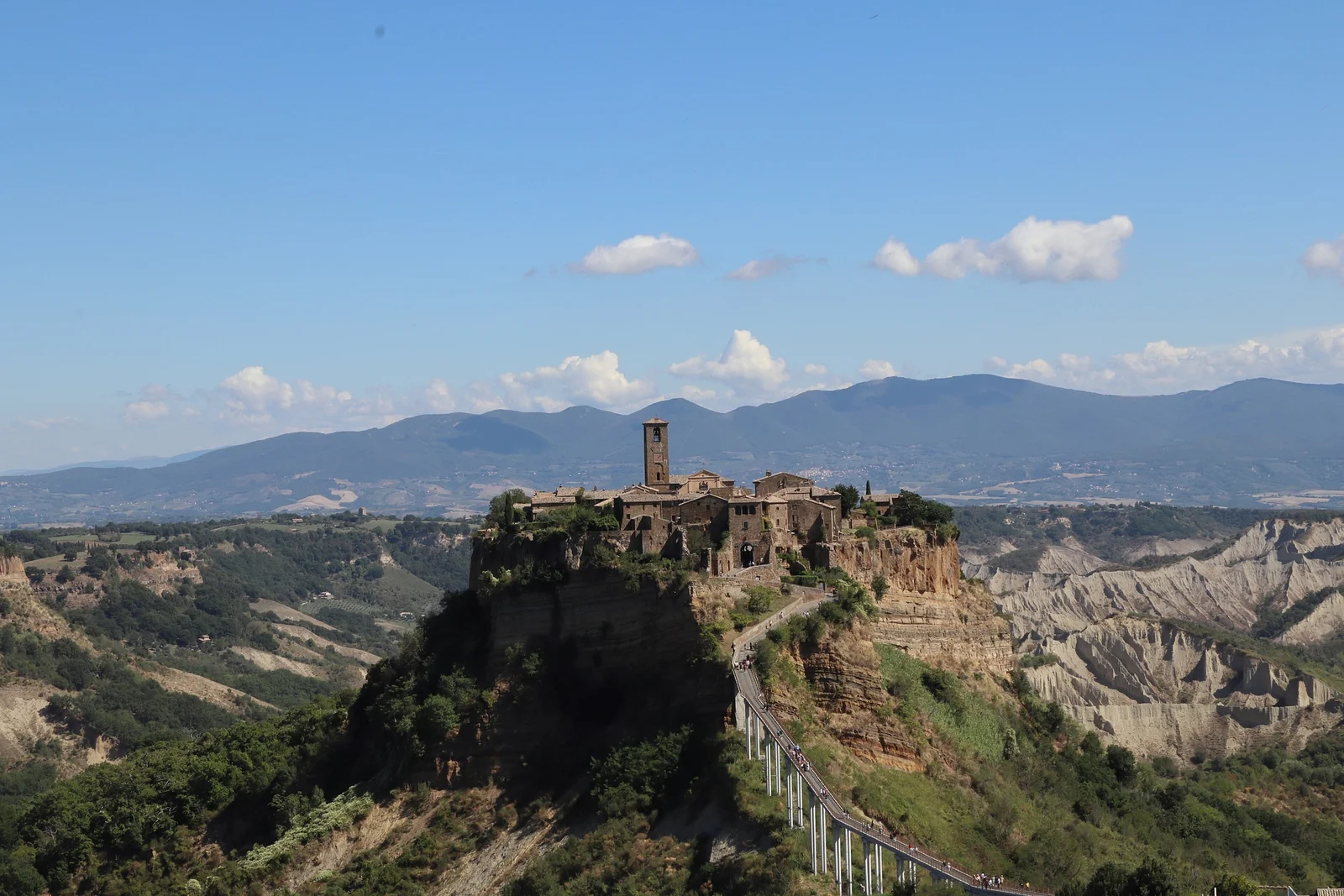
There is no road in. You park in Bagnoregio, walk to the footbridge and cross on foot. A ticket is required to enter, and the amount can change, so check it on the official Bagnoregio municipal site before you go. Cafés, shops and small restaurants operate in the village, which is the clearest sign that this is a living place, not a ghost town.
Visit it as a contrast, not a substitute. If what you want is silence and ruin, the other villages below deliver more. If you want a dramatic setting and are happy to share it with other travelers, Civita is an easy stop north of Rome, and our Rome travel guide is a good place to plan around it.
Pentedattilo: The Village Under the Five Fingers
Pentedattilo sits on a hillside in southern Calabria, below a rock formation shaped like a hand. The name comes from the Greek for five fingers. It is also the setting of the Alberti massacre of 1686, a bloody feud between noble families that locals still tell as a ghost story.
Sources disagree on exactly why the village emptied. Earthquake damage, landslides and the pull of emigration in the 20th century all appear in accounts, and it was eventually declared unfit to live in. Today part of it has been revived, with a few artisan workshops and visitors, and it is much more welcoming than most ghost towns.
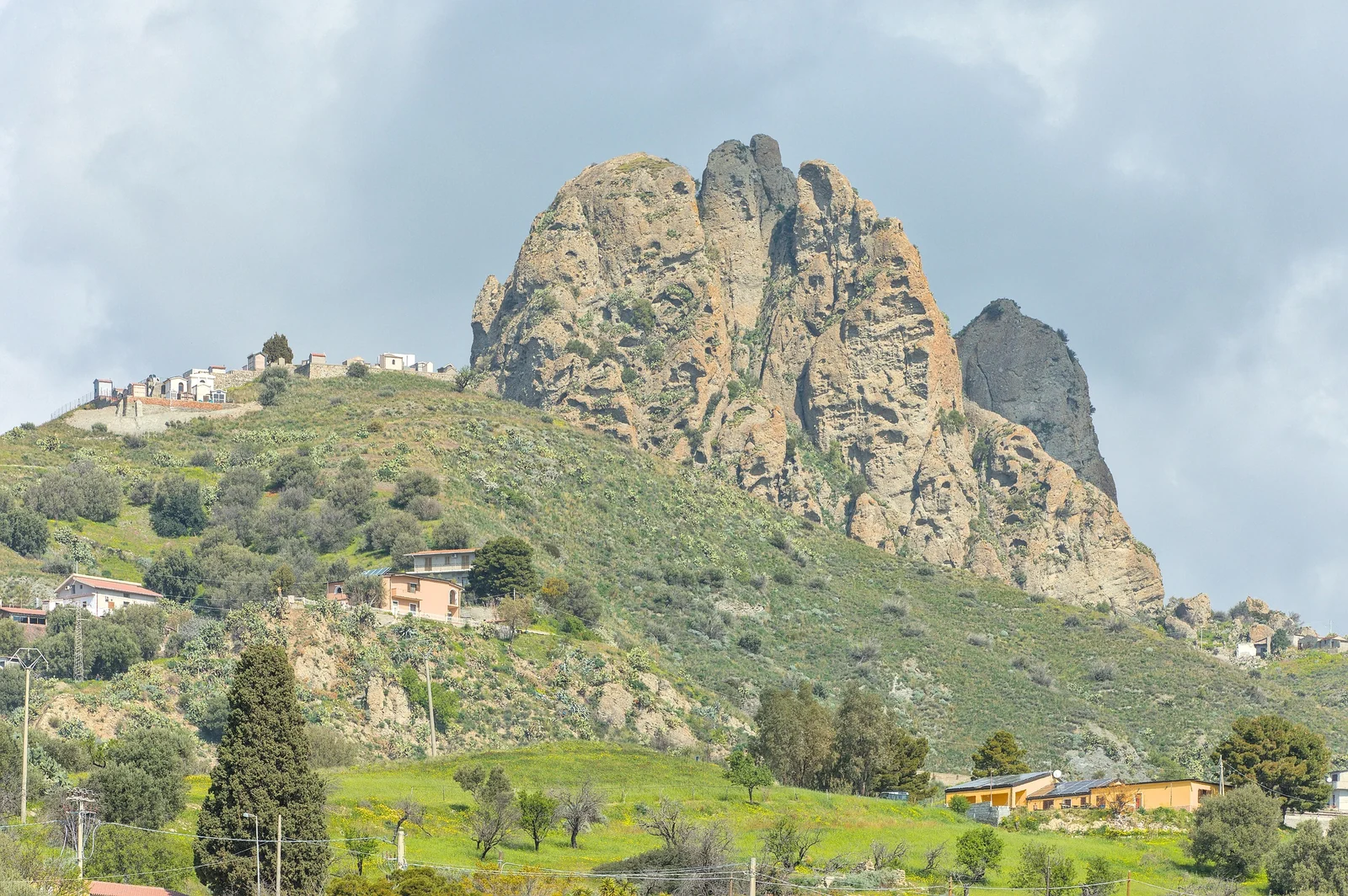
Getting there and access.
Pentedattilo lies roughly 30 kilometers south of Reggio Calabria, near Melito di Porto Salvo. A car is the easiest way. You park below the village and walk up the steep lanes, so wear sturdy shoes and expect uneven stone. There is no entrance gate, but the buildings that are still ruined are unsafe to enter. Stay on the open lanes and the squares.
Roscigno Vecchia: The Cilento's Open-Air Museum
Roscigno Vecchia, in the province of Salerno, was evacuated from 1902 because of landslide danger, and its people moved to Roscigno Nuova nearby. Some accounts add malaria as a factor. The old village was never demolished, so what you see is a nearly intact village: houses, a church and a square, all frozen in time.
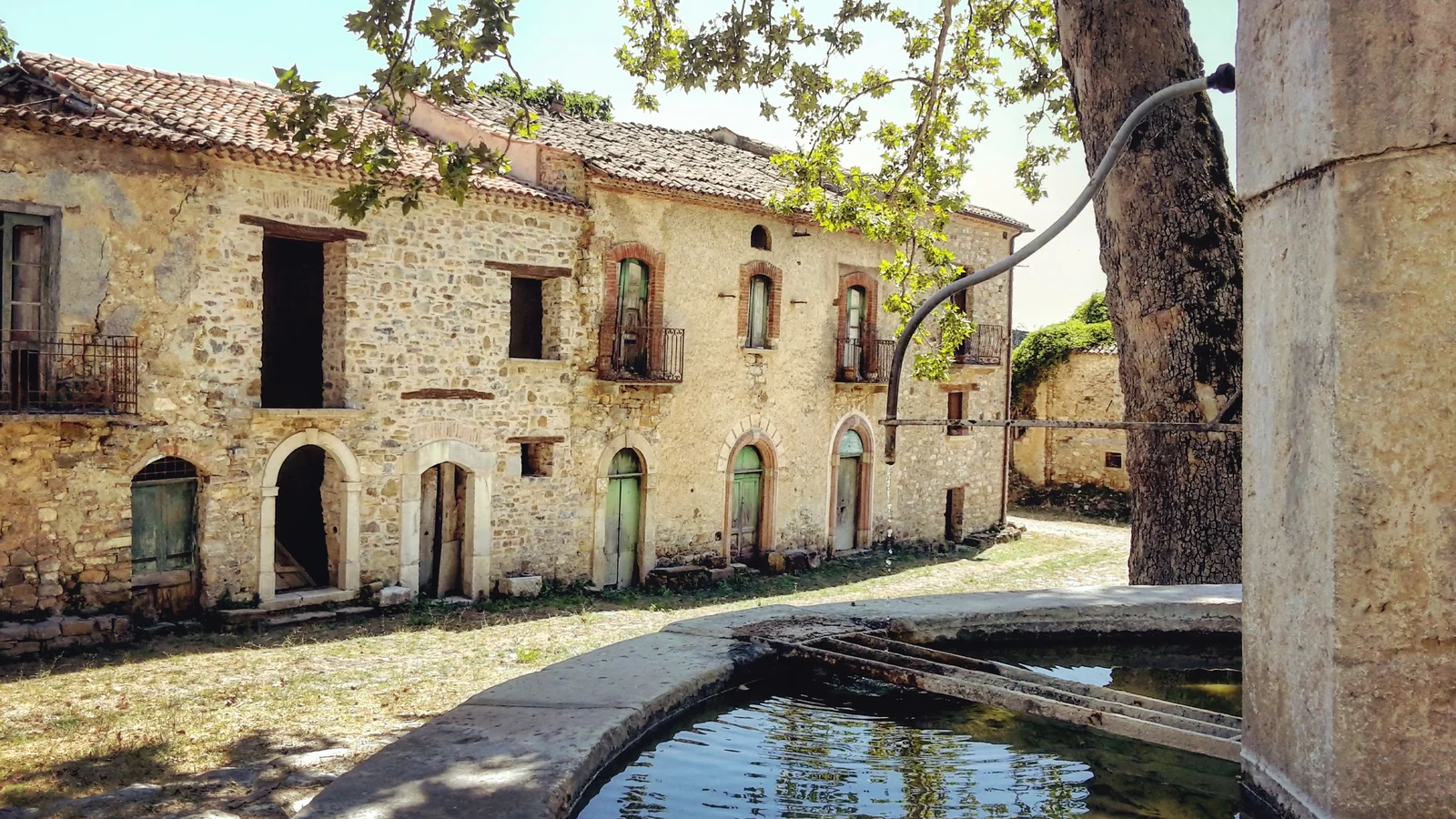
It is the easiest ghost town in this guide to enjoy. You can walk through the village, and a small museum of rural life is run by local volunteers. Opening hours are not reliable, so ask at the new village or check locally before relying on it. Reach it by car, and follow the main road, because navigation apps have been known to send drivers onto very narrow tracks. The A3 motorway toward Salerno and the Cilento is the main approach.
Gairo Vecchio: Sardinia's Village on the Slope
Gairo Vecchio is in the Ogliastra area of eastern Sardinia. A flood in October 1951 struck a village built on unstable ground, and residents gradually moved uphill to a new site. Accounts differ on the final dates, giving the early 1960s for abandonment and 1969 for the end of the move.
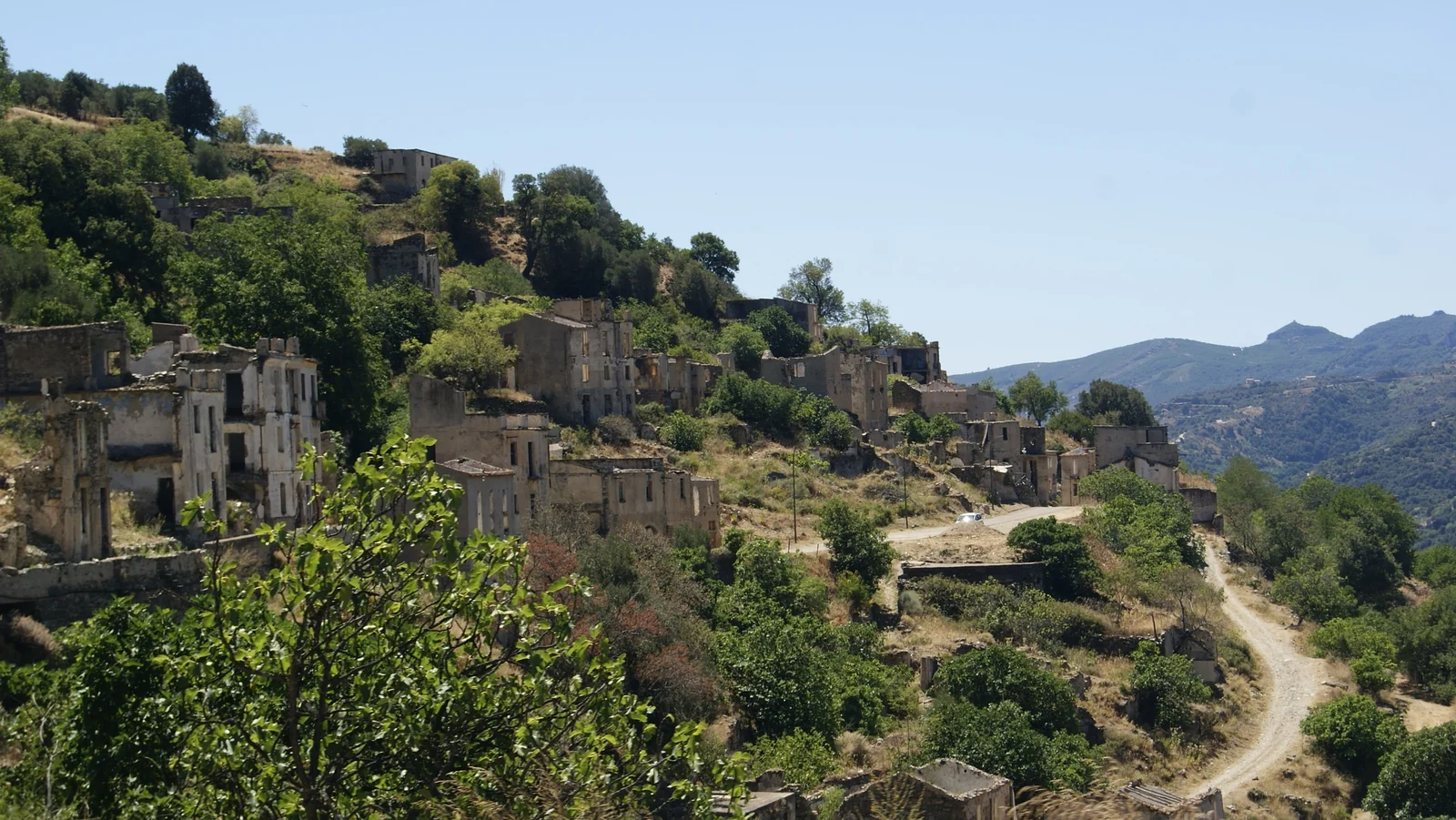
The old village is open to visitors, and you can walk among the empty houses and a restored church. There are no services on site, so bring water. Follow the signs from Gairo Sant'Elena, the new village, or the turn on the road near Osini. Locals return once a year for a religious feast in August, which is a good time to see it with people in it. Take care on loose stone, and keep out of buildings with broken roofs.
Bussana Vecchia: Liguria's Artists' Village
Bussana Vecchia was wrecked by an earthquake on Ash Wednesday of 1887, and the survivors rebuilt lower down the hill as Bussana Nuova. The abandoned village then stood empty for decades. In the early 1960s a group of artists began moving in and repairing the ruins, and it became an international artists' community.
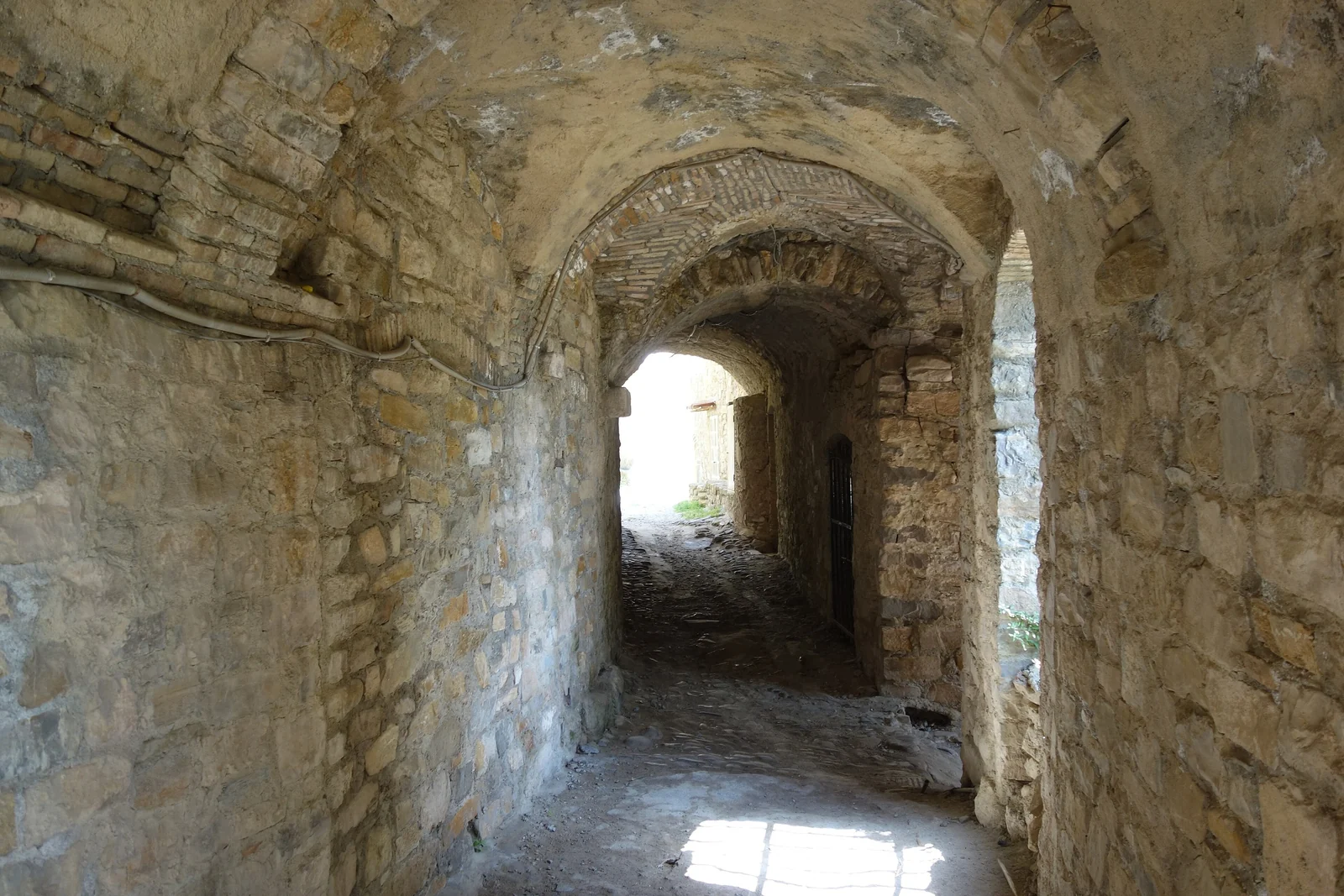
It is open to walkers, and a visit of about an hour is typical. The village is a short distance inland from Sanremo, and a bus from town plus a walk uphill is the standard way up, so check the current timetable. Studios and small galleries open at different times, and the status of the buildings has been disputed over the years. Stay on the main lanes and respect private doors.
Ruins to See From the Outside
Poggioreale Vecchia: Sicily's Earthquake Ruin
Poggioreale Vecchia in western Sicily was devastated by the Belice earthquake of January 1968, and its residents were moved to a new town built nearby. The old center was left as a field of broken buildings, and it is one of the best-known ruins of that disaster.
Access is the sticking point. Many travel guides say the old town is officially closed because buildings can collapse, and describe a locked gate. Italian media have reported a reopening project tied to national recovery funding, but the terms are not clear. Contact the municipality of Poggioreale before you go, and do not enter areas that are fenced off. From the new town you can see the ruins and the hills around them, which is the safe option if you cannot confirm access.
Consonno: The Failed City of Toys
Consonno is the strangest entry. It was a small hamlet in Lombardy, in the hills near Olginate in Lecco province, until a developer named Mario Bagno bought it in the 1960s and set out to build a resort town. The plan was a Las Vegas for the Milan area, with entertainment buildings, a minaret and a ballroom. The village was largely demolished to make way for it.
The dream did not last. A landslide cut the access road, and the sources differ on the exact year, with the 1970s most often named. The resort was never finished, and the half-built structures were left to weather, vandals and graffiti. Today Consonno is known for urban exploration and for longboarders who use the road.
Reaching it usually means walking, with a trail from the nearby village of Ello widely used, and the road is often blocked to cars. The buildings are in poor condition and many are unstable, so treat it as a place to see from the paths, not from inside. Check recent local reports on whether the area is open and who owns what before you plan a trip.
Balestrino: A Ligurian Hill Village Seen From Below
Balestrino in Liguria has a modern village at the base of a hill and an old one above it. The old village was abandoned in the middle of the 20th century because of geological instability, and sources differ between 1953 and the 1960s. A castle once held by the Del Carretto family dominates the top. It is privately owned and cannot be visited.
Independent wandering through the old village is generally not allowed, and the ruins are unsafe. The best approach is to park in the new village and look up at the old one and the castle. If you want to go further, ask the municipality or the local tourist office about any guided visits.
Safety and Etiquette at Italian Ghost Towns
Most of the danger in these places is mundane: loose stone, hidden holes and roofs that look solid but are not. A few rules cover almost everything.
- Stay out of closed areas. Fences and signs mean the building or slope has been judged unsafe, and trespassing can bring a fine.
- Wear real shoes. Pentedattilo and Gairo Vecchio have steep, uneven ground, and sandals are a poor choice.
- Do not take anything. Doors, tiles and furniture belong to someone, even if the owner is absent.
- Carry water and a charged phone. Most of these sites have no shops, and mobile signal can fade in the valleys.
- Ask before photographing people. Some places, such as Bussana Vecchia, have residents who live there year-round.
Weather matters as well. The south is hot in summer, and the same slopes that crumble in landslides can be slippery after heavy rain. Plan your visits for dry days in spring or autumn, and check conditions with the local municipality, whose website is the most reliable place for closures.
How to Plan a Route
The villages are spread from the Alps to Sicily, so choose by region. In the south, Craco, Roscigno Vecchia and Pentedattilo can each anchor a trip, and they are best done by car. In Liguria, Bussana Vecchia and Balestrino are an easy pair along the coast. Sardinia's Gairo Vecchio suits a drive through the Ogliastra mountains, and Civita di Bagnoregio fits between Rome and Tuscany.
If you want a mix, pair one open village with one guided visit. Craco with a night in Matera, or Roscigno Vecchia on the way down the Cilento coast, give a good sense of the south. For the rest of the country, see our Italy travel guides. For a similar trip in another country, our guide to abandoned villages in Spain covers the same kind of places.
Abandoned Villages in Italy FAQ
Which abandoned village in Italy is the easiest to visit?
Roscigno Vecchia in Campania and Bussana Vecchia in Liguria are the simplest. Both are open to walkers without a booking, and both have small facilities nearby. Pentedattilo is also open, but the climb up is steep and you need good shoes.
Can you enter Craco on your own?
Not freely. Craco is visited on guided tours, and visitors follow the guide's route and safety rules. The buildings are unstable after years of landslides. Book a tour in advance, and check the Craco day trip guide for the details.
Is Civita di Bagnoregio an abandoned village?
No. It is a living but very small town, with only a handful of year-round residents. It is called the dying city because erosion eats away the hill it stands on. You reach it by a pedestrian bridge and pay an entry fee.
Is it safe to visit Poggioreale Vecchia?
Only with care. Guides warn that buildings can collapse, and access has been officially restricted. Ask the municipality of Poggioreale about the current rules, stay out of fenced areas, and consider viewing the ruins from outside.
Can you visit Consonno?
You can usually reach the area on foot, often from the village of Ello, but the buildings are derelict and unsafe to enter. Access conditions have varied over time, so look for recent local information before you go.
What is the best time of year to visit Italian ghost towns?
Spring and autumn are the most comfortable, especially in the south, where summer heat can be harsh on exposed slopes. Avoid days after heavy rain, when stone and steps become slippery and landslide-prone ground is less stable.