Budapest is the capital of Hungary, a city of about 1.7 million people split by the Danube into hilly Buda on the west bank and flat, busy Pest on the east. It is one of the easiest big European cities to enjoy: grand 19th-century architecture, a Castle Hill with sweeping views, natural hot springs under bathhouses you can use for the price of a modest lunch, and a nightlife scene built inside crumbling courtyards.
Three full days is the right amount for the main sights, and a fourth lets you leave town. This Budapest travel guide covers what to see in Buda and Pest, how the thermal baths work, where to eat, when to go, how to get around and which neighborhoods suit which kind of trip. For more of the country, see our Hungary travel guides.
Buda Castle Hill and Fisherman's Bastion
Castle Hill is a long limestone plateau above the Danube, and the Buda Castle Quarter belongs to the UNESCO World Heritage listing for the banks of the Danube, inscribed in 1987. Kings of Hungary lived here from the 13th century, and the huge palace you see today, much rebuilt after World War II, now houses the Hungarian National Gallery and the Budapest History Museum.
You can climb up on foot from the Chain Bridge, take the Sikló funicular (running since 1870) or ride a bus from Széchenyi István tér. Walking is the better choice if your knees allow it, because the lanes behind the palace are quiet and lined with Baroque houses.
Matthias Church and the Bastion
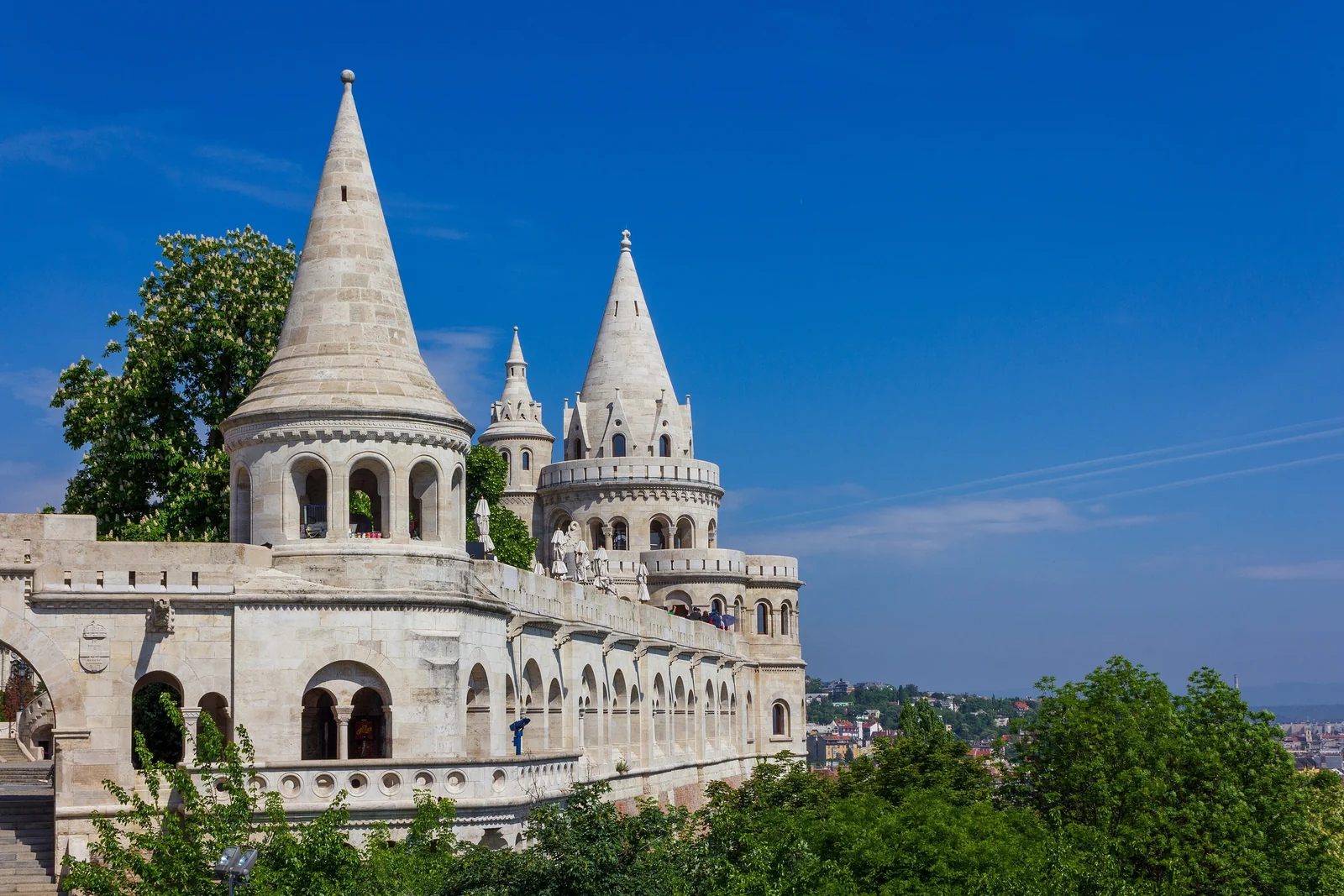
Matthias Church, with its patterned Zsolnay-tile roof, stands in the middle of the old town. Beside it, Fisherman's Bastion is a fairy-tale terrace of white stone turrets built between 1895 and 1902 and designed by Frigyes Schulek. It was never a real fortress. Its seven towers are usually linked to the seven Magyar tribes, and the terraces give you the classic view across the river to the Parliament.
The bastion is crowded from mid-morning. Go at opening time or after dinner, and check the official site for which upper terraces charge a fee.
The Parliament, the Chain Bridge and the Danube
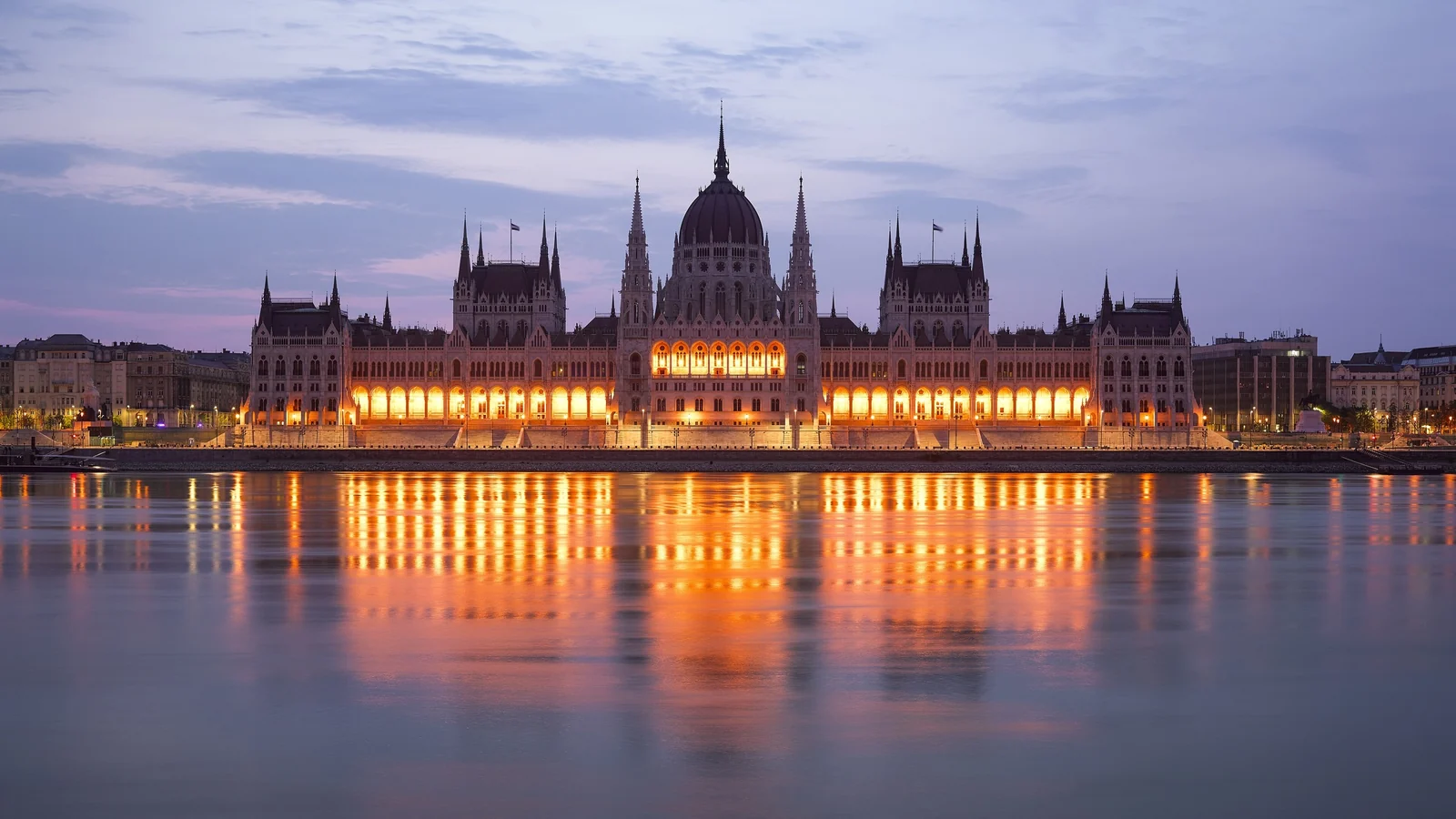
Hungarian Parliament Building
Imre Steindl's neo-Gothic Parliament was built between 1885 and 1904 and is one of the largest in Europe. It holds the Holy Crown of Hungary under its central dome. Interior visits are guided and tied to timed tickets, so book in advance on the official Visitors' Centre site and bring photo ID in case it is asked for.
The Chain Bridge
The Széchenyi Chain Bridge, opened in 1849, was the first permanent span across the Danube in the city. It was designed by the English engineer William Tierney Clark and built under the Scottish engineer Adam Clark. Retreating troops blew it up in 1945, and it was rebuilt and reopened in 1949. Walk across at dusk with the castle lit up behind you.
Cruising the Danube
Evening river cruises pass under the bridges and give you the Parliament, the castle and Gellért Hill in one go. They range from a plain sightseeing loop to dinner boats, so compare duration and what is included before you pay. If you only do one, make it after dark, when the buildings are floodlit.
Thermal Baths: Széchenyi, Gellért and Rudas
Budapest sits on a network of thermal springs, and bathing is part of daily life here rather than a tourist stunt. You'll see locals playing chess in hot water. Each of the three famous baths has its own personality, so pick by mood.
| Bath | Opened | Setting | Best for |
|---|---|---|---|
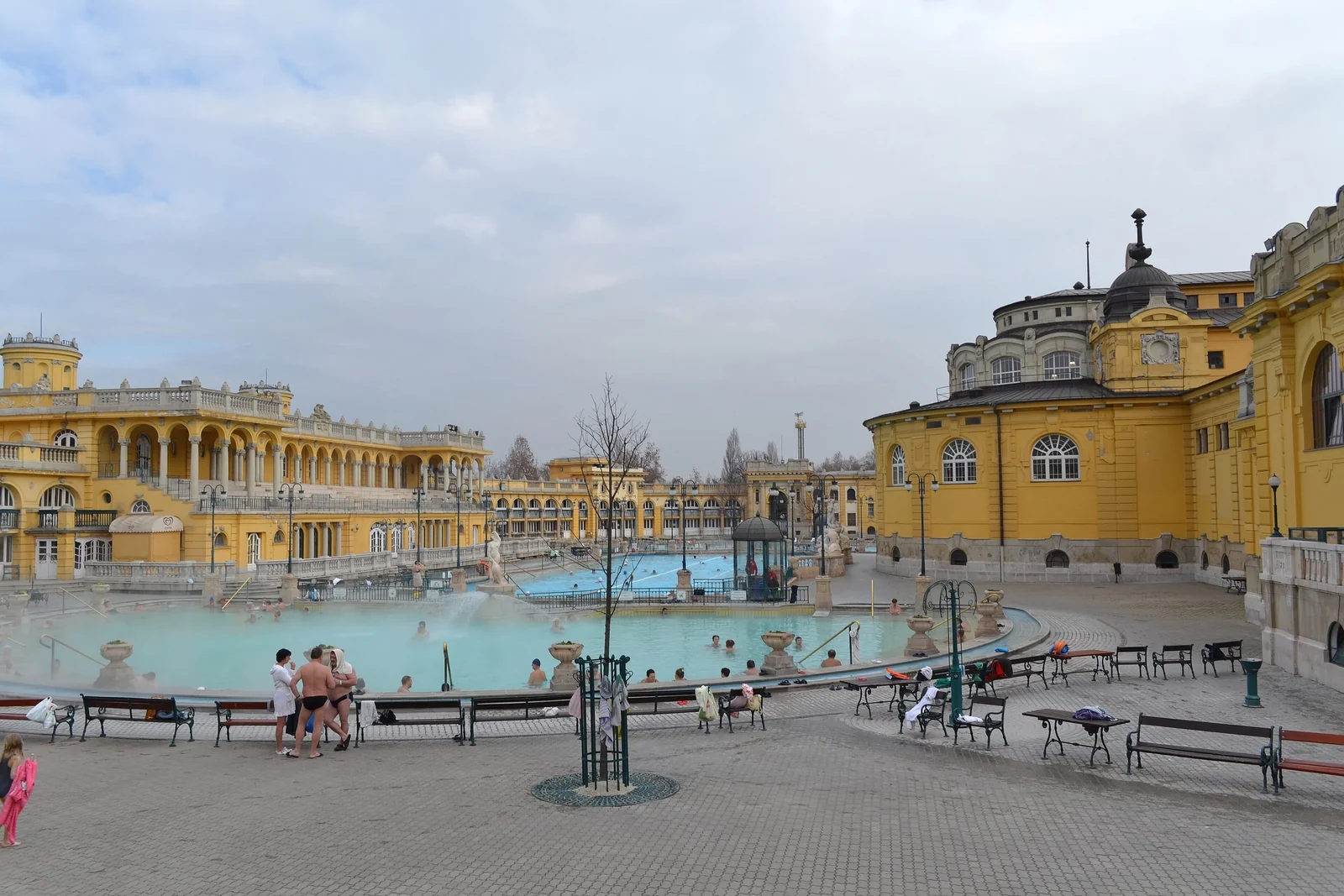
| Széchenyi | 1913 | Yellow neo-Baroque complex in City Park, indoor and outdoor pools | First-timers, outdoor soaking in cool weather |
| Gellért | 1918 | Art Nouveau hall at the foot of Gellért Hill | Architecture, a quieter ambience |
| Rudas | 16th century | Ottoman-era domed pool on the Buda riverbank | Atmosphere, a rooftop pool with Danube views |
Széchenyi is the largest and the easiest to reach, with the M1 line stopping nearby. Expect a mix of lap pools, hot pools and steam rooms, and a busy changing system. Arrive early on weekdays, bring flip-flops and a towel or plan to rent one.
Gellért is the grand dame, famous for its mosaics, columns and glass-roofed pool hall. Parts of the complex have been under renovation in recent years, so check what is open before you go. Rudas keeps the original Ottoman pool under a dome, plus a modern wellness area. Access and mixed or single-gender days differ between the historic and modern sections, so read the schedule on the Rudas site before you commit.
Whichever you choose, rinse before getting in, wear a swimming cap if the pool requires one, and don't stay in the hottest pool for more than a short stretch. Tickets are usually cheaper at weekday off-peak times, but confirm current prices on each bath's official page.
The Jewish Quarter and Ruin Bars
District VII, the old Jewish Quarter, is where central Pest gets loud. The Dohány Street Synagogue, finished in 1859, is the largest synagogue in Europe, and the nearby memorials tell the story of the Budapest ghetto. Visit by day and give it a proper hour.
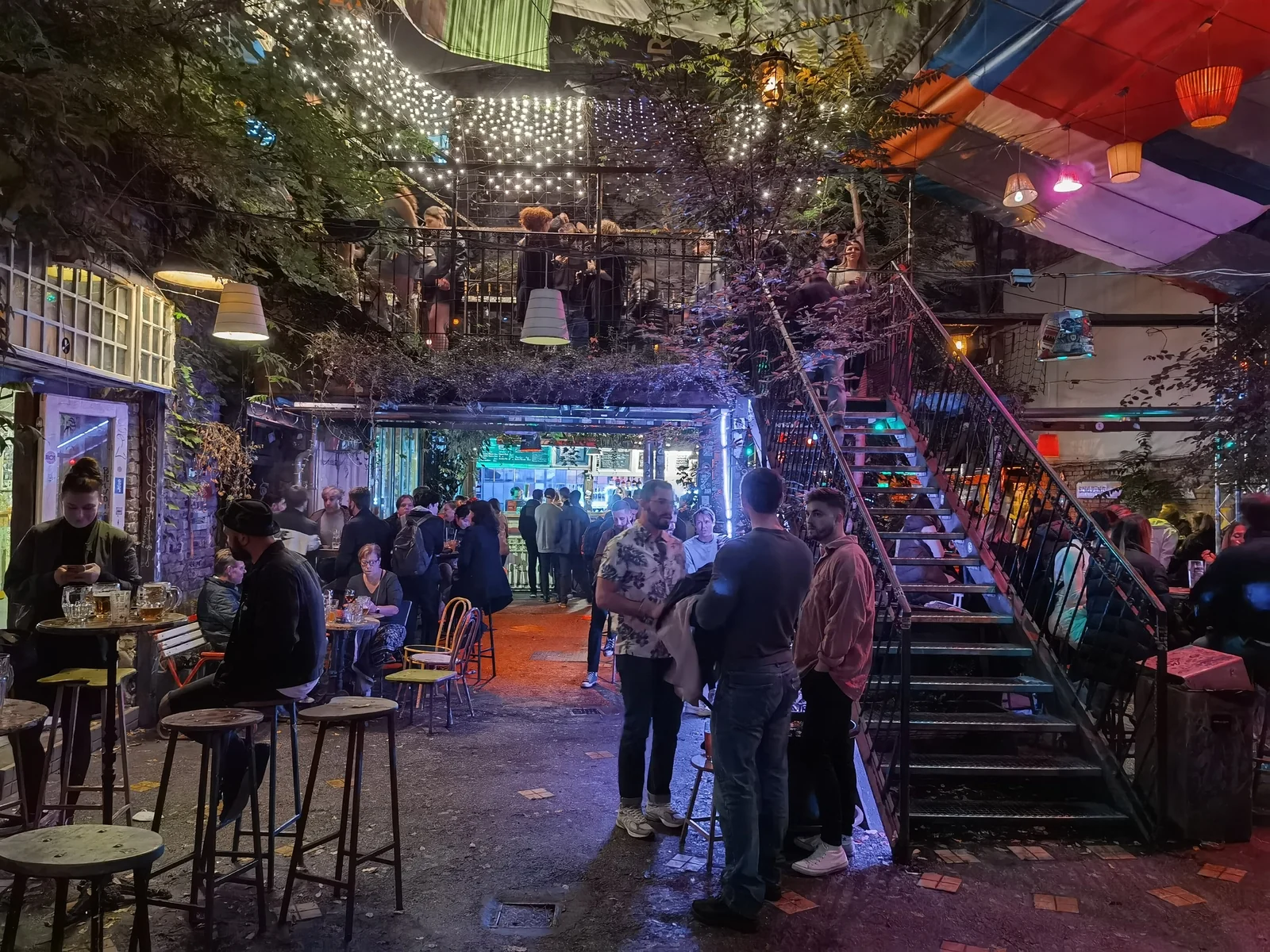
After dark the same streets fill with ruin bars (romkocsma), pubs set up in abandoned buildings and courtyards from the early 2000s onward. Szimpla Kert, opened in 2002 on Kazinczy Street, is the original and still the best known. It is a maze of mismatched furniture, bicycles hung from ceilings and tiny rooms. Go in the afternoon for a quiet look, in the evening for the crowds.
Keep an eye on drink tabs and avoid exchanging money on the street. Prices are reasonable by Western European standards, but the busiest streets can get rowdy on weekends.
What to Eat: Goulash, Lángos and Chimney Cake
Hungarian food is hearty and paprika-forward. The famous goulash (gulyás) is really a beef soup with potatoes and carrots, not the thick stew many visitors expect; the thicker paprika stew is called pörkölt. Look for it in a small family restaurant instead of a tourist-menu place on the main squares.
Lángos is deep-fried flatbread, most often topped with sour cream and grated cheese. It is street food at its greasiest and most satisfying, and the market hall's upper level is a classic place to eat one. Chimney cake (kürtőskalács) is sweet dough wound around a spit, baked over embers and rolled in sugar, cinnamon or walnuts. Eat it hot.
Great Market Hall
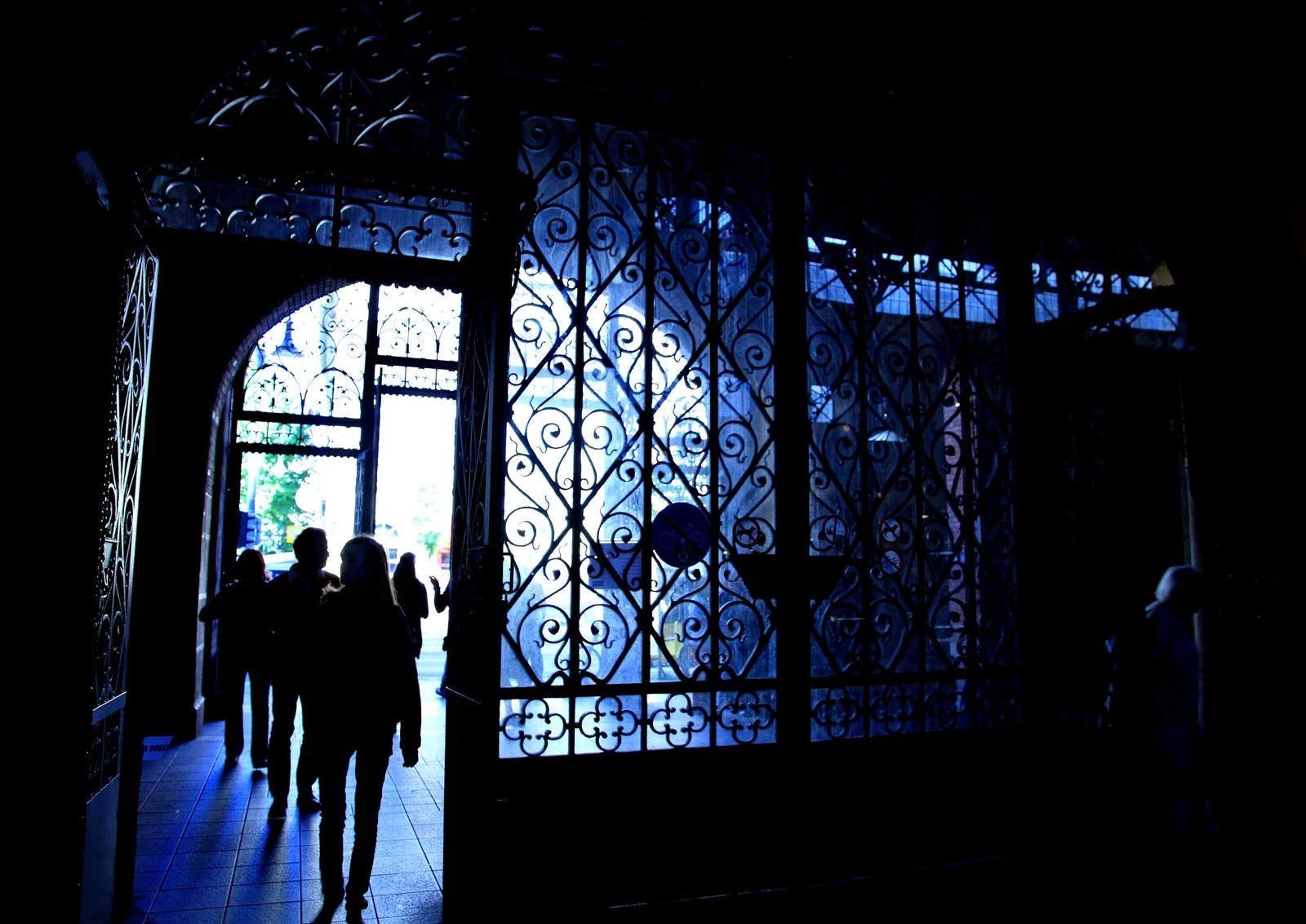
The Great Market Hall (Nagyvásárcsarnok) at the Pest end of the Liberty Bridge opened in 1897 and was designed by Samu Pecz. Its iron-and-glass hall is worth seeing even if you buy nothing. Ground-floor stalls sell paprika, salami and pickles; the gallery above sells lángos and souvenirs. Go in the morning on a weekday, and check opening days, as it is typically closed on Sundays.
Round off the day with a Hungarian wine. The country makes serious white and red wines, and the Tokaj sweet wine and the red Egri Bikavér from Eger are the best-known names.
A 3-Day Budapest Itinerary
Day 1: Buda
Walk up to Castle Hill in the morning, see Matthias Church and Fisherman's Bastion, then browse the palace museums. Come down for lunch near the river, and cross the Chain Bridge on foot. Finish with a Danube cruise after dark.
Day 2: Pest
Start at the Parliament with a booked tour, stroll along Andrássy Avenue (UNESCO-listed in 2002) toward Heroes' Square and spend the afternoon in a thermal bath at Széchenyi in City Park. Eat dinner in Erzsébetváros and then take in a ruin bar or two.
Day 3: Markets, Gellért and the Quarter
Visit the Great Market Hall when it opens, cross the Liberty Bridge to Gellért Hill and its Citadel viewpoint, then soak at Gellért or Rudas. Spend the afternoon at the Dohány Street Synagogue and wander the Jewish Quarter before an evening meal.
If you have a fourth day
Leave the city for the Danube Bend or Eger (below), or take a slower day on Margaret Island, a car-free park in the middle of the Danube. If you're continuing north, our Kraków travel guide is a natural next stop.
Day Trips: Szentendre, Esztergom and Eger
| Destination | How to get there | Approx. time | Best for |
|---|---|---|---|
| Szentendre | HÉV suburban railway from Batthyány tér | About 40 minutes | Artists' town, galleries, cobbled lanes |
| Danube Bend: Visegrád and Esztergom | Train or bus from Budapest, or a seasonal river boat | 1 to 2 hours | Hilltop fortress, Hungary's largest basilica |
| Eger | Train or bus from Budapest | About 2 hours | Castle, Baroque center, wine cellars |
Szentendre
A small riverside town north of Budapest with colorful Baroque houses, museums and a long tradition as an artists' colony. It is easy and relaxed, ideal for a half-day when you want a break from the city.
Esztergom and the Danube Bend
At the Danube Bend the river turns sharply south between wooded hills. Visegrád has a medieval hilltop citadel with a wide view of the bend, while Esztergom is home to the huge basilica on the river, the largest church in Hungary. Combine both in a long day, or choose just one.
Eger
This northern Hungarian town is known for its castle, which held out against an Ottoman siege in 1552, and for a Turkish minaret, its wine cellars and the red blend Egri Bikavér. Staying overnight lets you try the cellars without rushing back to the train.
Looking for a different kind of side trip? See our Slovenia travel guide for another small, easy-going Central European country.
When to Visit Budapest
- April to June: mild, green and lively, with terrace weather and manageable crowds.
- July and August: hot and busy. Bath complexes are crowded, but evening cruises and riverbanks are at their best.
- September and October: pleasant temperatures, wine-harvest season and thinner crowds, often the best balance.
- November to March: cold and gray, yet this is when outdoor thermal pools feel best, and there are Christmas markets in early December.
Whatever the month, book Parliament tickets and your favorite bath in advance if you're traveling on a weekend.
Getting Around and Where to Stay
Getting there and around
Budapest Ferenc Liszt International Airport connects to the center by bus and taxi, and the 100E airport bus is the simplest direct option. The city has four metro lines, trams and buses run by BKK, and the historic M1 line, which opened in 1896, runs under Andrássy Avenue. Single tickets are valid for one journey and must be validated; travel cards for 24 hours, 72 hours or longer are usually better value. Check the BKK site for current fares and routes. Hungary uses the forint, not the euro, so withdraw from a bank ATM instead of changing cash on the street.
The core sights are walkable, and trams 2 and 19 follow the Danube. Use the metro or a tram for the Széchenyi baths and the hilltops.
Where to stay
- District V (Belváros-Lipótváros): central and polished, near the Parliament and the river. Convenient and pricier.
- District VII (Jewish Quarter): the best choice for nightlife and restaurants, but expect noise on weekends.
- District VI (Terézváros): along Andrássy Avenue, with good metro links and a calmer feel.
- District I (Castle Hill and Víziváros): quiet and scenic, with steeper walking.
- District IX (Ferencváros): near the market hall, good for value and local restaurants.
Budapest Travel FAQ
How many days do you need in Budapest?
Three days cover Buda Castle Hill, the Parliament, a thermal bath, the market hall and the Jewish Quarter at a relaxed pace. Add a fourth day if you want a day trip to Szentendre, Esztergom or Eger.
Which thermal bath in Budapest is best?
Széchenyi is the classic outdoor bath and the easiest first choice. Gellért has the most beautiful Art Nouveau interior, and Rudas offers an Ottoman pool and a rooftop with river views. Check current opening details before going.
Do you need to book the Parliament in advance?
Yes. Interior visits are by guided tour with timed tickets, and popular slots sell out, particularly in the busy season. Book through the official Visitors' Centre website and check the tour languages offered.
Is Budapest safe for tourists?
Generally yes. Watch for pickpockets on crowded trams, at the market hall and in nightlife areas, and be careful with taxis and street money changers. Use licensed taxis or a ride app and keep an eye on bar tabs.
What currency is used in Budapest?
Hungary uses the forint (HUF), not the euro. Cards are widely accepted, but withdraw cash from a bank ATM for small purchases and markets. Avoid street exchange booths with unclear rates.
What is the best way to get from Budapest to Eger?
Trains and buses both run from Budapest, with a journey of around two hours. Check current timetables on the official rail and bus operators, and consider an overnight stay if you want to visit the wine cellars.