


Tbilisi, the capital of Georgia, spreads along the Mtkvari River in a valley at the edge of the Caucasus. It is one of the easiest places in the region for a first trip: a walkable old town of carved wooden balconies and brick-domed sulfur baths, a food culture that turns dinner into an event, and wine made in clay jars the same way it has been for thousands of years.
Give the city three days, then use it as a base for day trips to the ancient capital of Mtskheta, the high mountains around Kazbegi and the wine country of Kakheti. This Tbilisi travel guide covers what to see in Old Tbilisi, what to eat and drink, how to get around and when to go. For more ideas around the country, browse our Georgia travel guides.
Old Tbilisi: Narikala and the Sulfur Baths
The oldest part of the city sits on the right bank of the river, squeezed between the water and the ridge of Sololaki hill. Half the pleasure is getting lost among crumbling courtyards, tiny churches and cellar wine bars. Start early, before the day-trip groups arrive.
Narikala Fortress and Mother of Georgia
Narikala has guarded the city since late antiquity, though most of the walls you see were rebuilt over later centuries by whoever happened to control Tbilisi at the time. You can walk up from the baths in 15 to 20 minutes or ride the cable car from Rike Park across the river. The views over the rooftops, the river and the domes of the cathedral are the best introduction to the city's layout.
Follow the ridge west to Kartlis Deda, the aluminum Mother of Georgia statue put up in 1958. She holds a sword for enemies and a bowl of wine for friends, which tells you a lot about how Georgians see themselves.
Abanotubani, the Bath District
According to legend, King Vakhtang Gorgasali founded Tbilisi in the 5th century after his falcon fell into a hot spring here, and the name itself comes from the Georgian word for warm. The low brick domes of Abanotubani cover bathhouses fed by those sulfur springs. The most photographed is the Orbeliani bath, with its blue-tiled, mosque-like facade.
Most baths rent private rooms by the hour, with a hot pool, a shower and sometimes a cooler plunge, and you can add a scrub from an attendant. It is a very local experience and a good way to end a long walking day. Book ahead for evenings and weekends, and expect the water to smell of eggs.
Sameba, Rustaveli Avenue and Modern Tbilisi
Holy Trinity Cathedral (Sameba)
On Elia hill across the river, the Holy Trinity Cathedral, known simply as Sameba, was built between 1995 and 2004 and is one of the tallest Orthodox cathedrals in the world. Dress modestly: women usually cover their hair, and men and women both cover their legs. Wraps are often available at the door.
Rustaveli Avenue
Tbilisi's grand boulevard runs north from Freedom Square, lined with plane trees and 19th- and 20th-century public buildings: the Georgian National Museum, the Opera and Ballet Theater with its Moorish-style facade, the old Parliament and Kashveti Church. The museum's gold treasury of ancient jewelry is the highlight for most visitors.
Fabrika and the Left Bank
Across the river in Chugureti, Fabrika is a former Soviet sewing factory turned into a hostel and creative courtyard full of cafés, bars and small shops, with murals on most walls. It is busiest in the evening and is a good place to see how younger Tbilisi spends its time.
The Dry Bridge Market
Around the Dry Bridge and the small park beside it, traders lay out Soviet badges, old cameras, vinyl, silver, carpets, paintings and plenty of things that defy description. Bargaining is expected, so take your time and carry cash. Weekends usually bring the most stalls.
Georgian Food: Khinkali, Khachapuri and the Supra
Georgian cooking is generous, heavy on walnuts, herbs, garlic and pomegranate, and very good value. It is reason enough to come. Portions are big, so order a few dishes to share rather than one each.
What to Order
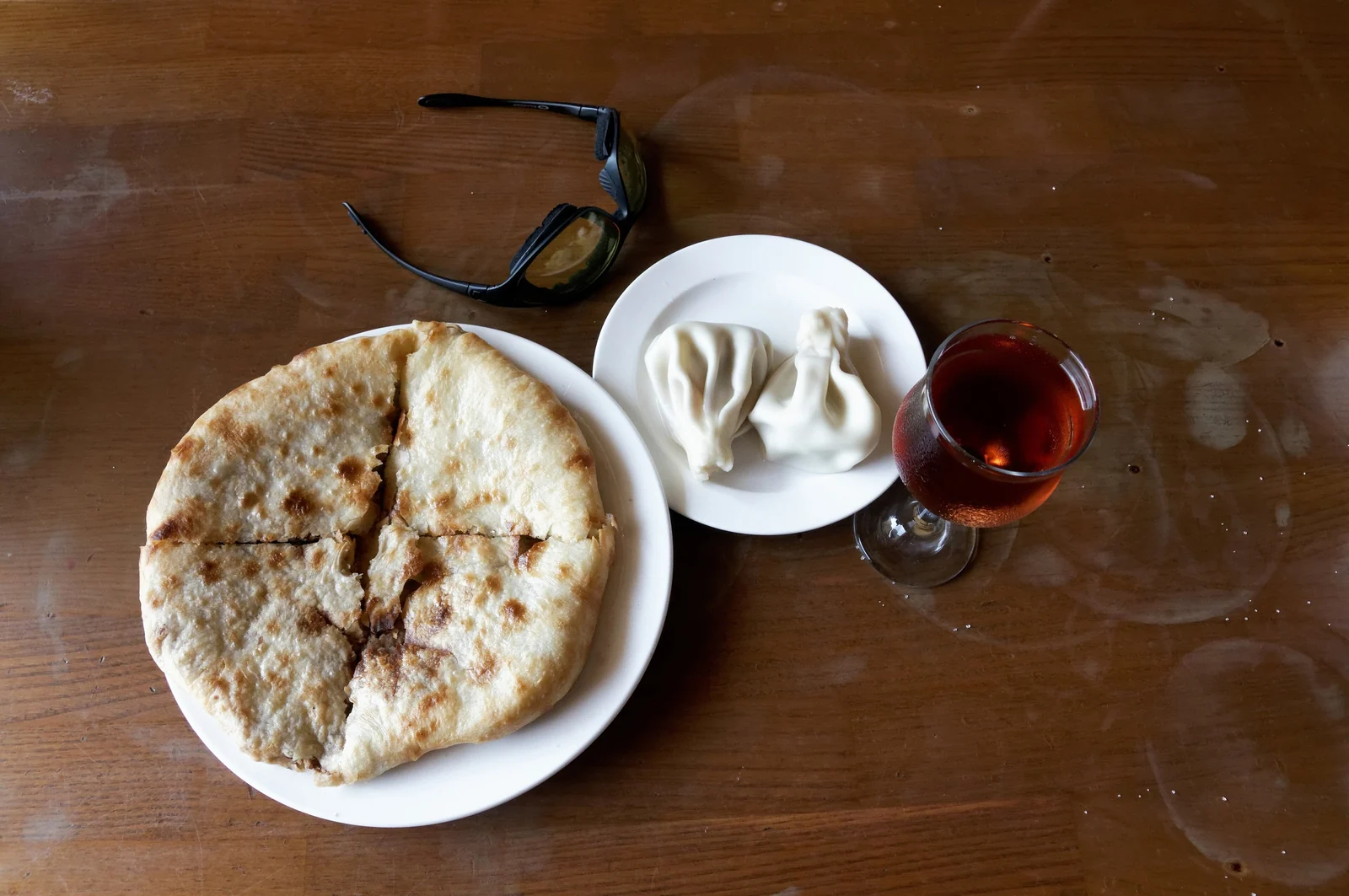
- Khinkali: twisted dumplings filled with spiced meat and broth, originally a mountain dish. Hold one by the knot on top, bite a small hole, sip the broth, then eat the rest. Leave the knot on your plate.
- Khachapuri: cheese bread in many regional styles. Imeruli is round and filled; Adjaruli is boat-shaped, topped with an egg and butter that you stir into the molten cheese.
- Pkhali and badrijani: vegetable pâtés with walnut paste, and fried eggplant rolls filled with walnut and garlic. Good news for vegetarians.
- Mtsvadi: skewers of grilled meat, usually pork, served with raw onion and tangy plum sauce, tkemali.
- Churchkhela: walnuts threaded on a string and dipped in thickened grape juice, sold everywhere and easy to carry home.
The Supra and the Tamada
A supra is a traditional Georgian feast, and if you are invited to one, go. A tamada, or toastmaster, leads a long series of toasts to peace, to the dead, to parents, to friendship and to guests. You drink wine after each one, often draining the glass, and say gaumarjos, the Georgian cheers. Pace yourself, wait for the tamada before drinking, and don't toast with beer, which is traditionally reserved for less friendly sentiments.
Qvevri Wine and Where to Taste It
Georgia has one of the oldest winemaking traditions on earth. Its signature method ferments grapes, often with skins, stems and seeds, in a qvevri, a large egg-shaped clay vessel buried in the ground. UNESCO added the traditional qvevri winemaking method to its Intangible Cultural Heritage list in 2013.
White grapes made this way turn deep amber, with tannin and a dry, slightly nutty taste that surprises people used to crisp whites. Look for Rkatsiteli and Mtsvane among the whites and Saperavi, an inky red, among the reds. In Tbilisi, small wine bars around Sololaki and the old town pour by the glass. To see qvevri in the ground, head to Kakheti.
Day Trips from Tbilisi: Mtskheta, Kazbegi and Kakheti
| Destination | How to get there | Approx. travel time | Best for |
|---|---|---|---|
| Mtskheta | Marshrutka from Didube station, taxi or Bolt | About 30 minutes | Ancient churches, a half-day trip |
| Kazbegi (Stepantsminda) | Marshrutka from Didube, shared taxi or tour | About 3 hours | High mountains, Gergeti Trinity Church, hiking |
| Sighnaghi and Kakheti | Marshrutka from Samgori station, driver or tour | About 2 hours | Wine, Alazani Valley views, Bodbe Monastery |
Mtskheta
Georgia's ancient capital sits where the Aragvi and Mtkvari rivers meet, just north of Tbilisi. Its historical monuments are a UNESCO World Heritage Site, listed in 1994. In town, Svetitskhoveli Cathedral is the spiritual heart of the Georgian church, said to stand over the burial place of Christ's robe. On the hill opposite, the 6th-century Jvari Monastery overlooks the river confluence.
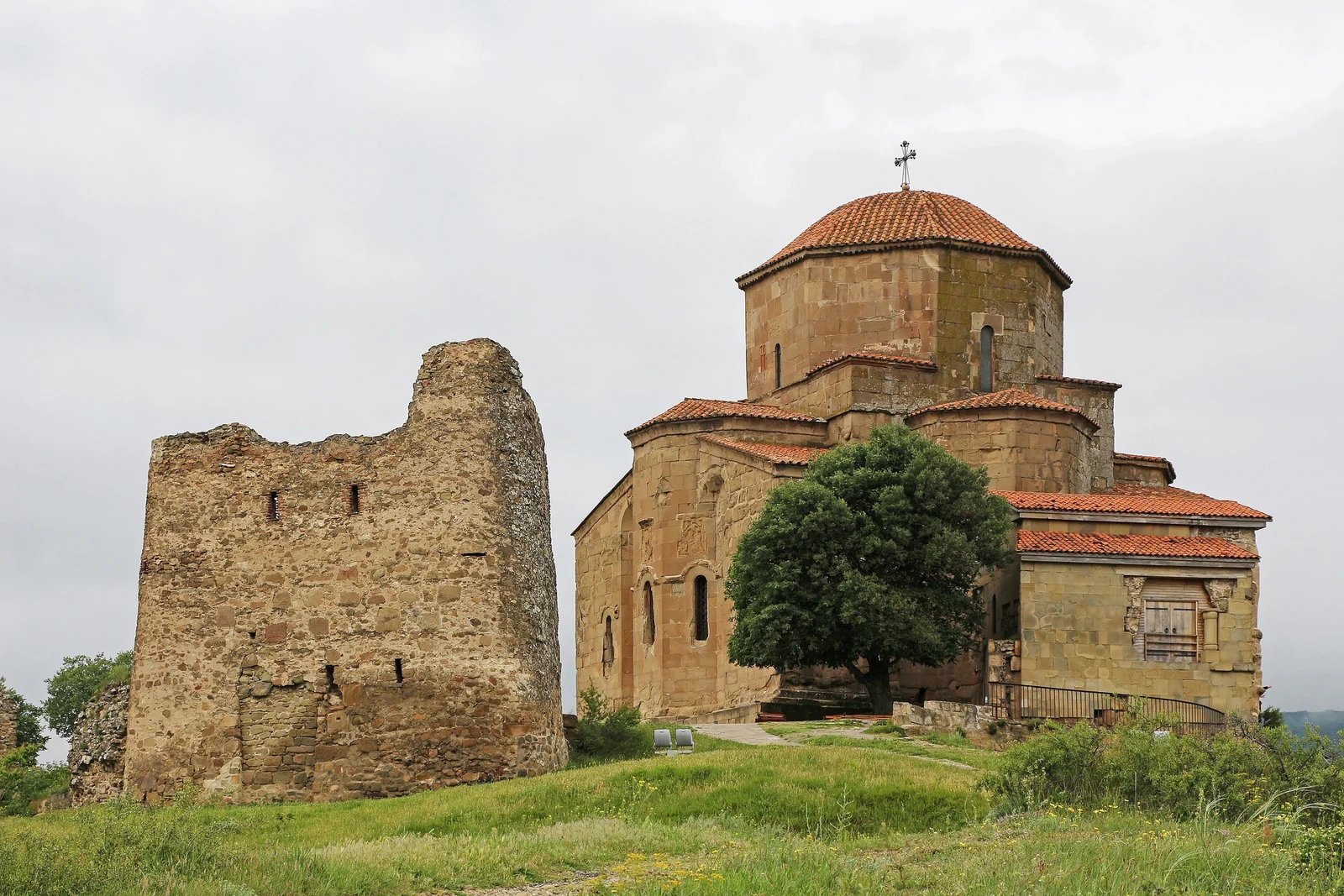
Jvari is a separate drive up the hill, so take a taxi from town. Half a day is enough, which makes Mtskheta a good first stop on the way to Kazbegi.
Kazbegi and Gergeti Trinity via the Georgian Military Road
The Georgian Military Road runs north from Tbilisi over the Greater Caucasus toward the Russian border, and it is one of the great drives in this part of the world. Stop at Ananuri, a fortress and churches above the Zhinvali reservoir, then climb past the ski resort of Gudauri to the Jvari Pass, at roughly 2,400 meters. Just before the pass, the Soviet-era Russia–Georgia Friendship Monument has a curved mosaic wall above a deep gorge.
The road ends for most visitors at Stepantsminda, still widely called Kazbegi. Above the village, the 14th-century Gergeti Trinity Church sits alone on a ridge at about 2,170 meters, with the glaciers of Mount Kazbek, which tops 5,000 meters, rising behind it. You can hike up in around 1.5 to 2 hours or ride a 4x4 from the village.
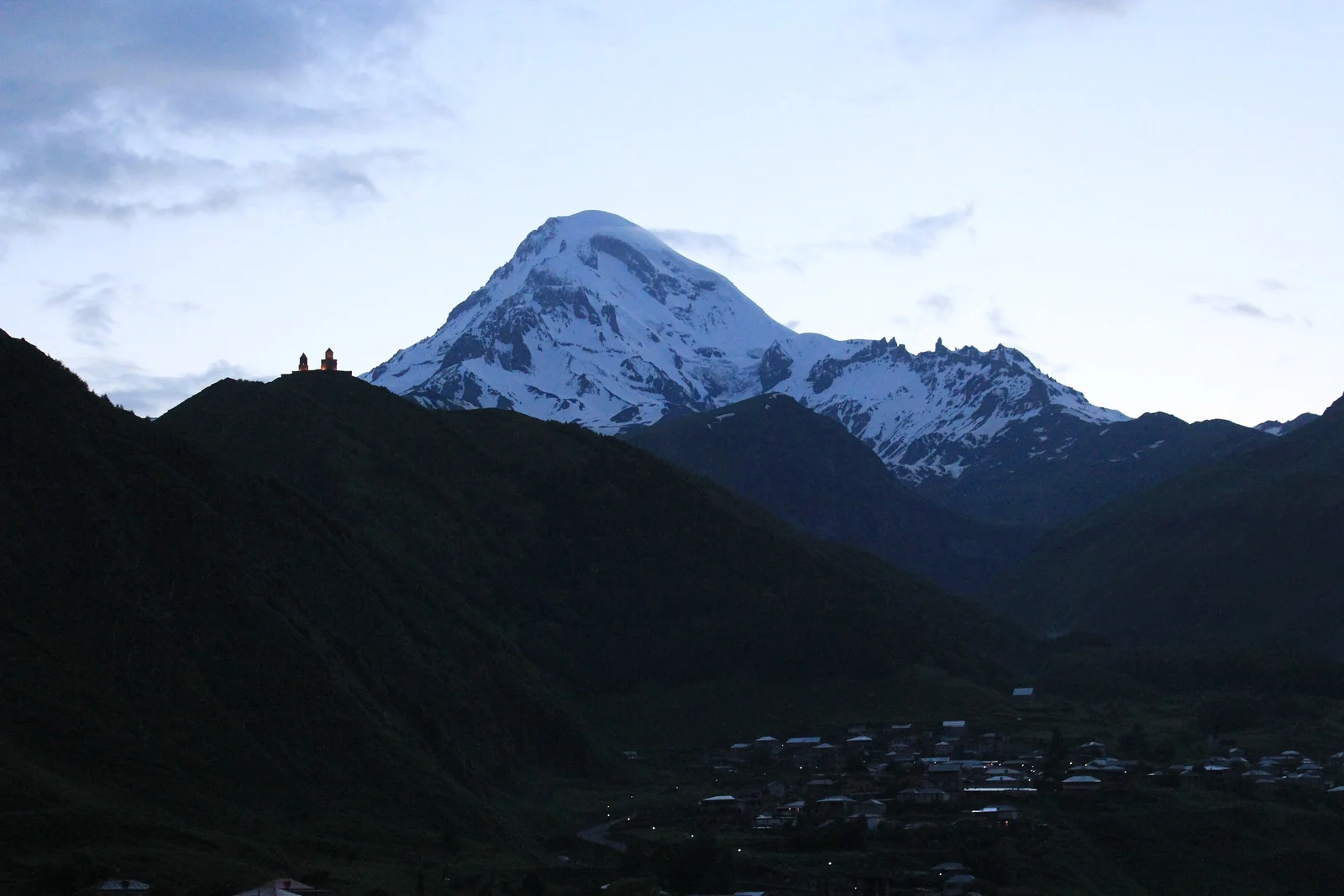
It can be done in a long day, but an overnight in Stepantsminda is far better: the light is softer, the crowds thin out and you get time for a walk toward the Gveleti waterfall or into the Truso Valley. In winter, snow and avalanche risk can close the pass, so check the road before setting off. Bring a warm layer at any time of year.
Kakheti and Sighnaghi
Kakheti, east of Tbilisi, is Georgia's main wine region, a broad valley of vineyards below the Caucasus. Sighnaghi, about 110 kilometers from the capital, is the easiest base. The hilltop town is ringed by defensive walls built by King Erekle II in the 1770s, and you can walk sections of them for views across the Alazani Valley to the mountains.
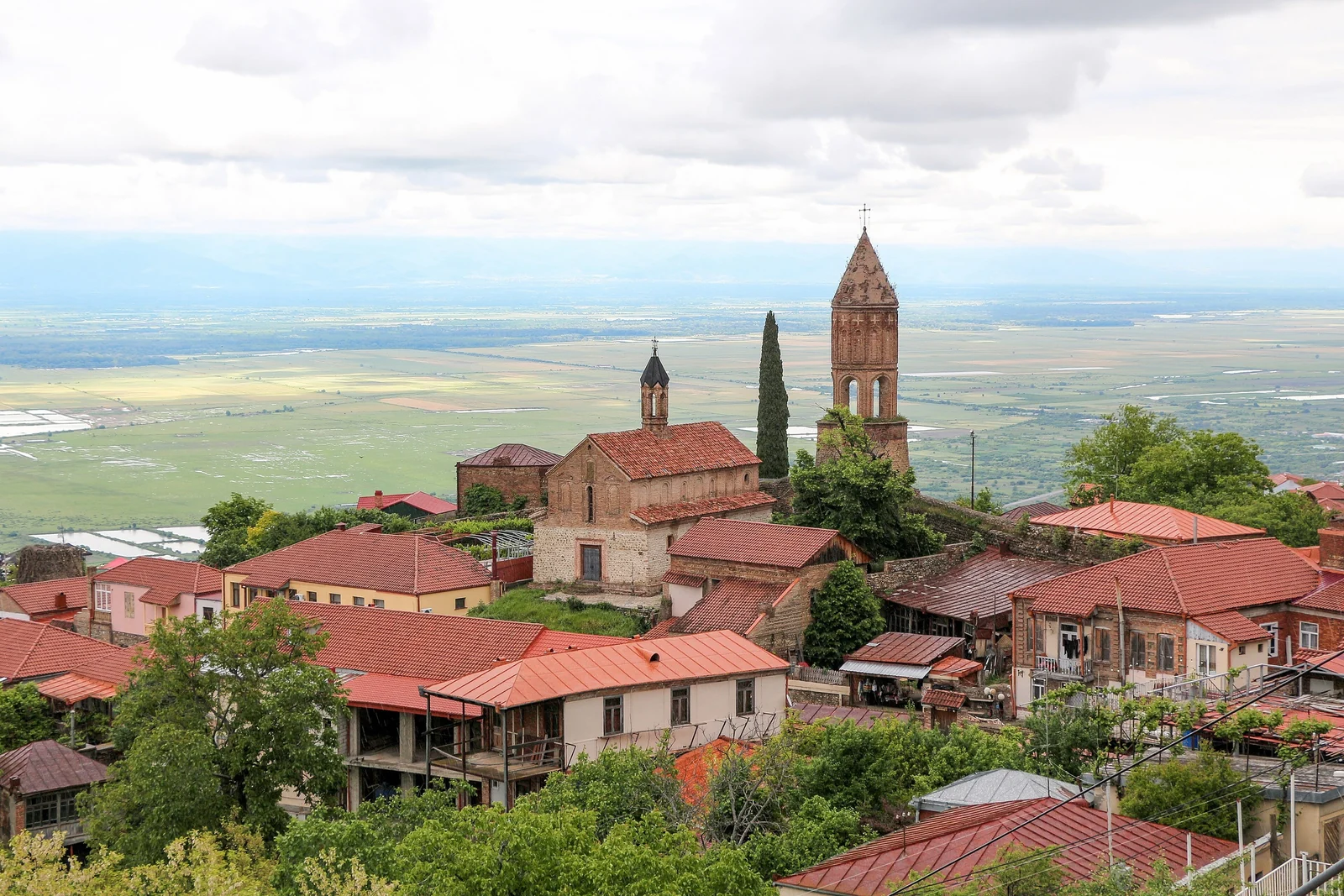
Just outside town, Bodbe Monastery holds the grave of Saint Nino, who brought Christianity to Georgia in the 4th century. The real reason to come, though, is wine. Family wineries all over Kakheti offer tastings and lunches, and a driver for the day lets you combine Sighnaghi with two or three cellars without worrying about the drive back.
Getting Around Tbilisi and Georgia
Metro and Buses
Tbilisi's metro has two lines, with deep Soviet-era stations and very long escalators. It is cheap and fast, and reaches Didube and Samgori bus stations. You can tap a contactless bank card or buy a rechargeable transport card, which also works on city buses. From the airport, bus 337 runs into the center along Rustaveli Avenue to the central railway station.
Marshrutkas
Marshrutkas are the white minibuses that connect Tbilisi with almost every town in the country. They leave from the bus stations when full or on a loose schedule, and destinations are usually shown in Georgian script on the windshield, so ask the drivers. For Mtskheta and Kazbegi, use Didube; for Sighnaghi and Kakheti, use Samgori. Carry small cash and a little patience.
Bolt and Taxis
In Tbilisi, ride-hailing with Bolt is the easiest way to get around at night or with luggage, and the price is fixed before you get in. Street taxis rarely use meters, so agree on the fare first. For mountain or wine-country days, hiring a driver gives you the freedom to stop wherever you like.
Best Time to Visit Tbilisi and Georgia
- May and June: green hills, wildflowers in the mountains and pleasant city weather. The Kazbegi road is usually open, though high trails may still hold snow early on.
- July and August: Tbilisi gets hot, so this is the time to head for the mountains. Best for hiking around Kazbegi.
- September and October: the sweet spot. Grape harvest, called rtveli, fills Kakheti, the city cools down and the autumn light is lovely. Tbilisoba, the city's harvest festival, usually takes place in October.
- November to March: cold and quiet in Tbilisi, with good skiing at Gudauri. The Georgian Military Road can close after heavy snow.
Practical Tips for a First Trip to Georgia
- Entry: citizens of the US, UK, EU and many other countries can visit without a visa for long stays. Check current entry rules, including any insurance requirements, before you travel.
- Money: the currency is the Georgian lari (GEL). Cards are widely accepted in Tbilisi, but carry cash for marshrutkas, markets and villages.
- Language: Georgian has its own alphabet. English is common among younger people in Tbilisi; older people often speak Russian. Learn gamarjoba (hello) and madloba (thank you).
- Churches: cover shoulders and knees; women usually cover their hair.
- Safety: Tbilisi feels relaxed for visitors, but watch your step on uneven old-town pavements. Stay well away from the boundary lines with the breakaway regions of Abkhazia and South Ossetia.
- Where to stay: Old Tbilisi and Sololaki for atmosphere and walking, Vera for quieter streets and cafés near Rustaveli, and Chugureti for nightlife around Fabrika.
The official Georgia tourism site has regional overviews and event listings. Combining the Caucasus with a longer trip? Istanbul is a short flight away, and our guide to Hagia Sophia is a good start. If you like Georgia's mix of old towns, mountains and low prices, our Albania travel guide covers a similar kind of trip in the Balkans. You can also browse all European destinations.
Tbilisi and Georgia Travel FAQ
How many days do you need in Tbilisi?
Two or three days cover Old Tbilisi, Narikala, the sulfur baths, Rustaveli Avenue and Fabrika at a relaxed pace. For a first trip to Georgia, plan a week in total so you can add Mtskheta, an overnight in Kazbegi and a day or two in Kakheti.
Is Tbilisi safe for tourists?
Tbilisi is generally considered safe for visitors, and street crime against tourists is relatively low. Use normal city precautions at night, use Bolt rather than unmarked taxis and keep away from the boundary lines of Abkhazia and South Ossetia. Check your government's travel advice before you go.
Can you visit Kazbegi as a day trip from Tbilisi?
Yes. The drive along the Georgian Military Road takes about three hours each way, longer with stops at Ananuri and the Jvari Pass. A day trip is possible, but spending a night in Stepantsminda gives you time to hike to Gergeti Trinity Church and enjoy the mountains without rushing.
What is qvevri wine?
Qvevri wine is fermented and aged in large clay vessels buried in the ground, often with the grape skins. White grapes made this way turn amber and taste drier and more tannic than ordinary white wine. UNESCO lists the method as Intangible Cultural Heritage.
How do you eat khinkali?
Pick a dumpling up by its twisted knot, turn it upside down, bite a small hole and sip the hot broth first. Then eat the rest and leave the doughy knot on the plate. Cutlery loses the broth, the best part.
What is the best time to visit Georgia?
May to June and September to October are the best all-round months, with mild weather in Tbilisi and open mountain roads. Autumn adds the grape harvest in Kakheti. July and August suit mountain hiking, while winter is good for skiing in Gudauri.
Do you need a visa for Georgia?
Citizens of the US, UK, EU and many other countries can enter Georgia visa-free and stay for an extended period. Rules can change, so check the official list from Georgia's Ministry of Foreign Affairs before booking.