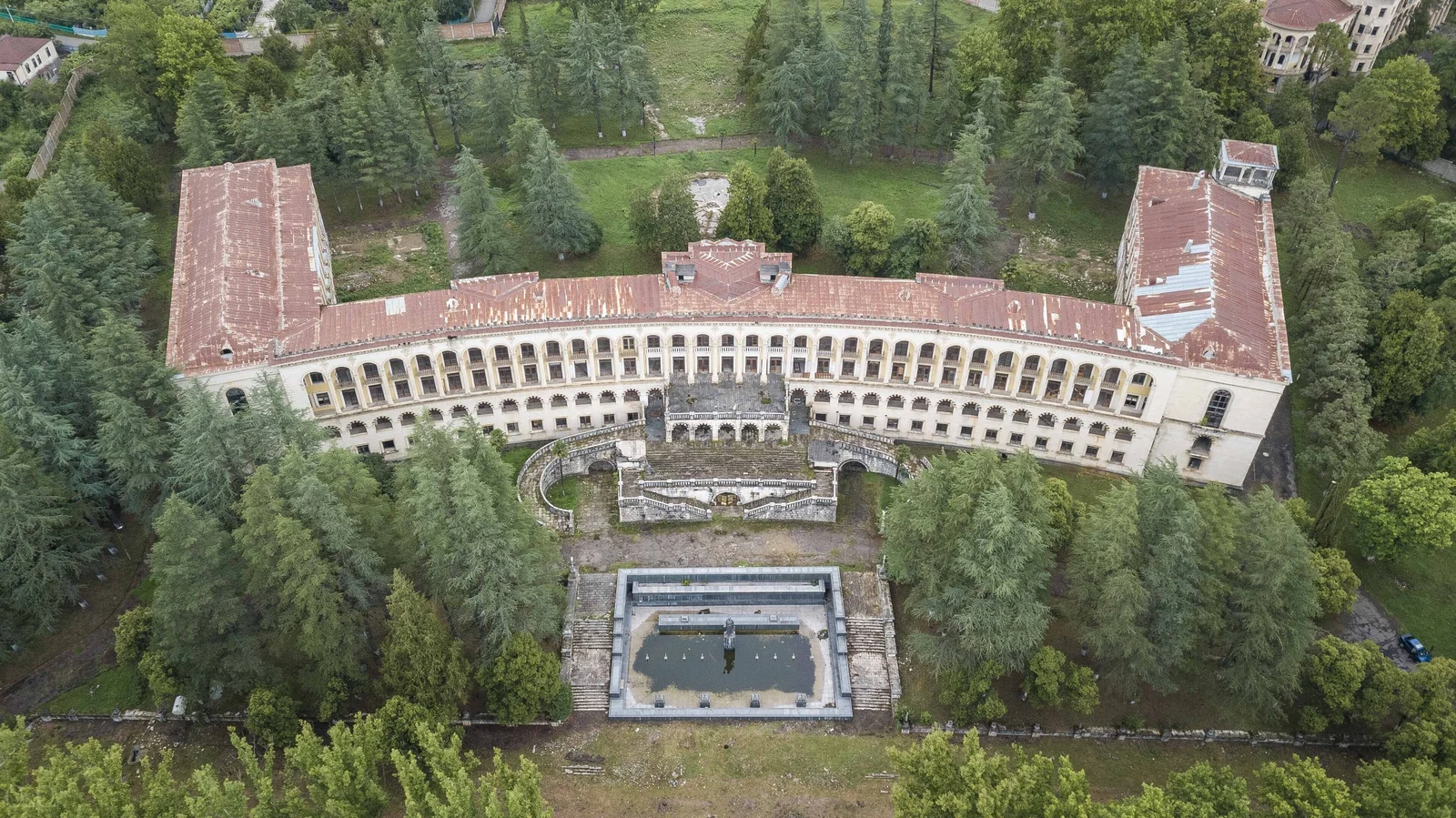
The most striking abandoned places in Georgia are the Soviet sanatoriums of Tskaltubo, a spa town in the west of the country, a short drive from Kutaisi. Once the most prestigious health resort in the Soviet Union, it now holds grand, crumbling halls with columns, mosaics and trees growing through the roofs. Add the old cable cars of Chiatura and a few other Soviet-era sites, and you get one of the most rewarding offbeat days in the Caucasus.
One thing to understand before you go: Tskaltubo is not an empty ghost town. Families displaced by conflict in the 1990s still live in several of the old buildings, so this guide covers how to get there, what you will see, and how to visit without treating people's homes like a film set. If you are building a wider trip, start with our Georgia travel guides.
Tskaltubo: The Soviet Spa Town in Brief
Tskaltubo sits in the Imereti region of western Georgia. Its draw is a spring of warm, radon-rich mineral water that comes out of the ground at around 33 to 35 °C, warm enough for bathing without heating. People had praised the water for centuries, and under Soviet rule the town was developed into a balneological resort, with city status granted in 1953.
At its peak it had roughly two dozen sanatoriums, and visitors came from across the USSR on state-sponsored vacations. Doctors prescribed the baths for joint, nerve and circulatory complaints, and the buildings were designed to impress: neoclassical facades, ballrooms, painted ceilings and long colonnades. Joseph Stalin, who was born in Georgia, is closely tied to the town. A bathhouse was built for his use, and his private pool and a frieze of him are among the things people ask to see.
What Happened to the Sanatoriums
The decline came with the end of the Soviet Union in 1991. State-funded vacations disappeared, the visitors stopped arriving, and the resort lost its reason to exist. The timing was worse than that: the war in Abkhazia in the early 1990s pushed hundreds of thousands of ethnic Georgians from their homes, and many of the empty sanatoriums became shelter for displaced families.
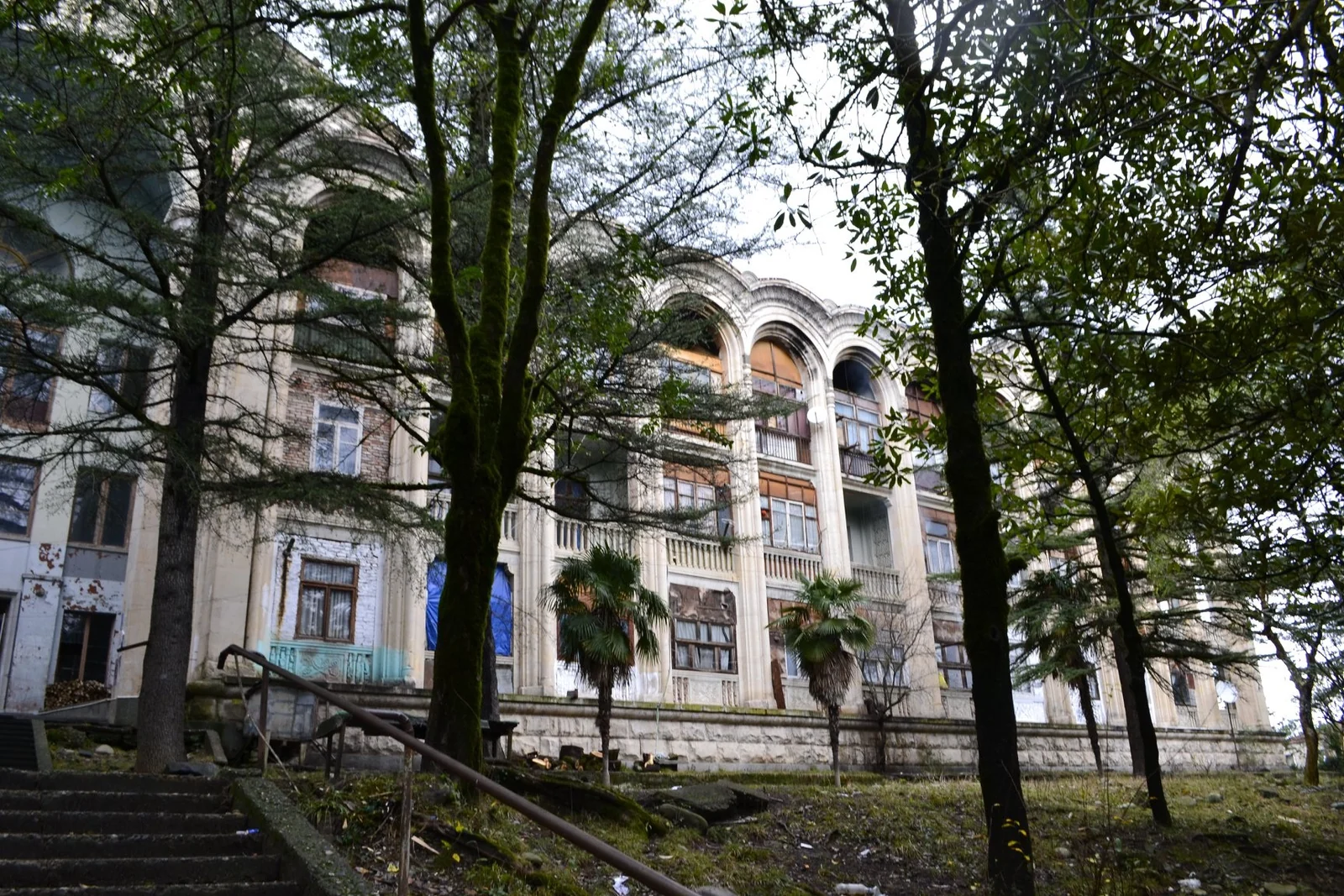
That is why "abandoned" is only half true. Some buildings are empty shells, some are fenced off, and some are still home to people who have lived there for decades. Over the years there have been various plans to renovate parts of the town, and a few buildings have been restored or reopened as hotels. Others have waited a long time for money that never came. The mix of the three is what you will see on the ground, and it changes, so ask locally about what is currently open.
What You Will See in Tskaltubo
The sanatoriums are spread through the town and its central park, so a visit is mostly a slow walk. Names you will come across include Gelati, Tbilisi, Imereti, Meshakhte and Medea, plus several bathhouses. Each had its own architecture and decoration, and the look ranges from heavy Stalinist classicism to lighter mid-century modernism.
Sanatorium halls and bathhouses
From outside, you get the colonnades, the balconies, the stained plaster and the sheer scale. Where a building is open to the public or visible through gaps, you may see stairwells, tiled bath halls and faded murals. Treat anything inside as unstable. Floors can be rotten, stairs may be missing rails, and ceilings drop without warning.
The central park and the springs
The central park is the town's pleasant side. It is a large green space with paths, old trees and a lake, and it is where you will see locals out walking. The springs themselves are still part of the town's identity. For something clearly open and easy, the park and the nearby Prometheus Cave and Sataplia Nature Reserve (a short drive away) make good additions to a Tskaltubo day.
Visiting Tskaltubo Safely and Respectfully
The buildings are private property or state-owned and in poor condition, and many have people living in them. A few rules keep the visit sensible.
- Do not enter buildings that are lived in. If there is laundry on a balcony, a door that has been painted, or a family in the yard, you are looking at somebody's home. Stay outside.
- Ask before photographing people. Residents are not part of the scenery. Many are friendly, but a camera pushed in a face is not a way to find out.
- Skip the ruined interiors if you are unsure. Collapsing floors and stairs are the real hazard. Wear sturdy shoes, and do not climb on balconies or roofs.
- Do not take anything. Tiles, fixtures and mosaic pieces belong to the buildings. Leave no litter, and no graffiti.
- Go in daylight, and tell someone where you are. Mobile coverage is generally fine in town, but a twisted ankle in an empty wing is not the moment to find a gap.
If you want context rather than just photographs, consider a guided visit. Local guides and tour operators in Kutaisi and Tskaltubo offer half-day walks that explain the history and know which buildings are safe to approach. Choose one that talks about the residents with respect, and confirm the details directly with the operator, because offers change.
Chiatura: Cable Cars and the Manganese Valley
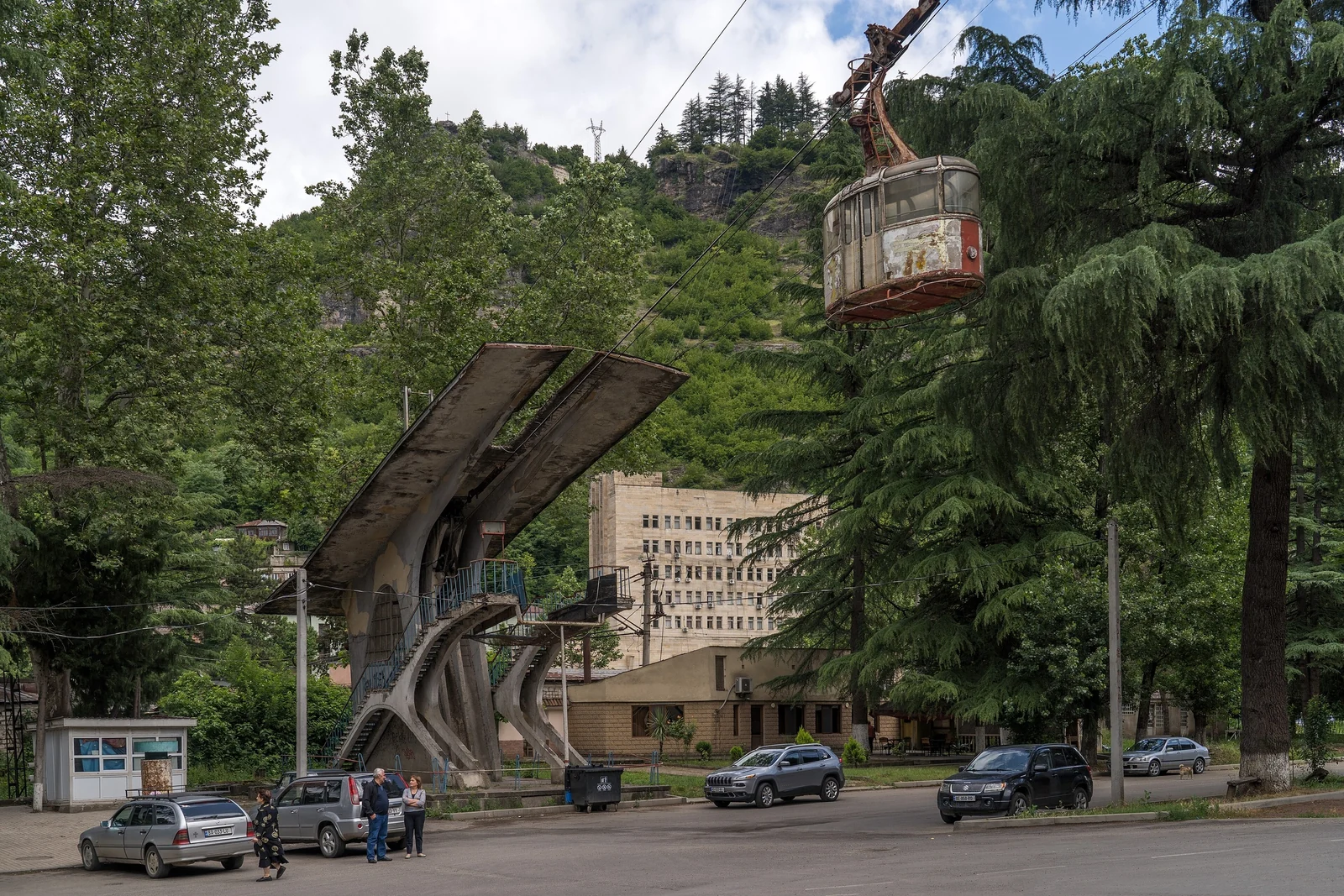
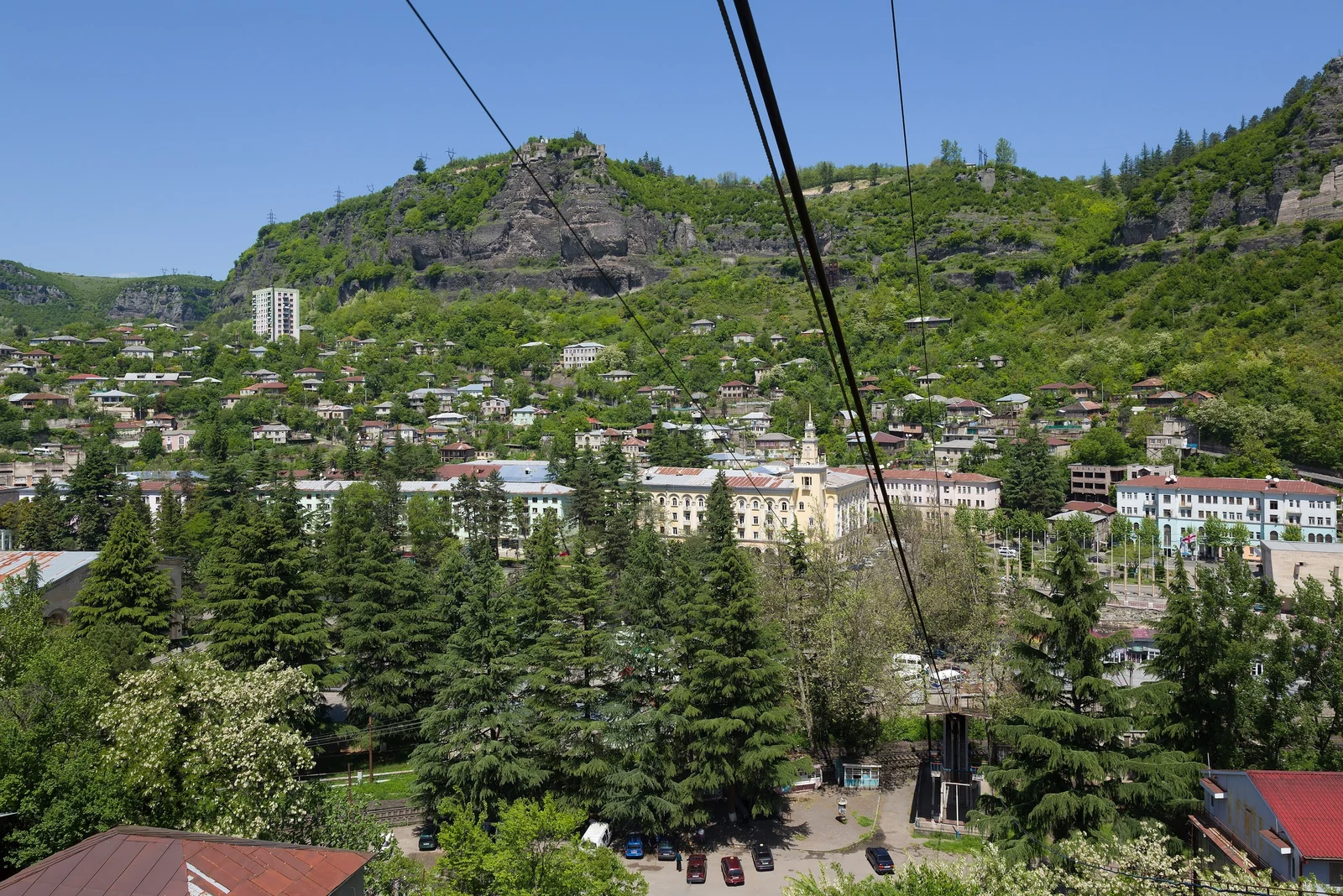
Chiatura is a mining town in a deep gorge, and its second claim to fame is the network of cable cars that crosses it. Manganese mining here began in the late nineteenth century, and the town became a major source of the metal. In the 1950s, the Soviet authorities built a large ropeway system to move workers and ore across the steep valley. According to the manufacturer POMA, the valley once had about 100 industrial and urban ropeways, and Chiatura had the first passenger ropeway in the USSR.
The old cabins were small, rusty boxes that rattled across the gorge, and they became a favorite of photographers. Many of those older lines have since been replaced by modern urban gondolas built by POMA, so what you ride today is newer than the legend suggests. Some old stations and cabins remain as ruins, which are worth a look from the street.
The town itself is still working and still lived in, so treat it as a place where people commute, not a theme park. The modern lines are part of ordinary public transport, so you can ride one to see the gorge and the mining slopes. Check on arrival which lines are running.
Other Soviet Sites Worth Knowing
The Gudauri friendship monument
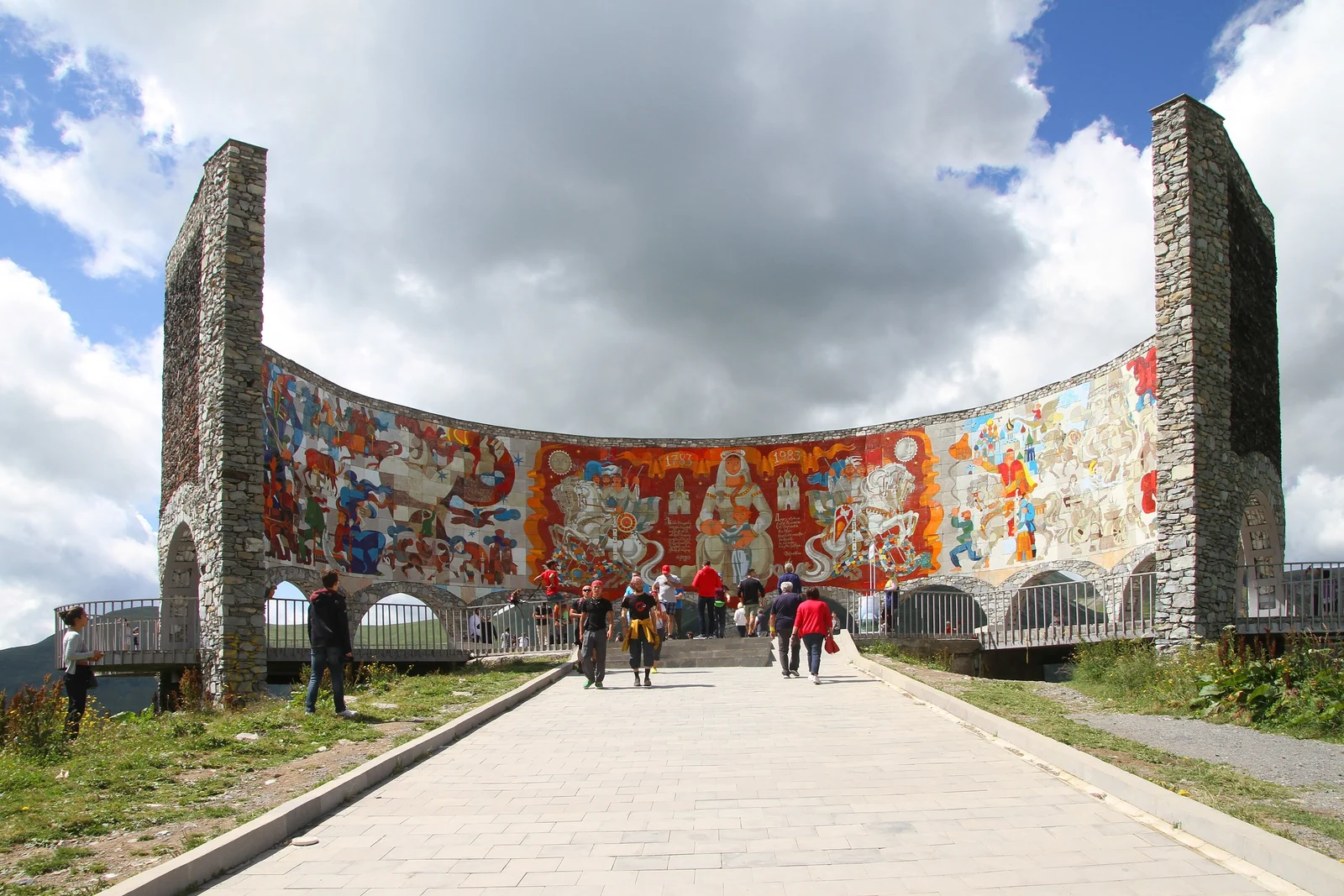
Not every Soviet landmark in Georgia is a ruin, and this one is a good example. The Russia–Georgia Friendship Monument stands on the Georgian Military Highway near Gudauri. It was built in 1983 to mark two hundred years since the Treaty of Georgievsk, and its curved concrete wall is lined with mosaics showing scenes from Georgian and Russian history. It is not abandoned, but it fits well with a Soviet theme, and it is a simple stop if you are driving to Kazbegi. Our Kazbegi day trip guide covers the road.
Tbilisi and the wider Soviet legacy
Many other Soviet-era buildings, including mosaics, bus stops and modernist halls, are scattered across the country. Tbilisi is the easiest place to start, and our Tbilisi travel guide covers the capital. Do not count on any particular ruin without checking: sites close, get fenced or get rebuilt, and a quick local question beats a stale blog post.
How to Get to Tskaltubo and Chiatura
Both places are easiest from Kutaisi, the main city of western Georgia, which also has an international airport. Tskaltubo is about 20 to 30 minutes from Kutaisi by road. City minibuses (marshrutkas) run there, and local guides usually say to look for them near the Red Bridge, though routes and stops change, so ask at your guesthouse. A taxi or a ride-hailing car is simple and not expensive by Western standards, and you can arrange a driver to wait while you walk around.
From Tbilisi, plan on roughly three hours by road to reach Tskaltubo, according to the national tourism board. Most travelers break the journey in Kutaisi. Chiatura is farther into the hills: minibuses leave from a Kutaisi bus station and the ride takes under two hours, but check which station and what time the last return leaves, since late afternoon departures can be the last of the day. If you have a car or a driver, you can combine both towns in one long day. For rail, road and flight options to the region, see our overview of Europe travel guides, and check the official Georgia Travel page for Tskaltubo for current visitor information.
Abandoned Places in Georgia at a Glance
| Place | What it is | From Kutaisi | Best for | Watch out for |
|---|---|---|---|---|
| Tskaltubo sanatoriums | Soviet spa resort, partly empty, partly lived in | About 20 to 30 minutes by road | Architecture, history, photography | Residents' homes, unstable floors |
| Tskaltubo park and Prometheus Cave | Green park and a show cave nearby | Short drive | An easy add-on | Check opening days |
| Chiatura cable cars | Mining town with Soviet-era ropeways, now partly rebuilt | Under two hours by minibus | Gorge views, industrial heritage | Last minibus back, which line runs |
| Gudauri friendship monument | Soviet monument with mosaics, not abandoned | Far, on the road from Tbilisi to Kazbegi | A quick roadside stop | Cold, windy weather at altitude |
Distances and times are approximate. Confirm minibus times and which cable car lines are running with your guesthouse or a local guide.
Best Time to Visit and Planning Tips
Spring and early autumn are the most comfortable seasons in western Georgia. Summers are warm and humid, and the Tskaltubo greenery grows over the ruins, which looks good but hides trip hazards. Winters are grey and damp. Rain makes old floors and steps slippery, so the dry months suit exploring better.
Tskaltubo works as a half-day trip, or a full day if you add the park and a cave. Chiatura deserves most of a day on its own. Mornings give the best light and let you catch return minibuses. Carry water and some cash, since small cafés and minibuses may not take cards. If you are interested in other places where industry and ideology left strange ruins, read about Pyramiden, the Soviet mining town on Svalbard and the ship graveyard at Moynaq.
Abandoned Places in Georgia FAQ
Where are the abandoned sanatoriums in Georgia?
They are in Tskaltubo, a spa town in the Imereti region of western Georgia, a short drive from Kutaisi. The buildings were Soviet health resorts, and today some are empty, some are fenced and some are still home to displaced families.
Is it safe to visit Tskaltubo?
The town itself is generally fine for daytime walking. The main danger is the buildings: rotten floors, missing stair rails and falling plaster. Do not enter inhabited buildings, wear sturdy shoes, and consider a local guide who knows which areas are safe.
Do people still live in the Tskaltubo sanatoriums?
Yes. After the war in Abkhazia in the early 1990s, many displaced families moved into the empty buildings, and some still live there. Treat those buildings as homes, stay outside, and ask before taking photographs of people.
How do I get from Kutaisi to Tskaltubo?
By road it takes roughly 20 to 30 minutes. You can take a city minibus, a taxi or a ride-hailing car, or hire a driver for the day. Ask your guesthouse which minibus stop is current, since routes change.
Can I visit the Chiatura cable cars?
Yes. Chiatura is under two hours from Kutaisi by minibus, and the modern urban cable car lines are part of local transport. Check which lines are running when you arrive, and confirm the time of the last minibus back.
Is the Gudauri Soviet monument abandoned?
No. The Russia–Georgia Friendship Monument, built in 1983 above the Georgian Military Highway, is a roadside viewpoint with mosaics. It is a Soviet landmark but not a ruin, and it is an easy stop on the way to Kazbegi.
Is a guided tour worth it for Tskaltubo?
Often yes. A good guide explains the history, knows which buildings are safe and which are lived in, and can open doors that are awkward for a stranger. Choose an operator that treats residents with respect, and confirm details directly.