Singapore is a city-state of roughly 5.5 million people on a tropical island one degree north of the equator, and it is one of the easiest places in Asia to visit: clean, safe, compact and run on trains that arrive when the board says they will. The headline sights are the Supertrees of Gardens by the Bay, the three-towered Marina Bay Sands and the UNESCO-listed Botanic Gardens. The real reason to come, though, is the food, eaten in open-air hawker centres where a plate of chicken rice is a serious matter.
Three days is a good length for a first visit, and even a long layover gets you a taste. This Singapore travel guide covers the main sights, the old districts of Chinatown, Little India and Kampong Glam, what to order at the hawker centres, escapes to Sentosa, the zoo and Pulau Ubin, the weather, the rules, where to stay and a plan that works. See our Singapore guides and the wider Asia destinations page.
Gardens by the Bay and the Marina Bay Sands Area
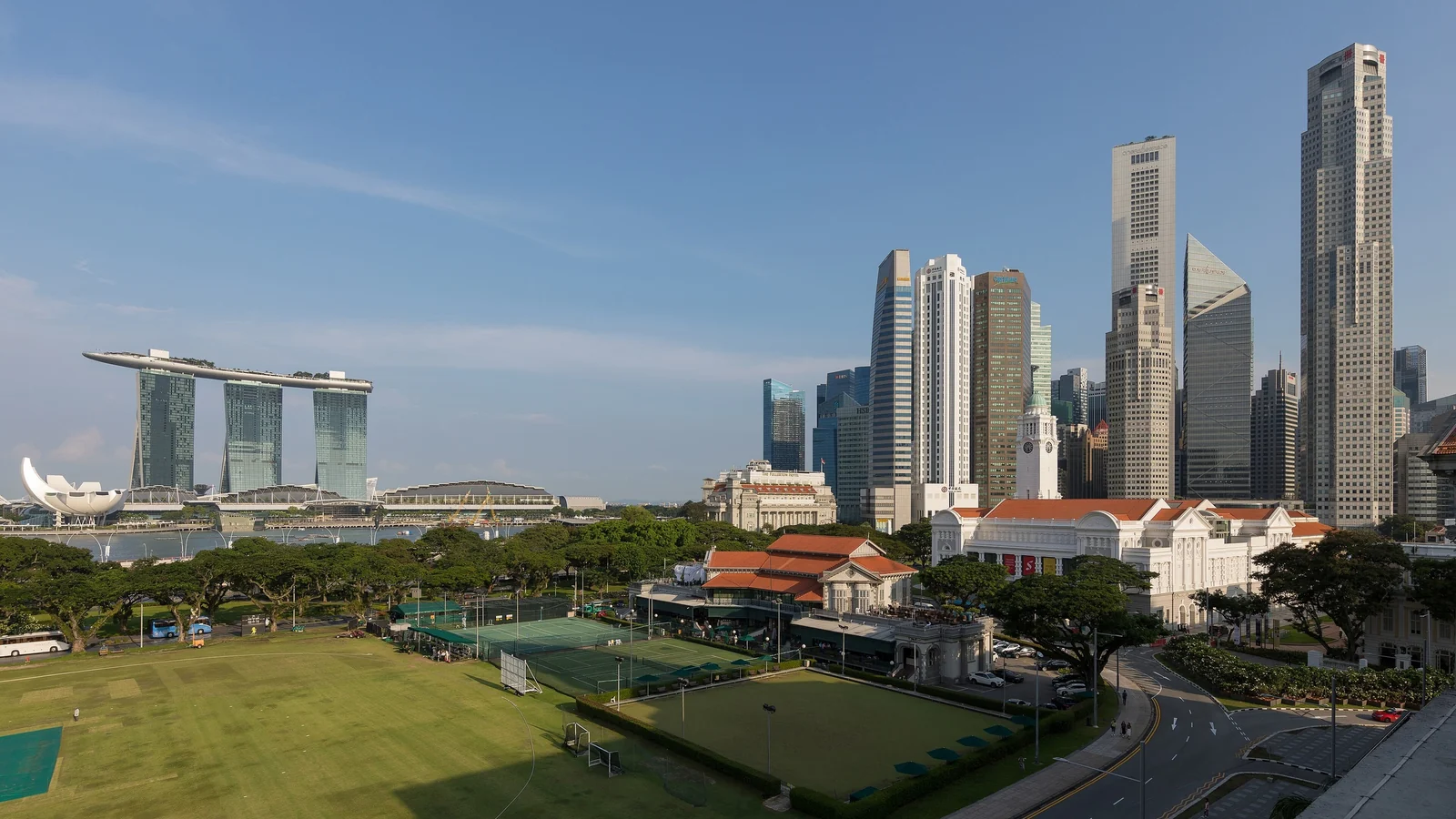
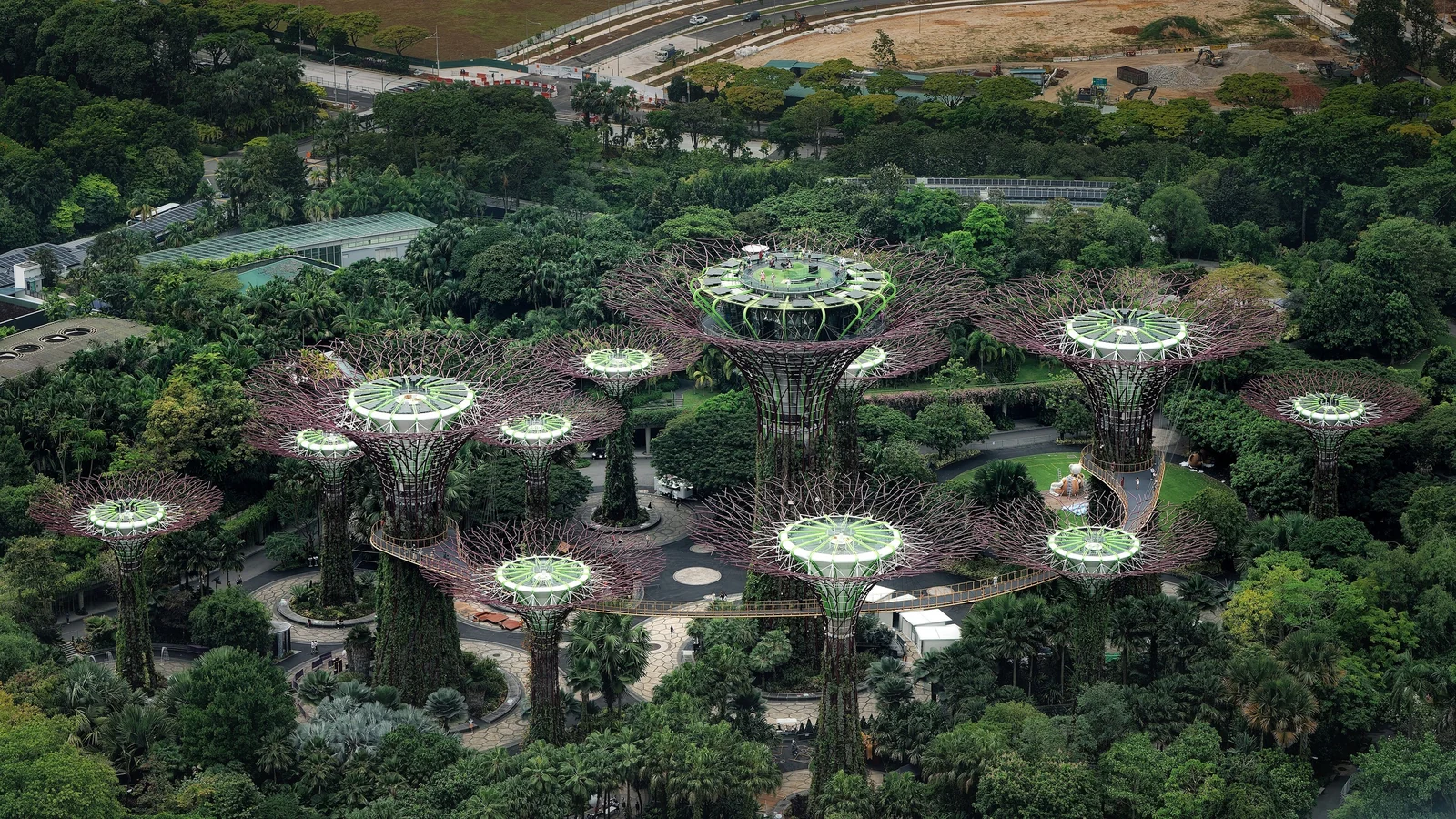
Marina Bay is the postcard Singapore, built on reclaimed land around a freshwater reservoir. Start at Gardens by the Bay, which opened in 2012. Its Supertree Grove is a stand of 18 steel trunks between 25 and 50 meters tall, planted with ferns and orchids and fitted with solar panels. Most of the park is free to walk around. The Flower Dome and Cloud Forest conservatories, and the elevated skyway between the Supertrees, are ticketed, so check the official Gardens by the Bay site for current prices.
The Cloud Forest is the better of the two glasshouses, with a 35-meter indoor waterfall and a misty mountain you descend in a spiral. Go in the evening and stay for the free light-and-music show in the Supertree Grove, held nightly. Bring a light layer, because the conservatories are air-conditioned to a chill.
Marina Bay Sands, the Helix Bridge and the Waterfront
Marina Bay Sands is a casino resort with a ship-shaped SkyPark on top. The rooftop pool is for hotel guests only, but a separate observation deck sells tickets to everyone and gives you the best view of the bay and the Gardens. The waterfront promenade is free: walk from the Merlion past the lotus-shaped ArtScience Museum and across the Helix Bridge for the classic skyline shot, ideally at dusk. The Shoppes mall has a canal with boat rides if the weather turns.
Chinatown, Little India and Kampong Glam
Singapore's old districts sit within a few MRT stops of each other, and each keeps its own food, temples and shop signs. Doing all three in a single day is easy if you start early and eat as you go.
Chinatown
Chinatown is a mix of restored shophouses, souvenir stalls and serious religious sites. The Sri Mariamman Temple, a Hindu temple founded in 1827, is the oldest in Singapore and sits in the middle of the Chinese district. A few minutes away the Buddha Tooth Relic Temple is a large, multi-story Tang-style building, free to enter, with dress rules for shoulders and knees. Finish at Maxwell Food Centre for lunch, or the Chinatown Complex hawker hall for a more local crowd.
Little India
Little India is louder, brighter and more fragrant than anywhere else on the island. The Sri Veeramakaliamman Temple is the one to see, covered in painted deities, and the Tekka hawker centre is the place for dosa, biryani and fish-head curry. Mustafa Centre, a sprawling department store, stays open very late and sells everything from spices to electronics. Shoes come off at temple doors; leave them on the racks outside.
Kampong Glam
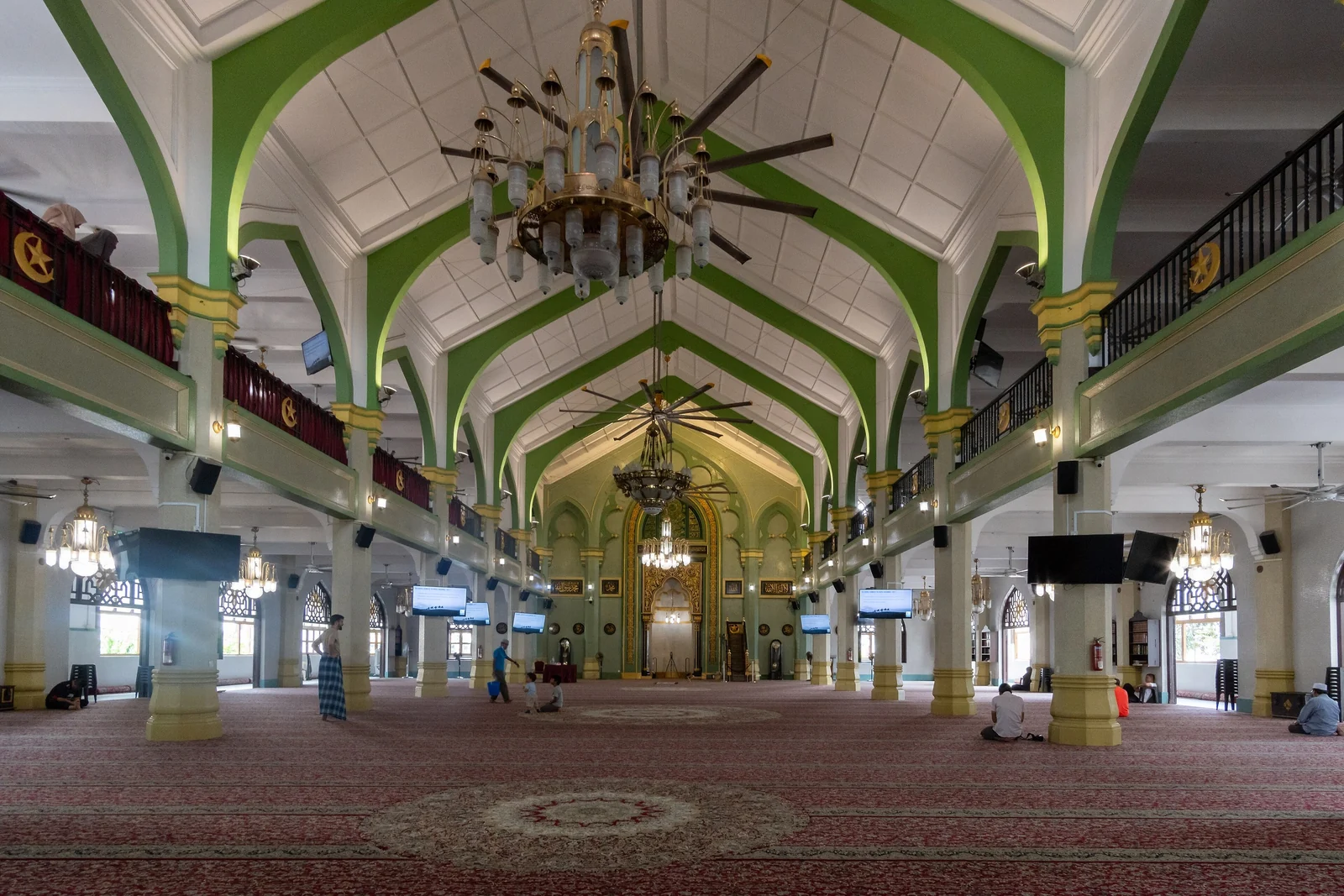
Once the seat of Malay royalty, Kampong Glam is centered on the golden-domed Sultan Mosque. Walk along Arab Street for textiles and perfume, then cut through Haji Lane, a narrow strip of boutiques and murals. Visitors can usually enter the mosque outside prayer times if dressed modestly, and robes are normally lent at the door. It is a good area for Turkish and Malay food, and for coffee in the afternoon.
Hawker Centres: What to Eat and Where
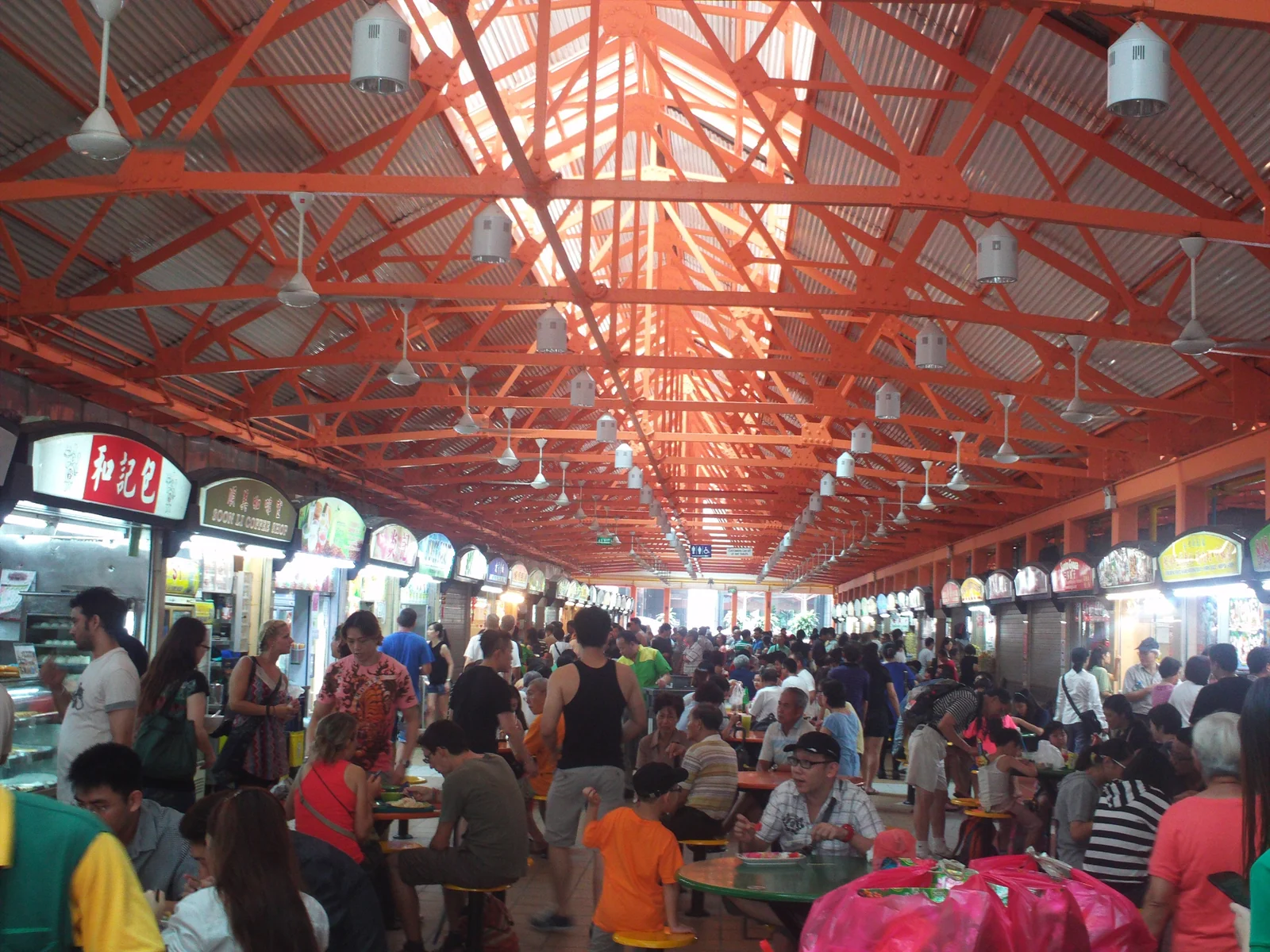
Hawker centres are government-built food halls where dozens of stalls serve cooked-to-order dishes at communal tables. Singapore's hawker culture was inscribed on UNESCO's Intangible Cultural Heritage list in December 2020, and several stalls have earned Michelin recognition. It is cheap, fast and very good. Go at lunchtime, because many stalls sell out or close by mid-afternoon.
The Dishes to Try
- Hainanese chicken rice: poached chicken over rice cooked in the broth, with chili sauce and ginger. The simplest dish on the island, and the one people argue about most.
- Laksa: noodles in a coconut-and-chili broth with prawns and cockles. The Katong style, with short noodles you can eat with just a spoon, is a local favorite.
- Chilli crab: a whole crab in a sweet, tangy tomato-chili gravy. Order fried buns to mop it up, and expect to use your hands. It is usually sold by weight at seafood restaurants, so ask the price first.
- Char kway teow: flat rice noodles wok-fried with egg, cockles and Chinese sausage.
- Satay: grilled skewers with peanut sauce, best eaten outdoors in the evening.
- Kaya toast set: toast with coconut jam, soft-boiled eggs and strong coffee, the classic breakfast.
Maxwell, Lau Pa Sat and Newton
Maxwell Food Centre is in Chinatown, close to the MRT and full of famous stalls, which means lunchtime queues. Lau Pa Sat, a Victorian cast-iron market building in the financial district, is atmospheric at night, when a nearby street is closed to traffic and becomes an open-air satay row. Newton Food Centre is the most touristy of the three and gained international fame after appearing in a film, so compare prices before ordering seafood. For a more local atmosphere, try the hawker centres in Tiong Bahru or Old Airport Road.
A few habits help. Claim a table first by leaving a packet of tissues on it (the local habit called chope), then queue. Return your tray if the signs ask you to. Sugarcane juice and iced kopi are easy ways to survive the afternoon heat.
Sentosa, Singapore Zoo and Pulau Ubin
When you want a break from the center, Singapore offers three very different escapes.
Sentosa Island
Sentosa is a resort island south of the city with beaches, Universal Studios Singapore, an aquarium and a cable car. It is built for families and short on local flavor, but the beaches at the far end are decent for a swim. Reach it on the Sentosa Express monorail from VivoCity mall, by cable car, or on foot over the boardwalk.
Singapore Zoo and Night Safari
The Singapore Zoo, opened in 1973, houses animals in naturalistic, mostly barless enclosures in a rainforest setting, and is well regarded for its orangutans. Next door the Night Safari, which opened in 1994, is a nocturnal park you tour by tram and on foot. Both belong to the Mandai Wildlife precinct, so book online and check opening hours on the official site. Wear mosquito repellent.
Pulau Ubin
Pulau Ubin is the quiet rural island off the northeast coast, and it feels like an older Singapore: wooden houses, mangrove boardwalks and dirt tracks. Take the MRT to Tanah Merah, a bus to Changi Point, then a bumboat that leaves when it has enough passengers. Rent a bicycle on the island and ride to the Chek Jawa wetlands. Bring cash for the boat and the bike, and plenty of water.
The Singapore Botanic Gardens
The Singapore Botanic Gardens were founded in 1859 and became the country's first UNESCO World Heritage Site in 2015. It is a tropical park with rainforest patches, lakes and a bandstand, and entry to most of it is free, from early morning until midnight. The National Orchid Garden inside is ticketed and holds thousands of orchid hybrids, which is worth the fee if you like flowers.
Best Time to Visit Singapore
Singapore is hot and humid all year, with daytime temperatures typically in the low 30s °C (high 80s °F) and barely any seasonal shift. Rain tends to come in short, heavy bursts rather than long gray spells.
| Period | What to expect | Notes |
|---|---|---|
| February to April | Often the driest and sunniest stretch | Hot by March and April; good for outdoor sights |
| May to September | Warm and humid, with some thunderstorms | Haze from regional fires affects some years |
| October to November | Frequent afternoon storms | Shoulder season, quieter at attractions |
| December to January | Wettest months of the Northeast Monsoon | Slightly cooler days, longer showers, busy holidays |
There is no bad month. Pack a small umbrella and light clothes, and expect to be indoors in air conditioning more than you planned. Most sights have covered links or malls nearby for when it pours.
Getting Around: MRT, Taxis and Stopovers from Changi
The MRT
The MRT is the backbone of any trip. It is clean, air-conditioned and signed in English. You can tap in with a contactless bank card or a visitor transit card, so check the official Visit Singapore site for current options. Buses cover the gaps, and taxis and ride-hailing apps are plentiful if you are tired. Eating and drinking are not allowed on trains.
Stopover Tips from Changi Airport
Changi Airport has its own MRT station with trains into the city, which makes a short stopover realistic. Keep a few things in mind.
- Under 5 hours: stay at the airport and visit Jewel, the glass-domed complex with its indoor waterfall, linked to the terminals by walkway.
- 6 to 8 hours: a quick city loop is possible. Take the MRT to Marina Bay or Chinatown, eat at a hawker centre and return with a wide margin.
- Overnight or longer: check your passport and entry requirements, including the digital arrival card, on the official immigration site before you fly.
- Luggage: the airport offers storage services, which let you explore without a bag.
Where to Stay in Singapore
Singapore is small and the MRT links nearly everything, so choosing an area is more about mood than distance. Prices run high compared with the rest of Southeast Asia, particularly around the bay.
- Marina Bay and the Civic District: the skyline, big hotels and the Gardens on your doorstep. Pricey and quiet at night.
- Chinatown and Tanjong Pagar: great food, good transport and the widest choice of small hotels and hostels.
- Kampong Glam and Bugis: central, creative and walkable, with good cafes and mid-range options.
- Little India and Farrer Park: better value and a lively street scene, with easy MRT links.
- Orchard Road: malls, large hotels and the Botanic Gardens nearby, suited to shoppers and families.
- Sentosa: resort stays by the beach, better for a family holiday than for city sightseeing.
Rules and Etiquette
Singapore's reputation for rules is real, but the practical effect is a very orderly city. A few laws catch visitors off guard.
- Chewing gum cannot be sold or imported for ordinary use, so leave it at home.
- Vaping and e-cigarettes are banned, so do not bring them in.
- Littering carries fines, and smoking is restricted to designated areas.
- Drug laws are extremely strict, with severe penalties.
- Remove your shoes before entering homes, temples and mosques, and dress modestly at places of worship.
- Tipping is not expected. Many restaurants add a service charge and tax to the bill; hawker stalls do not.
Tap water is safe to drink. Check the official tourism and immigration pages for the latest entry rules before you travel.
A 3-Day Singapore Itinerary
Day 1: Chinatown, Marina Bay and the Gardens
Begin with a kaya toast breakfast, then walk through Chinatown's temples and have lunch at Maxwell. Spend the afternoon along the Marina Bay waterfront, then head to Gardens by the Bay for sunset and the Supertree show. Finish with satay at Lau Pa Sat.
Day 2: Little India, Kampong Glam and the Botanic Gardens
Start with breakfast at Tekka and see the Sri Veeramakaliamman Temple, then go to Kampong Glam for the Sultan Mosque and Haji Lane. In the afternoon, take the MRT to the Botanic Gardens, and follow with dinner at a hawker centre or a chilli crab restaurant.
Day 3: Wildlife, Sentosa or Pulau Ubin
Pick one. Families should head to the Singapore Zoo in the morning and the Night Safari after dark. Beach and theme-park fans can spend the day on Sentosa. If you want quiet, ride a bumboat to Pulau Ubin and cycle the trails. Heading to Thailand next? Read our Bangkok travel guide, or compare with Vietnam's north-to-south route.
Singapore Travel FAQ
How many days do you need in Singapore?
Three days cover the major sights, the old districts, the Gardens and a couple of hawker centres at a relaxed pace. Add a fourth for the zoo and Night Safari, Sentosa or Pulau Ubin. A long layover of 8 hours or more can fit Marina Bay and one meal.
Is Singapore expensive for tourists?
Accommodation is the main cost, and hotels near the bay are pricey. Food can be very affordable if you eat at hawker centres, and public transport is cheap. Seafood restaurants and attractions add up, so compare prices before ordering.
What is the best hawker centre in Singapore?
There is no single winner. Maxwell Food Centre is best for first-timers in Chinatown, Lau Pa Sat for atmosphere and satay at night, and Tekka in Little India for Indian food. Go at lunch and look for the stall with the longest local queue.
Is Gardens by the Bay free?
The outdoor gardens and Supertree Grove are mostly free to enter. The Flower Dome, Cloud Forest and the elevated skyway require tickets. Check the official Gardens by the Bay website for current prices, show times and opening hours.
Can you use the MRT from Changi Airport?
Yes. Changi Airport has its own MRT station with trains into the city center. You can pay with a contactless bank card or a transit card. Taxis and ride-hailing are also available at arrivals if you have heavy luggage.
What should you not do in Singapore?
Do not chew gum, vape, litter or smoke outside designated areas, and never carry illegal drugs. Do not eat or drink on the MRT. Dress modestly at temples and mosques, and take your shoes off when asked.
When is the best time to visit Singapore?
February to April is often the driest stretch, though it is hot and humid all year. The wettest months are generally December and January. Showers are usually short, so plan outdoor sights for the morning.