The Taj Mahal day trip from Delhi is one of the most popular excursions in India, and it is doable in a single long day: a fast morning train or an expressway drive south to Agra, the Taj at its best light, a fort, a second tomb, and a late return. Agra sits roughly 200 km from the capital, and the main sights are close enough to each other that you can cover them by taxi or auto-rickshaw.
The honest trade-off is energy. A same-day return gives you the Taj Mahal and one or two extras, but not the calm of a sunrise visit or the stop at Fatehpur Sikri. If you can spare a night, the trip gets much better. This guide covers the history, the sights, how to get there, the ticket rules, the touts, the seasons and a realistic plan. More routes in the country are in our India travel guides.
The Taj Mahal: History and What to Expect
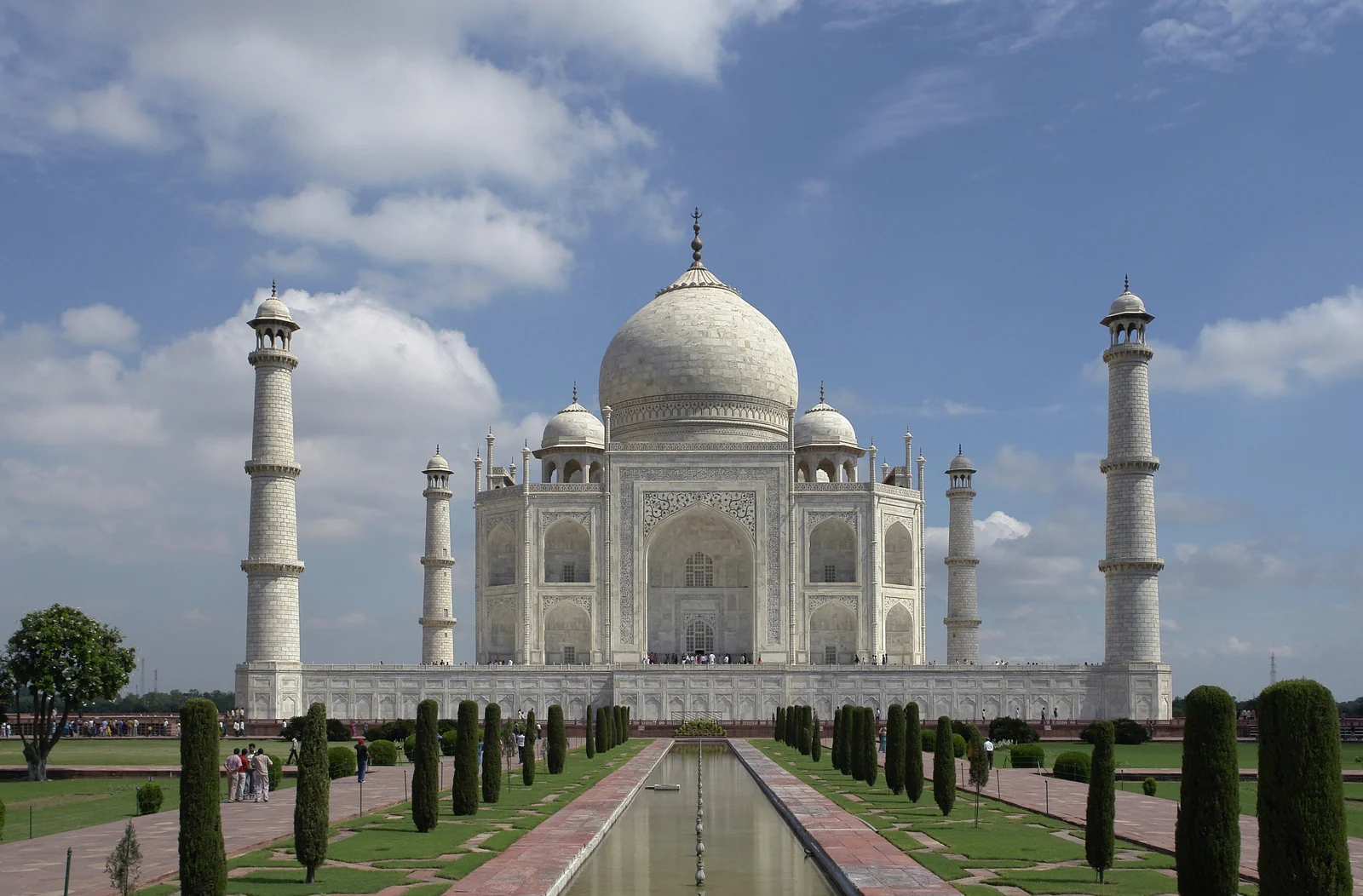
The Mughal emperor Shah Jahan commissioned the Taj Mahal as a mausoleum for his wife Mumtaz Mahal, who died in 1631. Construction began the following year on the south bank of the Yamuna River and the main complex took until about 1653, with thousands of workers and craftsmen. UNESCO inscribed it as a World Heritage Site in 1983.
Photos flatten the scale. The white marble tomb stands on a raised platform with four slender minarets at the corners, approached through a red sandstone gateway and a long garden with a central water channel. The first view through the gate is the moment everyone queues for, and it still lands, crowds and all. The marble is inlaid with semi-precious stones in floral patterns, and the tomb changes color from pinkish at dawn to pale white at midday to golden at the end of the day.
Opening Days and Tickets
The Taj Mahal is closed to general visitors on Fridays, according to the fee table on the official Taj Mahal ticketing page. Plan around that first, since many other Agra sights stay open that day. Hours are tied to the sun, so they shift through the year; the same page gives the current details.
Foreign visitors pay a much higher fee than Indian citizens, and there is a separate, extra ticket if you want to enter the main mausoleum chamber. Prices are set by the Archaeological Survey of India and change from time to time, so check the official site close to your date rather than trusting any figure in a blog. Expect airport-style security: large bags, tripods and food are restricted, so travel light and leave luggage at your hotel or with your driver.
Sunrise or Not?
Sunrise is the classic recommendation, and it works for one reason: fewer people and softer light. From a Delhi day trip, though, you will usually arrive mid-morning at the earliest, so you will not see it. That is fine. Go straight in, walk to the main platform before the tour groups peak, and spend your first half hour on the side garden paths rather than at the famous central bench.
Agra Fort: The Mughal Power Base
Agra Fort is the Taj's necessary companion, because it explains who built it and why. Akbar began the red sandstone fortress in 1565 on the Yamuna's west bank, and his grandson Shah Jahan later added white marble palaces inside. The fort is also a UNESCO World Heritage Site, listed in 1983, and the walls and moat alone are worth the visit.
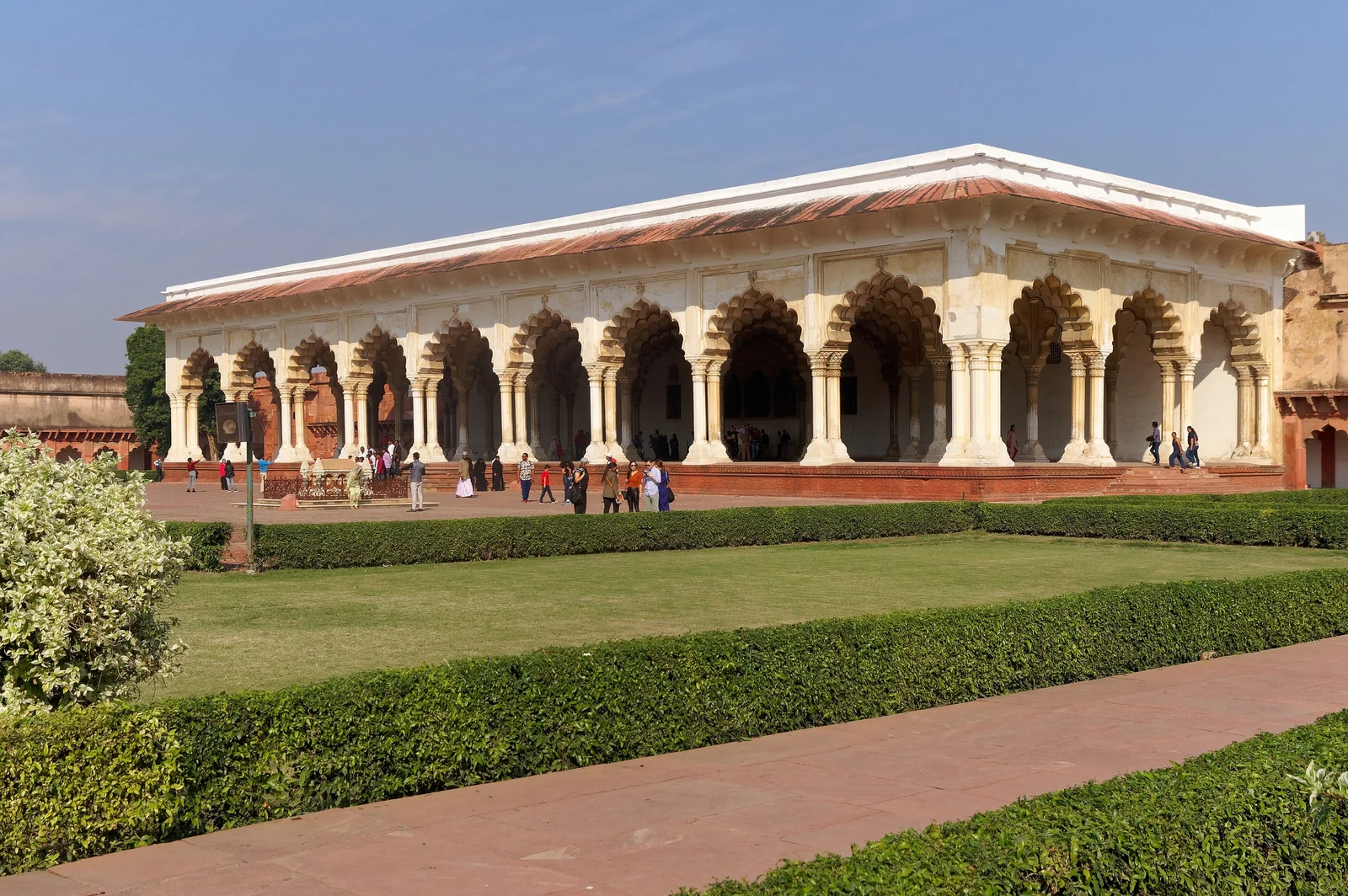
Inside, look for the Diwan-i-Am (public audience hall), the Diwan-i-Khas (private audience hall), the Moti Masjid and the Musamman Burj, a marble tower with a view toward the Taj. Shah Jahan spent his final years confined in the fort, and the story goes that he gazed at the Taj from that tower.
Allow one and a half to two hours. A licensed guide is useful here, since the layout is confusing and the signage thin; agree the rate before you start.
Mehtab Bagh: The Taj from Across the River
Mehtab Bagh is a Mughal-style garden on the opposite bank of the Yamuna, aligned with the Taj. It is the place to see the monument from a distance, with the river in front and far fewer people around you. It is best late in the afternoon, when the light warms up and the haze softens.
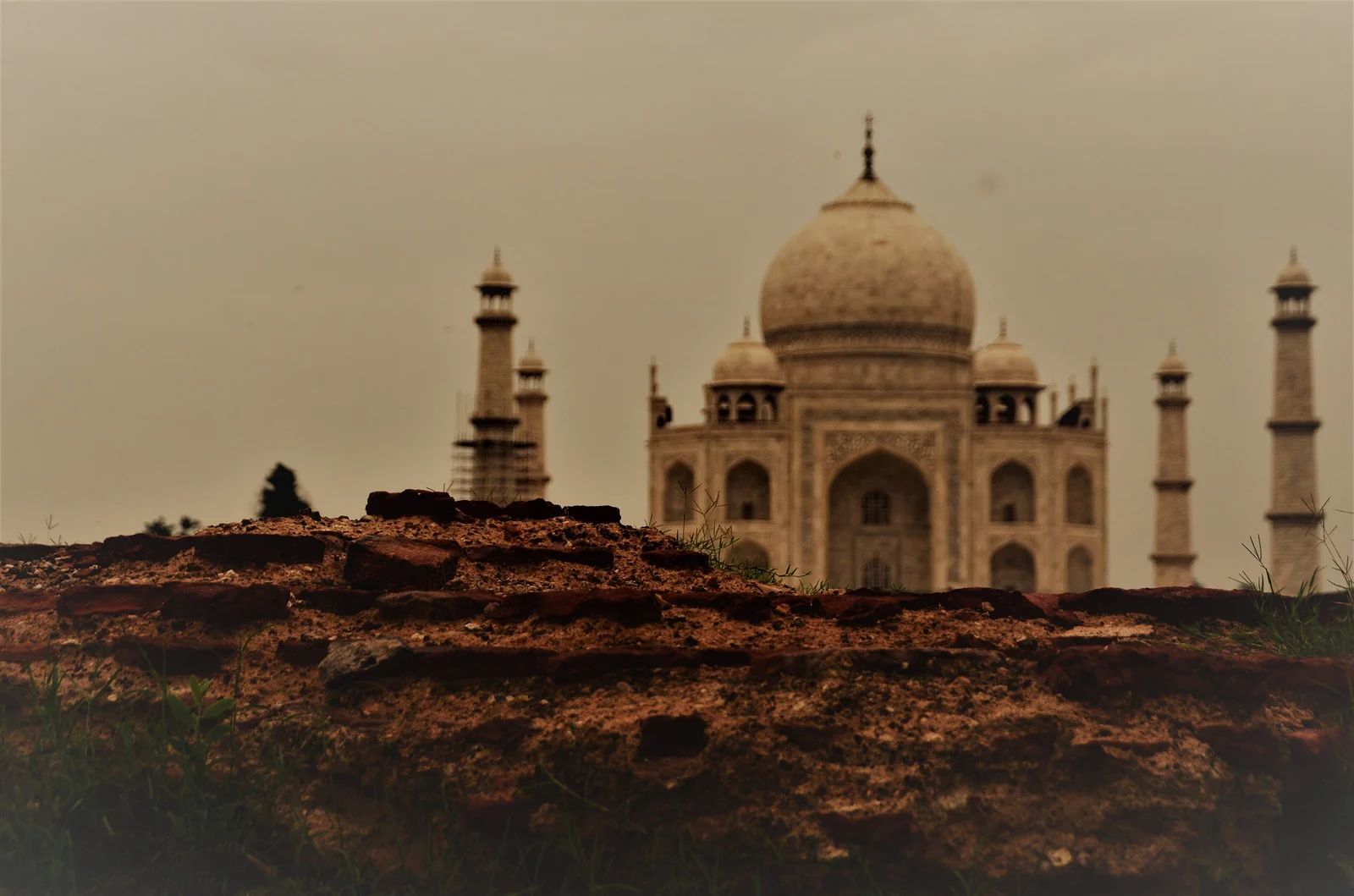
The official table lists Mehtab Bagh as open on Fridays, so it is the standard fallback for visitors who find themselves in Agra on the wrong day. It is not a replacement for walking inside the Taj, but it is a good photograph and a calm hour.
Itimad-ud-Daulah: The "Baby Taj"
Across the river from the Taj and the fort, the tomb of Itimad-ud-Daulah gets nowhere near the crowds, which is exactly why it is worth the detour. The tomb was built in the 1620s by Empress Nur Jahan for her father, a senior minister under the emperor Jahangir. It is often called the Baby Taj because it is small, refined and decorated with marble inlay that foreshadows the Taj Mahal.
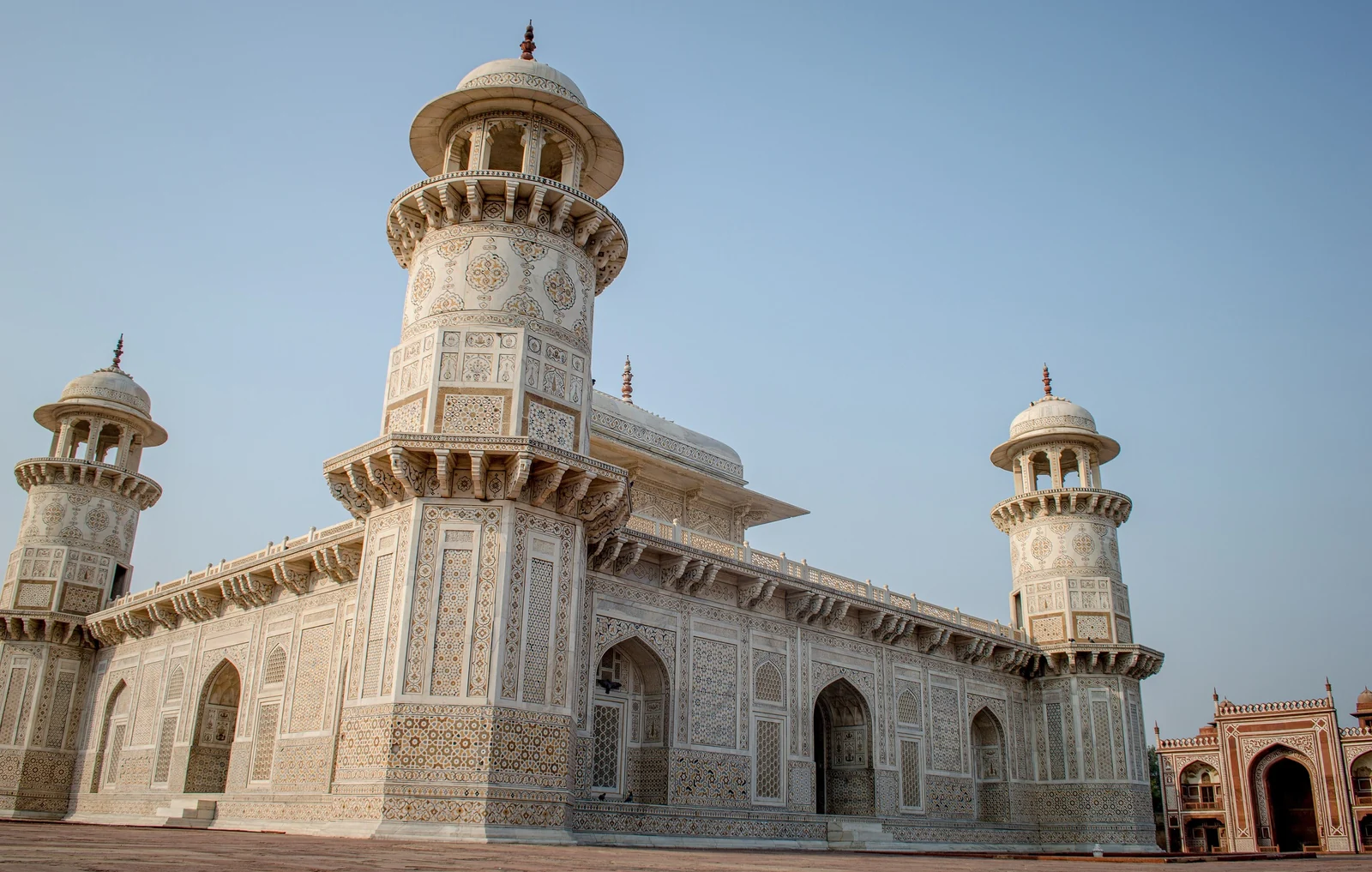
It was one of the first Mughal tombs faced in white marble rather than red sandstone, and the inlay, painted interior and pierced screens reward a slow look. You need about 45 minutes. It sits on the way to Mehtab Bagh, so the two combine well.
Fatehpur Sikri: Akbar's Abandoned Capital
Fatehpur Sikri, about 40 km west of Agra, is a Mughal capital built by Akbar from the early 1570s and left within about 15 years, reportedly because of water problems. That abrupt end preserved a remarkable red sandstone complex of palaces, courtyards and a huge mosque, which UNESCO listed in 1986.
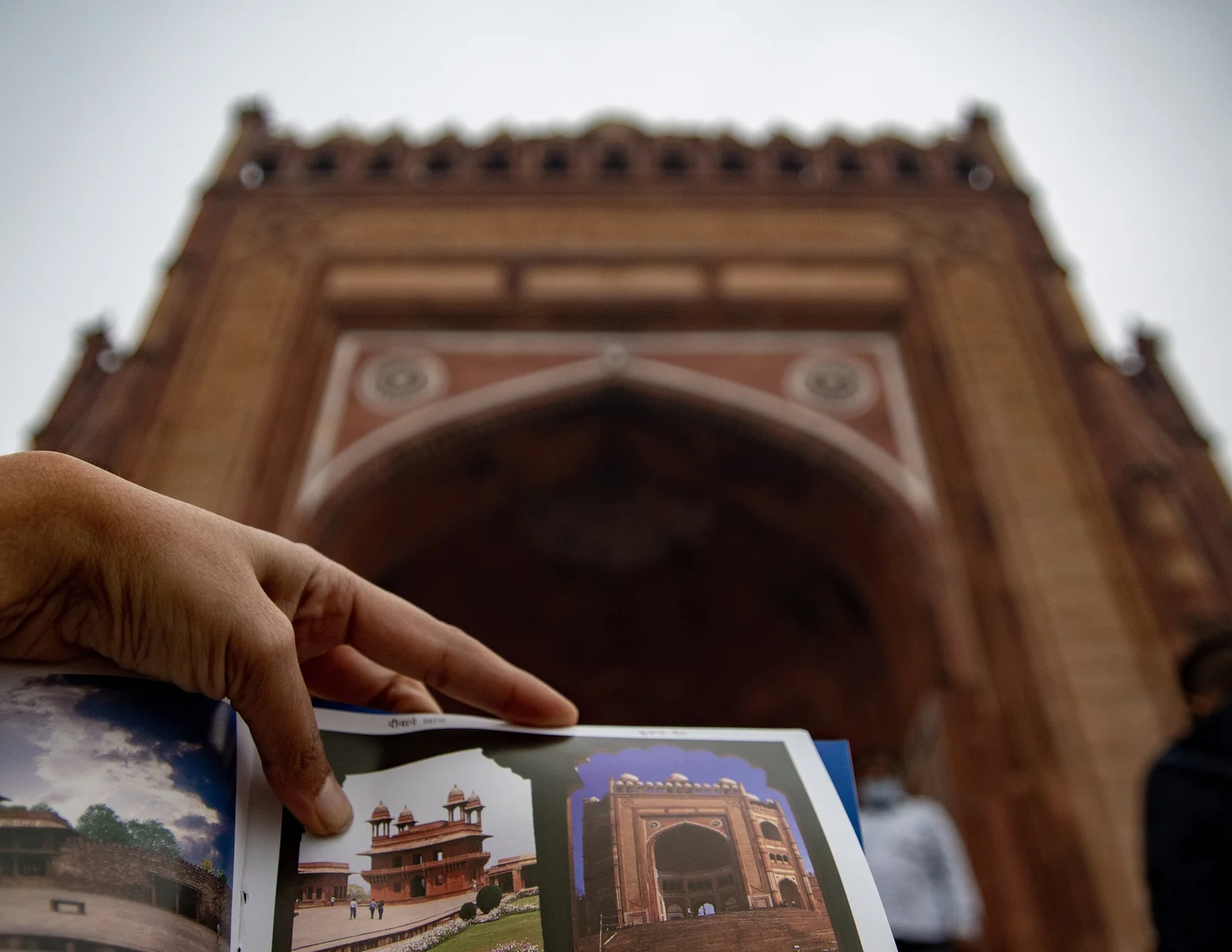
The highlights are the Buland Darwaza, a gateway of around 54 meters that is among the tallest in the world, the marble tomb of the Sufi saint Salim Chishti in the mosque courtyard, and the palace area, with its Panch Mahal and the Diwan-i-Khas. Go with a guide if you can, or be ready to ignore the unofficial ones who will attach themselves to you at the entrance. Dress modestly for the mosque and carry something to cover your shoulders.
On a same-day trip from Delhi, Fatehpur Sikri is the first thing to drop. With an overnight stay it makes a fine second-morning stop on the way back toward Delhi or on to Jaipur; our Rajasthan itinerary picks up the route from there.
Getting from Delhi to Agra: Train, Car or Bus
The table compares the usual options.
| Option | Approx. time | Strengths | Watch out for |
|---|---|---|---|
| Gatimaan Express | About 1 hr 40 min | Fastest and the most comfortable; arrives rested | Does not run on Fridays; book ahead; the station is a short ride from the sights |
| Other express trains | Around 2.5 to 4 hours | Cheap, frequent, a real taste of Indian rail | Delays are common; seat classes and booking rules vary |
| Private car and driver via the Yamuna Expressway | Roughly 3 to 4 hours each way | Door to door, flexible stops, easy to add Fatehpur Sikri | Traffic out of Delhi; fog or smog can slow you; agree the price in writing |
| Bus | Around 4 to 6 hours | Lowest cost | Slow and tiring; least suited to a day trip |
For most travelers the Gatimaan Express is the best day-trip option: it leaves Delhi in the morning, runs in the neighborhood of 100 minutes, and returns in the evening. Check the current timetable and running days on the official IRCTC booking site, because schedules change. The train also skips Fridays, which conveniently matches the Taj's closing day.
A car and driver is better if you want Fatehpur Sikri or you are a group of three or four. The Yamuna Expressway is a fast, modern toll road, but the first stretch out of Delhi can crawl at rush hour, so start early. Whatever you choose, book Agra entry tickets for the Taj on a non-Friday date and check that your plan is not clashing with a public holiday, when queues grow.
Day Trip or Overnight in Agra?
A day trip works if you are short on time and happy with a long, busy day. You get the Taj Mahal, Agra Fort and one of Itimad-ud-Daulah or Mehtab Bagh. You get little else. You also leave Agra in the evening, just when the light turns.
An overnight stay changes the pace. You can enter the Taj when it opens, rest in the hot hours, see the fort and the Baby Taj in the afternoon, catch the sunset from Mehtab Bagh and take Fatehpur Sikri the next morning. If the Taj is part of a longer trip, our Asia destination guides can help you place it in the wider route.
- Same-day return: Taj Mahal, Agra Fort, one extra. Start before 7 a.m. and book the return train in advance.
- One night: add Mehtab Bagh at sunset and Fatehpur Sikri the next morning.
- Two nights: add Sikandra's Akbar's Tomb and unhurried time in the old city.
Scams, Touts and How to Stay Calm
Agra has a reputation for pushy touts, and it is deserved in a few specific places: the station, the Taj gates and the shopping stops.
- Unofficial guides at the gate. Hire a licensed guide through the official counter or a reputable operator, or skip a guide altogether.
- Commission shops. Drivers and some guides take you to marble, carpet or jewelry shops where they earn a cut. Say clearly at the start that you do not want shopping stops.
- "The Taj is closed today." A classic way to divert you. Check the Friday rule yourself, then ignore the rest.
- Taxi and rickshaw prices. Agree the fare before you get in, or use a prepaid taxi counter or a ride-hailing app.
- Photo offers. A "free" photographer will often expect payment afterward; politely decline.
A firm, friendly no is enough.
Best Time to Visit Agra: Heat and Smog
Agra swings between extremes. Summers, roughly April to June, are very hot, and the middle of the day is brutal on an exposed marble platform. The monsoon from about July to September brings humidity and cloudy skies, though crowds thin. Winter, roughly November to February, is the most comfortable for walking, and also the peak tourist season.
Winter's catch is air quality. Cool, still air traps smoke and dust across northern India, and Agra can be hazy or foggy, particularly in early mornings. Fog can also delay trains and slow the road, so give yourself a margin. Check the forecast and air quality a few days ahead, and consider a mask if you are sensitive.
| Season | Typical conditions | Notes for the Taj |
|---|---|---|
| Late October to February | Mild to cool days, cold mornings; haze or fog possible | Best for walking, but busy and prone to smog and train delays |
| March | Warming up, usually clearer | A good compromise before the heat arrives |
| April to June | Very hot | Go at opening and plan to be out by late morning |
| July to September | Monsoon, humid, cloudy | Fewer visitors, lush gardens, unpredictable rain |
Practical Tips for Your Visit
- Check Friday first. The Taj is closed to general visitors, and so is the Gatimaan Express.
- Book official tickets only. Use the Archaeological Survey of India's official channels, linked from the Taj Mahal site.
- Pack light. Security restricts big bags, food and tripods. Bring water, sunscreen and a hat.
- Wear comfortable shoes. You will walk on hot stone, and shoe covers or bare feet are required in the mausoleum.
- Respect the mosque. The Taj complex includes a working mosque and so does Fatehpur Sikri. Dress modestly.
- Keep cash and cards for small things. Some vendors and rickshaw drivers prefer cash.
Delhi is a good base for the trip, and the capital itself deserves a day or two before or after. For another Silk Road capital with Timurid roots, the dynasty the Mughals descended from, read our Uzbekistan Silk Road itinerary.
Agra and Taj Mahal FAQ
Is the Taj Mahal closed on Fridays?
Yes. The official ticketing page lists the Taj Mahal as closed to general visitors on Fridays. Agra Fort, Fatehpur Sikri, Itimad-ud-Daulah and Mehtab Bagh stay open, so a Friday visit to Agra is possible but not for the Taj itself.
Can you see the Taj Mahal in one day from Delhi?
Yes. A morning Gatimaan Express or an early car with a driver gets you to Agra in time for the Taj and Agra Fort. A third stop, such as the Baby Taj or Mehtab Bagh, is realistic. Fatehpur Sikri is usually too much for one day.
What is the fastest way from Delhi to Agra?
The Gatimaan Express is the fastest option, taking roughly 100 minutes between Delhi and Agra Cantonment. It does not run on Fridays, and schedules change, so check the IRCTC site. A car on the Yamuna Expressway takes roughly three to four hours each way.
What is the best time of year to visit the Taj Mahal?
Late autumn to early spring is the most comfortable, though it is also the busiest and can be hazy or foggy. March is a good compromise. April to June is very hot, and the monsoon brings humidity and clouds but fewer visitors.
What is the Baby Taj in Agra?
The Baby Taj is the nickname for the tomb of Itimad-ud-Daulah, built in the 1620s by Empress Nur Jahan for her father. It is small and elaborately inlaid with marble, and is considered a forerunner of the Taj Mahal. It is far quieter than the Taj.
Is it worth going to Fatehpur Sikri?
Yes, if you have the time. It is a well-preserved Mughal capital built by Akbar and abandoned within about 15 years, with the monumental Buland Darwaza and a large mosque. It is best on an overnight trip rather than a rushed day.
How do you avoid scams in Agra?
Book tickets through official channels, agree prices before any ride, hire only licensed guides and decline shopping stops. Ignore anyone who says the Taj is closed without you checking the Friday rule. A calm, firm no works.