Nara is the easiest big-name day trip in the Kansai region: a compact, walkable old capital where a giant bronze Buddha sits a short stroll from a park full of free-roaming deer. From Kyoto or Osaka it takes under an hour by train, and you can see the headline sights, Todai-ji, Nara Park and Kasuga Taisha, between a late breakfast and an early dinner.
This Nara day trip guide covers which trains to take, a route that avoids backtracking, how long to stay, and how to behave around the deer. It works as an add-on to our Kyoto guide or our Osaka guide, and the wider Japan travel guides help if you are stringing several cities together.
Why Nara Is Worth a Day
Nara was Japan's capital from 710 to 784, the period when Buddhism, Chinese-style government and city planning took root in the country. Kyoto came later and grew into the showpiece, which is exactly why Nara feels different: older, quieter and far less polished. Many of its monuments are among the oldest wooden structures in the world.
Eight sites make up the UNESCO World Heritage listing Historic Monuments of Ancient Nara, inscribed in 1998. Four of them fit easily into a single day on foot: Todai-ji, Kofuku-ji, Kasuga Taisha and the forest behind the shrine. The deer are the bonus that makes people smile, even those who arrive tired of temples.
Getting to Nara from Kyoto and Osaka
Two railways serve Nara, and the choice matters because their stations sit in different places. Kintetsu-Nara station is the closer one to the sights, about a ten-minute walk to Nara Park. JR Nara station is a little farther out, roughly a twenty-minute walk or a short bus ride.
| From | Railway | Approx. time | Notes |
|---|---|---|---|
| Kyoto | Kintetsu line from Kyoto station | About 35 to 50 minutes | Limited express is fastest and needs a seat supplement; regular express is slower. Arrives at Kintetsu-Nara. |
| Kyoto | JR Nara line (Miyakoji Rapid) | About 45 to 50 minutes | Covered by the Japan Rail Pass. Arrives at JR Nara. |
| Osaka | Kintetsu Nara line from Osaka-Namba | About 40 minutes | Frequent rapid express trains. Arrives at Kintetsu-Nara. |
| Osaka | JR Yamatoji Rapid from Osaka or Tennoji | About 50 minutes | Covered by the Japan Rail Pass. Arrives at JR Nara. |
Times and supplements change with timetables, so check the day's schedule in a route app or at the station. If you hold a rail pass, the JR route is free; if you do not, Kintetsu is usually the better choice because it drops you at the edge of the park.
Todai-ji and the Great Buddha
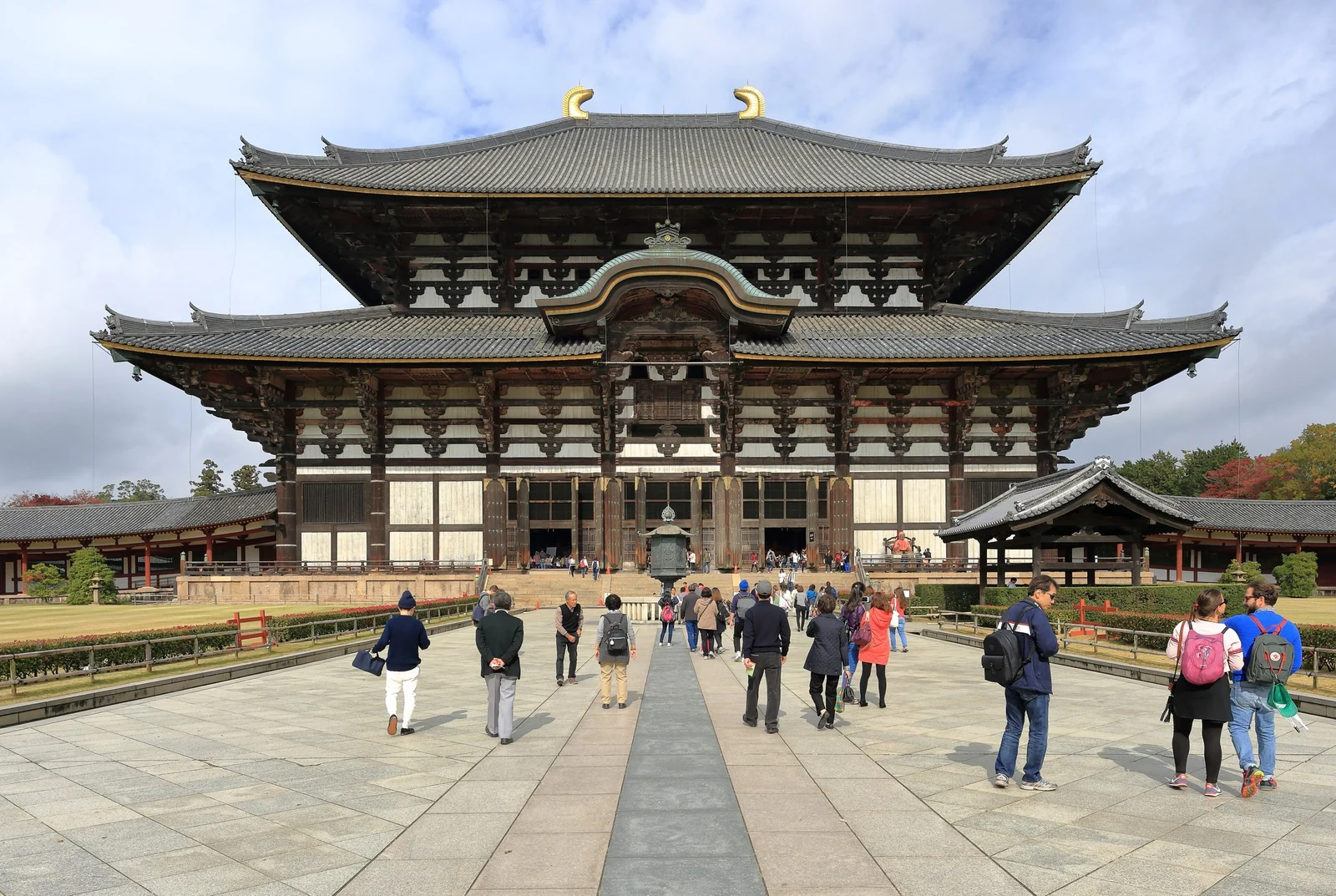
Todai-ji is the reason most people come. Emperor Shomu commissioned the temple in the eighth century, and the Great Buddha was dedicated in 752. The bronze figure, a Vairocana Buddha, is about 15 meters tall and sits inside the Daibutsuden, the Great Buddha Hall.
Here is the part guidebooks underplay: the hall you walk into is not the original. It burned down in 1567 and was rebuilt in 1709 at about two-thirds of its former width. Even so, it remains one of the largest wooden buildings in the world, and the first glimpse of it through the Nandaimon gate, flanked by two fierce guardian statues, is genuinely stunning.
Inside, the Buddha is flanked by smaller attendant figures, and a wooden pillar near the rear has a hole said to match the size of the Buddha's nostril. Children and the adventurous squeeze through it for luck. Allow 45 to 60 minutes for the whole complex, and check opening hours and admission on the official Todai-ji website, since hours vary by season.
Nara Park and the Deer
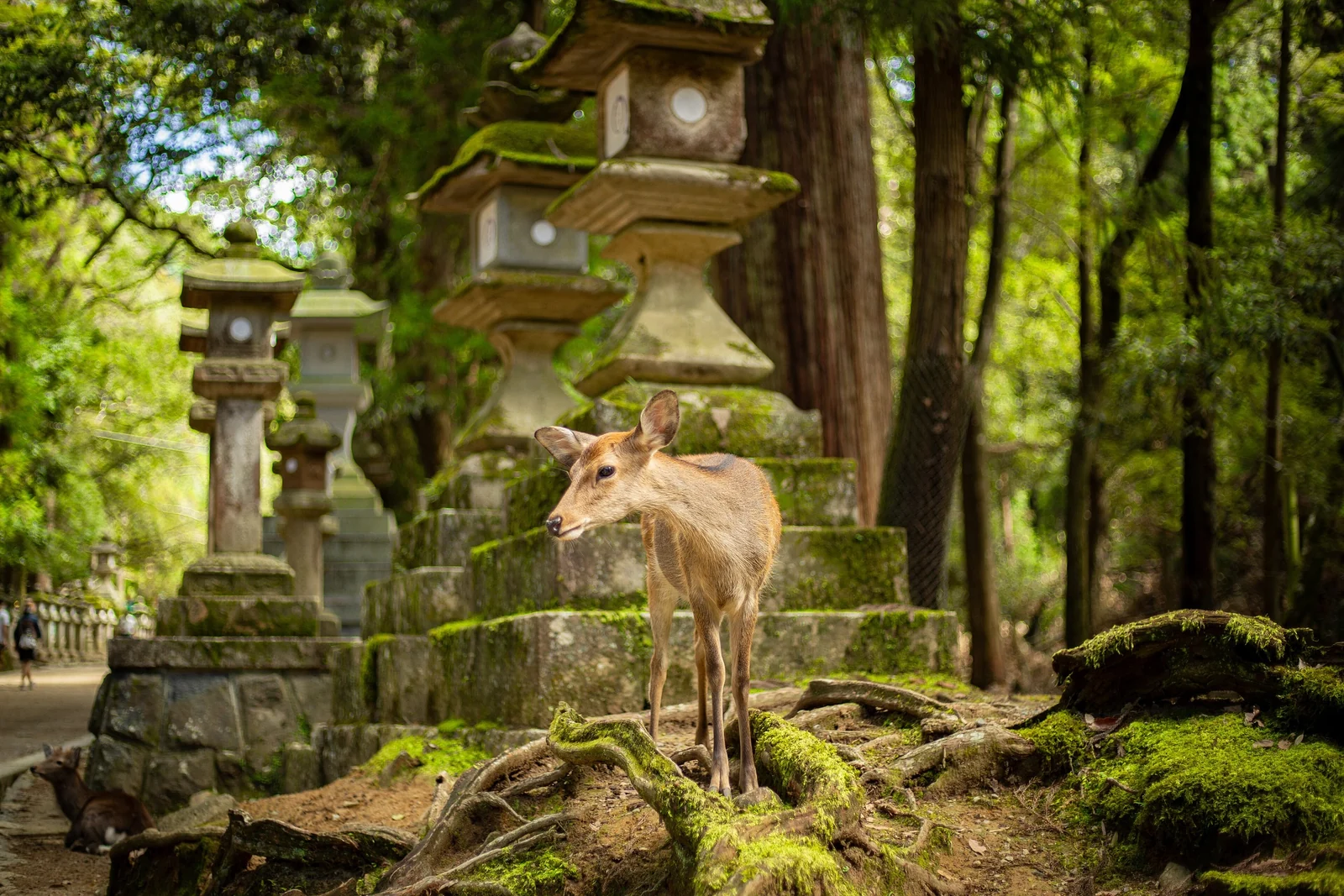
Several hundred sika deer live in and around Nara Park, and they are the town's trademark. Local tradition ties them to the founding of Kasuga Taisha, whose deity is said to have arrived riding a white deer, which is why they were long treated as sacred messengers. They are protected as a natural monument today.
Deer Etiquette
The deer look gentle and are still wild animals. They can bite, butt and kick, especially when food is involved. A few habits keep everyone happy:
- Feed only the official crackers. Stalls sell shika senbei, made for the deer. Human snacks and anything else are bad for them.
- Hold the crackers openly. Deer will nibble at pockets, maps and shopping bags, so keep paper out of reach.
- Do not tease. Waving a cracker without handing it over is how people get nudged hard or bitten.
- Bow back. Some deer bow their heads when they see crackers. It is a real habit, and a bow in return is part of the fun.
- Give mothers and fawns space. Females with young can be protective.
Once your crackers are gone, show open palms and the deer lose interest. Nobody needs to feed them all day, and the animals do fine on grass.
Kasuga Taisha and the Forest Path
Kasuga Taisha, founded in 768 according to the shrine's own history, is the best thing in Nara after Todai-ji and arguably the more atmospheric one. The approach is a long gravel path under cedars, lined with stone lanterns furred with moss. The vermilion shrine buildings sit in a forest that has been protected for over a thousand years.
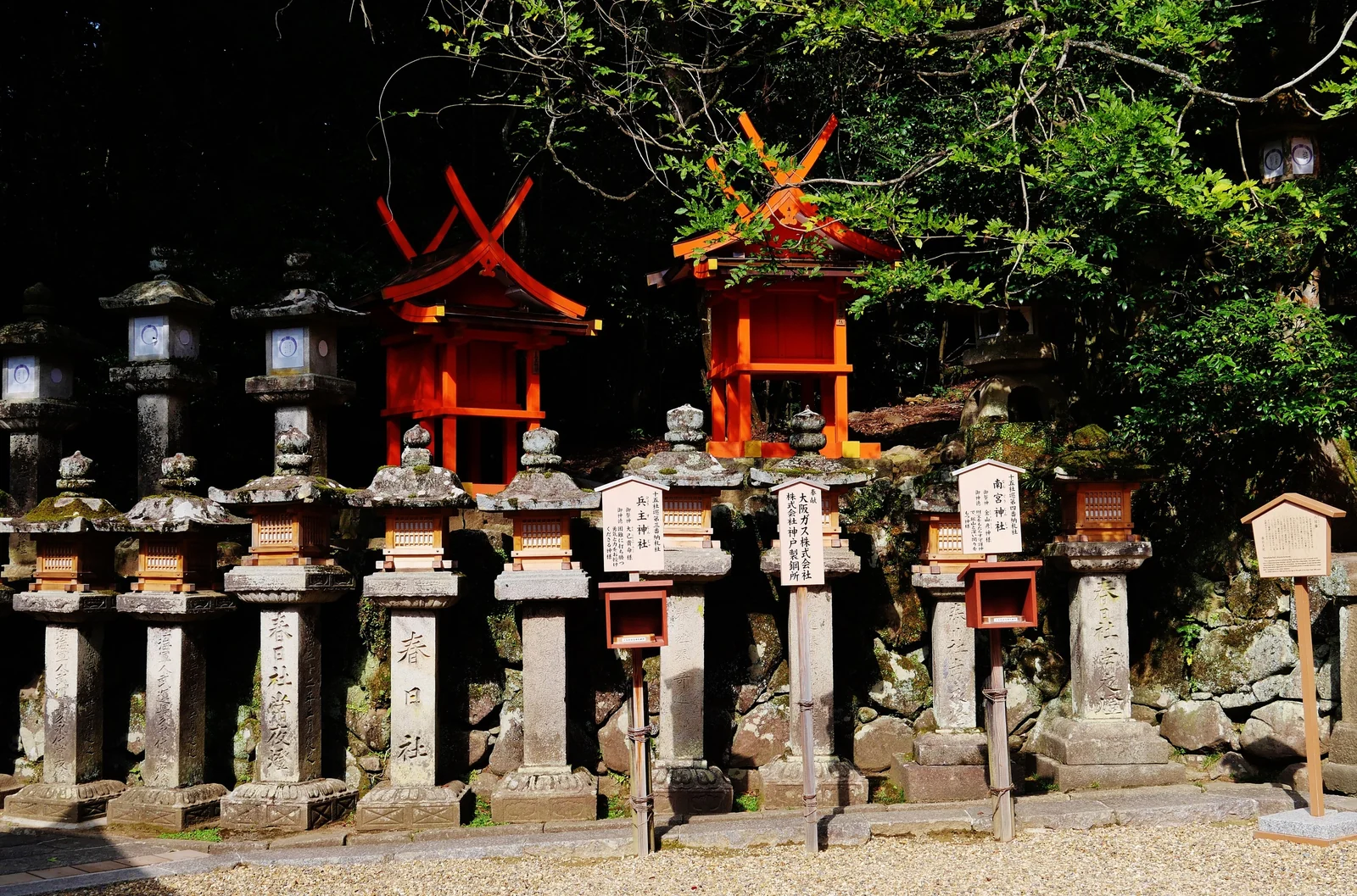
Thousands of lanterns, stone along the paths and bronze hanging from the eaves, were donated by worshippers. They are lit together twice a year during the Mantoro lantern festivals, in early February and in mid-August, and both nights draw crowds. On an ordinary day the shrine feels hushed. Read about the main hall and any paid inner areas on the official Kasuga Taisha site before you set out.
The forest behind the shrine, Kasugayama Primeval Forest, is part of the same World Heritage listing. Hunting and logging have been banned there since the ninth century, so it is unusually intact. You can walk marked trails if you want an hour of quiet after the crowds.
Kofuku-ji and Naramachi
Kofuku-ji, the old family temple of the powerful Fujiwara clan, stands between the station and the park. Its five-story pagoda is about 50 meters tall, the second tallest in Japan after the one at To-ji in Kyoto, and it has become the symbol of the town. The present pagoda dates from 1426, after earlier ones burned. A national treasure museum on the grounds holds Buddhist sculpture, and the Eastern Golden Hall nearby is worth a look.
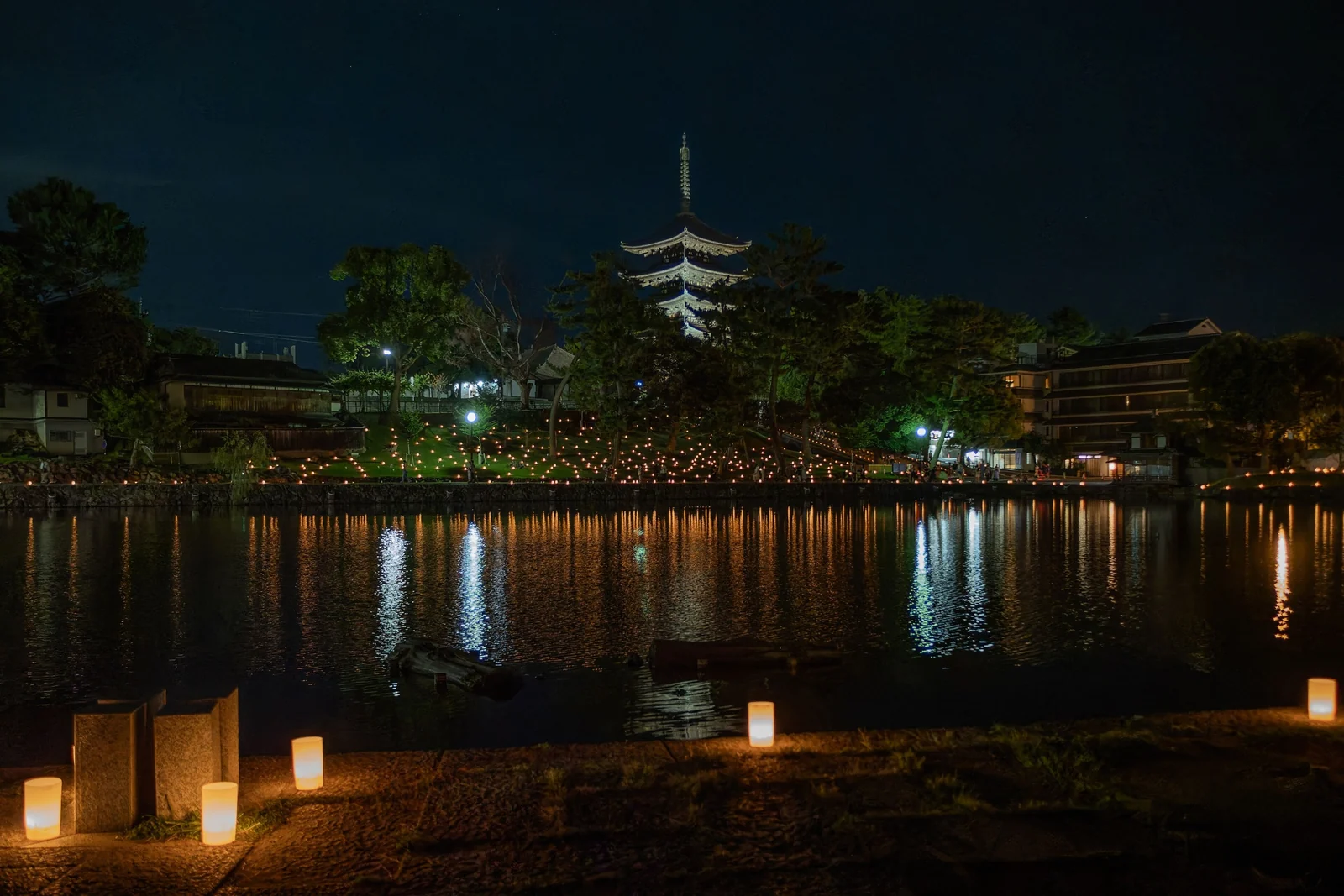
Sarusawa Pond, just below the pagoda, gives the classic reflection shot, and its steps are a pleasant spot to sit. South of the pond, the old merchant quarter of Naramachi has narrow lanes, wooden townhouses, small museums and cafes. It is the best place in town for a slow lunch or a handmade souvenir, and the crowds thin out a block or two off the main road.
A One-Day Nara Route
This loop keeps walking to a sensible level and finishes near Kintetsu-Nara, so you are not dragging yourself back uphill at the end of the day.
- Morning: arrive by 9:00 if you can, and walk through Kofuku-ji and past Sarusawa Pond into Nara Park.
- Late morning: go to Todai-ji and spend an hour with the Great Buddha Hall and its gate.
- Lunch: eat in or near the park. Plenty of casual restaurants and noodle shops serve set meals, and a regional specialty, kakinoha-zushi, is sushi wrapped in persimmon leaves.
- Afternoon: walk the lantern-lined road to Kasuga Taisha and, if energy allows, a short forest trail.
- Late afternoon: head back through Naramachi for coffee and a wander before taking the train out.
The route is roughly 4 to 5 kilometers on foot, mostly flat. Go in comfortable shoes; the park's gravel gets tiring faster than people expect.
How Long to Stay and When to Go
Most visitors do Nara as a day trip, and that is enough for the main route above. A half day works if you only want Todai-ji and the deer. Sleeping in Nara is worth considering if you like quiet evenings; the day crowds leave around late afternoon and the park becomes calm. If you want to see the sights for a second day, there are other World Heritage sites a short ride away, such as Horyu-ji, one of the world's oldest surviving wooden temples.
- Spring (late March to April): cherry blossoms in the park. Beautiful and crowded.
- Summer (June to August): hot and humid, and the rainy season arrives in early summer. Start early and carry water.
- Autumn (late October to November): the best balance of comfortable weather and red maple leaves. Expect crowds on weekends.
- Winter (December to February): cold but clear, with the fewest tourists and a good chance of quiet temple grounds.
Whatever the season, go early. Tour groups arrive from mid-morning, and the best light and calmest paths come before 10:00. For a sense of what Japan feels like when the weather turns, our winter in Japan guide is a useful read.
Practical Tips for Nara
- Luggage: use coin lockers at the stations rather than carrying bags around. Space can run out on busy days.
- Cash and cards: temples and small shops often take cash only, so carry some yen. Cracker stalls are cash.
- Footwear: you will remove shoes in some halls, so slip-ons help.
- Food: the park area gets expensive and rushed at midday. A short walk toward Naramachi gives you more choice.
- Information: the Nara City tourism site lists current events, walking maps and visitor centers.
If you are comparing bases for a Kansai trip, our guide on Tokyo or Osaka for a first trip will help you decide where to sleep, and our list of places to go in Japan has more ideas for the rest of the itinerary.
Nara Day Trip FAQ
Is Nara worth a day trip from Kyoto or Osaka?
Yes. Nara is under an hour from both cities and packs Todai-ji's giant Buddha, the park's deer, Kasuga Taisha and Kofuku-ji into one walkable area. It feels older and calmer than Kyoto, which makes it a good contrast.
How long do you need in Nara?
Five to seven hours covers the main route at an easy pace: Kofuku-ji, Todai-ji, Nara Park, Kasuga Taisha and a short stop in Naramachi. If you only want Todai-ji and the deer, a half day is enough.
Is it better to take the JR or Kintetsu train to Nara?
Kintetsu stops at Kintetsu-Nara, a short walk from the park, and is often quicker from Kyoto and Osaka-Namba. JR Nara station is a little farther away but is covered by the Japan Rail Pass. Pick whichever starts closer to your hotel.
Is it safe to feed the deer in Nara?
Yes, if you use only the official deer crackers sold at stalls in the park and follow basic rules. Keep paper and bags out of reach, do not tease them, and give females with fawns space. The deer can bite or butt when impatient.
What is the best time to visit Nara?
Autumn, from late October to November, brings mild weather and red maple leaves. Spring blossoms in April are also lovely. Summer is hot and humid, and winter is cold but quiet. Arrive early in any season to avoid tour groups.
Can you visit Nara and Kyoto on the same day?
It is possible, since trains between them take under an hour, but it makes for a rushed day. A better plan is to give Nara its own day from Kyoto or Osaka, or to see Kyoto's Fushimi Inari in the morning and Nara in the afternoon.
Is Nara good for kids?
Yes. Children usually love the deer, and the Great Buddha Hall is impressive at any age. Keep an eye on small children around the animals, bring water, and plan for a lot of walking on gravel paths.