Nikko is the easiest big escape from Tokyo: a mountain town in Tochigi Prefecture, roughly two hours north by direct train, where an overdecorated shogun's shrine, a cluster of Buddhist temples and a high crater lake sit within one valley system. A Nikko day trip from Tokyo works well, as long as you pick your priorities before you leave.
The core visit is the UNESCO-listed shrine and temple area with Toshogu and Rinno-ji. The bonus round is up the mountain road to Lake Chuzenji and Kegon Falls, which is where the autumn leaves put on their best show. This guide covers each stop, the train and pass options, the best season and the honest answer to whether a day is enough. For the wider picture, see our Japan travel guides.
Why Nikko Is Worth a Day from Tokyo
Tokyo is spectacular, but it is also relentlessly flat and built-up. Nikko gives you the opposite: cedar forest, moss-covered stone lanterns, cold mountain air and a level of craftsmanship you rarely see outside Kyoto. The shrines were part of the Edo-period shogunate's statement of power, and they look like it.
The area is listed by UNESCO as the Shrines and Temples of Nikko, inscribed in 1999. That listing covers Toshogu, Futarasan Shrine and Rinno-ji, together more than a hundred buildings, and the setting among mature cedars is half the appeal. If you are still choosing between big-city plans and countryside, our comparison of Tokyo or Osaka for a first trip will help, and our Tokyo travel guide covers the capital itself.
Getting from Tokyo to Nikko: Trains and Passes
There are two railway companies and no bad choice. Both take roughly two hours from central Tokyo with a direct limited express, and both end up at stations about a mile or so (a short bus ride or a walk) from the shrine area.
| Option | Departs from | Arrives at | Notes |
|---|---|---|---|
| Tobu Railway limited express (Spacia Nikko) | Asakusa | Tobu-Nikko | About two hours, direct on many departures; reserved seats; the usual choice for visitors |
| JR limited express (Nikko) | Shinjuku | JR Nikko | About two hours; useful if you stay on the west side of Tokyo and hold a JR pass |
| Shinkansen plus local train | Tokyo or Ueno to Utsunomiya, then JR Nikko Line | JR Nikko | Faster on paper, but the change and the slower local leg usually cancel the gain |
| Tobu Nikko Pass | Asakusa | Tobu-Nikko and the Nikko area buses | Combines the round-trip train with unlimited local buses for a set number of days; compare it with single fares before buying |
Whether a pass saves money depends on what you plan to ride. If you intend to go up to Lake Chuzenji, the local bus fare is a real cost, and a pass that bundles it with the train is often the simplest option. If you are only visiting the shrine area on foot, single tickets may be cheaper. Check current fares, areas and validity on the Tobu Railway international site and the Nikko tourism association site.
A practical tip: reserve seats on the limited express for weekends and autumn dates, and aim for an early departure. Every hour you lose in the morning comes out of your afternoon at the lake.
Toshogu Shrine: The Shogun's Showpiece
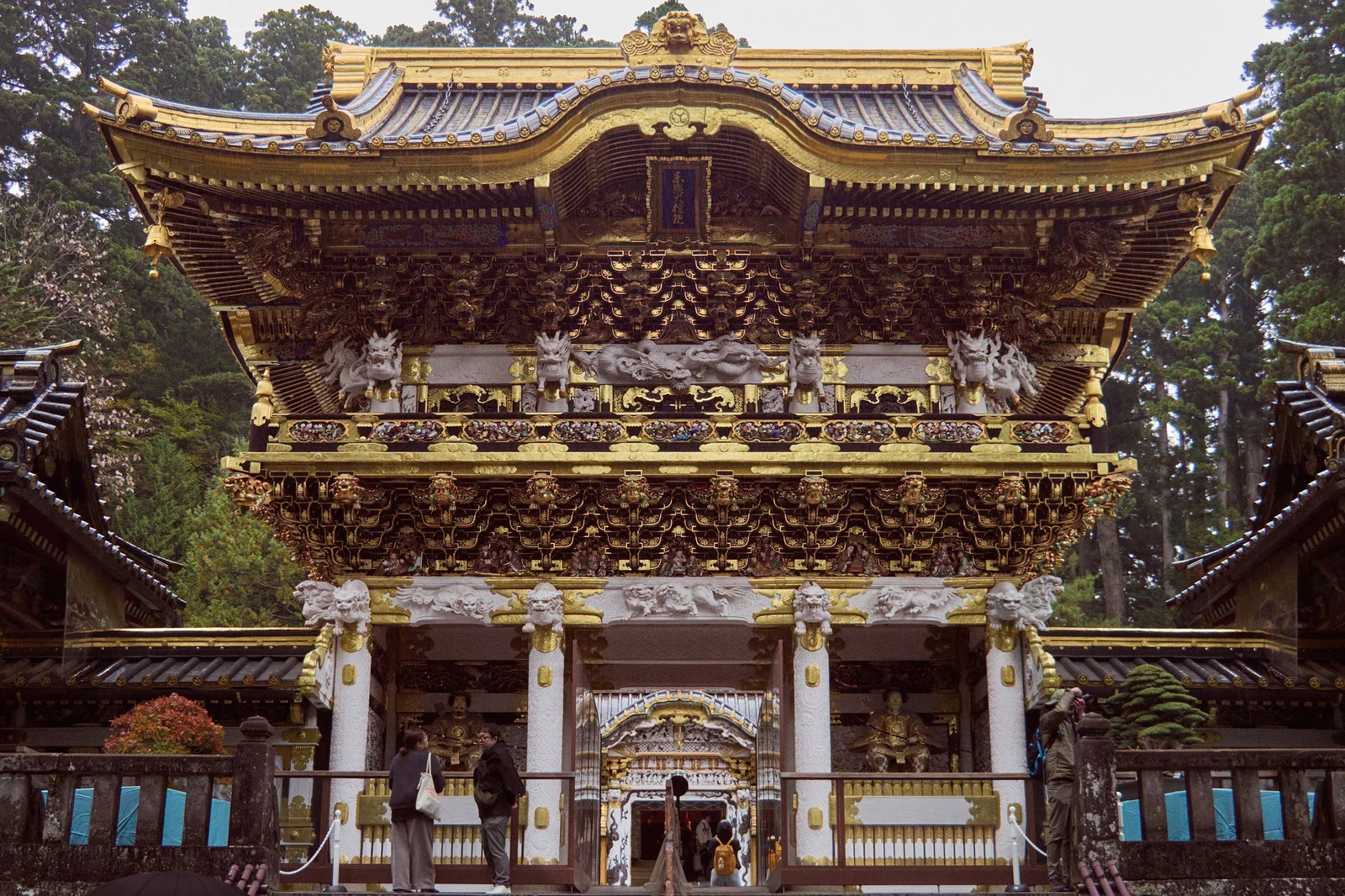
Toshogu is the mausoleum-shrine of Tokugawa Ieyasu, who founded the shogunate that ruled Japan for more than 250 years. It was first built in 1617, and his grandson Iemitsu had it enlarged and rebuilt in the 1630s into the lavish complex you see today. Think gold leaf, red lacquer and thousands of painted carvings, packed onto a hillside among giant cryptomeria trees.
What to Look for Inside Toshogu
- Yomeimon Gate: the showpiece entrance, nicknamed the gate you could stare at until the sun goes down. Every beam seems to carry a dragon, child or mythical beast.
- The Three Wise Monkeys: carved on the stable that housed the sacred horses. The famous see-no-evil, hear-no-evil, speak-no-evil trio is just one panel in a longer series.
- The Sleeping Cat (Nemuri-neko): a small carving above a passage toward the tomb, attributed to the sculptor Hidari Jingoro. Most visitors walk under it without noticing, so look up.
- The stairway to Ieyasu's tomb: a long climb of stone steps through the cedars. It is quieter and more austere than anything below, and a good contrast to the gold.
Honestly, Toshogu divides people. Visitors who love restraint, as in the tea houses of Kyoto, may find it exhausting. Visitors who like craft and spectacle tend to leave dazed and happy. Allow at least an hour and a half, more if you buy tickets for the inner sections. Check opening hours and ticket details on the Nikko Toshogu official site.
Rinno-ji, Futarasan and Shinkyo Bridge
Toshogu gets the attention, but the other two parts of the World Heritage area are worth your time. Rinno-ji is the area's main Buddhist temple, traditionally founded in the eighth century. Its largest hall, the Sanbutsudo, enshrines three large gilded Buddhas. Parts of the temple complex have been under restoration in recent years, so check what is open before you plan your route.
Futarasan Shrine is the oldest Shinto presence here, much older than the Tokugawa buildings, and it is calmer and less crowded. The grounds slide into the forest in a way Toshogu never does.
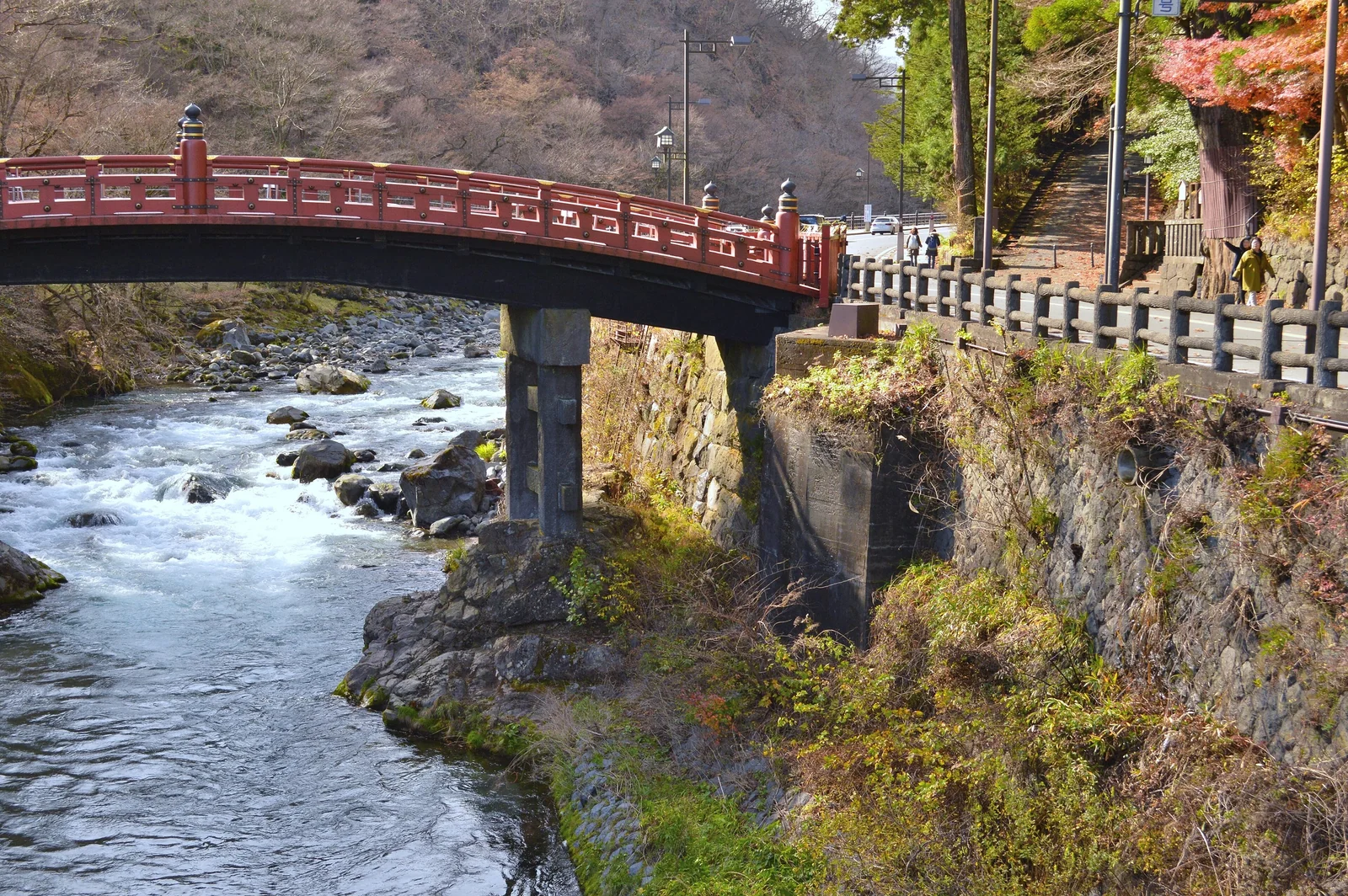
On the way up from the station you will cross the Daiya River near the red lacquered Shinkyo Bridge, the traditional gateway to the sacred area. It is a fine photo stop in the morning, and you can see it from the road without paying anything. From there it is an uphill walk of roughly twenty to thirty minutes to Toshogu, or a short ride on a local bus.
Kegon Falls and Lake Chuzenji
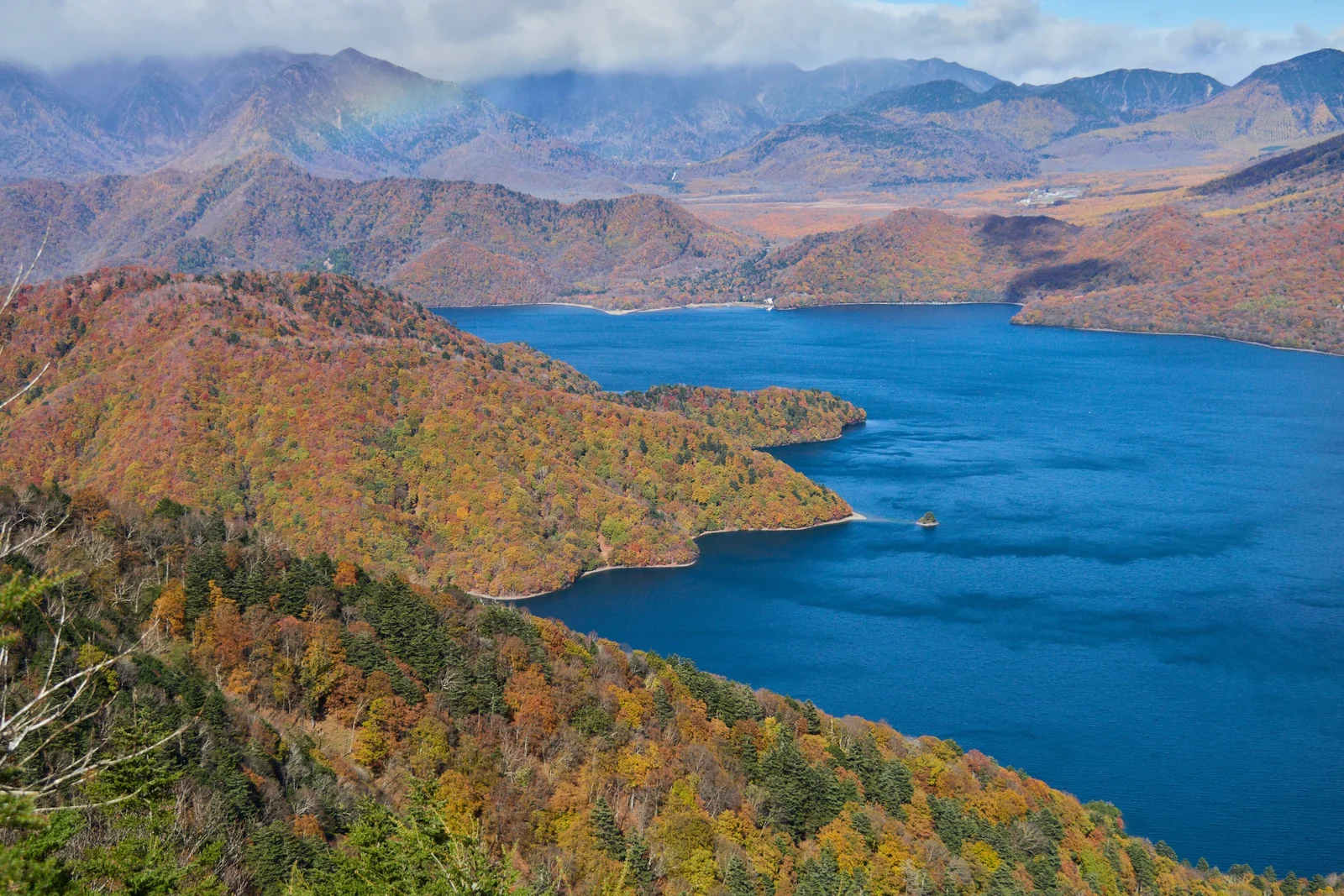
The second half of a Nikko day trip is up in the mountains. Lake Chuzenji, formed when lava from Mount Nantai dammed a river valley, sits at more than 1,200 meters above sea level, so it is noticeably cooler than the town below. It is the heart of the Oku-Nikko (inner Nikko) area, a landscape of forested slopes, hot springs and trails.
Kegon Falls
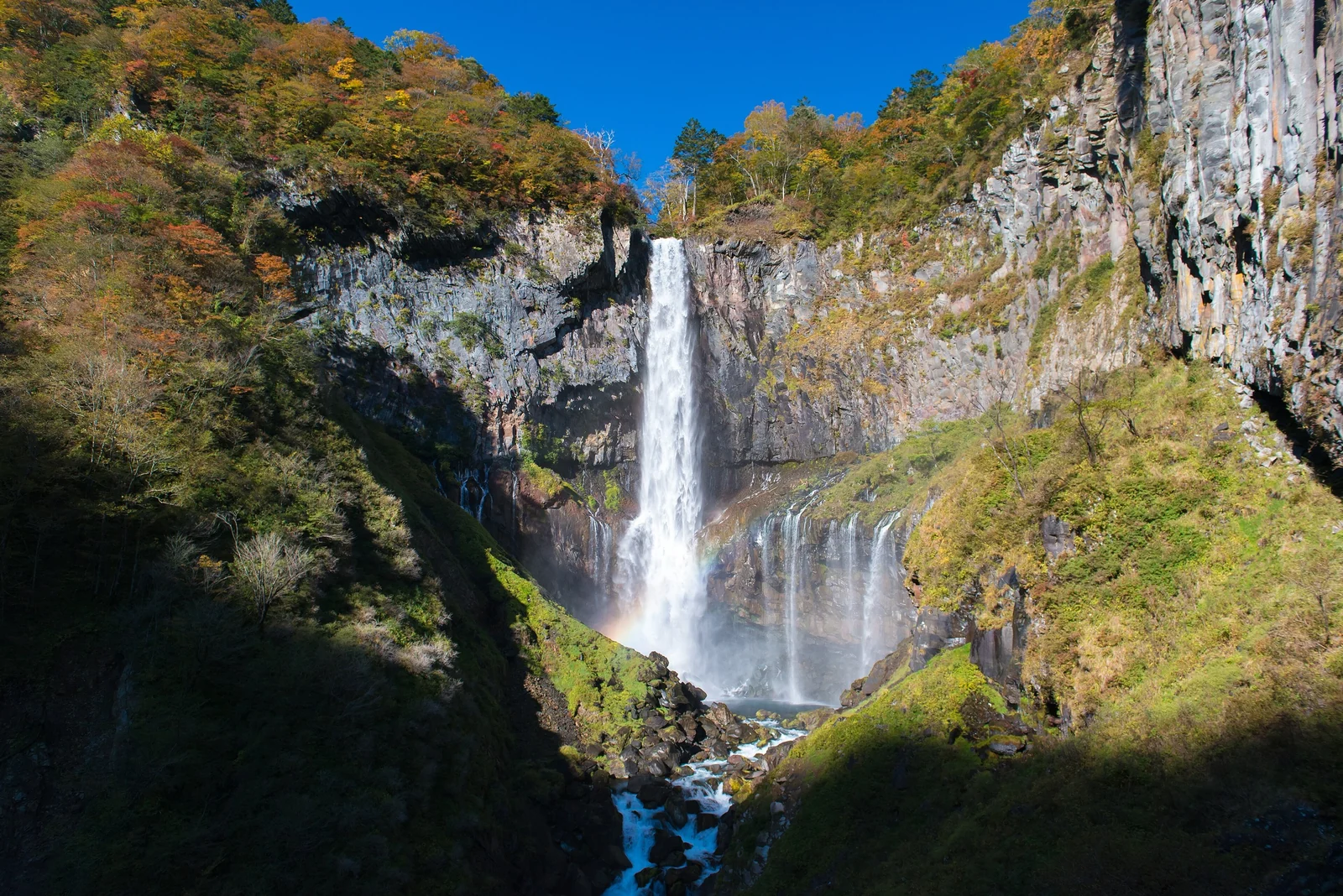
Kegon Falls drops about 97 meters from the lake's outflow into a rocky gorge, and it is counted among the three great waterfalls of Japan. You can see it from a free platform and, for a fee, from an elevator that takes you down to a viewing deck at the base. The mist, the sound and the scale are all better from below. On a clear day in autumn, the cliffs around the falls are among the most photographed scenes in the region.
Lakeside Time
After the falls, walk along the lakeshore or just sit with a coffee. If you have an extra hour, there are temples and shrine buildings around the lake, boat trips in season and short forest paths. Keep expectations realistic: this is a scenic stop, not a hike-heavy day, unless you deliberately pick a trail. Mountain weather changes fast, so a light jacket is smart even when Tokyo feels warm.
The Irohazaka Road and Getting Up the Mountain
The only practical route from Nikko town up to the lake is the Irohazaka, a winding mountain road with a long run of hairpin turns. It is split into two one-way roads, one for going up and one for going down, and it is named after the old Japanese syllabary (iroha), because each bend carries a syllable. Local buses run the route from the Nikko stations to Chuzenji, and the ride takes roughly forty minutes.
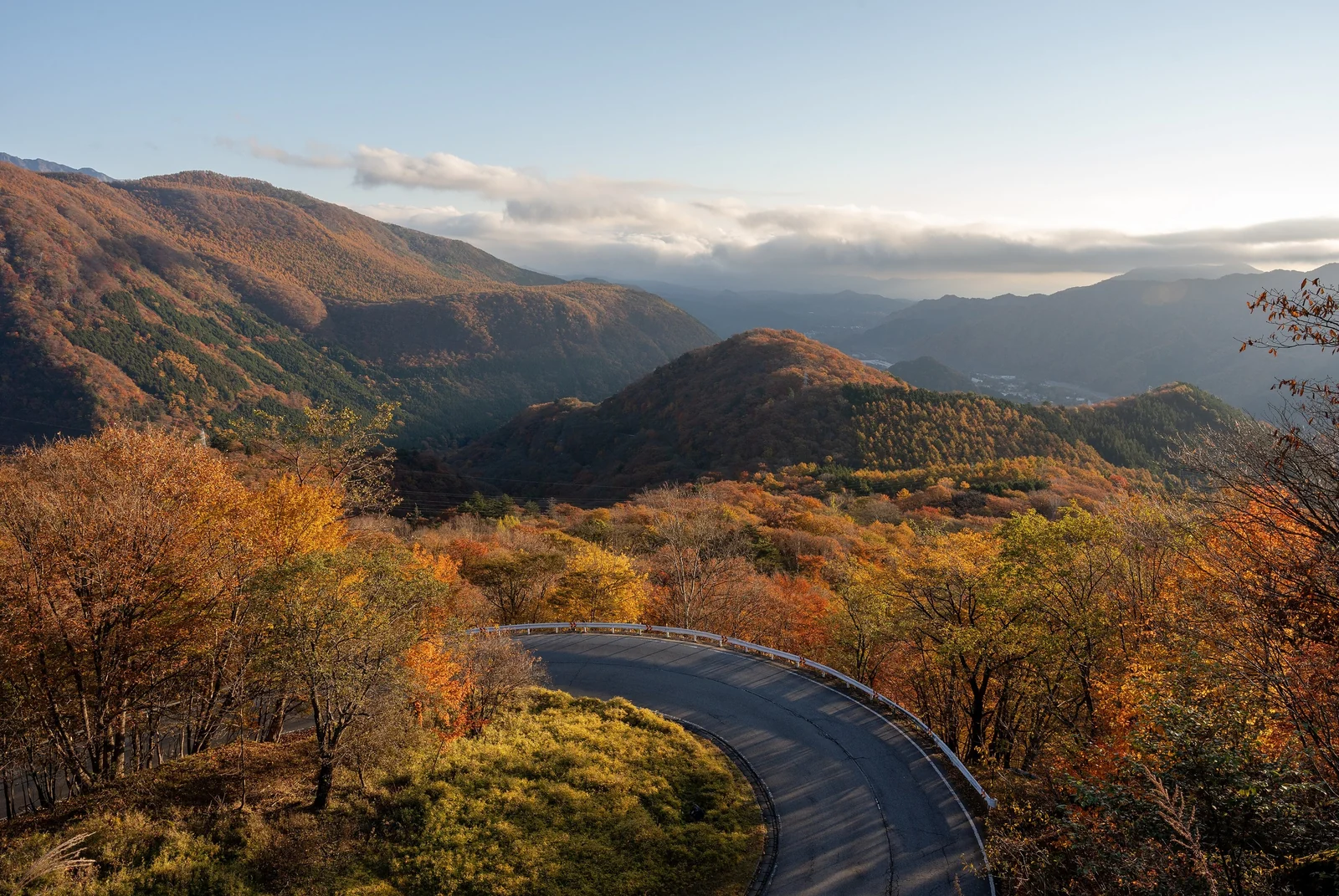
In peak leaf season the road can crawl, and a trip that normally takes forty minutes can stretch far longer. Plan for it: go up early, leave the lake before late afternoon, and avoid sitting in traffic when buses are fullest. Driving is possible, but for most visitors the bus is less stressful than the hairpins and the parking queues.
Best Time to Visit Nikko and the Autumn Leaves
Nikko is a four-season destination, but autumn is the headline. Color usually starts high up first, around Lake Chuzenji and Oku-Nikko in about mid-October, then works its way down the valley to the shrine area toward early or mid-November. That means the same trip can show you peak leaves at the lake and green forest in town, or the other way around, depending on the week. Check the local foliage forecast before you set a date.
| Season | What to expect | Good for |
|---|---|---|
| Spring (April to May) | Cool mornings, new green and cherry blossoms that arrive later here than in Tokyo | Quiet temples and fresh forest |
| Summer (June to August) | Warm in town, cooler at the lake; rain in the early summer | Escaping Tokyo's heat; lakeside walks |
| Autumn (October to November) | Peak foliage, heavy crowds and slow roads on the mountain | Photography, the Irohazaka drive and Kegon Falls |
| Winter (December to March) | Cold, with snow likely at higher elevations; fewer visitors | Atmospheric shrines and hot springs |
If you are visiting in the colder months, our guide to Japan in winter explains what to pack and what to expect. Whatever the season, weekdays are calmer than weekends, and in peak autumn that difference is large.
A One-Day Nikko Itinerary
A single day is tight but doable if you start early and accept that you will skip something. Here is a plan that keeps the walking sensible.
- Early morning: take a direct limited express from Tokyo and arrive in Nikko by mid-morning.
- Late morning: bus or walk to the shrine area, pause at Shinkyo Bridge, then spend your main block at Toshogu.
- Early afternoon: quick lunch near the shrines, a look at Rinno-ji or Futarasan if time allows.
- Mid-afternoon: bus up the Irohazaka to Kegon Falls and the lake. This is where a day trip gets tight.
- Late afternoon: return down the mountain before the last buses fill, then take the train back to Tokyo.
If this sounds like too much, drop the lake and spend the whole day on the shrines, or do the reverse. Trying to see everything leaves you rushing through the part that most deserves slow attention.
Day Trip or Overnight in Nikko?
A day trip is fine for first-timers who want the highlights, especially outside peak foliage. An overnight stay is better in three cases: you want both the shrines and the lake without rushing, you are visiting in peak autumn when roads and buses are slow, or you want to see Toshogu in the early morning before the tour groups arrive.
- Nikko town: close to the stations and the shrines, with guesthouses and traditional inns. The practical choice for most visitors.
- Lake Chuzenji and Oku-Nikko: quieter and more scenic, with hot-spring inns and lake views. Better for hiking and for avoiding the afternoon crush.
- Kinugawa Onsen: a hot-spring town on the same rail line, an easy side trip or base if you want a bath after sightseeing.
Prices vary a lot by season, so book early for autumn weekends. If you are building a longer route through the country, browse our list of places to go in Japan for ideas that combine well with a mountain stop.
Practical Tips for Visiting Nikko
- Shoes and steps: expect stairs and gravel at the shrines. Wear shoes you can walk in comfortably and slip off easily where required.
- Bring layers: the lake is noticeably cooler than Tokyo, and the shrine area is shaded by tall trees.
- Cash and cards: major sites accept cards, but small shops and local buses may favor cash or IC cards, so carry some yen.
- Etiquette: keep voices low in the shrine grounds, follow signs about photography inside buildings and do not touch carvings.
- Last trains: check the final return departure to Tokyo before you go up the mountain, so you are never racing the clock.
Nikko Day Trip FAQ
Can you do Nikko as a day trip from Tokyo?
Yes. Direct limited express trains from Asakusa or Shinjuku take roughly two hours each way, which leaves enough time for Toshogu and either Rinno-ji or the lake. Seeing everything in one day is possible but rushed, so choose your priorities.
How do you get from Tokyo to Nikko by train?
Take the Tobu Railway limited express from Asakusa to Tobu-Nikko, or the JR limited express from Shinjuku to JR Nikko. Both take about two hours. Reserve seats for weekends and the autumn season, and check current timetables on the operators' sites.
Is a Nikko pass worth buying?
It depends on your plan. A pass that bundles the round-trip train with local buses is usually good value if you go up to Lake Chuzenji and Kegon Falls. If you only visit the shrines on foot, single tickets may cost less. Compare before you buy.
When is the best time to see autumn leaves in Nikko?
Color usually peaks around Lake Chuzenji and Oku-Nikko in about mid-October, then reaches the shrine area in early to mid-November. Timing shifts from year to year, so check a local foliage forecast. Expect crowds and slow roads at the peak.
How high is Kegon Falls?
Kegon Falls drops about 97 meters from Lake Chuzenji into a rocky gorge. It is considered one of the three great waterfalls of Japan. You can view it from a free platform or from an elevator that takes you down to a lower deck.
How long does it take to get to Lake Chuzenji from Nikko?
The bus from the Nikko stations to Lake Chuzenji takes roughly forty minutes in normal conditions, up the Irohazaka road. In peak autumn, traffic can slow the trip considerably, so start early and leave the lake before late afternoon.
Is it better to stay overnight in Nikko?
Stay overnight if you want both the shrines and the lake without rushing, if you visit in peak foliage, or if you want quiet early-morning time at Toshogu. First-timers who just want the highlights can manage on a well-planned day trip.