Rajasthan is India's land of sandstone forts, lake palaces and desert dunes, and the classic way to see it is a loop through four cities: Jaipur, Udaipur, Jodhpur and Jaisalmer. Each has its own color and mood. Jaipur is pink and busy, Udaipur is white and lakeside, Jodhpur is blue below a huge fort, and Jaisalmer is golden and close to the Thar Desert.
Ten to fourteen days is comfortable for all four, with Delhi as the usual entry and exit point. This Rajasthan itinerary gives you a sensible order, what to see in each city, how the trains and roads fit together, and which months are kind to your feet. It sits within our wider India travel guides.
how-to-plan-a-rajasthan-route
The distances are big. Jaipur to Udaipur and Jodhpur to Jaisalmer are each a long day by road or rail, so resist the urge to add a fifth city until you have counted the hours. Most travelers do better with fewer stops and an extra night in each.
The most natural direction runs Delhi, Jaipur, Udaipur, Jodhpur, Jaisalmer, then a flight or night train back. It follows the geography, saves the desert for the end and avoids backtracking. If you are short on time, drop Jaisalmer and finish in Jodhpur.
| City | Known for | Suggested nights | Character |
|---|---|---|---|
| Jaipur | Amber Fort, City Palace, Hawa Mahal, bazaars | 3 | Busy, colorful, packed with sights |
| Udaipur | Lake Pichola, City Palace, old-town lanes | 2 to 3 | Relaxed, romantic, good for slowing down |
| Jodhpur | Mehrangarh Fort, the blue old town, Umaid Bhawan Palace | 2 | Dramatic fort, lively markets |
| Jaisalmer | Golden fort, havelis, Thar Desert dunes | 2 to 3 | Remote, atmospheric, desert pace |
jaipur-the-pink-city
Jaipur was founded in 1727 by Maharaja Sawai Jai Singh II and laid out on a planned grid, unusual for an Indian city of that era. Its walled center, painted in the terracotta-pink that gives the city its nickname, is on the UNESCO World Heritage List. Give it three nights; two feels rushed once the heat or the traffic gets to you.
amber-fort
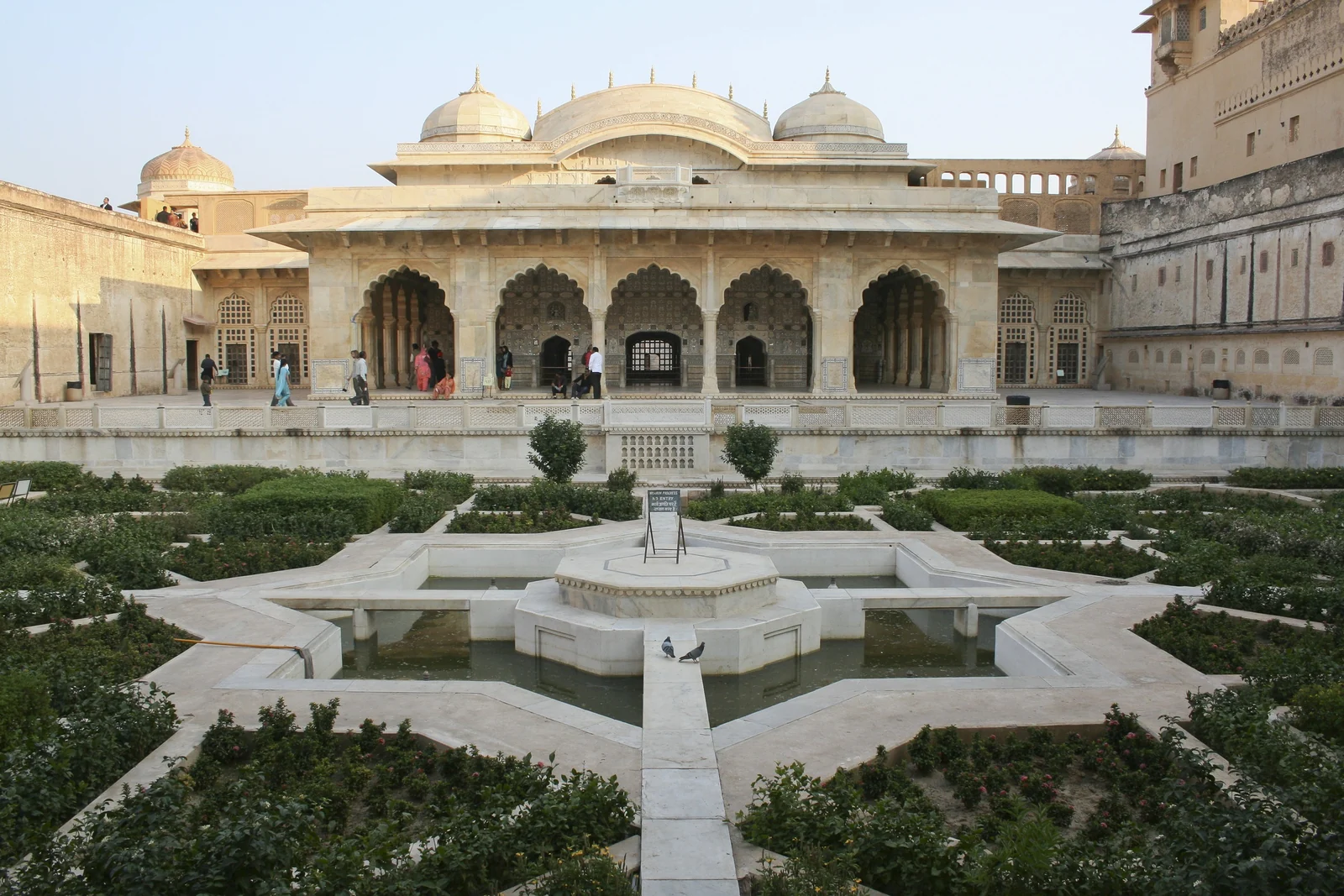
Amber (also spelled Amer) sits on a ridge a short drive outside the center. The palace-fort mixes red sandstone and marble, with mirrored halls, courtyards and sweeping views over Maota Lake. It is one of six Rajasthan hill forts inscribed by UNESCO in 2013. Arrive at opening time, before the tour buses, and walk up rather than queue for the elephant rides, which many visitors now avoid for welfare reasons.
city-palace-jantar-mantar-and-hawa-mahal
In the old city, the City Palace is still partly a royal residence, with museum rooms of textiles, weapons and manuscripts. Next door, Jantar Mantar is an observatory of giant stone instruments built by Jai Singh II in the early 18th century, and a UNESCO site since 2010. A short walk on, the Hawa Mahal, completed in 1799, is a five-story screen of tiny windows that let royal women watch street life unseen. It looks best from across the road in the morning light.
bazaars-and-food
Johari Bazaar and Bapu Bazaar sell jewelry, block-printed cotton, leather shoes and brass. Bargain politely and walk away if the price stays silly. For dinner, look for dal baati churma and laal maas, the local meat curry; vegetarian travelers will find Rajasthan one of the easiest regions in India to eat well.
udaipur-lakes-and-palaces
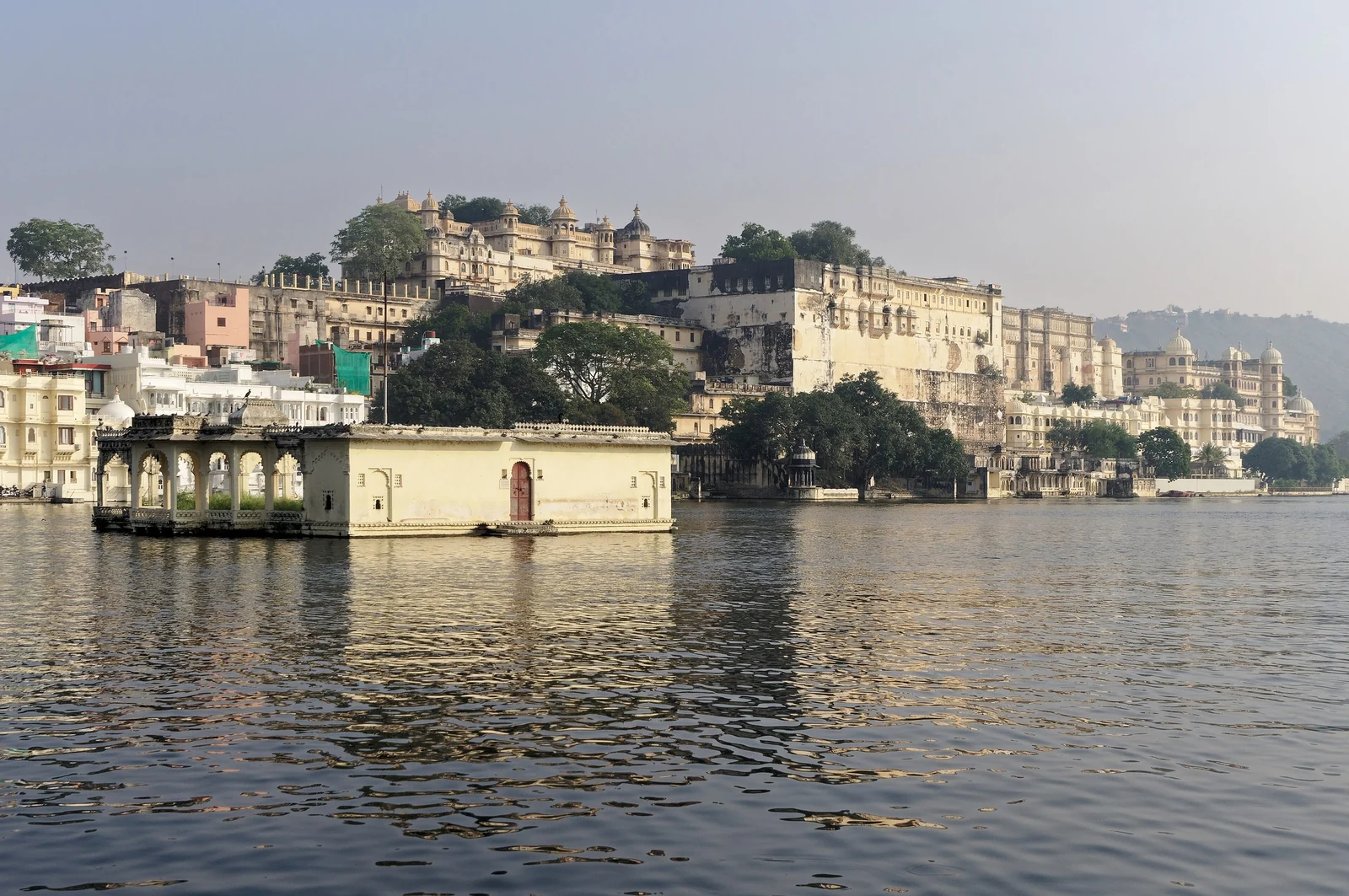
Udaipur was founded in 1559 by Maharana Udai Singh II and has been the most relaxed stop on most itineraries ever since. The city wraps around Lake Pichola, with palaces on the shore, a white island palace in the water and hills on every side. After Jaipur's pace, it feels like an exhale.
city-palace-and-lake-pichola
The City Palace complex climbs the eastern shore, a stack of courtyards, balconies and museum rooms built by successive maharanas. Plan a couple of hours. Afterward, take a late-afternoon boat ride on Lake Pichola; the light on the ghats and the palace walls is the reason people come here.
old-town-and-day-trips
The lanes around Jagdish Temple are good for slow wandering, with rooftop cafes, miniature-painting shops and small workshops. For a half-day outing, Saheliyon ki Bari is a garden of fountains built for royal women, and the hilltop Sajjangarh (Monsoon Palace) looks over the lakes at sunset.
ranakpur-on-the-way-to-jodhpur
If you travel Udaipur to Jodhpur by car, stop at the Jain temples of Ranakpur. The main marble temple dates to the 15th century and is known for its forest of carved pillars. Dress modestly and expect to remove shoes.
jodhpur-the-blue-city-and-mehrangarh
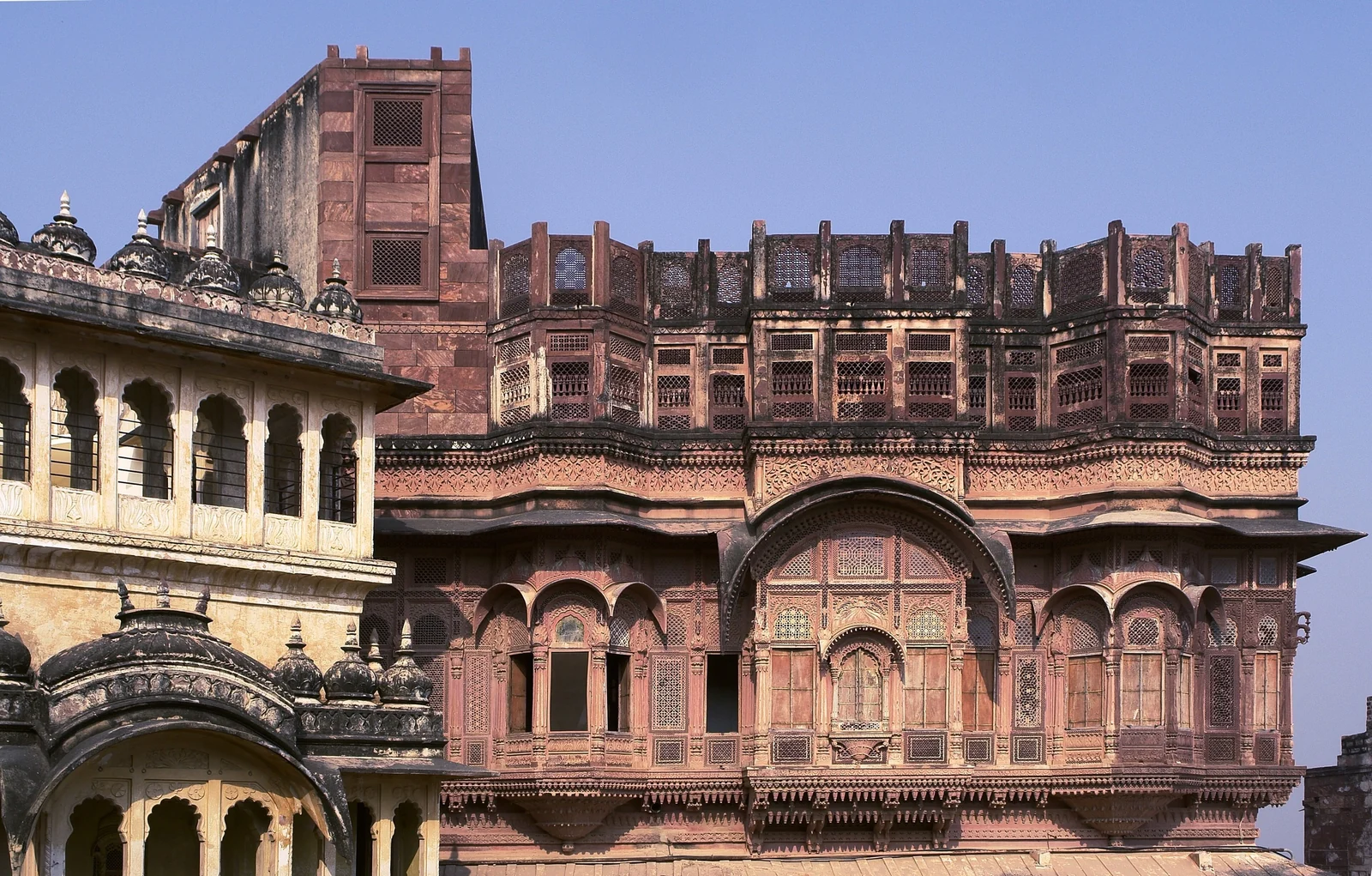
Rao Jodha founded Jodhpur in 1459, and the fort he began, Mehrangarh, still dominates it from a rocky hill. Seen from the walls, the old town below spreads out in shades of blue, traditionally linked to the Brahmin quarter, though the exact origin of the color is debated.
inside-mehrangarh-fort
The fort is run as a museum by the Mehrangarh Museum Trust, and its audio guide is genuinely good. Highlights include the decorated palace rooms, a collection of howdahs, palanquins, weapons and paintings, and the ramparts with their old cannons. Allow three hours, and check opening hours and tickets on the official Mehrangarh site.
the-old-town-and-clock-tower-market
Climb down through the blue lanes to Sardar Market, around the clock tower. It is loud, smelly and good: spice sellers, textile stalls, snack carts and the city's famous sweet shops. Try a creamy makhaniya lassi and the mirchi bada, a stuffed fried chili fritter.
umaid-bhawan-palace
Finished in 1943, this vast sandstone palace is partly a hotel, partly a royal home and partly a museum. Even if you do not stay, it is worth a visit for the Art Deco-meets-Indian architecture and the vintage car display.
jaisalmer-golden-fort-and-the-thar-desert
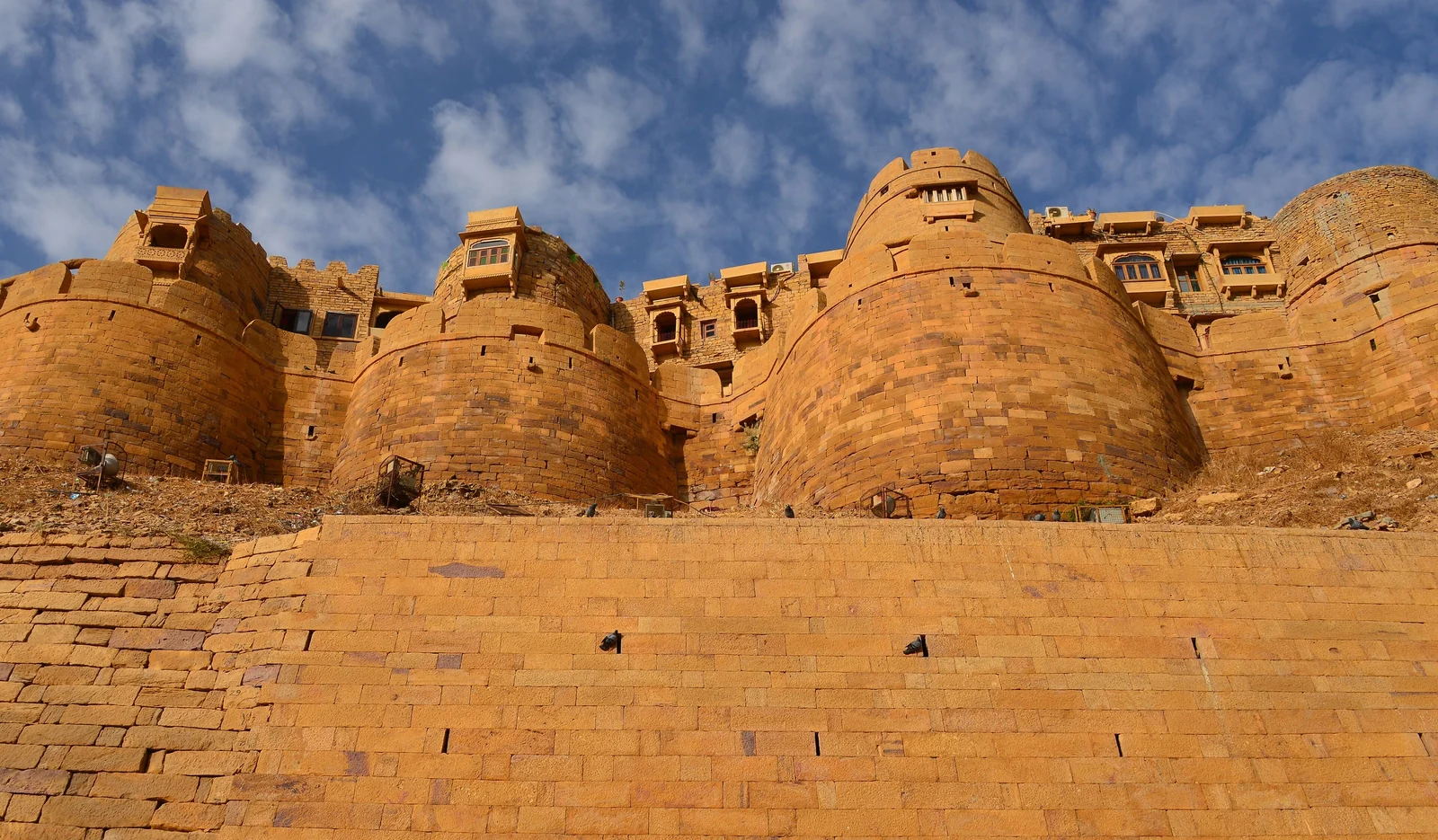
Rawal Jaisal founded Jaisalmer in 1156 on an old caravan route, and its sandstone glows honey-gold at sunset. The fort, also called Sonar Quila, is one of the Rajasthan hill forts on the UNESCO World Heritage List. Unusually, people still live inside its walls, so it works as a neighborhood as much as a monument.
inside-the-fort-and-the-havelis
Wander the narrow lanes, the palace museum and the group of Jain temples. Below the fort, merchants' mansions called havelis, such as Patwon ki Haveli, have intricately carved facades. Be mindful of water use here; the fort's old drainage is under strain, and many visitors choose to stay outside the walls for that reason.
a-night-in-the-desert
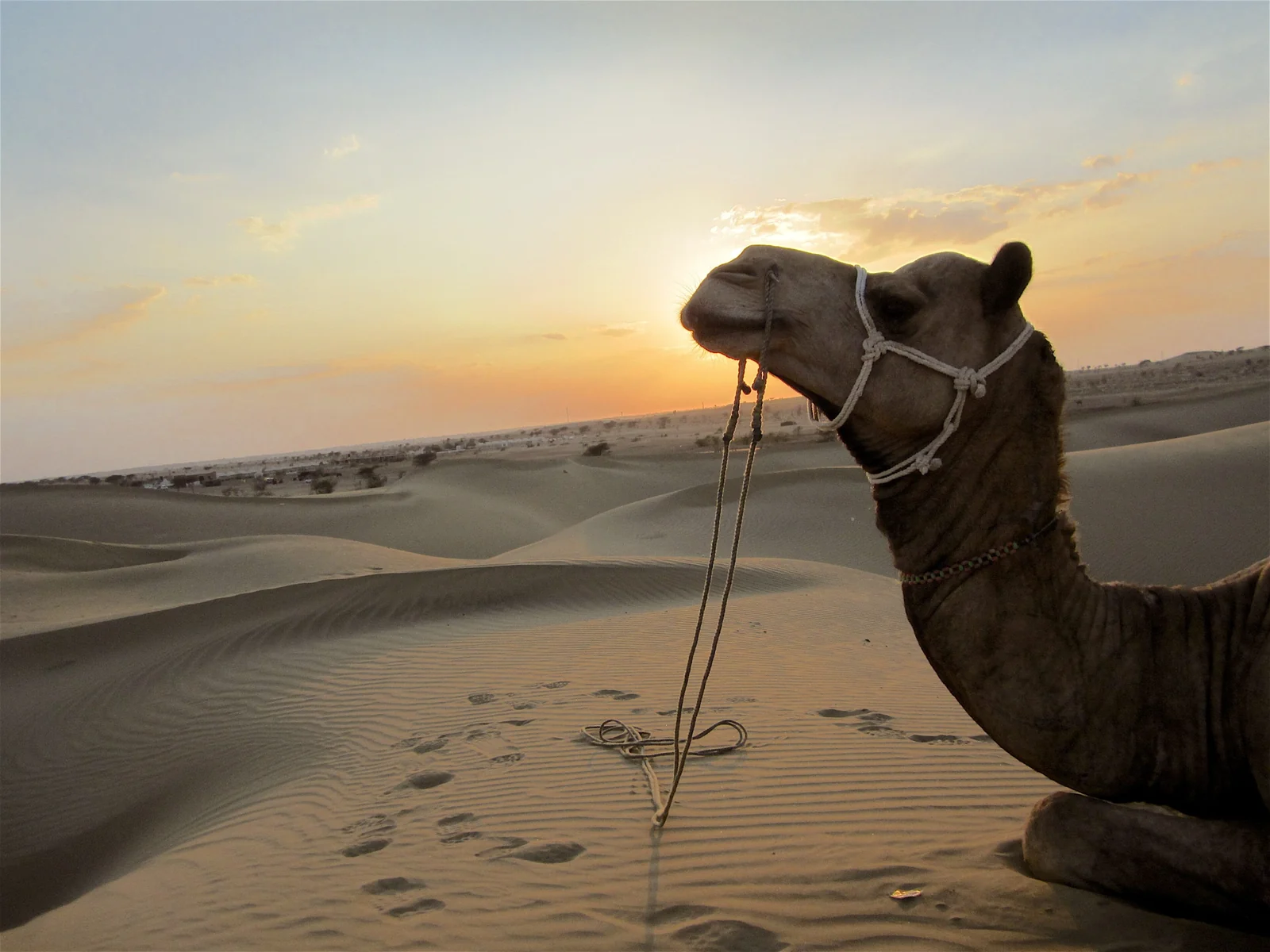
The best-known dunes are around Sam, roughly 40 kilometers from town, and the quieter Khuri area is also popular. Most visitors do a camel ride at sunset followed by a camp dinner with music. Choose a camp for its reviews and its standards on waste and animal care, and expect cold nights in winter.
gadisar-lake
Come at dawn for the old reservoir at Gadisar, where small temples and ghats line the water and the town is still quiet. It is a good counterpoint to the fort at midday.
getting-around-rajasthan-trains-and-roads
Rajasthan has an extensive railway network, and Jaipur, Jodhpur and Jaisalmer are all on it; Udaipur is reachable by train too, though many visitors prefer to drive. Long-distance trains are booked through the Indian Railways system, so reserve ahead for popular days and check which class suits you. Seat and berth availability changes quickly in peak season.
| Leg | Practical options | Notes |
|---|---|---|
| Delhi to Jaipur | Train or road | A straightforward first leg of several hours |
| Jaipur to Udaipur | Train, flight or private car | Long day by road; consider a stop on the way |
| Udaipur to Jodhpur | Private car, with a stop at Ranakpur | Scenic, hilly route |
| Jodhpur to Jaisalmer | Train, bus or car | Desert landscapes on the way; leave early |
A car with a driver is the most flexible option for a Rajasthan loop. It lets you stop at forts, step wells and temples that trains skip, and many travelers hire one for the whole trip. Agree on the route, rest stops and what the price includes before you set off. Domestic flights serve several of the cities, and the airports in Jaipur, Udaipur and Jodhpur are the easiest.
Within cities, auto-rickshaws and ride-hailing apps cover most needs. Use the meter or agree the fare before you get in.
best-time-to-visit-rajasthan
- October to March: the main season, with warm days, cool evenings and clear skies. Desert nights can be properly cold in December and January, so bring a jacket.
- April to June: very hot, especially in the west. Sightseeing is possible only early in the morning and late in the day.
- July to September: the monsoon turns the south green, Udaipur's lakes fill up and crowds thin out, but rain and humidity can disrupt plans.
Recurring festivals add color. The Pushkar camel fair draws crowds in November, and the Jaisalmer Desert Festival takes place in winter. Dates follow the lunar calendar or change yearly, so check them on the official tourism site before you book rooms.
practical-tips-for-rajasthan
- Book ahead in peak season. Good rooms in Udaipur and Jaisalmer fill up in the main winter months.
- Dress for the sun and for respect. Cover shoulders and knees at temples; light cotton long sleeves also protect against the sun.
- Drink bottled or filtered water and be selective with street food; busy stalls with fast turnover are usually the safer bet.
- Ask before photographing people, especially women and camel handlers, and expect a small tip to be requested for some portraits.
- Check entry requirements and tickets on official sites, including the Rajasthan Tourism website. Foreign visitors often pay a higher price at monuments.
If this trip is part of a longer Asian journey, our Sri Lanka two-week itinerary and the Uzbekistan Silk Road route pair well with it. You can also browse all Asia destinations, or read about another desert-and-rock landscape in our Petra and Wadi Rum guide.
a-sample-10-day-rajasthan-itinerary
- Days 1 to 3: Jaipur. Amber Fort in the morning, the old city and bazaars the next day, a slow third day for museums or a cooking class.
- Days 4 to 6: Udaipur. Travel in the morning, then the City Palace, a lake boat ride and a day of wandering the old town.
- Days 7 and 8: Jodhpur. Stop at Ranakpur on the way, then Mehrangarh and the market.
- Days 9 and 10: Jaisalmer. The fort, the havelis and a night at the dunes, then fly or take a train onward.
rajasthan-itinerary-faq
How many days do you need for Rajasthan?
Ten days covers Jaipur, Udaipur, Jodhpur and Jaisalmer without feeling frantic. With a week, choose three cities. With two weeks, add Pushkar, Ranakpur or a wildlife stop, and slow the pace.
What is the best order for Jaipur, Udaipur, Jodhpur and Jaisalmer?
Start in Jaipur, continue to Udaipur, then Jodhpur and finish in Jaisalmer. It follows a natural line, keeps the desert for the end and avoids backtracking before you fly or take a train home.
When is the best time to visit Rajasthan?
October to March is the most comfortable, with warm days and cooler nights. Summers are very hot, and the monsoon brings humidity, though it also turns the south green and thins the crowds.
Is Rajasthan safe for solo travelers?
Many solo travelers, including women, enjoy Rajasthan. Use sensible precautions: licensed taxis or trusted apps, modest clothing, no late walks in empty areas, and a careful eye on touts and overpriced offers.
Should you take trains or hire a car in Rajasthan?
Trains are cheap and good for long legs such as Jodhpur to Jaisalmer. A car with a driver gives flexibility for stops and day trips. Many travelers combine both depending on the route.
Is the Thar Desert worth a night?
Yes, if you pick a responsible camp. A sunset camel ride and a night under the stars near Sam or Khuri is the highlight for many visitors. Bring layers because the desert gets cold after dark.
Are the forts in Rajasthan UNESCO sites?
Six hill forts, including Amber Fort near Jaipur and Jaisalmer Fort, were inscribed by UNESCO in 2013 as the Hill Forts of Rajasthan. Mehrangarh in Jodhpur is not part of that group but is just as impressive.