


Cambodia is a small country in Southeast Asia with an outsized pull, and most trips start with one name: Angkor Wat. The temple complexes around Siem Reap, built by the Khmer Empire between roughly the 9th and 13th centuries, are the main reason to come. The capital, Phnom Penh, adds the other half of the story, a riverside city that is both lively and sobering.
A first visit works well in about a week: three days around Angkor, two in Phnom Penh, and a couple more on the south coast or in Battambang if you have time. This Cambodia travel guide covers the temples, the pass, the best season, how to behave at sacred and painful places, and how to link the highlights. If you are building a wider Asia route, browse our Cambodia guides for more.
Angkor Wat: The Temple Everyone Comes For
Angkor Wat was built in the 12th century by King Suryavarman II, between 1113 and 1150 according to most accounts. It began as a Hindu temple and later became a Buddhist site, and it is still in use today. The whole Angkor area has been a UNESCO World Heritage Site since 1992.
What surprises first-timers is the scale and the detail. A long causeway crosses a wide moat, five lotus-bud towers rise ahead, and the outer galleries are covered in bas-reliefs of battles and legends. The temple faces west, which is why photographers crowd the pond to the left of the entrance causeway at dawn, when the towers appear against a pale sky and mirror in the water.
Sunrise or Not?
Sunrise is beautiful and also very crowded. If the idea of standing among hundreds of phones at 5 a.m. leaves you cold, go in the early afternoon instead, when many tour groups have left for lunch and the galleries are cooler and quieter. The upper level, with its steep stairs, has its own rules on dress and access, so check the posted notices on the day.
Angkor Thom, the Bayon and Ta Prohm
Angkor Wat is only the beginning. The complex covers a huge area of forest and rice fields, and some of its most memorable monuments date from the reign of Jayavarman VII, who took the throne in 1181 and built on a heroic scale.
Angkor Thom and the Bayon
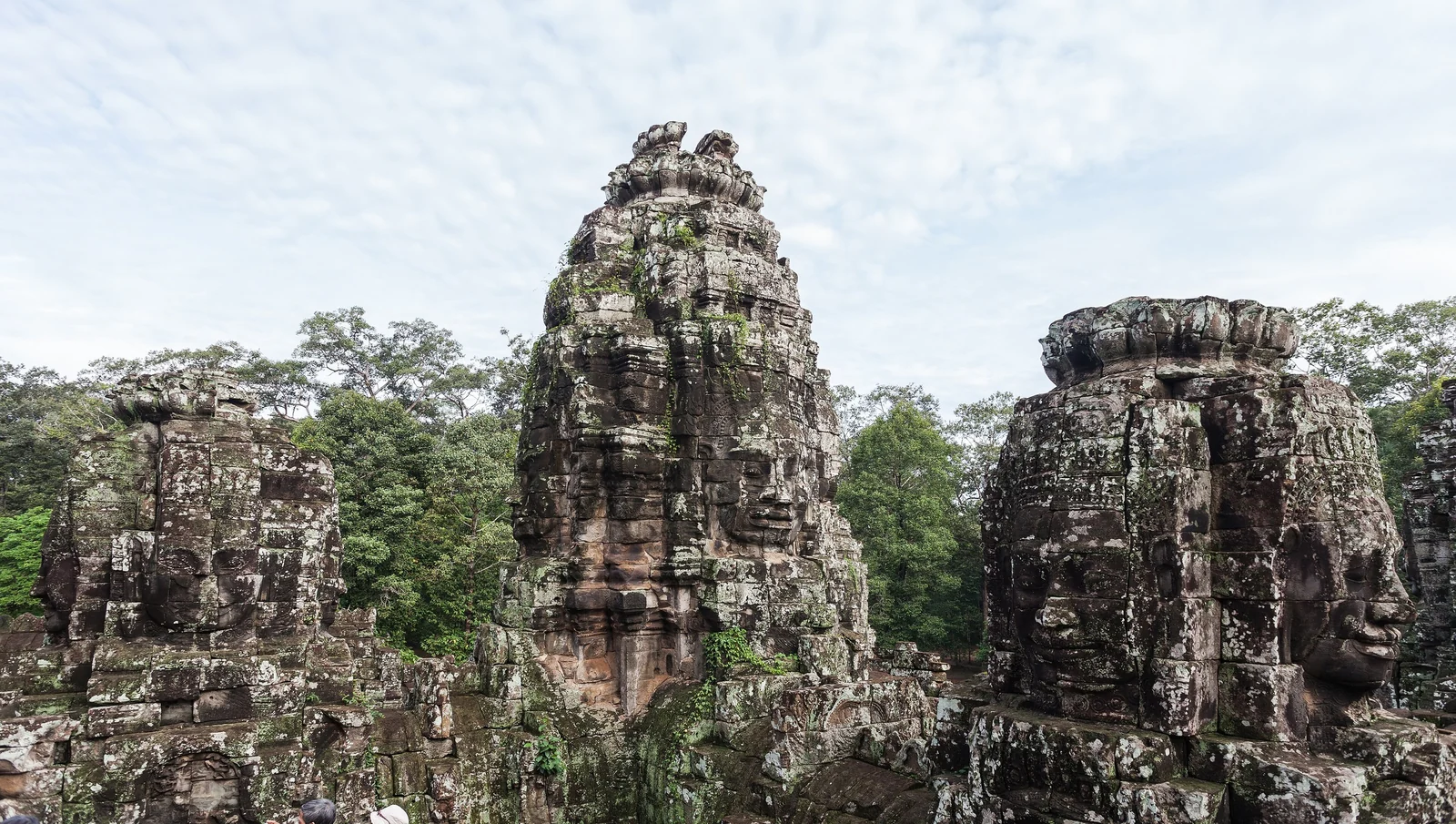
Angkor Thom, the “Great City”, is a walled royal capital that Jayavarman VII raised over an earlier Khmer capital. You enter across a bridge lined with stone guardians, through a gate topped with enormous faces. At its center stands the Bayon, a temple whose towers are carved with serene, smiling faces. Go early or late, because the narrow corridors fill quickly and the faces are best seen in low, angled light.
Ta Prohm and the Tree Roots
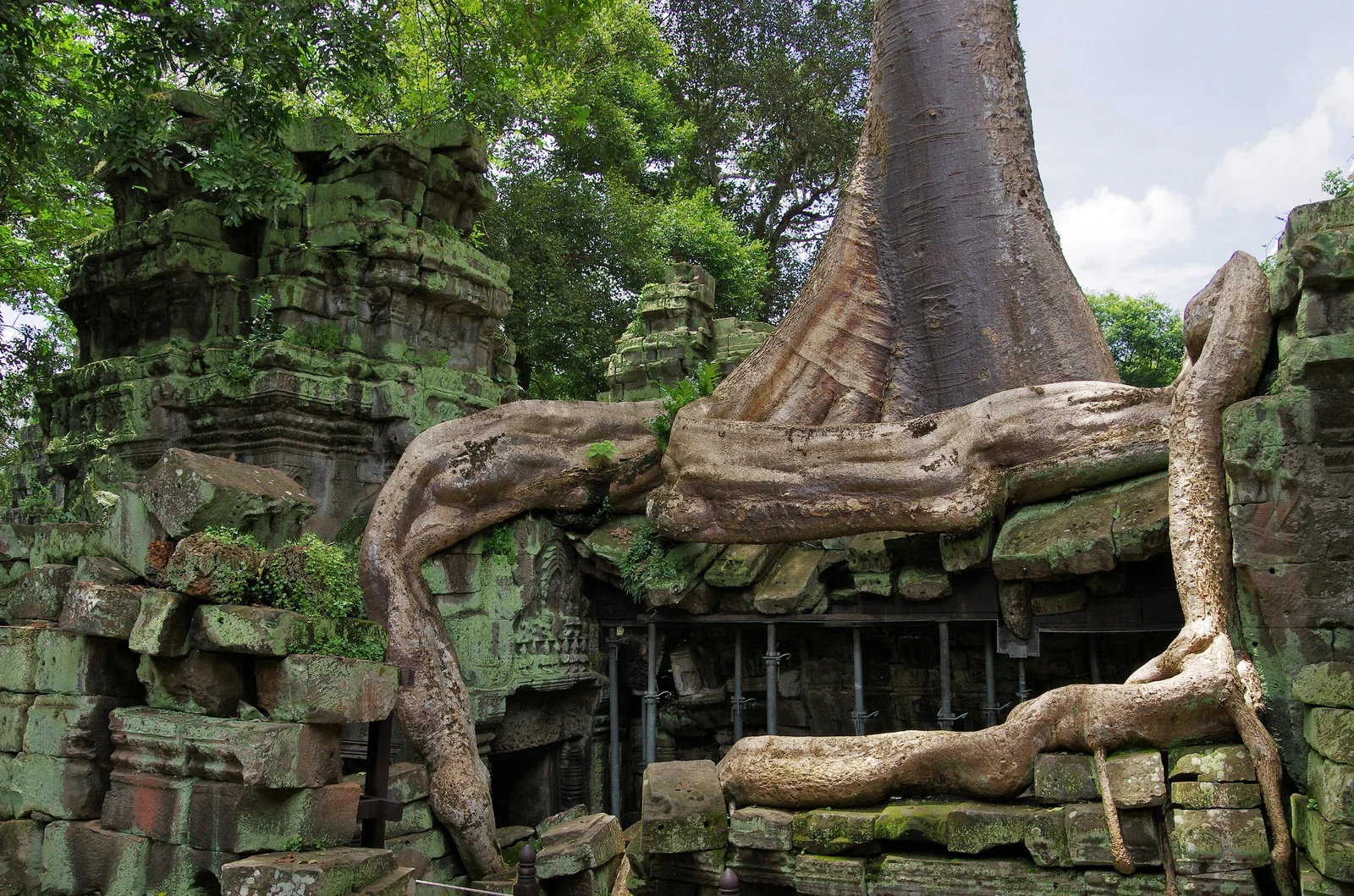
Ta Prohm is the temple of fallen stones and giant trees, built by Jayavarman VII and dedicated to his mother. Roots of enormous trees wrap the walls and doorways in a way that looks accidental and is, in fact, now carefully managed by conservation teams. It is the most atmospheric stop on the small circuit, but also the most photographed, so arrive at opening time.
Smaller Temples Worth a Detour
Once you have seen the big three, pick a couple of lesser sites instead of repeating the headline names. Banteay Srei, a pink sandstone temple with extremely fine carving, lies a good way north of the main circuit. Quiet, collapsed temples such as Preah Khan and Ta Som reward anyone who likes to wander with fewer people around.
The Angkor Pass and How to Plan Your Days
Entry to the Angkor Archaeological Park requires a pass. Passes come in one-day, three-day and seven-day versions, and the official operator sells them through its website and app. Prices change, so check the official Angkor Enterprise site for current rates, opening hours and rules. Carry the pass with you at all times, because it is checked at each major temple.
| Pass length | Best for | Suggested plan |
|---|---|---|
| One day | A very short stop | Angkor Wat, the Bayon and Ta Prohm, with an early start |
| Three days | Most first-time visitors | Small circuit, a long circuit day, and a day for Banteay Srei or quieter sites |
| Seven days | Temple enthusiasts | All of the above, plus remote sites and slow mornings |
Three days is the sweet spot for most people. Spread them out if you can, because Angkor is hot and exhausting, and temple fatigue is real. Start at dawn, rest in the middle of the day and come back in the late afternoon, when the stone turns gold.
Siem Reap: A Base for the Temples
Siem Reap is the gateway town to Angkor, and it has far more going on than a bed and a bus stop. The area around Pub Street and the Old Market is loud, touristy and fun for an evening. Further along the river, quieter lanes hold cafés, small galleries and craft shops, and there are plenty of places to eat Khmer food such as fish amok, a mild steamed curry served in banana leaf.
Getting Around Siem Reap
Tuk-tuks are the standard way to move, and most visitors hire one driver for a full temple day. Agree the plan and price before you set off. Cycling is possible in the cooler months, though the heat and traffic make it a hard day for many people. Siem Reap has an international airport, and the town is also reached by road from Phnom Penh.
Beyond the Temples
If you have a spare half-day, look at the floating villages and wetlands of Tonlé Sap, Southeast Asia's largest lake, though choose your operator with care and ask what benefits the local community. You can also see a performance of traditional Khmer dance, or visit a training workshop where young Cambodians learn traditional crafts.
Phnom Penh: History and Respect
Phnom Penh sits where the Mekong, the Tonlé Sap river and the Bassac meet. It is the capital, the largest city and a fast-changing place of French-era boulevards, street food, motorbike traffic and riverfront promenades. It also carries the weight of the Khmer Rouge years, 1975 to 1979, when the regime of Democratic Kampuchea killed an estimated one to three million people.
The Royal Palace and the Riverfront
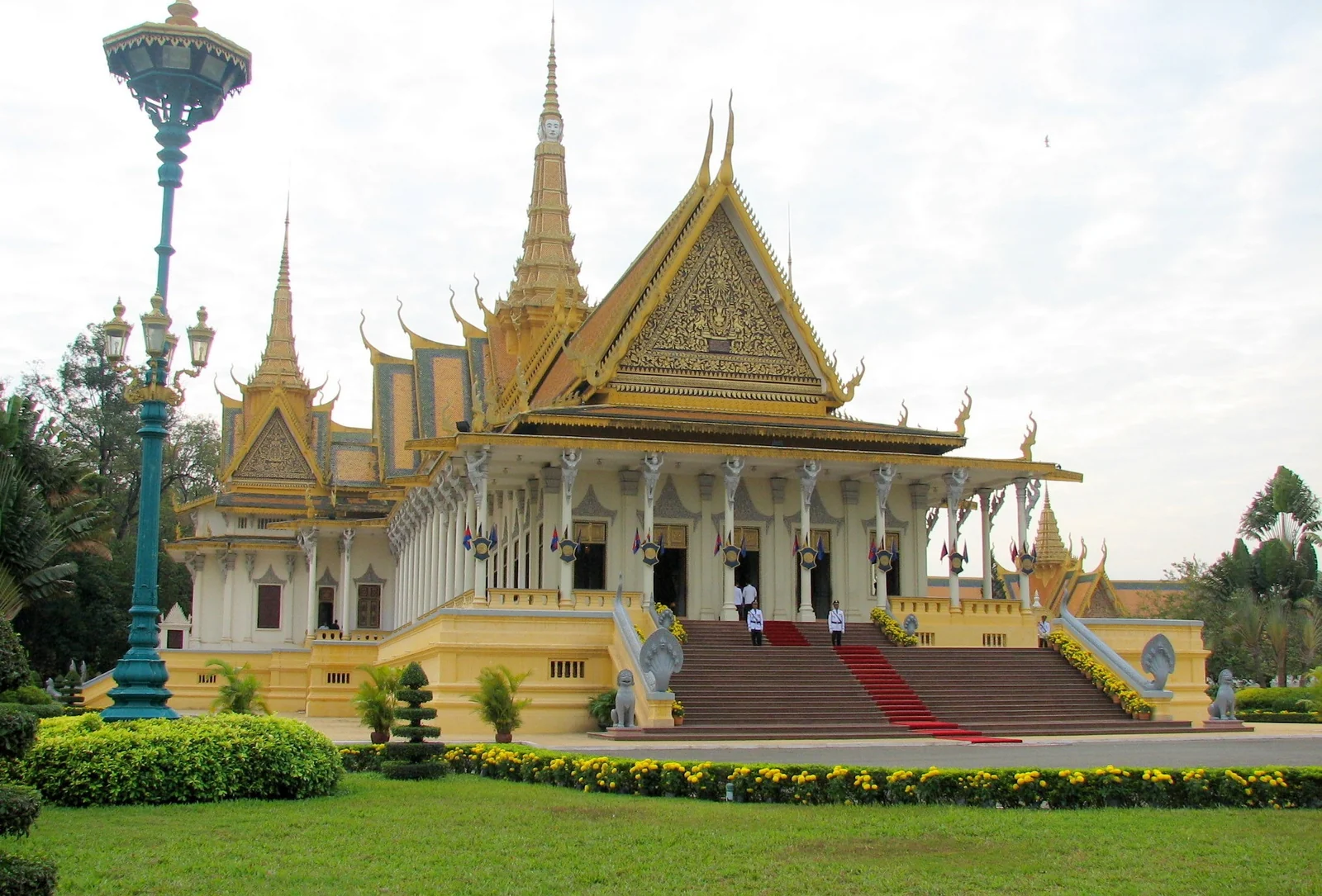
The Royal Palace compound, with its golden roofs and the Silver Pagoda, is the city's most photogenic stop. It is still the residence of the king, so parts of it close without notice, and a modest dress code applies. Afterward, walk the riverside promenade in the evening, when families gather and street vendors set up.
Tuol Sleng and Choeung Ek
Two sites explain what happened under the Khmer Rouge. The Tuol Sleng Genocide Museum occupies a former high school that the regime turned into the prison known as S-21; an estimated 20,000 people were held there. Choeung Ek, outside the city, is one of the mass grave sites. Both are hard visits.
- Go with time and a clear head. Do not schedule these as a quick stop between lunch and a shopping trip.
- Dress conservatively and speak quietly. These are places of mourning for many Cambodians.
- Do not take smiling selfies or pose with exhibits. Photography rules vary, so follow the signs.
- Consider an audio guide or guided tour. The context makes a difference, and it supports local staff.
Kampot, Kep and Battambang: Slower Cambodia
After temples and a capital, many travelers want something quieter. Two options work well, depending on your route. Choose the south if you want river views and sea air, or Battambang if you want a provincial city with an arts scene.
Kampot and Kep
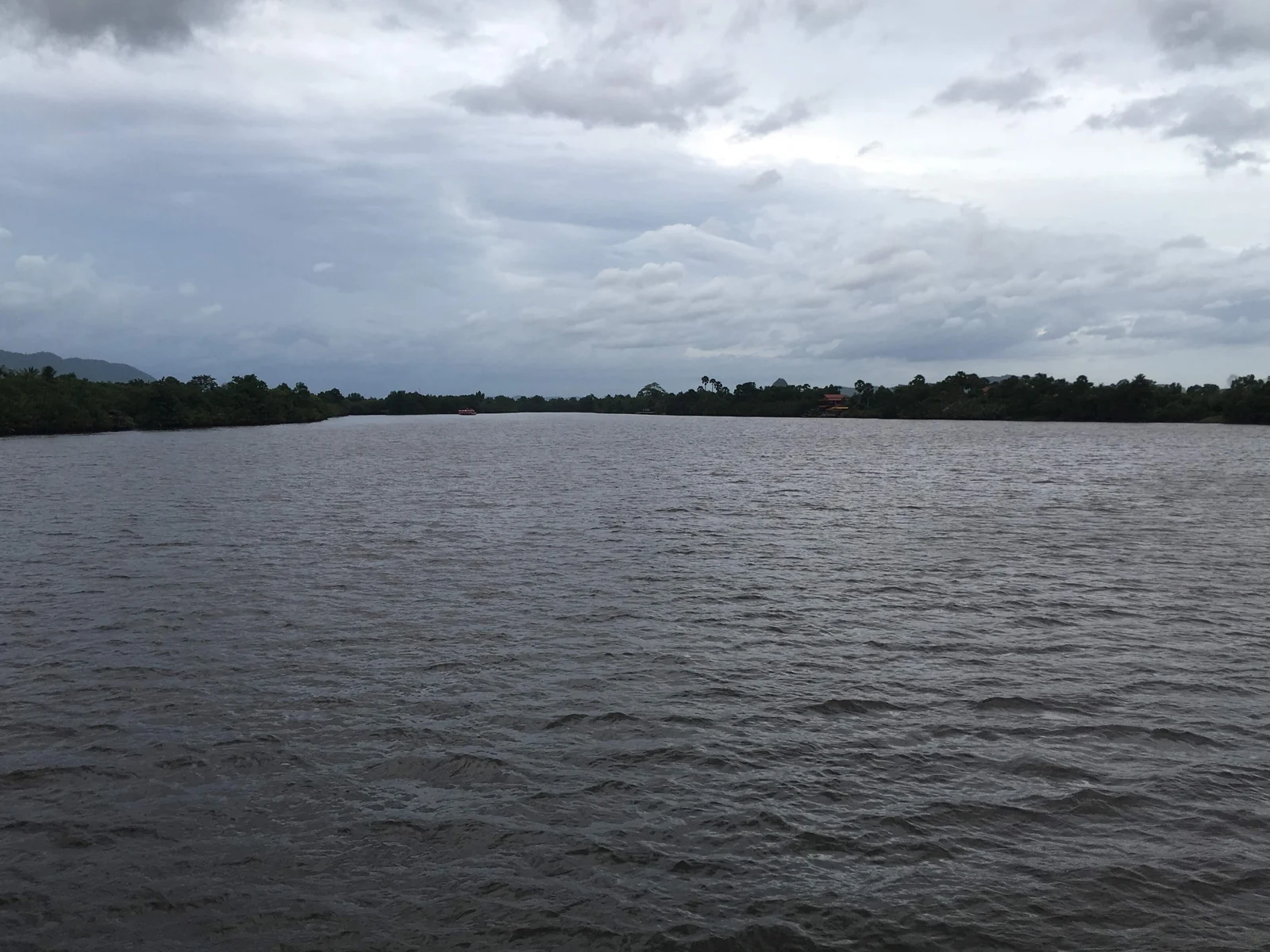
Kampot is a small riverside town of faded French colonial shophouses on the Praek Tuek Chhu river, a few kilometers from the Gulf of Thailand. The region is known for its pepper, as well as salt and durian. Spend your time on slow river cruises at sunset, cycling between farms and visiting pepper plantations. Kep, a short ride along the coast, is a sleepy seaside town best known for its crab market and seafood stalls.
Battambang
Battambang is Cambodia's third-largest city and is more laid-back than Siem Reap. The French laid out a grid of streets, canals and bridges here after 1907, and a conservation area protects hundreds of historic buildings. Contemporary arts are a highlight: Phare Ponleu Selpak, a nonprofit school that trains disadvantaged young people, also runs the Phare circus. The bamboo train is now a short tourist ride rather than a transport link, so treat it as a novelty.
A small number of visitors also see the Phnom Sampeau caves outside the city, a former Khmer Rouge execution site, so the same respectful approach applies as in Phnom Penh. If you are linking Cambodia with neighboring countries, our Vietnam itinerary and Bangkok guide make natural next stops.
Best Time to Visit Cambodia
Cambodia's climate is shaped by the monsoon. The rainy season runs from roughly May to October, with rainfall peaking around September and October, and the dry season from November to April. The temperature stays warm all year.
| Season | Months | What to expect |
|---|---|---|
| Cool dry | November to February | Most comfortable for temples; the busiest and priciest time |
| Hot dry | March to April | Very hot, so plan for dawn and late afternoon visits |
| Rainy | May to October | Green landscapes, fewer visitors, short heavy downpours, some muddy roads |
For temples, the cool dry stretch is the easy choice. The rainy season has real advantages if you can handle humidity: the countryside is green, the crowds are thinner and the rain often falls in short afternoon bursts. Carry a light rain jacket and plan indoor stops in the afternoon.
Etiquette, Money and Practical Tips
- Dress for temples. Covered shoulders and knees are expected at Angkor Wat, the Royal Palace and active pagodas. Carry a light scarf or shirt.
- Respect monks and sacred spaces. Remove your shoes and hat when entering a prayer hall, never point your feet at a Buddha image, and women should not touch monks or hand things to them directly.
- Do not climb on ruins. Stay on marked paths and steps and avoid touching delicate carvings.
- Greet with the sompeah. Pressing your palms together near your chest is a polite greeting, especially to elders.
- Ask before photographing people. This matters especially with monks and children.
- Bring both currencies. The riel is the official currency, but US dollars are widely used for larger purchases. Carry small notes.
Check entry rules and visa options on your government's travel advice pages and Cambodia's official tourism resources before you book. Drink bottled or filtered water, and bring sun protection, a hat and a reusable bottle. Overall, Cambodia is welcoming, and a little courtesy goes a long way.
A Simple One-Week Route
- Days 1 to 3, Siem Reap: Angkor Wat at dawn or in the afternoon, Angkor Thom and the Bayon, Ta Prohm, then a day for Banteay Srei or quieter temples.
- Day 4, travel: Move from Siem Reap to Phnom Penh by road or air. Allow most of the day if you go overland.
- Days 5 and 6, Phnom Penh: Royal Palace and riverfront on one day; Tuol Sleng and Choeung Ek, with time to reflect, on another.
- Day 7, the south: Continue to Kampot and Kep for a slower finish, or fit in Battambang on the way north instead.
For regional context and other routes, see our full list of Asia destinations.
Cambodia Travel FAQ
How many days do you need for Angkor Wat?
Most first-time visitors are happy with three days: one for Angkor Wat, one for Angkor Thom, the Bayon and Ta Prohm, and one for further temples such as Banteay Srei. If you are short on time, one very early start can cover the three headline sites.
When is the best time to visit Cambodia?
The cool dry season, from about November to February, is the most comfortable and the busiest. March and April get very hot. The rainy season, roughly May to October, is greener and quieter, with short downpours.
Do you need a pass for Angkor Wat?
Yes. The Angkor Archaeological Park requires a pass, available in one-day, three-day and seven-day versions. Buy it through the official operator's website or app, and check current prices and rules there before you go.
What should you wear at temples in Cambodia?
Cover your shoulders and knees at Angkor Wat, the Royal Palace in Phnom Penh and active pagodas. Light, loose clothing works best in the heat. Remove your shoes and hat before entering a prayer hall.
Is it appropriate to visit Tuol Sleng and Choeung Ek?
Yes, and many Cambodians want visitors to understand this history. Treat both sites as memorials: dress modestly, speak quietly, avoid posed photos and give yourself time afterward to process what you have seen.
What currency should you use in Cambodia?
The official currency is the riel, but US dollars are widely used, especially in tourist areas. Carry small dollar notes and some riel for change, markets and small local purchases.
Is Kampot or Battambang better for a quieter stop?
It depends on your taste. Kampot and Kep suit river views, sea air, pepper farms and seafood. Battambang suits colonial architecture, a lively arts scene and countryside day trips. Both are slower than Siem Reap.