The short answer: if you only have one day, choose the Argentine side of Iguazu Falls for close-up walks, jungle trails and a walkway that ends on the lip of the Devil's Throat. Choose the Brazilian side for the wide panorama. Most people who can spare two days do both, and the two parks are only a short drive apart.
This guide compares the two sides honestly, explains each route, the boat rides and the Devil's Throat, and covers the border crossing, visa questions, how many days to allow and how to get here from Buenos Aires or Rio. For wider planning, see our South America travel guides.
Iguazu Falls at a Glance
Iguazu is not one waterfall but a chain of roughly 275 drops (the count shifts with the river's level) spread along a front of about 2.7 kilometers where the Iguazu River tumbles off a plateau. The tallest drops reach around 82 meters. The river forms part of the border between Argentina and Brazil, and each country protects its bank with a national park: Iguazú National Park in Argentina, listed by UNESCO in 1984, and Iguaçu National Park in Brazil, listed in 1986.
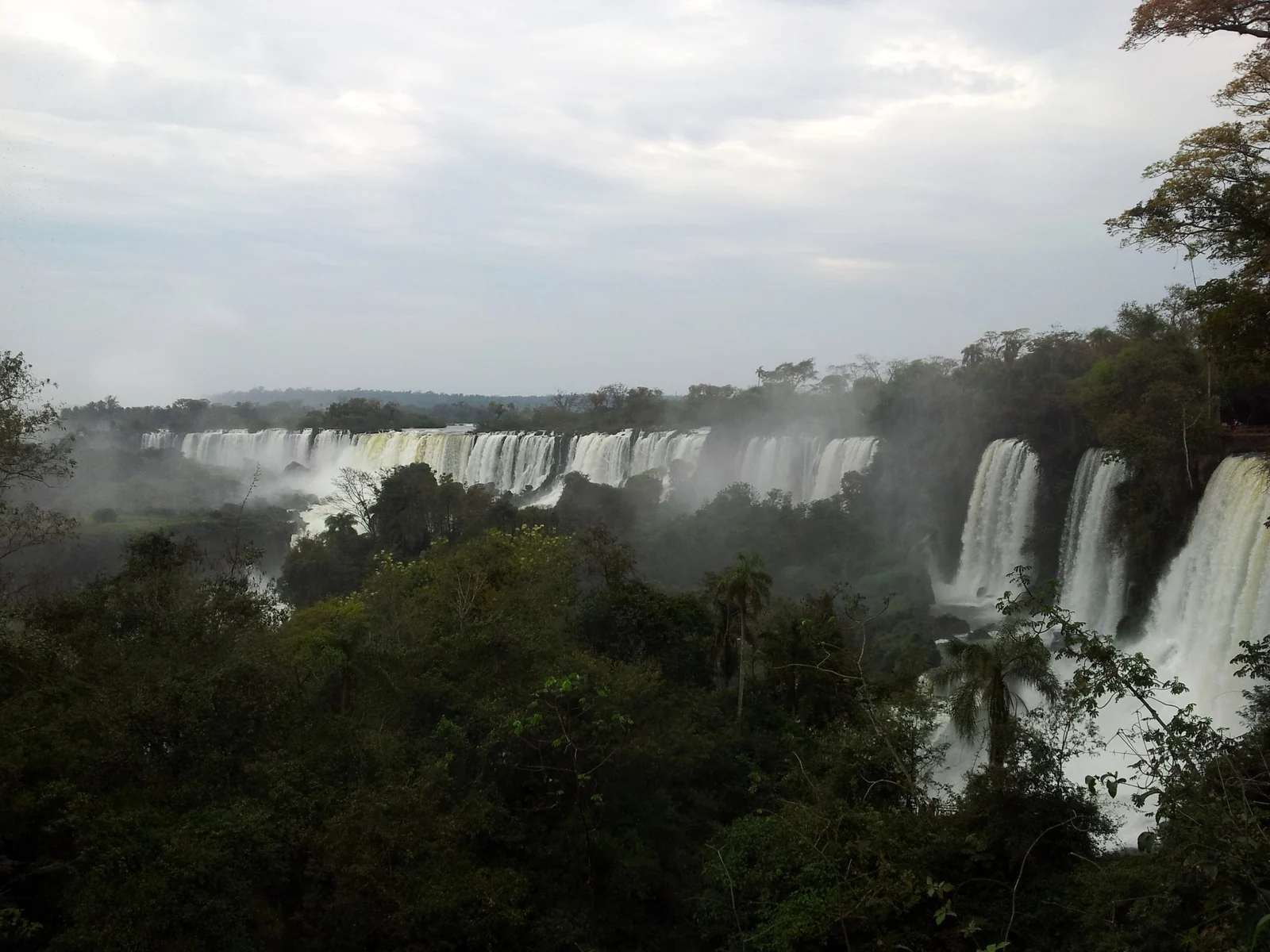
About 80 percent of the falls lie on the Argentine side, which is why that bank gives you more variety and more time among the cascades. The Brazilian bank holds the remaining 20 percent or so, but it faces the main curtain of water, so it gives the better overview. That one geographic fact explains almost every recommendation below.
Argentine vs Brazilian Side: The Comparison
| Argentine side | Brazilian side | |
|---|---|---|
| Share of the falls | About 80 percent | About 20 percent |
| Best for | Close-up views, variety, walking | Panoramas, photos, a short visit |
| Main walks | Upper Circuit, Lower Circuit, Devil's Throat walkway, jungle trail | One trail of about 1.5 km ending at the Devil's Throat |
| Time needed | A full day | Half a day |
| Gateway town | Puerto Iguazú | Foz do Iguaçu |
| Boat rides | Fast boat into the spray | Macuco Safari trail-and-boat ride |
| Feel | Wild, spread out, active | Compact, scenic, easy |
Neither side is a mistake. Think of Argentina as walking through the falls and Brazil as standing back and looking at them. If your time or legs are limited, Argentina is the stronger single choice. If you want one classic photograph with the whole length of the falls and a rainbow in it, the Brazilian trail delivers that quickly, and it is the easier of the two for anyone who dislikes stairs.
The Argentine Side: Circuits and Catwalks
The Argentine park is built around raised metal catwalks that cross the river and hug the cliff edges, so you are rarely far from falling water. A small train inside the park links the entrance with the walkways, which saves walking in the heat. Budget a full day, because the circuits are spread out and the best viewpoints invite lingering.
Upper Circuit
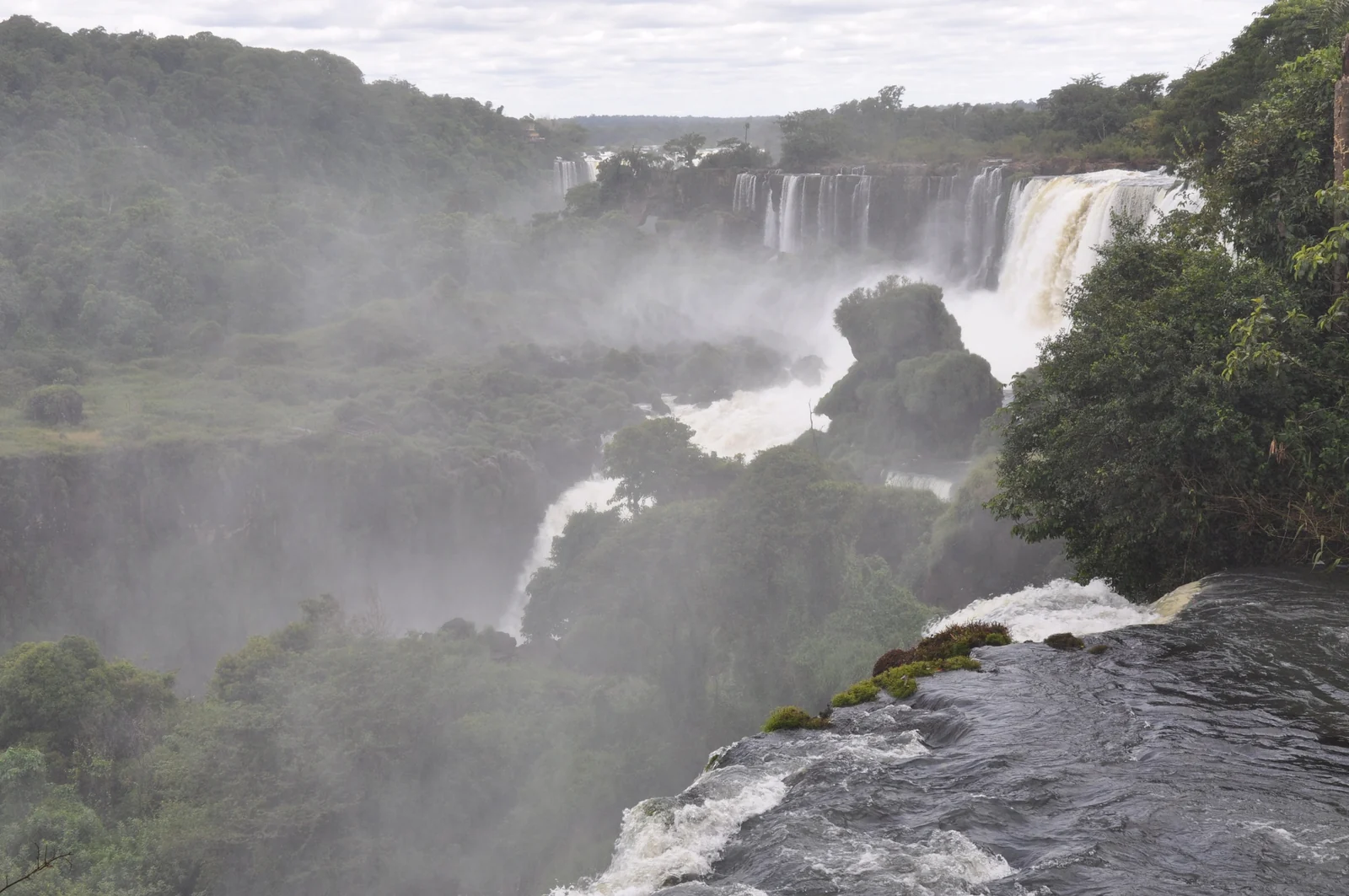
The Upper Circuit runs along the top of the falls. The walkways take you out over the river just before it drops, which gives a strange sense of calm above all that noise. It is flat and the easiest of the three main routes, a good first walk while the light is soft.
Lower Circuit
The Lower Circuit descends toward the base of several falls through stairs and forest paths. This is the one for views up into the cascades and for the fine spray that cools you in summer. Wear shoes with grip, because the steps are wet, and keep your camera in a bag between shots.
Devil's Throat Walkway
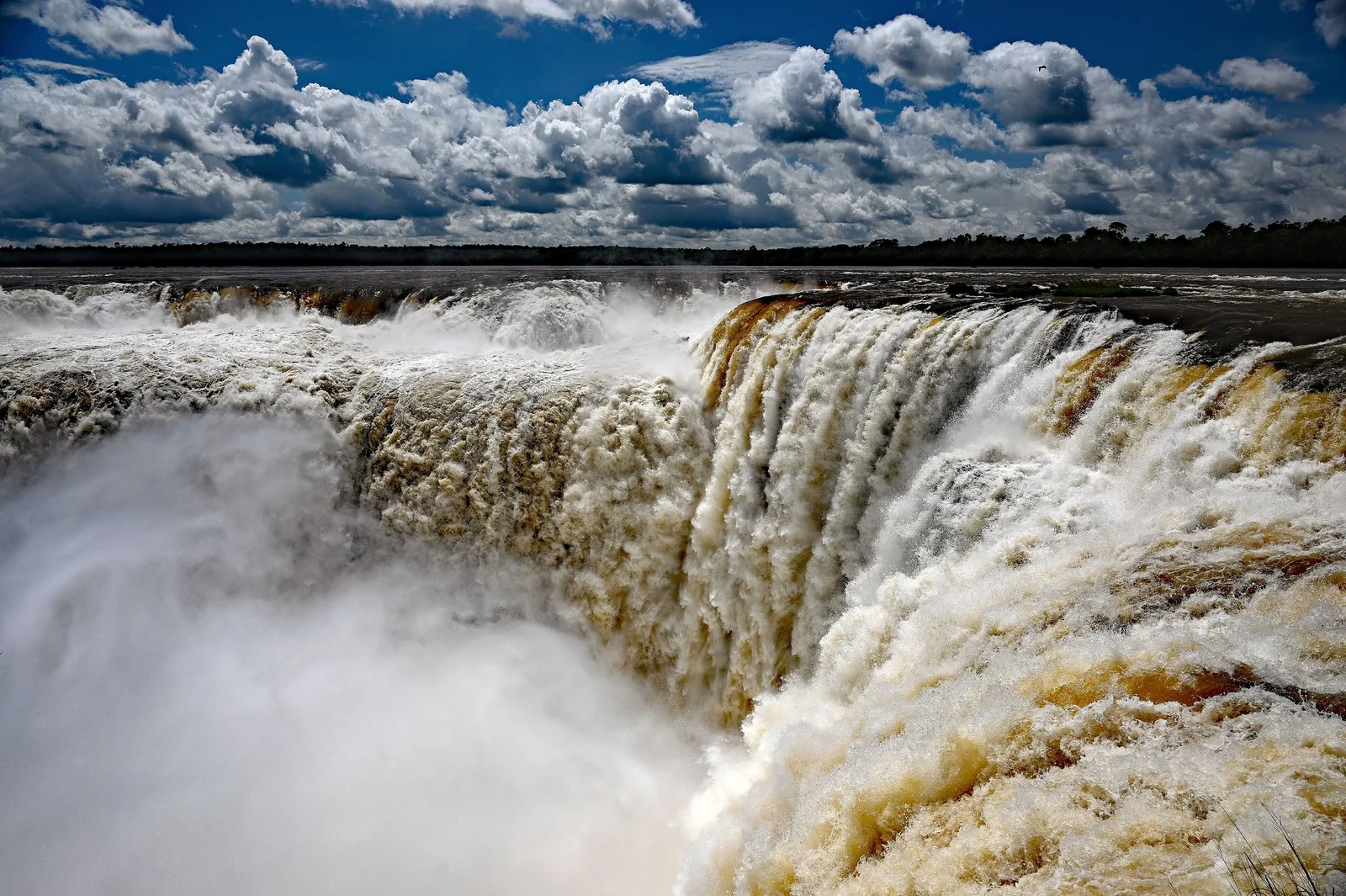
The Devil's Throat (Garganta del Diablo) is a U-shaped chasm where around half of the river's flow drops into a gorge roughly 80 to 90 meters wide. On the Argentine side a walkway of about a kilometer leads out over the river to a platform at the very edge. The noise, the mist and the sense of the ground disappearing are the reason many people choose Argentina.
Floods have damaged and closed this walkway in the past, so check its status before you plan the day around it. The park's official Iguazu Argentina site lists current conditions and schedules.
Jungle Trails and the Boat Ride
Away from the circuits, the Macuco Trail leads through forest to a smaller waterfall and is a good bet for birds and butterflies early in the day. The park also offers a fast boat ride that carries you into the spray at the base of the falls. Expect to be soaked, and bring a waterproof bag for your phone and passport.
The Brazilian Side: Panoramas and One Great Walk
The Brazilian park is smaller and simpler. Panoramic buses carry you from the visitor center to the start of the Trilha das Cataratas, a trail of about 1.5 kilometers. It follows the canyon edge with the Argentine falls stretched out in front of you, then finishes with a walkway out over the water and a face-on view of the Devil's Throat. Access to the trail is included in the park ticket.
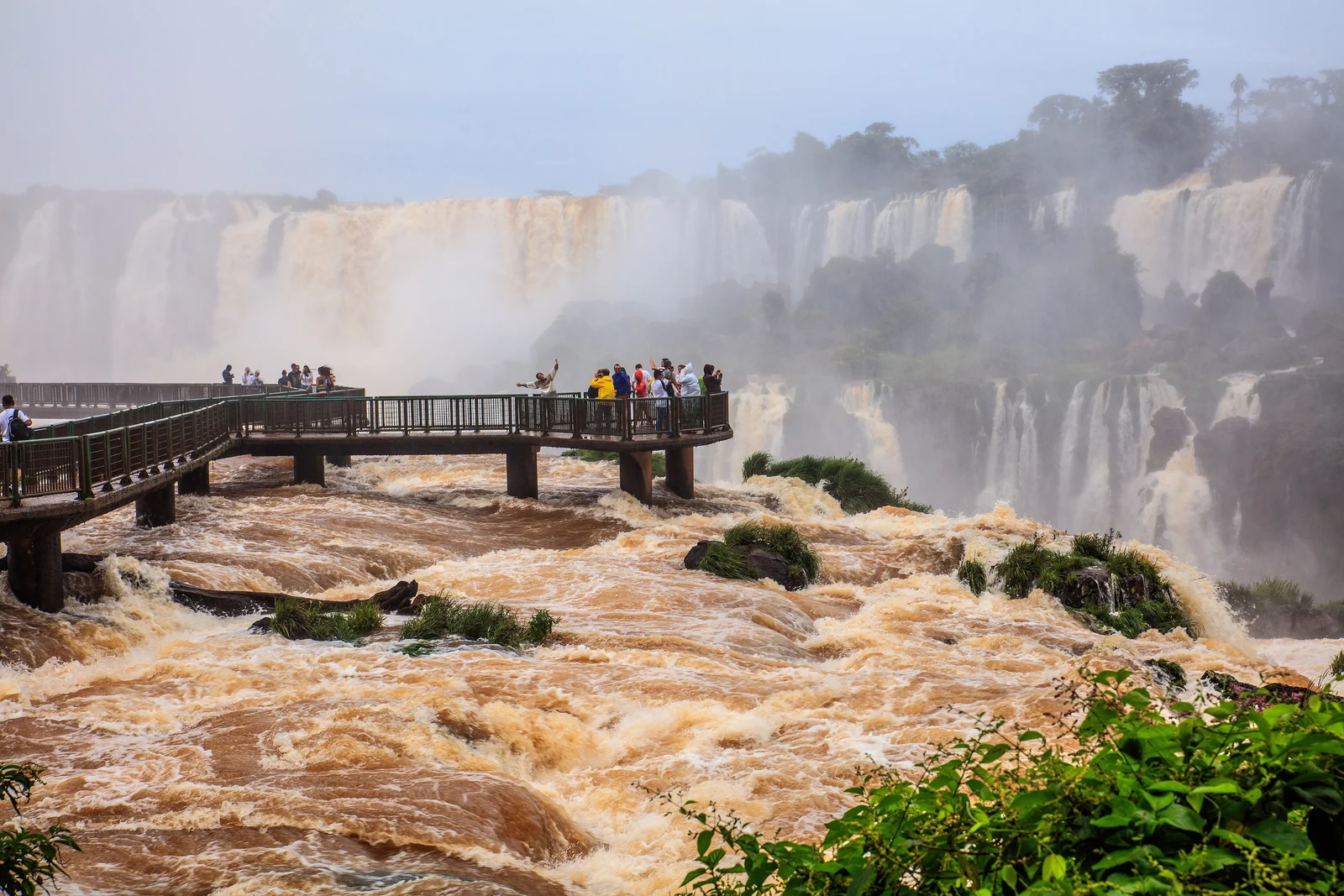
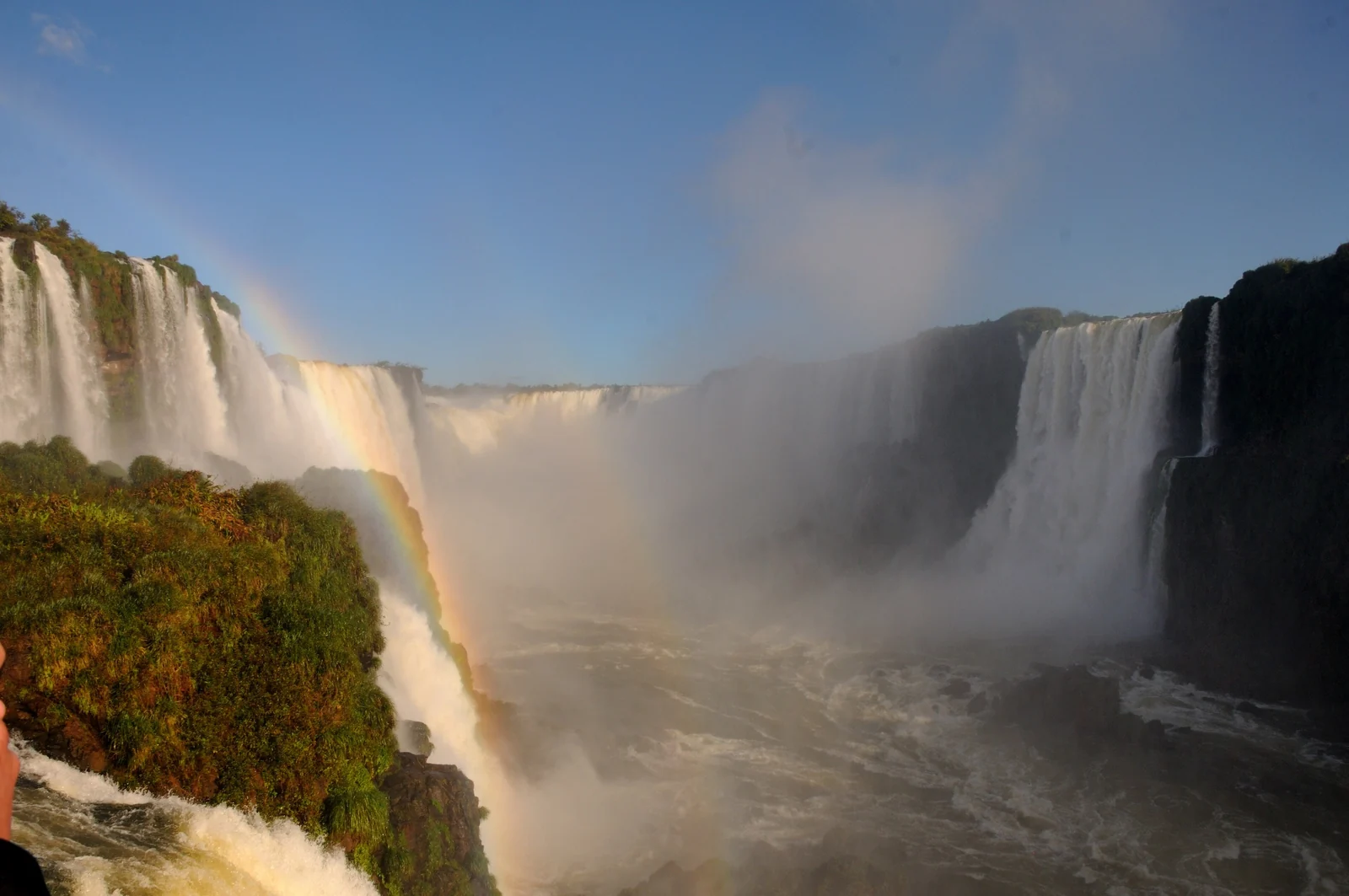
It is hard to beat for photographs, and most visitors manage it in two to three hours including the bus rides and viewpoints. A rainbow often forms in the mist on sunny days. Expect it to feel more like a scenic promenade than a hike, and expect crowds on the final walkway, where everyone stops for the same shot.
Macuco Safari and Other Extras
On the Brazilian side the Macuco Safari combines a short ride through the forest with a boat trip to the foot of the falls. It is run by a concession operator, so book it separately from your park ticket. Helicopter flights over the falls also depart near the Brazilian side. They are expensive and loud, so decide whether the aerial view is worth the money before booking.
Brazil also has a bird park, the Parque das Aves, close to the national park entrance. It is a separate attraction, useful if you have a spare afternoon or are traveling with children. Check opening hours and ticket details for the falls on the official Brazilian park site, which also sells timed tickets online.
Crossing the Border and Visa Questions
The two sides are joined by the Tancredo Neves Bridge between Puerto Iguazú and Foz do Iguaçu. Local buses and taxis run between the towns, and many visitors cross as part of a day trip. Allow extra time for passport control, since queues vary through the day. Paraguay is also within sight, as the three countries meet at a point on the rivers, and a third bridge leads to Ciudad del Este.
Visa rules depend on your passport, and they change. Brazil has required an e-visa from some nationalities, including US, Canadian and Australian citizens, so confirm what applies to you on the Brazilian foreign ministry site or in your own government's travel advice before you book. Some tour operators and taxi drivers can handle the border for a day visit, but your passport still has to meet the entry rules of both countries.
If you do not have, or do not want to arrange, a visa for one country, simply visit the side that suits your passport. Skipping a border crossing is far less stressful than a failed one, and the falls are spectacular from either bank.
How Many Days Do You Need?
| Time available | Plan |
|---|---|
| One day | Argentine side, starting at opening time, finishing with the Devil's Throat |
| Two days | Argentine side on day one, Brazilian side on day two (morning), plus a free afternoon |
| Three days | Both sides, a boat or Macuco ride, the Macuco jungle trail and the Parque das Aves |
Two nights is the sweet spot. It gives you a full Argentine day, a shorter Brazilian morning and a margin for rain, which can happen in any season. Anything shorter feels rushed, and anything longer is for slow travelers or families.
Best Time to Visit
Iguazu sits in a subtropical zone with hot, humid summers (roughly December to February) and milder winters. Spring and autumn are comfortable for walking. The river's volume changes with rainfall, so the falls can be vigorous and brown after heavy rain or thinner during dry spells. Neither is bad, but heavy flooding can close walkways.
- Summer: hot and humid, big crowds around school holidays, and the spray is welcome.
- Autumn and spring: comfortable temperatures, good for the longer trails.
- Winter: cooler and often quieter; bring a light layer for mornings.
- Any season: go early to beat tour groups, and pack a rain jacket.
Getting There from Buenos Aires and Rio
Flying is the practical choice. Flights from Buenos Aires to Iguazu take roughly two hours and land at Cataratas del Iguazú airport on the Argentine side, a short drive from Puerto Iguazú. From Rio de Janeiro, flights to Foz do Iguaçu also take roughly two hours and land near the Brazilian park. Check which airlines serve each airport, because routes and timetables change.
The overland alternative from Buenos Aires is a very long bus ride that takes most of a day or longer. It is a budget option, not a time-saver. If you are combining cities, our guides to Buenos Aires and Rio de Janeiro help you plan either end of the trip. Our Argentina and Brazil pages list more destinations on both routes.
Where to Stay: Puerto Iguazú or Foz do Iguaçu?
Puerto Iguazú is the more relaxed town, with a leafy feel, good restaurants and easy buses to the national park. Foz do Iguaçu is larger and has more hotels, with the Brazilian park a short drive away. Both work as a base for visiting the other side. Pick the town on the side you will see first, or the one where hotel prices suit you.
A few practical notes: carry some local cash for taxis and small cafes, use insect repellent, stay on marked paths, and do not feed the coatis. They look friendly, they have sharp claws, and they will go for your snacks.
Iguazu Falls FAQ
Which side of Iguazu Falls is better, Argentina or Brazil?
Argentina is better for close views and variety because about 80 percent of the falls are on that side. Brazil is better for panoramic photographs and a quick visit. If you can only choose one, pick Argentina; if you can do both, do both.
Can you see Iguazu Falls in one day?
Yes, but you will need an early start. Spend the day on the Argentine side, walking the Upper and Lower Circuits and finishing at the Devil's Throat. The Brazilian side takes about half a day, so it is a better second-day add-on.
How many days do you need at Iguazu Falls?
Two days is ideal: one for the Argentine park and a morning for the Brazilian side, with a buffer for rain. One day is possible for the Argentine side alone. Three days suits slower travelers who want boat rides, trails and the bird park.
Do you need a visa to cross between Argentina and Brazil at Iguazu?
It depends on your passport. Brazil has required an e-visa from some nationalities, including US citizens, so check the official government sources before you travel. A day crossing still involves passport control, and you must meet each country's entry rules.
Is the Devil's Throat worth seeing?
Yes. It is the largest and loudest section, where about half of the river's flow drops into a narrow gorge. The Argentine walkway takes you to the edge; the Brazilian walkway shows it from the side. Check whether the Argentine walkway is open before your visit.
When is the best time to visit Iguazu Falls?
Spring and autumn are the most comfortable for walking, while summer is hot and humid but lively. Winter is cooler and often quieter. Water levels change with rainfall, so the falls look different on every visit. Go early to avoid the crowds.
How do you get to Iguazu Falls from Buenos Aires or Rio?
Most travelers fly. Flights from Buenos Aires take roughly two hours to Iguazu on the Argentine side, and flights from Rio take roughly two hours to Foz do Iguaçu on the Brazilian side. A long bus from Buenos Aires is a budget alternative.