


The best way to get from Barcelona to Madrid is the high-speed train. The fastest direct services cover the roughly 620 kilometers in about two and a half hours, from the middle of one city to the middle of the other, with no security line and no airport transfer. A plane is only a little quicker in the air and slower almost everywhere else. The bus and the car are for people who care more about money or stops than about time.
This guide to Barcelona to Madrid by train, flight, bus or car compares the four door to door, explains which stations and airports to use, and says whether a stopover in Zaragoza is worth it. If you have not decided how long to give the Catalan capital, our Barcelona travel guide is a good place to start.
Barcelona to Madrid: The Quick Verdict
Take the train. Spain built one of the best high-speed networks in the world, and this is its showpiece route. Before the line opened, the trip took more than six hours. Now the quickest trains take about two and a half, and you step off in the center of Madrid with a metro station close by.
Fly only if your flight to or from another country is on the same booking, or if you found a fare far below the train price and have no luggage to check. Take the bus when you are on a tight budget and have time to spare, because it takes the better part of a day. Drive if you want to see Aragon on the way, or if you are carrying a lot of gear and continuing by road afterward.
Barcelona to Madrid at a Glance
| Train | Flight | Bus | Car | |
|---|---|---|---|---|
| Time | About 2.5 hours on the fastest direct trains, around 3 on slower ones | A little over an hour in the air, but 4 hours or more door to door | Often around 8 hours | About 6 hours of driving without stops |
| Comfort | Best: wide seats, space for bags, easy to walk around | Cramped, with queues and waiting | Fine for sleeping, long for everything else | Depends on you and the traffic |
| Door-to-door effort | Low: city center to city center | High: transfers, check-in and security at both ends | Medium: stations are usually well connected | Medium to high: a long drive, parking in Madrid |
| Cost | Wide range; cheap if booked early | Wide range, plus airport transfers | Usually the lowest | Fuel, parking, rental fees, possible tolls |
| Best for | Almost everyone | Connections to other flights | Tight budgets and flexible schedules | Stopovers and road trips |
| Arrive at | Madrid Atocha or Chamartín | Madrid-Barajas airport | Madrid bus stations | Anywhere |
Treat the times as approximate. Timetables change, services vary by operator, and traffic around either city can add a lot. Check the current schedule before you plan a connection.
By Train: AVE, Ouigo and Iryo
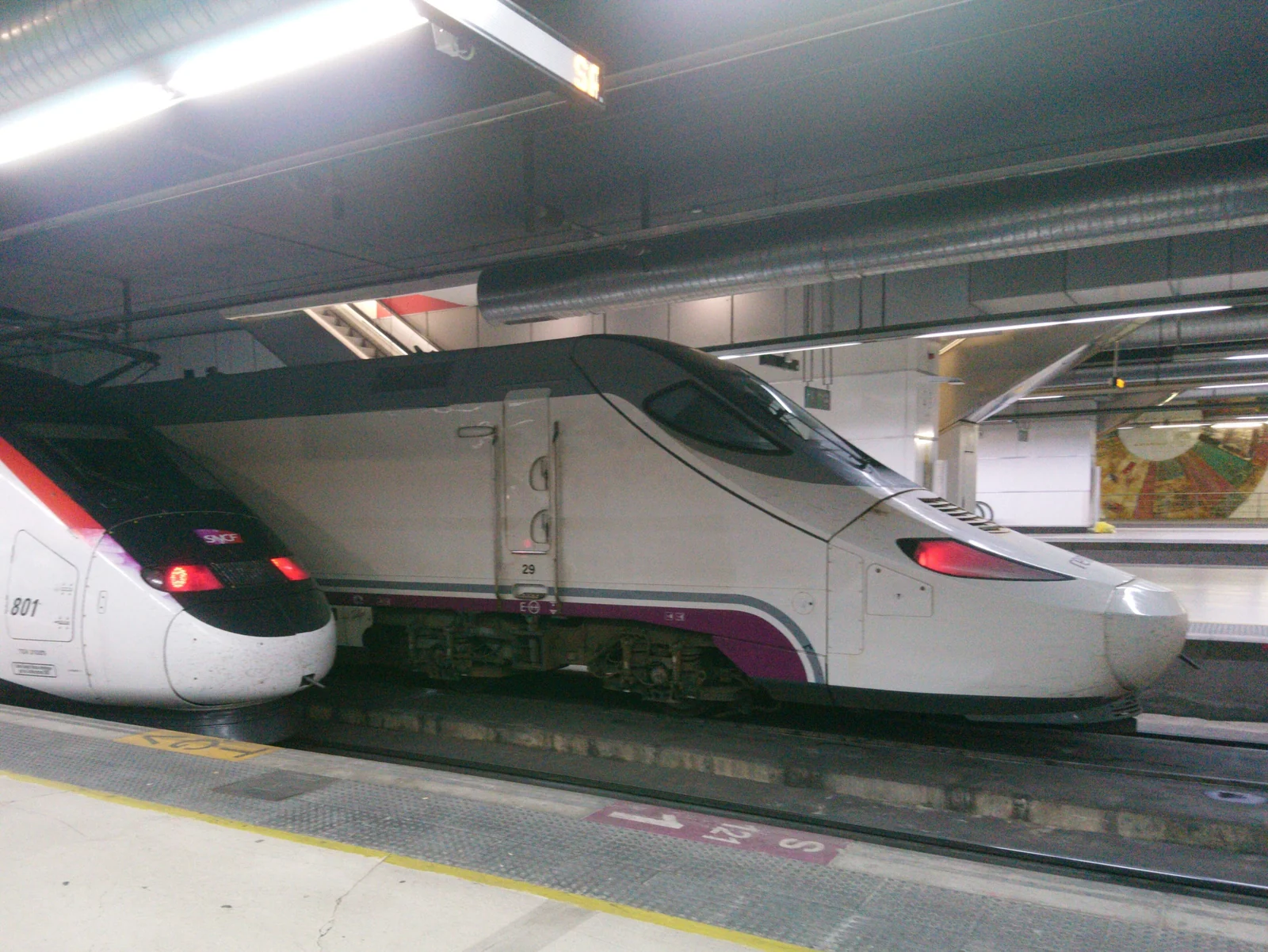
Three groups of operators run trains on the Madrid to Barcelona high-speed line. Renfe, the state railway, runs the AVE and the lower-cost Avlo brand. Two private competitors, Ouigo and Iryo, also sell tickets on the same tracks. Competition is the reason fares on this route range so widely, and the reason it pays to compare.
Direct trains take about two hours and 30 minutes. Services that call at every intermediate station take about three hours and 10 minutes. The line opened in full in February 2008, and trains run at up to 300 km/h. If two trains leave at similar times, pick the faster one unless the price gap is large, because the extra half hour is rarely worth a small saving.
Which Stations: Sants, Atocha and Chamartín
In Barcelona, trains leave from Barcelona Sants, the main station, which has a metro stop and sits a short ride from the center. In Madrid, most travelers arrive at Madrid Puerta de Atocha, south of the Retiro park and within reach of the Prado museum area. Some services end at Madrid Chamartín in the north instead. The station is printed on the ticket, so check it before you choose your hotel or plan the metro.
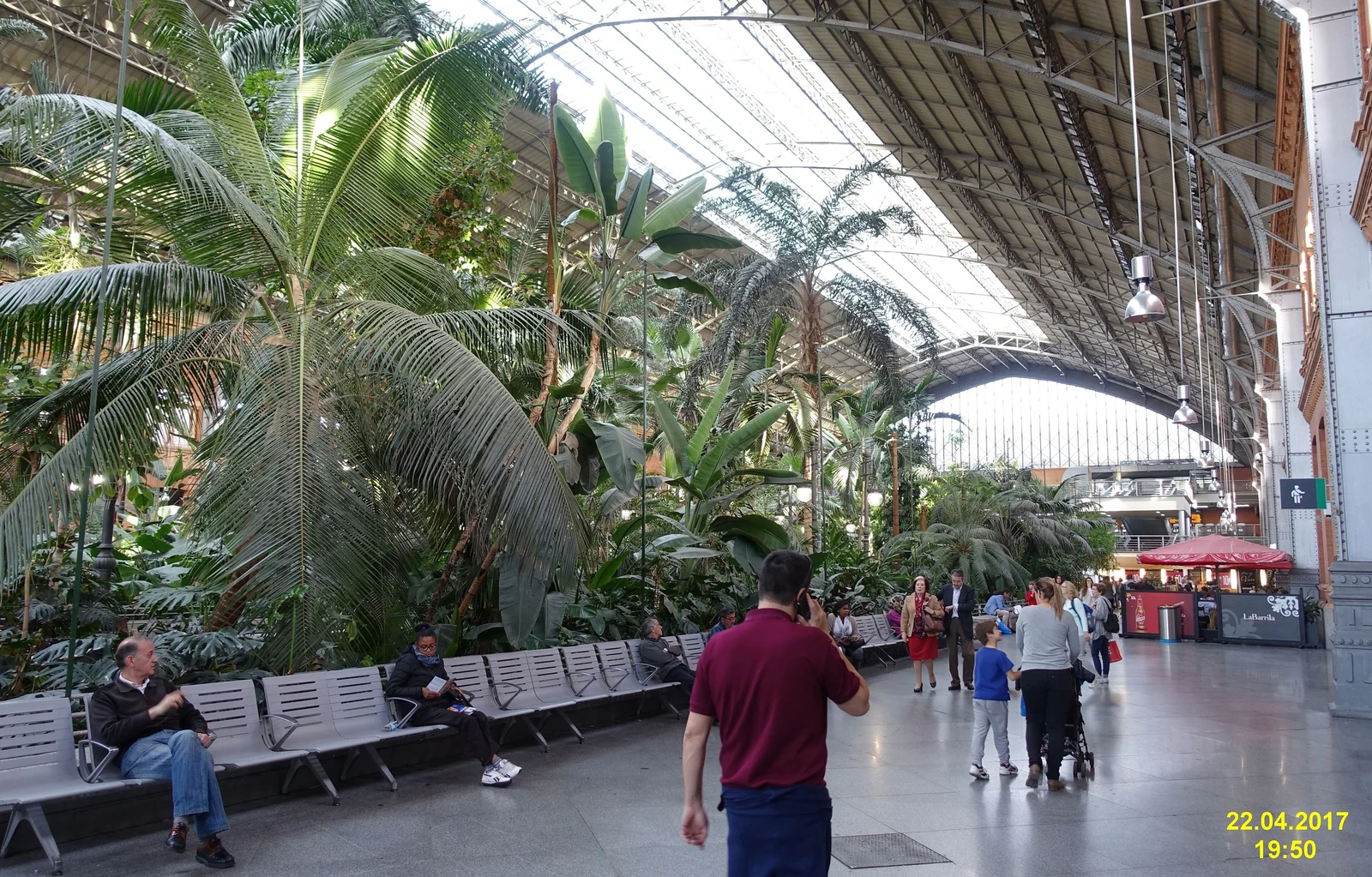
Atocha is the better arrival if you want the old center. Its original terminal now holds an indoor tropical garden, which is a pleasant place to wait for a connection. Chamartín is fine too, but it is further from most sights, so allow a metro ride.
Booking Tips for the Train
- Book early. Fares are tied to demand, so the cheapest seats go first. Weekends and holiday periods fill up fastest.
- Compare all three operators. The same train time can have a very different price on Renfe, Ouigo and Iryo, and the cheapest brands charge extra for bags and seat choice.
- Check the luggage rules. Low-cost fares often limit the size and number of bags. Read the conditions before you pay.
- Arrive early for the platform. Spanish high-speed stations screen bags before you board, and gates close shortly before departure.
- Keep your ticket handy. It carries your coach and seat number, and you will need it at the gate.
By Plane: When Flying Makes Sense
Flights link Barcelona-El Prat with Madrid-Barajas, and the time in the air is a little over an hour. That is the problem: the flight is short, but everything around it is not. You travel to the airport, check in, pass security, board, land, and then travel into the city at the other end.
From Madrid-Barajas, the metro, the commuter train, the airport bus and taxis all reach the center, and which is best depends on your destination. In Barcelona, the Aerobús express bus runs to Plaça de Catalunya in roughly 35 minutes by most accounts. Once you add those transfers to the check-in time, the plane loses to the train for most trips.
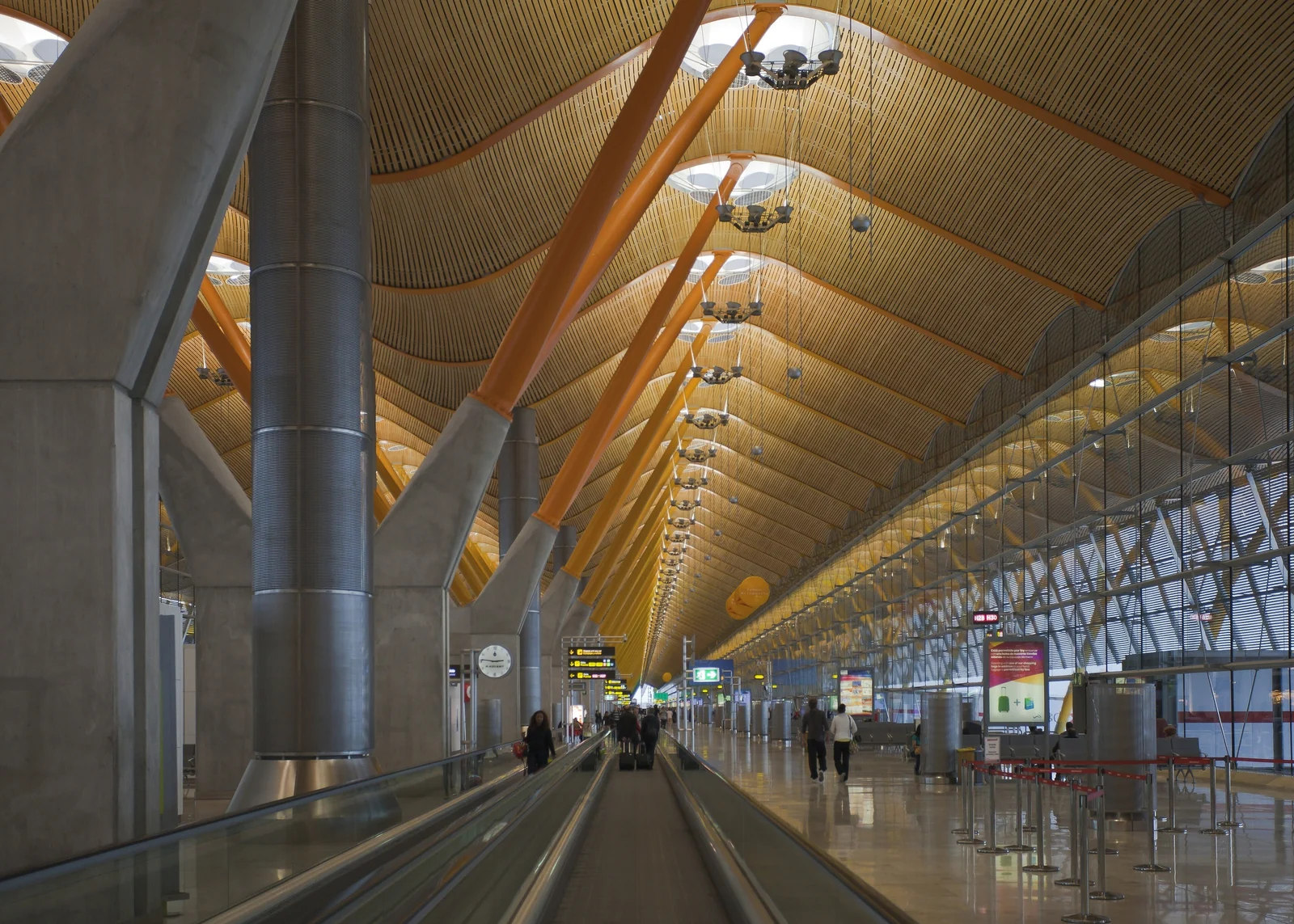
A flight makes sense in a few cases. If you are connecting to a long-haul flight on the same ticket, flying saves you from collecting and rechecking your bags. For a plain city-to-city trip, though, the train is the better call.
By Bus: The Slow and Cheap Option
Long-distance coaches, with Alsa the best-known operator, run between the two cities. Listings put the journey at around eight hours, sometimes a little less. Barcelona has two main coach stations, Nord and Sants, so check which one your ticket uses. In Madrid, coaches generally arrive at the Sur station or at another stop in the city.
The bus wins on price on most days, and an overnight departure can save you a hotel night. It loses on everything else. You will spend the best part of a day in a seat when the train does the trip before lunch. Treat the bus as a budget tool, not as the default.
By Car: The Road Through Aragon
The drive is about 620 kilometers. Spain's official tourism site puts it at around six hours and 15 minutes by way of the A-2 through Zaragoza and the AP-2 toward Barcelona. That is long enough to need a break or two, so plan on closer to seven hours with stops.
Add fuel, parking and any one-way fee from the rental company. Parking in central Madrid can be expensive and awkward, and car access to parts of the center is restricted, so ask your hotel how it works before you arrive. Toll rules on Spanish motorways have changed over the years, so check which sections charge before you set off.
A car is the right choice if you want to stop in Aragon, if you are visiting small towns that no train reaches, or if you are traveling with several people and a lot of luggage. For a plain transfer between the two cities, it is the most tiring option.
Stopovers Between Barcelona and Madrid
The high-speed line calls at several stations between the two cities, including Camp de Tarragona, Lleida, Zaragoza-Delicias and Calatayud. Most direct trains skip them, so a stopover usually means choosing a train that stops there, or buying separate tickets for each leg.
Zaragoza
Zaragoza is the one stopover that really works. It sits roughly between the two cities, its station, Zaragoza-Delicias, is on the high-speed line, and the city has a big basilica beside the Ebro River. The Basilica of Our Lady of the Pillar is the landmark you will see on every postcard. A half day is enough to walk from the station area to the river and back, and a night lets you see the old center without hurrying.
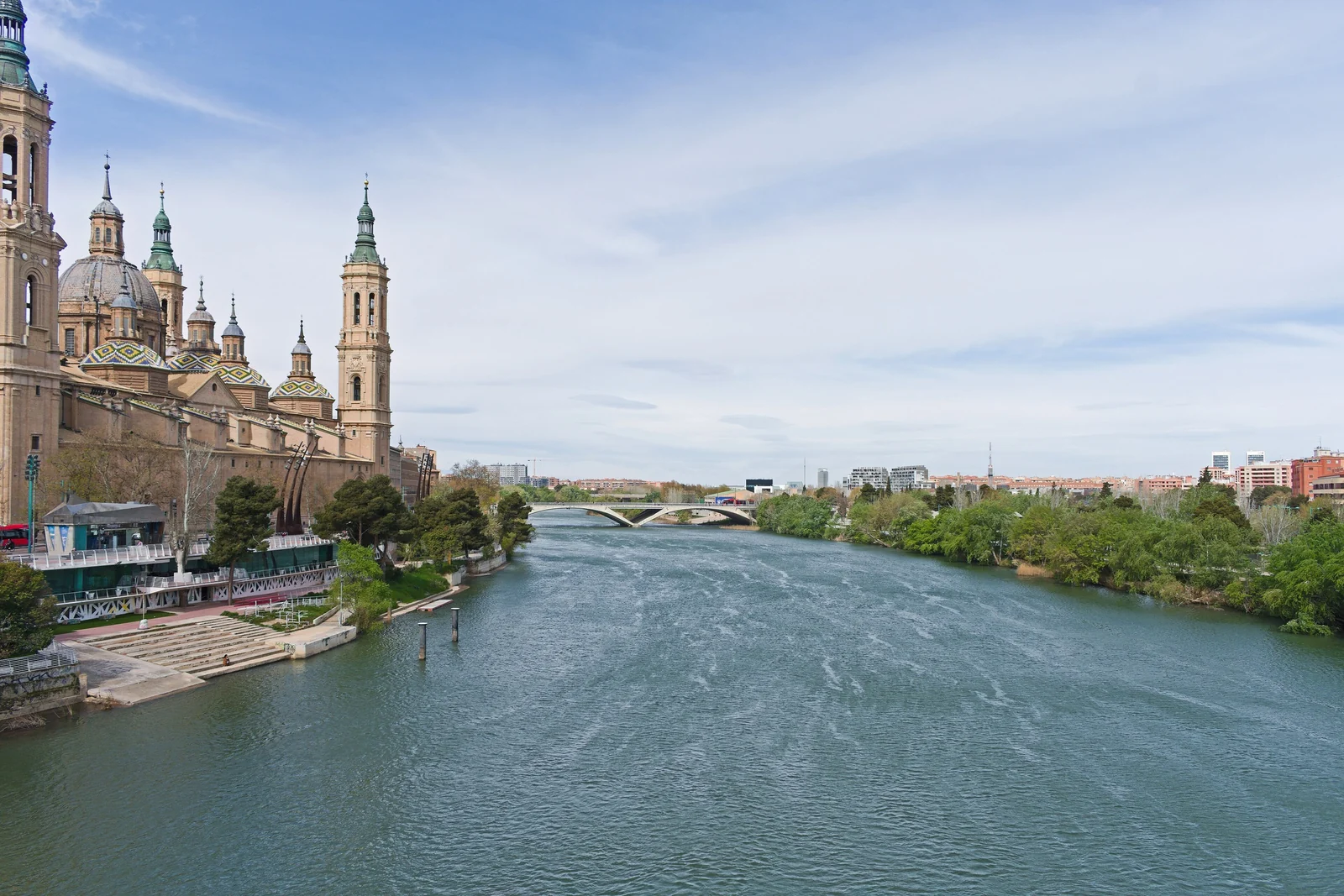
The practical advice is simple. Book the two legs separately, leave your big bag at your hotel if you can, and check the onward timetable before you wander too far.
Other Breaks Worth Considering
Lleida and Tarragona are both on the line, but the Camp de Tarragona station sits away from the old town, so the stop takes more planning than it looks. If you want a coastal city with a Roman past, it is better to treat Tarragona as its own short trip from Barcelona than as a stop on the way to Madrid. Drivers have more freedom, because the road passes through Aragon and the Ebro valley and you can stop wherever you like.
Which Option Fits You?
- First time in Spain: the AVE or a similar direct train. Book a morning departure and arrive for lunch.
- Tight budget, flexible schedule: an early-booked low-cost train, or the bus if time is not an issue.
- Connecting to a flight: the plane, if it is on the same ticket.
- Want a break on the way: a train with a night in Zaragoza.
- Road trip or lots of gear: the car, with a plan for parking in Madrid.
Spain is easy to string together by rail. After Madrid, the same network reaches Andalusia, and our guide to Seville or Granada helps you choose where to go next. You can also read the Seville guide, the Valencia guide or browse all our Spain travel guides.
Barcelona to Madrid FAQ
How long does the train from Barcelona to Madrid take?
The fastest direct high-speed trains take about two and a half hours. Services that stop at every station along the line take about three hours and 10 minutes. Exact times differ by operator and departure, so check the current timetable before you book.
Which stations do I use for Barcelona to Madrid by train?
You leave from Barcelona Sants. In Madrid, most trains arrive at Puerta de Atocha, and some end at Chamartín in the north. The station is shown on your ticket, so check it before booking a hotel near the arrival point.
Is it cheaper to fly or take the train from Barcelona to Madrid?
It depends on the date. Early-booked train tickets from low-cost operators can be very cheap, and flights add airport transfers and bag fees. Compare the full door-to-door cost, not just the headline fare, before you decide.
Is the bus from Barcelona to Madrid worth it?
Only if the price matters more than your time. The coach takes around eight hours, about three times as long as the fastest train. An overnight departure can save you a hotel night, but most travelers will be happier on the train.
How far is it to drive from Barcelona to Madrid?
The drive is about 620 kilometers and takes around six hours without long stops. The usual route follows the AP-2 and A-2 through Zaragoza. Check which motorway sections charge tolls, and ask your rental company about one-way fees.
Is Zaragoza a good stop between Barcelona and Madrid?
Yes. It is roughly halfway, its Delicias station is on the high-speed line, and the Basilica of Our Lady of the Pillar stands beside the Ebro River. Book each leg separately and leave a half day or a night to see the center.
Should I book the Barcelona to Madrid train in advance?
Yes. Prices usually rise as seats sell out, and weekends and holidays fill up quickly. Compare Renfe, Ouigo and Iryo for the same departure, and read the baggage rules on low-cost fares before you pay.