Montenegro packs a fjord-like bay, medieval walled towns, Adriatic beaches, a 2,500-meter mountain range and one of Europe's deepest canyons into a country smaller than Connecticut. Most visitors split their time between the Bay of Kotor and the coast around Budva, then add a night or two in the northern mountains around Durmitor.
This Montenegro travel guide follows that logic: Kotor and Perast first, then Budva and Sveti Stefan, the road up Lovćen, the monastery at Ostrog and the Durmitor and Tara canyon country. It ends with transport, seasons and where to base yourself. For the wider region, see our Montenegro travel guides.
The Bay of Kotor and the Old Town
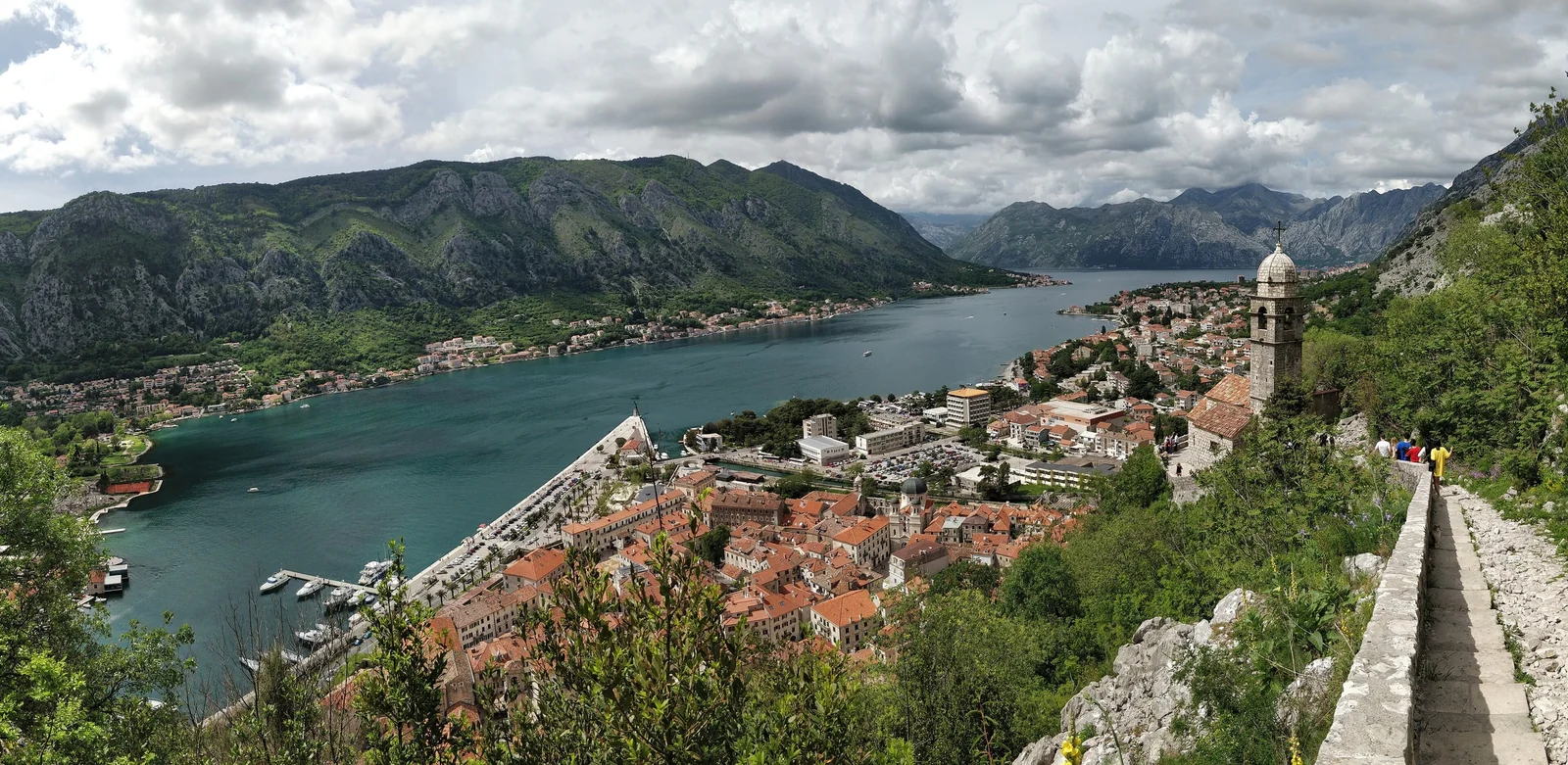
The Bay of Kotor is often called Europe's southernmost fjord, though geologists describe it as a drowned river canyon. Steep limestone mountains drop straight into a series of linked inlets, and small stone towns sit in the gaps. The whole area, including the old town of Kotor, has been on the UNESCO World Heritage list since 1979.
Walking Kotor's Old Town
Kotor's walled center is a maze of lanes, squares and small churches built mostly under Venetian rule. The Cathedral of St. Tryphon, consecrated in 1166, anchors the main square. Streets are not signposted well, and getting lost for an hour is part of the point. Cruise ships can flood the center at midday, so walk it early in the morning or after dinner.
Climbing to the San Giovanni Fortress
A stepped path zigzags up the hill behind town to the ruins of San Giovanni fortress. The climb is commonly quoted at around 1,350 steps and takes most people 45 to 60 minutes. Start early, carry water and wear real shoes, because the stones are polished and slippery. The view over the bay at the top is the one on every postcard. Check the current entry fee and hours locally, as the rules for the walls have changed several times.
Perast and Our Lady of the Rocks
A short drive along the shore, Perast is a single baroque street of captains' palaces facing the water. Two small islands sit just offshore. Our Lady of the Rocks is man-made, built up over centuries by sailors who sank rocks and old ships there, and the church on it dates to the 17th century. Local boats run the short crossing from the Perast waterfront.
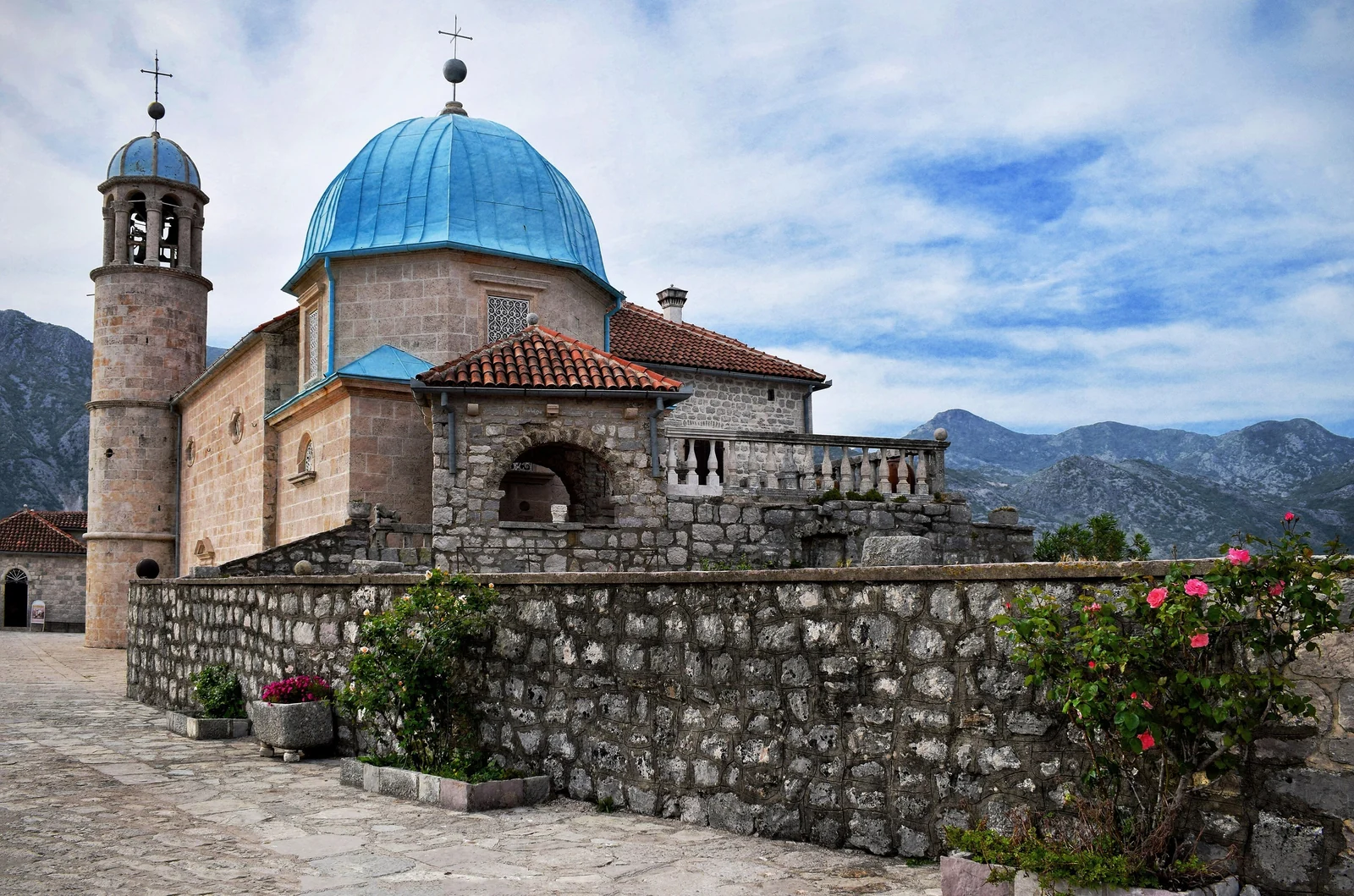
Perast has little nightlife and few sights beyond the waterfront, so most people stop for a couple of hours. If you want a quiet base on the bay, it is a good one, especially after the day-trippers leave.
Budva, Sveti Stefan and the Coast
Montenegro's central coast is its busiest stretch, with long beaches, resorts and a lively summer scene. Budva is the hub. Its walled old town sits on a small peninsula, rebuilt in places after a major earthquake in 1979, and is full of bars, restaurants and narrow stone lanes. The beaches nearby are mostly pebble and shingle, and in July and August they fill up fast.
Sveti Stefan
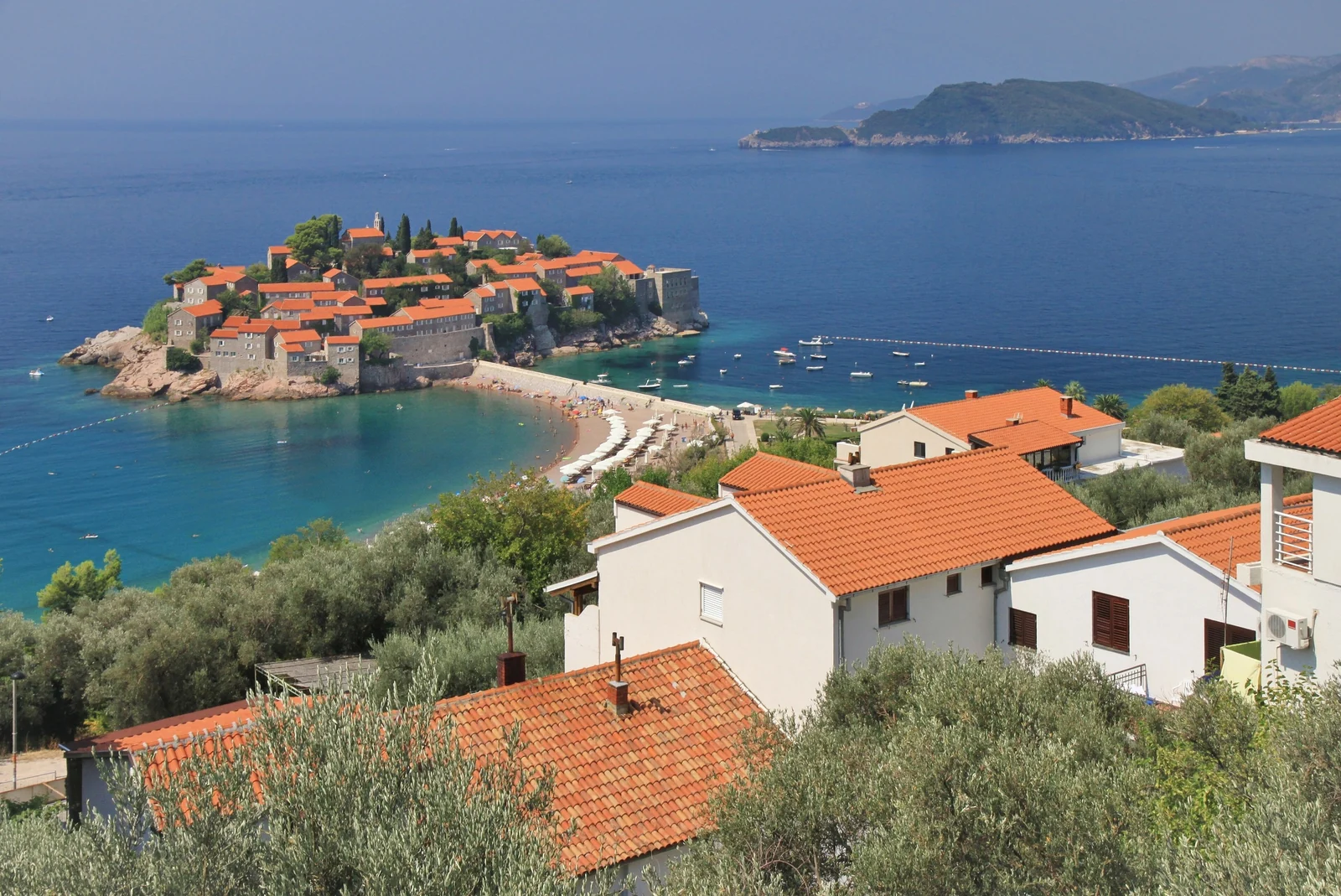
A few kilometers south of Budva, Sveti Stefan is a fortified islet joined to the mainland by a narrow causeway. It was once a fishing village and later became a luxury hotel complex, so access to the island itself depends on the current operator's rules. You can still enjoy the classic view from the road above and the beaches on either side.
Quieter Beaches and Towns
If Budva feels too busy, look south to Petrovac, a calmer small resort, or to the old town of Bar and the long sands of Ulcinj near the Albanian border. Along the bay, Herceg Novi and Tivat offer a gentler pace. Heading on to Albania? Our Albania travel guide picks up where the coast road ends.
Lovćen, Cetinje and the Old Royal Road
The best drive in the country starts in Kotor, where a mountain road climbs through a long run of numbered hairpin bends toward Lovćen National Park. Take it slowly. The road is narrow, and buses and rental cars squeeze past each other on the tight corners.
The Njegoš Mausoleum
At the top of Mount Lovćen stands the mausoleum of Petar II Petrović-Njegoš, the prince-bishop and poet who ruled Montenegro until his death in 1851. The present mausoleum was designed by the sculptor Ivan Meštrović and completed in 1974. You climb a long stone staircase, commonly given as 461 steps, to a terrace with views that on a clear day reach from the bay to the interior peaks.
Cetinje
Down the far side lies Cetinje, the former royal capital, still the country's cultural center. It is a small town of leafy streets and old embassies, and it holds several museums and the Cetinje Monastery. Combine it with Lovćen in a single loop from Kotor, or continue on toward Lake Skadar, where you can take a boat trip through the reed beds.
Ostrog Monastery
Few sights in Montenegro are as dramatic as Ostrog Monastery, built into an almost vertical rock face high above the Zeta valley. It was founded in the 17th century by St. Basil of Ostrog and remains one of the most visited pilgrimage places in the Balkans, drawing Orthodox believers and curious travelers alike.
Dress modestly, with covered shoulders and knees, and expect to queue to see the saint's relics in the upper monastery. The lower monastery is reached by a short walk, and the upper by a steeper path or a drive up a narrow road. It fits neatly on the way between the coast and Durmitor, and takes about an hour or two.
Durmitor National Park and Žabljak
Head inland and the country changes completely. Durmitor National Park is a high limestone massif of peaks, glacial lakes and pine forest, inscribed as a UNESCO World Heritage Site in 1980. The base for exploring is Žabljak, among the highest towns in the Balkans. The park's highest summit, Bobotov Kuk, reaches 2,523 meters.
Black Lake and Easy Walks
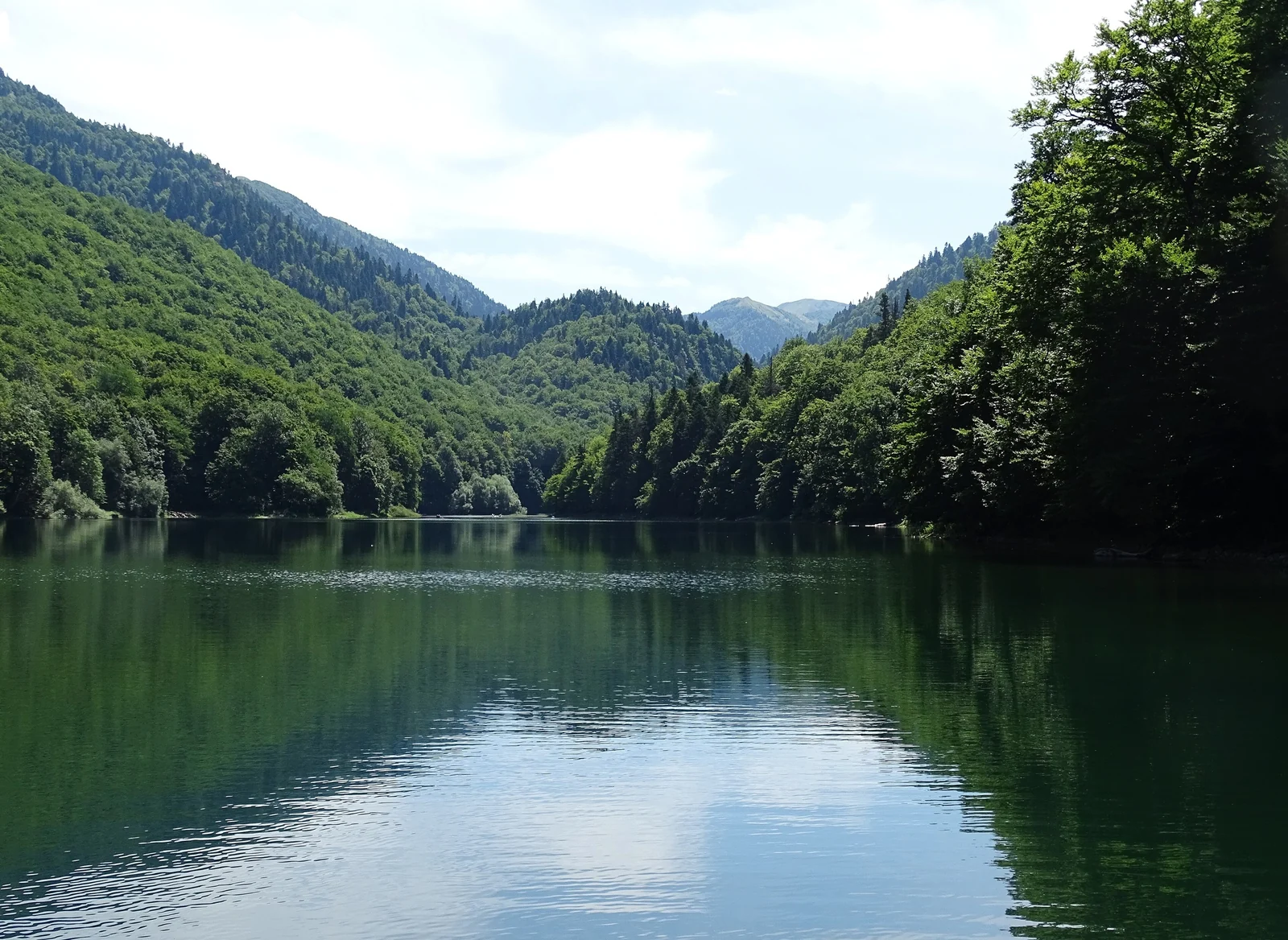
The Black Lake (Crno jezero) is the park's most accessible highlight, a flat loop of about an hour's walk from Žabljak through the forest, with the Međed peak reflected in the water on calm days. Other trails lead to higher lakes and viewpoints. Weather turns quickly at altitude, so pack layers even in summer and check trail conditions locally before a big hike.
Tara River Canyon and the Đurđevića Tara Bridge
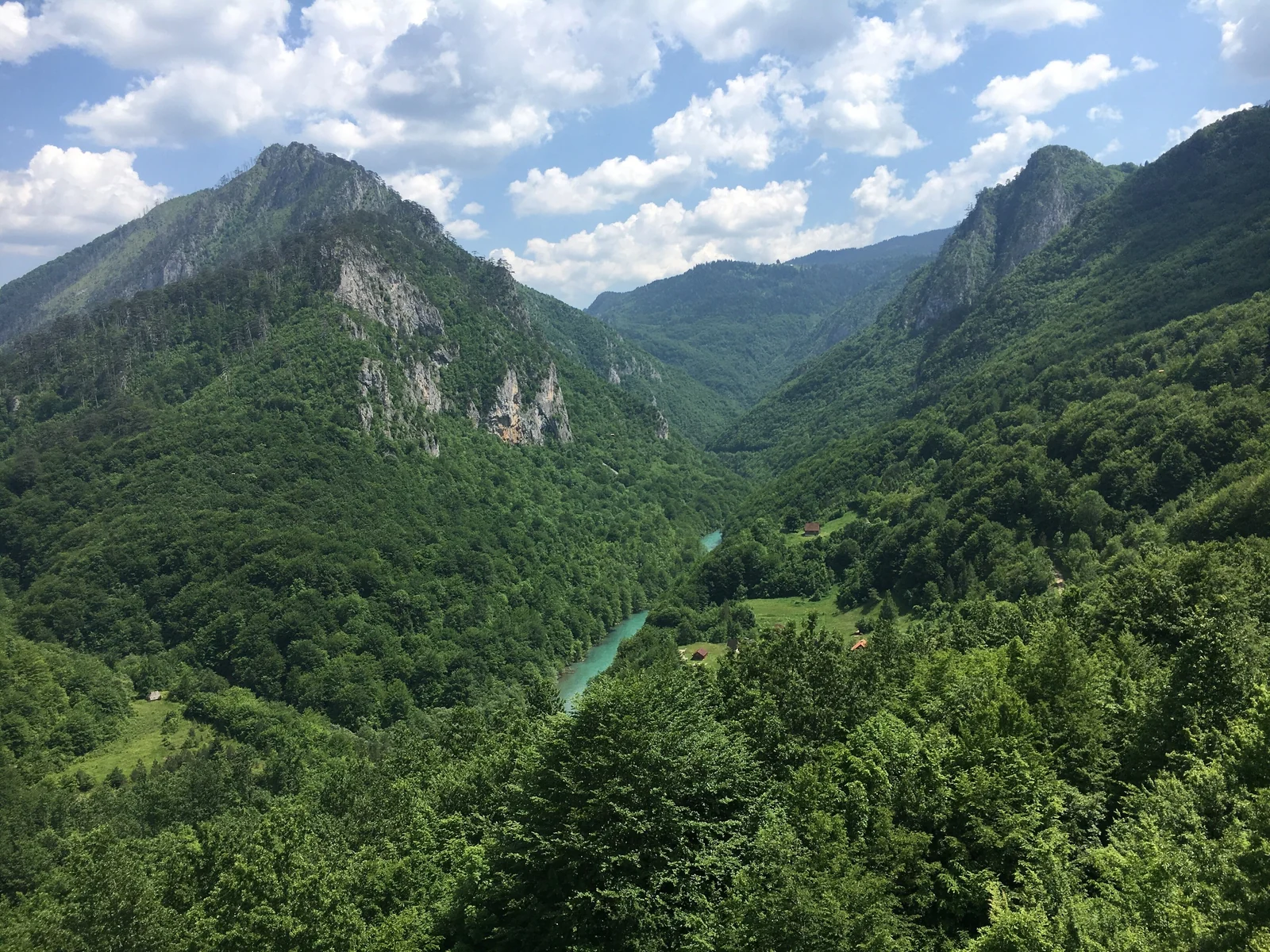
West of Žabljak, the Tara River has cut a canyon that reaches about 1,300 meters at its deepest, among the deepest in Europe. The concrete arch of the Đurđevića Tara Bridge, completed in 1940, carries the road high above the river, and a zip line runs beside it. Rafting trips on the river are the main summer activity, and operators run them from late spring to early autumn, depending on water levels.
In winter, Žabljak turns into a small ski resort. Snow can affect mountain roads, so confirm conditions before driving up.
Best Time to Visit Montenegro
Each part of the country has its own season, so match your dates to what you want to do. The table gives the general pattern.
| Season | Coast and Bay of Kotor | Northern mountains |
|---|---|---|
| Spring (April to May) | Mild, green and quiet; sea still cold | Snow lingers at altitude; trails open late |
| Early summer (June) | Warm, good beach weather, fewer crowds | Hiking and rafting get going |
| Peak summer (July to August) | Hot, crowded, highest prices | Cooler than the coast; busiest in the park |
| Autumn (September to October) | Warm sea, easier sightseeing | Crisp air and fall color |
| Winter (December to March) | Mild but wet; many resort businesses close | Ski season around Žabljak |
For a first trip, June and September offer the best balance of weather, price and crowds. If your trip is built around the beach, aim for late June or early September rather than the peak weeks.
Getting to Montenegro and Getting Around
Airports and Entry
The country has two main airports: Podgorica, the capital, and Tivat, closest to Kotor and the bay. Many visitors also fly into Dubrovnik in neighboring Croatia, which is near the northern end of the bay. Montenegro uses the euro, but it is not part of the Schengen Area, so check current entry rules for your passport on the official Montenegro tourism site.
Car, Bus or Tour
A rental car gives the most freedom, especially for Lovćen, Ostrog and Durmitor, but mountain roads are narrow and summer traffic on the coast is slow. Buses link the main towns cheaply and reliably, though timetables thin out on smaller routes. A short ferry crosses the narrow Verige strait in the bay, saving a long drive around. Without a car, organized day tours cover Perast, Lovćen and Ostrog from Kotor and Budva.
Allow more time than the map suggests. Distances are short, but winding roads mean even a 100-kilometer drive can take two hours or more.
Food, Money and Small Practical Tips
Coastal menus lean on grilled fish, black risotto and seafood, while the mountains favor lamb, smoked ham, cheese and hearty stews. Cards are widely accepted in towns, but carry some euros in cash for small cafes, parking and village shops. Summer parking in Kotor and Budva is tight, so use the designated lots outside the old walls rather than circling the lanes. Tap water is generally drinkable, but ask locally if you are unsure.
Where to Stay in Montenegro
- Kotor: the best base for the bay, with an atmospheric old town. Expect crowds at midday and small rooms inside the walls.
- Perast: quiet and scenic, with few restaurants and almost no nightlife.
- Budva: the choice for beaches, bars and a long summer season. Loud in July and August.
- Herceg Novi or Tivat: a calmer bay base with promenades and easy airport access in Tivat.
- Žabljak: the mountain base for Durmitor, Black Lake and the Tara canyon. Book ahead in peak summer and ski season.
A Simple Montenegro Itinerary
A week works well if you split it: three nights around the Bay of Kotor, one or two on the Budva coast, and two in the mountains. With less time, skip the north and add Lovćen and Cetinje as a day loop from Kotor.
If you are combining Montenegro with a longer Balkan trip, our Dalmatian coast itinerary covers the route north from Dubrovnik, and our European destination guides list more ideas for the rest of the continent.
Montenegro Travel FAQ
How many days do you need in Montenegro?
Five to seven days covers the Bay of Kotor, Budva and one mountain stop. Three days is enough for Kotor, Perast and a day on Lovćen. Add two nights if you want Durmitor and the Tara canyon.
Is Montenegro in the EU or Schengen?
Montenegro is not in the Schengen Area and uses the euro. Entry rules differ by nationality, so check the official tourism site or your government's travel advice before you book.
Is Kotor worth visiting?
Yes. Its walled old town and the bay around it are among the best-preserved medieval landscapes on the Adriatic, and UNESCO listed the area in 1979. Visit early in the morning to avoid cruise-ship crowds.
Do you need a car in Montenegro?
Not for the coast, where buses and taxis are enough. A car helps for Lovćen, Ostrog and Durmitor, though mountain roads are narrow. Many visitors use organized tours for these day trips.
When is the best time to visit Montenegro?
June and September give warm weather with fewer crowds. July and August are best for the beach but hot and busy. Hikers should aim for late spring to early autumn, and skiers for midwinter.
What is the best way to see Perast and Our Lady of the Rocks?
Take the bus or a taxi from Kotor, then a short boat from the Perast waterfront to the island. Go in the morning or late afternoon, when tour groups are fewer.
Can you visit Ostrog Monastery as a tourist?
Yes. It is an active place of worship open to visitors. Dress modestly, with shoulders and knees covered, expect queues in the upper church, and behave quietly.