


The Eiffel Tower is a 330-meter wrought-iron lattice tower on the Champ de Mars in Paris, built for the 1889 World’s Fair. It was meant to stand for only 20 years. Today it is the defining symbol of the city and of France, and one of the most visited paid monuments in the world.
Beyond the postcard, the tower is a genuine piece of engineering history: a structure designed around wind, built in just over two years and kept alive by science and radio. This guide explains how it came to be, what makes it remarkable, and how to plan a visit that goes beyond queuing and snapping a photo.
Eiffel Tower History: An Icon Almost Never Built
Built for the 1889 World’s Fair
The tower was the centerpiece of the 1889 Exposition Universelle, held in Paris to mark the centenary of the French Revolution. The original concept came from two engineers in Gustave Eiffel’s company, Maurice Koechlin and Émile Nouguier, with architect Stephen Sauvestre refining its look, including the decorative arches at the base. Eiffel bought the rights to the design and put his name, and his company, behind it.
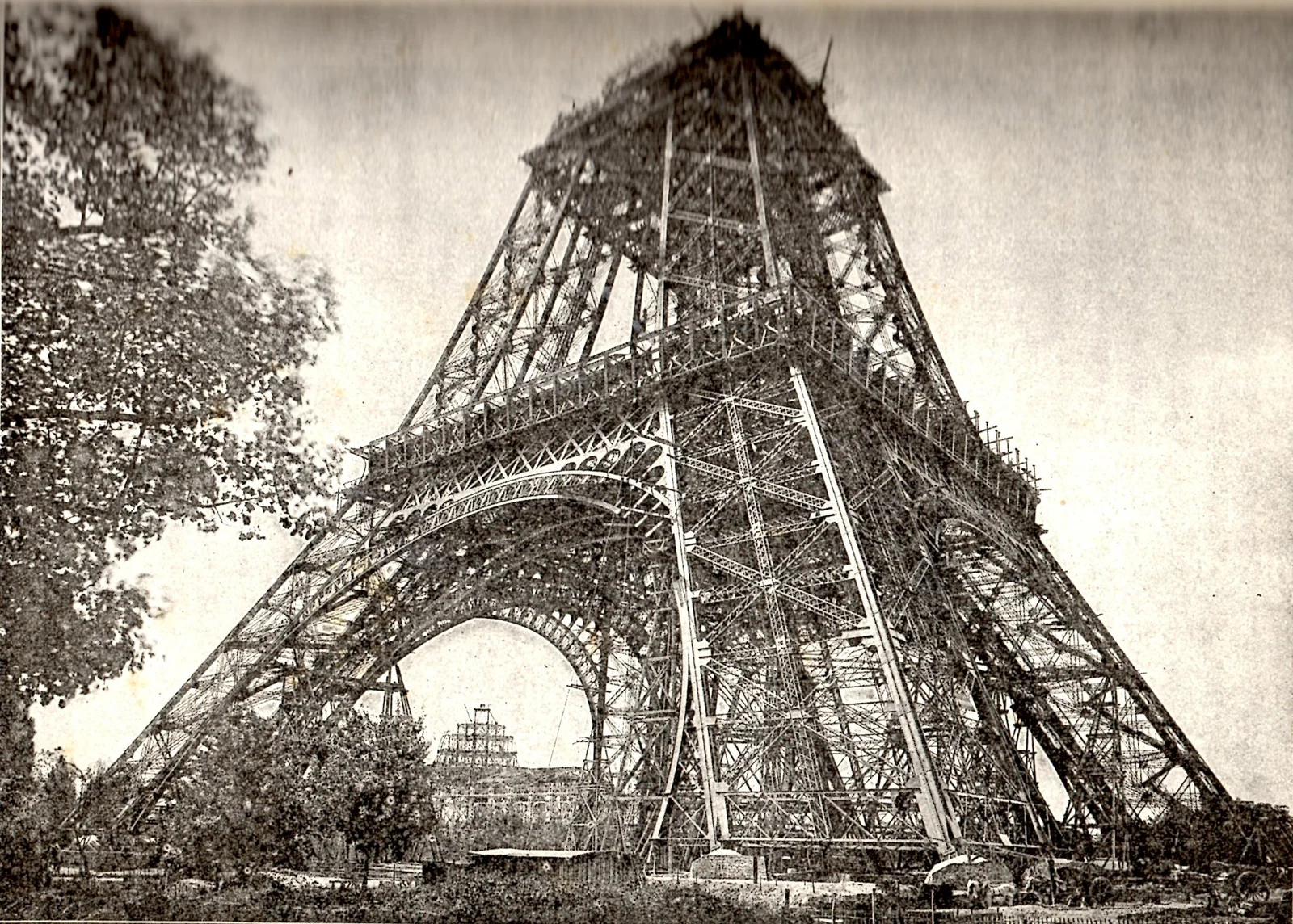
Construction began on January 28, 1887, and was finished on March 31, 1889, a little over two years later. The tower opened to the public on May 15, 1889, during the fair. At 300 meters (it has since grown with antennas), it was the tallest structure in the world, a title it held until the Chrysler Building in New York overtook it in 1930.
The artists’ protest
The design was controversial before a single beam went up. In February 1887, a group of prominent artists and writers, among them architect Charles Garnier of the Paris Opera, published a letter of protest against what they called a “useless and monstrous” tower that would overshadow the city’s monuments. Eiffel defended the project in the press, and work went ahead.
Too useful to tear down
Eiffel’s concession ran for 20 years, after which the tower could have been dismantled. He made it indispensable by encouraging scientific work on it, including weather observations and experiments in wireless telegraphy. Radio transmission, which proved valuable to the military during the First World War, is the main reason the tower survived. Antennas still crown it today and explain its current height of 330 meters, reached in 2022 when a new digital radio antenna was installed.
Eiffel Tower Engineering and Key Facts
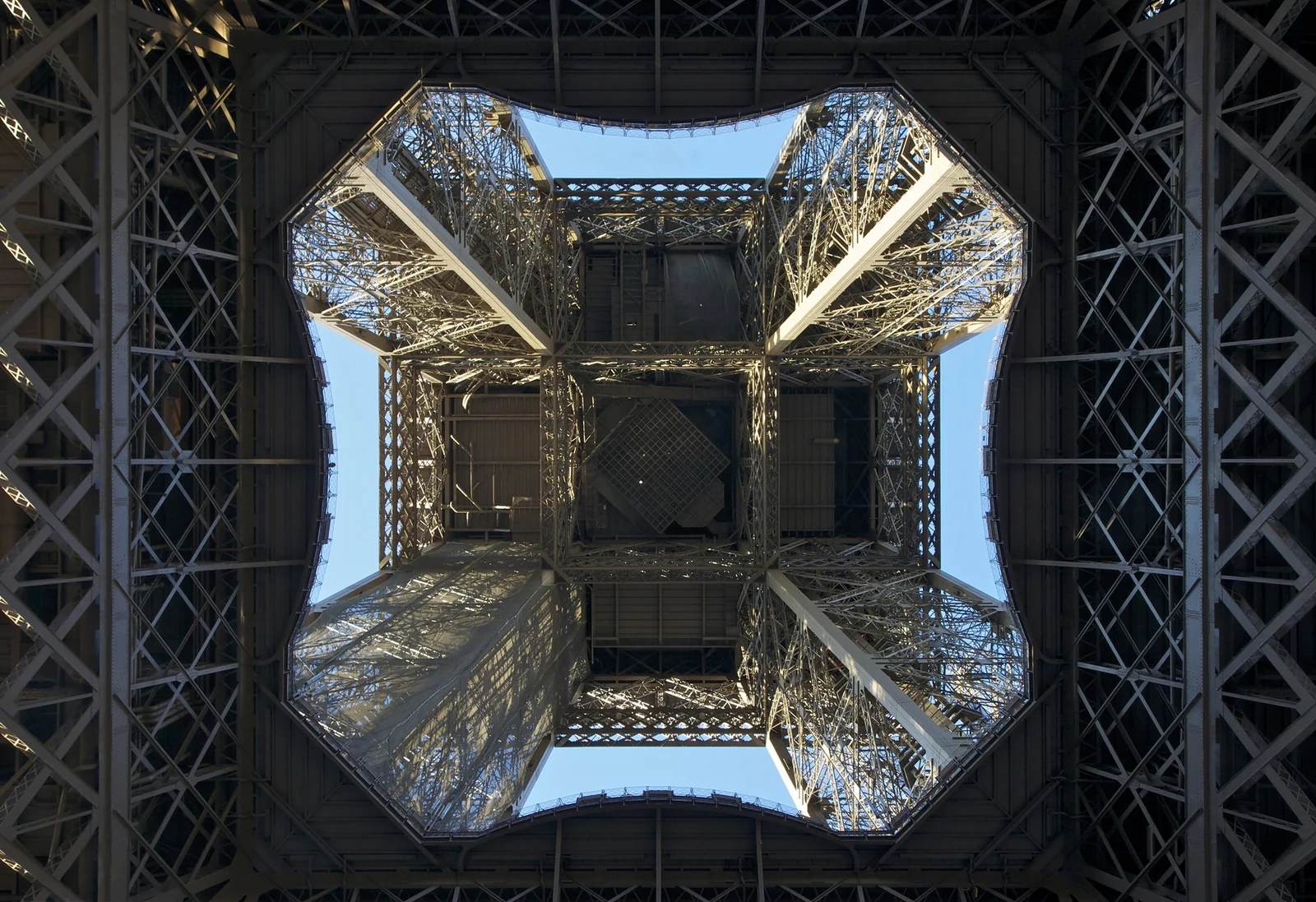
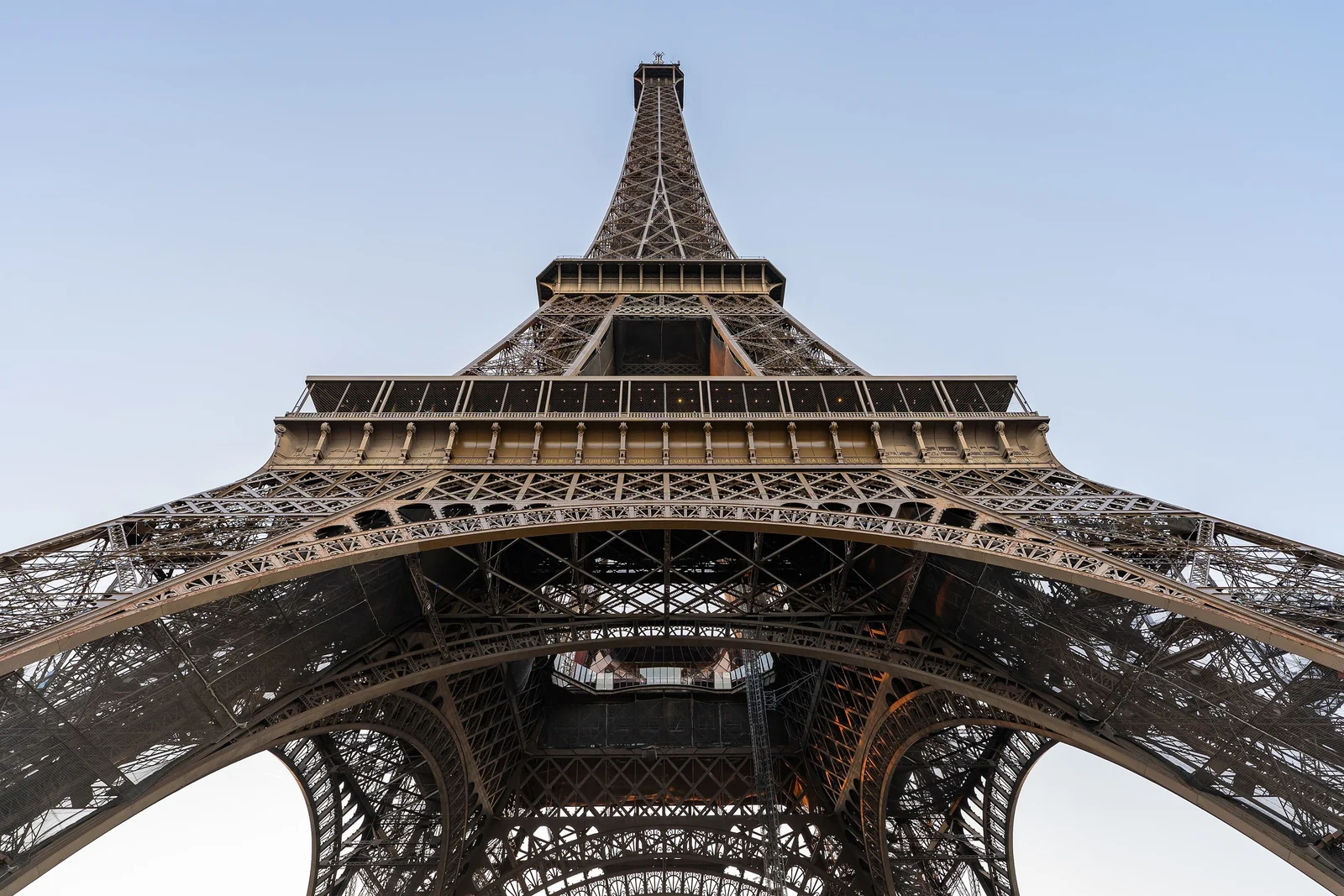
The tower’s curved profile is not decoration. Eiffel and his engineers shaped the four legs to resist wind at height as efficiently as possible, and the open lattice lets wind pass through instead of pushing against a solid surface. The result is a structure that is extraordinarily light for its size and still moves only a few centimeters in strong wind.
| Fact | Figure |
|---|---|
| Height | 330 m including antennas (300 m when completed in 1889) |
| Iron parts | 18,038, joined by about 2.5 million rivets |
| Weight | About 10,100 tonnes in total, 7,300 tonnes of it the iron frame |
| Construction | January 28, 1887 to March 31, 1889 |
| Visitor levels | 1st floor at 57 m, 2nd floor at 116 m, top at 276 m |
| Steps | 674 to the 2nd floor (the top is reached by elevator only) |
| Thermal movement | The top can shift up to about 18 cm in strong sun as the metal expands |
Look closely at the frieze below the first floor and you will see the names of 72 French scientists, engineers and mathematicians engraved in gold letters, Eiffel’s tribute to the people whose work made structures like his possible.
What to See on Each Level of the Eiffel Tower
First floor (57 m)
The largest level has a section of glass floor installed during a 2014 renovation, which lets you look straight down to the esplanade, plus exhibits on the tower’s history and a restaurant. It is the least crowded floor and a good place to understand the scale of the structure.
Second floor (116 m)
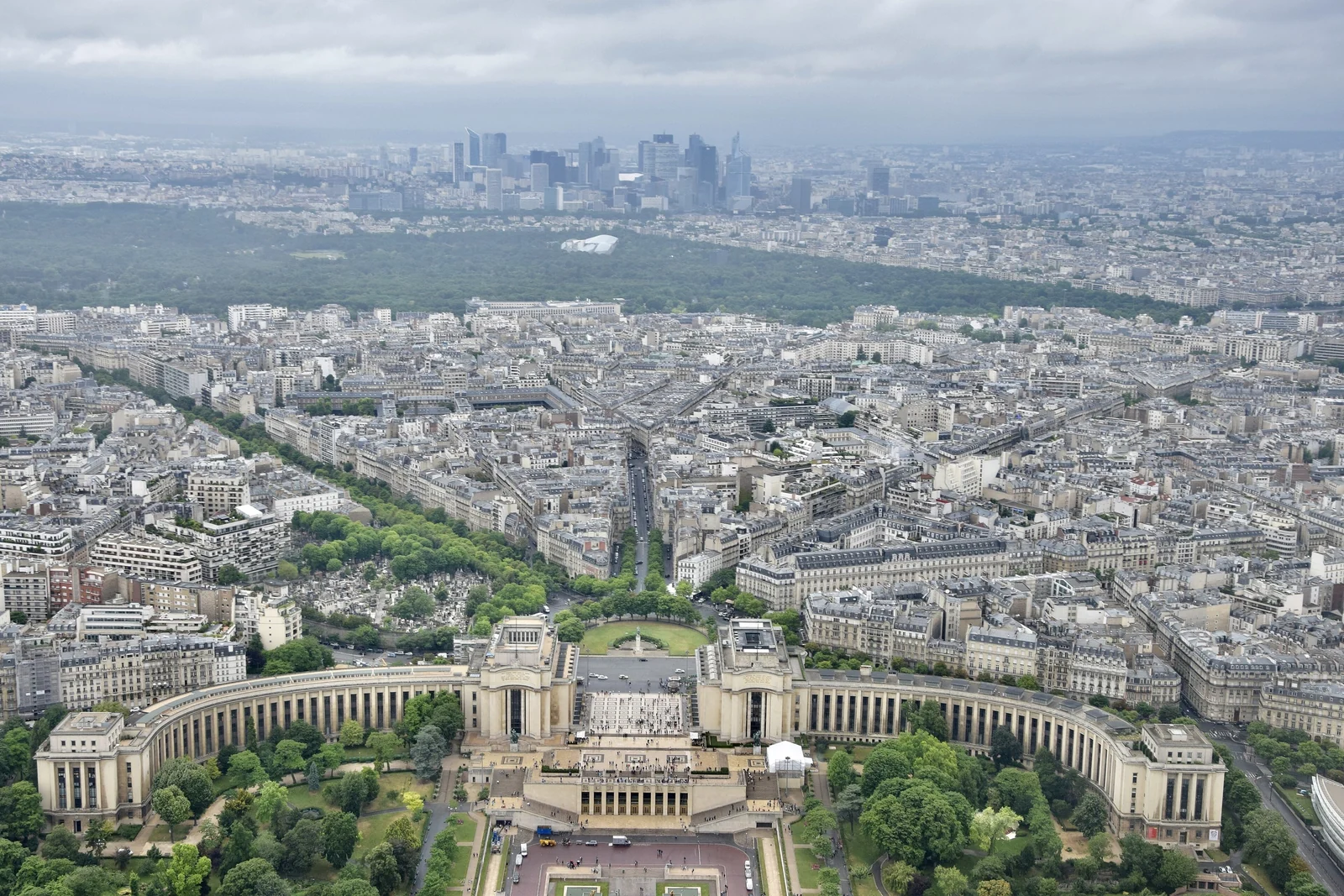
Many visitors find the second floor has the best views: high enough to see the whole city laid out, low enough to pick out landmarks such as the Seine bridges, the Trocadéro, Les Invalides and Montmartre. This is also where you change elevators for the top, and where the tower’s fine-dining restaurant, Le Jules Verne, is located.
The top (276 m)
The summit is reached only by elevator. Up here you will find a small champagne bar, panoramic maps that identify what you are looking at, and a recreation of Gustave Eiffel’s private office, furnished with wax figures of Eiffel and Thomas Edison, who visited him in 1889. On clear days the view extends far beyond the city limits.
Maintenance, Paint and the Nightly Sparkle
Iron rusts, so the tower is repainted by hand roughly every seven years, a campaign that uses about 60 tonnes of paint. Its color has changed several times, from the original reddish-brown to the bronze-brown shades used since the late 20th century, applied slightly darker at the bottom and lighter at the top so it looks uniform from the ground.
After dark, the tower is lit with a warm golden illumination, and for five minutes at the start of each hour thousands of flashing bulbs make it sparkle. The sparkle has been a feature since the millennium celebrations of 1999. The last sparkle and the time the lights go out have changed in recent years, partly to save energy, so check the official website if you are planning a late-night photo.
Visiting the Eiffel Tower: Tickets, Timing and Access
Tickets are sold on the official Eiffel Tower website, which is the safest place to buy them and the only reliable source for current prices and hours. You can choose between the elevator to the second floor, the elevator to the top, or the stairs to the second floor, which are usually cheaper and often have shorter lines.
| Topic | What to know |
|---|---|
| Booking | Timed tickets go on sale in advance online and sell out in summer and on holidays; book as early as you can |
| Quietest times | Opening time and later in the evening are usually calmer than the middle of the day |
| Security | All visitors pass airport-style security checks at the entrance to the esplanade; large bags are not allowed |
| Getting there | Nearby stations include Bir-Hakeim (Metro line 6), Trocadéro (lines 6 and 9) and Champ de Mars–Tour Eiffel (RER C) |
| Accessibility | The elevators serve the first and second floors and the top; check the official site for current accessibility details |
| Weather | The top can close in high winds or storms, so keep your plans flexible |
Be wary of unofficial sellers around the tower, and remember that you can enjoy the monument for free from the esplanade under the legs, the Champ de Mars lawns and the Trocadéro terraces across the river.
Best Places to See and Photograph the Eiffel Tower
- Trocadéro: the classic head-on view across the Seine from the terrace of the Palais de Chaillot, best at sunrise before the crowds.
- Champ de Mars: the long park beneath the tower, ideal for a picnic and a full-height view from the south.
- Pont de Bir-Hakeim: a two-level bridge with a framed view of the tower, popular with photographers.
- Seine river cruise: boats pass right by the tower and are especially atmospheric at dusk.
- Montparnasse Tower: an observation deck with the Eiffel Tower in your panorama instead of beneath your feet.
Tips for a Better Eiffel Tower Visit
- Book ahead: official timed tickets are the biggest time-saver, especially from spring to early autumn.
- Consider the stairs: climbing to the second floor is a memorable way to feel the structure around you.
- Time it with sunset: arriving in late afternoon lets you see Paris in daylight, at dusk and lit up.
- Dress for the wind: it is noticeably cooler and windier at the top than on the ground.
- Watch your belongings: as at any major landmark, pickpockets target busy crowds.
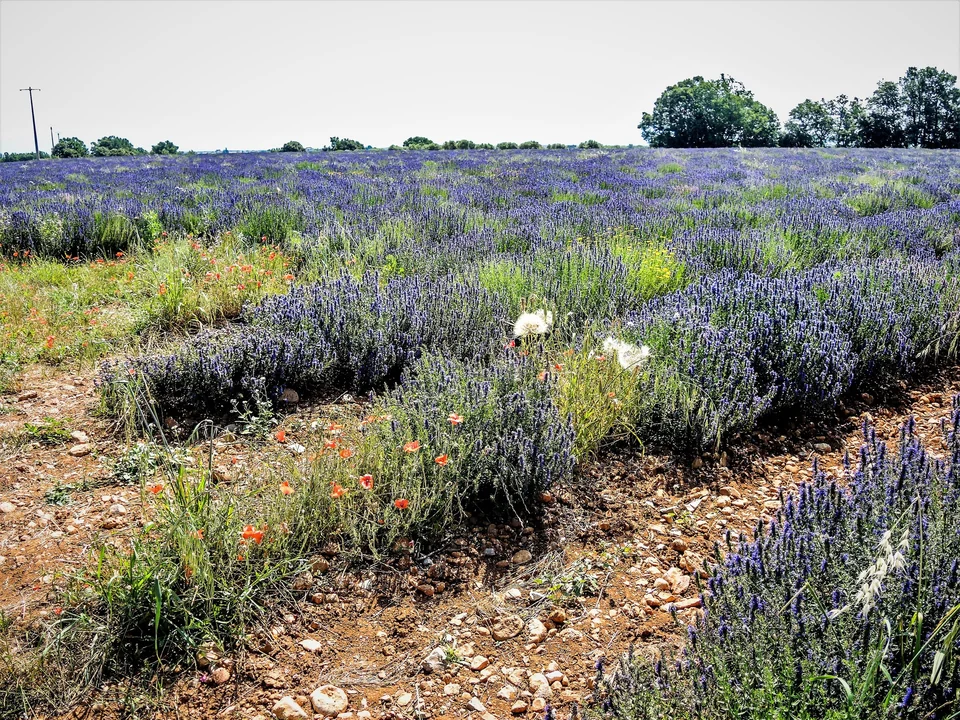
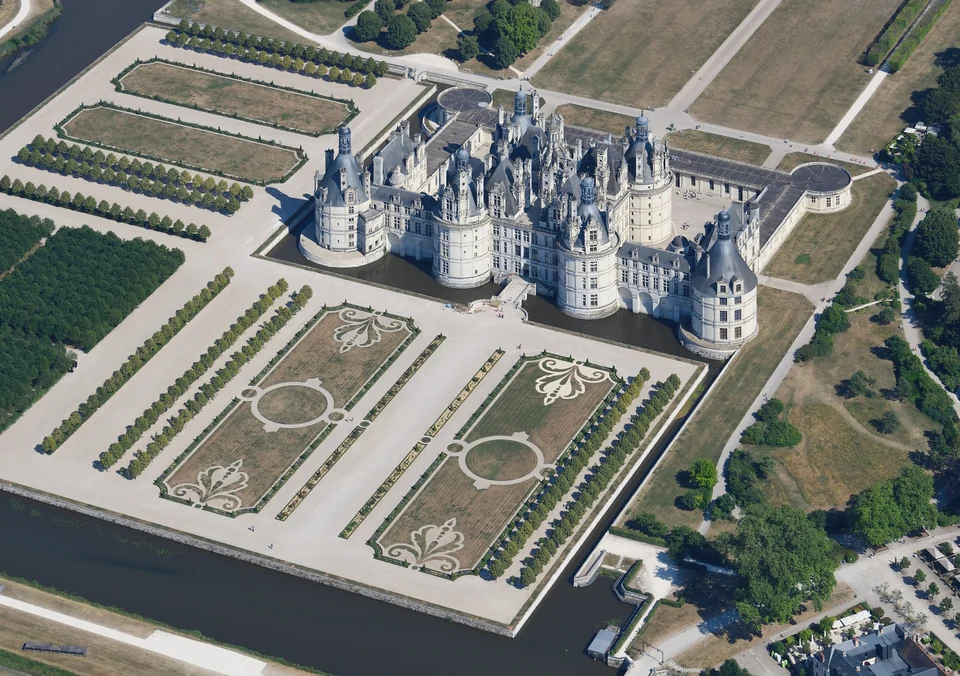
If you are building a longer trip through France, pair Paris with our guides to the best castles in France and the villages and lavender fields of Provence. For another landmark with centuries of engineering behind it, read our guide to Hagia Sophia in Istanbul.
Eiffel Tower FAQ
Why was the Eiffel Tower built?
It was built as the entrance monument and showpiece of the 1889 Exposition Universelle in Paris, the World’s Fair that marked 100 years since the French Revolution. It was intended to demonstrate French engineering skill and was originally meant to stand for only 20 years.
How tall is the Eiffel Tower?
The Eiffel Tower is 330 meters tall including its antennas, a height reached in 2022 when a new digital radio antenna was installed. When it opened in 1889 it measured 300 meters, making it the tallest structure in the world until 1930.
How long did it take to build the Eiffel Tower?
Construction took just over two years, from January 28, 1887, to March 31, 1889. The parts were prefabricated in Eiffel’s workshops and assembled on site, which is why such a large structure could be completed in time for the World’s Fair.
Can you walk up the Eiffel Tower?
Yes, but only to the second floor. There are 674 steps from the ground to the second level, and stair tickets are usually cheaper than the elevator. To reach the top at 276 meters, you must take the elevator from the second floor.
When does the Eiffel Tower sparkle?
After nightfall, the tower sparkles for five minutes at the start of every hour, on top of its steady golden lighting. The time of the last sparkle and when the lights switch off have changed in recent years, so check the official website before planning a late visit.
Do I need to book Eiffel Tower tickets in advance?
It is strongly recommended. Timed tickets are released online on the official website and often sell out in peak season. Booking in advance lets you pick your time and avoid the longest lines, although you still need to pass the security check at the entrance.
Is the Eiffel Tower a UNESCO World Heritage Site?
The tower is part of the UNESCO World Heritage Site “Paris, Banks of the Seine,” inscribed in 1991, which covers the riverside landscape from the Eiffel Tower to the Louvre and Notre-Dame.