


Provence is the sunlit southeastern corner of France, stretching from the Rhône River to the Alps and down to the Mediterranean. It is known for lavender fields, hilltop villages of honey-colored stone, Roman ruins, open-air markets and a slow, food-centered way of life that has drawn painters and travelers for well over a century.
Go for the lavender in early summer, the markets and wine in autumn, or the cities and quiet villages in spring. This guide covers the best places to visit in Provence, when to go, what to eat and how to get around, so you can plan a trip that mixes famous sights with unhurried countryside days.
Where Is Provence? Geography and Identity
Historically, Provence was a separate county before it became part of France in the late 15th century. Today most of it lies in the administrative region of Provence-Alpes-Côte d’Azur, and when travelers say “Provence” they usually mean the inland areas of the Vaucluse, the Bouches-du-Rhône and the Alpes-de-Haute-Provence, plus the coast around Marseille.
The landscape changes quickly: the flat Rhône delta of the Camargue, the limestone hills of the Luberon and the Alpilles, the high plateau of Valensole and the steep canyons of the Verdon. The region is famous for its bright light, and also for the mistral, a strong, cold northerly wind that can blow for days, mostly in winter and spring.
Best Places to Visit in Provence
Avignon
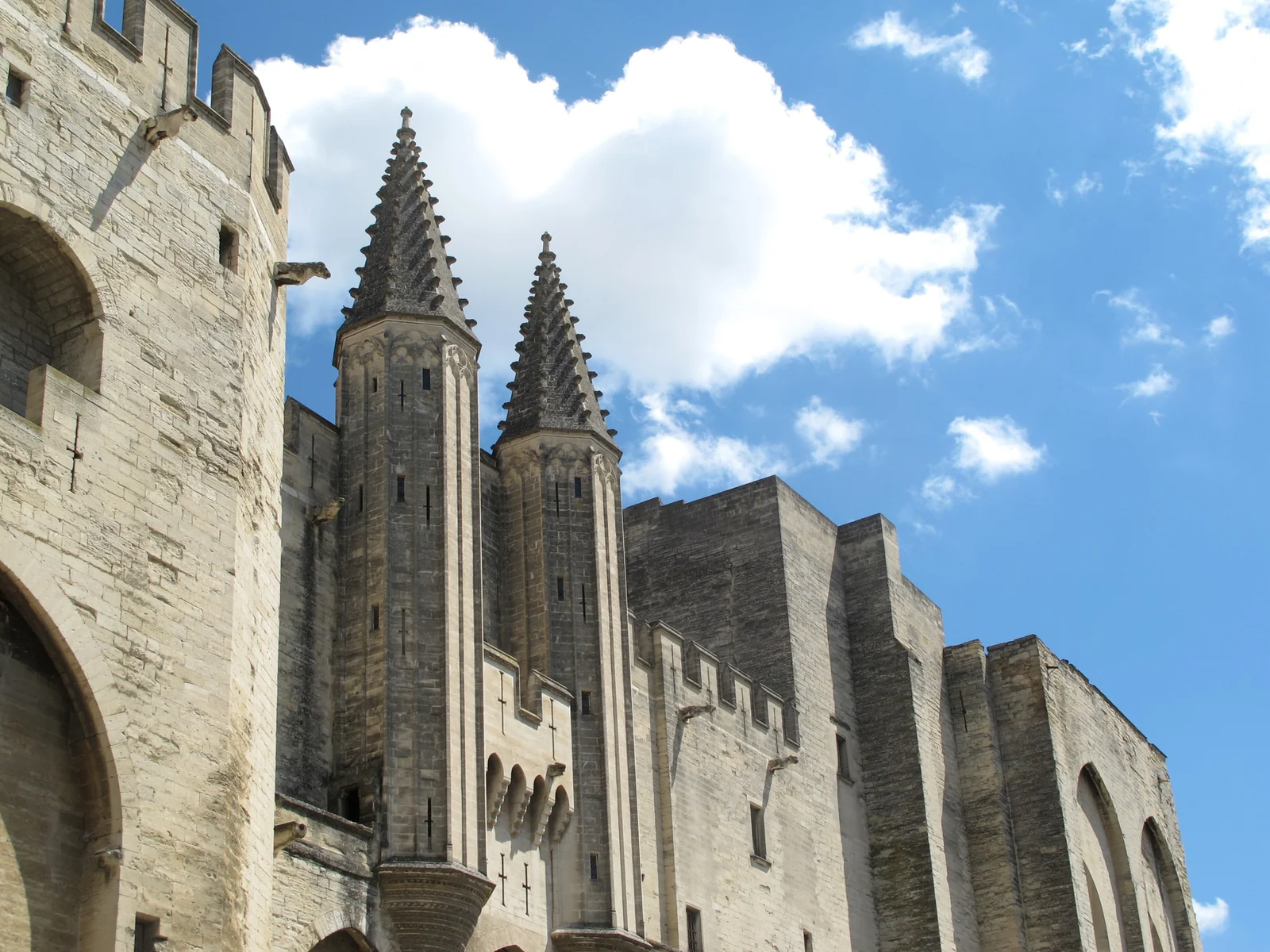
Avignon was the seat of the popes for most of the 14th century, and the vast Gothic Palais des Papes still dominates its walled old town. Together with the cathedral and the famous half-ruined Pont Saint-Bénézet, the “Pont d’Avignon” of the children’s song, the historic center is a UNESCO World Heritage Site. Every July the city hosts one of the world’s best-known theater festivals.
Aix-en-Provence
Elegant Aix is a university town of fountains, 17th- and 18th-century mansions and plane-tree-lined boulevards, above all the Cours Mirabeau. It was the hometown of painter Paul Cézanne, and you can visit his last studio on the edge of town and walk out toward the Montagne Sainte-Victoire, the mountain he painted again and again.
Arles
Arles has a Roman amphitheater still used for events, an ancient theater and a Romanesque church with a superb carved portal, all part of a UNESCO listing. Vincent van Gogh lived here in 1888 and 1889 and painted hundreds of works in and around the town. Arles is also the gateway to the Camargue, a wetland of flamingos, white horses and rice fields.
Marseille and the Calanques
Founded by Greek settlers around 600 BC, Marseille is France’s oldest city and a lively, multicultural port. Walk around the Vieux-Port, climb to the basilica of Notre-Dame de la Garde for the view, and visit the MuCEM museum on the waterfront. Just east of the city, the limestone inlets of Calanques National Park offer hiking trails and turquoise coves.
Hilltop Villages of the Luberon
The Luberon, east of Avignon, is the Provence of postcards: stone villages perched on hills above vineyards, cherry orchards and lavender. Distances are short, so you can see two or three villages in a day, ideally early in the morning or late in the afternoon when the light is softest and the tour buses have gone.
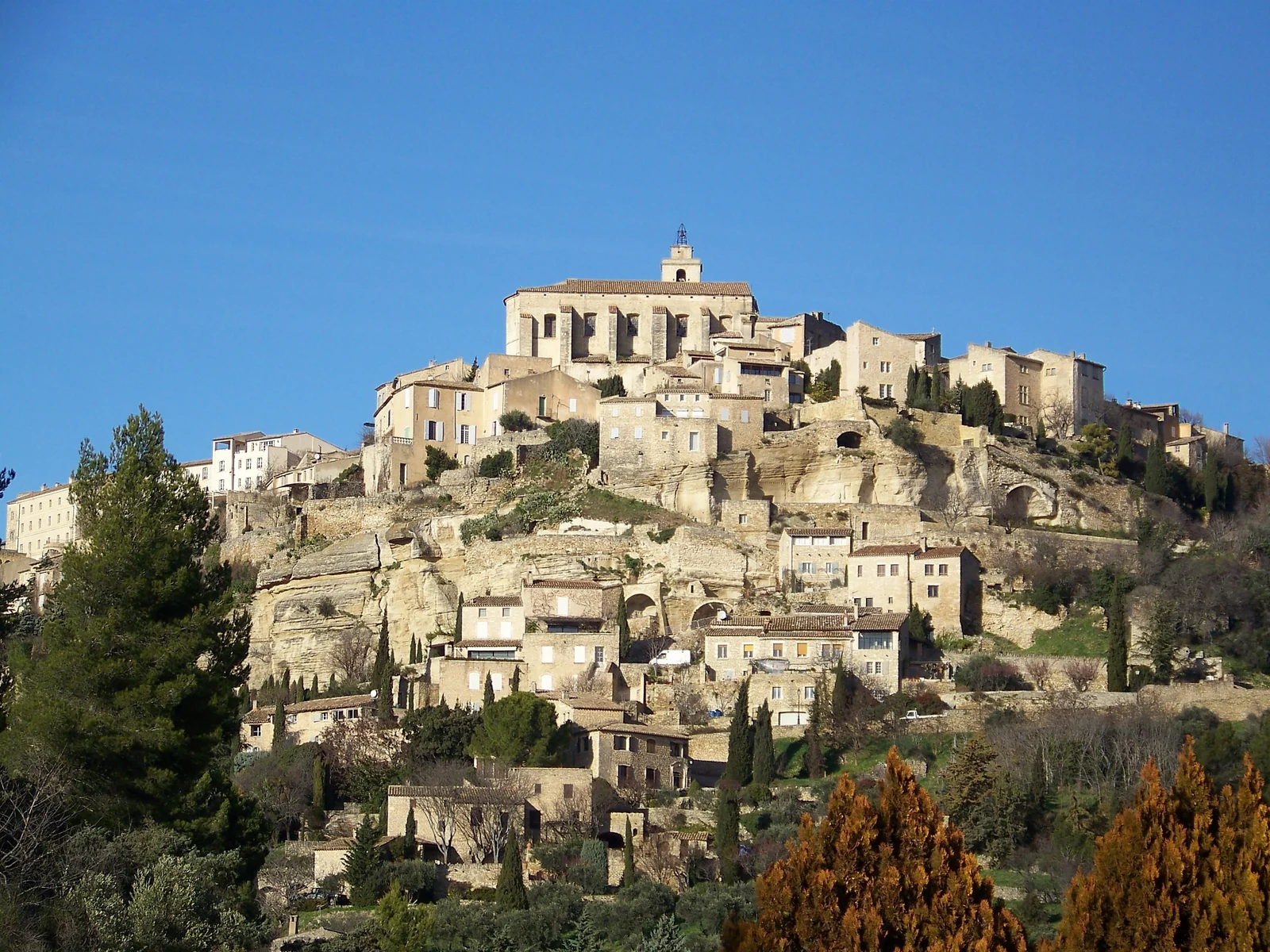
- Gordes: a dramatic village of stone terraces topped by a Renaissance castle. Nearby Sénanque Abbey, a 12th-century Cistercian monastery, is framed by lavender in early summer.
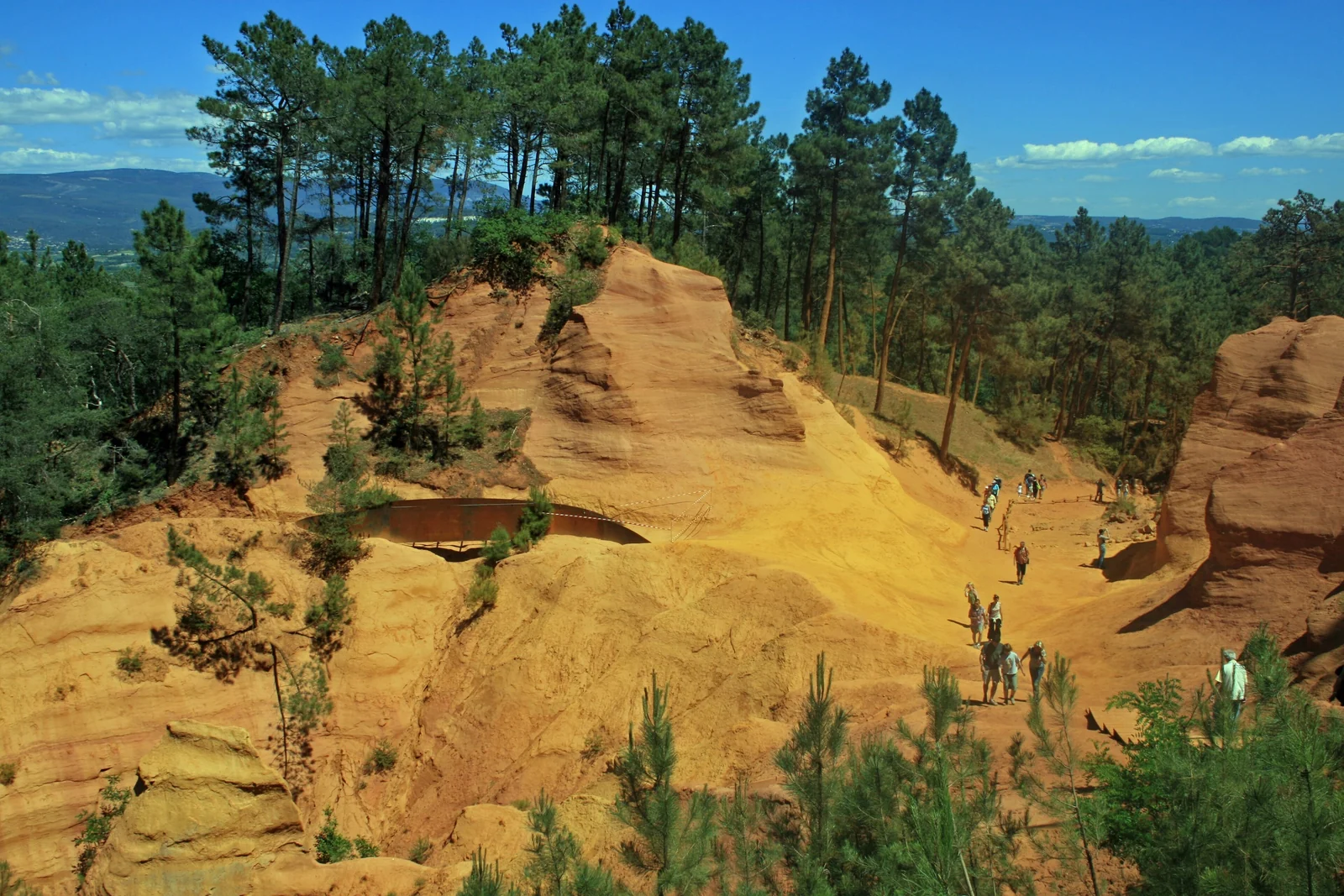
- Roussillon: built on ochre cliffs, its houses glow red and orange. The Sentier des Ocres trail leads through former ochre quarries.
- Lourmarin: a relaxed village with a Renaissance château, cafés and a popular Friday market.
- Ménerbes and Bonnieux: quieter hilltop villages with wide views over the valley.
- L’Isle-sur-la-Sorgue: a town on river channels, famous for its antique dealers and Sunday market.
Lavender Fields in Provence: Where and When
Lavender generally blooms from mid-June to late July, depending on altitude and the weather that year. Lower fields flower first and higher ones later, and harvesting starts in July, so a field that was purple one week can be cut the next. For the best chance, aim for the last days of June and the first half of July.
| Area | What to expect | Typical peak |
|---|---|---|
| Valensole plateau | Vast, flat fields of lavandin, the most famous views | Late June to mid-July |
| Luberon and Sénanque Abbey | Smaller fields beside villages and the abbey | Late June to early July |
| Sault and the Plateau d’Albion | Higher, cooler fields of fine lavender near Mont Ventoux | July |
The fields are working farms. Stay on the edges and paths, do not walk between rows or pick flowers, and park only where it is allowed. Many farms and distilleries sell lavender products and welcome visitors.
Nature in Provence: Gorges, Mountains and Wetlands
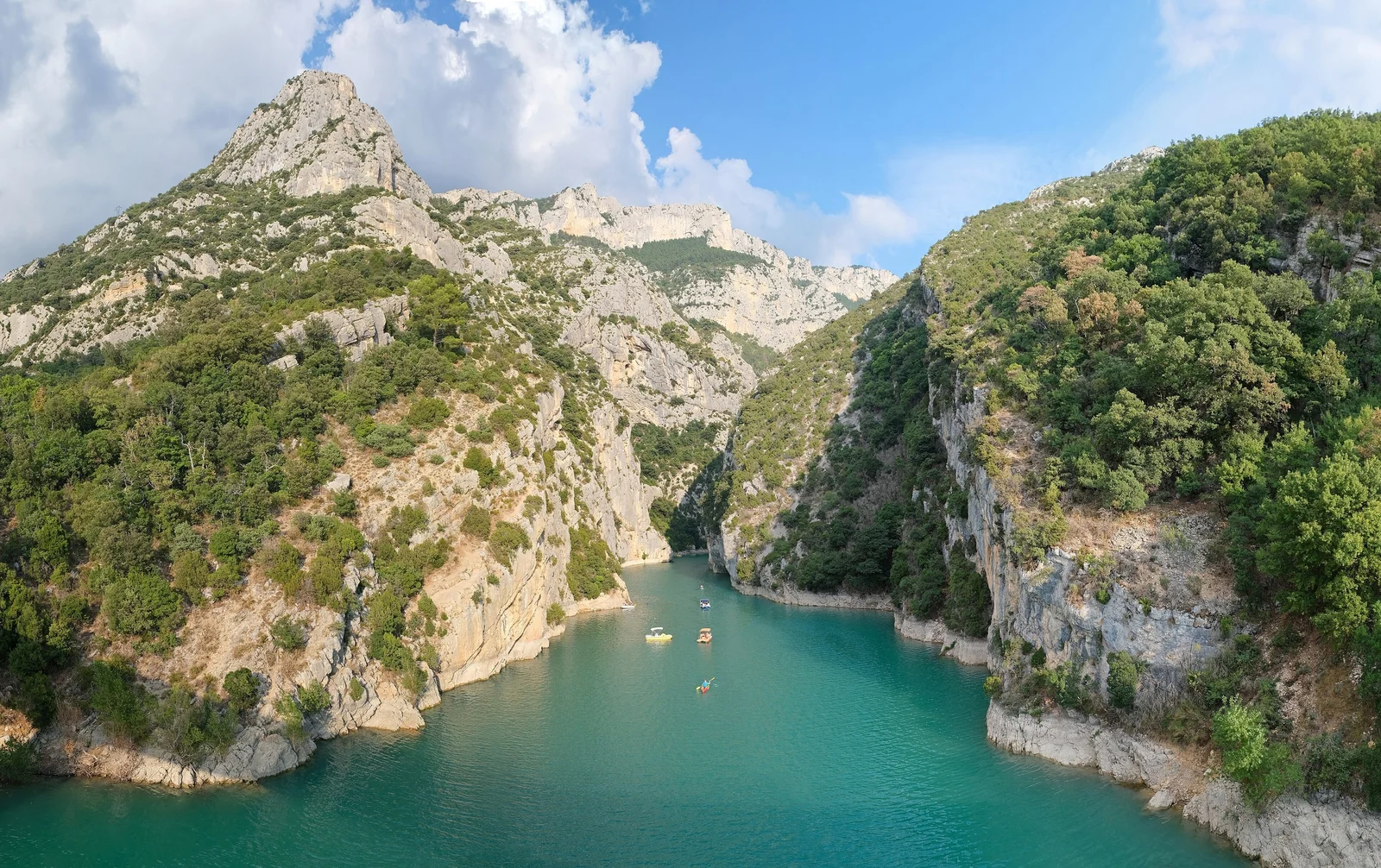
Provence is not only villages. The Verdon Gorge, often called France’s Grand Canyon, is a limestone canyon around 25 kilometers long and up to about 700 meters deep, with a scenic road along its rim and kayaks on the green river below where it opens into the Lac de Sainte-Croix.
- Mont Ventoux: the “Giant of Provence,” around 1,910 meters high and legendary among cyclists for its climbs from Bédoin, Malaucène and Sault.
- The Alpilles: jagged limestone hills with olive groves and the hilltop village of Les Baux-de-Provence.
- The Camargue: salt marshes and lagoons in the Rhône delta, home to pink flamingos, black bulls and white horses.
- Calanques National Park: coastal cliffs and coves between Marseille and Cassis, best explored on foot or by boat.
What to Eat and Drink in Provence
Provençal cooking is built on olive oil, garlic, tomatoes, herbs and seafood. The best introduction is a morning market, where you can taste olives, goat cheese, honey and seasonal fruit before sitting down for a long lunch.
- Bouillabaisse: Marseille’s rich fish stew, served with rouille and croutons.
- Ratatouille: slow-cooked summer vegetables with herbs and olive oil.
- Tapenade and aïoli: an olive and caper spread, and a garlic mayonnaise served with vegetables and fish.
- Calissons: almond and candied-melon sweets, a specialty of Aix-en-Provence.
- Wine: Provence is best known for dry rosé, while the southern Rhône near Avignon produces reds such as Châteauneuf-du-Pape.
Best Time to Visit Provence
| Season | Highlights | Keep in mind |
|---|---|---|
| Spring (April to May) | Wildflowers, mild weather, open markets | The mistral can be strong and cold |
| Early summer (June to mid-July) | Lavender season, long days, festivals | Busy villages and higher prices |
| High summer (late July to August) | Beaches, evening events | Heat, crowds and traffic; most lavender is harvested |
| Autumn (September to October) | Grape harvest, warm sea, quieter roads | Some seasonal businesses close in late autumn |
| Winter (November to March) | Christmas markets, empty villages, low prices | Short days; many restaurants take a break |
How to Get to and Around Provence
High-speed TGV trains link Paris with Avignon, Aix-en-Provence and Marseille in roughly three hours, and Marseille Provence Airport has flights from across Europe. Nice airport is another option if you are combining Provence with the Côte d’Azur.
Trains and regional buses connect the main towns, but the villages, lavender fields and gorges are far easier to reach by car. A good plan is to base yourself in one or two places, such as Avignon for the Rhône valley and a Luberon village for the countryside, and make day trips from there. The official regional tourism site, Provence-Alpes-Côte d’Azur Tourism, has current event listings and route ideas.
Tips for First-Time Visitors to Provence
- Go to markets early for the best produce and fewer crowds; most wind down around midday.
- Many restaurants serve lunch only until about 2 pm and dinner from around 7:30 pm, so plan meals around those hours.
- Book accommodation well ahead for June and July, especially in the Luberon.
- Wear comfortable shoes for steep, cobbled village lanes.
- In summer, carry water and respect fire-risk closures of forests and trails.
Planning a bigger trip through France? Add a few days in Paris with our Eiffel Tower guide, tour the castles of France, or cross the border for more Mediterranean food and history in our Italy travel guide.
Provence FAQ
When is lavender season in Provence?
Lavender usually blooms from mid-June to late July, with the best color in the last week of June and the first half of July. Lower fields such as Valensole flower earlier, and harvesting begins in July, so exact timing changes from year to year.
What is the best base for exploring Provence?
Avignon is a convenient base with good train connections and easy access to the Luberon, Arles and the Pont du Gard. Aix-en-Provence works well for Marseille and the coast, while a Luberon village suits travelers with a car who want countryside and quiet evenings.
Do you need a car in Provence?
Not for the main towns, which are linked by train and bus. To visit hilltop villages, lavender fields, wineries and the Verdon Gorge, a car is by far the most practical option, since public transport to rural areas is limited and infrequent.
How many days do you need in Provence?
Five to seven days lets you see Avignon, Arles or Aix, several Luberon villages and a day of nature such as the Verdon Gorge or the Calanques. With less time, focus on one area rather than trying to cover the whole region.
Is Provence the same as the French Riviera?
They share an administrative region, but they are usually treated as different destinations. The French Riviera, or Côte d’Azur, is the glamorous coast around Nice and Cannes, while Provence generally refers to the inland countryside, its villages and cities such as Avignon, Aix and Marseille.
What is Provence famous for?
Provence is famous for lavender fields, perched stone villages, Roman monuments in Arles and Orange, the papal palace in Avignon, rosé wine, olive oil and markets, and for the light that inspired painters such as Cézanne and Van Gogh.