


Lyon is France's third-largest city, built where the Saône meets the Rhône about two hours south of Paris by high-speed train. Go for the food first. This is the city of the bouchon, the small, crowded, checked-tablecloth restaurant, and of Paul Bocuse, and it eats better at every price level than almost anywhere else in the country.
Then stay for the old quarters. Renaissance Vieux Lyon, Roman Fourvière and the silk weavers' hill of Croix-Rousse are part of a UNESCO World Heritage Site, and they are threaded with traboules, covered passages that cut through buildings from one street to the next. This Lyon travel guide covers what to see, where and what to eat, the Fête des Lumières, day trips, how to get there and where to stay.
Plan on three days; two feels rushed once you start taking lunch seriously. For more of the country, browse our France travel guides.
Vieux Lyon: Renaissance Streets and Traboules
Vieux Lyon is the strip of old town squeezed between the Saône and the foot of Fourvière hill. In the 1500s, Lyon was a wealthy hub of trade fairs, banking and printing, and Italian and Flemish merchants built tall stone houses here with galleried courtyards and spiral stair towers. Much of it survived, which is why the Historic Site of Lyon was added to the UNESCO list in 1998.
The district has three parts named after its churches: Saint-Paul, Saint-Jean and Saint-Georges. Rue Saint-Jean is lined with souvenir shops and tourist bouchons, so walk it once, then spend your time on the side streets.
How to Find the Traboules
A traboule is a private passage running through one or more buildings, usually via a courtyard and a vaulted corridor. Lyon has several hundred of them across Vieux Lyon, Croix-Rousse and the Presqu'île, but only a minority are open to visitors, under agreements with residents that generally cover daytime hours. Look for a small bronze plaque or a lion-head marker beside a doorway, push the door and go in quietly. People live here.
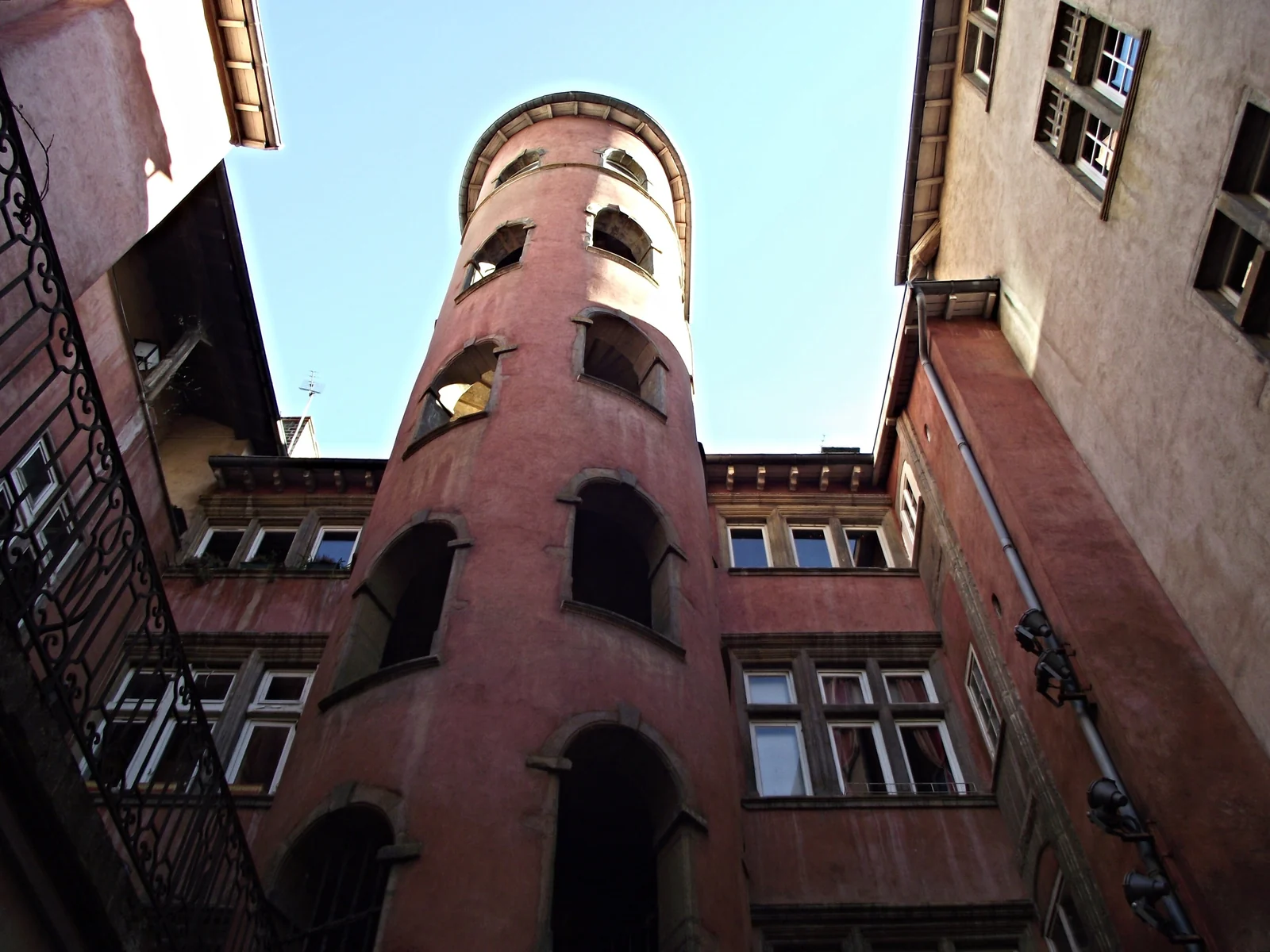
The obvious first stop is the Tour Rose, the pink stair tower in the courtyard of the Maison du Crible at 16 Rue du Bœuf. From there, simply try doors marked as traboules along Rue Saint-Jean and Rue du Bœuf. The tourist office's free map marks the open ones.
Saint-Jean Cathedral
Saint-Jean Cathedral took roughly three centuries to build, which is why its Romanesque apse and Gothic facade don't quite match. See the stained glass and astronomical clock, then take the funicular next door up to Fourvière.
Fourvière Hill: The Basilica and Roman Lyon
The hill above the old town is where Lyon began. The Romans founded Lugdunum here in 43 BC, and it became the capital of the Three Gauls. Today the hilltop is a mix of white basilica, Roman ruins and quiet gardens, and it gives you the best view in the city.
Basilica of Notre-Dame de Fourvière
Built between 1872 and 1884, the basilica is a wedding cake of white stone and towers, and inside it is lavish to the point of excess, with mosaics covering nearly every surface. I prefer the esplanade outside, where the whole city spreads out below and, on a clear day, the Alps appear.
The Roman Theaters and Lugdunum Museum
A five-minute walk downhill brings you to two Roman theaters cut into the slope. The larger one was first built around 15 BC under Augustus and later enlarged to seat about 10,000 people; the smaller Odeon sits beside it. Both are free to wander, and in summer the big theater hosts the Nuits de Fourvière festival of concerts and performances.
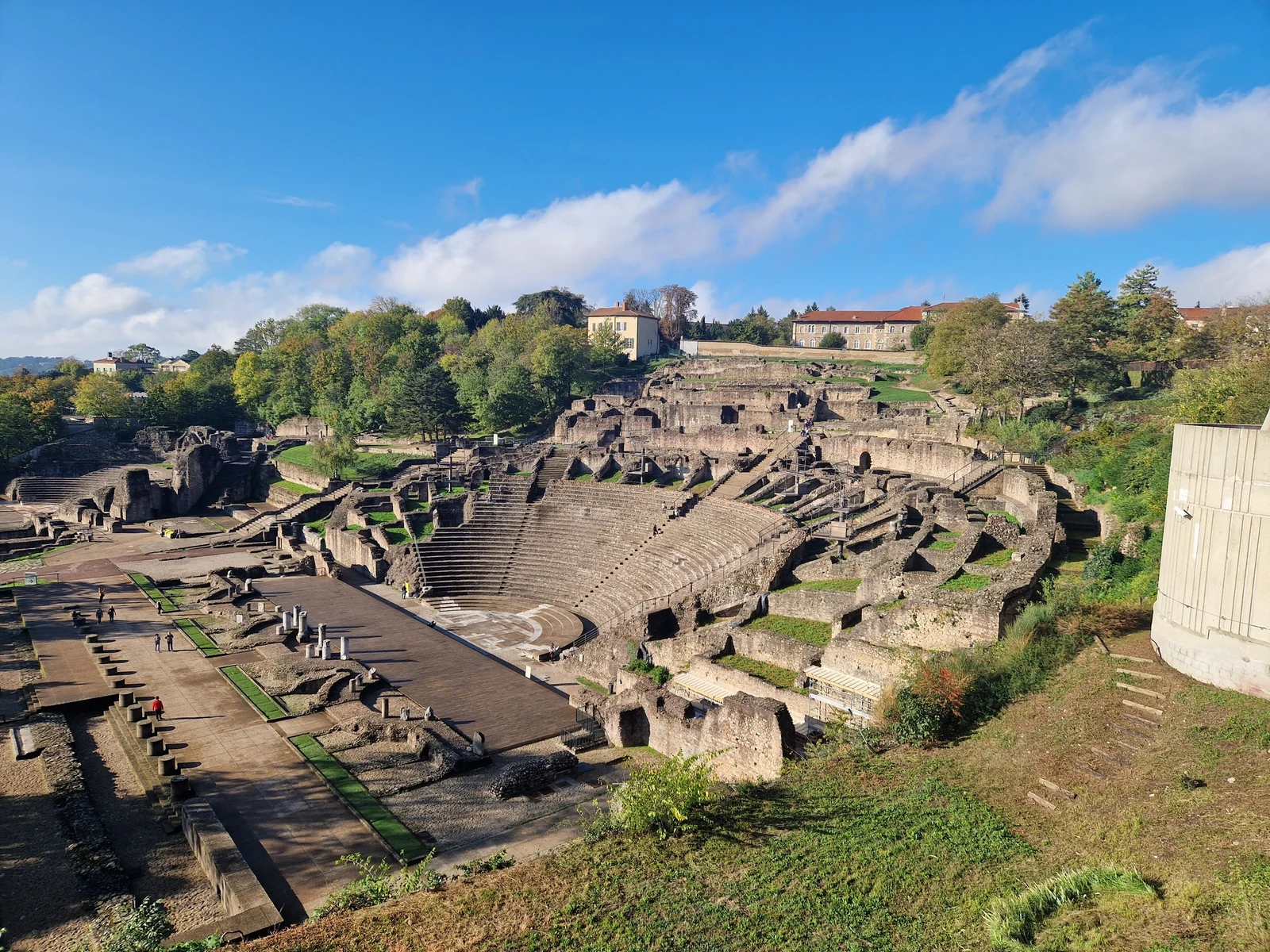
The Lugdunum museum, built into the hillside above, looks unpromising from outside and turns out to be one of France's best archaeology museums. Look for the mosaics and the bronze Claudian Tablet, a speech by the Lugdunum-born emperor Claudius.
Croix-Rousse and Lyon's Silk-Weaving History
Across the Saône, the hill of Croix-Rousse is known as "the hill that works," as opposed to Fourvière, "the hill that prays." In the 19th century, thousands of silk weavers, the canuts, lived and worked on its slopes. Their buildings have unusually high ceilings and tall windows, designed to fit Jacquard looms and let in as much light as possible.
The canuts were also militant. Their uprisings in 1831 and 1834, over pay and working conditions, are counted among the first major workers' revolts of the industrial age. You can learn how the looms worked at the Maison des Canuts, a small workshop-museum with weaving demonstrations.
Walking the Slopes
Start at Place des Terreaux and climb through the Pentes, the steep lower slopes, using traboules and staircases. The Cour des Voraces, with its monumental open-air staircase, is the famous one. At the top, the Boulevard de la Croix-Rousse has a morning street market, and a short walk away the Mur des Canuts, a giant trompe-l'œil mural, shows the neighborhood as a painted street scene. The Pentes also hide good independent bars and small restaurants.
Presqu'île: Bellecour, Terreaux and the City Between Two Rivers
The Presqu'île is the long tongue of land between the Saône and the Rhône, and it is Lyon's commercial center. Its grand 19th-century streets, Rue de la République and Rue Victor Hugo, are for shopping and strolling rather than sights, but the two squares at either end are essential.
- Place Bellecour: one of the largest open squares in Europe, a vast expanse of reddish gravel with an equestrian statue of Louis XIV in the middle. The main tourist office is here.
- Place des Terreaux: framed by the 17th-century Hôtel de Ville and the Musée des Beaux-Arts, with Bartholdi's fountain of horses at one end. Bartholdi also designed the Statue of Liberty.
- Musée des Beaux-Arts: housed in a former abbey, with one of France's largest art collections outside Paris and a cloister garden that makes a calm break from the crowds.
Confluence, Tête d'Or and Modern Lyon
Confluence and the Musée des Confluences
The southern tip of the Presqu'île, once a zone of railway yards and warehouses, has been rebuilt as the Confluence district: offices, housing and bright, oddly shaped buildings along the docks. At the very point where the rivers meet stands the Musée des Confluences, a science and anthropology museum that opened in December 2014 in a building of glass and steel that looks like a cloud that has crash-landed.
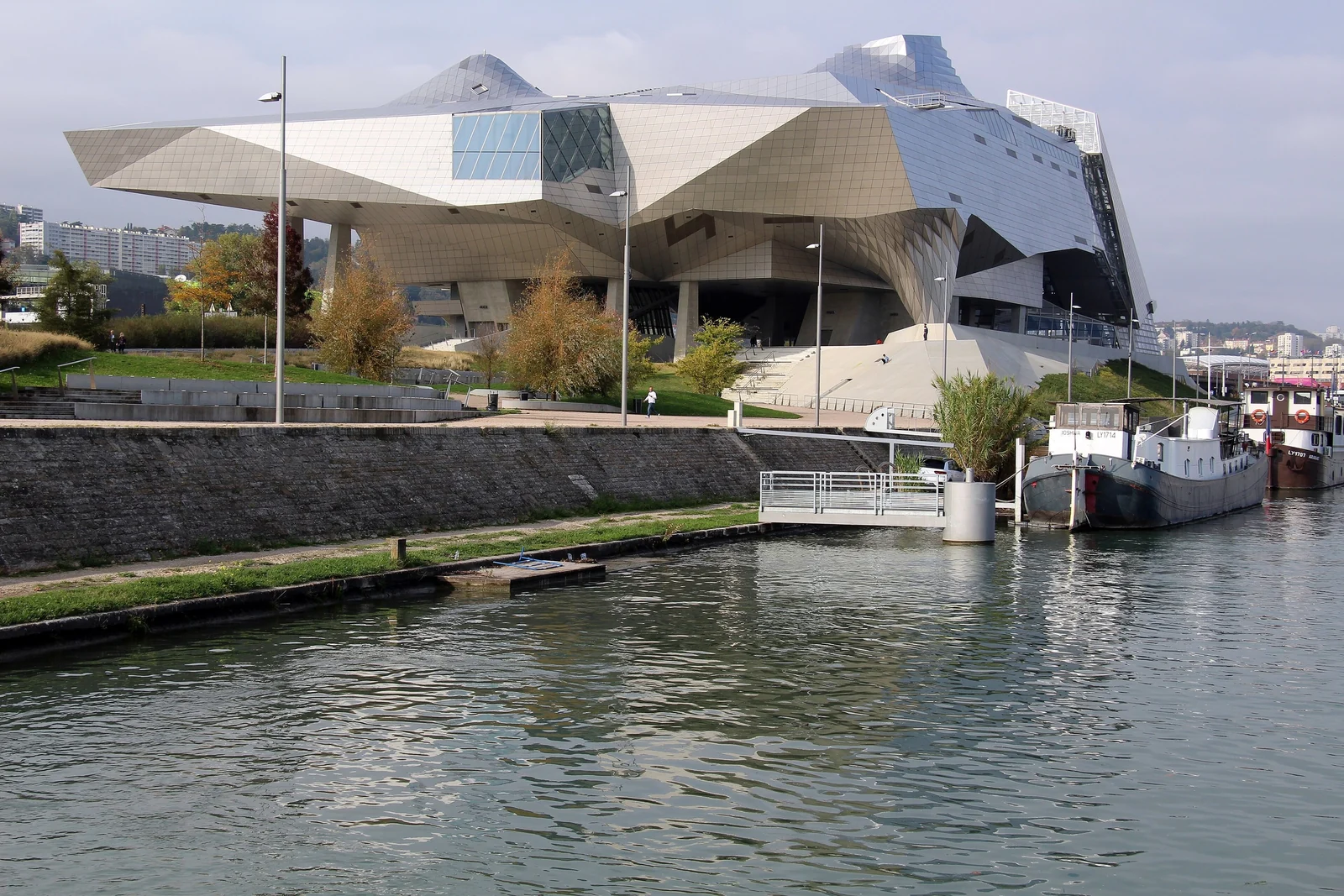
The permanent galleries run from the origins of the universe to human societies, a strong pick on a rainy day or with kids. Tram T1 runs there from Part-Dieu and Perrache.
Parc de la Tête d'Or
North of the center on the Rhône's left bank, the Parc de la Tête d'Or was created in 1857 and covers about 117 hectares. It has a large lake with rowboats, a rose garden, botanical greenhouses and a free zoo. It is the best place in the city to slow down for an afternoon.
Eating in Lyon: Bouchons, Lyonnais Dishes and Les Halles
Lyon's food reputation rests on two traditions: the bouchon, a casual restaurant serving hearty, meat-heavy local dishes, and the women cooks known as the mères lyonnaises, led by Eugénie Brazier, who trained a young Paul Bocuse. His name is still everywhere in the city.
How to Choose a Bouchon
Not every self-styled bouchon deserves the name, especially on Rue Saint-Jean. Since 2012, an association called Les Bouchons Lyonnais has awarded a label to restaurants that pass an independent audit of their cooking, produce and setting; look for the plaque showing Gnafron, the wine-loving puppet from Lyon's Guignol theater. Book dinner ahead.
Lyonnais Dishes to Try
- Salade lyonnaise: frisée with bacon lardons, croutons and a poached egg.
- Quenelle de brochet: a light pike dumpling baked in a rich crayfish Nantua sauce.
- Saucisson brioché: pork sausage baked inside brioche.
- Tablier de sapeur: breaded, fried beef tripe, better than it sounds.
- Cervelle de canut: fromage blanc whipped with herbs, shallots and garlic, named after the silk weavers.
- Tarte aux pralines: a tart filled with bright pink sugar-coated almonds, melted into a sticky filling.
To drink, order a pot lyonnais, a heavy-bottomed 46 cl bottle of house red, often Beaujolais or Côtes du Rhône.
Les Halles de Lyon Paul Bocuse
Lyon's covered food market opened on Cours Lafayette, near Part-Dieu station, in 1971 and was renamed after Bocuse in 2006. Think high-end food counters: cheese, charcuterie, pastry, oysters and wine bars. Go late in the morning on a weekend, when locals stand around eating oysters with white wine, and skip Monday, when it is closed.
Fête des Lumières and the Best Time to Visit Lyon
Lyon's biggest event dates back to December 8, 1852, when a statue of the Virgin Mary was placed on the chapel at Fourvière and residents lit candles in their windows. The tradition continues, and every December the city now stages the Fête des Lumières, a free festival of light installations, projections on facades and illuminated squares.
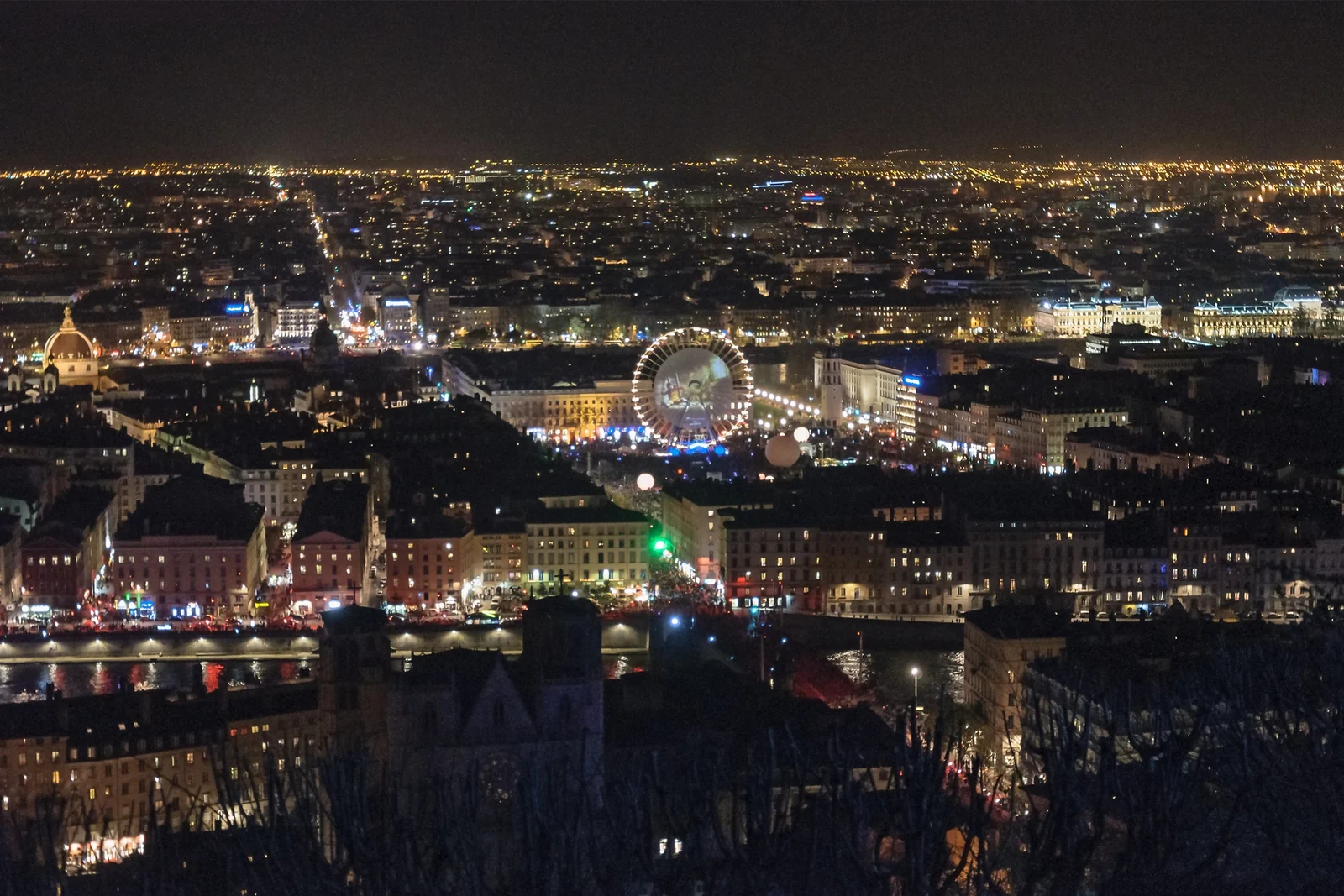
The 2026 edition runs from Saturday, December 5 to Tuesday, December 8, with installations lit each evening. Crowds are enormous and hotels fill months ahead. Check the official Fête des Lumières site for the program, and book a room as early as you can.
- April to June: my favorite time, mild and green, good for walking the hills and eating outdoors.
- July and August: often hot and humid; many locals leave and some small restaurants close for summer holidays.
- September and October: harvest season in Beaujolais and comfortable city weather.
- November to March: cold and gray but ideal for bouchon dinners. Beaujolais Nouveau is released on the third Thursday of November.
Day Trips from Lyon: Beaujolais, Pérouges and Annecy
| Destination | How to get there | Approx. travel time | Best for |
|---|---|---|---|
| Beaujolais | Car or organized tour | Under an hour to the southern villages | Wine tasting, golden-stone villages |
| Pérouges | Regional train to Meximieux-Pérouges, then a walk; or car | About 45 minutes | A preserved medieval hilltop village |
| Annecy | Regional train or car | About 2 hours | Lake views, canals, the old town |
Beaujolais
The vineyards begin just north of the city. The south, the Pays des Pierres Dorées, has villages of honey-colored stone, while northern crus such as Morgon and Fleurie make far more serious wine than Beaujolais Nouveau. Public transport is thin, so drive (with a designated driver) or book a tour.
Pérouges
Northeast of Lyon, Pérouges is a small walled village of cobbled lanes and half-timbered houses that has been used as a film set more than once. It takes about two hours to see. Before you leave, eat a galette de Pérouges, a thin, sugary, buttery flatbread sold warm in the village.
Annecy
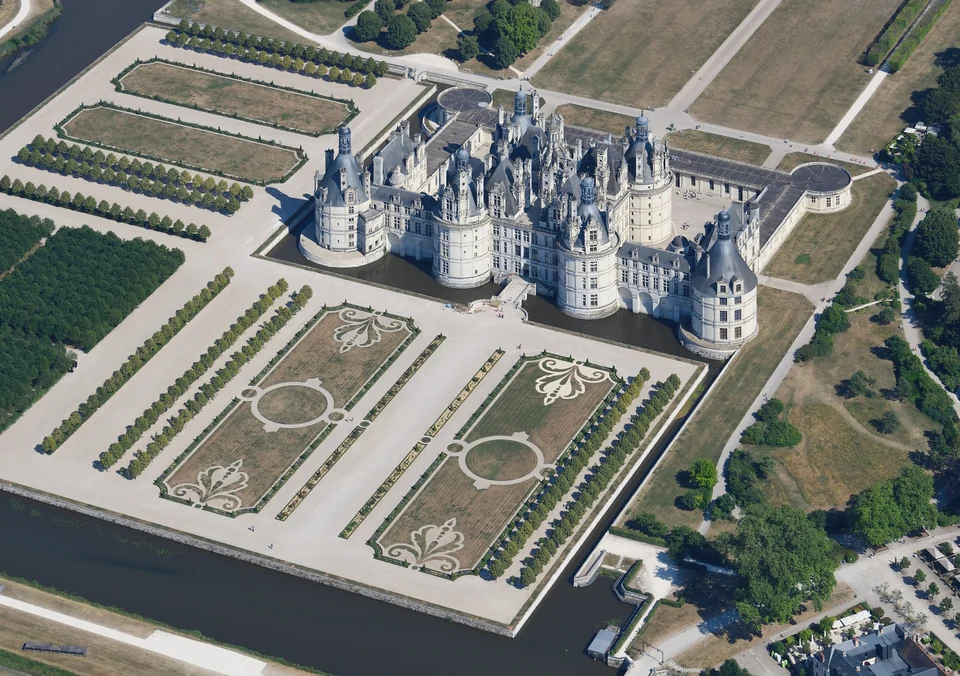
Annecy is a long but lovely day trip: canals and pastel houses on the shore of a clear Alpine lake. Leave early and save the afternoon for the lakeshore. If you're continuing south, our guide to Provence picks up where the Rhône valley leaves off, and our castles in France guide has ideas for the drive.
Getting to Lyon, Getting Around and Where to Stay
By Train and by Air
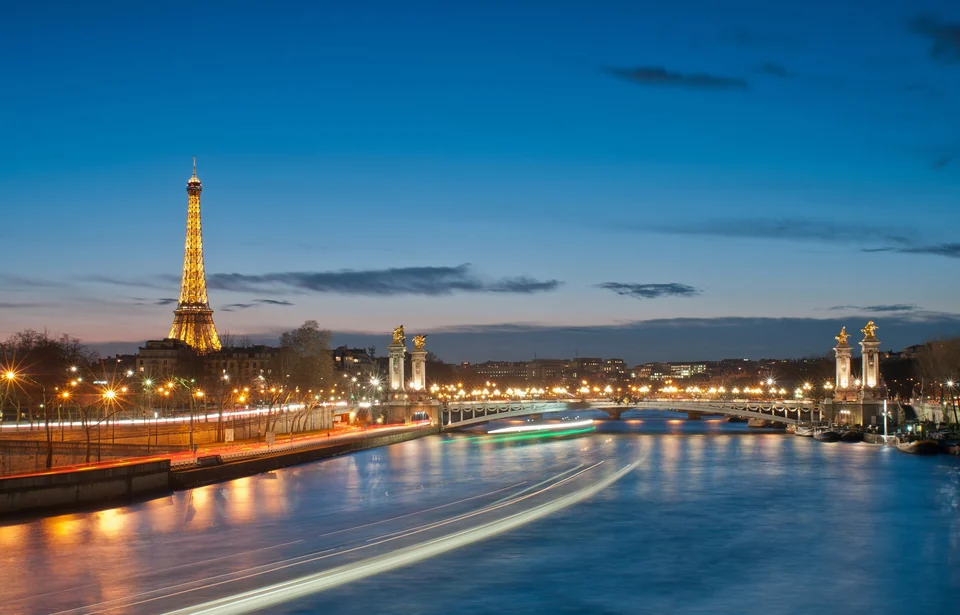
The TGV from Paris Gare de Lyon takes about two hours to Lyon Part-Dieu, and some trains stop at Perrache, closer to the old town. Book early for the best fares. Coming from Paris after a few days in the capital? Our Eiffel Tower guide covers the start of the trip.
Lyon–Saint-Exupéry Airport lies east of the city. The Rhônexpress tram connects it to Part-Dieu in under 30 minutes, running from early morning to around midnight. It costs more than regular city transport, and a taxi takes longer at rush hour.
Getting Around and the Lyon City Card
The center is walkable, though the hills are steep. The TCL network of metro, trams, buses and funiculars covers everything. The Lyon City Card, sold for one to four days by the official ONLYLYON tourism office, bundles unlimited public transport, entry to most major museums, a Saône river cruise and some guided tours. It pays off with two or more museums a day; check current prices first.
Where to Stay in Lyon
- Vieux Lyon: the most atmospheric base, with Renaissance buildings and the funicular on your doorstep. Streets can be loud late at night and rooms are often small.
- Presqu'île (Bellecour to Terreaux): the most convenient, central for everything, with good metro connections and plenty of restaurants.
- Croix-Rousse: a village feel, local markets and bars. Expect hills.
- Part-Dieu: practical for early trains and the airport tram and close to Les Halles, but short on charm.
- Confluence: modern and quieter, good for families, a tram ride from the old quarters.
Lyon Travel FAQ
How many days do you need in Lyon?
Three days is ideal: one for Vieux Lyon and Fourvière, one for Croix-Rousse and the Presqu'île, and one for Confluence, Les Halles or the Parc de la Tête d'Or. Add a fourth day for a trip to Pérouges, Beaujolais or Annecy.
What is a traboule in Lyon?
A traboule is a passage that runs through buildings and courtyards from one street to another. Lyon has several hundred across Vieux Lyon, Croix-Rousse and the Presqu'île, but only some are open to visitors, generally during the day. Enter quietly, since residents live there.
What is a bouchon lyonnais?
A bouchon is a small, informal Lyon restaurant serving traditional local dishes such as quenelles, saucisson brioché and salade lyonnaise, with wine by the pot. The Les Bouchons Lyonnais label, created in 2012, helps you tell authentic ones from tourist traps.
When is the Fête des Lumières in 2026?
The 2026 Fête des Lumières runs from Saturday, December 5 to Tuesday, December 8, with light installations each evening. It is free but very crowded, so book accommodation months ahead and check the official site for the program and routes.
How long is the train from Paris to Lyon?
The TGV from Paris Gare de Lyon reaches Lyon Part-Dieu in about two hours, with frequent departures through the day. Some trains also stop at Perrache. Book early for cheaper fares.
How do you get from Lyon airport to the city center?
The Rhônexpress tram links Lyon–Saint-Exupéry Airport to Part-Dieu station in under 30 minutes, with departures every 15 to 30 minutes from early morning until around midnight.
Is the Lyon City Card worth it?
It is worth it if you plan to visit several museums, such as Lugdunum, the Musée des Confluences and the Musée des Beaux-Arts, and use public transport and the Saône cruise. Otherwise, single tickets are cheaper.