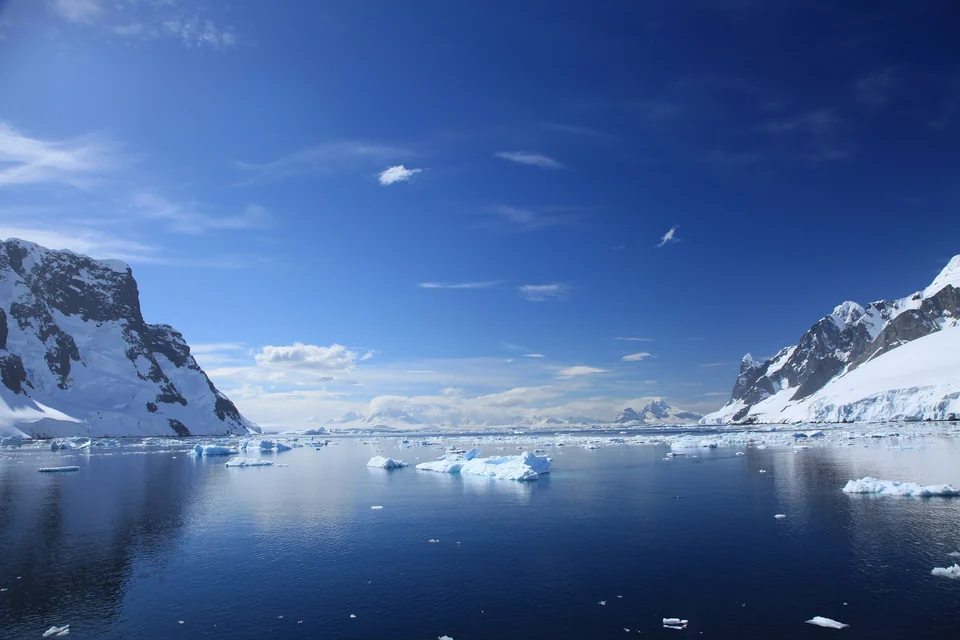



Yes, there is warm water in Antarctica, but not in the way the phrase “hot springs” suggests. There are no steaming spa pools hidden under the ice. The place visitors actually mean is Deception Island, an active volcano in the South Shetland Islands where heat from below warms the black-sand shoreline, sends up wisps of steam and, at the right tide, takes the chill off the sea.
This guide separates fact from myth. It explains how Deception Island’s geothermal beaches work, what you can see at Pendulum Cove and Whalers Bay, which other volcanic areas exist on the continent, and how expedition cruise passengers visit the island under strict international rules.
Are There Really Hot Springs in Antarctica?
Antarctica is volcanic in places, and wherever magma lies close to the surface, heat escapes. But most of that heat is either buried under kilometers of ice or located on remote, high mountains that only scientists reach. Stories of secret hot springs near Mount Erebus that tourists might one day bathe in are not accurate.
Deception Island is the exception. Its geothermal activity reaches the shoreline inside a flooded caldera that ships can sail into, which is why it has become one of the most visited sites in Antarctica. Even there, what you find is warm sand and a thin, patchy layer of warmed seawater, not a natural hot tub.
Deception Island: A Volcano You Can Sail Into
Deception Island is a roughly circular island about 15 kilometers across, with an area of around 79 square kilometers. The sea has flooded its collapsed center to form Port Foster, a sheltered bay about 10 kilometers long. The only way in is Neptune’s Bellows, a gap in the crater wall just 500 meters wide, named for the strong winds that funnel through it.
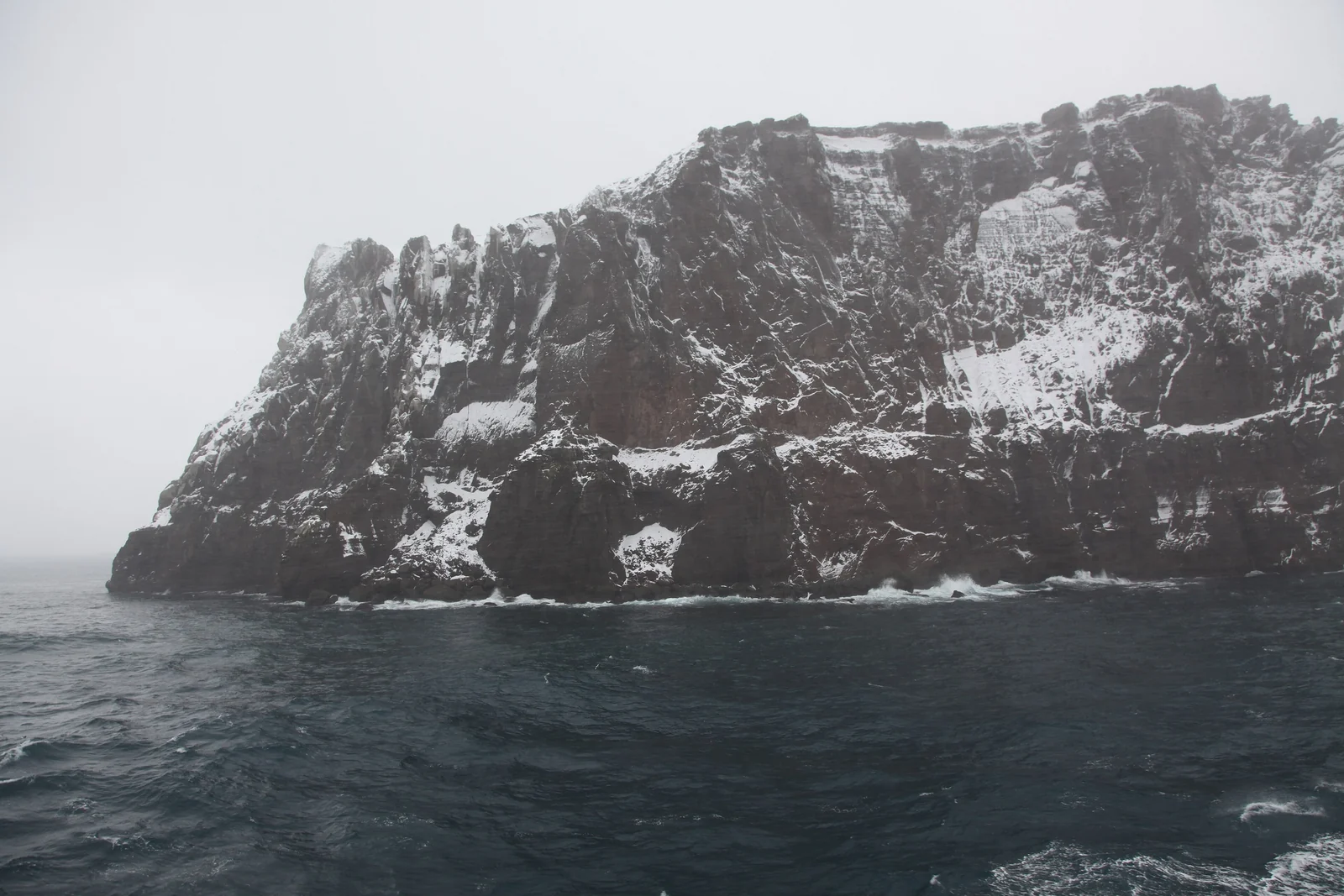
The volcano is very much alive. Eruptions were recorded around 1839 to 1842 and again in 1967, 1969 and 1970, when ash and mudflows destroyed the scientific stations on the island. Today Spain’s Gabriel de Castilla Base and Argentina’s Decepción Station operate during the summer, and scientists monitor seismic activity closely. The whole island is managed as Antarctic Specially Managed Area No. 4 under the Antarctic Treaty system.
How Deception Island’s Geothermal Beaches Work
Beneath the caldera, a shallow magma system heats the ground. Seawater seeps into the porous volcanic sand, warms up and rises again along the shoreline. In cold air, the warm sand and water give off visible steam, and in places the beach is warm to the touch while snow lies a few meters away.
- Temperatures vary enormously: the official visitor guidelines note that water above 70°C has been recorded at Pendulum Cove, hot enough to scald.
- The warmth is shallow and local: hot water only mixes with the near-freezing sea in a thin band along the shore, so a step or two farther out the water is icy.
- Tides and weather change everything: on some days the shallows feel pleasantly warm; on others, with high tide, wind and snow, there is no warmth to speak of.
Pendulum Cove: The Warm-Water Beach
Pendulum Cove, on the northeast side of Port Foster, is the site most associated with “Antarctic hot springs.” It takes its name from the pendulum and magnetic observations made here by a British expedition under Henry Foster in 1829. Its beach is where expedition staff most often mark out a safe spot where scalding geothermal water mixes with cold seawater for a brief, memorable dip.
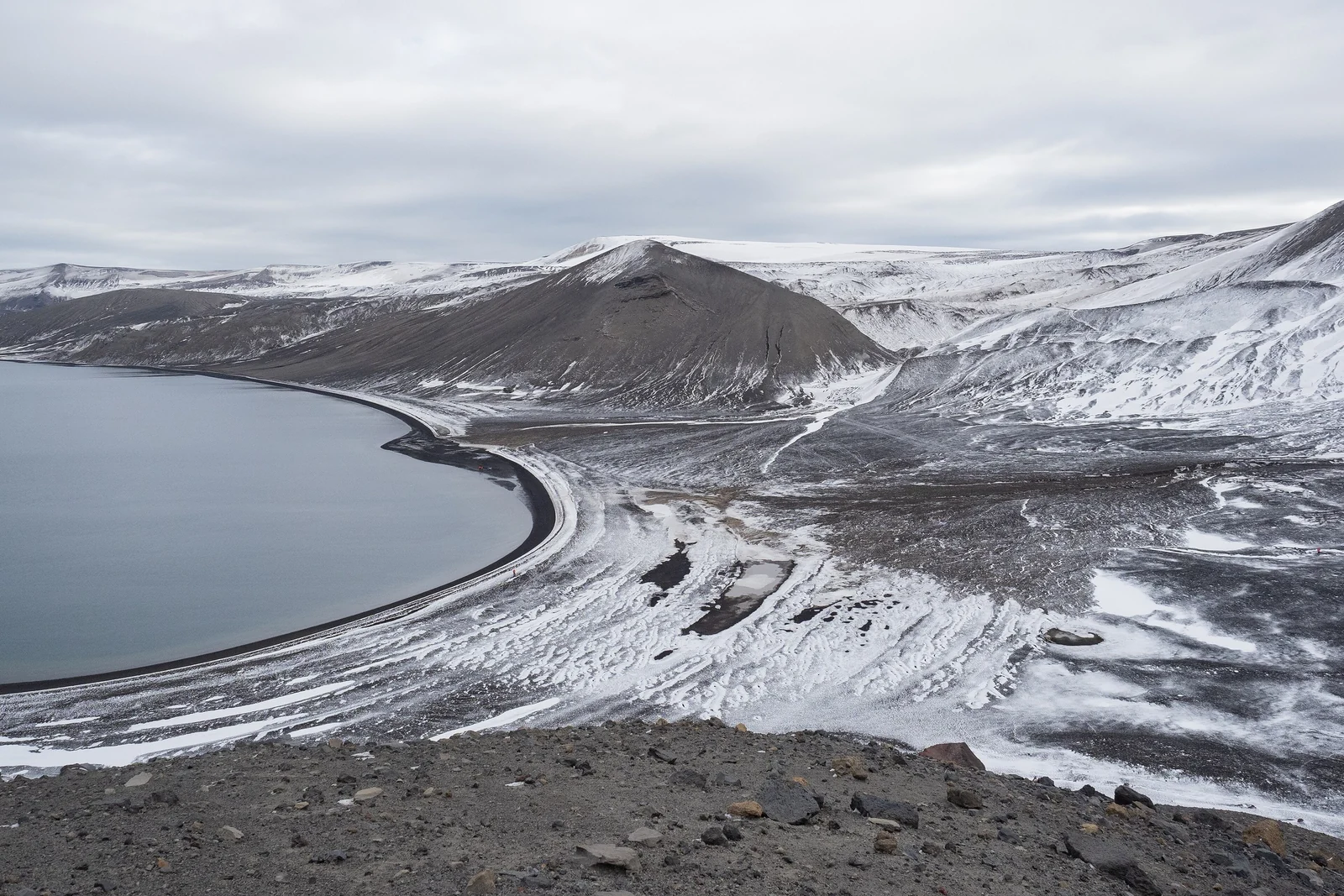
Behind the beach stand the ruins of Chile’s Pedro Aguirre Cerda Station, opened in 1955 and destroyed by the eruptions of 1967 and 1969. The ruins are protected as Historic Site and Monument No. 76, and visitors must stay outside them. The warm slopes above the cove support rare mosses found nowhere else in Antarctica, so that area is part of Antarctic Specially Protected Area No. 140 and closed to walkers.
Whalers Bay: Steam, Whaling History and the Polar Plunge
Just inside Neptune’s Bellows, Whalers Bay is the most visited landing on the island. Its long black beach often steams gently, and it is a popular place for the “polar plunge,” a quick run into the sea that many cruise passengers try. The water here is mostly bitterly cold, with at best a thin warm layer close to shore.
The bay is also a history lesson. Commercial whaling operated at Deception Island from 1906, and the Norwegian Hektor whaling station worked here until 1931. Rusting boilers and tanks, collapsed buildings and a whalers’ cemetery remain, along with the remains of a British base damaged by the 1969 eruption. Together they are protected as Historic Site and Monument No. 71, among the most significant whaling remains in Antarctica.
Wildlife and Other Sites on Deception Island
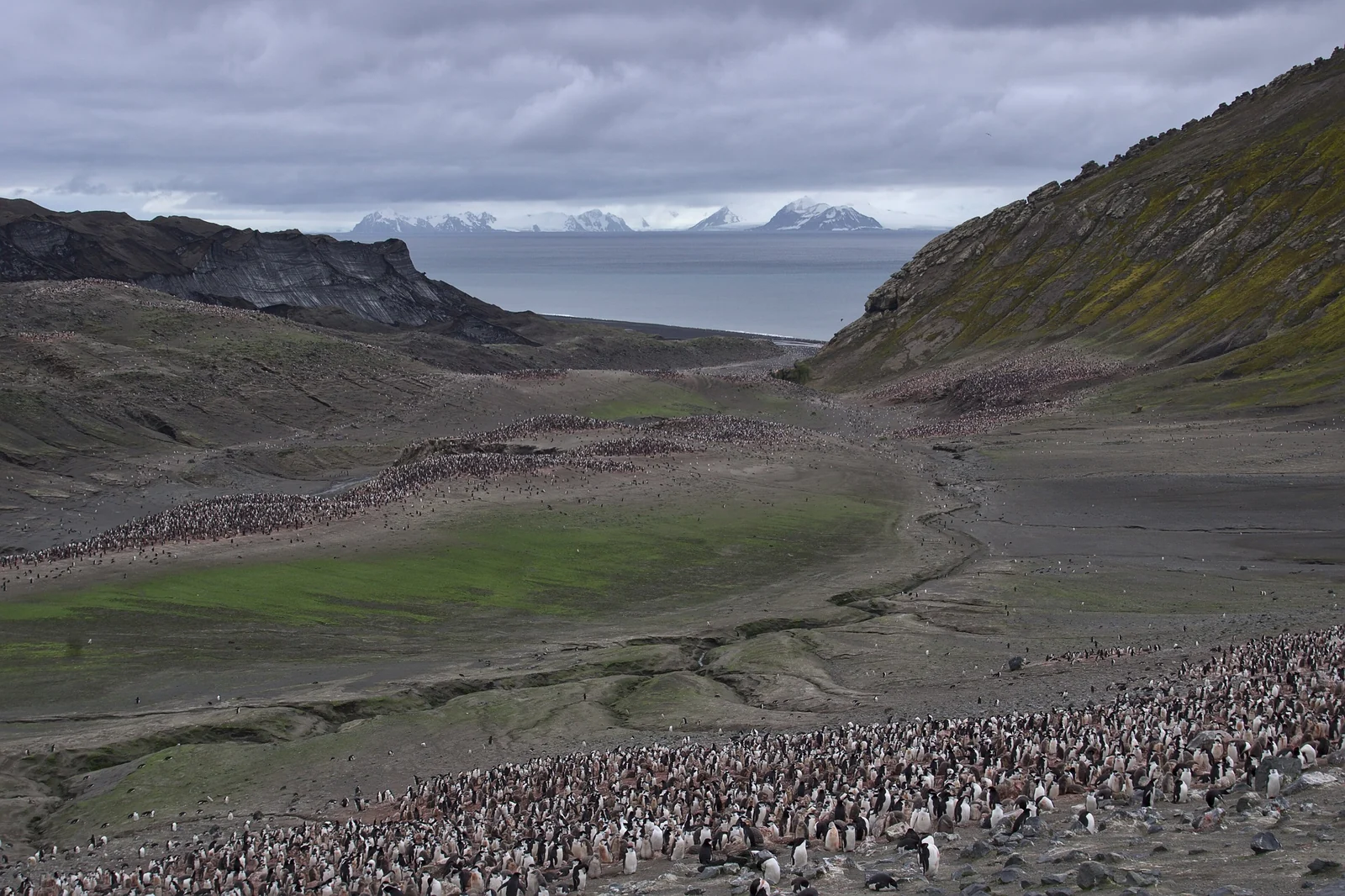
Deception Island is not only about volcanic heat. On its outer, seaward side, Baily Head hosts a huge chinstrap penguin colony, estimated at around 100,000 pairs, in an amphitheater-shaped valley. Landings there depend on swell and are often impossible. Inside the caldera, Telefon Bay offers walks across young volcanic craters formed in the eruptions of the late 1960s.
Antarctic fur seals often rest on the beaches at Whalers Bay later in the season, and skuas and kelp gulls patrol the shoreline. Keep at least 5 meters from all wildlife.
Other Geothermal Areas in Antarctica
Deception Island is the only place where ordinary visitors meet Antarctic geothermal heat, but it is not the only volcanic area on the continent.
- Mount Erebus, Ross Island: at about 3,792 meters, it is the southernmost active volcano on Earth and has held a lava lake in its summit crater since at least the early 1970s. Steam from its vents builds ice towers and warm ice caves that host microbial life. It is reached only by research teams working from nearby stations.
- Subglacial volcanism: scientists have found evidence of volcanic heat beneath parts of the West Antarctic Ice Sheet, where it can melt ice from below. None of this reaches the surface as accessible springs.
- Other volcanic islands: several remote islands and peaks in the region show fumarole activity, but they are rarely, if ever, visited by tourists.
If you want real hot springs you can soak in, look north: our guide to Iceland’s hot springs and underground wonders covers some of the best, and our story on the so-called Blue Lagoon of Norway untangles another popular myth.
How to Visit Deception Island
The only practical way for travelers to reach Deception Island is on an expedition cruise to the Antarctic Peninsula, usually from Ushuaia in Argentina or as part of a fly-cruise from Punta Arenas in Chile. Many, but not all, Peninsula itineraries include a stop here. Our Antarctica travel guide explains the season, routes and what to pack.
Visits follow site guidelines adopted under the Antarctic Treaty. At Pendulum Cove, for example, no more than 100 visitors may be ashore at once, with one guide for every 15 people, and bathers must wear footwear and stay within the area staff have checked.
- Never dig bathing pits or walk on moss; the vegetated slopes are protected.
- Keep at least 20 meters from scientific monitoring equipment, which records seismic and volcanic activity.
- Stay outside historic buildings and ruins, and remove nothing, not even pebbles.
- Only enter the water when staff say it is safe, and never alone; cold shock is dangerous.
- Accept that landings and swims can be canceled because of weather, sea state or volcanic alerts.
You will find more polar and volcanic destinations in our Antarctica section.
Antarctica Hot Springs FAQ
Are there hot springs in Antarctica?
Not in the sense of natural bathing pools. The closest thing is Deception Island in the South Shetland Islands, where volcanic heat warms the shoreline of its flooded caldera. Visitors may find warm sand, steam and a thin layer of warmed seawater at the right tide.
Can you swim in warm water on Deception Island?
Sometimes. Expedition staff may mark a safe spot at Pendulum Cove or Whalers Bay where geothermal water mixes with the cold sea. Whether it feels warm depends on tide and weather, and water above 70°C has been recorded, so only swim where and when staff allow it.
Where is Deception Island?
Deception Island is one of the South Shetland Islands, just north of the Antarctic Peninsula. Ships reach it on Antarctic Peninsula cruises from Ushuaia in Argentina or on fly-cruises that begin with a flight from Punta Arenas in Chile to King George Island.
Is Deception Island volcano still active?
Yes. Deception Island is an active volcano whose last eruptions occurred in 1967, 1969 and 1970, destroying the research stations then on the island. Its activity is monitored by scientists, and visits can be restricted when the alert level rises.
What is the polar plunge?
The polar plunge is a brief, voluntary dip into Antarctic waters offered by many expedition cruises, often at Whalers Bay on Deception Island. Despite the geothermal heat, the water there is usually close to freezing, so the swim lasts only seconds and staff supervise it closely.
Can tourists visit Mount Erebus?
Not in practice. Mount Erebus, on Ross Island near McMurdo Station and Scott Base, is the southernmost active volcano on Earth, but its summit, lava lake and warm ice caves are visited only by research teams. Ross Sea cruises may view it from the ship.