A Kenya safari is built around a handful of very different landscapes: the open plains of the Maasai Mara, the elephant swamps of Amboseli beneath Kilimanjaro, the dry north of Samburu, and the Rift Valley lakes close to Nairobi. Most first-timers should spend four to six nights in the Mara and Amboseli, then add one or two stops depending on their interests.
This Kenya safari guide explains what each area does best, how lodges, tented camps and conservancies differ, when to go, and how to travel responsibly. It ends with a 7 to 10 day route and a beach extension. For wider context, see our Kenya travel guides.
Kenya's Safari Areas at a Glance
Kenya is compact enough that you can combine several ecosystems in one trip, though distances are longer than the map suggests. Roads are slow, and many travelers fly between parks on small planes. The table compares the main areas.
| Area | Known for | Good to know |
|---|---|---|
| Maasai Mara | Big cats, huge herds, the Mara River | Roughly 224 km from Nairobi at its nearest edge; busiest in the migration window |
| Amboseli | Elephants with Kilimanjaro behind them | Open, dusty and flat; the mountain is clearest early in the morning |
| Tsavo East and West | Vast wilderness, red-dust elephants, lava and springs | Large, quieter and a natural link with the coast |
| Lake Nakuru | Flamingos, rhinos, a compact park | Easy first stop from Nairobi; flamingo numbers vary |
| Lake Naivasha | Freshwater lake, hippos, birds | Boat trips and walks in nearby Hell's Gate |
| Samburu | Dry-country species such as Grevy's zebra and gerenuk | Hot, remote and rewarding |
| Laikipia conservancies | Private land, walking and night drives, rhino | Flexible rules and small camps |
Maasai Mara: Big Cats and the Great Migration
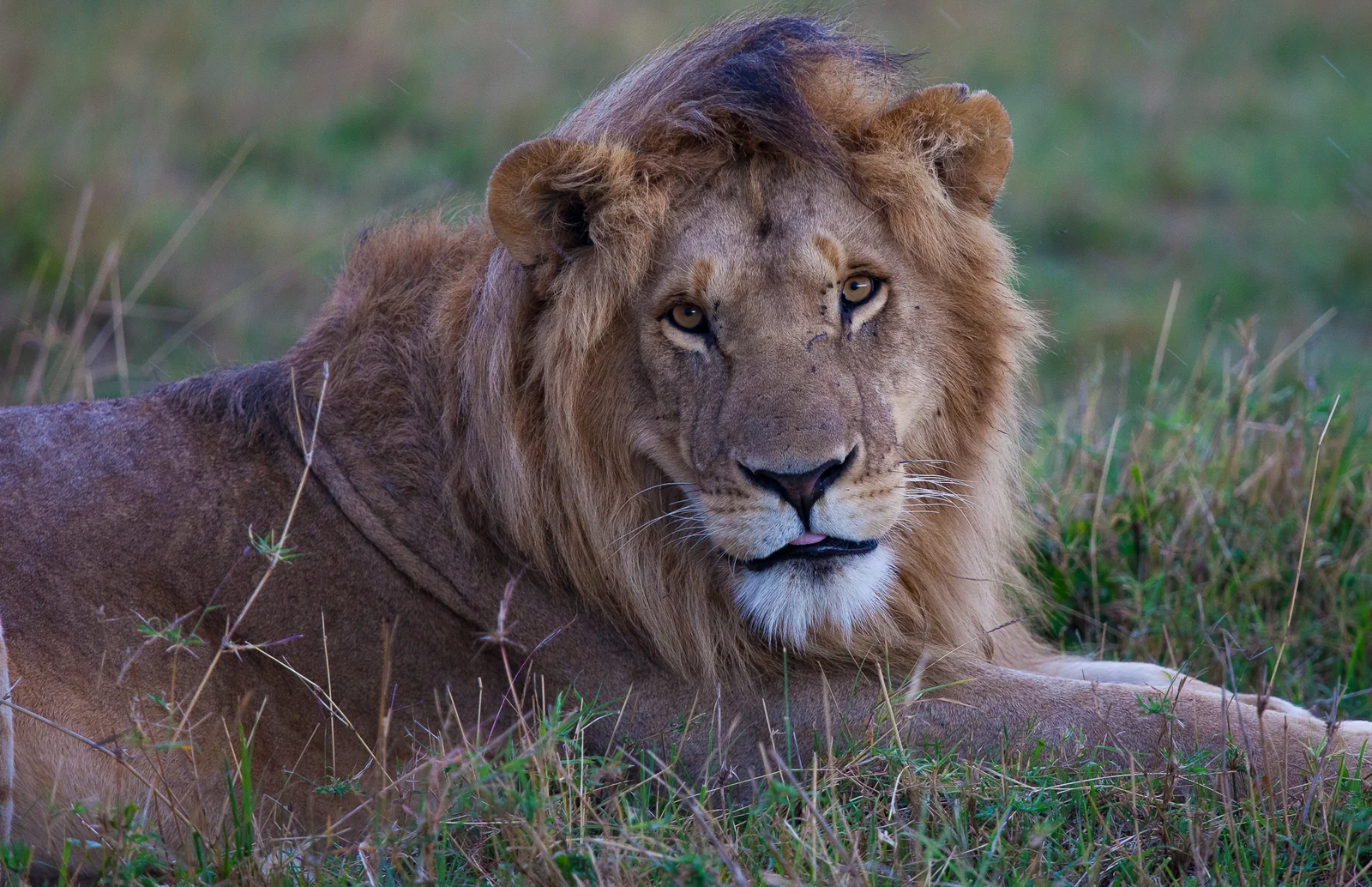
The Mara is the one most people picture: acacia-dotted grassland, lions in the long grass, and cheetahs using termite mounds as lookouts. The reserve covers about 1,510 square kilometers within the larger Greater Mara ecosystem, and it was first protected in 1961. The Mara River drains it, and that river is the stage for the famous crossings.
When the Wildebeest Arrive
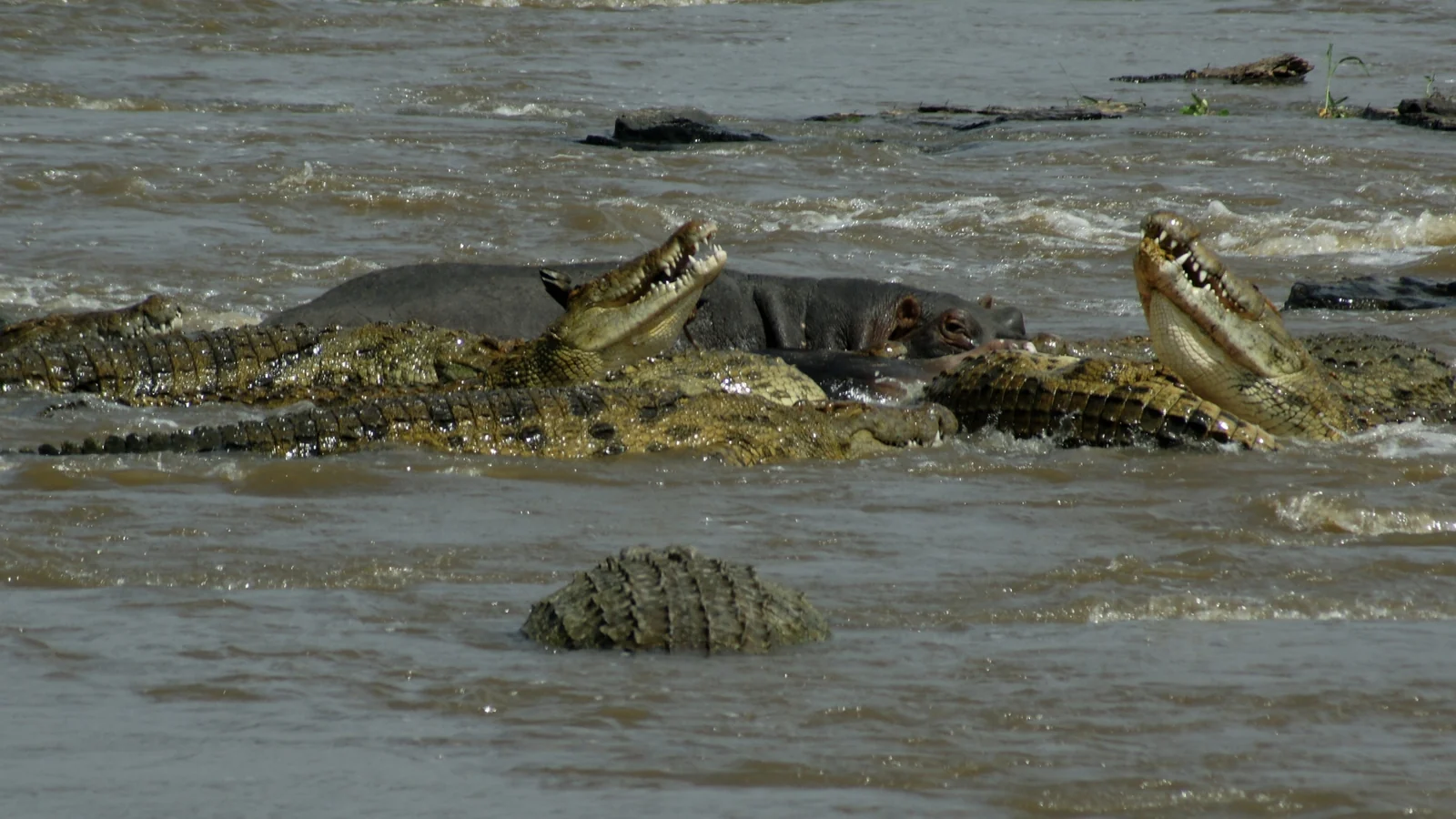
Wildebeest, zebra and gazelle follow the rains in a loop between Tanzania's Serengeti and the Mara. The herds typically reach the Mara around July and move back south around October, though rainfall shifts the timing from year to year. Treat that as a typical window, not a promise. River crossings are unpredictable: herds can mill at the bank for days, then cross at dawn or not at all while you are there.
The good news is that the Mara is excellent when the herds are away. Resident lions, leopards, cheetahs, elephants, giraffes and hippos stay year-round, and green-season game drives are quieter and cheaper.
Conservancy or National Reserve?
The Maasai Mara National Reserve is the public core, with a county-run structure and a separate area, the Mara Triangle, managed by the Mara Conservancy. Around the reserve sit private conservancies, where Maasai landowners lease their land to tourism operators. Conservancies cap the number of beds and vehicles, so sightings feel less crowded. Many also allow walks and night drives, which the reserve does not.
The trade-off is cost: conservancy stays usually include a conservancy fee in the price and can be more expensive. If you want the river crossings, stay near the reserve or in a camp that has access to it. For wildlife in peace, a conservancy often wins.
Amboseli: Elephants Under Kilimanjaro
Amboseli is the most photogenic park in Kenya. Its core covers about 392 square kilometers, set within an ecosystem of roughly 8,000 square kilometers that crosses into Tanzania. It became a national park in 1974 and is known for its elephant population, which researchers have studied since 1972.
The park has swamps fed by meltwater from Kilimanjaro, so elephants and buffalo gather there even in dry months. Africa's highest mountain, 5,895 meters, rises just over the border in Tanzania. Clouds usually hide the summit by mid-morning, so do your first drive at sunrise and keep your camera ready.
Amboseli is dusty in the dry months and very open, which makes sightings easy but also means crowded viewing around popular spots. Book a driver who will move away from the pack. A night or two is enough; two is better if the mountain stays hidden on the first morning.
Tsavo, the Rift Valley Lakes and Samburu
Tsavo East and Tsavo West
Tsavo is Kenya's biggest park system, split into two national parks on either side of the Nairobi to Mombasa highway. It is wilder and less polished than the Mara. Distances are large, vehicles are fewer, and elephants coated in the local red soil are a highlight. Tsavo works well as a stop on the way to the coast, which is why it appears in many safari-plus-beach routes.
Lake Nakuru and Lake Naivasha
Lake Nakuru National Park was created in 1961 around a shallow alkaline lake in the Rift Valley. Flamingos feed on algae there, sometimes in huge flocks, but their numbers change with water levels, so do not count on a pink shoreline. The park also protects both black and white rhinos in a fenced sanctuary.
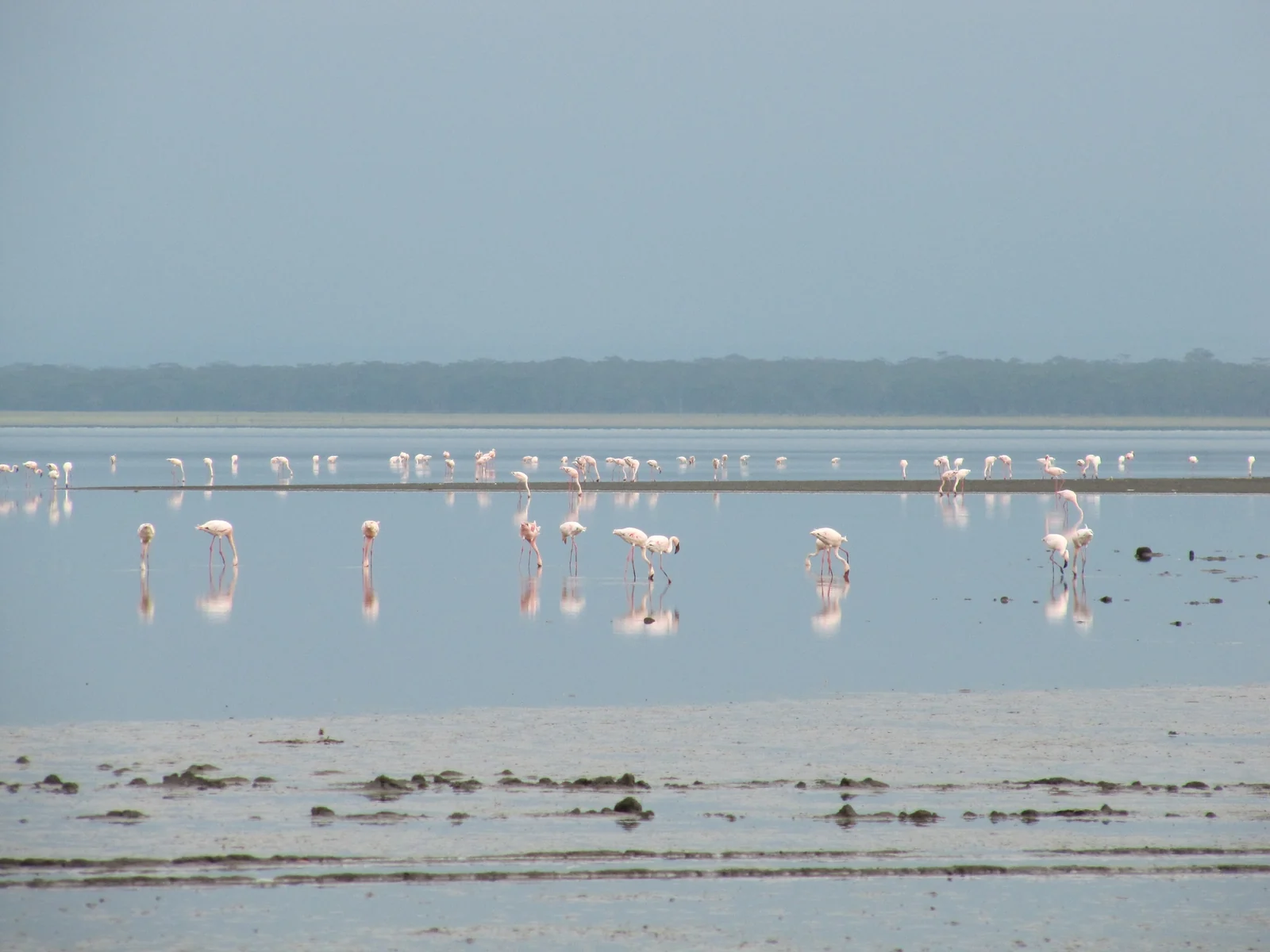
Lake Naivasha is a freshwater lake about 1,884 meters above sea level, with hippos and more than 400 bird species. The nearby Hell's Gate National Park allows walking and cycling among cliffs and gorges, which is rare in a Kenyan park. Both lakes make an easy first or last day for those who want to avoid a long drive.
Samburu
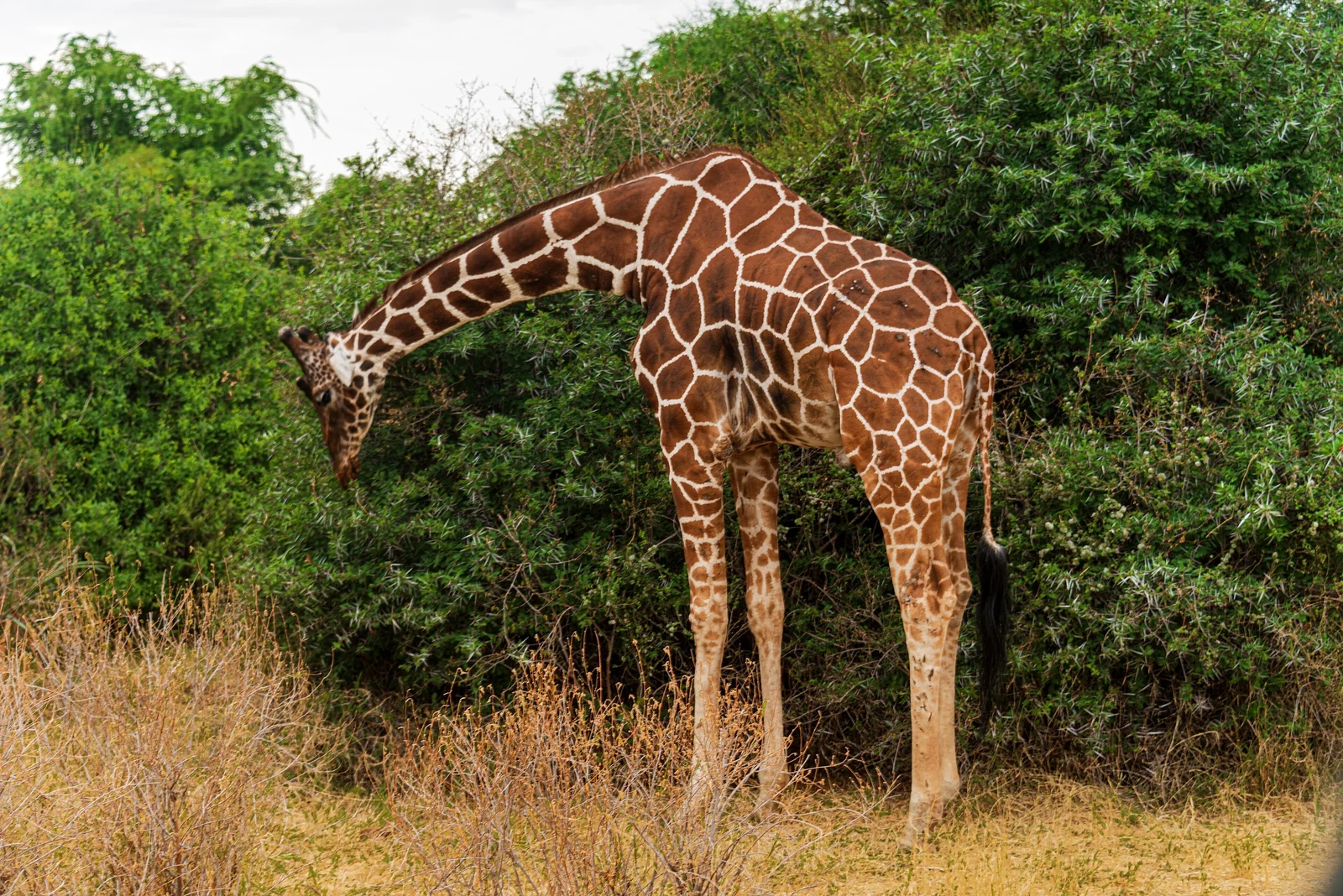
North of Mount Kenya, Samburu National Reserve is hot, dry and strikingly different. It lies along the Ewaso Ng'iro river and is known for species that you will not find in the south, including Grevy's zebra, gerenuk, oryx and reticulated giraffe. Elephants, lions and leopards also live here. It is about 350 kilometers from Nairobi, so most visitors fly in.
Laikipia Conservancies and Nairobi
Laikipia is a plateau of private ranches and community conservancies north of Mount Kenya. Because the land is not a national park, camps here can offer guided bush walks, night drives, horse or camel rides and visits to rhino sanctuaries. Camps are small and often family-run. It is a good second stop after the Mara if you want a different pace.
Nairobi National Park
Nairobi National Park opened in 1946 and is Kenya's first national park. It covers about 117 square kilometers and sits roughly 7 kilometers from the city center, so you can watch lions with skyscrapers on the horizon. It is also a strong place to see black rhinos. Allow a half day if you have a long layover.
Orphanages and the Giraffe Centre
Nairobi has two well-known stops for close encounters. The Giraffe Centre is a conservation and education site where you can feed giraffes from a raised platform. Elephant and rhino orphanages, including the David Sheldrick Trust, rear injured or abandoned calves for release; they typically run a short public visit at set hours, so check the current schedule and book ahead. Use a licensed, well-reviewed operator and avoid any place that offers hands-on cub or calf play.
Safari Styles: Lodge or Camp, Self-Drive or Guided
- Lodge or tented camp: Lodges offer solid walls, bars and bigger dining rooms. Tented camps feel closer to the bush, sometimes with canvas walls and bucket showers. Tented does not mean basic; some are the most luxurious options in Kenya.
- Guided or self-drive: A professional driver-guide finds animals, reads behavior and navigates rough tracks. Self-drive is possible in some parks with a 4x4, but a guide adds a great deal on a first trip.
- Game drives: Early morning and late afternoon are best, when animals move and the light is soft. Midday is for rest by the pool.
- Walking safaris: Offered in conservancies and a few other areas with an armed ranger. You notice tracks, birds, insects and plants that a vehicle misses.
- Group or private vehicle: A private vehicle gives you control over when to stay and when to leave. Shared vehicles are cheaper, but you rely on the group's pace.
Most travelers combine styles: a busy lodge in the Mara, a quiet conservancy camp, a flight between them. Ask any operator how many vehicles are allowed at a sighting and whether the roof opens for photography.
Best Time to Visit Kenya for a Safari
Kenya has two dry seasons and two rainy ones. Wildlife viewing is easier in the dry months because animals concentrate at water and the grass is shorter.
| Season | Typical months | What to expect |
|---|---|---|
| Long dry season | June to October | The classic safari window and the usual Mara migration period; highest demand |
| Short rains | November to December | Greener, fewer visitors, showers that often pass quickly |
| Short dry season | January to February | Hot, good visibility and strong wildlife viewing |
| Long rains | March to May | Heavy rain on some days, lower rates, some camps close |
These patterns vary from year to year, so check with your operator rather than planning around exact dates. The green season has its own appeal: lush scenery, newborn animals and quieter roads.
A 7 to 10 Day Kenya Safari Route
This route balances driving with flying and works in either direction. Adjust the number of nights to your budget and interests.
- Day 1: Arrive in Nairobi. Rest, or visit the Giraffe Centre or an orphanage if you land early.
- Days 2 to 4: Maasai Mara. Spend three nights, ideally with early drives and one long day out. Add a conservancy night if you want a walk.
- Day 5: Return to Nairobi or take a flight directly toward Amboseli.
- Days 6 to 7: Amboseli. Drive at sunrise for Kilimanjaro and again in late afternoon for elephants.
- Days 8 to 9 (optional): Lake Nakuru and Lake Naivasha, or Samburu or Laikipia for a drier, quieter finish.
- Day 10: Fly home from Nairobi or continue to the coast.
For a 7-day version, keep to Nairobi, the Mara and Amboseli. If you want a broader picture of the continent before you choose, browse our Africa travel guides, or read about the wonders of Africa.
Beach Extension: Diani and Lamu
A few days on the Indian Ocean coast is a popular finish. Diani Beach, south of Mombasa, has a long stretch of white sand with resorts and water sports. Lamu, on the northern coast, is a quieter island with narrow lanes, dhows and no cars to speak of. Flights from Nairobi serve both areas, and Tsavo can be combined with a drive or train ride to the coast. Check current local conditions and travel advice before booking either.
Practical Tips: Entry, Health, Safety and Ethics
Entry Rules
Kenya uses an electronic travel authorization for most foreign visitors, which must be approved before you fly. Rules, fees and exemptions change, so apply only on the official Kenya eTA portal and ignore third-party sites that add extra charges. Make sure your passport has enough validity for your dates, and check the portal for current requirements.
Health and Safety Basics
- Before you go: Talk to a travel clinic well ahead about vaccinations and malaria prevention for your route.
- On safari: Use repellent, cover up at dusk and sleep under nets if provided. Stay hydrated and carry sun protection.
- In Nairobi: Use licensed transport and avoid walking at night in unfamiliar areas, as in any large city.
- Insurance: Take a policy that covers medical evacuation, since parks can be hours from a hospital.
Ethical Wildlife Viewing
Good guides keep a respectful distance, turn off engines at sightings and never chase animals. Do not leave the vehicle unless your guide says it is safe, do not feed wildlife and keep your voice low. Choose operators that employ local staff and support conservancy and community land, since that is how safari money helps keep wildlife on the land. Read more about another corner of Africa's wild places if you plan a longer trip.
The agency that manages most national parks is the Kenya Wildlife Service. Check its site for current park rules and fees before you go.
Kenya Safari FAQ
How many days do you need for a Kenya safari?
Seven days covers Nairobi, the Maasai Mara and Amboseli at a comfortable pace. Ten days adds a lake or Samburu stop, or a beach extension. Less than five nights in the parks feels rushed once travel days are counted.
When is the Great Migration in the Maasai Mara?
The herds typically reach the Mara around July and head back toward Tanzania around October, but rainfall moves the dates. River crossings are never guaranteed, so plan for wildlife in general and treat a crossing as a bonus.
Is Amboseli worth visiting?
Yes, especially for elephants with Kilimanjaro behind them. The mountain is clearest at sunrise, since clouds often cover it later in the day. One or two nights is enough, and you can combine it with the Mara or Tsavo.
What is the difference between a conservancy and a national reserve?
A national reserve is public land with fixed entry rules. A conservancy is private or community land leased to operators, usually with fewer vehicles and more flexible activities such as walks and night drives. Conservancies often cost more.
Is it safe to go on safari in Kenya?
Most safari trips go smoothly when you use reputable operators and follow your guide's instructions. Check your government's travel advice, buy medical insurance and ask a travel clinic about vaccinations and malaria prevention before you go.
Do you need a visa for Kenya?
Most visitors need an electronic travel authorization approved before departure. Requirements, fees and exemptions change, so apply only on the official government portal and check the details for your nationality.