


Tuvalu is a tiny Polynesian nation of nine low-lying islands in the South Pacific, roughly halfway between Hawaii and Australia. With about 26 square kilometers of land and a population of around 10,000, it is one of the smallest and least visited countries in the world, and that is exactly why some travelers want to go.
A trip here is not a resort holiday. You will find a calm lagoon, uninhabited islets, warm community life and very limited tourist infrastructure. You will also see, up close, a country on the front line of sea-level rise. This guide explains how to reach Tuvalu, what to do in the capital atoll of Funafuti, when to go and how to visit respectfully.
Where Is Tuvalu? Islands and Key Facts
Tuvalu lies north of Fiji and south of Kiribati, spread across a long chain of reef islands and atolls. It is made up of six true atolls and three reef islands. Formerly the Ellice Islands, part of a British colony, it became independent on October 1, 1978, and remains a member of the Commonwealth.
| Fact | Details |
|---|---|
| Capital | Funafuti atoll (government offices on the islet of Fongafale) |
| Islands | Nine: six atolls and three reef islands |
| Land area | About 26 km² |
| Population | Around 10,000, with roughly half living on Funafuti |
| Languages | Tuvaluan and English |
| Currency | Australian dollar (Tuvaluan coins also exist) |
| Highest point | About 4.6 m above sea level |
Tuvalu also has a quirky claim to fame: its internet country code is .tv, and leasing the domain has brought the government a valuable source of income.
How to Get to Tuvalu
Getting to Tuvalu is the biggest part of the adventure. Fiji Airways is the only international airline serving Funafuti International Airport, with flights from Fiji several times a week. Most visitors connect through Nadi or Suva. Seats are limited and flights can be booked up by government travel, aid workers and returning Tuvaluans, so reserve early and build a buffer day into your plans in case of delays.
Visitors receive an entry permit on arrival, typically for up to one month, provided they have a passport valid for at least six months, an onward or return ticket, proof of accommodation and sufficient funds. Some nationalities are visa-exempt, while others pay a fee on arrival. Check current rules with your government’s travel advice, such as the U.S. State Department’s Tuvalu page, before you book.
Reaching the outer islands
There are no domestic flights. The eight outer islands are served by government-run passenger and cargo ships that sail irregularly, and a round trip can take days or weeks. If you want to visit them, you need flexible time and local contacts. Most visitors stay on Funafuti.
Things to Do in Funafuti
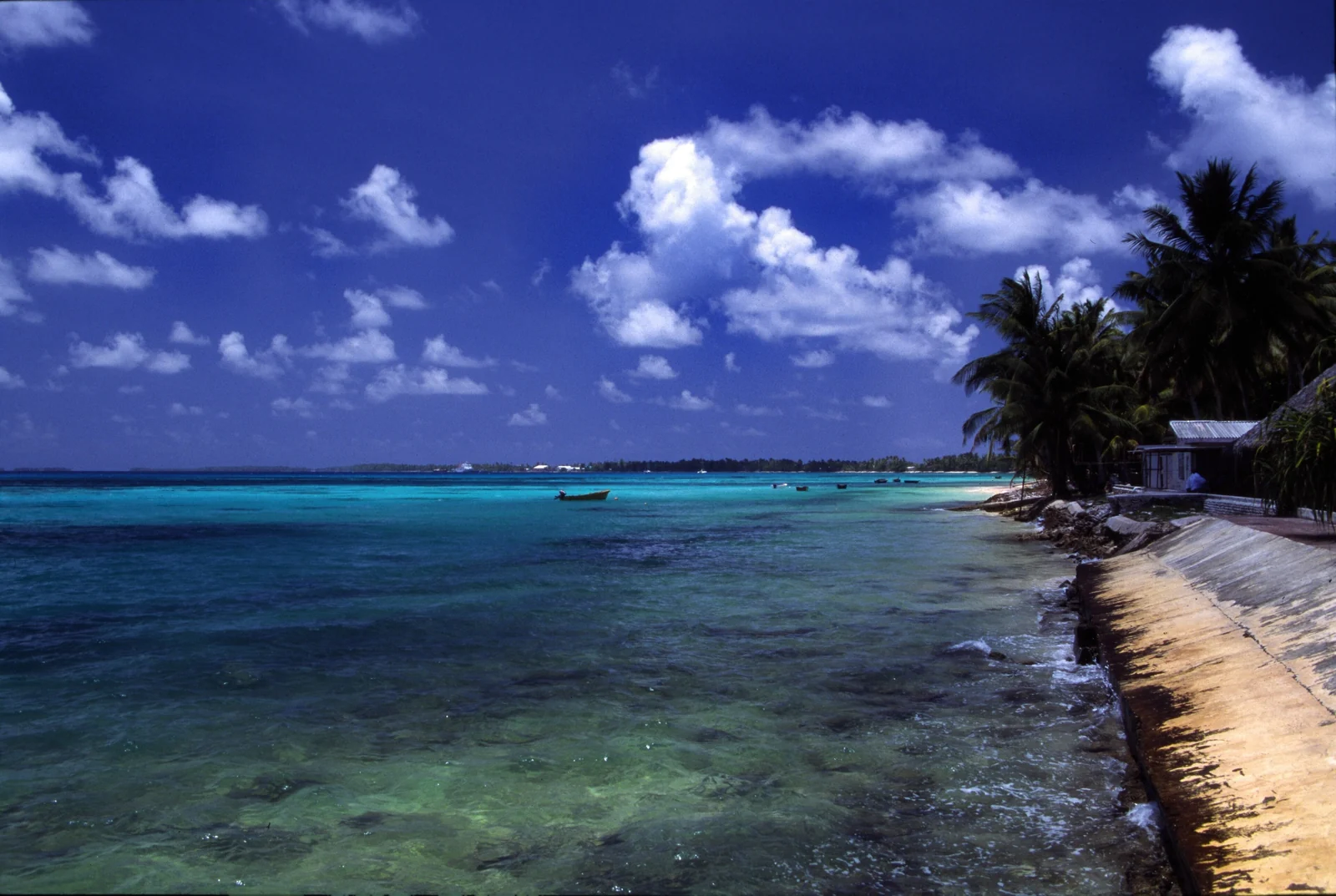
Funafuti is a thin ring of land around the largest lagoon in Tuvalu, about 18 kilometers long and 14 kilometers wide. The main islet, Fongafale, is so narrow in places that you can see the ocean on one side and the lagoon on the other. You can cover it by scooter or bicycle in a day, which makes it easy to slow down and settle into island rhythm.
Funafuti Conservation Area
Established in 1996, the Funafuti Conservation Area protects about 33 square kilometers of reef, lagoon and six uninhabited islets on the western side of the atoll. Green sea turtles and seabirds nest on the islets, and the clear water is good for snorkeling. Visitors usually hire a local boat from the main wharf to reach islets such as Tepuka or Fualopa; agree on the price and pick-up time before you leave.
The runway after hours
Funafuti’s airstrip, first built by US forces during World War II, is one of the largest open spaces on the island. When no flights are due, it turns into a community space where locals play volleyball, football and rugby, ride scooters and cool off in the evening breeze. It is a memorable way to see everyday Tuvaluan life.

Lagoon swims and simple pleasures
- Swim in the lagoon on the calm western side of Fongafale; the ocean side can have strong waves and currents.
- Visit the Tuvalu Philatelic Bureau, whose colorful stamps have long been sought after by collectors.
- Watch the sunset over the lagoon, one of the simplest and best things to do here.
- Learn about adaptation projects such as the new raised land along the lagoon shore.
Tuvaluan Culture and Etiquette
Community life revolves around the church, family and the maneapa, the open-sided meeting house found in every island community, where celebrations and meetings take place. Each island is governed locally by its falekaupule, the traditional assembly of elders. The best-known performance is the fatele, a group dance that builds in speed and volume to the beat of a wooden box drum, often performed at national celebrations.

Most Tuvaluans are Christian, and Sunday is a quiet day for church and family, when many businesses close. Dress modestly away from the water, cover shoulders and knees when visiting villages or churches, and ask before photographing people. If you are invited to an event in a maneapa, follow your host’s lead on where to sit and when to eat.
Tuvalu and Climate Change: What Visitors Should Know
Most of Tuvalu’s land lies only a few meters above sea level. Rising seas, stronger storm surges, coastal erosion and saltwater seeping into groundwater and garden pits threaten homes and food crops, and the highest spring tides, known as king tides, can flood low-lying parts of Funafuti.
Tuvalu is responding. The Tuvalu Coastal Adaptation Project, supported by the Green Climate Fund and UNDP, completed about 7.8 hectares of raised, flood-free land on Funafuti in 2023, and a second phase is adding more. In 2023 Tuvalu and Australia signed the Falepili Union, the world’s first bilateral climate mobility treaty, which from 2025 offers up to 280 Tuvaluans a year the right to live, work and study in Australia.
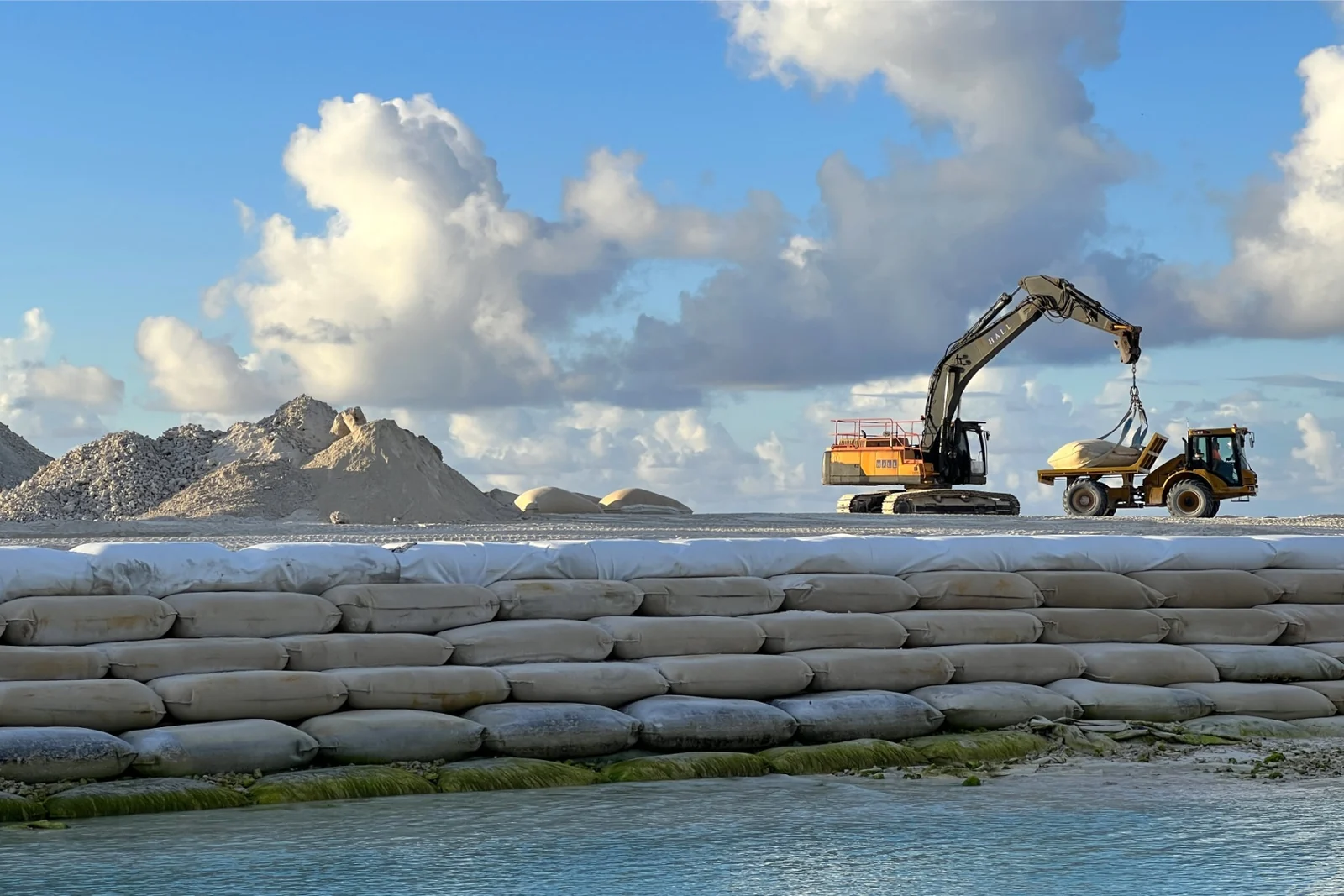
Visiting does not mean seeing a place in its last days; Tuvaluans are working hard to stay on their islands. As a visitor, keep your footprint light: bring a refillable water bottle, avoid single-use plastics, which are hard to dispose of on an atoll, and spend your money with local businesses. The Maldives faces similar challenges, as our Maldives guide explains.
Best Time to Visit Tuvalu
Tuvalu is hot and humid all year, with temperatures typically around 26 to 32°C. The drier and more settled period generally runs from about May to October, when trade winds are more reliable. The wetter season, roughly November to April, brings heavier rain and a risk of tropical cyclones. National celebrations such as Independence Day on October 1 are a lively time to be on Funafuti, but flights and rooms fill up quickly.
Practical Tips for Visiting Tuvalu
- Book accommodation before you fly. Funafuti has only a small number of hotels and guesthouses, and proof of accommodation is required on arrival.
- Bring enough cash. The Australian dollar is used, card acceptance is limited and you should not rely on ATMs.
- Expect slow internet. Connections can be patchy, so download maps and documents before you arrive.
- Pack for the sun. Shade is limited, so bring a hat, reef-safe sunscreen and light, modest clothing.
- Stay healthy. Health facilities are basic, so carry any medicines you need and take out travel insurance that covers medical evacuation.
- Be flexible. Weather, flight changes and ship schedules can alter plans at short notice.
Dreaming of more remote islands? Browse our Pacific Ocean guides, discover the reefs of Queensland or learn why the Pacific looks smaller than it really is in our article on world map distortions.
Tuvalu Travel FAQ
How do you get to Tuvalu?
You fly from Fiji. Fiji Airways is the only international airline serving Funafuti International Airport, with flights from Nadi or Suva several times a week. Seats are limited, so book early. There are no domestic flights, and the outer islands are reached only by infrequent government ships.
Do you need a visa to visit Tuvalu?
Most visitors receive an entry permit on arrival, typically for up to one month, if they have a passport valid for six months, an onward ticket, proof of accommodation and enough funds. Some nationalities are visa-exempt and others pay a fee. Check current requirements before you travel.
Is Tuvalu worth visiting?
If you enjoy slow travel, community life and remote places, yes. Tuvalu has a beautiful lagoon, a marine conservation area and a warm culture, but very few tourist facilities, few restaurants and limited activities. It suits curious, flexible travelers rather than those looking for a resort holiday.
Is Tuvalu sinking?
The islands are not sinking, but the sea around them is rising. With most land only a few meters above sea level, Tuvalu faces flooding, erosion and saltwater intrusion. The country is building raised land on Funafuti and has a climate mobility treaty with Australia while working to remain on its islands.
How many tourists visit Tuvalu?
Very few. Tuvalu regularly ranks among the least visited countries in the world, with only a few thousand international arrivals a year, many of them on business, government or aid trips rather than holidays. That makes it one of the quietest destinations you can reach by scheduled flight.
What currency is used in Tuvalu?
Tuvalu uses the Australian dollar, alongside its own Tuvaluan coins. Card acceptance is limited, so bring enough Australian dollars in cash to cover your accommodation, meals, boat trips and scooter or bicycle rental for your whole stay.